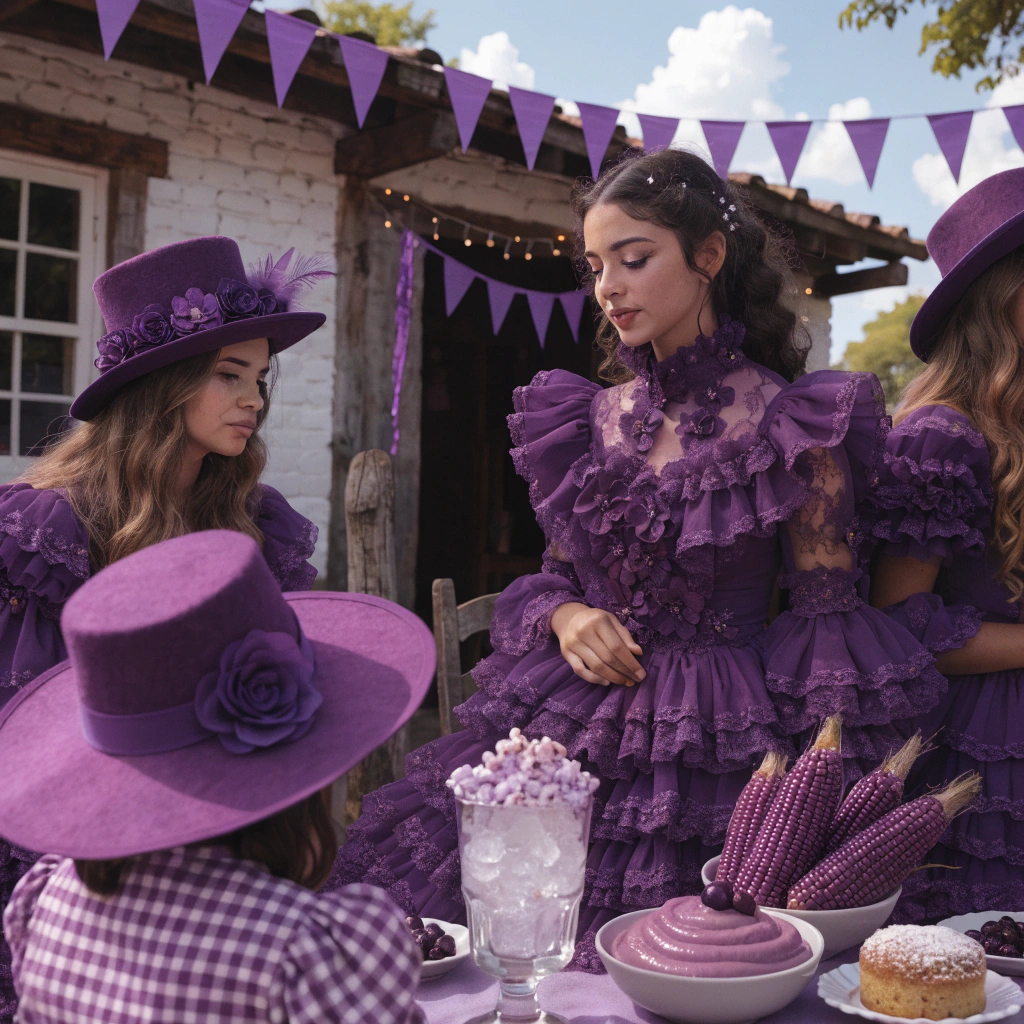
June Festivals in Brazil
In June, Brazil has many big parties. They call them Festa Junina. People celebrate the winter harvest. It is a very happy time for families and friends.
People wear special clothes. Men wear straw hats and shirts with squares. Women wear colorful dresses. People dance together in a circle. This dance is called Quadrilha.
The food is delicious. There is a lot of corn. People eat corn cake and sweet popcorn. It is cold outside, but the festival is warm and fun. Everyone loves these festivals.
文法スポットライト
パターン: Present Simple for Facts
"In June, Brazil has many big parties."
We use the present simple to talk about facts or things that happen every year. For 'Brazil' (it), we use the verb 'has' instead of 'have'.
パターン: Adjectives before Nouns
"Women wear colorful dresses."
In English, the describing word comes before the thing it describes. Here, 'colorful' describes the 'dresses'.
理解度をチェック
10 問 · A1 初級 · 無料プレビュー 1回
この記事で学んだことをテストしよう。全問正解してXPを獲得!
When does Brazil have these big festivals?
問題の内訳
When does Brazil have these big festivals?
あなたの回答:
正解: In June
Men wear straw hats during the festival.
あなたの回答:
正解: 正しい
What does 'delicious' mean?
あなたの回答:
正解: Tastes very good
People eat corn _____ and sweet popcorn.
あなたの回答:
正解: cake
Festa Junina: A Famous Festival in Brazil
Festa Junina is a very famous festival in Brazil. It happens every June during the winter season. Many Brazilians think it is more important than Carnival because it celebrates their traditions and the harvest.
In the past, the festival started to honor three Catholic saints. Today, people celebrate in every city. They dress like farmers from the countryside. Men wear plaid shirts and straw hats, and women wear colorful dresses. They often paint fake freckles on their faces because it looks cute.
The music is loud and happy. People dance the 'quadrilha' together in large groups. This dance is older than many other modern dances. There is also a lot of delicious food made from corn. People eat corn cake, popcorn, and sweet corn pudding.
Festa Junina is special because it brings families together. It is a colorful time with many decorations and big fires. It is a wonderful way to learn about Brazilian culture.
文法スポットライト
パターン: Comparatives (Adjective + -er than / More + Adjective + than)
"This dance is older than many other modern dances."
We use comparatives to compare two things. For short words like 'old', we add '-er', and for longer words, we use 'more' before the adjective.
パターン: Past Simple
"In the past, the festival started to honor three Catholic saints."
We use the past simple to talk about things that happened at a specific time in the past. For regular verbs like 'start', we add '-ed' to the end.
理解度をチェック
11 問 · A2 初級 · 無料プレビュー 1回
この記事で学んだことをテストしよう。全問正解してXPを獲得!
When does Festa Junina happen in Brazil?
問題の内訳
When does Festa Junina happen in Brazil?
あなたの回答:
正解: Every June
Festa Junina celebrates the winter harvest.
あなたの回答:
正解: 正しい
What does 'delicious' mean?
あなたの回答:
正解: Tasting very good
Men wear plaid shirts and straw _____.
あなたの回答:
正解: hats
What is the main ingredient in many festival foods?
あなたの回答:
正解: Corn
Festa Junina: Brazil’s Beloved Winter Harvest Festival
Although Carnival is famous worldwide, many Brazilians believe that 'Festa Junina' is the most important tradition in their country. These festivals, which are held throughout June, celebrate the winter harvest and honor three Catholic saints. This tradition has been celebrated for centuries, and it is a colorful explosion of rural nostalgia known as 'cultura caipira.'
During the festival, participants dress in stylized rural costumes. Men usually wear plaid shirts and straw hats, while women wear colorful dresses with lace. Often, children have painted freckles on their faces to complete the look. These costumes represent a traditional way of life that has been preserved by local communities.
The food is another essential part of the celebration. Since June is the month when corn is harvested, many delicious dishes are made with it. You can find corn cake, popcorn, and a sweet corn pudding called 'pamonha.' While people are eating, they also watch the 'quadrilha.' This is a traditional folk dance which is performed by groups of couples. The dance is led by a narrator who tells a story about a rural wedding.
Festa Junina has become a symbol of Brazilian identity. It is a time when people gather with their friends and family to enjoy music and bonfires. Even though Brazil has changed a lot, this festival helps people remember their history and the importance of the countryside.
文法スポットライト
パターン: Passive Voice
"This is a traditional folk dance which is performed by groups of couples."
The passive voice is used here to focus on the action (the dance) rather than the people doing it. It is formed using the verb 'to be' and the past participle.
パターン: Present Perfect
"Festa Junina has become a symbol of Brazilian identity."
This pattern connects the past to the present. It shows that the festival's status as a symbol started in the past and continues today.
理解度をチェック
11 問 · B1 中級 · 無料プレビュー 1回
この記事で学んだことをテストしよう。全問正解してXPを獲得!
What is the main reason for celebrating Festa Junina?
問題の内訳
What is the main reason for celebrating Festa Junina?
あなたの回答:
正解: To celebrate the winter harvest and honor saints
Men usually wear colorful dresses with lace during the festival.
あなたの回答:
正解: 間違い
What does 'narrator' mean?
あなたの回答:
正解: A person who tells a story
The dance is _____ by a narrator who tells a story.
あなたの回答:
正解: led
Which ingredient is used in most Festa Junina dishes?
あなたの回答:
正解: Corn
Festa Junina: Brazil’s Beloved Winter Harvest Festival
While Carnival undoubtedly remains Brazil’s most famous international spectacle, many locals would argue that 'Festa Junina' is the nation’s most cherished tradition. This winter harvest festival, celebrated throughout the month of June, offers a profound insight into the country’s rural heritage and religious history. Unlike the urban glamour of Carnival, Festa Junina is a colorful explosion of rural nostalgia, often referred to as 'cultura caipira.' It is a time when Brazilians, regardless of their background, embrace a stylized version of country life to commemorate three significant Catholic saints: Saint Anthony, Saint John the Baptist, and Saint Peter.
The historical origins of the festival can be traced back to the Portuguese colonial period. Over the centuries, these European traditions merged with indigenous and African influences, resulting in a unique cultural phenomenon. One of the most prominent features of the celebration is the 'quadrilha,' a folk dance inspired by 18th-century French court dances. Participants perform elaborate choreographed movements while dressed in traditional rural attire. Men typically wear plaid shirts and straw hats, while women wear vibrant, multi-colored dresses adorned with ribbons and lace. This visual spectacle is not merely for entertainment; it serves to reinforce a sense of community and shared history.
Gastronomy plays a pivotal role in the festivities, with a heavy emphasis on the winter harvest. Since June marks the corn harvest in many parts of Brazil, corn-based delicacies are prepared in abundance. Traditional dishes such as 'pamonha' (a sweet corn cake) and 'canjica' (a corn-based pudding) are consumed with great enthusiasm. The aroma of these foods, combined with the warmth of traditional bonfires, creates an atmosphere of comfort and celebration. Despite the modern shift toward urbanization, these culinary practices ensure that the festival’s rural roots remain intact.
Furthermore, the festival serves as a vital bridge between the country’s colonial past and its modern identity. It provides an opportunity for Brazilians to celebrate their authenticity and resist the homogenizing effects of globalization. By participating in these age-old rituals, younger generations are taught to value their cultural heritage. In conclusion, Festa Junina is much more than a simple harvest festival; it is a profound expression of the Brazilian soul, blending religious devotion, historical memory, and a deep-seated love for the rural way of life.
文法スポットライト
パターン: Passive Voice
"Corn-based delicacies are prepared in abundance."
The passive voice is used here to focus on the food (the object) rather than who is preparing it. It is formed using the verb 'to be' followed by the past participle.
パターン: Non-defining Relative Clause
"This winter harvest festival, celebrated throughout the month of June, offers a profound insight..."
This clause provides extra information about the subject. It is separated by commas and can be removed without changing the core meaning of the sentence.
パターン: Discourse Markers for Addition
"Furthermore, the festival serves as a vital bridge between the country’s colonial past and its modern identity."
Discourse markers like 'Furthermore' are used in formal writing to introduce a new point that supports the previous argument.
理解度をチェック
11 問 · B2 中上級 · 無料プレビュー 1回
この記事で学んだことをテストしよう。全問正解してXPを獲得!
What is the primary focus of the Festa Junina celebrations?
問題の内訳
What is the primary focus of the Festa Junina celebrations?
あなたの回答:
正解: The winter harvest and Catholic saints
The 'quadrilha' dance was originally inspired by 18th-century French court dances.
あなたの回答:
正解: 正しい
What does 'vibrant' mean in the context of the article?
あなたの回答:
正解: Bright, striking, and full of energy
Festa Junina is often referred to as 'cultura _____,' representing rural nostalgia.
あなたの回答:
正解: caipira
Which crop is most central to the culinary traditions of the festival?
あなたの回答:
正解: Corn
ブラジルの六月祭:収穫を祝う心温まる伝統の祭典
ブラジルと聞けば、多くの人がまずカーニバルを思い浮かべることだろう。しかし、国民の心に深く根ざし、カーニバルにも勝るとも劣らない情熱をもって迎えられる祭典が、もう一つ存在する。それが、毎年6月に国中で盛大に開催される「フェスタ・ジュニーナ」、すなわち六月祭である。冬の収穫を祝うと同時に、聖アンソニー、洗礼者聖ヨハネ、聖ペトロという三人のカトリック聖人を称えるこの祭りは、ブラジル社会において紛れもない文化の象徴として確立されている。
この祭りの核心をなすのは、「カイピーラ文化」と呼ばれる素朴な田舎の郷愁である。参加者は、どこか懐かしさを覚えるような、様式化された農村の衣装に身を包む。男性はチェックのシャツに麦わら帽子を被り、顔には付けひげやそばかすを描く。一方、女性は花柄のドレスに三つ編みの髪、そして同様にそばかすを施し、伝統的な農村の雰囲気を醸し出すのだ。これらの衣装は、単なる仮装にとどまらず、ブラジルの奥地に息づく人々の生活様式や価値観を反映したものであると言えよう。
フェスタ・ジュニーナは、その視覚的な魅力のみならず、聴覚や味覚をも刺激する。祭りの会場では、フォルクローレ音楽の一種である「フォホー」や「セルタネージョ」が鳴り響き、人々を踊りへと誘う。特に見どころは、カップルやグループで踊られる伝統的な「クアドリーリャ」だ。ヨーロッパのフォークダンスに起源を持つこの踊りは、陽気な掛け声と共に繰り広げられ、会場全体を熱狂の渦に巻き込む。また、祭りの屋台には、トウモロコシを主原料としたパモーニャ、カンジカ、クラウといった伝統的な菓子や料理が所狭しと並ぶ。ピーナッツを使ったおやつや、体が温まるホットワイン「ケンタォン」も欠かせない。これらの食べ物や飲み物は、収穫の恵みへの感謝と、寒い冬を乗り切るための滋養を象徴しているのだ。
地域社会における六月祭の役割は極めて大きい。家族や友人が一堂に会し、焚き火を囲んで語り合い、花火を打ち上げる光景は、ブラジルの各家庭にとってかけがえのない絆を深める機会となる。学校や教会、近隣コミュニティが主体となって開催される催しは、世代を超えた交流の場を提供し、文化の継承に貢献している。宗教的な要素は依然として重要であるものの、この祭りはそれにとどまらず、国民的アイデンティティを再確認し、共に喜びを分かち合うための祝祭として脈打っているのである。
カーニバルがその絢爛豪華さで世界を魅了する一方で、フェスタ・ジュニーナは、より素朴で心温まる、地域に根差した魅力を放つ。それは、ブラジル人が自らのルーツと深く結びつき、過去から現在へと受け継がれてきた伝統を慈しむ姿を如実に示している。この祭りは、単なるイベントではなく、人々の生活の一部であり、ブラジルの魂そのものであると言っても過言ではないだろう。一度体験すれば、その魅力に取り憑かれること請け合いである。
文法スポットライト
パターン: 〜にとどまらず
"これらの衣装は、単なる仮装にとどまらず、ブラジルの奥地に息づく人々の生活様式や価値観を反映したものであると言えよう。"
「〜にとどまらず」は、「〜だけでなく、さらに広範囲にわたる」という意味を表す表現です。ある範囲や程度に限定されず、それ以上であることを強調する際に用いられます。名詞や動詞の終止形に接続します。
パターン: 〜のみならず
"フェスタ・ジュニーナは、その視覚的な魅力のみならず、聴覚や味覚をも刺激する。"
「〜のみならず」は、「〜だけでなく、さらに〜も」という意味で、複数の事柄が当てはまることを強調する表現です。「〜だけでなく」よりも硬い表現で、書き言葉でよく使われます。名詞や動詞、形容詞の終止形に接続します。
パターン: 〜と言っても過言ではないだろう
"この祭りは、単なるイベントではなく、人々の生活の一部であり、ブラジルの魂そのものであると言っても過言ではないだろう。"
「〜と言っても過言ではないだろう」は、「〜と言っても言い過ぎではない、全くその通りだ」と強く主張する際に使う表現です。ある評価や意見が、非常に的確であることを強調する意図があります。文の最後に置かれ、主観的ながらも確信を込めた意見を述べる際に有効です。
理解度をチェック
12 問 · C1 上級 · 無料プレビュー 1回
この記事で学んだことをテストしよう。全問正解してXPを獲得!
フェスタ・ジュニーナは、ブラジルで何月に開催される祭典ですか?
問題の内訳
フェスタ・ジュニーナは、ブラジルで何月に開催される祭典ですか?
あなたの回答:
正解: 6月
フェスタ・ジュニーナは、カーニバルと比べて、ブラジル国民の心にはそれほど根ざしていない。
あなたの回答:
正解: 間違い
「醸し出す」の最も適切な意味は何ですか?
あなたの回答:
正解: 雰囲気や感情などを生み出す
フェスタ・ジュニーナの参加者は、素朴な田舎の_______をテーマにした衣装を身につけます。
あなたの回答:
正解: 郷愁
フェスタ・ジュニーナで飲まれる、体が温まるホットワインは何と呼ばれますか?
あなたの回答:
正解: ケンタォン
フェスタ・ジュニーナは、宗教的な要素が全くなく、純粋な収穫祭としてのみ祝われている。
あなたの回答:
正解: 間違い
Agrarian Nostalgia and the Syncretic Tapestry: An Analytical Deconstruction of Brazil’s Festa Junina
While the global imaginary often perceives Brazilian cultural identity through the exuberant, albeit somewhat reductive, lens of Carnival, a more nuanced excavation of the nation's sociological landscape reveals the profound ubiquity of the Festa Junina. This winter solstice celebration, ostensibly rooted in the veneration of Catholic saints—Anthony, John, and Peter—serves as a complex nexus where agrarian nostalgia converges with post-colonial syncretism. To understand the Festa Junina is to engage with the 'cultura caipira,' a vernacular construct that oscillates between a romanticized pastoral ideal and a satirical subversion of rural hardship. It is arguably the case that this festival, rather than the more internationally recognized Carnival, provides the most authentic window into the collective Brazilian psyche.
Should one venture into the hinterlands or the burgeoning metropolises during June, the visual landscape undergoes a radical transformation. The 'quadrilha,' a folk dance derived from the 19th-century French 'quadrille,' epitomizes this cultural pastiche. It is not merely a dance but a semiotic performance of social roles, where participants don stylized rural attire—plaid shirts, straw hats, and painted-on freckles—to enact a mock wedding. This performance is a vestigial remnant of the European courtly tradition, transposed onto the Brazilian soil and infused with local rhythms. It is imperative that the observer recognize the 'caipira' archetype not as a static historical relic, but as a dynamic identity that facilitates a collective reclamation of the rural past.
Furthermore, the culinary dimensions of the festival underscore the primacy of the harvest. Corn, the quintessential staple of the winter harvest, is transmuted into a dizzying array of delicacies: pamonha, canjica, and bolo de milho. These communal feasts do more than merely satiate hunger; they reinforce a sense of social reciprocity and communal solidarity. The bonfire, a central motif, functions as both a literal source of warmth in the southern winter and a symbolic beacon of spiritual purification. Some scholars contend that the bonfire’s persistence is a testament to the pre-Christian, pagan origins of the solstice celebrations, which were subsequently assimilated into the Catholic liturgical calendar, demonstrating the inherent syncretism of the region.
Despite the encroaching hegemony of globalized pop culture, the Festa Junina has resisted becoming an ossified museum piece. Instead, it has evolved, incorporating contemporary musical genres like 'sertanejo universitário' while maintaining its core symbolic framework. This adaptability suggests that the festival provides an essential psychological anchor for a population navigating the rapid transitions of late modernity. The ephemeral nature of the festivities—the transient glow of the lanterns and the fading scent of woodsmoke—belies the enduring impact of this tradition. In essence, the Festa Junina is a living palimpsest, where layers of history, faith, and agrarian lore are perpetually rewritten and celebrated, ensuring its continued relevance in the 21st century.
文法スポットライト
パターン: Inverted Conditional (Should)
"Should one venture into the hinterlands or the burgeoning metropolises during June, the visual landscape undergoes a radical transformation."
This structure is used in formal English to replace 'If' in first conditional sentences. It emphasizes the hypothetical nature of the condition and is common in academic or literary prose.
パターン: The Subjunctive Mood
"It is imperative that the observer recognize the 'caipira' archetype not as a static historical relic..."
The subjunctive is used after verbs or adjectives of necessity or importance. Note that the base form of the verb ('recognize') is used regardless of the subject.
パターン: Complex Nominalization
"The ephemeral nature of the festivities—the transient glow of the lanterns and the fading scent of woodsmoke—belies the enduring impact of this tradition on the Brazilian psyche."
Nominalization turns verbs or adjectives into nouns (e.g., 'ephemeral' to 'ephemeral nature'). This allows for the dense packing of information and is a hallmark of C2-level analytical writing.
理解度をチェック
12 問 · C2 マスター · 無料プレビュー 1回
この記事で学んだことをテストしよう。全問正解してXPを獲得!
What is the primary thesis regarding the Festa Junina's cultural significance?
問題の内訳
What is the primary thesis regarding the Festa Junina's cultural significance?
あなたの回答:
正解: It serves as a more profound reflection of the Brazilian psyche than Carnival.
The article suggests that Carnival is the only significant lens through which to view Brazilian identity.
あなたの回答:
正解: 間違い
Which word describes the merging of different religious or cultural beliefs?
あなたの回答:
正解: Syncretism
The author describes the festival as a living _____, where historical layers are perpetually rewritten.
あなたの回答:
正解: palimpsest
According to the text, the 'quadrilha' dance is an example of:
あなたの回答:
正解: A cultural pastiche derived from French courtly traditions.
The bonfire's origins are exclusively linked to the Catholic liturgical calendar according to all scholars.
あなたの回答:
正解: 間違い

