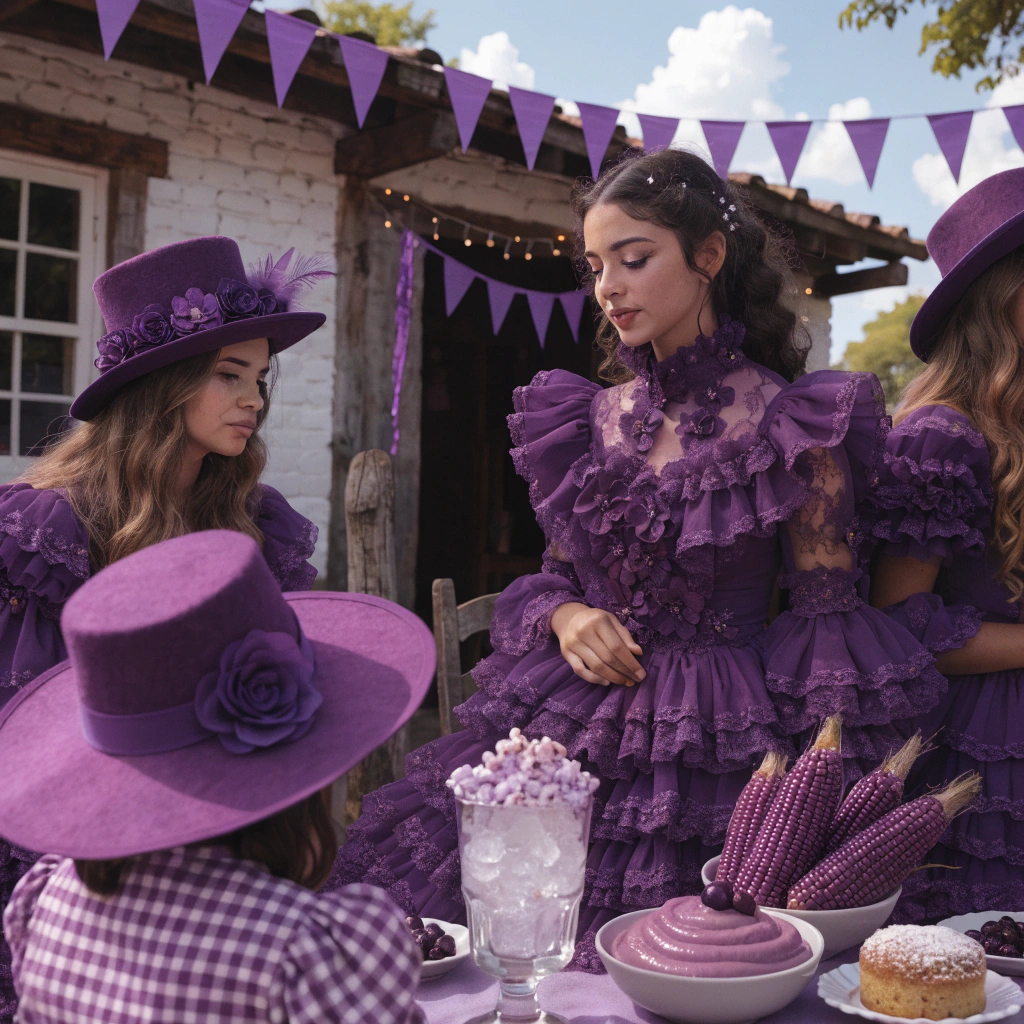
브라질의 즐거운 겨울 축제: 페스타 주니나
브라질에는 아주 재미있는 축제가 있습니다. 이름은 '페스타 주니나'입니다. 이 축제는 6월에 합니다. 6월은 브라질에서 겨울입니다. 사람들은 이때 농작물 수확을 축하합니다. 세 명의 성인도 기억합니다.
페스타 주니나는 아주 즐거운 시간입니다. 사람들은 특별한 옷을 입습니다. 남자들은 체크무늬 셔츠와 밀짚모자를 씁니다. 여자들도 예쁜 옷을 입고 머리를 땋습니다. 모두 함께 춤을 추고 노래를 부릅니다. 맛있는 음식도 많이 먹습니다. 이 축제는 브라질 사람들에게 아주 중요하고 행복한 축제입니다.
문법 스포트라이트
패턴: -ㅂ니다/습니다
"브라질에는 아주 재미있는 축제가 있습니다."
이것은 동사나 형용사 뒤에 붙어서 문장을 끝내는 아주 공손한 표현입니다. 공식적인 상황이나 처음 만나는 사람에게 사용합니다.
패턴: -고
"여자들도 예쁜 옷을 입고 머리를 땋습니다."
이것은 두 가지 행동이나 상태를 이어서 말할 때 사용합니다. '그리고'와 비슷한 의미입니다.
이해도를 테스트하세요
10 질문 · A1 초급 · 무료 미리보기 1회
이 기사에서 배운 내용을 테스트하세요. 모든 질문에 답하여 XP를 획득하세요!
페스타 주니나는 몇 월에 합니까?
문제별 결과
페스타 주니나는 몇 월에 합니까?
내 답변:
정답: 6월
페스타 주니나는 브라질의 여름 축제입니다.
내 답변:
정답: 거짓
'수확'은 무슨 뜻입니까?
내 답변:
정답: 농작물을 거두는 것
남자들은 체크무늬 셔츠와 _______를 씁니다.
내 답변:
정답: 밀짚모자
Festa Junina: A Famous Festival in Brazil
Festa Junina is a very famous festival in Brazil. It happens every June during the winter season. Many Brazilians think it is more important than Carnival because it celebrates their traditions and the harvest.
In the past, the festival started to honor three Catholic saints. Today, people celebrate in every city. They dress like farmers from the countryside. Men wear plaid shirts and straw hats, and women wear colorful dresses. They often paint fake freckles on their faces because it looks cute.
The music is loud and happy. People dance the 'quadrilha' together in large groups. This dance is older than many other modern dances. There is also a lot of delicious food made from corn. People eat corn cake, popcorn, and sweet corn pudding.
Festa Junina is special because it brings families together. It is a colorful time with many decorations and big fires. It is a wonderful way to learn about Brazilian culture.
문법 스포트라이트
패턴: Comparatives (Adjective + -er than / More + Adjective + than)
"This dance is older than many other modern dances."
We use comparatives to compare two things. For short words like 'old', we add '-er', and for longer words, we use 'more' before the adjective.
패턴: Past Simple
"In the past, the festival started to honor three Catholic saints."
We use the past simple to talk about things that happened at a specific time in the past. For regular verbs like 'start', we add '-ed' to the end.
이해도를 테스트하세요
11 질문 · A2 초등급 · 무료 미리보기 1회
이 기사에서 배운 내용을 테스트하세요. 모든 질문에 답하여 XP를 획득하세요!
When does Festa Junina happen in Brazil?
문제별 결과
When does Festa Junina happen in Brazil?
내 답변:
정답: Every June
Festa Junina celebrates the winter harvest.
내 답변:
정답: 참
What does 'delicious' mean?
내 답변:
정답: Tasting very good
Men wear plaid shirts and straw _____.
내 답변:
정답: hats
What is the main ingredient in many festival foods?
내 답변:
정답: Corn
브라질의 즐거운 겨울 축제: 페스타 주니나
브라질은 카니발 축제로 아주 유명하지만, 많은 브라질 사람들은 '페스타 주니나'(6월 축제)가 가장 소중한 전통이라고 말합니다. 이 축제는 6월 한 달 내내 전국에서 열립니다. 페스타 주니나는 겨울 수확을 축하하고, 세 명의 가톨릭 성인인 성 안토니오, 세례자 요한, 그리고 성 베드로를 기리기 위해 시작되었습니다. 이 축제는 브라질 사람들에게 농촌의 향수를 불러일으키는 '카이피라 문화'로도 잘 알려져 있습니다.
축제 참가자들은 보통 시골 복장을 합니다. 남자들은 체크무늬 셔츠와 짚모자를 쓰고, 얼굴에 주근깨를 그립니다. 여자들은 밝은 색의 드레스를 입고 머리에 땋은 머리나 리본을 장식합니다. 이 복장은 브라질 시골 사람들의 모습을 재미있게 표현한 것입니다. 축제장에서는 전통 음악인 포호(Forró)가 연주되고, 사람들은 함께 춤을 춥니다. 특히 '콰드리야(Quadrilha)'라는 춤은 유럽의 스퀘어 댄스에서 유래된 것으로, 많은 사람들이 즐겁게 참여합니다.
페스타 주니나에는 맛있는 음식도 많습니다. 옥수수와 관련된 음식이 특히 유명합니다. 예를 들어, 팝콘, 옥수수 케이크, 그리고 '파몬하(Pamonha)'라고 불리는 달콤한 옥수수 요리가 있습니다. 또한, 따뜻한 와인인 퀸타웅(Quentão)이나 생강 음료도 즐겨 마십니다. 밤에는 큰 모닥불을 피우고, 불꽃놀이를 하기도 합니다.
이 축제는 브라질의 역사와 문화를 이해하는 데 중요한 부분입니다. 페스타 주니나는 가족과 친구들이 함께 모여 즐거운 시간을 보내는 특별한 기회를 제공합니다. 도시 사람들도 잠시 시골의 정취를 느낄 수 있게 해주는 아름다운 축제입니다. 브라질을 방문할 기회가 있다면, 6월에 이 즐거운 축제에 꼭 참여해 보세요. 여러분은 브라질 사람들의 따뜻한 마음과 흥겨운 에너지를 느낄 수 있을 것입니다.
문법 스포트라이트
패턴: ~는 데 (에) 중요하다/도움이 되다
"이 축제는 브라질의 역사와 문화를 이해하는 데 중요한 부분입니다."
이 문법은 어떤 행동이나 목적을 이루는 데 있어서 '중요하다'거나 '도움이 된다'는 것을 표현할 때 사용합니다. 동사 뒤에 '~는 데'를 붙여 사용하며, '이해하는 데'처럼 명사형으로 바꿀 수 있습니다.
패턴: ~에/에서 유래되다
"특히 '콰드리야(Quadrilha)'라는 춤은 유럽의 스퀘어 댄스에서 유래된 것으로, 많은 사람들이 즐겁게 참여합니다."
이 문법은 어떤 것이 특정한 장소나 기원에서 시작되었음을 나타내는 수동형 표현입니다. '~에서'는 시작점을 나타내며, 동사 '유래되다'는 '어디에서 비롯되다'라는 의미를 가집니다.
이해도를 테스트하세요
11 질문 · B1 중급 · 무료 미리보기 1회
이 기사에서 배운 내용을 테스트하세요. 모든 질문에 답하여 XP를 획득하세요!
페스타 주니나 축제는 주로 언제 열립니까?
문제별 결과
페스타 주니나 축제는 주로 언제 열립니까?
내 답변:
정답: 6월
페스타 주니나는 브라질에서 가장 유명한 카니발 축제입니다.
내 답변:
정답: 거짓
'수확'은 무슨 뜻입니까?
내 답변:
정답: 농작물을 거두는 일
페스타 주니나는 겨울 _______을(를) 축하하고 성인들을 기리는 축제입니다.
내 답변:
정답: 수확
축제 참가자들이 즐겨 먹는 음식 중 옥수수와 관련 없는 것은 무엇입니까?
내 답변:
정답: 퀸타웅
Festa Junina: Brazil’s Beloved Winter Harvest Festival
While Carnival undoubtedly remains Brazil’s most famous international spectacle, many locals would argue that 'Festa Junina' is the nation’s most cherished tradition. This winter harvest festival, celebrated throughout the month of June, offers a profound insight into the country’s rural heritage and religious history. Unlike the urban glamour of Carnival, Festa Junina is a colorful explosion of rural nostalgia, often referred to as 'cultura caipira.' It is a time when Brazilians, regardless of their background, embrace a stylized version of country life to commemorate three significant Catholic saints: Saint Anthony, Saint John the Baptist, and Saint Peter.
The historical origins of the festival can be traced back to the Portuguese colonial period. Over the centuries, these European traditions merged with indigenous and African influences, resulting in a unique cultural phenomenon. One of the most prominent features of the celebration is the 'quadrilha,' a folk dance inspired by 18th-century French court dances. Participants perform elaborate choreographed movements while dressed in traditional rural attire. Men typically wear plaid shirts and straw hats, while women wear vibrant, multi-colored dresses adorned with ribbons and lace. This visual spectacle is not merely for entertainment; it serves to reinforce a sense of community and shared history.
Gastronomy plays a pivotal role in the festivities, with a heavy emphasis on the winter harvest. Since June marks the corn harvest in many parts of Brazil, corn-based delicacies are prepared in abundance. Traditional dishes such as 'pamonha' (a sweet corn cake) and 'canjica' (a corn-based pudding) are consumed with great enthusiasm. The aroma of these foods, combined with the warmth of traditional bonfires, creates an atmosphere of comfort and celebration. Despite the modern shift toward urbanization, these culinary practices ensure that the festival’s rural roots remain intact.
Furthermore, the festival serves as a vital bridge between the country’s colonial past and its modern identity. It provides an opportunity for Brazilians to celebrate their authenticity and resist the homogenizing effects of globalization. By participating in these age-old rituals, younger generations are taught to value their cultural heritage. In conclusion, Festa Junina is much more than a simple harvest festival; it is a profound expression of the Brazilian soul, blending religious devotion, historical memory, and a deep-seated love for the rural way of life.
문법 스포트라이트
패턴: Passive Voice
"Corn-based delicacies are prepared in abundance."
The passive voice is used here to focus on the food (the object) rather than who is preparing it. It is formed using the verb 'to be' followed by the past participle.
패턴: Non-defining Relative Clause
"This winter harvest festival, celebrated throughout the month of June, offers a profound insight..."
This clause provides extra information about the subject. It is separated by commas and can be removed without changing the core meaning of the sentence.
패턴: Discourse Markers for Addition
"Furthermore, the festival serves as a vital bridge between the country’s colonial past and its modern identity."
Discourse markers like 'Furthermore' are used in formal writing to introduce a new point that supports the previous argument.
이해도를 테스트하세요
11 질문 · B2 중상급 · 무료 미리보기 1회
이 기사에서 배운 내용을 테스트하세요. 모든 질문에 답하여 XP를 획득하세요!
What is the primary focus of the Festa Junina celebrations?
문제별 결과
What is the primary focus of the Festa Junina celebrations?
내 답변:
정답: The winter harvest and Catholic saints
The 'quadrilha' dance was originally inspired by 18th-century French court dances.
내 답변:
정답: 참
What does 'vibrant' mean in the context of the article?
내 답변:
정답: Bright, striking, and full of energy
Festa Junina is often referred to as 'cultura _____,' representing rural nostalgia.
내 답변:
정답: caipira
Which crop is most central to the culinary traditions of the festival?
내 답변:
정답: Corn
Rural Nostalgia and Sacred Rites: Deconstructing the Cultural Tapestry of Festa Junina
While the global gaze often remains transfixed by the neon spectacle of Carnival, many Brazilians would posit that the true soul of the nation resides within the rustic embrace of Festa Junina. Held throughout the month of June, these festivities represent a sophisticated amalgamation of European hagiography and indigenous harvest rituals. Nominally a celebration of three Catholic saints—Anthony, John the Baptist, and Peter—the festival serves as a poignant vessel for 'cultura caipira,' a stylized rural nostalgia that romanticizes Brazil's agrarian past. Rarely is the depth of this cultural phenomenon fully appreciated by the casual observer, who might see only the checkered shirts and straw hats without grasping the socio-historical undercurrents at play.
It is through the lens of this rural archetype that the festival reveals its true essence. Participants don costumes that are deliberate caricatures of country folk, complete with painted-on freckles and gap-toothed smiles. This performative 'caipira' identity is not merely a costume; it is a vestigial link to a pre-industrial era. The centerpiece of the event is often the 'quadrilha,' a folk dance derived from the 19th-century French 'quadrille.' The adaptation of this aristocratic European dance into a satirical portrayal of rural weddings demonstrates the unique cultural syncretism that defines Brazilian identity. The juxtaposition of sacred devotion and profane revelry creates a social space where hierarchies are temporarily suspended.
Seldom does one find a celebration so deeply entrenched in the agrarian calendar. The timing of Festa Junina coincides with the winter harvest, particularly that of maize. Consequently, the gastronomy of the festival is an olfactory journey through corn-based delicacies—from the sweet 'canjica' to the savory 'pamonha.' The consumption of these dishes is a communal act, reinforcing social bonds within the neighborhood or 'arraial.' However, the burgeoning commercialization of these festivities has sparked a nuanced debate regarding cultural authenticity. In major urban centers, the raw, pastoral charm of the traditional bonfire is frequently replaced by sponsored stages and polished performances.
Furthermore, the preservation of these customs serves as a bulwark against the homogenizing forces of globalization. While critics argue that the festival has become a commodified version of its former self, proponents suggest that its evolution is inevitable. The persistent popularity of Festa Junina, even among the cosmopolitan elite, underscores a collective yearning for a simpler, more communal existence. Ultimately, it is the enduring relevance of these traditions that allows Brazilians to navigate the complexities of modernity while remaining anchored in their historical narrative. Whether viewed as a religious obligation or a secular party, Festa Junina remains a quintessential expression of the Brazilian spirit.
문법 스포트라이트
패턴: Negative Inversion
"Rarely is the depth of this cultural phenomenon fully appreciated by the casual observer."
When a negative or restrictive adverbial (like 'Rarely' or 'Seldom') starts a sentence, the auxiliary verb and subject are inverted. This emphasizes the rarity or limitation of the action and is typical of formal C1-level writing.
패턴: Cleft Sentences
"It is through the lens of this rural archetype that the festival reveals its true essence."
Cleft sentences use 'It is/was... that' to focus on a specific part of the information. Here, it emphasizes 'the lens of this rural archetype' as the primary means of understanding the festival.
패턴: Nominalisation
"The adaptation of this aristocratic European dance into a satirical portrayal of rural weddings demonstrates the unique cultural syncretism."
Nominalization involves turning verbs (adapt, portray) into nouns (adaptation, portrayal). This allows for more complex ideas to be packed into the subject of a sentence, creating a more academic and advanced tone.
이해도를 테스트하세요
12 질문 · C1 고급 · 무료 미리보기 1회
이 기사에서 배운 내용을 테스트하세요. 모든 질문에 답하여 XP를 획득하세요!
What does the author suggest about the relationship between Carnival and Festa Junina?
문제별 결과
What does the author suggest about the relationship between Carnival and Festa Junina?
내 답변:
정답: Festa Junina is arguably more representative of the national soul.
The 'quadrilha' dance is an original indigenous ritual that existed before European arrival.
내 답변:
정답: 거짓
What does 'entrenched' mean in the context of the article?
내 답변:
정답: Deeply established and resistant to change
The author notes that the festival's gastronomy is an olfactory journey through _____-based delicacies.
내 답변:
정답: corn
What is the primary tension mentioned regarding the modern celebration of Festa Junina?
내 답변:
정답: Commercialization versus cultural authenticity
The 'caipira' identity used in the festival is described as a deliberate caricature of rural life.
내 답변:
정답: 참
브라질의 영혼을 담은 겨울 수확제, 페스타 주니나: 전통과 현대의 조화로운 공존
카니발이 브라질을 대표하는 세계적인 축제임은 두말할 나위 없으나, 많은 브라질인들은 ‘페스타 주니나(Festa Junina)’, 즉 6월 축제를 자국의 가장 소중한 전통으로 꼽는 데 주저함이 없습니다. 6월 한 달 내내 전국 각지에서 펼쳐지는 이 축제는 단순히 겨울 수확을 기념하는 것을 넘어, 세 명의 가톨릭 성인—성 안토니오, 세례자 요한, 성 베드로—을 기리는 종교적 의미까지 내포하고 있습니다. 이는 단순한 즐거움을 넘어선, 브라질 문화의 깊은 심층을 이해하는 데 필수적인 요소라 할 수 있습니다.
페스타 주니나는 ‘카이피라 문화(cultura caipira)’, 즉 시골 향수를 색채감 넘치게 재현하는 축제의 장으로, 그 본질에 있어 농경 사회의 소박한 정취를 현대적으로 재해석한 것입니다. 참가자들은 격자무늬 셔츠와 밀짚모자를 착용한 남성, 얼굴에 주근깨를 그리고 머리를 땋은 여성 등 양식화된 시골 의상을 입고 축제에 임합니다. 이러한 복장은 과거 농부들의 삶을 연극적으로 표현하며, 공동체의 유대감을 강화하는 데 지대한 영향을 미칩니다. 화려함보다는 친근함과 소박함이 강조되는 이 축제는, 카니발의 도회적이고 세속적인 분위기와는 확연히 대비되는 지점이라 할 수 있습니다.
축제의 백미는 단연 ‘콰드리야(quadrilha)’라는 민속춤입니다. 이는 유럽의 궁정 춤에서 유래했으나 브라질 농촌의 색채를 입고 새롭게 태어난 것으로, 커플들이 줄을 맞춰 춤을 추는 모습은 마치 한 편의 드라마를 연상케 합니다. 활활 타오르는 모닥불은 축제의 상징이자 공동체의 따뜻한 유대를 상징하며, 밤하늘을 수놓는 불꽃놀이는 축제의 절정을 알리는 신호탄 역할을 합니다. 또한, 옥수수를 주재료로 한 뽀뽀카(pipoca, 팝콘), 파몽냐(pamonha), 콘수프(curau), 그리고 땅콩을 이용한 파소카(paçoca)와 페 데 몰레케(pé de moleque) 등 다채로운 전통 음식들은 참가자들의 오감을 만족시키며 축제의 풍성함을 더합니다.
종교적 측면에서 페스타 주니나는 앞서 언급된 세 성인을 공경하는 의례를 통해 그 의미를 심화합니다. 성 안토니오는 결혼과 인연을, 세례자 요한은 정화와 새로운 시작을, 성 베드로는 어부와 교회의 수호성인을 상징하며, 이들에 대한 경배는 축제의 영적 토대를 이룹니다. 특히, 성 요한의 날(6월 24일)에는 모닥불을 피우는 전통이 강하게 남아있는데, 이는 이교적인 요소와 가톨릭 신앙이 융합된 브라질 특유의 종교적 혼합주의, 즉 싱크리티즘(syncretism)을 명확히 보여주는 사례라 하겠습니다.
페스타 주니나는 단순한 오락거리를 넘어 브라질 사회의 중요한 문화적 기둥 역할을 수행합니다. 이는 도시화가 가속화되는 현대 사회에서도 시골의 정체성과 공동체 의식을 보존하고 강화하는 데 지대한 공헌을 하고 있습니다. 카니발이 브라질의 역동성과 다양성을 상징한다면, 페스타 주니나는 그 내면에 면면히 흐르는 전통과 소박한 삶의 가치를 대변한다고 볼 수 있습니다. 이처럼 페스타 주니나는 과거와 현재를 잇고, 지역적 특색을 보존하며, 브라질 국민들의 삶에 깊숙이 뿌리내린 살아있는 문화유산으로서 그 가치를 면면히 이어가고 있습니다.
결론적으로, 페스타 주니나는 브라질의 농경 문화, 종교적 신념, 그리고 공동체적 유대가 복합적으로 어우러진 총체적 예술 작품이라 할 수 있습니다. 이는 단순히 과거를 회상하는 것을 넘어, 현재를 살아가는 브라질인들에게 자국의 문화적 뿌리에 대한 자긍심을 고취하고 미래 세대에게 전통의 중요성을 일깨우는 역할을 하고 있습니다. 그 화려함과 소박함이 공존하는 독특한 매력은 브라질을 방문하는 이들에게 잊을 수 없는 문화적 경험을 선사할 것임에 틀림없습니다.
문법 스포트라이트
패턴: ~에 다름 아니다
"이는 단순한 즐거움을 넘어선, 브라질 문화의 깊은 심층을 이해하는 데 필수적인 요소라 할 수 있습니다."
이 표현은 ‘~와 마찬가지이다’ 또는 ‘~에 불과하다’와 유사하게 사용되어, 어떤 것이 다른 어떤 것과 본질적으로 같거나 다를 바 없음을 강조할 때 씁니다. 주로 명사 뒤에 붙어 앞선 내용이 곧 뒤의 내용임을 단정적으로 말할 때 사용됩니다.
패턴: ~을/를 막론하고
"6월 한 달 내내 전국 각지에서 펼쳐지는 이 축제는 단순히 겨울 수확을 기념하는 것을 넘어, 세 명의 가톨릭 성인—성 안토니오, 세례자 요한, 성 베드로—을 기리는 종교적 의미까지 내포하고 있습니다."
이 문형은 앞선 내용에 상관없이 뒤의 내용이 적용됨을 나타낼 때 사용합니다. '무엇이든 가리지 않고' 또는 '모두 포함하여'와 같은 의미로, 포괄적인 상황을 설명할 때 유용하게 쓰입니다. 명사 뒤에 붙어 그 명사가 어떤 것이든 예외 없이 해당됨을 강조합니다.
패턴: ~는 데 일조하다
"이러한 복장은 과거 농부들의 삶을 연극적으로 표현하며, 공동체의 유대감을 강화하는 데 지대한 영향을 미칩니다."
이 문형은 어떤 행위나 요소가 특정한 결과나 상황을 만드는 데 긍정적이든 부정적이든 어떤 방식으로든 기여함을 나타냅니다. 주로 동사나 형용사 뒤에 연결되어 ‘~하는 것에 도움을 주다’ 또는 ‘~하는 데 한몫하다’와 같은 의미로 사용됩니다.
이해도를 테스트하세요
12 질문 · C2 마스터 · 무료 미리보기 1회
이 기사에서 배운 내용을 테스트하세요. 모든 질문에 답하여 XP를 획득하세요!
페스타 주니나의 가장 중요한 종교적 의미는 무엇입니까?
문제별 결과
페스타 주니나의 가장 중요한 종교적 의미는 무엇입니까?
내 답변:
정답: 세 명의 가톨릭 성인을 기리는 것
페스타 주니나는 카니발과 달리 도시적이고 세속적인 분위기를 강조하는 축제이다.
내 답변:
정답: 거짓
다음 중 '지대하다'의 의미로 가장 적절한 것은 무엇입니까?
내 답변:
정답: 영향이나 중요성이 매우 크고 깊다
페스타 주니나는 '카이피라 문화'를 통해 시골의 _____를 색채감 넘치게 재현합니다.
내 답변:
정답: 향수
페스타 주니나의 대표적인 민속춤은 무엇입니까?
내 답변:
정답: 콰드리야
페스타 주니나에서는 옥수수를 주재료로 한 음식을 맛볼 수 있다.
내 답변:
정답: 참

