









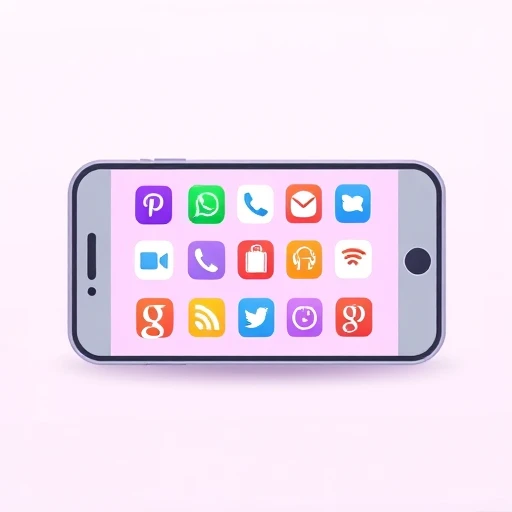
apps 30 सेकंड में
- Apps are specialized software programs for specific tasks, primarily used on mobile devices.
- The term is a shortened version of 'applications' and became popular with the rise of smartphones.
- Apps can be free or paid and are usually downloaded from digital stores like the App Store.
- They cover a wide range of uses, from entertainment and social media to productivity and banking.
The word apps is the plural form of 'app,' which is a shortened version of the word 'application.' In the modern digital landscape, apps refer to specialized software programs designed to perform specific functions for the user. While the term 'application software' has existed since the early days of computing, the clipped form 'app' exploded into the global lexicon following the launch of the Apple App Store in 2008. Today, it is the primary way we describe the tools we use on our smartphones, tablets, and even smartwatches. Apps are distinct from operating systems; they are the layers of functionality that allow us to check the weather, bank online, play games, or edit photos. When people use this word, they are usually referring to mobile-first experiences, though 'desktop apps' is a common term for computer software like Slack or Spotify. The transition from 'program' to 'app' signifies a shift in user experience—from complex, multi-functional software to streamlined, task-oriented tools that are easy to install and update.
- Mobile Apps
- Software specifically designed to run on mobile devices like iPhones or Android phones, often optimized for touch interfaces and limited screen real estate.
I have too many apps on my home screen; I need to organize them into folders.
The usage of 'apps' extends beyond just the software itself; it represents an entire ecosystem of development, marketing, and consumption. We talk about 'app developers,' 'app stores,' and 'in-app purchases.' The word is used in almost every professional and social context. In a business meeting, someone might suggest, 'We need to develop internal apps to track our inventory.' In a casual setting, a friend might ask, 'What are the best apps for learning Spanish?' The term is inherently modern and carries a connotation of convenience and accessibility. Unlike traditional software that required physical discs and complex installation wizards, apps are 'one-tap' solutions. This ease of use has led to the 'appification' of the web, where services that used to be accessed through a browser are now accessed through dedicated icons on a device. This shift has changed how we perceive technology—it is no longer a distant tool but a collection of immediate, personalized services living in our pockets.
- Web Apps
- Applications that run inside a web browser but look and feel like mobile apps, such as Google Docs or Trello.
The company is moving away from desktop software toward cloud-based apps.
Linguistically, 'apps' is a count noun, meaning it can be singular or plural. Interestingly, the word has become so dominant that it is often used as a prefix in compound words like 'app-centric' or 'app-based.' The ubiquity of the term is also reflected in the famous marketing slogan 'There’s an app for that,' which became a cultural touchstone. This phrase highlights the versatility of apps—they cover everything from health tracking and financial management to entertainment and social networking. When using the word, consider the platform. If you are talking about a computer, 'programs' or 'software' is still acceptable, but 'apps' is increasingly common (e.g., 'Mac apps'). If you are talking about a phone, 'apps' is the only natural choice. Using the full word 'applications' in a casual conversation about your phone might sound overly formal or slightly dated, much like saying 'television receiver' instead of 'TV.'
- Native Apps
- Apps built specifically for a particular operating system (like iOS or Android) to ensure high performance and access to device features like the camera.
Educational apps have revolutionized the way children learn mathematics.
In summary, 'apps' is the definitive term for the software tools of the 21st century. It bridges the gap between complex engineering and everyday utility. Whether you are downloading a new game, updating your banking app, or deleting old apps to save space, you are participating in a digital culture defined by these small, powerful pieces of code. The word continues to evolve as technology does, now encompassing 'AR apps' (augmented reality) and 'AI apps' (artificial intelligence), ensuring its place in our vocabulary for the foreseeable future.
Using the word apps correctly involves understanding its grammatical role as a plural count noun and its common collocations. Because apps are digital products, the verbs we use with them are specific to the lifecycle of software. You 'download' an app from a store, 'install' it on your device, 'launch' or 'open' it to use it, 'update' it to get new features, and 'delete' or 'uninstall' it when you no longer need it. In more technical or business contexts, you might 'develop,' 'deploy,' 'monetize,' or 'optimize' apps. The word functions smoothly in various sentence structures, from simple subject-verb-object patterns to more complex clauses. For example, 'Apps change how we live' (Subject-Verb-Object) or 'The apps that I use most frequently are related to productivity' (Relative Clause).
- Common Verbs
- Download, install, update, delete, launch, browse, develop, sync.
You should always update your apps to ensure you have the latest security patches.
Adjectives also play a crucial role in describing apps. We often categorize them by their cost ('free apps,' 'paid apps,' 'freemium apps') or by their quality ('user-friendly apps,' 'buggy apps,' 'intuitive apps'). We also categorize them by their purpose ('social media apps,' 'fitness apps,' 'navigation apps'). When constructing sentences, it is important to match the adjective to the specific context of the app's utility. For instance, 'I prefer native apps because they are usually faster than web-based ones.' Here, 'native' provides technical detail that clarifies the speaker's preference. In a professional setting, you might say, 'Our enterprise apps require multi-factor authentication for security.' This uses 'enterprise' to denote that the apps are for business use rather than general consumers.
- Prepositional Phrases
- Apps *on* my phone, apps *for* business, apps *with* high ratings, apps *by* Google.
Many apps for photo editing now include advanced artificial intelligence features.
Another important aspect of using 'apps' in sentences is the concept of 'in-app' actions. This is often used as a compound adjective. For example, 'in-app purchases' refers to buying things within the software, and 'in-app advertising' refers to ads shown inside the app. You can also use 'apps' as part of a compound noun, such as 'app store' or 'app developer.' When talking about the collection of apps on a device, we often use the word 'library' or 'collection,' as in 'My app library is getting a bit cluttered.' In modern English, 'apps' is so common that it can even be used metaphorically, though this is rare. For example, 'He has an app for every problem,' meaning he has a ready-made solution for everything. However, stick to the literal digital meaning for most communications.
- Contextual Usage
- Formal: 'The software suite includes several mobile apps.' Informal: 'Check out these cool apps I found!'
The developer released three new apps this quarter, targeting the health and wellness market.
Finally, consider the register of your sentence. In academic writing, you might prefer 'mobile applications' to sound more formal, but in almost any other context—including business reports and journalism—'apps' is perfectly acceptable and often preferred for its brevity. When writing about apps, it's also helpful to mention the platform to provide clarity, such as 'iOS apps' or 'Android apps.' This specificity helps the reader understand the technical environment you are discussing. By mastering these collocations and structures, you can discuss technology with the fluency of a native speaker.
The word apps is ubiquitous in the 21st century, appearing in a vast array of environments ranging from casual social gatherings to high-stakes corporate boardrooms. One of the most common places you will hear it is in daily social interactions. Friends often swap recommendations for 'new apps' they've discovered, whether it's a game that has gone viral or a productivity tool that helps them manage their schedule. In these settings, the word is used with a sense of excitement and utility. You might hear someone say, 'I've started using these meditation apps, and they really help me sleep.' This casual usage highlights how apps have become integrated into our personal well-being and lifestyle routines.
- In Public Spaces
- You will hear 'apps' mentioned in transit announcements ('Download our app for real-time bus tracking') and in restaurants ('You can order through our apps for a discount').
'Excuse me, do I need to download any apps to use the parking meter here?'
In the professional world, 'apps' is a staple of the tech industry but has also permeated traditional sectors like finance, healthcare, and education. In a business context, the word often appears in discussions about 'digital transformation.' Managers might talk about 'migrating our services to mobile apps' or 'improving the user interface of our internal apps.' Here, the word carries a weight of innovation and efficiency. In the news and media, 'apps' is frequently the subject of headlines, especially regarding privacy concerns, market dominance, or the 'gig economy' (think of 'ride-sharing apps' or 'delivery apps'). Journalists use the word to describe the tools that are reshaping society, often discussing the 'app economy' as a major driver of global GDP.
- In Advertising
- Television and online ads constantly urge viewers to 'Get the apps' or 'Available on all major app stores,' making it one of the most heard marketing terms.
'Our new banking apps allow you to deposit checks just by taking a photo.'
Education is another sphere where 'apps' is a frequent topic. Teachers discuss 'educational apps' that can supplement classroom learning, and students use 'study apps' for flashcards and research. In this environment, the word is associated with modern pedagogy and interactive learning. Furthermore, in the world of customer support, you will often hear the word when troubleshooting. A technician might ask, 'Have you tried force-closing your apps?' or 'Is the problem happening in all your apps or just one?' This technical usage is essential for navigating the modern world of device maintenance. Even in politics, 'apps' are discussed in the context of voting, census-taking, and government transparency.
- In Tech Support
- 'Please ensure all background apps are closed before starting the system diagnostic.'
'I'm trying to cut down on my screen time, so I deleted all my social media apps.'
Ultimately, you hear 'apps' wherever there is a screen. It is the language of the digital interface. Whether you are at a tech conference hearing about 'decentralized apps' (dApps) or at a family dinner hearing a grandparent ask how to use 'the WhatsApps' (a common slight misusage), the word is a bridge between our physical reality and our digital lives. Its frequency in the English language reflects how deeply software has integrated into every facet of human experience, from the way we eat and travel to the way we love and work.
While apps is a simple word, there are several common mistakes that learners and even native speakers make regarding its usage, grammar, and context. One of the most frequent errors is the confusion between 'apps' and 'software' or 'programs.' While all apps are software, not all software is an app. 'Software' is an uncountable noun that refers to the general concept of computer instructions, whereas 'apps' are specific, countable instances of software. You cannot say 'I have many softwares,' but you can say 'I have many apps.' Similarly, 'programs' usually refers to more complex, desktop-based software like Adobe Photoshop or Microsoft Excel, although the line is blurring. Calling a massive enterprise operating system an 'app' might make you sound less technically savvy.
- Countability Error
- Incorrect: 'I need to download an apps.' Correct: 'I need to download an app' or 'I need to download some apps.'
Many people mistakenly use 'software' as a plural, but you should use apps if you want to count them.
Another common mistake involves the pronunciation and pluralization of the word. Some learners forget the 's' when talking about multiple items, leading to sentences like 'I have many app on my phone.' Conversely, some people add an unnecessary 's' to the name of a specific app, such as calling the messaging service 'the WhatsApps' or 'the Facebooks.' This is often seen as a sign of being 'out of touch' with technology. Additionally, there is the 'app vs. website' confusion. While many websites have corresponding apps, they are not the same thing. An app is installed on the device, while a website is accessed through a browser. Saying 'I'm on the Amazon app' when you are actually using Chrome to view Amazon.com is technically incorrect.
- Preposition Mistakes
- Incorrect: 'The apps in my phone.' Correct: 'The apps *on* my phone.' We generally use 'on' for digital platforms and screens.
It is a common error to say 'I'm using the apps' when you only mean one specific application.
Usage in formal writing can also be a pitfall. While 'apps' is widely accepted, in very formal academic papers or legal documents, the full term 'applications' or 'mobile applications' is often preferred. Using 'apps' in a PhD thesis might be seen as too colloquial unless the thesis is specifically about the 'App Economy.' Furthermore, learners sometimes struggle with the verb 'to app.' While 'app' is occasionally used as a verb in slang (e.g., 'App me that photo'), it is not standard English and should be avoided in most contexts. Instead, use specific verbs like 'send,' 'message,' or 'share.' Finally, be careful with the word 'applet.' An applet is a very small, specific type of app (often web-based), and the terms are not always interchangeable in technical discussions.
- Spelling and Capitalization
- 'Apps' does not need to be capitalized unless it's at the start of a sentence or part of a proper noun like 'App Store.'
Avoid the mistake of calling every icon on your computer apps; some might just be file shortcuts.
In summary, the key to avoiding mistakes with 'apps' is to treat it as a standard plural count noun, use the preposition 'on,' and reserve it for specific software tools rather than general software concepts. By paying attention to these nuances, you will sound more natural and technically accurate when discussing the digital world. Always remember: one app, two apps, and they live *on* your device, not *in* it.
While apps is the most common term today, several synonyms and related words offer different nuances depending on the context. Understanding these alternatives will help you choose the most precise word for your needs. The most direct synonym is 'applications.' This is the formal version of the word and is used in technical documentation, legal contracts, and academic writing. For example, 'The user shall not reverse-engineer the mobile applications.' It sounds more professional and comprehensive than 'apps.' Another close relative is 'programs.' Historically, 'programs' was the standard term for computer software. Today, it is still used for desktop software, especially complex ones like 'coding programs' or 'editing programs.' Using 'programs' instead of 'apps' can sometimes imply a more robust or professional-grade tool.
- Apps vs. Software
- 'Apps' are individual, countable tools. 'Software' is the general, uncountable category they belong to. You use 'software' for the industry or the concept, and 'apps' for the specific items.
While I use many apps for fun, I rely on professional software for my work as an architect.
'Tools' and 'utilities' are other alternatives. A 'tool' suggests something functional and helpful, often used in a work context (e.g., 'productivity tools'). A 'utility' usually refers to a small app that performs a maintenance task, like a 'disk utility' or a 'battery utility.' In the world of web development, you might hear the term 'widgets.' A widget is a small, limited-functionality app that often lives on a home screen or a sidebar, like a weather widget. There is also 'software as a service' (SaaS), which is a business term for apps that you subscribe to rather than buy once. When discussing the technical architecture, you might hear 'client' (as in 'a mail client'), which is a specific type of app that connects to a server.
- Specialized Terms
- dApps (decentralized apps), Web Apps, Hybrid Apps, Native Apps, Legacy Apps (old software).
The developer is known for creating high-quality utilities that complement existing apps.
In the context of mobile devices, 'apps' is almost irreplaceable. However, you might use 'mobile services' or 'digital platforms' when speaking broadly about a company's offerings. For example, 'Uber offers various mobile services through its apps.' In gaming, 'apps' is often replaced by 'mobile games' or simply 'titles.' When talking about the visual part of the app, you might use 'interface' or 'UI.' For example, 'The app's interface is very clean.' If you are talking about the code behind the app, you might use 'scripts' or 'modules.' Understanding these distinctions allows you to vary your vocabulary and speak more precisely about technology. For instance, saying 'I need a utility to clean my phone' sounds more specific than 'I need an app to clean my phone.'
- Apps vs. Platforms
- An 'app' is the tool you use. A 'platform' is the larger system that hosts the app, like iOS, Android, or even Facebook (which hosts many mini-apps).
We are looking for a developer who can build both web apps and native mobile programs.
In conclusion, while 'apps' is the 'king' of modern tech vocabulary, it is surrounded by a rich family of words like 'software,' 'programs,' 'utilities,' and 'applications.' Choosing the right one depends on whether you want to sound casual, formal, technical, or functional. By mastering these alternatives, you can navigate conversations about technology with greater confidence and precision, ensuring that your message is perfectly tailored to your audience.
How Formal Is It?
रोचक तथ्य
The word 'App' was the American Dialect Society's 'Word of the Year' in 2010.
उच्चारण मार्गदर्शिका
- Pronouncing it like 'apes' (long 'a').
- Adding an extra vowel sound at the end (e.g., 'app-su').
- Forgetting the 's' in plural contexts.
- Mixing it up with 'apps' as in appetizers (though pronounced the same).
- Over-emphasizing the 'p' sound.
कठिनाई स्तर
Very easy to recognize in text due to its brevity and commonality.
Simple to spell, but remember the double 'p'.
One syllable, very easy to pronounce.
Can be confused with 'app' (singular) in fast speech.
आगे क्या सीखें
पूर्वापेक्षाएँ
आगे सीखें
उन्नत
ज़रूरी व्याकरण
Pluralization of clipped words
App -> Apps, Photo -> Photos, Gym -> Gyms.
Prepositions for digital platforms
Use 'on' for apps, websites, and screens.
Compound nouns
App store, app developer (no hyphen usually).
Countable vs. Uncountable
Apps (countable) vs. Software (uncountable).
Articles with specific vs. general
I like apps (general). The app I used (specific).
स्तर के अनुसार उदाहरण
I have five apps on my phone.
J'ai cinq applications sur mon téléphone.
Plural noun 'apps' follows the number 'five'.
This app is free.
Cette application est gratuite.
Singular 'app' with the demonstrative 'this'.
Do you like games apps?
Aimes-tu les applications de jeux ?
Using 'games' as a descriptor for 'apps'.
Open the camera app.
Ouvre l'application appareil photo.
Imperative verb 'Open' with the object 'app'.
I need a weather app.
J'ai besoin d'une application météo.
Indefinite article 'a' before 'weather app'.
Delete the old apps.
Supprime les anciennes applications.
Definite article 'the' with plural 'apps'.
The app is very fast.
L'application est très rapide.
Subject-verb-adjective structure.
Where is the music app?
Où est l'application de musique ?
Question form using 'Where is'.
I use apps to learn English every day.
J'utilise des applications pour apprendre l'anglais tous les jours.
Infinitive 'to learn' expresses purpose.
She downloaded three new apps yesterday.
Elle a téléchargé trois nouvelles applications hier.
Past simple verb 'downloaded'.
Are these apps safe to use?
Ces applications sont-elles sûres à utiliser ?
Plural demonstrative 'these' with 'apps'.
My phone has no space for more apps.
Mon téléphone n'a plus de place pour d'autres applications.
Preposition 'for' followed by the noun 'apps'.
You can find many useful apps in the store.
Vous pouvez trouver de nombreuses applications utiles dans le magasin.
Adjective 'useful' modifying 'apps'.
He likes to play apps with his friends.
Il aime jouer à des applications avec ses amis.
Prepositional phrase 'with his friends'.
This app helps me save money.
Cette application m'aide à économiser de l'argent.
Third-person singular verb 'helps'.
I don't use social media apps.
Je n'utilise pas d'applications de réseaux sociaux.
Negative form 'don't use'.
Many apps require an internet connection to function properly.
De nombreuses applications nécessitent une connexion Internet pour fonctionner correctement.
Verb 'require' shows necessity.
I prefer using banking apps instead of going to the bank.
Je préfère utiliser des applications bancaires plutôt que d'aller à la banque.
Gerund 'using' after the verb 'prefer'.
The developer updated the apps to fix some bugs.
Le développeur a mis à jour les applications pour corriger certains bogues.
Infinitive of purpose 'to fix'.
There are several apps designed specifically for students.
Il existe plusieurs applications conçues spécifiquement pour les étudiants.
Passive participle 'designed' modifying 'apps'.
You should check the reviews before downloading any apps.
Vous devriez vérifier les avis avant de télécharger des applications.
Modal verb 'should' for advice.
Apps have made it much easier to stay organized.
Les applications ont rendu beaucoup plus facile le fait de rester organisé.
Present perfect 'have made'.
I'm looking for some apps that can help me edit videos.
Je cherche des applications qui peuvent m'aider à monter des vidéos.
Relative clause 'that can help me...'
Most of my apps are related to my work.
La plupart de mes applications sont liées à mon travail.
Phrase 'related to' showing connection.
The appification of services has transformed the retail industry.
L'appification des services a transformé le secteur du commerce de détail.
Noun 'appification' derived from 'app'.
Users are often concerned about how apps handle their personal data.
Les utilisateurs sont souvent préoccupés par la manière dont les applications gèrent leurs données personnelles.
Indirect question 'how apps handle...'
Native apps generally offer a smoother user experience than web apps.
Les applications natives offrent généralement une expérience utilisateur plus fluide que les applications Web.
Comparative 'smoother... than'.
The company is investing heavily in developing proprietary apps.
L'entreprise investit massivement dans le développement d'applications propriétaires.
Present continuous 'is investing'.
Many free apps rely on in-app advertising for revenue.
De nombreuses applications gratuites dépendent de la publicité intégrée pour leurs revenus.
Phrasal verb 'rely on'.
It's important to manage the permissions you grant to your apps.
Il est important de gérer les autorisations que vous accordez à vos applications.
Relative clause with omitted 'that'.
The market for mobile apps is becoming increasingly competitive.
Le marché des applications mobiles devient de plus en plus compétitif.
Adverb 'increasingly' modifying 'competitive'.
He successfully monetized his apps through a subscription model.
Il a réussi à monétiser ses applications grâce à un modèle d'abonnement.
Adverb 'successfully' modifying 'monetized'.
The interoperability between these apps allows for seamless data transfer.
L'interopérabilité entre ces applications permet un transfert de données fluide.
Abstract noun 'interoperability'.
Developers must ensure their apps comply with the latest privacy regulations.
Les développeurs doivent s'assurer que leurs applications sont conformes aux dernières réglementations sur la confidentialité.
Verb 'comply with' followed by a noun phrase.
The sheer volume of apps available can lead to decision fatigue for users.
Le volume impressionnant d'applications disponibles peut entraîner une fatigue décisionnelle chez les utilisateurs.
Noun phrase 'sheer volume of'.
Cloud-based apps have revolutionized collaborative work environments.
Les applications basées sur le cloud ont révolutionné les environnements de travail collaboratifs.
Compound adjective 'Cloud-based'.
The app's architecture was redesigned to improve scalability.
L'architecture de l'application a été repensée pour améliorer l'évolutivité.
Passive voice 'was redesigned'.
Legacy apps often pose significant security risks to corporate networks.
Les applications héritées posent souvent des risques de sécurité importants pour les réseaux d'entreprise.
Adjective 'legacy' used in a technical sense.
The transition to decentralized apps (dApps) is a key trend in Web3.
La transition vers les applications décentralisées (dApps) est une tendance clé du Web3.
Appositive '(dApps)' explaining the term.
He critiqued the app's UX, noting several violations of usability heuristics.
Il a critiqué l'UX de l'application, notant plusieurs violations des heuristiques d'utilisabilité.
Participle phrase 'noting several violations...'
The proliferation of apps has fundamentally altered our cognitive habits.
La prolifération des applications a fondamentalement modifié nos habitudes cognitives.
Adverb 'fundamentally' modifying 'altered'.
We must scrutinize the ethical implications of algorithmic bias in social apps.
Nous devons examiner les implications éthiques du biais algorithmique dans les applications sociales.
Modal 'must' with a sophisticated verb 'scrutinize'.
The app economy acts as a catalyst for innovation in emerging markets.
L'économie des applications agit comme un catalyseur pour l'innovation dans les marchés émergents.
Metaphorical use of 'catalyst'.
Seamless integration across multiple apps is now a baseline user expectation.
L'intégration fluide entre plusieurs applications est désormais une attente de base des utilisateurs.
Compound noun 'baseline user expectation'.
The developer's penchant for minimalist design is evident in all her apps.
Le penchant de la développeuse pour le design minimaliste est évident dans toutes ses applications.
Sophisticated noun 'penchant'.
Apps that leverage augmented reality are pushing the boundaries of retail.
Les applications qui exploitent la réalité augmentée repoussent les limites de la vente au détail.
Relative clause 'that leverage...'
The obsolescence of 32-bit apps necessitated a major system update.
L'obsolescence des applications 32 bits a nécessité une mise à jour majeure du système.
Abstract noun 'obsolescence' as the subject.
The ubiquity of apps has rendered certain traditional hardware redundant.
L'ubiquité des applications a rendu certains matériels traditionnels redondants.
Present perfect with 'rendered... redundant'.
समानार्थी शब्द
विलोम शब्द
सामान्य शब्द संयोजन
सामान्य वाक्यांश
— A famous slogan meaning a solution exists for almost any problem.
Want to track your water intake? There's an app for that!
— An app so popular or useful that it makes the hardware it runs on successful.
The spreadsheet was the killer app for early personal computers.
— An app built for a specific operating system.
Native apps usually perform better than web-based ones.
— An app that runs in a browser rather than being installed.
Google Docs is a popular web app.
— Focusing primarily on mobile applications.
The company has an app-centric business strategy.
— The economic activity created by mobile applications.
The app economy has created millions of jobs worldwide.
— An app made by a company other than the device manufacturer.
Be careful when installing third-party apps.
— The feeling of being overwhelmed by too many apps.
Many users are experiencing app fatigue and deleting unused software.
अक्सर इससे भ्रम होता है
In a restaurant, 'apps' is common slang for starters/appetizers.
A common pronunciation error; 'apps' has a short 'a' sound.
An abbreviation for 'access points' in networking, but much less common.
मुहावरे और अभिव्यक्तियाँ
— Used to suggest that technology has a solution for everything.
You want to identify that bird? There's an app for that!
informal— A feature or program that is so necessary it proves the core value of a larger technology.
High-quality video calling was the killer app for 4G networks.
technical/business— Being overly enthusiastic about downloading or using many apps.
He's gone app-happy and filled his phone with useless tools.
informal— A slang term describing something that is excellent in the context of apps.
That new photo editor is app-tastic!
slang— A humorous term for a major failure or change in the app market.
The new privacy rules caused a minor app-ocalypse for advertisers.
informal/journalistic— Being tired of using apps or having too many of them.
I'm totally app-ed out; I need to look at a real book.
informal— A pun on 'appetizing,' used to describe a well-designed app.
The new food delivery interface is very app-etizing.
slang/pun— A pun on 'aptly named,' used when an app's name perfectly fits its function.
The 'Sleep' app is app-ly named, as it really helps me rest.
informal/pun— A pun on 'absolutely,' used to show strong agreement about an app.
Is this the best game? App-solutely!
slang/pun— A pun on 'apathy,' referring to a lack of interest in new apps.
I've developed a bit of app-athy lately; nothing in the store looks interesting.
informal/punआसानी से भ्रमित होने वाले
Both refer to computer programs.
Software is uncountable and general; apps are countable and specific.
I bought some new software that includes three different apps.
Both refer to executable code.
Program is more traditional and often refers to desktop software; app is modern and mobile-focused.
I use a complex program for video editing, but a simple app for social media.
Many services have both.
A website is accessed via a browser; an app is installed on the device.
I prefer the Amazon app over the Amazon website.
Sounds similar.
An applet is a very small, specific component or a web-based mini-program.
This Java applet runs inside your browser.
Both are small digital tools.
A widget is usually a small display on a home screen; an app is a full program.
I have a weather widget that links to my weather app.
वाक्य संरचनाएँ
I have [number] apps.
I have ten apps.
I use apps to [verb].
I use apps to learn English.
The [type] apps are [adjective].
The banking apps are very secure.
Apps have made it [adjective] to [verb].
Apps have made it easier to track my health.
The [noun] of apps has [verb] the [industry].
The proliferation of apps has disrupted the taxi industry.
Despite the [noun] of apps, [contrast].
Despite the ubiquity of apps, many people still prefer physical books.
I need to [verb] my apps.
I need to update my apps.
Which apps do you [verb] for [purpose]?
Which apps do you recommend for photo editing?
शब्द परिवार
संज्ञा
क्रिया
विशेषण
संबंधित
इसे कैसे इस्तेमाल करें
Extremely high in modern English.
-
I have much apps.
→
I have many apps.
Apps is a countable noun, so use 'many' instead of 'much'.
-
I'm using the WhatsApps.
→
I'm using WhatsApp.
Don't pluralize the proper name of a specific app.
-
The apps in my phone.
→
The apps on my phone.
We use the preposition 'on' for digital devices and screens.
-
I need to download an apps.
→
I need to download an app.
Use the singular 'app' with the indefinite article 'an'.
-
This software are great.
→
These apps are great.
Software is uncountable and takes a singular verb. If you want to use 'are,' use 'apps'.
सुझाव
Be Specific
Instead of just saying 'apps,' specify the type, like 'fitness apps' or 'travel apps,' to be clearer.
Check Countability
Remember that 'apps' is countable. Use 'many apps' or 'a few apps,' never 'much apps.'
Update Regularly
Always keep your apps updated to protect your device from security threats.
Formal vs. Informal
Use 'applications' in academic papers and 'apps' in emails, blogs, and conversation.
Pronunciation
Ensure the 'a' is short, like in 'apple.' Don't say 'apes.'
Manage Space
Delete apps you haven't used in three months to save battery and storage space.
Check Permissions
Be careful about what data you allow your apps to access, such as your location or contacts.
Read Reviews
Before downloading, check the ratings and reviews in the app store to avoid 'buggy' software.
App Economy
Understand that 'apps' is a major industry. Learning to build them is a valuable career skill.
Global Term
You can use the word 'apps' almost anywhere in the world and people will understand you.
याद करें
स्मृति सहायक
Think of 'A' for 'Action' and 'PP' for 'Pocket Program.' Apps are Actions in your Pocket Program.
दृश्य संबंध
Visualize the grid of colorful square icons on a smartphone screen.
Word Web
चैलेंज
Try to list 10 apps you use every day and describe their function in one sentence each.
शब्द की उत्पत्ति
Shortened from 'application' (mid-20th century). The clipped form 'app' gained mainstream popularity around 2008.
मूल अर्थ: A software program designed for a specific user task.
Latin (via 'applicatio').सांस्कृतिक संदर्भ
Be aware of 'digital divide' issues; not everyone has access to the latest apps or high-speed internet.
In the US and UK, 'apps' is the standard term. 'Applications' is only for formal tech talk.
असल ज़िंदगी में अभ्यास करें
वास्तविक संदर्भ
Social Media
- Check my apps
- Post on the app
- App notifications
- Delete the app
Travel
- Navigation apps
- Booking apps
- Translation apps
- Offline apps
Finance
- Banking apps
- Payment apps
- Investment apps
- Secure apps
Work
- Productivity apps
- Communication apps
- Project management apps
- Enterprise apps
Health
- Fitness apps
- Meditation apps
- Calorie counting apps
- Sleep apps
बातचीत की शुरुआत
"What are the three apps you use most often?"
"Do you prefer free apps with ads or paid apps without ads?"
"Have you ever deleted all your social media apps for a 'digital detox'?"
"What is the most useful app you've discovered recently?"
"Do you think we rely too much on apps for simple tasks?"
डायरी विषय
Describe an app that has significantly changed your daily routine and explain how.
If you could design a brand new app to solve a problem in your life, what would it do?
Reflect on the 'appification' of the world. Is it making life better or more complicated?
Write about your favorite childhood game and compare it to the apps children play today.
How do you decide which apps to keep and which ones to delete from your phone?
अक्सर पूछे जाने वाले सवाल
10 सवालIt is short for 'applications,' which are software programs designed for specific tasks.
It is plural. The singular form is 'app.'
Yes, especially for modern, task-oriented software like those found in the Mac App Store or Windows Store.
No, many apps cost money to download, and others offer 'in-app purchases' for extra features.
You download them from a digital marketplace like the Apple App Store or Google Play Store.
Updates fix bugs, improve security, and add new features to the software.
It is an app built specifically for one operating system, like iOS or Android, to ensure the best performance.
Some can, but many require a connection to sync data or provide real-time information.
It is a transaction made within the app to buy virtual goods, subscriptions, or premium features.
It is better to use 'applications' or 'software' on a resume to sound more professional.
खुद को परखो 200 सवाल
Write a sentence about your favorite app.
Well written! Good try! Check the sample answer below.
List three things you can do with mobile apps.
Well written! Good try! Check the sample answer below.
Explain why it is important to update your apps.
Well written! Good try! Check the sample answer below.
Compare a native app with a web app.
Well written! Good try! Check the sample answer below.
Describe an app you would like to create.
Well written! Good try! Check the sample answer below.
Discuss the impact of social media apps on teenagers.
Well written! Good try! Check the sample answer below.
Write a short review of an app you use for work.
Well written! Good try! Check the sample answer below.
How has the 'app economy' changed the way we work?
Well written! Good try! Check the sample answer below.
What are the privacy risks of using free apps?
Well written! Good try! Check the sample answer below.
Describe the process of downloading and setting up a new app.
Well written! Good try! Check the sample answer below.
Write a formal email asking for tech support for an app.
Well written! Good try! Check the sample answer below.
Analyze the psychological effects of gamified apps.
Well written! Good try! Check the sample answer below.
Should children be allowed to use social media apps? Why or why not?
Well written! Good try! Check the sample answer below.
How do apps help you stay organized?
Well written! Good try! Check the sample answer below.
What is the difference between an app and a website?
Well written! Good try! Check the sample answer below.
Write a dialogue between two friends recommending apps.
Well written! Good try! Check the sample answer below.
Describe the 'killer app' of the last decade.
Well written! Good try! Check the sample answer below.
How do in-app purchases work?
Well written! Good try! Check the sample answer below.
What are the benefits of educational apps for kids?
Well written! Good try! Check the sample answer below.
Reflect on a time you deleted an app to save time.
Well written! Good try! Check the sample answer below.
Tell me about an app you use every day.
Read this aloud:
तुमने कहा:
Speech recognition is not supported in your browser. Try Chrome or Edge.
How do you find new apps to download?
Read this aloud:
तुमने कहा:
Speech recognition is not supported in your browser. Try Chrome or Edge.
What are the pros and cons of using social media apps?
Read this aloud:
तुमने कहा:
Speech recognition is not supported in your browser. Try Chrome or Edge.
Explain how to delete an app from a smartphone.
Read this aloud:
तुमने कहा:
Speech recognition is not supported in your browser. Try Chrome or Edge.
Do you think apps make our lives easier or more stressful?
Read this aloud:
तुमने कहा:
Speech recognition is not supported in your browser. Try Chrome or Edge.
Describe a 'killer app' that you think everyone should have.
Read this aloud:
तुमने कहा:
Speech recognition is not supported in your browser. Try Chrome or Edge.
How have apps changed the way you travel?
Read this aloud:
तुमने कहा:
Speech recognition is not supported in your browser. Try Chrome or Edge.
What is your opinion on in-app advertising?
Read this aloud:
तुमने कहा:
Speech recognition is not supported in your browser. Try Chrome or Edge.
Talk about an app that helped you learn something new.
Read this aloud:
तुमने कहा:
Speech recognition is not supported in your browser. Try Chrome or Edge.
How do you feel about apps tracking your location?
Read this aloud:
तुमने कहा:
Speech recognition is not supported in your browser. Try Chrome or Edge.
Discuss the future of apps in the next ten years.
Read this aloud:
तुमने कहा:
Speech recognition is not supported in your browser. Try Chrome or Edge.
What makes an app 'user-friendly' in your opinion?
Read this aloud:
तुमने कहा:
Speech recognition is not supported in your browser. Try Chrome or Edge.
Would you ever pay for an app? Why or why not?
Read this aloud:
तुमने कहा:
Speech recognition is not supported in your browser. Try Chrome or Edge.
Describe the most useless app you have ever seen.
Read this aloud:
तुमने कहा:
Speech recognition is not supported in your browser. Try Chrome or Edge.
How do apps impact our privacy today?
Read this aloud:
तुमने कहा:
Speech recognition is not supported in your browser. Try Chrome or Edge.
Recommend three apps for a student and explain why.
Read this aloud:
तुमने कहा:
Speech recognition is not supported in your browser. Try Chrome or Edge.
What is the difference between a mobile app and a computer program?
Read this aloud:
तुमने कहा:
Speech recognition is not supported in your browser. Try Chrome or Edge.
Talk about the 'appification' of traditional services like banking.
Read this aloud:
तुमने कहा:
Speech recognition is not supported in your browser. Try Chrome or Edge.
How do you organize the apps on your home screen?
Read this aloud:
तुमने कहा:
Speech recognition is not supported in your browser. Try Chrome or Edge.
What is the most popular app in your country right now?
Read this aloud:
तुमने कहा:
Speech recognition is not supported in your browser. Try Chrome or Edge.
Listen and write: 'I have too many apps.'
Listen and write: 'Download the app from the store.'
Listen and write: 'The app needs a new update.'
Listen and write: 'Are there any free apps for this?'
Listen and write: 'I use banking apps for all my transfers.'
Listen and write: 'The developer is working on a native app.'
Listen and write: 'In-app purchases are disabled on this phone.'
Listen and write: 'The app's interface is quite intuitive.'
Listen and write: 'We need to optimize the app for older devices.'
Listen and write: 'The proliferation of apps has changed everything.'
Listen and write: 'Check the reviews before you install the app.'
Listen and write: 'The app crashed during the launch.'
Listen and write: 'Privacy policies are often found within the app settings.'
Listen and write: 'The killer app for this tablet is the drawing tool.'
Listen and write: 'He successfully monetized his apps through subscriptions.'
/ 200 correct
Perfect score!
Summary
The word 'apps' is the standard modern term for task-oriented software. Whether you're gaming or banking, you're using an app. Example: 'I downloaded several travel apps to help plan my vacation.'
- Apps are specialized software programs for specific tasks, primarily used on mobile devices.
- The term is a shortened version of 'applications' and became popular with the rise of smartphones.
- Apps can be free or paid and are usually downloaded from digital stores like the App Store.
- They cover a wide range of uses, from entertainment and social media to productivity and banking.
Be Specific
Instead of just saying 'apps,' specify the type, like 'fitness apps' or 'travel apps,' to be clearer.
Check Countability
Remember that 'apps' is countable. Use 'many apps' or 'a few apps,' never 'much apps.'
Update Regularly
Always keep your apps updated to protect your device from security threats.
Formal vs. Informal
Use 'applications' in academic papers and 'apps' in emails, blogs, and conversation.
उदाहरण
How many apps do you have on your phone?
संबंधित सामग्री

Technology के और शब्द
viewmodel
C1व्यूमॉडल (ViewModel) एक सॉफ्टवेयर घटक है जो UI डेटा को प्रबंधित करता है।
sdk
B2सॉफ्टवेयर डेवलपमेंट किट (SDK) एप्लिकेशन बनाने के लिए उपकरणों का एक सेट है।
engines
B1इंजन वे मशीनें हैं जो ऊर्जा को गति में बदलती हैं।
post
A1सोशल मीडिया या ब्लॉग पर प्रकाशित एक संदेश या छवि।
api
B1एक एपीआई (API) नियमों का एक समूह है जो विभिन्न सॉफ़्टवेयर अनुप्रयोगों को एक-दूसरे के साथ संवाद करने की अनुमति देता है।
scroll
A1स्क्रॉल कागज या चर्मपत्र का एक लंबा रोल है जिस पर लिखा होता है।
transistors
C1ट्रांजिस्टर अर्धचालक उपकरण हैं जिनका उपयोग विद्युत संकेतों और शक्ति को बढ़ाने या स्विच करने के लिए किया जाता है।
technologies
B1प्रौद्योगिकियां व्यावहारिक उद्देश्यों के लिए वैज्ञानिक ज्ञान के विभिन्न अनुप्रयोग हैं।
algorithms
B2एल्गोरिदम किसी समस्या को हल करने के लिए चरणों का एक निश्चित समूह या प्रक्रिया है।
intelligence
B2बुद्धिमत्ता सीखने और समझने की क्षमता है। इसका अर्थ गुप्त जानकारी या खुफिया जानकारी भी होता है।

