









grill 30 सेकंड में
- A grill is a metal cooking tool used to cook food over direct heat, commonly used outdoors for meats and vegetables during social gatherings.
- It typically consists of metal bars (grates) and uses fuel like charcoal or gas to provide the necessary high temperature for searing food.
- In British English, the term can also refer to the top heating element in an oven, which Americans call a broiler.
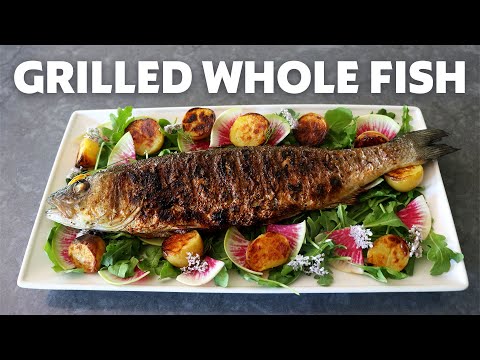
- Grilling is a fast cooking method that imparts a unique smoky flavor and distinctive char marks to the food being prepared.
- Physical Structure
- A grill usually features a sturdy metal grate made of materials like stainless steel, cast iron, or porcelain-coated steel, which are chosen for their ability to withstand high temperatures and retain heat effectively.
We decided to buy a new charcoal grill for the family reunion this weekend.
- Social Context
- The grill serves as a focal point for community building, where the act of cooking is shared and celebrated as much as the meal itself.
The smoky aroma from the neighbor's grill filled the entire street on Saturday afternoon.
Please don't touch the grill while it is hot, as it can cause serious burns.
- Maintenance
- Regular maintenance of your grill, including emptying the ash and checking for gas leaks, is essential for both performance and safety.
The restaurant features an open grill where customers can watch their food being prepared.
I need to buy a cover for my grill to protect it from the rain and rust.
- Subject Usage
- The grill needs more charcoal if we want to cook these thick steaks properly.
Is there enough space on the grill for the corn and the chicken?
- Descriptive Usage
- The stainless steel grill gleamed in the afternoon sun, ready for the evening feast.
After the party, we had to wait for the grill to cool down before we could put the cover back on.
He spent the entire afternoon standing by the grill, flipping burgers for the guests.
- Action-Oriented Usage
- Can you help me move the grill to the patio so we can start cooking?
The old charcoal grill was rusty, so we decided it was time to upgrade to a gas model.
I forgot to turn off the grill after we finished eating, and we wasted a lot of propane.
- Casual Conversations
- Friends often discuss their grilling techniques or the latest grill models they have seen in stores during casual weekend chats.
The salesperson at the home improvement store showed us a high-end infrared grill.
- Professional Kitchens
- In a busy restaurant, the 'grill station' is one of the most demanding positions, requiring constant attention and skill.
We ordered a mixed platter of meats straight from the charcoal grill.
The news report included a segment on how to prevent grill fires during the holiday weekend.
I heard a loud pop coming from the grill, so I immediately turned off the gas.
The instructional video explained how to assemble the new grill step by step.
- Spelling Confusion
- Incorrect: We cooked the steaks on the grille. Correct: We cooked the steaks on the grill.
Be careful with international recipes; a grill in London is not the same as a grill in Texas.
- Usage Error
- Avoid saying 'I put the grill in the meat' when you mean 'I put the meat on the grill.'
The most common mistake beginners make is not letting the grill heat up enough before adding food.
Using the wrong fuel in your grill can ruin the flavor of your food and damage the equipment.
Many people forget to clean the grease trap of their grill, which can lead to dangerous flare-ups.
Don't confuse a grill with a smoker; while they look similar, they use different cooking principles.
- Grill vs. Barbecue
- A grill is for fast cooking like burgers; a barbecue is often for slow-cooked meats like brisket.
If it's raining outside, you can use the broiler instead of the outdoor grill.
- Grill vs. Griddle
- Grills have bars and allow fat to drip away; griddles are flat and keep the food in its own juices.
We used a cast-iron griddle on top of the grill to make breakfast outdoors.
The restaurant's wood-fired grill gives the pizza a unique, charred crust.
A portable hibachi is a great alternative to a full-sized grill for small balconies.
The chef preferred using a charcoal grill over a gas one for better flavor profile.
How Formal Is It?
रोचक तथ्य
The word 'grill' and the word 'grate' (as in a fireplace grate) share the same Latin root 'cratis.' They both refer to a structure of parallel bars.
उच्चारण मार्गदर्शिका
- Pronouncing it like 'girl' (gerl).
- Adding an extra syllable like 'grill-uh'.
- Confusing the 'i' sound with a long 'e' (greel).
- Softening the 'g' sound to a 'j' sound (jrill).
- Not fully pronouncing the 'l' at the end.
कठिनाई स्तर
The word is short, phonetically consistent, and frequently appears in basic texts.
Easy to spell, though sometimes confused with 'grille'.
Simple one-syllable pronunciation that is easy for most learners.
Distinct sound that is easy to recognize in conversation.
आगे क्या सीखें
पूर्वापेक्षाएँ
आगे सीखें
उन्नत
ज़रूरी व्याकरण
Prepositions of Place
We cook food *on* the grill (surface) or *over* the grill (heat).
Compound Nouns
A 'charcoal grill' uses the noun 'charcoal' as an adjective to modify 'grill'.
Imperative Mood
'Clean the grill' is a command commonly found in manuals.
Articles with Unique Objects
We say 'the grill' when referring to the specific one in our yard.
Zero Article for Generalization
'Grill maintenance is important' (talking about grills in general).
स्तर के अनुसार उदाहरण
The grill is in the garden.
Le gril est dans le jardin.
Simple subject-verb-prepositional phrase structure.
I have a small grill.
J'ai un petit gril.
Use of the indefinite article 'a' with an adjective.
Put the meat on the grill.
Mettez la viande sur le gril.
Imperative sentence using the preposition 'on'.
The grill is very hot.
Le gril est très chaud.
Use of the intensifier 'very' with an adjective.
Is the grill ready?
Le gril est-il prêt ?
Simple yes/no question structure.
We like the new grill.
Nous aimons le nouveau gril.
Simple subject-verb-object structure.
The grill uses charcoal.
Le gril utilise du charbon de bois.
Present simple tense for a general fact.
Clean the grill after use.
Nettoyez le gril après usage.
Imperative sentence with a time phrase.
We bought a gas grill for the summer.
Nous avons acheté un gril à gaz pour l'été.
Past simple tense with a purpose phrase.
The charcoal grill gives a better flavor.
Le gril au charbon donne une meilleure saveur.
Comparative adjective 'better' used in a descriptive sentence.
Can you help me move the grill?
Peux-tu m'aider à déplacer le gril ?
Polite request using 'can' and an infinitive.
The grill is covered in rust.
Le gril est couvert de rouille.
Passive-like structure describing a state.
Don't forget to turn off the grill.
N'oublie pas d'éteindre le gril.
Negative imperative with an infinitive phrase.
There is a large grill at the park.
Il y a un grand gril au parc.
Use of 'there is' to indicate existence.
My father is the master of the grill.
Mon père est le maître du gril.
Possessive noun phrase used as a title.
The grill is too small for all this food.
Le gril est trop petit pour toute cette nourriture.
Use of 'too' to indicate an excessive quality.
I prefer using a charcoal grill because of the smoky aroma.
Je préfère utiliser un gril au charbon à cause de l'arôme fumé.
Expressing preference with a reason.
The grill grates should be oiled before you start cooking.
Les grilles du gril doivent être huilées avant de commencer à cuisiner.
Modal verb 'should' in a passive construction.
We need to replace the propane tank for the gas grill.
Nous devons remplacer la bouteille de propane pour le gril à gaz.
Using 'need to' for necessity.
The grill was still hot even an hour after we finished.
Le gril était encore chaud même une heure après que nous ayons fini.
Adverbial phrase of time and concession.
He spent the whole afternoon cleaning the old grill.
Il a passé tout l'après-midi à nettoyer le vieux gril.
Verb 'spend' + time + gerund.
The restaurant has an impressive open grill in the center.
Le restaurant possède un gril ouvert impressionnant au centre.
Descriptive sentence with multiple adjectives.
You can use a portable grill if you go camping.
Tu peux utiliser un gril portable si tu vas camper.
First conditional structure.
The grill lid helps to keep the heat inside.
Le couvercle du gril aide à garder la chaleur à l'intérieur.
Subject-verb-object with an infinitive of purpose.
The cast-iron grill provides superior heat retention for searing.
Le gril en fonte offre une rétention de chaleur supérieure pour saisir.
Technical vocabulary used in a descriptive context.
Make sure the grill is preheated to at least 400 degrees.
Assurez-vous que le gril est préchauffé à au moins 400 degrés.
Imperative with a noun clause and specific measurements.
The grill's burners are clogged and need to be cleared.
Les brûleurs du gril sont bouchés et doivent être nettoyés.
Possessive noun and passive necessity.
Despite the rain, the grill remained the focal point of the party.
Malgré la pluie, le gril est resté le point central de la fête.
Concessive phrase starting with 'despite'.
The new model features an integrated infrared grill station.
Le nouveau modèle dispose d'une station de gril à infrarouge intégrée.
Complex noun phrases and technical terminology.
Cleaning the grill is a tedious but necessary chore.
Nettoyer le gril est une corvée fastidieuse mais nécessaire.
Gerund as a subject with contrasting adjectives.
The grill was positioned away from the house for safety reasons.
Le gril était positionné loin de la maison pour des raisons de sécurité.
Passive voice with a prepositional phrase of reason.
We opted for a built-in grill for our outdoor kitchen renovation.
Nous avons opté pour un gril encastré pour la rénovation de notre cuisine extérieure.
Phrasal verb 'opt for' with a complex object.
The Maillard reaction is most evident when using a high-heat grill.
La réaction de Maillard est la plus évidente lors de l'utilisation d'un gril à haute température.
Academic vocabulary and superlative adjective.
The grill's design facilitates optimal airflow for charcoal combustion.
La conception du gril facilite un flux d'air optimal pour la combustion du charbon.
Formal verb 'facilitates' and technical terminology.
A seasoned grill grate is essential for preventing delicate fish from sticking.
Une grille de gril culottée est essentielle pour empêcher le poisson délicat de coller.
Participial adjective 'seasoned' and gerund phrase.
The grill has evolved from a simple pit to a sophisticated appliance.
Le gril a évolué d'une simple fosse à un appareil sophistiqué.
Present perfect tense showing evolution over time.
The chef's mastery of the grill is what sets this steakhouse apart.
La maîtrise du gril par le chef est ce qui distingue ce restaurant de grillades.
Cleft sentence structure for emphasis.
Thermal mass in a ceramic grill allows for incredibly stable temperatures.
La masse thermique d'un gril en céramique permet des températures incroyablement stables.
Technical scientific concept applied to a noun.
The grill served as a silent witness to decades of family celebrations.
Le gril a servi de témoin silencieux à des décennies de célébrations familiales.
Personification and metaphorical language.
One must exercise caution when disposing of hot ashes from the grill.
On doit faire preuve de prudence lors de l'élimination des cendres chaudes du gril.
Formal use of the pronoun 'one' and modal 'must'.
The grill, a quintessential icon of Americana, embodies the spirit of summer.
Le gril, icône par excellence de l'Americana, incarne l'esprit de l'été.
Appositive phrase and high-level vocabulary.
The nuances of heat distribution across the grill's surface are paramount.
Les nuances de la répartition de la chaleur sur la surface du gril sont primordiales.
Complex subject with abstract nouns.
The grill acts as a catalyst for social cohesion in many suburban communities.
Le gril agit comme un catalyseur de cohésion sociale dans de nombreuses communautés de banlieue.
Metaphorical use of 'catalyst' in a sociological context.
The juxtaposition of the rustic grill and the modern patio was striking.
La juxtaposition du gril rustique et du patio moderne était frappante.
Advanced noun 'juxtaposition' and descriptive adjectives.
To master the grill is to understand the primal relationship between fire and food.
Maîtriser le gril, c'est comprendre la relation primaire entre le feu et la nourriture.
Infinitive phrases used as subject and complement.
The grill's longevity is a testament to the quality of its craftsmanship.
La longévité du gril est un témoignage de la qualité de sa fabrication.
Abstract nouns and formal structure.
The subtle infusion of hickory smoke from the grill elevated the dish.
La subtile infusion de fumée de hickory provenant du gril a rehaussé le plat.
Sophisticated vocabulary and precise description.
The grill remains an indispensable tool in the repertoire of the modern gastronome.
Le gril reste un outil indispensable dans le répertoire du gastronome moderne.
Formal vocabulary and complex prepositional phrases.
विलोम शब्द
सामान्य शब्द संयोजन
सामान्य वाक्यांश
— Currently being cooked using a grill. It describes the location of the food.
The burgers are on the grill right now.
— Recently finished cooking and removed from the grill. It implies freshness.
These hot dogs are fresh off the grill.
— Standing near the grill, usually while cooking or waiting for food.
He spent the whole evening standing by the grill.
— A person who is very skilled at cooking food on a grill.
My uncle is the undisputed master of the grill.
— The specific area in a professional kitchen where grilling takes place.
She was assigned to the grill station for the dinner shift.
— A protective fabric or plastic sheet used to protect a grill from the weather.
Don't forget to put the grill cover on before it rains.
— A tool with stiff bristles used for cleaning the metal bars of a grill.
Use the grill brush to remove the burnt bits of food.
— A collection of tools like tongs, spatulas, and forks used for grilling.
He received a high-quality grill set for his birthday.
— The level of heat inside or on the surface of the grill.
Check the grill temperature before adding the meat.
— The specific smoky and charred taste that comes from cooking on a grill.
Nothing beats the authentic grill flavor of a wood fire.
अक्सर इससे भ्रम होता है
A 'grille' is a decorative metal screen, often on a car or a vent. A 'grill' is for cooking.
A 'grid' is a general pattern of lines, while a 'grill' is a specific cooking tool made of bars.
A 'griddle' is a flat cooking surface without the bars found on a 'grill'.
मुहावरे और अभिव्यक्तियाँ
— To ask someone many intense and difficult questions, like an interrogation. This uses the verb form.
The police decided to grill the suspect for three hours.
informal— To start the grill, but often used figuratively to mean starting a social event or party.
It's Friday night, let's fire up the grill!
informal— In a position of being scrutinized or under pressure (less common than 'on the hot seat').
The CEO was on the grill during the shareholders' meeting.
informal— To cook something on a grill so that it is exactly right in terms of taste and texture.
This salmon has been grilled to perfection.
neutral— A humorous title for someone who takes charge of the cooking at a barbecue.
Dad wears his 'King of the Grill' apron every Sunday.
informal— A restaurant or room in a club where grilled food is served.
We met for lunch in the club's grill room.
formal— Decorative metalwork that looks like a grill, often found on gates or windows.
The old mansion had beautiful iron grill work on the balcony.
neutral— In British English, refers to cooking food using the top heating element of an oven.
Put the cheese sandwiches under the grill for two minutes.
neutral (UK)— The charred lines on food that signify it was cooked on a grill; often seen as a sign of quality.
The chef was proud of the perfect grill marks on the steak.
neutral— To have a meal where the food is cooked on an outdoor grill.
We should grill out this weekend while the weather is nice.
informalआसानी से भ्रमित होने वाले
Homophones (sound the same).
Grill is for cooking; grille is for decoration or protection on cars and buildings.
The car has a chrome grille, but the steak is on the grill.
Similar function.
A grill usually has heat from below; a broiler has heat from above (indoor oven).
I used the broiler because my outdoor grill was out of gas.
Used interchangeably in casual speech.
Grilling is fast and hot; barbecuing is slow and smoky.
We are grilling burgers on the barbecue.
Both involve heat and meat.
A roaster is usually an enclosed pan or oven; a grill is open or has a lid over grates.
Put the turkey in the roaster, but the steaks go on the grill.
Both are cooking surfaces.
A stove is usually indoors with solid burners; a grill is often outdoors with open bars.
I cooked the pasta on the stove and the chicken on the grill.
वाक्य संरचनाएँ
The [noun] is on the grill.
The meat is on the grill.
I have a [adjective] grill.
I have a small grill.
We need to [verb] the grill.
We need to clean the grill.
The grill is [participle] with [noun].
The grill is covered with rust.
Using a grill [verb] the [noun].
Using a grill enhances the flavor.
The grill's [noun] is a [noun] of [noun].
The grill's design is a marvel of engineering.
Is the grill [adjective]?
Is the grill hot?
I prefer [noun] because of the grill.
I prefer chicken because of the grill.
शब्द परिवार
संज्ञा
क्रिया
विशेषण
संबंधित
इसे कैसे इस्तेमाल करें
Very common in daily life, especially in summer.
-
Spelling it as 'grille' for cooking.
→
grill
As discussed, 'grille' refers to the front of a car or a ventilation cover. Always use 'grill' when talking about food or the cooking machine.
-
Using 'in the grill' instead of 'on the grill'.
→
on the grill
Because the food sits on top of the metal bars, the correct preposition is 'on'. You only use 'in' if you are talking about the internal space of the grill while the lid is closed.
-
Putting food on a cold grill.
→
Preheat the grill first.
If the grill isn't hot, the food will stick to the bars and won't develop a good crust. Always wait for the grill to reach the desired temperature before cooking.
-
Overcrowding the grill.
→
Leave space between food items.
If you put too much food on the grill at once, the temperature will drop, and the food will steam rather than sear. Leave enough room for air to circulate and for you to flip the items.
-
Using gasoline to start a charcoal grill.
→
Use charcoal lighter fluid or a chimney starter.
Gasoline is extremely dangerous and can cause explosions. It also leaves a terrible chemical taste on your food. Always use approved methods to start your fire.
सुझाव
Placement Matters
Always place your grill on a flat, stable surface at least ten feet away from your house, deck railings, and overhanging branches. This prevents accidental fires from spreading to your home or surroundings.
Preheat for Success
Always preheat your grill for at least 10-15 minutes before adding food. A hot grill sears the food on contact, which helps prevent sticking and creates those desirable grill marks and flavors.
Oil the Grates
Before putting food on the grill, lightly coat the grates with a high-smoke-point oil using a folded paper towel and tongs. This creates a non-stick surface, which is especially important for delicate items like fish or vegetables.
Don't Peek
Try to keep the grill lid closed as much as possible while cooking. Opening the lid lets the heat escape, which increases cooking time and can dry out your food. Only open it to flip the food or check for doneness.
Gas Leak Check
If you use a gas grill, regularly check the hoses for leaks by applying a soapy water solution. If you see bubbles forming when the gas is on, you have a leak and should not use the grill until it is repaired.
Use a Thermometer
Don't rely on the color of the meat to tell if it's done. Use a digital meat thermometer to ensure your food has reached a safe internal temperature, which prevents both undercooking and overcooking.
Clean While Warm
It is much easier to clean the grill grates while they are still warm. Use your grill brush immediately after you finish cooking to remove residue before it hardens and becomes difficult to scrub off later.
Wood Chips
For extra flavor on a gas grill, you can use a smoker box filled with soaked wood chips. This allows you to get some of that classic smoky charcoal flavor even when using a convenient gas-powered machine.
Flare-up Control
Keep a spray bottle of water nearby to manage small flare-ups on a charcoal grill. For gas grills, simply turn down the burners or move the food to a cooler part of the grill until the flames subside.
Rest the Meat
After taking meat off the grill, let it rest for 5-10 minutes before cutting into it. This allows the juices to redistribute throughout the meat, resulting in a much juicier and more flavorful final product.
याद करें
स्मृति सहायक
Think of the 'G' in Grill as standing for 'Garden' and the 'ill' as the sound of 'Sizzle.' You use a Grill in the Garden to make a Sizzle!
दृश्य संबंध
Imagine a black round kettle with silver bars on top and bright red coals glowing underneath. See the smoke rising and the lines on a burger.
Word Web
चैलेंज
Try to find three different types of grills in an online store and describe them using the word 'grill' in three separate sentences.
शब्द की उत्पत्ति
The word 'grill' comes from the Middle English word 'grille,' which was derived from the Old French word 'greil' or 'graille.' This, in turn, came from the Latin word 'craticulum,' which is a diminutive of 'cratis,' meaning a hurdle or a wickerwork frame. The original meaning referred to a grating of metal bars.
मूल अर्थ: A grating or framework of metal bars used for various purposes, including cooking.
Indo-European (via Latin and French)सांस्कृतिक संदर्भ
Be aware that 'grill' can also refer to a type of dental jewelry in hip-hop culture, which is a very different context.
In the US, grilling is a major part of summer culture. In the UK, 'grilling' often refers to the oven's top heater.
असल ज़िंदगी में अभ्यास करें
वास्तविक संदर्भ
Backyard Barbecue
- Fire up the grill.
- Is the grill hot yet?
- Put the burgers on the grill.
- Clean the grill grates.
Restaurant Dining
- From the grill.
- Grilled to order.
- The grill station.
- Bar and grill.
Shopping for Appliances
- Gas vs charcoal grill.
- Portable grill for camping.
- Stainless steel grill.
- Grill accessories.
Cooking Instructions
- Preheat the grill.
- Place on the grill.
- Grill for five minutes.
- Remove from the grill.
Safety Warnings
- Hot grill surface.
- Grill fire safety.
- Outdoor use only.
- Keep away from the grill.
बातचीत की शुरुआत
"Do you prefer a gas grill or a charcoal grill for cooking outdoors?"
"What is your favorite thing to cook on the grill during the summer?"
"Have you ever tried using a portable grill while you were camping?"
"Who is the person in your family who usually manages the grill at parties?"
"Do you think food tastes better when it is cooked on a grill?"
डायरी विषय
Describe a memory of a time you shared a meal that was cooked on a grill.
If you could design the perfect outdoor kitchen, what kind of grill would you include?
Write about the differences between cooking on a grill and cooking on a regular stove.
Explain the steps you would take to prepare a delicious meal using a charcoal grill.
Discuss why you think the grill is such a popular tool for social gatherings.
अक्सर पूछे जाने वाले सवाल
10 सवालIn casual conversation, they are often the same thing. However, technically, a grill is the physical equipment used for fast cooking over high heat. Barbecue refers to a slow cooking method using indirect heat and smoke. Most people just say 'the grill' to mean the machine in their yard.
No, you should never use a charcoal grill indoors. It produces carbon monoxide, which is a deadly, odorless gas. Charcoal grills also pose a significant fire hazard. Only use grills specifically designed for indoor use, such as electric models, inside your home.
To clean a grill, you should first heat it up to loosen any stuck-on food. Then, use a stiff wire grill brush to scrub the grates. For a deeper clean, you can remove the grates once they are cool and wash them with warm, soapy water. Always remember to empty the ash from charcoal grills.
A gas grill is a type of grill that uses liquid propane or natural gas as its fuel source. It is popular because it starts quickly and allows for easy temperature control using knobs, similar to an indoor stove. It is a convenient alternative to charcoal grills.
Grill marks are the dark, charred lines that appear on food when it is cooked on a hot grill. They are caused by the direct contact between the food and the hot metal bars of the grill grate. Many people consider them a sign of a well-cooked and visually appealing meal.
This is a common idiomatic expression that means to start or ignite the grill. It is often used to signal the beginning of a cooking session or a social gathering like a party. For example, 'The guests are arriving, so let's fire up the grill!'
In American English, no. A grill has heat from below, while a broiler is part of an oven with heat from above. However, in British English, the word 'grill' is often used to describe what Americans call a broiler. This is a key regional difference in vocabulary.
You can cook almost anything on a grill! Popular non-meat options include corn on the cob, asparagus, bell peppers, pineapple, peaches, and even pizza. The high heat of the grill adds a unique flavor to these items that you can't get from a regular stove or oven.
Many modern grills have a built-in thermometer on the lid. If yours doesn't, you can use the 'hand test' (carefully!) by holding your palm about five inches above the grate. If you can only hold it there for 2-3 seconds, the grill is at high heat.
A portable grill is a smaller, lightweight version of a standard grill designed to be easily moved. They are perfect for activities like camping, tailgating at sports events, or picnics in the park. They can be either charcoal or gas-powered.
खुद को परखो 192 सवाल
Describe the steps to prepare a grill for a barbecue.
Well written! Good try! Check the sample answer below.
Compare a gas grill and a charcoal grill.
Well written! Good try! Check the sample answer below.
Write a short invitation to a 'grill out' party.
Well written! Good try! Check the sample answer below.
Explain why safety is important when using a grill.
Well written! Good try! Check the sample answer below.
Describe your favorite food to cook on a grill and why.
Well written! Good try! Check the sample answer below.
What are the benefits of grilling vegetables?
Well written! Good try! Check the sample answer below.
How do you maintain a grill to make it last longer?
Well written! Good try! Check the sample answer below.
Write a review of a restaurant that specializes in grilled food.
Well written! Good try! Check the sample answer below.
Explain the difference between grilling and barbecuing to a beginner.
Well written! Good try! Check the sample answer below.
Describe the cultural significance of the grill in your country.
Well written! Good try! Check the sample answer below.
What are three important tools for grilling?
Well written! Good try! Check the sample answer below.
How does a portable grill change a camping experience?
Well written! Good try! Check the sample answer below.
Write a safety warning for a public grill in a park.
Well written! Good try! Check the sample answer below.
Describe the appearance of a well-used charcoal grill.
Well written! Good try! Check the sample answer below.
Why do some people prefer wood-fired grills?
Well written! Good try! Check the sample answer below.
Explain how to check for a gas leak on a grill.
Well written! Good try! Check the sample answer below.
What is the role of the 'grill station' in a busy kitchen?
Well written! Good try! Check the sample answer below.
How has grill technology changed in recent years?
Well written! Good try! Check the sample answer below.
Describe the perfect 'grill marks' on a piece of meat.
Well written! Good try! Check the sample answer below.
Write a short story about a disastrous grill experience.
Well written! Good try! Check the sample answer below.
Explain how to safely light a charcoal grill.
Read this aloud:
तुमने कहा:
Speech recognition is not supported in your browser. Try Chrome or Edge.
Describe your ideal outdoor barbecue party.
Read this aloud:
तुमने कहा:
Speech recognition is not supported in your browser. Try Chrome or Edge.
Talk about the pros and cons of grilling.
Read this aloud:
तुमने कहा:
Speech recognition is not supported in your browser. Try Chrome or Edge.
How would you convince someone to try grilled vegetables?
Read this aloud:
तुमने कहा:
Speech recognition is not supported in your browser. Try Chrome or Edge.
Explain the difference between a grill and a stove.
Read this aloud:
तुमने कहा:
Speech recognition is not supported in your browser. Try Chrome or Edge.
What should you do if you smell gas near your grill?
Read this aloud:
तुमने कहा:
Speech recognition is not supported in your browser. Try Chrome or Edge.
Describe the process of cleaning a very dirty grill.
Read this aloud:
तुमने कहा:
Speech recognition is not supported in your browser. Try Chrome or Edge.
Why is the grill such a popular social tool?
Read this aloud:
तुमने कहा:
Speech recognition is not supported in your browser. Try Chrome or Edge.
Talk about a traditional grilled dish from your culture.
Read this aloud:
तुमने कहा:
Speech recognition is not supported in your browser. Try Chrome or Edge.
What are the essential accessories for a new grill owner?
Read this aloud:
तुमने कहा:
Speech recognition is not supported in your browser. Try Chrome or Edge.
How do you achieve the perfect steak on a grill?
Read this aloud:
तुमने कहा:
Speech recognition is not supported in your browser. Try Chrome or Edge.
Explain the term 'master of the grill'.
Read this aloud:
तुमने कहा:
Speech recognition is not supported in your browser. Try Chrome or Edge.
What are the environmental impacts of different grill fuels?
Read this aloud:
तुमने कहा:
Speech recognition is not supported in your browser. Try Chrome or Edge.
Describe the sound and smell of a grill in action.
Read this aloud:
तुमने कहा:
Speech recognition is not supported in your browser. Try Chrome or Edge.
How would you teach a child about grill safety?
Read this aloud:
तुमने कहा:
Speech recognition is not supported in your browser. Try Chrome or Edge.
What is the best way to grill delicate fish?
Read this aloud:
तुमने कहा:
Speech recognition is not supported in your browser. Try Chrome or Edge.
Discuss the evolution of the grill from ancient times to today.
Read this aloud:
तुमने कहा:
Speech recognition is not supported in your browser. Try Chrome or Edge.
Why do some people find grilling therapeutic?
Read this aloud:
तुमने कहा:
Speech recognition is not supported in your browser. Try Chrome or Edge.
Explain the concept of 'indirect grilling'.
Read this aloud:
तुमने कहा:
Speech recognition is not supported in your browser. Try Chrome or Edge.
What is your favorite memory involving a grill?
Read this aloud:
तुमने कहा:
Speech recognition is not supported in your browser. Try Chrome or Edge.
Listen to the instruction: 'Put the chicken on the grill and close the lid.' What should you do after putting the chicken on?
The chef says: 'The grill is at 350 degrees.' Is the grill ready for high-heat searing?
You hear: 'We're out of charcoal, so we can't use the grill.' Why can't they use the grill?
A neighbor says: 'I'm firing up the grill at six.' What time will the cooking start?
The salesperson says: 'This model features a side burner and a grill cover.' What two things are included?
You hear: 'Watch out, the grill is still hot!' What is the warning about?
The recipe says: 'Grill the corn for ten minutes, turning occasionally.' How long do you cook the corn?
Someone asks: 'Is there any more room on the grill for my sausage?' What are they asking for?
You hear: 'The grill grates are filthy; we need to scrub them.' What needs to be done?
A friend says: 'I prefer the flavor of a charcoal grill.' What is their preference?
The manual says: 'Never use the grill in a garage.' Where is it forbidden?
You hear: 'The steak has great grill marks.' What is being complimented?
Someone says: 'Pass me the grill tongs, please.' What tool do they need?
You hear: 'The gas grill is much faster than the charcoal one.' Which one is faster?
The news says: 'Grill safety is important this holiday weekend.' What is the topic?
/ 192 correct
Perfect score!
Summary
The grill is an essential outdoor cooking apparatus that uses direct heat to create flavorful, charred meals. For example: 'We fired up the charcoal grill to cook burgers for the neighborhood block party.'
- A grill is a metal cooking tool used to cook food over direct heat, commonly used outdoors for meats and vegetables during social gatherings.
- It typically consists of metal bars (grates) and uses fuel like charcoal or gas to provide the necessary high temperature for searing food.
- In British English, the term can also refer to the top heating element in an oven, which Americans call a broiler.
- Grilling is a fast cooking method that imparts a unique smoky flavor and distinctive char marks to the food being prepared.
Placement Matters
Always place your grill on a flat, stable surface at least ten feet away from your house, deck railings, and overhanging branches. This prevents accidental fires from spreading to your home or surroundings.
Preheat for Success
Always preheat your grill for at least 10-15 minutes before adding food. A hot grill sears the food on contact, which helps prevent sticking and creates those desirable grill marks and flavors.
Oil the Grates
Before putting food on the grill, lightly coat the grates with a high-smoke-point oil using a folded paper towel and tongs. This creates a non-stick surface, which is especially important for delicate items like fish or vegetables.
Don't Peek
Try to keep the grill lid closed as much as possible while cooking. Opening the lid lets the heat escape, which increases cooking time and can dry out your food. Only open it to flip the food or check for doneness.
उदाहरण
We are cooking sausages on the grill in the garden.
संबंधित सामग्री
वीडियो में देखें
संदर्भ में सीखें
यह शब्द अन्य भाषाओं में
Food के और शब्द
additive
B2योजक (additive) वह पदार्थ है जिसे किसी चीज़ में सुधार करने के लिए थोड़ी मात्रा में मिलाया जाता है।
additives
B2योजक वे पदार्थ हैं जिन्हें भोजन या अन्य उत्पादों में उनके गुणों को सुधारने के लिए मिलाया जाता है।
almond
B2उसकी आँखें बादामी आकार की हैं।
annatto
B1अनातो एक प्राकृतिक नारंगी-लाल खाद्य रंग है जो अचीओट पेड़ के बीजों से प्राप्त होता है। इसका उपयोग पनीर और मक्खन को रंगने के लिए किया जाता है।
appetite
C1भूख या 'Appetite' भोजन करने की स्वाभाविक इच्छा है। इसका अर्थ किसी अन्य चीज़, जैसे रोमांच या सीखने की तीव्र इच्छा भी हो सकता है।
appetizer
C1एपेटाइज़र भोजन से पहले परोसा जाने वाला एक छोटा हिस्सा है जो भूख बढ़ाने के लिए होता है।
appetizing
B2बहुत अच्छा दिखता है या महकता है, जिससे भूख लगती है। / ताज़ी पकी हुई ब्रेड की महक स्वादिष्ट थी।
apple
C1उसने अपना काम 'apple' तरीके से किया, सादगी और स्पष्टता के साथ।
apples
A1सेब गोल और खाने योग्य फल होते हैं।
apricot
C1सूर्यास्त के समय आकाश खुबानी के रंग जैसा दिख रहा था।

