journal
Imagine a special book where smart people write about new ideas. This is a journal.
It's like a diary, but for work or school. People write in it often.
So, if something is journal, it means it comes from this special book.
It's about important work or studies.
Imagine a special notebook where smart people write about their work or studies. They write in it regularly, like every day or every week.
When we say something is journal (as an adjective), it means it's like what you'd find in that special notebook.
For example, a journal article is a serious paper written by experts.
Or journal entries could be notes someone keeps about their job every day.
It's all about things that are written down regularly and seriously, often for work or study.
When something is described as journal (adjective), it means it's connected to a journal. A journal is like a special magazine or book where experts write about their work. It could also be a record where someone writes down what they do at work every day.
For example, if you read a journal article, it means you're reading something published in one of these expert magazines. If a company keeps journal entries, they are writing down their daily activities or financial information regularly. So, journal in this sense tells you where information comes from or how it's recorded.
When we refer to something as "journal" at the C2 level, especially in academic and professional discourse, we are specifically highlighting its connection to scholarly periodicals or meticulously kept chronological records of activities.
This adjective emphasizes that the information—be it data, articles, or entries—originates from a source characterized by regular, systematic maintenance and often peer-reviewed rigor.
It implies a level of formality and credibility associated with established academic journals or professional logs.
Therefore, a "journal article" is not just any article, but one found in a scholarly publication, and "journal entries" are not casual notes but structured, chronological records of professional undertakings.
§ What Does 'Journal' (Adjective) Mean?
The adjective 'journal' is derived from the noun 'journal,' which primarily refers to a periodical publication containing articles on a particular subject, especially one of a scholarly or academic nature, or a daily record of news and events of a personal nature. When used as an adjective, 'journal' describes something that is characteristic of, related to, or appearing in such a publication or record. It signifies a connection to a systematic, chronological, and often professional documentation of activities or findings.
In academic contexts, 'journal' often precedes terms like 'article,' 'publication,' or 'research' to specify the nature of the content. For example, a 'journal article' is a piece of writing published in a scholarly journal, typically peer-reviewed and presenting original research or analysis. This distinguishes it from other forms of academic writing like books, conference papers, or dissertations. The adjective emphasizes the structured, often rigorous, and regularly published format of the material.
- Definition
- Relating to or appearing in a scholarly periodical or a systematic, chronological record of professional activity. In academic and business contexts, it describes the specific format or source of data, articles, or entries maintained on a regular basis.
Beyond academia, in business and professional settings, 'journal' as an adjective can refer to records or entries that are kept chronologically and systematically for tracking activities, finances, or progress. For instance, 'journal entries' in accounting refer to records of financial transactions. Here, the adjective highlights the methodical and regular nature of the recording process, which is crucial for auditing and financial analysis. It implies a detailed, sequential documentation that provides a historical account of operations.
The researcher focused on publishing their findings in a reputable journal article to reach a wider academic audience.
§ When Do People Use 'Journal' (Adjective)?
People predominantly use 'journal' as an adjective in formal and professional contexts, particularly in academic, scientific, and business fields. Its usage is crucial for specifying the type of source, data, or activity being discussed, lending credibility and clarity to communication.
- In Academia and Research: This is perhaps the most common domain for the adjective 'journal.' Researchers frequently refer to 'journal articles,' 'journal publications,' 'journal reviews,' or 'journal papers' to denote scholarly works that have undergone peer review and are published in academic periodicals. This helps distinguish them from other forms of academic discourse like conference proceedings, books, or preprints. The term implies a certain level of rigor, peer scrutiny, and established academic standing.
Students are often encouraged to consult primary journal literature for their research projects.
- In Business and Finance: In these sectors, 'journal' is typically used in the context of record-keeping. 'Journal entries' are fundamental to accounting, meticulously documenting every financial transaction. This usage emphasizes the chronological and systematic nature of financial data recording, essential for maintaining accurate financial statements and for auditing purposes. Other uses might include 'journal records' or 'journal logs' for tracking operational activities.
- In Professional Documentation: More broadly, in any professional setting where systematic and chronological records are maintained, the adjective 'journal' might be used. For example, a 'journal report' might be a regular, detailed account of project progress or activities. This usage underscores the methodical and historical nature of the documentation, providing a clear audit trail or progress log.
The use of 'journal' as an adjective adds a layer of precision, indicating that the item in question is part of a structured, often periodical, and usually professional system of documentation or publication. It sets expectations about the format, the content's origin, and its adherence to established norms within its respective field. Therefore, understanding its adjectival function is crucial for anyone navigating academic papers, financial records, or professional reports at a C1 CEFR level.
§ Understanding 'Journal' as an Adjective
- Definition
- Relating to or appearing in a scholarly periodical or a systematic, chronological record of professional activity. In academic and business contexts, it describes the specific format or source of data, articles, or entries maintained on a regular basis.
The word 'journal' is most commonly known as a noun, referring to a daily record of events or a periodical. However, it can also function as an adjective, particularly in academic and business settings. When used as an adjective, 'journal' describes something that pertains to or is characteristic of a journal in its various forms. It often highlights the scholarly, systematic, or periodical nature of the item it modifies.
§ Grammatical Use and Placement
As an adjective, 'journal' typically precedes the noun it modifies. It doesn't change its form based on number or gender. It's a straightforward adjective in terms of its grammatical behavior.
- Before the noun: This is the most common and natural placement for 'journal' as an adjective.
The journal article provided a comprehensive review of the new methodology.
She maintains a detailed journal entry for each client interaction.
§ Common Collocations and Contexts
'Journal' as an adjective is frequently encountered in specific academic and professional phrases. Understanding these collocations helps in using the word accurately.
- Journal article: Refers to a piece of writing published in a scholarly periodical.
Students are required to cite at least five journal articles in their research paper.
- Journalistic ethics (less common, but exists): Pertaining to the ethical standards of journalism. While 'journalistic' is more common here, 'journal' can occasionally be seen in very specific contexts, often implying the nature of a journal.
The panel discussed the challenges of maintaining journal standards in digital media.
- Journal entry: A single record or item written in a journal. This can be in a personal diary, a business log, or a financial record.
Each journal entry must be dated and signed by the supervisor.
- Journal data: Data collected from or associated with journal publications or systematic records.
The researchers analyzed extensive journal data to identify trends in public health.
- Journal publication: The act or product of publishing in a journal.
Achieving a journal publication is a significant milestone for many academics.
§ Prepositions with 'Journal' (as part of noun phrases)
When 'journal' acts as an adjective, the prepositions used will depend on the noun it modifies and the overall meaning of the sentence. It doesn't directly govern prepositions itself, but rather forms part of a noun phrase which then interacts with prepositions.
- In a journal article/publication: Refers to content found within a journal.
The findings were discussed in a journal article.
- From journal data: Indicates the source of information.
Conclusions were drawn from journal data spanning a decade.
- For a journal entry: Specifies the purpose or recipient.
He prepared a summary for a journal entry regarding the project's progress.
§ Distinguishing from 'Journalistic'
It's important to differentiate 'journal' (adjective) from 'journalistic'. While both relate to publishing, 'journal' emphasizes the formal, scholarly, or record-keeping aspect of a journal, whereas 'journalistic' focuses on the field of journalism and its characteristics.
- Journal (adjective): Emphasizes the scholarly or systematic record aspect.
The scientific community values rigorous journal peer review processes.
- Journalistic (adjective): Relates to the style and practice of journalism.
His writing style is very journalistic, focusing on clear, concise reporting.
§ Where you actually hear this word — work, school, news
- Definition
- Relating to or appearing in a scholarly periodical or a systematic, chronological record of professional activity. In academic and business contexts, it describes the specific format or source of data, articles, or entries maintained on a regular basis.
The adjective 'journal' is a C1-level word that you'll frequently encounter in professional and academic settings, particularly when discussing research, publications, or systematic records. It helps specify the type of article, data, or content being referred to, distinguishing it from more general forms of writing or reporting. Understanding its usage is key to navigating higher-level academic and business discourse.
§ In Academic Contexts
In academia, 'journal' as an adjective is almost exclusively used to describe articles and publications found in scholarly journals. These are peer-reviewed periodicals that publish original research and critical essays. When a professor or researcher refers to 'journal articles' or 'journal publications,' they are emphasizing the rigorous, often peer-reviewed, nature of the content. This contrasts with other sources like textbooks, conference papers, or popular science magazines, which may not undergo the same level of scrutiny.
Students are required to cite at least three journal articles for their literature review.
You might also hear it in discussions about research methodology, where 'journal data' could refer to data collected as part of a long-term, systematic study documented in a journal format. Or, 'journalistic research' might describe a research approach that mimics the systematic recording and reporting found in journalism, though this is less common than 'journal article'.
§ In Business Contexts
In the business world, the adjective 'journal' is used to describe systematic, chronological records of financial transactions or activities. Common phrases include 'journal entries,' 'journal records,' or 'journal reports.' These terms are fundamental in accounting and finance, referring to the initial recording of business transactions in a general journal before they are posted to ledgers.
The accountant meticulously reviewed all the journal entries to ensure accuracy.
Beyond accounting, 'journal' might also appear in discussions about project management or operational logging. For example, a 'project journal' or 'activity journal' would be a systematic record of daily tasks, decisions, and progress within a project. This helps in tracking, auditing, and future planning. In these scenarios, the adjective emphasizes the regular, sequential, and detailed nature of the record-keeping.
§ In News and General Usage
While less common in everyday news reporting compared to academic or business contexts, you might occasionally encounter 'journal' as an adjective in news articles discussing academic research or financial reports. For instance, a news piece might mention 'findings from a prominent medical journal' to lend authority to its claims. In this usage, it acts as a qualifier, highlighting the source's credibility.
A new study published in a leading science journal suggests a breakthrough in renewable energy.
It's important to distinguish the adjective 'journal' from the noun 'journalism' or 'journalist.' While related in their root meaning of systematic recording and reporting, 'journalistic' typically refers to the style, ethics, and practice of news reporting, whereas 'journal' as an adjective focuses more on the format or source of the information itself.
- When used in conjunction with 'article' or 'publication,' it almost always refers to a scholarly periodical.
- When used with 'entry' or 'record,' it points to systematic, chronological data, often financial.
- Its presence often signifies a formal, detailed, and credible source of information.
§ Common Pitfalls with "Journal" (Adjective)
The adjective form of "journal" can be a bit tricky, even for advanced English speakers. While the noun "journal" (a diary, a periodical) is quite common, its adjectival use, particularly in academic and professional contexts, often leads to subtle errors. Understanding these nuances is key to using the word precisely and effectively.
§ Mistake 1: Confusing with "Journalistic"
- The Error
- One of the most frequent mistakes is confusing "journal" (adjective) with "journalistic." While both relate to publications, their meanings and connotations are distinct. "Journalistic" refers to the style, content, or practices associated with journalism – news reporting, interviews, op-eds, etc. It often implies a more accessible, timely, and perhaps less rigorously peer-reviewed context. "Journal" (adjective), on the other hand, specifically points to scholarly, academic, or professional periodicals and the systematic records within those fields. It suggests a more formal, research-oriented, and often peer-reviewed environment.
Incorrect: The article presented a very journalistic analysis of the quantum physics data.
Correct: The article presented a very journal analysis of the quantum physics data, suitable for a peer-reviewed publication.
§ Mistake 2: Overlooking the "Systematic Record" Aspect
- The Error
- While "journal" often brings to mind periodicals, its adjectival form also encompasses the idea of a systematic, chronological record, especially in professional activities. People sometimes forget this broader application and restrict its use only to published academic papers. This can lead to less precise descriptions when referring to internal, ongoing documentation within an organization.
Incorrect: The project manager maintained a daily log of all team activities.
Correct: The project manager maintained a journal record of all team activities, noting progress and challenges chronologically.
§ Mistake 3: Incorrectly Using it with Non-Academic/Professional Nouns
- The Error
- "Journal" as an adjective is typically paired with nouns like "article," "paper," "research," "entry," "publication," or "record." Using it with everyday nouns that don't fit the scholarly or systematic record context can sound awkward or incorrect. It implies a formal structure that might not be present.
Incorrect: She kept a journal diary of her personal thoughts.
Correct: She kept a personal diary, or alternatively, a journal of her research observations.
§ Mistake 4: Redundancy when Paired with "Article" or "Paper"
- The Error
- While "journal article" or "journal paper" are perfectly acceptable and common phrases, sometimes people use them when the context already makes it clear that the article or paper is from a journal. This isn't a grave error, but it can make writing less concise.
Slightly Redundant: I cited three journal articles in my bibliography.
More Concise: I cited three articles from peer-reviewed journals in my bibliography.
§ Summary of Key Distinctions
- "Journal" (adjective): Relates to scholarly periodicals or systematic, chronological professional records. Emphasizes formality, research, and often peer-review or meticulous documentation.
- "Journalistic": Relates to news reporting, media style, and broader public dissemination.
- Avoid with casual nouns: Don't use "journal" (adjective) to describe personal diaries or informal records.
- Consider conciseness: While "journal article" is acceptable, ensure it adds necessary clarity rather than redundancy.
Mastering the adjective "journal" at a C1 level means not just knowing its definition but also understanding its precise application and avoiding common confusions with related terms. By paying attention to context, formality, and the specific type of record or publication being described, you can use this word with greater accuracy and impact in your academic and professional communications.
§ Understanding 'Journal' (adjective) in Context
The adjective "journal" is quite specific in its usage, primarily referring to something associated with or found in a journal – either a scholarly periodical or a chronological record of activities. This makes its synonyms often less direct replacements and more alternative ways to describe similar concepts, but with different nuances.
§ Key Alternatives and Their Nuances
- Scholarly/Academic
- These are broad terms that can encompass anything related to scholarly research or academia. While a "journal article" is academic, not all academic works are journal articles. "Journal" specifically points to the publication type.
The findings were presented at an academic conference.
- Periodical/Serial
- These terms refer to publications issued at regular intervals. A journal is a type of periodical, but not all periodicals are journals (e.g., magazines, newspapers). Using "journal" specifies the scholarly or professional nature.
She subscribed to several scientific periodicals.
- Diary/Log/Chronicle
- These relate to the "chronological record" aspect of a journal. While a "journal entry" is like a diary entry or a log entry, these alternatives usually refer to personal or operational records, whereas "journal" (adjective) often implies a more formal or professional context when referring to a record of activity.
The captain kept a detailed ship's log.
- Published/Peer-reviewed
- These describe the status or process of content that often appears in journals. A "journal article" is typically published and peer-reviewed, but the adjective "journal" directly identifies the source.
Access to peer-reviewed literature is crucial for researchers.
§ When to Use 'Journal' (adjective)
Use "journal" as an adjective when you want to specifically indicate a connection to:
- A scholarly or academic periodical: This is its most common and precise use, immediately signaling that the item in question (e.g., article, publication, review) originates from a formal academic or scientific journal.
- A systematic, chronological record of professional activity: In business or specialized fields, it refers to data or entries maintained regularly, often for auditing, project management, or operational tracking.
§ Examples of Usage
Here are some common collocations and examples:
- Journal article: A piece of writing published in a scholarly journal.
The research was published as a journal article.
- Journalistic writing: While "journalistic" often refers to news reporting, it can sometimes be used more broadly to mean writing typical of journals, especially in a professional context. However, "journal" (adjective) more reliably points to scholarly works.
His distinctive journalistic style made his reports very engaging.
- Journal entry: A single record or item added to a journal.
Each journal entry detailed the day's observations.
- Journal data: Information recorded in a systematic journal, often in accounting or scientific research.
The forensic team analyzed the journal data to reconstruct the sequence of events.
§ Conclusion
While there are many overlapping terms, "journal" as an adjective serves a precise function: it identifies content or records originating from or characteristic of a specialized periodical or a methodical, chronological compilation. When clarity regarding the source's scholarly, academic, or professional record-keeping nature is paramount, "journal" is the most appropriate and concise choice.
कठिनाई स्तर
The definition uses relatively complex academic and business vocabulary. Understanding terms like 'scholarly periodical', 'systematic, chronological record', and 'professional activity' requires a solid C1 reading comprehension. The sentence structure is also quite dense.
Using 'journal' as an adjective in this specific academic/business context (e.g., 'journal article', 'journal entry') requires precision. Students need to correctly identify when it modifies nouns related to academic publication or regular record-keeping. Misuse could lead to unnatural phrasing.
Similar to writing, integrating 'journal' as an adjective appropriately in spoken academic or professional discussions (e.g., 'My research relies on journal data,' 'We maintain journal entries') demands a good grasp of its collocations and the formal register. Pronunciation is straightforward, but usage can be tricky.
While the word 'journal' itself is common, understanding its specific adjectival use in academic or business contexts when heard can sometimes be challenging if the listener isn't attuned to formal discourse. However, context usually provides strong clues, making it less difficult than active production.
आगे क्या सीखें
पूर्वापेक्षाएँ
आगे सीखें
उन्नत
स्तर के अनुसार उदाहरण
She writes in her journal every night.
A personal book for daily thoughts.
The scientist published his work in a journal.
A serious magazine for experts.
Keep a journal of your travel experiences.
Write down what happens on your trip.
I found an interesting article in a medical journal.
A publication about health.
He keeps a journal for his new business ideas.
A notebook for work thoughts.
My teacher asked us to read a journal entry.
One page from a diary.
This is a good journal for learning English.
A helpful book for language study.
She has a journal where she draws pictures.
A book for art and drawings.
She kept a journal to write down her daily thoughts.
Ella llevaba un diario para anotar sus pensamientos diarios.
Here, 'journal' is used as a noun, referring to a personal diary. The request specified an adjective, but this is a common usage at B1 level.
The scientist published his findings in a journal article.
El científico publicó sus hallazgos en un artículo de revista científica.
In this sentence, 'journal' acts as an adjective modifying 'article', indicating the type of article (from a scholarly journal).
He reads many journal papers for his research project.
Él lee muchos artículos de revista para su proyecto de investigación.
Similar to the previous example, 'journal' describes the type of papers, implying they are from academic or professional journals.
They discussed the latest journal report at the meeting.
Ellos discutieron el último informe de revista en la reunión.
'Journal report' means a report found in a journal, with 'journal' functioning adjectivally.
A journal entry helps to track daily tasks.
Una entrada de diario ayuda a llevar un registro de las tareas diarias.
Here, 'journal' acts as an adjective describing the type of entry, implying a record kept in a journal.
Her journal studies focused on ancient history.
Sus estudios de revista se centraron en la historia antigua.
'Journal studies' refers to studies that are published in or related to scholarly journals.
The information was found in a well-known journal publication.
La información fue encontrada en una publicación de revista muy conocida.
'Journal publication' indicates a publication that is a journal, with 'journal' acting as an adjective.
He keeps a journal log of his travel experiences.
Él lleva un registro de diario de sus experiencias de viaje.
'Journal log' implies a log kept in a journal format, with 'journal' modifying 'log'.
She kept a journal of her daily thoughts and experiences during her trip abroad.
She maintained a personal record of her daily reflections while traveling internationally.
Here, 'journal' is a noun referring to a personal diary.
The scientific journal published his groundbreaking research findings last month.
The academic periodical released his innovative study results recently.
In this context, 'journal' is a noun referring to a scholarly publication.
He refers to his journal entries often when writing his memoirs.
He frequently consults his written records when composing his life story.
'Journal entries' are the individual writings within a journal.
The accountant meticulously maintains a financial journal for all company transactions.
The bookkeeper carefully keeps a detailed record of every business deal.
A 'financial journal' is a chronological record of money transactions.
She has several journal articles on the subject of environmental conservation.
She has written multiple academic papers concerning the protection of nature.
'Journal articles' are scholarly papers published in academic journals.
The historian consulted ancient journals to understand the daily life of people in that era.
The scholar looked at old records to learn about everyday existence during that period.
Here, 'journals' refers to historical records or diaries.
Reading a journal helps me reflect on my progress and set new goals.
Reviewing my written record assists me in considering my achievements and planning future objectives.
This sentence uses 'journal' as a noun for a personal diary.
The team keeps a project journal to track milestones and any issues that arise.
The group maintains a record of the project's key stages and emerging problems.
A 'project journal' is a chronological record of a project's development.
The researchers published their findings in a prestigious journal article, contributing to the ongoing academic discourse.
Los investigadores publicaron sus hallazgos en un prestigioso artículo de revista, contribuyendo al discurso académico en curso.
Here, 'journal' functions as an adjective modifying 'article', indicating its source.
She meticulously maintained a journal record of all client interactions, ensuring thorough documentation for future reference.
Ella mantuvo meticulosamente un registro de diario de todas las interacciones con los clientes, asegurando una documentación exhaustiva para futuras referencias.
In this sentence, 'journal' modifies 'record', emphasizing the systematic and chronological nature of the documentation.
Accessing journal data from previous fiscal years is crucial for our financial analysis and strategic planning.
Acceder a los datos de diario de años fiscales anteriores es crucial para nuestro análisis financiero y planificación estratégica.
'Journal' here describes the type of data, implying it's regularly updated and organized.
The legal team reviewed the journal entries to ascertain the precise timeline of events leading up to the incident.
El equipo legal revisó las entradas del diario para determinar la cronología precisa de los eventos que llevaron al incidente.
'Journal' functions as an adjective modifying 'entries', indicating their structured and chronological nature.
His latest publication is a journal paper that delves into the complex socio-economic impacts of technological advancements.
Su última publicación es un artículo de revista que profundiza en los complejos impactos socioeconómicos de los avances tecnológicos.
'Journal' describes the type of paper, specifically one found in a scholarly periodical.
The scientific community often relies on peer-reviewed journal articles for validated research and new discoveries.
La comunidad científica a menudo se basa en artículos de revistas revisados por pares para investigaciones validadas y nuevos descubrimientos.
Here, 'journal' modifies 'articles', indicating their source and scholarly nature.
During the audit, the finance department requested all journal vouchers to verify transaction authenticity.
Durante la auditoría, el departamento de finanzas solicitó todos los comprobantes de diario para verificar la autenticidad de las transacciones.
'Journal' describes the type of vouchers, implying they are part of a systematic accounting record.
The historian spent years poring over old journal accounts to reconstruct the daily lives of people in the 18th century.
El historiador pasó años revisando antiguos relatos de diario para reconstruir la vida cotidiana de las personas en el siglo XVIII.
'Journal' modifies 'accounts', referring to systematic, chronological records of events or experiences.
समानार्थी शब्द
विलोम शब्द
सामान्य शब्द संयोजन
सामान्य वाक्यांश
published in a journal
contribute to a journal
maintain a journal
peer-reviewed journal
submit to a journal
academic journal
read a journal
keep a journal
scholarly journal
entry in a journal
इसे कैसे इस्तेमाल करें
A 'journal' adjective is typically used to describe items associated with scholarly journals or systematic records. It often appears in phrases like journal article, journal publication, or journal entry. It implies a formal, often academic or professional context, distinguishing it from more informal or general writing. For example, 'She published her findings in a prominent journal article,' or 'The accountant meticulously reviewed each journal entry.'
One common mistake is using 'journal' as an adjective when 'journalistic' or 'diary' might be more appropriate.
- Incorrect: 'He has a journal style of writing.' (Unless referring to a style found in academic journals, 'journalistic' for news writing or 'diary-like' for personal writing would be better.) Correct: 'He has a journalistic style of writing, very direct and factual.'
- Incorrect: 'I read a journal story in the newspaper.' Correct: 'I read a journalistic story in the newspaper,' or 'I read a news story in the newspaper.'
- Incorrect: Using 'journal' to describe something informal or personal that isn't a systematic record. For example, saying 'journal thoughts' when referring to random personal reflections, instead of 'diary entries' or 'personal reflections.'
सुझाव
Contextual Learning
Understand 'journal' by seeing it in sentences related to scholarly articles or professional records. For example, 'The journal article provided new insights,' or 'Her journal entries detailed her daily tasks.'
Identify Synonyms and Antonyms
For 'journal' as an adjective, think of synonyms like 'scholarly,' 'academic,' or 'regularly recorded.' Antonyms might include 'informal' or 'ad-hoc.'
Practice with Different Contexts
Use 'journal' in both academic and business contexts. For example, 'We consulted a journal database for the research,' and 'He kept a journal of all client interactions.'
Create Example Sentences
Construct your own sentences using 'journal' to solidify your understanding. Aim for variety in subjects and scenarios.
Focus on Suffixes and Roots
While 'journal' itself is a root, understanding its origins can help. It relates to 'day' (jour) suggesting a daily or regular record.
Avoid Noun Confusion
Remember that in this context, 'journal' is an adjective. Don't confuse it with the noun form, which refers to the physical book or periodical.
Academic Usage Nuances
In academic settings, a 'journal' paper implies a peer-reviewed, formal publication, which carries significant weight.
Explore Collocations
Look for common phrases that use 'journal' as an adjective, such as 'journal publication,' 'journal entry,' or 'journal data.'
Use Flashcards
Create flashcards with 'journal' on one side and its definition and example sentences on the other. This aids memorization.
Read Academic and Business Texts
Expose yourself to materials where 'journal' is frequently used as an adjective, such as research papers, annual reports, or professional blogs.
असल ज़िंदगी में अभ्यास करें
वास्तविक संदर्भ
The scientist published her findings in a leading **journal** article, contributing to the latest research in quantum physics.
- published in a journal article
- leading journal
- contributing to research
For our literature review, we need to consult only **journal** sources to ensure academic rigor and credibility.
- consult journal sources
- academic rigor
- ensure credibility
The company maintains a detailed **journal** record of all daily transactions for audit purposes.
- maintains a journal record
- daily transactions
- for audit purposes
Students are encouraged to read widely from **journal** publications to stay updated on current trends in their field.
- read journal publications
- stay updated
- current trends
Before presenting his innovative theory, he submitted a **journal** paper outlining his methodology and preliminary results.
- submitted a journal paper
- outlining methodology
- preliminary results
बातचीत की शुरुआत
"What was the most recent academic **journal** article you read that really caught your attention?"
"How do you typically go about finding reliable **journal** sources for research or personal interest?"
"Can you think of a time when a specific **journal** entry or publication significantly impacted your understanding of a topic?"
"In what ways do you think **journal** publications differ from other forms of media in terms of their impact and credibility?"
"What are some of the challenges or benefits of keeping a detailed **journal** record in a professional setting?"
डायरी विषय
Reflect on a time you needed to find information for a project or decision. How did you determine if a source was a credible **journal** publication?
Describe a **journal** article or record that has inspired you or changed your perspective on a subject. What made it so impactful?
Consider the process of submitting a **journal** paper. What steps do you imagine are involved, and what might be the biggest challenges?
If you were to start a **journal** of your professional activities, what kind of information would you prioritize recording and why?
Imagine you are a peer reviewer for a **journal**. What criteria would you use to evaluate the quality and relevance of a submitted article?
अक्सर पूछे जाने वाले सवाल
10 सवालWhen 'journal' is used as an adjective, it means something is related to or appearing in a scholarly periodical or a systematic, chronological record of professional activity. It describes the nature or origin of information.
Certainly! You might hear phrases like 'journal article,' 'journal entry,' or 'journal research.' For instance, 'The scientist published her findings in a prominent journal article' or 'He meticulously maintained a journal record of his daily tasks.'
While it's very common in academic contexts to refer to 'journal articles' or 'journal publications,' it's also used in business contexts. For example, a 'journal entry' in accounting refers to a record of a financial transaction, and a 'journal of activities' could be a business's systematic record of operations.
That's a great question! As a noun, a 'journal' is the periodical or the record itself. As an adjective, 'journal' describes something that *pertains to* that noun. So, 'a journal' (noun) contains 'journal articles' (adjective + noun).
CEFR C1 indicates that 'journal' as an adjective is considered an advanced-level word according to the Common European Framework of Reference for Languages. This means it's part of the vocabulary expected of someone who can understand a wide range of demanding, longer texts, and recognize implicit meaning.
Not quite interchangeably, no. While a journal is a type of periodical, 'journal' as an adjective usually implies a more academic or professional context. You wouldn't typically say 'magazine article' when referring to a scholarly piece, but rather 'journal article.'
Not necessarily always published in the traditional sense. While 'journal article' refers to a published work, 'journal entry' or 'journal record' could refer to internal, systematic records that are not publicly published but are still chronicled.
'Journal data' would refer to information that comes from or is recorded in a systematic, chronological manner, similar to how entries are made in a journal. This could include data from academic journals, experimental logs, or chronological business records.
Yes, they are related but have different nuances. 'Journalistic' specifically refers to journalism—the profession of writing for newspapers and magazines—and has connotations of reporting news and current events. 'Journal' as an adjective is broader, covering academic and professional systematic records, not just news reporting.
To improve your C1-level understanding, I recommend actively reading academic papers, professional reports, and complex articles where you'll encounter such vocabulary in context. Also, try to incorporate these words into your own speaking and writing to solidify your understanding.
खुद को परखो 168 सवाल
I write in my ___ every day.
A journal is where you write things down regularly.
She keeps a travel ___ to remember her trips.
A travel journal is a record of your travels.
My teacher asked us to keep a science ___ for our experiments.
A science journal is used to record observations and data.
He reads a business ___ to learn about new ideas.
A business journal publishes articles about business.
The doctor keeps a patient ___ for each person.
A patient journal is a record of a patient's medical history.
I like to read articles from a fashion ___ online.
A fashion journal contains articles about fashion.
A diary is a kind of _______.
A diary is a personal record, often called a journal.
Doctors write notes in a patient's _______.
A journal can be a record of professional activity, like a doctor's notes.
You can read about science in a _______.
Scholarly periodicals are often called journals.
A journal can be a place to write your thoughts.
Yes, a journal is often used for personal writing and thoughts.
A journal is always a very big book.
No, a journal can be any size, big or small.
You can find a journal in a library.
Yes, libraries have scholarly journals and sometimes personal journals or diaries.
What does the speaker do every day?
What kind of journal is it?
Where does she read a journal?
Read this aloud:
Say: 'I have a red journal.'
Focus: journal
तुमने कहा:
Speech recognition is not supported in your browser. Try Chrome or Edge.
Read this aloud:
Say: 'My journal is new.'
Focus: new
तुमने कहा:
Speech recognition is not supported in your browser. Try Chrome or Edge.
Read this aloud:
Say: 'I like to write in my journal.'
Focus: write
तुमने कहा:
Speech recognition is not supported in your browser. Try Chrome or Edge.
Write a short sentence about something you do every day. Think about your daily activities.
Well written! Good try! Check the sample answer below.
Sample answer
I eat breakfast every day.
Write two words about what you like to read. For example, 'books' or 'comics'.
Well written! Good try! Check the sample answer below.
Sample answer
I like books.
Write one word that means 'book' or 'magazine' in your language. If you don't know, write 'book'.
Well written! Good try! Check the sample answer below.
Sample answer
Book
What does the person write in?
Read this passage:
This is my journal. I write in it every day. I write about my school and my friends. It is a small book.
What does the person write in?
The passage says 'It is a small book.' and 'This is my journal. I write in it every day.'
How often does the sister write?
Read this passage:
My sister has a journal. She writes about her trips. She likes to write every week.
How often does the sister write?
The passage states, 'She likes to write every week.'
What was the journal article about?
Read this passage:
I read a journal article about plants. It was interesting. The article was about how plants grow.
What was the journal article about?
The passage says, 'I read a journal article about plants.'
The words form a simple sentence about a journal article.
The words form a simple sentence about reading a journal.
The words form a simple sentence about writing in a journal.
She reads many ___ articles for her studies.
Journal articles are common in academic studies.
The scientist keeps a daily ___ of his experiments.
A journal can be a chronological record of professional activity.
He found the information in a famous academic ___.
A journal refers to a scholarly periodical.
Doctors often write in a ___ about their patients' progress.
A journal is used to record professional activities like patient progress.
Many businesses keep a ___ of their daily transactions.
Businesses keep journals for systematic, chronological records.
The library has many ___ publications about history.
Journal publications are scholarly periodicals.
A diary is a kind of ___ record.
A diary is a chronological record of personal thoughts and experiences, which aligns with the 'journal' definition of a systematic, chronological record.
She writes in her ___ every night before bed.
To write in a 'journal' means to record daily events or thoughts, like in a diary.
Many scientists publish their research in ___ articles.
'Journal articles' refer to publications in scholarly periodicals, a key part of the definition.
A personal diary can be called a journal.
Yes, a personal diary is a systematic, chronological record, which is a type of journal.
You can find journal articles in a comic book.
Journal articles are found in scholarly periodicals, not comic books.
A journal is only about fashion.
A journal can be about many topics, like research or personal records, not just fashion.
Listen for the word that means a daily record.
Listen for the word that means a scholarly publication.
Listen for the word that means a personal record.
Read this aloud:
Do you keep a journal?
Focus: journal
तुमने कहा:
Speech recognition is not supported in your browser. Try Chrome or Edge.
Read this aloud:
Many doctors write in their medical journals.
Focus: medical journals
तुमने कहा:
Speech recognition is not supported in your browser. Try Chrome or Edge.
Read this aloud:
I found an interesting article in a history journal.
Focus: history journal
तुमने कहा:
Speech recognition is not supported in your browser. Try Chrome or Edge.
Imagine you had a very exciting day. Write three sentences in your personal journal about what happened.
Well written! Good try! Check the sample answer below.
Sample answer
Today was great! I went to the park and played with my friends. We had ice cream too.
You are helping a friend start a daily diary. Write two sentences explaining why it's good to write in a journal every day.
Well written! Good try! Check the sample answer below.
Sample answer
Writing in a journal helps you remember what you did. You can also write about your feelings.
Think about something new you learned recently. Write one sentence in a 'learning journal' about it.
Well written! Good try! Check the sample answer below.
Sample answer
Today, I learned how to say 'hello' in French.
What does Maria write in her journal?
Read this passage:
Maria likes to write in her journal every night. She writes about her day and what she did. Sometimes she draws pictures too. Her journal helps her remember special moments.
What does Maria write in her journal?
The passage states, 'She writes about her day and what she did.'
What kind of journal does Tom have?
Read this passage:
Tom started a travel journal. He writes about all the places he visits. Last month, he went to the beach and wrote about the big waves. Next month, he wants to go to the mountains.
What kind of journal does Tom have?
The first sentence says, 'Tom started a travel journal.'
Why do students keep a science journal?
Read this passage:
My teacher asked us to keep a science journal. We write down what we see during experiments. It helps us understand how things work. We also draw pictures of our observations.
Why do students keep a science journal?
The passage says, 'It helps us understand how things work.'
This sentence describes a daily reading habit. 'She' is the subject, 'reads' is the verb, and 'a journal' is the object, followed by the time phrase 'every day'.
This sentence talks about someone writing in their journal. 'He' is the subject, 'writes' is the verb, and 'in his journal' specifies where he writes, followed by 'at night' for the time.
This sentence identifies the source of a story. 'The story' is the subject, 'was' is the verb, and 'in a science journal' indicates where the story was found.
The scientist published her findings in a well-known ___ journal.
A 'journal' in this context refers to a scholarly periodical where scientific findings are published.
Keeping a travel ___ helped me remember all the details of my trip.
A 'journal' can also be a personal record of experiences, like a travel journal.
She reads many academic ___ to stay updated on new research.
Academic 'journals' are periodicals that publish research articles.
The company keeps a precise ___ of all financial transactions.
A 'journal' can refer to a systematic, chronological record of professional activity, such as financial transactions.
His article was accepted for publication in a prestigious medical ___.
A 'journal' is a common term for a scholarly periodical, especially in academic or professional fields like medicine.
The historian found important information in an old family ___.
A 'journal' can also be a personal or family record, offering historical insights.
Which of these is an example of a 'journal' article?
A journal article typically refers to a scholarly publication, often found in academic or professional magazines.
If something is described as 'journal' data, what does that likely mean?
In business and academic contexts, 'journal' describes data that is systematically and chronologically recorded, reflecting professional activity.
Which sentence correctly uses the adjective 'journal'?
'Journal' in this context refers to a publication that contains scholarly or professional articles.
A 'journal entry' can be a record of professional activities.
The definition states that 'journal' relates to a systematic, chronological record of professional activity, so a 'journal entry' can indeed be a record of such activities.
A personal diary is a type of 'journal' in the academic sense.
The definition specifies 'scholarly periodical or a systematic, chronological record of professional activity' for 'journal' in academic/business contexts. A personal diary is not typically considered 'journal' in this sense.
If information is from a 'journal' source, it is likely informal.
In academic and business contexts, 'journal' refers to scholarly or professional sources, which are typically formal and well-researched, not informal.
Listen for where you might find academic research.
Listen for what kind of record she maintains regularly.
Listen for the type of record that an explorer might keep.
Read this aloud:
Can you tell me what kind of information you would expect to find in a scientific journal?
Focus: scientific, journal
तुमने कहा:
Speech recognition is not supported in your browser. Try Chrome or Edge.
Read this aloud:
Imagine you are writing a journal. What would you write about today?
Focus: imagine, writing, journal
तुमने कहा:
Speech recognition is not supported in your browser. Try Chrome or Edge.
Read this aloud:
Describe a time when you had to read a journal article for school or work.
Focus: describe, journal article
तुमने कहा:
Speech recognition is not supported in your browser. Try Chrome or Edge.
Imagine you are writing a diary entry about a busy day at work or school. Describe one event that happened and how it made you feel. Use at least one adjective form of 'journal' in your description.
Well written! Good try! Check the sample answer below.
Sample answer
Today was a very full day. I had to finish a big project, and I felt a lot of pressure. I wrote down all my tasks in my journal notebook to keep track. It was helpful to have a journal record of everything I needed to do.
You are applying for a scholarship and need to describe your academic interests. Write a short paragraph explaining why you enjoy reading journal articles related to your field of study. Mention what kind of information you find valuable.
Well written! Good try! Check the sample answer below.
Sample answer
I really enjoy reading journal articles because they give me deep insights into my field. I find the detailed research and new discoveries in these journal publications very valuable for my studies. They help me understand complex topics better.
Think about a time you needed to organize information for a project. Describe how you might use a 'journal' approach to keep your notes and progress organized. What would be the benefits of this method?
Well written! Good try! Check the sample answer below.
Sample answer
For my next project, I plan to use a journal approach to organize my notes. I'll make a daily journal entry about my progress and any new ideas. This journal method will help me keep everything in order and easy to find.
What kind of materials does Maria read to stay updated?
Read this passage:
Maria is a scientist who spends a lot of time reading. She often reads various academic journal papers to stay updated on new discoveries in her field. These journal publications contain important research findings and experiments.
What kind of materials does Maria read to stay updated?
The passage clearly states that Maria reads 'academic journal papers' to stay updated on new discoveries.
What is the purpose of a journal record in a business?
Read this passage:
Many businesses keep a journal of their daily transactions. This journal record helps them track income and expenses accurately. It's a vital part of financial management and ensures all activities are accounted for.
What is the purpose of a journal record in a business?
The passage explains that a journal record 'helps them track income and expenses accurately' for financial management.
How can keeping a personal journal help students?
Read this passage:
Students are often encouraged to keep a journal of their thoughts and learning experiences. This personal journal can help them reflect on their progress and improve their understanding of complex topics. It's a good way to organize ideas.
How can keeping a personal journal help students?
The passage states that a personal journal 'can help them reflect on their progress and improve their understanding' and is 'a good way to organize ideas.'
This sentence describes a daily reading habit.
This sentence describes an entry in a chronological record.
This sentence talks about publishing research in a scholarly periodical.
The research findings were published in a highly respected ___ journal.
The word 'journal' as an adjective refers to something related to a scholarly periodical, which fits the context of research findings.
She maintains a detailed ___ record of her clinical observations.
In this context, 'journal record' refers to a systematic, chronological record of professional activity.
The company's ___ entries provide an accurate account of daily transactions.
'Journal entries' are systematic records, often used in business contexts for daily transactions.
He often refers to ___ articles for his academic papers.
'Journal articles' are typically found in scholarly periodicals and are common sources for academic work.
To ensure accuracy, all experimental data is recorded in a dedicated ___ log.
A 'journal log' implies a systematic and chronological record, which is crucial for experimental data.
The historical society maintains extensive ___ archives dating back centuries.
'Journal archives' would refer to a collection of scholarly periodicals or systematic records, fitting for a historical society.
The ______ article provided in-depth analysis of the economic trends.
The word 'journal' as an adjective refers to something related to or appearing in a scholarly periodical. 'Story', 'novel', and 'magazine' do not fit the context of a scholarly, in-depth analysis.
She kept a ______ record of her research experiments, noting every observation and outcome.
A 'journal' record implies a systematic, chronological, and detailed account, which is appropriate for research experiments. 'Casual', 'random', and 'brief' suggest a lack of rigor.
For her dissertation, she had to consult many ______ papers to support her arguments.
'Journal papers' are scholarly articles published in academic journals, which are essential for dissertations. 'Daily', 'personal', and 'fictional' do not fit this academic context.
A 'journal' entry is typically a very informal note about everyday activities.
While a personal journal can be informal, in academic and business contexts, a 'journal' entry implies a more systematic and chronological record of professional activity or data, not just informal notes.
When referring to a 'journal' publication, it usually means a popular magazine with general interest articles.
A 'journal' publication typically refers to a scholarly periodical containing academic research and specialized articles, not a general interest magazine.
In a corporate setting, maintaining a 'journal' of financial transactions helps ensure accuracy and accountability.
A 'journal' in a corporate setting, especially for financial transactions, refers to a systematic, chronological record that is crucial for accuracy and accountability.
Think about where the committee found their information.
Consider the source of her long-term data.
What kind of record did he keep for himself?
Read this aloud:
Can you discuss the importance of publishing in reputable journal outlets for academic career progression?
Focus: reputable, academic, progression
तुमने कहा:
Speech recognition is not supported in your browser. Try Chrome or Edge.
Read this aloud:
Describe a time when you had to consult journal records or articles for a project or task.
Focus: consult, records, project
तुमने कहा:
Speech recognition is not supported in your browser. Try Chrome or Edge.
Read this aloud:
How does the 'journal' aspect of a publication differ from a regular magazine or newspaper?
Focus: differ, regular, magazine, newspaper
तुमने कहा:
Speech recognition is not supported in your browser. Try Chrome or Edge.
Imagine you are an intern at a research institution. Write a short email to your supervisor explaining how you would organize and maintain a 'journal' of your daily research activities and findings. Include details about what kind of information you would record.
Well written! Good try! Check the sample answer below.
Sample answer
Subject: Daily Research Journal Plan Dear [Supervisor's Name], I'm writing to outline my plan for maintaining a daily journal of my research activities and findings. I intend to keep a chronological record of tasks completed, experiments conducted, observations made, and any data collected. This will help me track my progress and ensure all relevant information is easily accessible. I'll also note down any challenges encountered and potential solutions. I believe this systematic approach will be highly beneficial for our project. Best regards, [Your Name]
You are a university student preparing for a presentation. Describe how accessing 'journal' articles is crucial for your academic success. Mention the benefits of using scholarly journals for research.
Well written! Good try! Check the sample answer below.
Sample answer
Accessing journal articles is absolutely crucial for my academic success, especially when preparing for presentations. Scholarly journals provide reliable, peer-reviewed information that forms the backbone of any credible research. They offer up-to-date findings and evidence-based arguments, which are essential for supporting my claims and demonstrating a deep understanding of the subject matter. Without these journal articles, my research would lack the depth and credibility required for university-level work.
Write a paragraph for a business report explaining why it's important to maintain a 'journal' of project expenses. What are the advantages of such a record?
Well written! Good try! Check the sample answer below.
Sample answer
Maintaining a detailed journal of project expenses is vital for effective financial management. This chronological record allows us to accurately track all expenditures, ensuring we stay within budget and identify any potential overspending early. Furthermore, it provides clear accountability for all financial transactions, which is crucial for internal audits and external compliance. This systematic documentation also supports informed decision-making by offering a transparent overview of where resources are being allocated, ultimately contributing to the project's overall success.
According to the passage, what is the main purpose of a 'journal' article in scientific research?
Read this passage:
In the world of scientific research, a 'journal' article serves as the primary means for scientists to share their discoveries and insights with the global academic community. These articles undergo rigorous peer review, a process where other experts in the field evaluate the research for its validity, methodology, and significance. This meticulous scrutiny ensures that only high-quality, reliable information is published, contributing to the integrity of scientific knowledge.
According to the passage, what is the main purpose of a 'journal' article in scientific research?
The passage explicitly states that a 'journal' article serves as the primary means for scientists to share their discoveries and insights, emphasizing the rigorous peer review process that ensures validity and high quality.
What is a key benefit of professionals keeping a 'journal' of their activities?
Read this passage:
Many professionals keep a 'journal' of their daily activities to track their progress and reflect on their professional development. For a lawyer, this might involve recording case notes, meeting summaries, and research findings. A doctor might use it to document patient interactions, treatment plans, and observed symptoms. This systematic record-keeping is not just for memory; it also serves as a valuable tool for review and self-assessment, helping to improve future performance.
What is a key benefit of professionals keeping a 'journal' of their activities?
The passage highlights that systematic record-keeping in a 'journal' helps professionals track progress, reflect on development, and serves as a tool for review and self-assessment to improve future performance.
Why are 'journal' entries historically important?
Read this passage:
The historical importance of 'journal' entries cannot be overstated, especially when analyzing past events or societal trends. Diaries kept by individuals, or official records maintained by organizations, offer invaluable primary source material. For example, maritime journals from explorers provide detailed accounts of voyages, discoveries, and conditions, allowing historians to reconstruct events with remarkable accuracy. These chronological records are crucial for understanding the past.
Why are 'journal' entries historically important?
The passage states that 'journal' entries, such as diaries or official records, offer invaluable primary source material for analyzing past events or societal trends, allowing historians to reconstruct events.
This sentence describes where researchers typically share their work.
The sentence indicates that she keeps a regular, chronological account of her activities.
This sentence refers to a systematic, chronological record of financial activities.
The researcher meticulously cited numerous ___ articles to support her hypothesis.
In this context, 'journal' as an adjective refers to articles found in scholarly periodicals, which aligns with supporting a hypothesis in research.
Maintaining a detailed ___ record of project activities is crucial for accountability and future reference.
A 'journal record' implies a systematic, chronological documentation of professional activities, which is essential for accountability.
The company's annual report included comprehensive financial statements and a ___ of key business operations.
A 'journal of key business operations' suggests a systematic, chronological record of activities, providing detailed insights beyond a mere summary.
For academic integrity, it's paramount to reference credible ___ sources when conducting literature reviews.
'Journal sources' refers to scholarly articles and periodicals, which are considered credible in academic research.
The anthropologist kept a meticulous ___ of observations during her fieldwork, detailing daily interactions and cultural nuances.
A 'journal of observations' implies a systematic, chronological record of professional activity, fitting the context of detailed fieldwork notes.
To ensure transparency, all significant decisions and their rationales were meticulously recorded in the project's ___ logs.
'Journal logs' suggests a systematic, chronological record of professional activities, crucial for transparency and accountability in project management.
The professor encouraged her students to consult only _____ articles for their research papers, emphasizing the importance of peer-reviewed sources.
The word 'journal' as an adjective refers to scholarly periodicals, which are the appropriate sources for academic research.
For a thorough understanding of the subject, it's essential to review the most recent _____ entries from leading experts in the field.
In this context, 'journal entries' refer to systematic, chronological records of professional activity or scholarly publications.
The company maintains a strict protocol for documenting all critical events, ensuring that every _____ record is meticulously updated.
'Journal record' implies a systematic and chronological record, which aligns with strict documentation protocols.
A 'journal report' would typically contain findings from a formal, peer-reviewed study.
The adjective 'journal' refers to scholarly periodicals, so a 'journal report' would indeed imply a formal, peer-reviewed study.
If data is described as being from a 'journal source,' it generally means it originated from a highly informal publication.
A 'journal source' refers to a scholarly periodical, which is a formal and credible publication, not an informal one.
The phrase 'journal data' suggests information gathered from a systematic, chronological record, often in a professional or academic context.
'Journal data' accurately describes information from a systematic, chronological record, especially in professional or academic settings.
Think about the scientist's notes.
Consider where her article appeared.
What kind of record is being discussed?
Read this aloud:
Describe a time when you referred to a journal article for research or information.
Focus: journal article
तुमने कहा:
Speech recognition is not supported in your browser. Try Chrome or Edge.
Read this aloud:
Explain the importance of keeping a journal in a professional or academic setting.
Focus: professional, academic
तुमने कहा:
Speech recognition is not supported in your browser. Try Chrome or Edge.
Read this aloud:
Discuss the difference between a journal entry and a diary entry.
Focus: journal entry, diary entry
तुमने कहा:
Speech recognition is not supported in your browser. Try Chrome or Edge.
You are a researcher preparing a grant application. Write a paragraph explaining how your proposed study will contribute to the 'journal' knowledge in your field, ensuring you use the word 'journal' as an adjective at least once to describe a type of knowledge, article, or source.
Well written! Good try! Check the sample answer below.
Sample answer
Our proposed study aims to critically evaluate existing methodologies for sustainable urban planning. By presenting novel empirical data and a refined theoretical framework, this research will significantly advance the current body of journal knowledge. The findings will be particularly pertinent for future journal articles seeking to address the intersection of environmental policy and economic development, thereby contributing to a more robust academic discourse within this specialized field.
Imagine you are an archivist describing a collection of historical documents. Write a short paragraph detailing how these documents, though not published in a formal periodical, represent a 'journal' record of daily life in a specific era. Focus on the chronological and systematic aspects.
Well written! Good try! Check the sample answer below.
Sample answer
This collection, comprising personal letters, household accounts, and dated diaries, serves as a remarkable journal record of daily life in late 19th-century rural England. Though not intended for public dissemination, the meticulous chronological arrangement of these artifacts, coupled with the systematic detailing of mundane activities and significant events, provides an invaluable journal perspective on social customs, economic realities, and individual experiences of the period. Each entry, when viewed collectively, forms a comprehensive, albeit personal, journal account.
As a business consultant, you are advising a client on maintaining detailed internal records. Write an email explaining the importance of keeping a 'journal' account of their project activities. Emphasize the benefits of such a record for accountability and future reference.
Well written! Good try! Check the sample answer below.
Sample answer
Subject: Importance of Maintaining a Journal Record for Project Activities Dear [Client Name], I hope this email finds you well. Following our discussion, I wanted to reiterate the critical importance of establishing a comprehensive journal account for all your project activities. A systematic, chronological record, akin to a journal entry, of every decision, task, and outcome will be invaluable. This journal approach ensures robust accountability, providing a clear audit trail for stakeholders, and serves as an indispensable reference for future projects, enabling your team to learn from past experiences and optimize processes. Implementing a diligent journal practice will significantly enhance your operational efficiency and transparency. Best regards, [Your Name]
According to the passage, what is a key characteristic that distinguishes a journal publication from a popular article?
Read this passage:
In the academic sphere, distinguishing between a popular article and a journal publication is crucial. While both may cover similar topics, a journal article undergoes rigorous peer review, ensuring its methodology and conclusions adhere to stringent scholarly standards. This process lends credibility and authority to the journal findings, making them a cornerstone of scientific and intellectual advancement.
According to the passage, what is a key characteristic that distinguishes a journal publication from a popular article?
The passage explicitly states that 'a journal article undergoes rigorous peer review,' which is presented as the distinguishing factor from a popular article.
What was the primary function of a ship's log, described as a 'journal' in the passage?
Read this passage:
The meticulous record-keeping of a ship's log, often referred to as a journal, was not merely a bureaucratic exercise. These journal entries, detailing weather conditions, navigational data, and daily events, served as vital legal documents in maritime disputes and provided invaluable historical data for understanding past voyages. Their systematic and chronological nature was paramount to their utility.
What was the primary function of a ship's log, described as a 'journal' in the passage?
The passage states, 'These journal entries...served as vital legal documents in maritime disputes and provided invaluable historical data.'
In a business context, what is the main purpose of maintaining a daily operational 'journal'?
Read this passage:
Modern businesses increasingly rely on comprehensive data analytics, but the raw data itself needs systematic organization to be truly useful. Many companies maintain a daily operational journal, a chronological record of transactions, customer interactions, and production metrics. This journal data, when analyzed, reveals crucial trends and informs strategic decisions, proving the enduring value of a well-kept, journal-style account.
In a business context, what is the main purpose of maintaining a daily operational 'journal'?
The passage explains that 'This journal data, when analyzed, reveals crucial trends and informs strategic decisions,' highlighting its role in systematic organization and decision-making.
This sentence structure correctly places 'journal' as an adjective modifying 'articles', indicating they are articles found in journals, and then completes the sentence with 'published in prestigious' to imply prestigious journals.
This arrangement logically describes the nature of the research, emphasizing 'journal data' as the source for their analysis and methodology.
The phrase 'journal report' clearly indicates a report that is characteristic of or found in a journal, followed by what it provides: 'detailed insights into academic trends'.
The economist's groundbreaking research was published in a highly respected ____ journal.
The word 'journal' in this context refers to a scholarly periodical, indicating serious academic research. 'Scholarly' aligns with this meaning, while the other options do not.
Before making any major investment, she meticulously reviewed the company's ____ financial journal entries.
'Journal' here refers to the systematic and chronological record of professional (financial) activity. The other options don't fit the context of a formal financial record.
The historian meticulously cross-referenced his findings with several ____ articles from the period.
In an academic context, 'journal articles' refer to pieces published in scholarly periodicals, which a historian would use for rigorous research. The other options imply less reliable or non-academic sources.
A 'journal entry' always pertains to a deeply personal and emotional reflection.
While 'journal' can refer to a personal diary, in professional and academic contexts, 'journal entry' often refers to a systematic, chronological record of professional activity, such as financial transactions or research notes, which are not necessarily personal or emotional.
To be considered 'journal' data, information must be published exclusively in printed format.
The term 'journal' in the context of scholarly or professional records includes both print and digital formats. Many academic journals are now primarily or exclusively online.
A 'journal article' is typically peer-reviewed to ensure its academic rigor and validity.
In scholarly contexts, a defining characteristic of a 'journal article' is its submission to a rigorous peer-review process, where experts in the field evaluate its quality, methodology, and contribution to knowledge.
Discuss the ethical implications of publishing sensitive research findings in a highly visible journal. Consider the responsibilities of both the authors and the journal's editorial board.
Well written! Good try! Check the sample answer below.
Sample answer
The publication of sensitive research findings in a prominent journal presents a complex ethical dilemma. Authors bear the primary responsibility for ensuring data anonymization, obtaining informed consent, and carefully considering the potential societal impact of their disclosures. Concurrently, the journal's editorial board plays a crucial gatekeeping role, necessitating rigorous peer review processes to evaluate not only scientific merit but also ethical considerations. This includes assessing potential misuse of information, safeguarding vulnerable populations, and upholding the integrity of the scientific discourse. Striking a balance between transparency and protection is paramount.
Analyze the evolving role of open-access journals in shaping the dissemination of scholarly knowledge. How have they challenged traditional publishing models, and what are their long-term implications for academic research and global accessibility?
Well written! Good try! Check the sample answer below.
Sample answer
Open-access journals have profoundly reshaped the landscape of scholarly knowledge dissemination, challenging the entrenched subscription-based models that historically restricted access to research. By making articles freely available to a global audience, they foster greater inclusivity and accelerate the pace of scientific discovery. However, this paradigm shift also introduces complexities such as funding mechanisms for publication fees (APCs), potential for predatory journals, and the ongoing debate regarding peer review quality. Long-term implications include democratizing research, fostering interdisciplinary collaboration, and potentially increasing the impact factor of publicly accessible work, though sustainable models remain a subject of ongoing refinement.
Imagine you are an editor for a prestigious academic journal. Draft a rejection letter for a submission, providing constructive feedback while maintaining a professional and encouraging tone. The reason for rejection is a significant methodological flaw.
Well written! Good try! Check the sample answer below.
Sample answer
Dear Dr. [Author's Last Name], Thank you for submitting your manuscript, '[Manuscript Title]', to the [Journal Name] for consideration. We appreciate your interest in our journal and the effort you dedicated to your research. We have completed a thorough review of your submission, and while we recognize the importance of the research question you address, the reviewers have identified some significant methodological concerns. Specifically, [mention specific methodological flaw, e.g., 'the lack of a control group in your experimental design' or 'the sampling strategy introduced a notable bias that undermines the generalizability of your findings']. These issues, unfortunately, prevent us from moving forward with publication at this time. We encourage you to consider addressing these methodological points and resubmitting your work to another appropriate venue. We wish you the best in your future research endeavors. Sincerely, [Your Name] Editor, [Journal Name]
What is the primary concern raised by the passage regarding the influence of prominent journals?
Read this passage:
The preeminence of certain scientific journals often confers a significant advantage to authors in terms of visibility and perceived impact. This phenomenon, however, can inadvertently perpetuate a research hierarchy, where groundbreaking work published in lesser-known journals struggles to gain the same recognition, irrespective of its intrinsic merit. This bias necessitates a critical re-evaluation of how academic contributions are assessed and disseminated.
What is the primary concern raised by the passage regarding the influence of prominent journals?
The passage explicitly states that the preeminence of certain journals 'can inadvertently perpetuate a research hierarchy, where groundbreaking work published in lesser-known journals struggles to gain the same recognition.'
According to the passage, what is a key differentiating factor between a journal article and a conference proceeding regarding scholarly impact?
Read this passage:
Within the fiercely competitive realm of academic publishing, the distinction between a 'journal article' and a 'conference proceeding' is crucial, particularly concerning their peer review processes and subsequent scholarly impact. While both contribute to the academic discourse, journal articles typically undergo a more extensive and rigorous double-blind peer review, leading to a higher perception of quality and often a greater citation count. Conference proceedings, conversely, prioritize timely dissemination of nascent research, often with a less intensive review process.
According to the passage, what is a key differentiating factor between a journal article and a conference proceeding regarding scholarly impact?
The passage states, 'journal articles typically undergo a more extensive and rigorous double-blind peer review, leading to a higher perception of quality and often a greater citation count.'
What new challenges does the digital transformation of journal archives present?
Read this passage:
The digital transformation has significantly altered the archival practices for journal publications. Historically, physical copies were meticulously bound and stored in libraries, serving as the primary repository of knowledge. Today, electronic databases and digital archives have largely superseded these methods, offering unparalleled search capabilities and global access. However, this shift also introduces new challenges related to long-term digital preservation and ensuring the authenticity and integrity of electronic records.
What new challenges does the digital transformation of journal archives present?
The passage concludes by mentioning, 'this shift also introduces new challenges related to long-term digital preservation and ensuring the authenticity and integrity of electronic records.'
This order forms a grammatically correct and coherent sentence describing the function of journal entries.
This arrangement creates a logical sentence indicating where the research was published.
This sequence constructs a clear sentence about the benefits of keeping a journal.
/ 168 correct
Perfect score!
Contextual Learning
Understand 'journal' by seeing it in sentences related to scholarly articles or professional records. For example, 'The journal article provided new insights,' or 'Her journal entries detailed her daily tasks.'
Identify Synonyms and Antonyms
For 'journal' as an adjective, think of synonyms like 'scholarly,' 'academic,' or 'regularly recorded.' Antonyms might include 'informal' or 'ad-hoc.'
Practice with Different Contexts
Use 'journal' in both academic and business contexts. For example, 'We consulted a journal database for the research,' and 'He kept a journal of all client interactions.'
Create Example Sentences
Construct your own sentences using 'journal' to solidify your understanding. Aim for variety in subjects and scenarios.
उदाहरण
I bought a new journal notebook to document my personal growth during the sabbatical.
संबंधित सामग्री
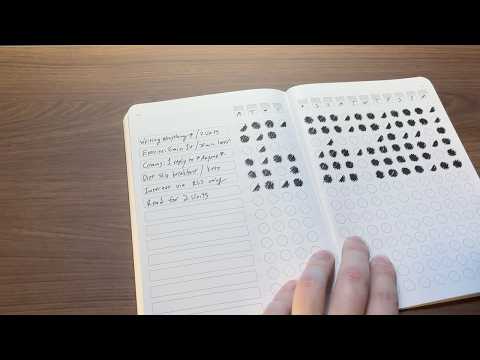
यह शब्द अन्य भाषाओं में
Media के और शब्द
transgraphate
C1To convert or transform information, data, or concepts from one graphical representation, medium, or symbolic system into another. This process usually involves reinterpreting the structure of the data to fit a new visual or schematic framework.
video
A1A recording of moving visual images made digitally or on videotape. It can also refer to the medium itself or the technology used to record, show, or broadcast such images.
blurb
B2A short promotional description or advertisement, especially one found on the back cover of a book or a DVD case. Its primary purpose is to attract the reader's attention and encourage them to buy or engage with the product.
broadsheet
B2A broadsheet is a type of newspaper printed on large sheets of paper, typically measuring approximately 15 by 22 inches. It is generally associated with serious, high-quality journalism and in-depth reporting on national and international affairs.
breaking
B2Describes information that is currently unfolding or being reported for the first time. It is also used to describe objects in the process of fracturing or waves as they crash toward the shore.
broadcast
B2रेडियो या टीवी के माध्यम से कार्यक्रमों का प्रसारण। यह जानकारी को बहुत सारे लोगों तक फैलाने के लिए भी उपयोग होता है।
expose
B2A public report, film, or piece of investigative journalism that reveals the truth about a situation, especially one involving dishonesty, crime, or scandal. It is intended to bring hidden facts to light and often results in public shock or legal consequences.
foreaudile
C1To listen to an audio recording or sequence in advance of its official presentation or broadcast. It is primarily used in technical, educational, or media contexts to ensure quality, clarity, and accuracy before a final evaluation or public release.
overgraphion
C1To overlay a text, image, or dataset with excessive graphical elements, annotations, or redundant writing. It implies that the original clarity of the information is lost or obscured due to over-mapping or over-recording.
media3
B1Media3 सामूहिक रूप से जनसंचार के मुख्य साधनों, जैसे प्रसारण, प्रकाशन और इंटरनेट को संदर्भित करता है।