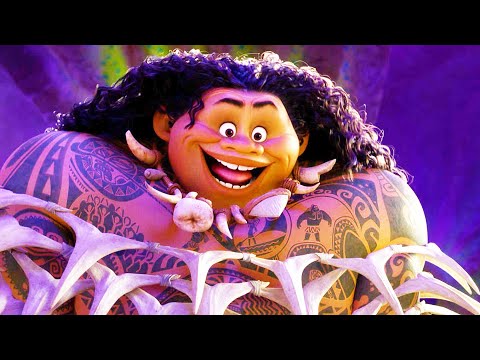
moi 30 सेकंड में
- A borrowed French pronoun used in English to refer to oneself in a playful, ironic, or slightly pretentious manner, often for comedic effect.
- Commonly heard in the phrase 'Who, moi?' to express mock surprise or to deflect a lighthearted accusation of being a diva or selfish.
- Associated with theatricality, high-fashion parodies, and pop culture icons like Miss Piggy, signaling a self-aware and humorous 'diva' persona.
- Strictly informal and stylistic; it should never be used as a literal replacement for 'me' in serious, professional, or academic contexts.
The word moi is a fascinating linguistic transplant from French into English. While in its native French it is simply the stressed form of the first-person singular pronoun 'me,' its journey into the English lexicon has transformed it into a specialized tool for social performance. When an English speaker uses 'moi,' they are rarely just referring to themselves in a neutral way. Instead, they are adopting a persona—one that is often playfully arrogant, theatrically modest, or intentionally pretentious. This usage is deeply rooted in the concept of irony. By using a French word, which carries historical connotations of high culture, sophistication, and the aristocracy in the English-speaking imagination, the speaker creates a humorous contrast between the 'grandeur' of the word and the perhaps mundane or slightly guilty reality of the situation. It is the linguistic equivalent of a dramatic hair flip or a mock-offended gasp.
- The Persona of Mock-Innocence
- The most common scenario involves a speaker being accused of something minor, like eating the last piece of cake or being a bit of a diva. By responding with 'Who, moi?', the speaker uses the French term to signal that the accusation is so beneath them that they must answer in the language of high society, thereby making the whole interaction a joke.
'You forgot to do the dishes again, didn't you?' 'Who, moi? I am far too busy contemplating the mysteries of the universe for such trivialities.'
Historically, the use of French in English was a marker of the ruling class following the Norman Conquest. Over centuries, this created a psychological association where French words feel 'fancier' than their Germanic counterparts. Modern English speakers tap into this collective memory to perform 'fanciness' for comedic effect. It is a way of saying 'I am being self-important right now, and I know that you know I am joking.' This makes 'moi' a highly social word, requiring a shared understanding of tone and context between the speaker and the listener. Without that shared irony, the speaker might actually come across as genuinely conceited, which is the opposite of the intended playful effect.
- The Miss Piggy Effect
- In popular culture, characters like Miss Piggy from The Muppets have cemented this word's place in English. Her constant use of 'moi' to assert her status as a star, despite being a puppet pig, perfectly encapsulates the word's function: a humorous assertion of self-importance that everyone is in on.
'Surely you aren't suggesting that moi would be capable of such a fashion faux pas?'
Furthermore, 'moi' serves as a shield. If someone calls you out for being selfish, saying 'It's all about moi' acknowledges the selfishness but wraps it in a layer of humor that softens the blow. It suggests that you are aware of your flaws and are choosing to celebrate them rather than hide them. This level of self-awareness is key to the word's B1-level complexity; it requires understanding not just the definition, but the social subtext of the interaction.
- Linguistic Irony
- The irony lies in the fact that 'moi' is a very simple word in French, but in English, it carries the weight of an entire cultural stereotype about French elegance and ego.
'Is this all for moi? You really shouldn't have, but I'm glad you did!'
'Don't look at moi; I'm just the messenger in this fabulous drama.'
In summary, 'moi' is a pronoun that functions more like an adjective or a stage direction. It tells the listener: 'I am currently playing the role of a sophisticated or slightly spoiled person.' It is a tool for levity, a way to navigate social friction with a wink and a nod to the shared cultural understanding of what it means to be 'fancy.'
Using moi correctly in English is less about grammar and more about timing and delivery. Because it is a borrowed term, it doesn't follow the standard rules for English pronouns like 'I' or 'me.' You cannot simply swap 'me' for 'moi' in every sentence without sounding very strange. Instead, 'moi' is almost always used in specific rhetorical structures that highlight the speaker's self-focus. The most iconic structure is the 'Who, moi?' question, which is used to deflect blame or express mock surprise at being noticed.
- The Rhetorical Question
- This is the primary way the word appears. It stands alone as a short, punchy interjection. It is usually preceded by 'Who,' and followed by a look of wide-eyed innocence.
'Are you suggesting that moi would ever be late for such an important gala?'
Another common usage is at the end of a sentence to emphasize that the speaker is the center of attention. This often happens in phrases like 'all for moi' or 'it's all about moi.' In these cases, 'moi' replaces 'me' to add a layer of theatricality. It suggests that the speaker is enjoying the attention and is leaning into the 'diva' persona. It is important to note that this should only be done in informal settings with friends or family who understand the joke. In a business meeting, using 'moi' would likely be seen as unprofessional or genuinely arrogant.
- The 'All About Moi' Pattern
- Used when the speaker is jokingly admitting to being self-centered. It's a way of acknowledging one's ego without being truly offensive.
'Today is my birthday, so for the next twenty-four hours, the world revolves around moi.'
Grammatically, 'moi' usually functions as an object pronoun (like 'me') or a subject complement. However, because it is used for effect, it often breaks standard syntax. You might see it used as a subject in very specific, stylized sentences, such as 'Moi? I would never!' Here, 'moi' acts as a disjunctive pronoun, setting the stage for the actual subject 'I.' This mimics the French structure 'Moi, je...' which is used for emphasis.
- The Sarcastic Third Person
- Sometimes people use 'moi' to refer to themselves as if they were a character in a play. 'And what about moi? Do I not get a glass of champagne?'
'Everyone else got a gift bag, but what about moi?'
When writing 'moi,' it is sometimes italicized to indicate its foreign origin, though this is becoming less common as the word becomes more integrated into English slang. The key is to ensure the surrounding context supports the ironic tone. If the sentence is too serious, 'moi' will feel like a typo or a mistake. It needs the 'flavor' of humor to work correctly.
'I'm sure you'll find someone better than moi for the job—though I highly doubt it!'
'A little bird told me you were looking for moi.'
In summary, use 'moi' when you want to be 'extra.' Use it when you want to draw attention to yourself in a way that says 'I'm being a bit much right now, and I'm loving it.' It's a word for the spotlight, the stage, and the dinner party, not for the office or the classroom.
In the real world, you are most likely to encounter moi in environments where people are performing social identities or engaging in witty banter. It is a staple of the 'fabulous' lifestyle, often heard in fashion, theater, and high-end hospitality circles. If you watch reality television shows about wealthy socialites, you will hear 'moi' used frequently as a way for the cast members to assert their importance while maintaining a veneer of charm. It is also very common in British 'camp' humor, where exaggeration and theatricality are celebrated.
- Pop Culture and Media
- The most famous user of 'moi' is undoubtedly Miss Piggy. Her use of the word defined it for generations of English speakers as the ultimate expression of a 'diva' personality. You will also find it in sitcoms when a character is trying to act more sophisticated than they actually are.
'In the world of fashion, there is only one person who matters: moi.'
You will also hear it in casual conversations among friends, particularly when someone is being teased. If a group of friends is deciding who should pay for dinner, and one person jokingly says, 'Well, it certainly shouldn't be moi!', they are using the word to lighten the mood and make their refusal part of a joke. It is a way to be 'difficult' without actually causing conflict. In this context, 'moi' acts as a social lubricant, using humor to navigate potentially awkward situations.
- Literature and Satire
- Satirical writers use 'moi' to mock characters who are full of themselves. In novels, a character who uses 'moi' is often being portrayed as pretentious or out of touch with reality. It is a quick linguistic shorthand for 'this person thinks they are better than everyone else.'
'The Duchess looked at the commoners and sighed, "They simply don't understand the burdens of moi."'
In the digital age, 'moi' has found a home in social media captions. An influencer might post a photo of themselves in a luxury setting with the caption 'Just moi in my natural habitat.' Here, the word is used to acknowledge the vanity of the post while simultaneously leaning into it. It’s a form of 'meta-humor' where the speaker is aware of the cliché they are fulfilling. You might also see it in ironic memes where a character (often a cat or a small dog) is portrayed as a demanding royal.
- The Drag and Queer Community
- In drag culture, 'moi' is used to project 'high-glamour' and 'over-the-top' femininity. It is part of a broader lexicon of words used to create a larger-than-life stage persona.
'Step aside, darling, moi has arrived!'
'Is there any more tea for moi?'
In summary, you hear 'moi' wherever there is a need for a little bit of drama, a little bit of irony, and a whole lot of self-focus. It is a word of the stage, whether that stage is a literal one or just the 'stage' of daily social interaction.
The biggest mistake learners make with moi is using it too literally. Because it means 'me' in French, some students think they can use it as a direct synonym for 'me' in English. This is incorrect. In English, 'moi' is a *stylistic choice*, not a grammatical necessity. If you use it in a sentence where there is no irony or humor, you will sound like you are struggling with basic English pronouns rather than being witty. For example, saying 'Please give the book to moi' in a normal conversation sounds very odd and incorrect.
- Mistake 1: Serious Usage
- Using 'moi' in a serious or formal context. 'Moi' is inherently playful. Using it in a cover letter or a legal document would be a significant error in register.
Incorrect: 'I would like to apply for the position because moi has the required skills.'
Another common mistake is mispronunciation. While it is a French word, in English, it is almost always pronounced 'mwah' (rhyming with 'spa'). Some learners might try to pronounce it like 'moy' or 'moy-ee,' which is incorrect and loses the sophisticated (or mock-sophisticated) feel of the word. The 'mwah' sound is essential to the theatricality of the term. If you don't get the sound right, the joke won't land.
- Mistake 2: Overuse
- Using 'moi' too frequently in a single conversation. Like any strong spice, a little 'moi' goes a long way. If you use it every time you refer to yourself, it becomes annoying rather than funny.
Overused: 'Moi thinks moi should go to the store for moi.'
Misunderstanding the 'Who, moi?' trope is also a pitfall. Some learners use it when they are genuinely confused about who someone is talking to. If someone says 'Hey, John!' and you aren't sure if they mean you, you should say 'Who, me?' or 'Me?'. If you say 'Who, moi?', you are implying that you are a very important person who is surprised to be addressed by a commoner. If that's not the vibe you want, stick to 'me.'
- Mistake 3: Subject Pronoun Confusion
- In French, 'moi' is a stressed pronoun, but in English, it usually acts as an object. Using it as a direct subject (e.g., 'Moi am going') is almost always wrong unless you are doing a very specific, very weird character voice.
Incorrect: 'Moi is ready to eat.'
Correct: 'Is that for moi?' (Playful)
Finally, remember that 'moi' is gender-neutral in English usage, even though French has gendered pronouns. Anyone can use 'moi' to be a diva, regardless of their gender. The mistake would be thinking it's only for women because of characters like Miss Piggy. It's for anyone who wants to add a touch of ironic flair to their speech.
If you find moi a bit too theatrical for a particular situation, there are several other ways to refer to yourself with varying degrees of humor, formality, or emphasis. Understanding these alternatives will help you choose the right 'self-reference' for the right moment. The most direct alternative is, of course, 'me' or 'myself,' but these lack the ironic 'spark' that 'moi' provides.
- Yours Truly
- This is a classic English alternative. It is also used for mock-modesty or to refer to oneself in the third person. It feels a bit more 'old-fashioned' and 'gentlemanly' compared to the 'diva' vibe of 'moi.'
'And who managed to fix the sink? None other than yours truly.'
Another option is 'Number One.' This is often used in phrases like 'looking out for number one.' It is much more cynical and less playful than 'moi.' While 'moi' is about performance and humor, 'number one' is about genuine self-interest and survival. You wouldn't use 'number one' to be cute; you'd use it to be pragmatic or even a bit selfish.
- The Royal 'We'
- If you want to go even further than 'moi' in terms of pretension, you can use 'we' to refer to yourself. This is known as the 'royal we' (pluralis majestatis). It is very rare and almost always used as a joke to imply that you are a monarch.
'We are not amused by these jokes.'
For a more modern, slangy feel, people sometimes use 'self' or 'the kid.' For example, 'Self, we need to get it together' or 'The kid needs a drink.' These are informal and often used in internal monologues or when talking to very close friends. They provide a different kind of irony—one that is more 'gritty' or 'street' compared to the 'high-society' irony of 'moi.'
- This Guy / This Girl
- Often accompanied by pointing two thumbs at oneself. It's a way of taking credit for something in a slightly goofy way. 'Who has two thumbs and just got a promotion? This guy!'
'Who's ready for the weekend? This girl!'
'I'm just a simple man, unlike moi over there with the fancy hat.'
In summary, while 'moi' is unique in its French-flavored irony, you have a whole toolkit of self-referential terms to choose from. Use 'moi' when you want to be a fabulous diva, 'yours truly' when you want to be a humble-bragger, and 'me' when you just want to be yourself.
How Formal Is It?
रोचक तथ्य
The ironic use of 'moi' in English became significantly more popular in the late 20th century, largely due to the character Miss Piggy from The Muppet Show, who used it to assert her 'star' status.
उच्चारण मार्गदर्शिका
- Pronouncing it like 'moy' (rhyming with 'boy').
- Pronouncing it like 'mo-ee' (two syllables).
- Using a hard 'o' sound like in 'more'.
- Failing to give it the theatrical 'breathiness' often associated with its ironic use.
- Pronouncing the 'i' as a long 'e' sound.
कठिनाई स्तर
Easy to recognize, but requires understanding the ironic tone.
Difficult to use correctly without sounding genuinely arrogant.
Requires correct 'mwah' pronunciation and theatrical delivery.
Must distinguish between a joke and a serious statement.
आगे क्या सीखें
पूर्वापेक्षाएँ
आगे सीखें
उन्नत
ज़रूरी व्याकरण
Disjunctive Pronouns
Moi, I like tea. (Using 'moi' for emphasis before the subject 'I'.)
Object Pronouns
Give it to moi. (Using 'moi' as the object of a preposition.)
Subject Complements
It is moi. (Using 'moi' after the verb 'to be'.)
Rhetorical Questions
Who, moi? (Using a pronoun as a standalone question.)
Loanword Italics
She referred to herself as *moi*. (Italicizing foreign words.)
स्तर के अनुसार उदाहरण
Is this for me?
Is this for moi?
Use 'me' for normal situations.
Who is it? It is me.
Who is it? It is moi.
Simple identification.
Give it to me.
Give it to moi.
Object pronoun.
Look at me!
Look at moi!
Imperative with object.
He likes me.
He likes moi.
Subject-Verb-Object.
Wait for me.
Wait for moi.
Prepositional object.
Can you hear me?
Can you hear moi?
Question form.
Help me, please.
Help moi, please.
Polite request.
Who, moi? I didn't do it!
Who, me? (Funny)
Used for mock-innocence.
Is all this cake for moi?
Is this for me? (Playful)
Adding flair to a question.
Don't forget about moi.
Don't forget me. (Silly)
Informal emphasis.
Moi? A diva? Never!
Me? A diva?
One-word response.
It's a gift from moi to you.
From me to you. (Fancy)
Stylized prepositional phrase.
Everyone is looking at moi.
Looking at me. (Dramatic)
Dramatic object.
Who's the best? Moi!
Who's the best? Me!
Exclamatory use.
Excuse moi, I'm coming through.
Excuse me. (Funny)
Mock-French phrase.
Who, moi? I would never dream of being late.
Who, me? (Ironic)
Deflecting blame with irony.
I suppose you're all here to see moi.
Here to see me. (Arrogant joke)
Adopting a persona.
It's all about moi today, isn't it?
All about me. (Self-centered joke)
Acknowledging vanity.
Is there a little something for moi in that bag?
Something for me? (Playful)
Informal request for attention.
Moi? I'm just a humble servant of the arts.
Me? (False modesty)
Mock-humility.
Don't you think this color suits moi perfectly?
Suits me. (Vain joke)
Seeking a compliment playfully.
You can't have a party without moi!
Without me. (Theatrical)
Emphasizing importance.
Who, moi? I'm shocked you'd even suggest it.
Who, me? (Over-acting)
Rhetorical surprise.
Surely you don't expect moi to walk in the rain?
Expect me to walk. (Diva behavior)
Expressing mock-outrage.
The spotlight was made for moi, darling.
Made for me. (Stage persona)
Using 'darling' to enhance the effect.
If anyone can handle this drama, it's moi.
It's me. (Self-assured joke)
Assertion of capability.
Are you talking to moi? I don't see anyone else here.
Talking to me? (Movie reference)
Referencing pop culture.
Moi? I'm far too sophisticated for such gossip.
Me? (Pretentious joke)
Setting a high-society tone.
Everything in this room was chosen to complement moi.
To complement me. (Extreme vanity)
Hyperbolic self-focus.
You know moi—I can't resist a good sale.
You know me. (Familiar irony)
Using 'moi' in a familiar idiom.
Is there no one who can match the wit of moi?
Match my wit. (Arrogant play)
Formal structure with 'moi'.
He had the audacity to suggest that moi was the source of the leak.
Suggest that I/me was...
Using 'moi' to highlight the 'insult' to one's status.
In the grand theater of life, I play many roles, but none so well as moi.
None so well as me.
Literary/philosophical irony.
The invitation was addressed to 'The Honorable,' which naturally means moi.
Means me.
Social satire.
Moi? I am merely the humble architect of this entire revolution.
Me? (Grandiosity)
Bathos: combining 'humble' with 'revolution'.
She treats everyone like a servant, including—heaven forbid—moi.
Including me.
Using 'moi' to emphasize the absurdity of the treatment.
Is it vanity if it's simply the truth about moi?
Truth about me.
Rhetorical play on self-perception.
I've spent years cultivating this persona; you can't expect the real moi to show up.
The real me.
Treating 'moi' as a distinct identity.
What is a party without the sparkling presence of moi?
Presence of me.
Mock-aristocratic phrasing.
The protagonist's constant recourse to 'moi' signals a deep-seated fragility masked by gallic affectation.
Use of 'me/self'.
Meta-linguistic analysis.
To use 'moi' is to invoke a centuries-old tradition of English francophilia and its attendant ironies.
To use the word.
Historical/cultural analysis.
The 'Who, moi?' defense is the ultimate weapon of the socially savvy miscreant.
The 'Who, me?' defense.
Noun phrase construction.
One does not simply 'use' moi; one inhabits the space that the word carves out in the conversation.
One doesn't just say it.
Abstract philosophical usage.
The transition from the French 'moi' to the English 'moi' is a study in semantic drift and cultural appropriation.
The change in meaning.
Linguistic terminology.
Her 'moi' was less Miss Piggy and more Marie Antoinette, dripping with a dangerous kind of playfulness.
Her way of saying 'me'.
Comparative character analysis.
In the digital age, 'moi' has been rehabilitated as a tool for performative self-deprecation.
Used for making fun of oneself.
Sociolinguistic observation.
The sheer audacity of the 'moi' in that sentence was enough to derail the entire negotiation.
The use of the word.
Word as a noun/concept.
सामान्य शब्द संयोजन
सामान्य वाक्यांश
— A classic expression of mock-innocence or surprise when accused of something.
You think I'm being dramatic? Who, moi?
— A humorous way to admit to being self-centered or wanting attention.
I'm the bride, so today it's all about moi.
— A playful way to ask if a gift or gesture is intended for you.
You brought coffee? Is that for moi?
— A way to say 'don't blame me' or 'I'm not involved' in a funny way.
The vase broke? Don't look at moi; I was in the garden.
— A theatrical denial of a suggestion or accusation.
Would I ever lie to you? Moi? Never!
— A slightly pretentious way to say you are alone.
A quiet evening with just moi and my thoughts.
— A mock-complaint about being ignored or left out.
You gave everyone a cookie, but what about moi?
— An extreme (and usually joking) assertion of self-importance.
In my house, the world revolves around moi.
— A dramatic way to say you are prepared for something.
The camera is on? Moi is ready for my close-up.
— Acknowledging a treat with a sense of entitlement and humor.
Oh, a chocolate! A gift for moi!
अक्सर इससे भ्रम होता है
The standard English pronoun. Use 'me' for serious things, 'moi' for jokes.
The subject pronoun. 'Moi' is almost never used as a simple subject like 'I' is.
The possessive adjective. Don't say 'moi book'; say 'my book'.
मुहावरे और अभिव्यक्तियाँ
— The quintessential idiom of mock-innocence, used to deflect blame with a wink.
You think I'm the one who spilled the wine? Who, moi?
Informal— An idiom used to signal that the speaker is prioritizing their own needs or desires, usually jokingly.
I'm taking the big bedroom; it's all about moi.
Informal— A self-deprecating but actually self-centered way to refer to oneself.
How could little old moi possibly help with such a big problem?
Sarcastic— A strong, theatrical denial of an action or intention.
Steal your seat? Moi? I wouldn't dream of it!
Dramatic— Referring to oneself as a glamorous character.
Clear the way for the fabulous moi!
Camp— A playful way to ask about the personal benefit of a situation.
I'll help you move, but what's in it for moi?
Informal— A variation of 'me and my big mouth,' used when the speaker has said too much.
I told him the secret. Moi and my big mouth!
Self-deprecating— Emphasizing one's uniqueness in a humorous way.
There is only one person for the job: the one and only moi.
Boastful— A play on the song lyric 'Is it me you're looking for?', used when someone enters a room.
I heard a knock. Is it moi you're looking for?
Playful— A play on 'mum's the word,' implying that the speaker is the focus of the secret.
Don't tell anyone I'm here. Moi's the word!
Humorousआसानी से भ्रमित होने वाले
They both refer to the speaker.
'Me' is neutral and standard; 'moi' is ironic and borrowed from French.
Give it to me (Standard). Give it to moi (Playful).
Both are used for emphasis.
'Myself' is a reflexive or intensive pronoun; 'moi' is a stylistic interjection.
I did it myself. Who, moi?
Both relate to the self.
'Mine' shows possession; 'moi' is a personal pronoun.
That is mine. Is that for moi?
Similar sound in some accents.
'May' is a modal verb for permission; 'moi' is a pronoun.
May I go? Who, moi?
Similar spelling.
'Mow' is a verb meaning to cut grass; 'moi' is a pronoun.
I need to mow the lawn. Is that for moi?
वाक्य संरचनाएँ
Who, [pronoun]?
Who, moi?
Is [noun] for [pronoun]?
Is this coffee for moi?
It's all about [pronoun].
It's all about moi.
Don't look at [pronoun].
Don't look at moi.
Little old [pronoun].
You want help from little old moi?
[Pronoun]? I wouldn't dream of it!
Moi? I wouldn't dream of it!
The [adjective] [pronoun].
The fabulous moi has arrived.
Recourse to '[pronoun]'.
His constant recourse to 'moi' was annoying.
शब्द परिवार
संबंधित
इसे कैसे इस्तेमाल करें
Low in general English, but high in specific comedic or social contexts.
-
Using 'moi' in a serious email.
→
Using 'me' or 'myself'.
'Moi' is too informal and playful for professional correspondence.
-
Pronouncing it 'moy'.
→
Pronouncing it 'mwah'.
The 'moy' pronunciation is incorrect and loses the French-inspired irony.
-
Using 'moi' as a regular subject.
→
I am going to the store.
Saying 'Moi is going' is grammatically incorrect in English.
-
Using 'moi' when you are actually confused.
→
Me? (Standard confusion).
'Who, moi?' implies you are too important to be spoken to, which might be rude if you aren't joking.
-
Thinking 'moi' is only for women.
→
Anyone can use it.
While associated with divas, it is a gender-neutral pronoun in English usage.
सुझाव
Theatricality
Think of 'moi' as a stage direction. It tells people you are playing a character.
Shared Irony
Only use 'moi' with people who understand you are joking. Otherwise, you might look arrogant.
The 'Wah' Sound
Make sure the 'wah' sound is clear. A flat 'moy' sound will ruin the effect.
Birthday Rule
Birthdays are the perfect time to use 'moi' because you are allowed to be self-centered.
Deflect Blame
Use 'Who, moi?' to turn a small mistake into a joke.
Loanword Love
Learning 'moi' helps you understand how English uses French to signal 'fanciness.'
Spot the Diva
When you hear 'moi' in a movie, look at the character's clothes and attitude—they are usually a diva.
Italics for Impact
In a text message, writing *moi* in italics helps convey the ironic tone.
Don't Overdo It
Using 'moi' too much makes the joke get old very quickly. Use it like a rare spice.
Miss Piggy Vibes
If you're unsure of the vibe, watch a clip of Miss Piggy. That is the 'moi' gold standard.
याद करें
स्मृति सहायक
Think of a 'Mwah!' kiss. When you say 'moi,' you are blowing a kiss to yourself because you are so fabulous.
दृश्य संबंध
Imagine a pig in a blonde wig and a pearl necklace (Miss Piggy) gasping and saying 'Who, moi?'. This image perfectly captures the word's tone.
Word Web
चैलेंज
Try to use 'Who, moi?' at least once today when someone asks you a question, but make sure you do it with a big, fake smile so they know you are joking.
शब्द की उत्पत्ति
Borrowed directly from the French language, where it is the stressed form of the first-person singular pronoun. It entered English usage as a stylistic loanword.
मूल अर्थ: Me; the stressed form of 'je' (I).
Romance (French) via Latin 'me'.सांस्कृतिक संदर्भ
Be careful not to use 'moi' in a way that mocks actual French speakers or their accent, as this can come across as xenophobic rather than ironic.
Commonly used in theatrical, fashion, and LGBTQ+ circles to project 'fabulousness.'
असल ज़िंदगी में अभ्यास करें
वास्तविक संदर्भ
Receiving a gift
- Is this for moi?
- You shouldn't have... but keep going!
- Moi? A present?
- How did you know what moi wanted?
Being accused of something minor
- Who, moi?
- I'm shocked!
- Moi? Never!
- Don't look at moi.
Celebrating a birthday
- It's all about moi today.
- The world revolves around moi.
- Presents for moi!
- Moi is the birthday queen/king.
Acting like a diva
- Moi needs a coffee.
- Is there a chair for moi?
- The spotlight belongs to moi.
- Only the best for moi.
Social media captions
- Just moi.
- Moi in my element.
- A little treat for moi.
- Moi, myself, and I.
बातचीत की शुरुआत
"If I said 'Who, moi?', would you think I was being serious or joking?"
"Do you know which famous puppet character always says 'moi'?"
"Have you ever used a French word in English just to sound fancy?"
"When is the last time you felt like the world revolved around 'moi'?"
"If someone calls you a diva, is 'Who, moi?' a good response?"
डायरी विषय
Write about a time you acted like a diva. Did you use the word 'moi' or just feel that way?
Describe a character in a movie who would definitely use the word 'moi' to refer to themselves.
Why do you think English speakers use French words to sound sophisticated or funny?
Write a short dialogue between two friends where one is being jokingly pretentious using 'moi.'
How does the meaning of a sentence change if you swap 'me' for 'moi'?
अक्सर पूछे जाने वाले सवाल
10 सवालIt is a French word that is commonly borrowed and used in English. It is listed in many English dictionaries as a loanword used for humorous effect.
It is pronounced 'mwah,' rhyming with 'spa.' Do not pronounce it like 'boy' or 'me.'
Use it in informal, playful situations when you want to act a bit like a diva or pretend to be innocent. Never use it in formal writing.
No. In English usage, anyone of any gender can use 'moi' to be playful or theatrical.
In English, it almost always functions like 'me' (an object pronoun). In French, it is a stressed pronoun.
It is a classic trope used to express mock surprise or innocence, often when the person is actually guilty of something minor.
Only if you have a very close, joking relationship with your colleagues. In most professional settings, it will sound unprofessional.
It can be considered a type of 'camp' or 'theatrical' slang, but it is also a well-recognized loanword.
The character Miss Piggy from The Muppets is largely responsible for its popularity in modern English pop culture.
The spelling is 'moi' (from French), but the pronunciation is 'mwah.'
खुद को परखो 200 सवाल
Write a sentence using 'Who, moi?' to respond to an accusation of eating the last cookie.
Well written! Good try! Check the sample answer below.
Use 'all about moi' in a sentence about your birthday.
Well written! Good try! Check the sample answer below.
Write a dialogue where someone uses 'moi' to act like a diva.
Well written! Good try! Check the sample answer below.
Explain why 'moi' is used in English instead of 'me' in certain contexts.
Well written! Good try! Check the sample answer below.
Write a social media caption for a fancy dinner using the word 'moi'.
Well written! Good try! Check the sample answer below.
Create a sentence using 'little old moi' sarcastically.
Well written! Good try! Check the sample answer below.
Rewrite the sentence 'Is this for me?' to sound more playful using 'moi'.
Well written! Good try! Check the sample answer below.
Describe a character who would frequently use the word 'moi'.
Well written! Good try! Check the sample answer below.
Write a sentence using 'moi' to express mock-outrage.
Well written! Good try! Check the sample answer below.
Use 'moi' in a sentence about a spotlight.
Well written! Good try! Check the sample answer below.
Write a sentence using 'moi' as a subject complement (after 'is').
Well written! Good try! Check the sample answer below.
Create a short story (3 sentences) using 'moi' twice.
Well written! Good try! Check the sample answer below.
Write a sentence using 'moi' to deflect a compliment.
Well written! Good try! Check the sample answer below.
Use 'moi' in a sentence about shopping.
Well written! Good try! Check the sample answer below.
Explain the pronunciation of 'moi' to a friend.
Well written! Good try! Check the sample answer below.
Write a sentence using 'moi' to show mock-innocence about a secret.
Well written! Good try! Check the sample answer below.
Use 'moi' in a sentence about a fashion choice.
Well written! Good try! Check the sample answer below.
Write a sentence using 'moi' to mock someone else's pretension.
Well written! Good try! Check the sample answer below.
Create a sentence using 'moi' and 'darling' together.
Well written! Good try! Check the sample answer below.
Write a sentence using 'moi' to express a desire for attention.
Well written! Good try! Check the sample answer below.
Say 'Who, moi?' with a look of fake innocence.
Read this aloud:
तुमने कहा:
Speech recognition is not supported in your browser. Try Chrome or Edge.
Pronounce 'moi' correctly three times.
Read this aloud:
तुमने कहा:
Speech recognition is not supported in your browser. Try Chrome or Edge.
Say 'It's all about moi' as if it's your birthday.
Read this aloud:
तुमने कहा:
Speech recognition is not supported in your browser. Try Chrome or Edge.
Practice the 'diva' voice: 'Is there no coffee for moi?'
Read this aloud:
तुमने कहा:
Speech recognition is not supported in your browser. Try Chrome or Edge.
Explain the meaning of 'moi' to a partner.
Read this aloud:
तुमने कहा:
Speech recognition is not supported in your browser. Try Chrome or Edge.
Say 'Moi? Never!' in response to being called a diva.
Read this aloud:
तुमने कहा:
Speech recognition is not supported in your browser. Try Chrome or Edge.
Use 'moi' in a sentence about a gift you just received.
Read this aloud:
तुमने कहा:
Speech recognition is not supported in your browser. Try Chrome or Edge.
Differentiate the sounds of 'me' and 'moi' aloud.
Read this aloud:
तुमने कहा:
Speech recognition is not supported in your browser. Try Chrome or Edge.
Say 'Don't look at moi' as if you just broke something.
Read this aloud:
तुमने कहा:
Speech recognition is not supported in your browser. Try Chrome or Edge.
Tell a 10-second story about a diva using 'moi'.
Read this aloud:
तुमने कहा:
Speech recognition is not supported in your browser. Try Chrome or Edge.
Say 'The fabulous moi has arrived' while walking into a room.
Read this aloud:
तुमने कहा:
Speech recognition is not supported in your browser. Try Chrome or Edge.
Ask 'What about moi?' in a mock-sad voice.
Read this aloud:
तुमने कहा:
Speech recognition is not supported in your browser. Try Chrome or Edge.
Pronounce 'moi-même' (mwah-mem).
Read this aloud:
तुमने कहा:
Speech recognition is not supported in your browser. Try Chrome or Edge.
Say 'Who, moi?' and then wink.
Read this aloud:
तुमने कहा:
Speech recognition is not supported in your browser. Try Chrome or Edge.
Use 'moi' in a sentence about your favorite food.
Read this aloud:
तुमने कहा:
Speech recognition is not supported in your browser. Try Chrome or Edge.
Say 'Excuse moi' like a character in a comedy.
Read this aloud:
तुमने कहा:
Speech recognition is not supported in your browser. Try Chrome or Edge.
Practice saying 'moi' with a French accent.
Read this aloud:
तुमने कहा:
Speech recognition is not supported in your browser. Try Chrome or Edge.
Say 'Is it moi you're looking for?' like a song.
Read this aloud:
तुमने कहा:
Speech recognition is not supported in your browser. Try Chrome or Edge.
Explain why you wouldn't use 'moi' in a business meeting.
Read this aloud:
तुमने कहा:
Speech recognition is not supported in your browser. Try Chrome or Edge.
Say 'Little old moi' with a sarcastic smile.
Read this aloud:
तुमने कहा:
Speech recognition is not supported in your browser. Try Chrome or Edge.
Listen to the sentence: 'Who, moi? I'm shocked!' Is the speaker serious?
Identify the word: 'Is this for [mwah]?'
Which word did the speaker use to refer to themselves: 'me' or 'moi'?
Does the speaker sound like a diva? 'Moi needs a drink right now!'
What is the last word in this sentence: 'The only person who matters is moi.'
Is the speaker using a French loanword? 'Who, moi?'
What is the tone of 'Is that for moi?'
Which phrase did you hear: 'all about me' or 'all about moi'?
Is the speaker being humble? 'Moi? I'm the best!'
Identify the syllable count of 'moi'.
Does 'moi' rhyme with 'boy' in the clip?
What emotion is expressed in 'Who, moi?'
Is 'moi' used as a subject or an object in: 'Give it to moi'?
Which character archetype uses 'moi' most often?
Can you hear the 'w' sound in 'moi'?
/ 200 correct
Perfect score!
Summary
The word 'moi' is your linguistic 'secret weapon' for adding a touch of irony and drama to your self-references. Use it when you want to wink at your audience and say, 'I know I'm being a bit much, and I'm doing it on purpose.' Example: 'Is all this attention for moi? How wonderful!'
- A borrowed French pronoun used in English to refer to oneself in a playful, ironic, or slightly pretentious manner, often for comedic effect.
- Commonly heard in the phrase 'Who, moi?' to express mock surprise or to deflect a lighthearted accusation of being a diva or selfish.
- Associated with theatricality, high-fashion parodies, and pop culture icons like Miss Piggy, signaling a self-aware and humorous 'diva' persona.
- Strictly informal and stylistic; it should never be used as a literal replacement for 'me' in serious, professional, or academic contexts.
Theatricality
Think of 'moi' as a stage direction. It tells people you are playing a character.
Shared Irony
Only use 'moi' with people who understand you are joking. Otherwise, you might look arrogant.
The 'Wah' Sound
Make sure the 'wah' sound is clear. A flat 'moy' sound will ruin the effect.
Birthday Rule
Birthdays are the perfect time to use 'moi' because you are allowed to be self-centered.