negro 30 सेकंड में
- A historical term for Black people that is now considered a deeply offensive racial slur in modern English.
- Commonly found in pre-1960s literature and historical documents, but strictly avoided in contemporary professional and social settings.
- Derived from the Spanish word for black, it carries the heavy weight of slavery and segregation in the United States.
- Replaced by terms like 'Black' and 'African American' to promote respect and self-determination for people of African descent.
The word negro is a term that has undergone a profound and painful transformation in the English language. Historically, it was used as a standard, and at times even a formal, designation for people of Black African heritage. Derived from the Spanish and Portuguese word for the color black, which in turn comes from the Latin niger, the term entered the English lexicon during the era of the transatlantic slave trade. For centuries, it was the primary descriptor used by Europeans and Americans to categorize individuals of African descent. However, the context of its use was inextricably linked to systems of oppression, including chattel slavery, Jim Crow laws, and colonial exploitation. While there was a period in the early to mid-20th century where some Black leaders and organizations, such as the Universal Negro Improvement Association or the United Negro College Fund, utilized the term as a means of asserting a collective identity and dignity, the social upheavals of the 1960s Civil Rights Movement led to a decisive shift. Activists and scholars began to reject the term because of its historical association with subservience and white supremacy, preferring 'Black' and later 'African American.' Today, in the 21st century, the word is widely regarded as an offensive racial slur or, at the very least, a deeply archaic and insensitive term that carries the heavy weight of historical trauma. Using it in contemporary conversation is generally seen as a sign of racial prejudice or a profound lack of social awareness.
- Historical Context
- The term was the standard identifier in the United States Census and official government documents until the late 20th century, reflecting a time when racial categorization was used to enforce segregation.
In many historical documents from the early 1900s, the word negro was used as a formal racial classification, though it is now considered offensive.
- Linguistic Evolution
- The transition from this term to 'Black' represented a move toward self-determination and the rejection of labels imposed by an external, oppressive culture.
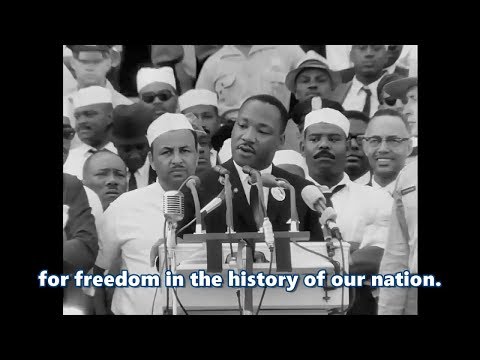
Dr. Martin Luther King Jr. used the term negro in his famous 'I Have a Dream' speech, which was consistent with the formal language of 1963.
Furthermore, the word's offensive nature is compounded by its phonetic proximity to a much more virulent racial slur. This has made the term even more radioactive in modern discourse. In academic settings, the word is usually only mentioned when quoting historical sources or analyzing the history of racism. In all other contexts, its use is strictly avoided to prevent causing harm or perpetuating racist ideologies. It is also important to distinguish between the English word and its cognates in other languages; for example, in Spanish, the word simply means the color black and does not carry the same derogatory history, though even there, its use as a descriptor for people can be complex depending on the region and intent. In English, however, the consensus is clear: the word is a relic of a discriminatory past and has no place in respectful, modern communication. Understanding this word is less about learning how to use it and more about understanding why it is no longer used, providing a window into the evolving nature of social justice and linguistic sensitivity.
- Modern Usage Status
- The term is now classified as derogatory and is often censored or replaced in modern reprints of older texts to avoid giving offense.
The museum exhibit explained how the label negro was once used to justify the exclusion of citizens from voting.
Scholars studying the Jim Crow era must analyze how the word negro functioned in legal statutes of that time.
The transition away from the term negro was a key part of the Black Power movement's focus on cultural pride.
Using the word negro in a sentence today is a highly sensitive matter that requires a deep understanding of linguistic pragmatics. In contemporary English, you should almost never use this word in active, everyday speech. The only appropriate context for its use is within a historical, academic, or literary framework where you are specifically referencing the past or quoting a primary source. For example, if you are writing a history paper about the 19th century, you might quote a politician from that era who used the term. In such cases, it is often helpful to provide context or use 'scare quotes' to indicate that the term is being cited rather than endorsed. You might say, 'The 1860 census categorized many individuals as negro, a term that reflected the racial hierarchies of the time.' This approach acknowledges the word's existence without adopting it as part of your own vocabulary. It is also vital to recognize that even in these contexts, the word can be jarring and hurtful to many people, so it should be handled with extreme care and respect for the audience.
- Academic Citation
- When quoting historical figures like Frederick Douglass or W.E.B. Du Bois, researchers maintain the original term negro to preserve historical accuracy while often adding a disclaimer about its modern offensiveness.
The professor noted that the term negro was common in the sociological writings of the early 20th century.
- Literary Analysis
- In discussing novels like 'To Kill a Mockingbird,' students examine how the use of the word negro illustrates the racial climate of the American South in the 1930s.
The documentary highlighted how the word negro was used on signs to enforce segregation in public spaces.
Another specific instance where the word might appear is in the names of long-standing organizations that have chosen to keep their original titles for historical reasons. For instance, the 'United Negro College Fund' (UNCF) continues to use the word. When referring to such organizations, it is correct to use the full, official name. However, even in these cases, many people prefer to use the acronym UNCF to avoid the word itself. In creative writing, an author might use the word in dialogue to establish a specific historical setting or to characterize a person from a past era. This is a common technique in historical fiction, but it requires a high level of skill to ensure that the word is being used to critique or accurately portray history rather than to normalize hate speech. Outside of these very specific, controlled environments, the word should be considered 'off-limits.' If you are an English learner, the safest and most respectful path is to completely exclude this word from your active vocabulary and instead use 'Black' or 'African American' when referring to people of African descent. Understanding the word's usage is about developing the cultural competence to navigate complex social landscapes and respecting the dignity of others.
- Proper Names
- When mentioning the 'Negro Leagues' in the history of American baseball, the term is used as part of a proper noun to describe the professional leagues for Black players during the era of segregation.
The historian explained that the negro spirituals were a vital form of cultural expression and resistance for enslaved people.
The archive contains many letters where the term negro is used to describe the community's efforts for civil rights.
In his essay, the author analyzed the shift from negro to 'Black' as a moment of linguistic liberation.
In the modern world, you are most likely to encounter the word negro in media that focuses on history, literature, or social justice education. If you are watching a documentary about the American Civil Rights Movement, you will hear the word used in archival footage of speeches by leaders like Malcolm X or Martin Luther King Jr. In these contexts, the word is not being used as a slur but as the standard terminology of the era. Similarly, if you are listening to an audiobook of a classic novel written before the 1960s, such as Ralph Ellison's 'Invisible Man' or James Baldwin's early essays, the word will appear frequently. These authors used the term to describe the reality of Black life in a segregated society. You might also hear it in academic lectures or podcasts that discuss the history of race relations, where scholars use the term to analyze how racial categories were constructed and maintained. It is also found in the titles of historical organizations or events, such as the 'Negro Leagues Baseball Museum' in Kansas City, which preserves the history of Black baseball players who were excluded from the Major Leagues.
- Archival Media
- Newsreels from the 1940s and 50s often used the term in a way that was considered objective reporting at the time, though it sounds jarring to modern ears.
The film featured a recording of a 1950s radio broadcast discussing the negro vote in the upcoming election.
- Museum Exhibits
- Curators use the word in placards to explain the specific historical context of artifacts from the era of legal segregation.
In the historical drama, the characters often used the word negro to refer to their community's social standing.
Outside of these historical and educational settings, the word is rarely heard in polite or professional conversation. If you do hear it used in a modern context, it is often a red flag for extremist rhetoric or hate speech. Some older individuals who grew up during the era when the word was standard might still use it out of habit, but this is increasingly rare and still generally frowned upon. In some very specific artistic contexts, such as hip-hop or modern poetry, the word (or variations of it) might be used as a form of 'reclamation,' where artists take a word that was used to hurt them and repurpose it for their own creative expression. However, this is a highly controversial and nuanced practice that is generally reserved for members of the Black community. For anyone else, hearing the word should serve as a signal to listen critically to the context. It is a word that demands an understanding of the speaker's intent and the historical weight it carries. In summary, while you will 'hear' the word in the echoes of history and the pages of literature, its presence in the modern spoken landscape is a sign of a very specific, and often problematic, context.
- Legal and Political History
- Law students may hear the term when studying landmark Supreme Court cases like Plessy v. Ferguson, where the word was part of the legal vernacular.
The lecturer discussed how the word negro was phased out of the US Census in favor of more inclusive terms.
The podcast episode explored the origins of negro spirituals and their influence on modern gospel music.
During the literature seminar, we discussed the significance of the word negro in Langston Hughes's poetry.
The most significant mistake an English learner can make with the word negro is assuming that it is a neutral or polite way to refer to a Black person. Because the word is a direct cognate for 'black' in many Romance languages (like Spanish, Portuguese, and Italian), speakers of those languages often mistakenly believe it is the correct term to use in English. This is a dangerous error. In English, the word has a specific, negative historical baggage that its counterparts in other languages do not necessarily share. Using it in a casual conversation will almost certainly be interpreted as an insult or a sign of racial animosity. Another common mistake is thinking that because the word appears in famous historical speeches or classic books, it is still acceptable to use today. This ignores the fact that language evolves, and terms that were once considered formal can become offensive over time. It is essential to distinguish between 'historical accuracy' and 'modern appropriateness.'
- Translation Error
- Translating the Spanish word 'negro' (black) directly into English when referring to a person is a major social faux pas that can lead to severe misunderstandings.
A common mistake is using negro instead of 'Black' in a modern essay about sociology.
- False Formality
- Some learners mistakenly believe that negro is a more 'formal' version of 'Black,' when in reality, it is considered outdated and offensive in all formal modern contexts.
Mistaking the word negro for a neutral descriptor is a frequent error for those unfamiliar with US history.
Furthermore, people sometimes confuse the word with its much more offensive derivative, the 'n-word.' While negro is considered offensive and dated, the derivative is a severe slur that is strictly taboo. However, the two are so closely linked in their history of oppression that using either one is likely to cause significant distress. Another mistake is using the word when referring to the color black in English. In English, the color is always 'black,' never 'negro.' For example, you would never say 'a negro car' or 'a negro dress.' This might seem obvious, but for speakers of Romance languages, the mental link between the color and the word can sometimes lead to slips of the tongue. Finally, some people assume that because an organization like the United Negro College Fund still exists, the word must be okay to use. This is a misunderstanding of how institutional names work; they often preserve historical terms that the rest of society has moved away from. In summary, the safest rule for any English speaker, especially a learner, is to treat this word as a historical artifact: something to be studied and understood, but never to be used in personal or professional communication.
- Misunderstanding Reclamation
- It is a mistake for non-Black individuals to think they can use the word just because they heard it in a song or a movie; this ignores the power dynamics of language.
It is a grave error to use the word negro in a job interview or a professional email.
Many students make the mistake of reading the word negro aloud in class without considering the impact on their peers.
The speaker apologized for using the word negro, realizing it was an outdated and insensitive choice.
When looking for alternatives to the word negro, it is important to choose terms that are respectful, modern, and accurate. The most common and widely accepted term today is 'Black.' This word is used as both an adjective and a noun (though usually an adjective, as in 'Black people') to describe individuals of African descent. In many contexts, especially in the United States, 'African American' is also a standard and respectful term, specifically referring to Black people who are citizens of the United States and have ancestral roots in Africa. Another term that has gained prominence is 'Person of Color' (POC) or 'BIPOC' (Black, Indigenous, and People of Color), which are used to describe people who are not white, emphasizing a shared experience of systemic racism. However, these terms are broader and should not be used if you are specifically referring to a Black person. It is also worth noting that 'Afro-American' was popular in the 1970s but is now considered somewhat dated, though not offensive like the word we are discussing. Understanding these nuances is key to being a culturally sensitive communicator.
- Black vs. Negro
- While 'Black' is a modern, empowering term, negro is a historical term that is now considered offensive due to its association with slavery and segregation.
Instead of using the word negro, modern journalists use 'Black' to describe the community's achievements.
- African American
- This term is often preferred in formal and academic settings in the U.S. to emphasize the dual heritage of the community.
The term 'Person of Color' is a broad alternative that avoids the specific historical pain of the word negro.
In a global context, terms can vary. In the United Kingdom, 'Black British' is the common term. In many parts of Africa, people identify by their specific nationality (e.g., Nigerian, Kenyan) or ethnic group rather than a racial category. When discussing history, you might encounter the term 'Colored,' which was also a standard term in the U.S. for a time but is now also considered offensive and dated. It is crucial to avoid 'Colored' just as strictly as you avoid the word we are focusing on. The evolution of these terms shows a move toward language that honors the humanity and self-identity of individuals. As a learner, staying updated on these shifts is a sign of respect. If you are ever unsure of which term to use, it is often best to listen to how people in that community describe themselves or to use 'Black' as a generally safe and respectful default in most modern English-speaking environments. By choosing the right words, you contribute to a more inclusive and understanding world, leaving behind the exclusionary language of the past.
- Global Variations
- In South Africa, 'Coloured' refers to a specific ethnic group and is not the same as the offensive U.S. term, showing how context changes everything.
The speaker emphasized that 'Black' is a term of pride, whereas negro is a term of historical subjugation.
We should use 'African American' in our report to align with modern professional standards and avoid the word negro.
The shift from negro to 'Black' in the 1960s was a major turning point in the language of civil rights.
How Formal Is It?
रोचक तथ्य
The word 'negro' was the preferred term of many Black activists in the early 20th century because it was seen as more dignified than other terms used at the time. It was only later that it became seen as offensive.
उच्चारण मार्गदर्शिका
- Pronouncing it like the Spanish word 'negro' (with a short 'e' sound).
- Confusing it with the much more offensive 'n-word' slur.
- Using a hard 'g' sound that sounds aggressive.
- Misplacing the stress on the second syllable.
- Failing to recognize the long 'ee' sound in the first syllable.
कठिनाई स्तर
Easy to recognize in texts, but requires historical context to understand correctly.
Extremely difficult to use correctly because it is almost always inappropriate to use.
Dangerous to use in speech; learners should avoid it entirely.
Important to recognize when heard in historical media to understand the context.
आगे क्या सीखें
पूर्वापेक्षाएँ
आगे सीखें
उन्नत
ज़रूरी व्याकरण
Pluralization of nouns ending in -o
Negro becomes Negroes, just like Hero becomes Heroes.
Using 'the' with racial groups (Archaic)
Historically, people said 'the Negro,' but today we say 'Black people'.
Capitalization of racial terms
In the past, 'negro' was often lowercase, but 'Black' is now often capitalized.
Adjectives as nouns
Avoid using 'a Black' as a noun; use 'a Black person' instead.
Quotation marks for sensitive terms
Use 'scare quotes' when referencing the word: The term 'negro' is dated.
स्तर के अनुसार उदाहरण
The old book uses the word negro.
L'ancien livre utilise le mot negro.
Subject + Verb + Object.
Do not say negro; say Black.
Ne dites pas negro ; dites Black.
Imperative mood.
Is the word negro good to use?
Le mot negro est-il bon à utiliser ?
Interrogative sentence.
No, the word negro is not good.
Non, le mot negro n'est pas bon.
Negative sentence.
We learn about the word negro in history.
Nous apprenons le mot negro en histoire.
Present simple tense.
The word negro is very old.
Le mot negro est très vieux.
Adjective usage.
I see the word negro in a museum.
Je vois le mot negro dans un musée.
Prepositional phrase.
Please use kind words, not negro.
S'il vous plaît, utilisez des mots gentils, pas negro.
Polite request.
In the past, people used the word negro often.
Dans le passé, les gens utilisaient souvent le mot negro.
Past simple tense.
Today, the word negro is considered offensive.
Aujourd'hui, le mot negro est considéré comme offensant.
Passive voice.
You should use 'Black' instead of negro.
Vous devriez utiliser 'Black' au lieu de negro.
Modal verb 'should'.
The teacher explained why negro is a bad word.
Le professeur a expliqué pourquoi negro est un mauvais mot.
Indirect question.
I found the word negro in an old newspaper.
J'ai trouvé le mot negro dans un vieux journal.
Past simple with 'found'.
Many people feel hurt by the word negro.
Beaucoup de gens se sentent blessés par le mot negro.
Expressing feelings.
The word negro is not used in modern English.
Le mot negro n'est pas utilisé en anglais moderne.
Negative passive voice.
We must be careful not to say negro.
Nous devons faire attention à ne pas dire negro.
Modal verb 'must'.
The term negro was once the standard racial identifier.
Le terme negro était autrefois l'identifiant racial standard.
Historical past tense.
Civil rights leaders eventually rejected the word negro.
Les leaders des droits civiques ont fini par rejeter le mot negro.
Adverbial placement.
It is rare to hear the word negro in public today.
Il est rare d'entendre le mot negro en public aujourd'hui.
It is + adjective + to-infinitive.
The word negro has a very complicated history.
Le mot negro a une histoire très compliquée.
Present perfect simple.
Some organizations still have the word negro in their names.
Certaines organisations ont encore le mot negro dans leur nom.
Quantifier 'some'.
Reading the word negro in literature can be uncomfortable.
Lire le mot negro dans la littérature peut être inconfortable.
Gerund as subject.
The shift from negro to Black happened in the 1960s.
Le passage de negro à Black s'est produit dans les années 1960.
Noun phrase as subject.
You should avoid using the word negro in your essays.
Vous devriez éviter d'utiliser le mot negro dans vos essais.
Avoid + gerund.
The word negro is now considered a derogatory archaism.
Le mot negro est désormais considéré comme un archaïsme dérogatoire.
Complex noun phrase.
Historians analyze how the word negro was used in legislation.
Les historiens analysent comment le mot negro était utilisé dans la législation.
Indirect question in a clause.
The term negro is inextricably linked to the era of segregation.
Le terme negro est inextricablement lié à l'ère de la ségrégation.
Adverb modifying an adjective.
Many authors of the Harlem Renaissance used the word negro.
De nombreux auteurs de la Renaissance de Harlem ont utilisé le mot negro.
Proper noun usage.
The word negro evolved from a neutral descriptor to a slur.
Le mot negro est passé d'un descripteur neutre à une insulte.
Verb 'evolved' with 'from... to'.
Using the word negro today demonstrates a lack of sensitivity.
Utiliser le mot negro aujourd'hui démontre un manque de sensibilité.
Gerund phrase as subject.
The word negro is often replaced in modern editions of classics.
Le mot negro est souvent remplacé dans les éditions modernes des classiques.
Frequency adverb with passive voice.
Context is everything when encountering the word negro.
Le contexte est tout lorsqu'on rencontre le mot negro.
Abstract noun as subject.
The sociolinguistic status of the word negro is highly contentious.
Le statut sociolinguistique du mot negro est très litigieux.
Academic vocabulary.
The word negro serves as a linguistic marker of a bygone era.
Le mot negro sert de marqueur linguistique d'une époque révolue.
Metaphorical language.
One must navigate the historical usage of negro with extreme caution.
Il faut naviguer dans l'usage historique de negro avec une extrême prudence.
Formal pronoun 'one'.
The term negro was systematically used to marginalize individuals.
Le terme negro a été systématiquement utilisé pour marginaliser les individus.
Adverbial modification of passive voice.
The word negro is a focal point in the study of racial rhetoric.
Le mot negro est un point focal dans l'étude de la rhétorique raciale.
Prepositional phrase 'in the study of'.
Scholars debate the ethics of reading the word negro aloud.
Les chercheurs débattent de l'éthique de lire le mot negro à haute voix.
Verb + object + gerund.
The word negro carries a visceral emotional charge for many.
Le mot negro porte une charge émotionnelle viscérale pour beaucoup.
Abstract noun with strong adjective.
The transition away from negro was a deliberate act of reclamation.
Le passage de negro a été un acte délibéré de réappropriation.
Complex subject phrase.
The word negro is a semiotic artifact of institutionalized racism.
Le mot negro est un artefact sémiotique du racisme institutionnalisé.
Highly specialized terminology.
Its presence in the lexicon is a testament to a dark chapter of history.
Sa présence dans le lexique est un témoignage d'un chapitre sombre de l'histoire.
Metaphorical 'testament to'.
The word negro is often invoked to illustrate the power of naming.
Le mot negro est souvent invoqué pour illustrer le pouvoir de la nomination.
Passive voice with 'invoked'.
The word negro has been largely purged from modern professional discourse.
Le mot negro a été largement purgé du discours professionnel moderne.
Present perfect passive with 'purged'.
The word negro remains a volatile element in the American cultural landscape.
Le mot negro reste un élément volatil dans le paysage culturel américain.
Adjective 'volatile' used figuratively.
Analyzing the word negro requires a nuanced understanding of power dynamics.
Analyser le mot negro nécessite une compréhension nuancée des dynamiques de pouvoir.
Gerund subject with complex object.
The word negro is a linguistic vestige of a stratified social order.
Le mot negro est un vestige linguistique d'un ordre social stratifié.
Sophisticated noun 'vestige'.
The word negro is strictly relegated to historical and critical analysis.
Le mot negro est strictement relégué à l'analyse historique et critique.
Adverb 'strictly' with passive 'relegated'.
सामान्य शब्द संयोजन
सामान्य वाक्यांश
— A term from the 1920s referring to a more outspoken and assertive Black identity. It was a central concept of the Harlem Renaissance.
Alain Locke's anthology 'The New Negro' defined an era of Black art.
— The precursor to Black History Month, established by Carter G. Woodson in 1926. It was intended to celebrate Black achievements.
We celebrated Negro History Week every February in my old school.
— Professional baseball leagues for Black players during the era of segregation in the U.S. They were known for high-level play.
Jackie Robinson played in the Negro Leagues before joining the Dodgers.
— Religious songs created by enslaved African people in the United States. They often contained coded messages about freedom.
'Swing Low, Sweet Chariot' is one of the most famous Negro spirituals.
— A philanthropic organization that funds scholarships for Black students and supports HBCUs. It is still active today.
She received a grant from the United Negro College Fund for her tuition.
— The official newspaper of the Universal Negro Improvement Association (UNIA). It was a major pan-Africanist publication.
Marcus Garvey founded the Negro World to spread his message.
— A term sometimes used for historical social or religious groups within the Black community. It implies a sense of brotherhood.
The Negro Fellowship League was an important community center in Chicago.
— A famous theater company in New York City that focuses on Black stories. It has produced many award-winning plays.
The Negro Ensemble Company helped launch the careers of many Black actors.
— A common name for the song 'Lift Every Voice and Sing.' It is a song of hope and resilience for Black Americans.
The crowd stood and sang the Negro National Anthem with pride.
— Referring to the UNIA, a global organization dedicated to Black nationalism and self-reliance. It was very influential in the 1920s.
The Universal Negro Improvement Association had millions of members worldwide.
अक्सर इससे भ्रम होता है
The n-word is a much more severe and violent slur, though both are offensive.
Black is the modern, respectful term, whereas negro is the outdated, offensive one.
In Spanish, it is a neutral word for the color black, which causes confusion for learners.
मुहावरे और अभिव्यक्तियाँ
— There are no common positive idioms using this word in modern English. Most idiomatic uses are historical and now considered offensive.
Idiomatic usage is not recommended.
None— The word is too sensitive for idiomatic use in contemporary language.
Avoid using this word in any figurative sense.
None— Historically, some phrases existed, but they are now slurs.
No examples provided for safety.
None— Linguistic experts advise against any idiomatic use of racial terms.
Focus on respectful language instead.
None— Idioms usually require a shared cultural comfort that does not exist with this word.
N/A
Noneआसानी से भ्रमित होने वाले
Direct cognate in Romance languages.
In English, it is a racial term with a history of oppression. In Spanish/Portuguese, it is primarily a color.
In Spain, 'un coche negro' is a black car. In English, you would never use the word for a car.
Both are historical terms for Black people.
Both are now offensive, but 'Colored' was often used for anyone non-white, while 'negro' was specific to those of African descent.
The sign said 'Colored Only' during the segregation era.
Similar spelling and Latin root.
Niger is a country in Africa; the other is a racial term. They are pronounced differently.
The Republic of Niger is located in West Africa.
Similar prefix.
Nigella is a type of flower or seed used in cooking, completely unrelated to race.
She added nigella seeds to the bread.
Similar root.
Nigeria is a major African nation. The name comes from the Niger River.
Lagos is the largest city in Nigeria.
वाक्य संरचनाएँ
The word [word] is [adjective].
The word negro is offensive.
People used to say [word], but now they say [alternative].
People used to say negro, but now they say Black.
The term [word] is associated with [historical event].
The term negro is associated with the era of segregation.
It is important to understand the [noun] of the word [word].
It is important to understand the history of the word negro.
The [noun] of [word] reflects the [noun] of the time.
The usage of negro reflects the racial attitudes of the time.
[Word] has transitioned from [category A] to [category B].
Negro has transitioned from a formal identifier to a slur.
The word [word] is a [noun] of [abstract concept].
The word negro is a vestige of colonial power.
One must [verb] the [noun] surrounding the word [word].
One must navigate the sensitivities surrounding the word negro.
शब्द परिवार
संज्ञा
विशेषण
संबंधित
इसे कैसे इस्तेमाल करें
Very low in modern speech; high in historical texts.
-
Using 'negro' to mean the color black.
→
Use 'black' for the color.
In English, 'negro' is only used for race, and it is offensive. For colors, always use 'black'.
-
Thinking 'negro' is a formal way to say 'Black'.
→
Use 'Black' or 'African American'.
This was true 70 years ago, but today it is the opposite. It is now considered very informal and rude.
-
Reading the word aloud in a modern setting without a disclaimer.
→
Acknowledge the word's history before reading.
Reading the word without context can make people around you feel very uncomfortable.
-
Translating directly from Spanish 'negro' to English.
→
Translate 'negro' as 'black' or 'Black person' depending on context.
Direct translation ignores the massive cultural and historical differences between the two languages.
-
Assuming it's okay because an old organization uses it.
→
Use the organization's name but don't use the word elsewhere.
Names of old groups are historical exceptions, not a rule for general language use.
सुझाव
Respect History
Understand that this word carries the weight of centuries of pain. Treating it with respect means not using it in your own speech.
Choose 'Black'
When in doubt, 'Black' is the most widely accepted and respectful term in modern English. It is simple and direct.
Use Quotes
If you must mention the word in a paper, always put it in quotation marks to show you are citing it, not using it yourself.
Listen First
Pay attention to how people describe themselves. Using a person's preferred terminology is the best way to show respect.
Check the Date
If you see the word in a text, check when it was written. This will help you understand if it was meant to be formal or offensive.
Language Differences
Be aware that words that look the same in different languages (like Spanish and English) can have very different meanings.
Avoid in Office
Never use this word in a professional setting. It can lead to serious consequences, including losing your job.
Read Critically
When reading older books, use the word as a chance to discuss how society has changed for the better.
Documentary Context
In documentaries, the word is used to preserve the truth of the past. Listen to it as a historical fact, not a modern suggestion.
Be Kind
Language is about connection. Choosing kind and modern words helps you connect better with everyone.
याद करें
स्मृति सहायक
Think of 'Negative' and 'Negro' – the word now has a very negative history in English and should be avoided.
दृश्य संबंध
Imagine an old, black-and-white history book from the 1950s. The word belongs inside that book, not in the modern world.
Word Web
चैलेंज
Try to explain to a friend why the word 'negro' is offensive in English but 'negro' is just a color in Spanish. Use at least three sentences.
शब्द की उत्पत्ति
The word originates from the Spanish and Portuguese word 'negro,' which means 'black.' This was derived from the Latin 'niger,' also meaning 'black.' It entered the English language in the 16th century.
मूल अर्थ: Originally, it was a neutral descriptor for the color black or for people with dark skin.
Romance (via Latin) into Germanic (English).सांस्कृतिक संदर्भ
Extremely high sensitivity. The word can cause genuine emotional distress and should be handled with the same care as any other racial slur.
In the US, Canada, and the UK, the word is strictly avoided in all modern social and professional contexts.
असल ज़िंदगी में अभ्यास करें
वास्तविक संदर्भ
History Class
- The historical term...
- In the context of the 19th century...
- As stated in the document...
- The racial classification used was...
Literature Analysis
- The author's use of the word...
- Reflecting the language of the time...
- A character's racial identity...
- The social climate of the novel...
Museum Visit
- The exhibit explains...
- These artifacts from the era of...
- The sign reads...
- Understanding the past through...
Documentary Film
- Archival footage shows...
- The speaker used the terminology of...
- A recording from 1955...
- The struggle for rights in...
Sociology Lecture
- The evolution of racial labels...
- The social construction of...
- Linguistic shifts in the 20th century...
- The impact of the Civil Rights Movement...
बातचीत की शुरुआत
"Why do you think the word 'negro' became offensive over time?"
"How does the history of the word 'negro' differ from its Spanish cognate?"
"What are some other words that have changed from formal to offensive?"
"How should we handle offensive words when reading classic literature aloud?"
"Why is it important for English learners to know which words are historical slurs?"
डायरी विषय
Reflect on how language can be used as a tool for both oppression and liberation.
Write about a time you encountered a word in a book that made you feel uncomfortable.
Discuss the importance of updating our vocabulary to reflect modern social values.
How does knowing the history of a word like 'negro' change your understanding of the past?
Imagine you are a historian explaining the shift from 'negro' to 'Black' to a student.
अक्सर पूछे जाने वाले सवाल
10 सवालIn modern English, yes, it is widely considered a racial slur or a deeply offensive term. While it was once a formal word, its association with slavery and segregation has made it unacceptable in contemporary society. You should avoid using it entirely.
Some organizations, like the United Negro College Fund (UNCF), were founded when the word was the standard formal term. They keep the name for historical continuity and brand recognition, but they often use their acronym instead. This does not mean the word is okay for general use.
No, in English, the color is always called 'black.' Using 'negro' for the color is a mistake often made by speakers of Romance languages. For example, say 'a black pen,' not 'a negro pen.'
The most respectful and common terms are 'Black' or 'African American.' 'Black' is generally safe in most English-speaking countries, while 'African American' is specific to the United States. Always use the term the community prefers.
Generally, no. In Spanish, 'negro' is the standard word for the color black and is often used neutrally to describe people. However, in English, the word has a completely different and much more negative history.
At the time Dr. King was speaking (the 1950s and 60s), 'negro' was the formal and respectful term used by both Black and white Americans. The shift to 'Black' happened toward the end of his life and after his death.
No, they are different words, but they are related. The n-word is a much more aggressive and violent slur. However, 'negro' is also considered offensive and should not be used.
These are historical religious songs created by enslaved people in the U.S. The term is still used in music history to refer to this specific genre, but it is one of the few contexts where the word is still used.
The transition happened during the late 1960s. As the Black Power movement grew, activists argued that 'negro' was a label given by oppressors and that 'Black' was a term of pride and self-choice.
Some Black artists or individuals use the word in a process called 'reclamation,' but this is a complex internal community matter. Non-Black people should never use the word, as it will be seen as racist.
खुद को परखो 180 सवाल
Explain why the word 'negro' is considered offensive today.
Well written! Good try! Check the sample answer below.
Compare the word 'negro' with the word 'Black'.
Well written! Good try! Check the sample answer below.
Write a sentence using the term 'Negro Leagues' correctly.
Well written! Good try! Check the sample answer below.
How should an English learner handle seeing the word 'negro' in a book?
Well written! Good try! Check the sample answer below.
What is the difference between 'negro' in English and Spanish?
Well written! Good try! Check the sample answer below.
Describe the shift in language that happened in the 1960s regarding this word.
Well written! Good try! Check the sample answer below.
Why do some organizations still have 'negro' in their names?
Well written! Good try! Check the sample answer below.
Write a short paragraph about 'Negro spirituals'.
Well written! Good try! Check the sample answer below.
What does 'reclamation' mean in the context of offensive words?
Well written! Good try! Check the sample answer below.
Is it ever okay to use the word 'negro' in a modern essay?
Well written! Good try! Check the sample answer below.
Define the term 'African American'.
Well written! Good try! Check the sample answer below.
Why is context important for this word?
Well written! Good try! Check the sample answer below.
What is the Latin origin of 'negro'?
Well written! Good try! Check the sample answer below.
How has the U.S. Census changed its use of the word?
Well written! Good try! Check the sample answer below.
Write a sentence about the Harlem Renaissance using the word 'negro'.
Well written! Good try! Check the sample answer below.
What is the plural form of 'negro'?
Well written! Good try! Check the sample answer below.
Why should you avoid using 'negro' for the color black?
Well written! Good try! Check the sample answer below.
Explain the term 'BIPOC'.
Well written! Good try! Check the sample answer below.
What is the emotional impact of this word?
Well written! Good try! Check the sample answer below.
Summarize the modern status of the word 'negro'.
Well written! Good try! Check the sample answer below.
Pronounce the word 'negro' correctly.
Read this aloud:
तुमने कहा:
Speech recognition is not supported in your browser. Try Chrome or Edge.
Explain to a classmate why they should say 'Black' instead of 'negro'.
Read this aloud:
तुमने कहा:
Speech recognition is not supported in your browser. Try Chrome or Edge.
What would you say if you saw this word in a textbook?
Read this aloud:
तुमने कहा:
Speech recognition is not supported in your browser. Try Chrome or Edge.
How do you say 'black car' in English?
Read this aloud:
तुमने कहा:
Speech recognition is not supported in your browser. Try Chrome or Edge.
Describe the history of the word in three sentences.
Read this aloud:
तुमने कहा:
Speech recognition is not supported in your browser. Try Chrome or Edge.
Is the stress on the first or second syllable?
Read this aloud:
तुमने कहा:
Speech recognition is not supported in your browser. Try Chrome or Edge.
What is a respectful way to talk about race?
Read this aloud:
तुमने कहा:
Speech recognition is not supported in your browser. Try Chrome or Edge.
Why is it important to know offensive words?
Read this aloud:
तुमने कहा:
Speech recognition is not supported in your browser. Try Chrome or Edge.
Can you use 'negro' as a joke?
Read this aloud:
तुमने कहा:
Speech recognition is not supported in your browser. Try Chrome or Edge.
What is the difference between 'negro' and the n-word?
Read this aloud:
तुमने कहा:
Speech recognition is not supported in your browser. Try Chrome or Edge.
How would you apologize if you used the word by mistake?
Read this aloud:
तुमने कहा:
Speech recognition is not supported in your browser. Try Chrome or Edge.
What is a 'Negro spiritual'?
Read this aloud:
तुमने कहा:
Speech recognition is not supported in your browser. Try Chrome or Edge.
Why do historians use this word?
Read this aloud:
तुमने कहा:
Speech recognition is not supported in your browser. Try Chrome or Edge.
Is the word 'negro' common in 2024?
Read this aloud:
तुमने कहा:
Speech recognition is not supported in your browser. Try Chrome or Edge.
What is the Latin root of the word?
Read this aloud:
तुमने कहा:
Speech recognition is not supported in your browser. Try Chrome or Edge.
What is 'Negritude'?
Read this aloud:
तुमने कहा:
Speech recognition is not supported in your browser. Try Chrome or Edge.
How do you pronounce the plural 'negroes'?
Read this aloud:
तुमने कहा:
Speech recognition is not supported in your browser. Try Chrome or Edge.
Why did Dr. King use the word?
Read this aloud:
तुमने कहा:
Speech recognition is not supported in your browser. Try Chrome or Edge.
Is 'negro' a noun or a verb?
Read this aloud:
तुमने कहा:
Speech recognition is not supported in your browser. Try Chrome or Edge.
What is the main rule for this word?
Read this aloud:
तुमने कहा:
Speech recognition is not supported in your browser. Try Chrome or Edge.
Listen to a clip of a 1950s newsreel. Why do they use the word 'negro'?
If you hear someone use 'negro' in a modern movie, what does it tell you about the character?
Listen for the difference between 'negro' and 'Nigeria'. Are they the same?
In a podcast about history, the host says 'the negro population'. Is this okay?
Can you hear the 'ee' sound in the first syllable?
If a speaker says 'negro' with a short 'e', what language might they be speaking?
Listen to a song from the 1920s. Does the word 'negro' sound offensive in that context?
What is the tone of someone saying 'negro' in a modern argument?
Do you hear the 's' or 'es' in the plural?
Is the word 'negro' used in modern pop songs?
Can you distinguish 'negro' from 'nero' (Italian for black)?
What is the 'Negro National Anthem'?
Does 'negro' rhyme with 'hero'?
Is the word 'negro' used in science?
What is the overall feeling of the word today?
/ 180 correct
Perfect score!
Summary
The word 'negro' is an offensive and outdated term that should never be used to refer to people today. Its only appropriate context is within the study of history or literature, where it serves as a reminder of a discriminatory past. For example: 'The historian explained that the term negro was once a standard census category but is now considered a slur.'
- A historical term for Black people that is now considered a deeply offensive racial slur in modern English.
- Commonly found in pre-1960s literature and historical documents, but strictly avoided in contemporary professional and social settings.
- Derived from the Spanish word for black, it carries the heavy weight of slavery and segregation in the United States.
- Replaced by terms like 'Black' and 'African American' to promote respect and self-determination for people of African descent.
Respect History
Understand that this word carries the weight of centuries of pain. Treating it with respect means not using it in your own speech.
Choose 'Black'
When in doubt, 'Black' is the most widely accepted and respectful term in modern English. It is simple and direct.
Use Quotes
If you must mention the word in a paper, always put it in quotation marks to show you are citing it, not using it yourself.
Listen First
Pay attention to how people describe themselves. Using a person's preferred terminology is the best way to show respect.