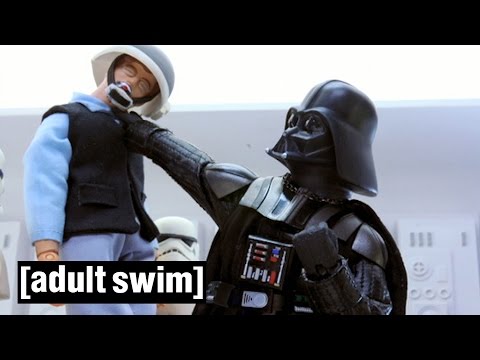
droids 30초 만에
- Droids are autonomous robots, often humanoid, popularized by science fiction media like Star Wars.
- The term is a shortened version of 'androids' and implies a machine with a distinct personality or function.
- Commonly used in informal and pop-culture contexts, droids are depicted as assistants, soldiers, or laborers.
- Grammatically, 'droids' is a countable plural noun that follows standard English rules for subject-verb agreement.
The term droids serves as a specialized, often science-fiction-oriented shorthand for the word 'androids.' In its most fundamental sense, a droid is a robot that is designed to resemble a human being or to act with a level of autonomy and intelligence that mimics biological life. While the word 'robot' can refer to any mechanical device—from a simple arm on a factory assembly line to a vacuum cleaner—the word 'droid' carries a specific connotation of personality, mobility, and often, a humanoid form. The term was popularized globally by the Star Wars franchise, where characters like R2-D2 and C-3PO became the archetypal examples of what a droid represents: a mechanical companion with a distinct function and, frequently, a quirky personality. In modern English, people use this word when they want to evoke a sense of advanced technology that feels approachable or even sentient. It is rarely used in strictly technical engineering papers, where 'autonomous systems' or 'humanoid robots' are preferred, but it is the dominant term in pop culture, gaming, and speculative fiction discussions.
- Functional Classification
- Droids are typically categorized by their primary purpose, such as protocol droids for translation, astromech droids for starship repair, or medical droids for surgery.
The scavenger spent her days scouring the desert for abandoned droids that could be sold for spare parts.
When using the word in a sentence, it is important to understand that 'droids' is the plural form. A single unit is a 'droid.' The word implies a level of complexity that goes beyond simple automation. For instance, you wouldn't call a toaster a droid, even if it had a digital screen. However, if that toaster had legs, could speak three languages, and could navigate a room to deliver toast, it might qualify for the label in a fictional or playful context. The word also carries a legal history; Lucasfilm Ltd. actually holds a trademark on the word 'droid' in many contexts, which is why you often see it used officially only in licensed products or very general descriptive ways in other media to avoid legal complications. Despite this, the word has entered the common lexicon as a synonym for any sophisticated, mobile robot that exhibits human-like traits or follows complex instructions without direct human steering.
- Cultural Nuance
- Using 'droids' instead of 'robots' often signals that the speaker is a fan of science fiction or is referring to a machine with a high degree of interactive capability.
In the futuristic city, droids performed all the menial tasks, from cleaning the streets to delivering packages.
In a broader technological context, the term is sometimes applied to the 'Android' operating system, though usually in the singular or as a brand name. However, when people talk about 'droids' in the plural, they are almost exclusively referring to physical, mechanical entities. The evolution of the word reflects our changing relationship with technology. In the mid-20th century, 'robots' were often seen as cold, metallic threats. By the time 'droids' became a popular term in the late 1970s, the concept had shifted toward machines that could be friends, assistants, or even comic relief. This shift is crucial for learners to understand: 'droids' often implies a level of personality or 'character' that 'robots' might lack. If you are writing a story about a machine that feels like a person, 'droid' is a much more evocative choice than 'mechanical device.'
- Technical Distinction
- While 'android' specifically means a robot that looks like a male human (and 'gynoid' for female), 'droid' is used more broadly for any sentient-acting robot regardless of shape.
The factory replaced its human workers with high-efficiency droids capable of working twenty-four hours a day.
These aren't the droids you're looking for.
The army of droids marched across the battlefield with perfect synchronization.
Using the word droids correctly requires an understanding of its grammatical role as a countable noun. Because it refers to distinct mechanical individuals, it follows all the standard rules for plural nouns in English. You can use it with numbers (three droids), with quantifiers (many droids, several droids, a few droids), and as the subject or object of a sentence. One of the most common ways to use 'droids' is in the context of labor or specialized tasks. Because droids are often depicted as tools or servants, verbs like 'deploy,' 'program,' 'repair,' 'deactivate,' and 'command' are frequently paired with them. For example, 'The engineer deployed a team of droids to explore the volcanic cavern.' Here, 'droids' is the direct object of the verb 'deployed,' indicating who or what was sent into the cavern.
- Subject-Verb Agreement
- Since 'droids' is plural, it always takes a plural verb: 'The droids are waiting,' not 'The droids is waiting.'
While some droids are designed for combat, others are built solely for diplomatic translation.
Another important aspect of using 'droids' is understanding its descriptive potential. Adjectives play a huge role in defining what kind of droid you are talking about. You might describe them as 'sentient droids' if they have feelings, 'malfunctioning droids' if they are broken, or 'autonomous droids' if they can think for themselves. In a sentence like, 'The ancient, rusted droids sat motionless in the corner of the hangar,' the adjectives 'ancient' and 'rusted' provide vital context about the state of the machines. Furthermore, 'droids' can be used in possessive forms. If you are talking about something that belongs to the droids, you would write 'the droids' power cells' (plural possessive). If you are talking about one droid, it would be 'the droid's power cell.'
- Collective Nouns
- Common collective nouns used with droids include 'a fleet of droids,' 'a squad of droids,' or 'a collection of droids.'
The technician had to wipe the memories of the droids to prevent them from sharing classified information.
In more advanced usage, 'droids' can be part of compound subjects or objects. For example, 'Both the pilots and the droids were exhausted after the long journey.' This highlights that in many science fiction settings, droids are treated with a status nearly equal to that of biological characters. You can also use the word in prepositional phrases: 'A world populated by droids,' or 'The conflict between humans and droids.' When constructing these sentences, remember that 'droids' implies a physical presence. If you are talking about software without a body, 'bots' or 'algorithms' is usually more accurate. If you say, 'The droids are attacking the server,' it implies physical robots are smashing the hardware. If you mean software is attacking, you should say 'The bots are attacking the server.'
- Passive Voice
- Droids are often the recipients of actions: 'The droids were manufactured in a secret facility on the moon.'
He wondered if the droids ever dreamed of electric sheep, or if their minds were purely logical.
Without the assistance of the navigation droids, the ship would have been lost in hyperspace.
The museum featured an exhibit on early 21st-century droids and their impact on domestic life.
The most prominent place you will hear the word droids is in the realm of entertainment, specifically within the Star Wars universe. From the very first film in 1977, the word became a household name. You will hear it in movies, animated series, and video games where characters interact with mechanical beings. Phrases like 'battle droids,' 'security droids,' and 'gonk droids' are common parlance for fans. However, the word's reach extends far beyond just one franchise. In the tech industry, specifically during the early 2010s, 'Droid' was a major brand of smartphones produced by Motorola in partnership with Verizon. This marketing campaign was so successful that for several years, many people in the United States used the word 'droid' as a generic term for any phone running the Android operating system, much like people use 'Kleenex' for tissues.
- Pop Culture Context
- You'll hear this word at comic book conventions, in toy aisles, and in discussions about the history of special effects in cinema.
'We don't serve their kind here!' the bartender shouted, pointing at the two droids entering the cantina.
In the world of real-world robotics and artificial intelligence, the word is used more colloquially. You might hear an engineer at a tech startup jokingly refer to their new delivery robot as a 'droid' to make it sound more friendly and less like a piece of industrial equipment. It is also a popular term in the 'maker' community—hobbyists who build their own robots. They might say, 'I'm working on a couple of droids for the upcoming robot combat tournament.' In this context, the word implies a labor of love and a creative project. Furthermore, in science fiction literature, authors use 'droids' to distinguish between different types of artificial life. A 'cyborg' is part human, an 'android' is a human-looking robot, and 'droids' is often used as a catch-all for the various mechanical workers that populate a futuristic society.
- Gaming Terminology
- In many RPGs and strategy games, 'droids' are a specific unit type with unique strengths and weaknesses compared to organic units.
The player must hack the enemy droids to turn them against their masters.
You might also encounter the word in news articles discussing the future of the workforce. Journalists sometimes use 'droids' as a catchy, slightly provocative way to talk about automation. Headlines like 'Are droids coming for your job?' or 'The rise of the domestic droids' are common. In these cases, the word is being used to tap into the public's existing familiarity with science fiction to make a complex economic topic feel more immediate and visual. Finally, in the field of linguistics and branding, 'droid' is studied as a prime example of how a fictional word can cross over into everyday language and even become a legally protected trademark. It is a word that carries a lot of 'baggage'—mostly positive—related to helpfulness, futuristic wonder, and the blurring lines between man and machine.
- Educational Context
- Teachers often use the concept of droids to engage students in STEM subjects, asking them to design their own functional machines.
The documentary explored how real-life engineers are inspired by the droids they saw in movies as children.
The futuristic theme park was staffed entirely by interactive droids.
The sci-fi convention featured a parade of fan-built droids that could actually roll and beep.
One of the most frequent mistakes learners make is using the word droids as a complete synonym for 'robots.' While all droids are robots, not all robots are droids. A 'robot' is a very broad term that includes everything from a robotic arm in a car factory to a computer program that crawls the web. A 'droid,' however, almost always implies a physical entity that has some degree of humanoid or animal-like characteristics, or at least a distinct personality. If you refer to a simple industrial sensor as a 'droid,' it will sound strange to native speakers. Another common error is confusing 'droids' with 'cyborgs.' A cyborg is a biological being (like a human) that has mechanical parts integrated into its body. A droid is 100% mechanical. If a character has a human brain but a metal body, they are a cyborg, not a droid.
- Droid vs. Android
- Don't confuse the noun 'droids' with the 'Android' operating system. While related, 'droids' refers to the machines themselves, while 'Android' is the software.
Incorrect: The droids on my phone are out of date. (Correct: The apps or OS on my phone are out of date.)
A subtle mistake involves the register or formality of the word. 'Droids' is a very informal, pop-culture-heavy term. If you are writing a formal academic essay about the future of automation in the healthcare industry, using the word 'droids' might make your writing seem less serious or overly influenced by movies. In professional settings, it is better to use terms like 'autonomous service robots' or 'humanoid assistants.' Additionally, learners sometimes struggle with the pluralization and possessive forms. Remember that 'droids' is already plural. If you want to talk about something belonging to a group of droids, the apostrophe goes after the 's' (droids'). If you put it before the 's' (droid's), you are talking about only one droid. This is a common punctuation error that can change the meaning of your sentence.
- Gendered Terms
- While 'android' technically refers to a male-shaped robot, 'droid' is gender-neutral and can be used for any robot.
Incorrect: The droids was fixed by the mechanic. (Correct: The droids were fixed by the mechanic.)
Finally, be careful with the trademarked nature of the word. If you are starting a business or naming a product, you should be aware that 'Droid' is a protected term in many jurisdictions. Using it in a commercial context without permission could lead to legal trouble. This doesn't affect how you speak or write in everyday life, but it's a good piece of 'real-world' knowledge to have. Also, avoid using 'droids' when you mean 'drones.' A drone is typically a remote-controlled or autonomous flying vehicle (UAV). While a drone could technically be considered a type of droid in a very broad sci-fi sense, in modern English, they are distinct categories. If it flies and looks like a small helicopter, it's a drone. If it walks on two legs and talks back to you, it's a droid.
- Pronunciation Pitfall
- Ensure you pronounce the 'oi' as a single diphthong /drɔɪdz/, not as two separate syllables like 'dro-ids.'
The scientist explained that while droids can simulate emotion, they do not actually feel it.
The movie was criticized for having droids that were too human-like to be believable.
Many people mistakenly call the Roomba a droid, but it's really just a specialized robot.
Understanding the synonyms and alternatives for droids helps you choose the most precise word for your context. The most common alternative is 'robots,' which is the parent category for all mechanical beings. Use 'robots' when you want to be general or technical. Another close relative is 'androids.' As mentioned before, 'android' is the full version of the word, but it specifically implies a robot that looks very much like a human. If your robot has a face, skin-like covering, and hair, 'android' is the better choice. If it looks more mechanical—with visible wires, metal plating, and glowing eyes—'droid' or 'robot' is more appropriate. For female-presenting robots, the rare but accurate term is 'gynoid,' though this is mostly used in academic or deep sci-fi circles.
- Droid vs. Automaton
- An 'automaton' is a mechanical figure that follows a predetermined set of instructions, often without any real intelligence. Droids are usually smarter and more adaptable.
While the 18th-century automata were impressive, they were nothing compared to modern droids.
In digital contexts, you will often see the word 'bots.' This is short for 'robots' as well, but in the 21st century, it has come to mean software programs that perform automated tasks online. You have 'chatbots' for customer service, 'search bots' for Google, and 'trading bots' for the stock market. You should almost never call these 'droids' because they don't have physical bodies. Another interesting alternative is 'synthetic' or 'synth.' Popularized by franchises like Fallout and Alien, 'synths' are biological-looking robots that are often indistinguishable from humans. Using 'synth' instead of 'droid' adds a layer of clinical or slightly eerie mystery to the description. If you are talking about a robot that is built for heavy labor and has no personality, 'mechanical unit' or 'automated worker' are good, neutral alternatives.
- Droid vs. Cyborg
- A cyborg is a 'cybernetic organism'—part biological, part machine. A droid is entirely machine.
The cyborg felt a strange kinship with the droids, even though he still possessed a human heart.
For a more poetic or archaic feel, you might use 'golem.' In mythology, a golem is an animated being created from inanimate matter (like clay). In some sci-fi, 'golem' is used as a derogatory or mystical term for droids. On the other end of the spectrum, 'AI' (Artificial Intelligence) is often used to refer to the 'brain' of the droid. You might say, 'The droid's AI is malfunctioning.' This distinguishes the physical body from the software controlling it. Finally, 'mechs' or 'mecha' refer to giant, pilotable robots, usually used for combat. While a droid is usually independent and roughly human-sized, a mech is a vehicle that a human sits inside. Knowing these distinctions allows you to build a much richer and more accurate vocabulary when discussing technology and fiction.
- Word Comparison Table
- Robot: General term. Android: Human-looking. Droid: Sci-fi, often humanoid. Bot: Software. Cyborg: Biological + Machine.
The colony relied on a fleet of mechanical laborers to harvest the crops before the storm arrived.
The synths were so realistic that they were granted the same rights as citizens.
The factory was a maze of automated systems and specialized droids.
How Formal Is It?
재미있는 사실
George Lucas liked the sound of the word so much that he made it a central part of his universe. Even though 'droid' is now a common word, Lucasfilm still owns the trademark for its use in toys and electronics.
발음 가이드
- Pronouncing it as two syllables: 'dro-ids.' It should be one smooth sound.
- Pronouncing the 'oi' like 'oh-ee.' It is a single diphthong.
- Making the 's' sound like a soft 's' instead of a 'z' sound.
- Failing to blend the 'd' and 'r' at the beginning.
- Dropping the 'd' at the end, making it sound like 'drois.'
난이도
The word is easy to recognize but often appears in complex sci-fi texts.
Learners must be careful with the plural possessive 'droids'.'
Pronunciation is straightforward once the 'oi' sound is mastered.
Can be confused with 'drones' or 'androids' in fast speech.
다음에 무엇을 배울까
선수 학습
다음에 배울 것
고급
알아야 할 문법
Plural Nouns
One droid, two droids.
Possessive Apostrophes
The droid's arm (one), the droids' arms (many).
Compound Nouns
Battle droids, security droids.
Collective Nouns
A fleet of droids, a squad of droids.
Adjective Order
The small, shiny, silver droids.
수준별 예문
The droid is my friend.
Le droïde est mon ami.
Simple subject-verb-complement structure.
I see two droids.
Je vois deux droïdes.
Plural 's' added to 'droid'.
The droid can talk.
Le droïde peut parler.
Use of modal verb 'can'.
Is that a droid?
Est-ce un droïde ?
Interrogative sentence structure.
The droid is blue and gold.
Le droïde est bleu et or.
Using adjectives to describe the noun.
Droids do not eat food.
Les droïdes ne mangent pas de nourriture.
Negative present simple tense.
My droid is very small.
Mon droïde est très petit.
Possessive adjective 'my'.
The droids are in the box.
Les droïdes sont dans la boîte.
Prepositional phrase 'in the box'.
The droids are helping the pilot fix the ship.
Les droïdes aident le pilote à réparer le vaisseau.
Present continuous tense for ongoing action.
He bought three new droids for his farm.
Il a acheté trois nouveaux droïdes pour sa ferme.
Past simple tense with a numerical quantifier.
Droids are robots that look like people.
Les droïdes sont des robots qui ressemblent à des gens.
Defining a noun using a relative clause.
The droid's eyes are glowing red.
Les yeux du droïde brillent en rouge.
Singular possessive form.
Many droids work in the factory.
Beaucoup de droïdes travaillent dans l'usine.
Quantifier 'many' used with a countable noun.
The droids were very expensive to buy.
Les droïdes étaient très chers à l'achat.
Past simple of 'to be' with an adjective.
Can the droids understand English?
Les droïdes peuvent-ils comprendre l'anglais ?
Modal question structure.
The droids cleaned the whole house.
Les droïdes ont nettoyé toute la maison.
Past simple for a completed action.
The scientist programmed the droids to perform surgery.
Le scientifique a programmé les droïdes pour effectuer des chirurgies.
Verb + object + infinitive pattern.
Droids are becoming more common in modern hotels.
Les droïdes deviennent plus courants dans les hôtels modernes.
Present continuous to show a changing situation.
If the droids malfunction, we will have to reset them.
Si les droïdes tombent en panne, nous devrons les réinitialiser.
First conditional structure.
The droids' primary function is to translate alien languages.
La fonction principale des droïdes est de traduire les langues extraterrestres.
Plural possessive form.
We need to find the droids that were stolen yesterday.
Nous devons trouver les droïdes qui ont été volés hier.
Relative clause with 'that' and passive voice.
The droids are much more efficient than human workers.
Les droïdes sont beaucoup plus efficaces que les travailleurs humains.
Comparative structure with 'than'.
Have you ever seen droids like these before?
Avez-vous déjà vu des droïdes comme ceux-là auparavant ?
Present perfect for life experience.
The droids were designed by a team of expert engineers.
Les droïdes ont été conçus par une équipe d'ingénieurs experts.
Passive voice in the past simple.
The ethical implications of using droids for warfare are widely debated.
Les implications éthiques de l'utilisation de droïdes pour la guerre sont largement débattues.
Complex subject with a prepositional phrase.
Despite being machines, these droids seem to exhibit genuine personality.
Bien qu'étant des machines, ces droïdes semblent faire preuve d'une véritable personnalité.
Concessive clause starting with 'Despite'.
The droids were deployed to the disaster zone to search for survivors.
Les droïdes ont été déployés dans la zone de la catastrophe pour rechercher des survivants.
Passive voice with a purpose infinitive.
The company's latest droids feature advanced haptic sensors.
Les derniers droïdes de l'entreprise sont dotés de capteurs haptiques avancés.
Noun phrase as subject with a technical verb 'feature'.
Many science fiction authors use droids as a metaphor for the working class.
De nombreux auteurs de science-fiction utilisent les droïdes comme métaphore de la classe ouvrière.
Using 'as a metaphor for' to express abstract ideas.
The droids' memories are wiped every month to ensure security.
La mémoire des droïdes est effacée chaque mois pour assurer la sécurité.
Plural possessive with a passive verb.
The droids struggled to navigate the uneven terrain of the planet.
Les droïdes ont eu du mal à naviguer sur le terrain accidenté de la planète.
Verb 'struggle' followed by an infinitive.
It is unlikely that droids will ever truly replace human creativity.
Il est peu probable que les droïdes remplacent un jour véritablement la créativité humaine.
Expletive 'it' construction with a 'that' clause.
The proliferation of droids in domestic spheres has fundamentally altered our concept of privacy.
La prolifération des droïdes dans les sphères domestiques a fondamentalement modifié notre concept de vie privée.
Present perfect with an adverb 'fundamentally'.
One must consider whether droids can be held legally accountable for their actions.
Il faut se demander si les droïdes peuvent être tenus légalement responsables de leurs actes.
Formal 'one' as a subject and a complex subordinate clause.
The droids' intricate neural networks allow them to learn from their environment.
Les réseaux neuronaux complexes des droïdes leur permettent d'apprendre de leur environnement.
Technical vocabulary used in a possessive structure.
Critics argue that the reliance on droids leads to a devaluing of human labor.
Les critiques soutiennent que la dépendance aux droïdes conduit à une dévalorisation du travail humain.
Reporting verb 'argue' followed by a 'that' clause.
The droids exhibited a level of emergent behavior that the engineers had not anticipated.
Les droïdes ont fait preuve d'un niveau de comportement émergent que les ingénieurs n'avaient pas prévu.
Past perfect 'had not anticipated' in a relative clause.
Integrating droids into the workforce requires a complete overhaul of current labor laws.
L'intégration des droïdes dans la population active nécessite une refonte complète des lois du travail actuelles.
Gerund phrase 'Integrating droids...' as the subject.
The droids' sleek, aerodynamic design minimizes energy consumption during flight.
La conception élégante et aérodynamique des droïdes minimise la consommation d'énergie pendant le vol.
Series of adjectives describing a technical noun.
The distinction between droids and humans becomes increasingly blurred in cyberpunk literature.
La distinction entre droïdes et humains devient de plus en plus floue dans la littérature cyberpunk.
Adverbial phrase 'increasingly blurred'.
The ontological status of droids remains a central theme in contemporary philosophy of mind.
Le statut ontologique des droïdes reste un thème central de la philosophie de l'esprit contemporaine.
High-level academic vocabulary (ontological, contemporary).
To categorize these droids as mere tools is to ignore the complexity of their cognitive architectures.
Catégoriser ces droïdes comme de simples outils, c'est ignorer la complexité de leurs architectures cognitives.
Infinitive phrases used for balanced comparison (To... is to...).
The droids' capacity for mimicry often masks the underlying lack of true consciousness.
La capacité de mimétisme des droïdes masque souvent l'absence sous-jacente de véritable conscience.
Abstract nouns (capacity, mimicry, consciousness) in a dense sentence.
We are witnessing a paradigm shift where droids are no longer peripheral but central to our infrastructure.
Nous assistons à un changement de paradigme où les droïdes ne sont plus périphériques mais centraux dans notre infrastructure.
Use of 'paradigm shift' and 'peripheral' in a complex relative clause.
The droids' autonomous decision-making processes are governed by a set of immutable ethical constraints.
Les processus de prise de décision autonomes des droïdes sont régis par un ensemble de contraintes éthiques immuables.
Passive voice with multiple modifiers and technical jargon.
The aesthetic of the droids in the film pays homage to early 20th-century futurism.
L'esthétique des droïdes dans le film rend hommage au futurisme du début du XXe siècle.
Idiomatic expression 'pays homage to'.
The droids' seamless integration into the social fabric necessitates a reevaluation of human identity.
L'intégration harmonieuse des droïdes dans le tissu social nécessite une réévaluation de l'identité humaine.
Complex noun phrase 'seamless integration into the social fabric'.
Should the droids achieve a state of self-awareness, the moral landscape would be irrevocably altered.
Si les droïdes parvenaient à un état de conscience de soi, le paysage moral serait irrévocablement modifié.
Inverted conditional structure 'Should the droids achieve...'.
자주 쓰는 조합
자주 쓰는 구문
— A very large number of robots used for a single purpose. It suggests a massive, unstoppable force.
The villain controlled an army of droids from his secret base.
— A group of robots, often flying or moving together. It implies organization and scale.
A fleet of droids was sent to survey the new planet.
— A famous pop-culture reference used to say that something is exactly what is needed or expected. It is often used jokingly.
If you need a good coffee machine, these are the droids you're looking for.
— To give instructions to robots. It is a common task in sci-fi settings.
I need to program the droids to clean the hangar bay.
— To send robots out into the field to perform a task. It sounds professional and tactical.
The captain ordered the crew to deploy the droids immediately.
— To change the instructions of a robot, often to make it work for a different side.
The rebels managed to reprogram the droids to help them escape.
— Robots that are hiding their true nature or looking like something else. It implies secrecy.
We suspected that the statues were actually droids in disguise.
— A small, organized group of robots. It suggests a tactical or military unit.
A squad of droids patrolled the perimeter of the facility.
— A phrase used to describe a time when robots become very powerful or common. It often has a negative or scary tone.
The movie is about the rise of the droids and the fall of humanity.
— Robots designed to be friends or assistants to people. It suggests a friendly relationship.
Many elderly people find comfort in their companion droids.
자주 혼동되는 단어
Drones are usually flying vehicles; droids are usually humanoid or ground-based robots.
Androids is the full word; droids is the shorter, more informal version.
Cyborgs are part human; droids are entirely mechanical.
관용어 및 표현
— To behave in a very mechanical, emotionless, or repetitive way. It is often used to criticize someone for lack of creativity.
He just follows the script and acts like a droid; he never has his own ideas.
informal— Used to deflect attention or suggest that something is not relevant. It is a very common movie quote used as an idiom.
When the boss asked about the missing cake, I just told him those weren't the droids he was looking for.
informal/slang— Doing something with extreme accuracy and without any mistakes, like a machine.
The pianist played the difficult piece with droid-like precision.
neutral— To be taught to think or act in a very specific way without questioning it.
The students were programmed like droids to pass the exam, but they didn't understand the subject.
informal— To have no emotions or sympathy for others. It describes a very uncaring person.
She was as cold as a droid when she fired the employees.
informal— A robot (or person) that can do many different types of work. A play on 'jack of all trades.'
This new model is a droid of all trades; it cleans, cooks, and guards the house.
informal— A play on 'the elephant in the room,' referring to an obvious piece of technology or a robot that everyone is ignoring.
No one wanted to talk about the giant security droid in the room.
informal— To talk in technical jargon or computer code that normal people don't understand.
I can't understand the IT guys; they're just speaking droid again.
slang— To have no feelings or to be completely logical and unfeeling.
You can't expect him to be sad; he has the heart of a droid.
informal— To work very hard for a long time without needing a break.
I've been working like a droid all week to finish this project.
informal혼동하기 쉬운
It is the source word for 'droid' and also a famous phone operating system.
Android refers to the software or the full concept of a human-like robot. Droids is the plural noun for the machines themselves.
My phone runs on Android, but I want to build physical droids.
Both refer to automated entities.
A bot is usually a software program (like a chatbot). A droid is a physical robot with a body.
The Twitter bot posted a link, but the droid delivered the package.
Both are mechanical beings.
An automaton is usually old-fashioned and follows simple, fixed movements. A droid is futuristic and autonomous.
The clockwork automaton can only wave its hand, but the droids can navigate a city.
Both are large robots.
A mech is a giant robot suit that a human pilot controls from inside. A droid is independent.
The pilot climbed into his mech to fight the army of droids.
Both are often used as mass-produced soldiers in sci-fi.
A clone is a biological copy of a human. A droid is a manufactured machine.
The clones fought alongside the droids in the galactic war.
문장 패턴
The [noun] is [adjective].
The droid is big.
I have [number] [noun]s.
I have three droids.
[Noun]s are used for [verb-ing].
Droids are used for cleaning.
Despite [verb-ing], the [noun]s...
Despite being machines, the droids seem happy.
The [noun]'s [abstract noun] is [adjective].
The droids' efficiency is remarkable.
Should the [noun]s [verb], the [result]...
Should the droids fail, the mission is over.
It is [adjective] to [verb] [noun]s.
It is difficult to repair droids.
The [noun]s, which were [verb-ed], are...
The droids, which were built in Japan, are very advanced.
어휘 가족
명사
동사
형용사
관련
사용법
Common in science fiction, gaming, and pop culture; rare in formal scientific papers.
-
Using 'droids' for software bots.
→
Using 'bots' for software.
Droids are physical machines. If it only exists on a computer screen, it's a bot.
-
Pronouncing 'droids' as 'dro-ids'.
→
Pronouncing it as one syllable: /drɔɪdz/.
The 'oi' is a diphthong, meaning it's one sound, not two separate vowels.
-
Using 'droid' as a singular for a group.
→
The droids are here.
'Droid' is singular, 'droids' is plural. Subject-verb agreement is essential.
-
Confusing 'droids' with 'cyborgs'.
→
The droids are 100% mechanical.
Cyborgs have biological parts (like a human brain). Droids are entirely artificial.
-
Misplacing the apostrophe in plural possessive.
→
The droids' batteries.
For plural nouns ending in 's,' the apostrophe goes after the 's.'
팁
Use Specific Types
Instead of just saying 'droids,' try using more specific terms like 'medical droids' or 'security droids' to make your descriptions more vivid and professional.
Watch the Plural
Remember that 'droids' is plural. Always use 'are' instead of 'is' (e.g., 'The droids are ready'). This is a simple but common mistake for beginners.
Know the Reference
When you use the word 'droids,' be aware that most people will immediately think of Star Wars. Use this to your advantage if you want to sound fun and approachable.
Possessive Forms
If you are talking about one droid's arm, it's 'droid's.' If you are talking about many droids' arms, it's 'droids'.'' The placement of the apostrophe is key.
One Syllable Only
Practice saying 'droids' as a single, quick sound. Avoid breaking it into 'dro-ids.' This will make you sound much more like a native speaker.
Droid vs. Bot
Use 'droid' for physical robots and 'bot' for software. This distinction is important in the tech world and helps avoid confusion.
Give Them Personality
In stories, droids are more interesting when they have quirks. Use adjectives like 'grumpy,' 'loyal,' or 'clumsy' to describe your droids.
Check the Setting
Only use 'droids' in sci-fi or informal settings. In a serious academic paper about robotics, use 'autonomous systems' instead.
Listen for the 'Z'
The final 's' in 'droids' is pronounced like a 'z.' Listening for this will help you identify the plural form in fast-paced movies.
Remember the Root
Remembering that 'droid' comes from 'android' (man-form) will help you remember that these robots usually have human-like features.
암기하기
기억법
Think of a 'Droid' as a 'DR-iving r-OID' (driving robot). It's a robot that can move and act on its own.
시각적 연상
Imagine a shiny metal robot with a round head and glowing eyes, holding a tool and looking helpful.
Word Web
챌린지
Try to write three sentences about what kind of droid you would want to help you at home. Use the word 'droids' at least once.
어원
The word 'droid' is a shortened version of 'android.' The term 'android' has been used since the 18th century to describe human-like machines. However, the specific clipping 'droid' was popularized and trademarked by George Lucas for the 1977 film Star Wars.
원래 의미: Short for 'android,' meaning a robot with a human appearance.
English (with Greek roots).문화적 맥락
Be careful not to use 'droid' to describe people in a way that suggests they are mindless or robotic, as it can be insulting.
In the US and UK, 'droids' is almost always associated with Star Wars. If you use the word, people will likely think of R2-D2 or C-3PO.
실생활에서 연습하기
실제 사용 상황
Science Fiction Movies
- The droids are attacking!
- Repair the damaged droids.
- These droids have a personality.
- A loyal droid companion.
Technology Discussions
- The future of droids in the home.
- Droids are replacing manual labor.
- Advanced droids with AI.
- The ethics of droids.
Gaming
- Level up your droids.
- Hack the enemy droids.
- Build a squad of droids.
- Droid factory location.
Toy Stores
- Remote-controlled droids.
- Collectible droids.
- Build-your-own droids.
- Miniature droids.
Space Exploration
- Droids exploring Mars.
- Navigation droids for the ship.
- Droids on the space station.
- Unmanned droids.
대화 시작하기
"If you could have any type of droids to help you at home, what would they do?"
"Do you think droids will ever be as smart as humans in the future?"
"Which movie has the best droids, in your opinion?"
"Would you feel comfortable having droids as your coworkers?"
"What are the biggest differences between droids and humans?"
일기 주제
Imagine you wake up in the year 2100. Describe a typical day living with your personal droids.
Write a story about a group of droids that decide they want to start their own city.
Do you think droids should have the same rights as people if they can think for themselves? Why or why not?
Describe a new type of droid that has never been seen before. What does it look like and what is its job?
Reflect on how droids in movies have changed the way we think about technology today.
자주 묻는 질문
10 질문While the word 'droid' was popularized by the Star Wars movies, it has become a real word in the English language. It is recognized by dictionaries and is used in technology and everyday conversation to describe humanoid robots. However, its origins are definitely in science fiction.
A robot is a general term for any machine that can perform tasks automatically. A droid is a specific type of robot that usually has a humanoid shape or a distinct personality. Think of 'robot' as the category and 'droid' as a specific style within that category.
It is usually better to avoid 'droids' in a formal business report unless you are specifically talking about the Star Wars franchise or the Droid brand of phones. In a professional setting, terms like 'autonomous robots' or 'automated systems' are more appropriate and sound more serious.
George Lucas and Lucasfilm trademarked the word 'droid' because it was a unique term they popularized for their films. This means other companies cannot use the word to name their products (like toys or phones) without permission. However, you can use the word freely in your own speech and writing.
Yes, 'droid' is simply a shortened version of 'android.' However, in modern usage, 'android' often implies a robot that looks exactly like a human, while 'droid' can refer to any autonomous robot, even if it looks like a trash can or a small vehicle.
Technically, a drone could be considered a droid if it is autonomous, but in common English, they are different. A drone is usually a flying machine used for surveillance or delivery, while a droid is usually a ground-based machine with more interactive features.
In science fiction, droids are often shown having feelings and personalities. In the real world, droids (robots) only follow their programming and do not have actual emotions, although they can be programmed to simulate them to make humans feel more comfortable.
Battle droids are a specific type of droid designed for combat. They are usually mass-produced and used as soldiers in futuristic armies. They are a very common trope in science fiction movies and video games.
It is pronounced as one syllable: /drɔɪdz/. The 'oi' sounds like the 'oy' in 'boy.' Make sure not to say 'dro-ids' as two syllables, as that is a common mistake for learners.
Yes, droids can be designed with any appearance. While 'android' technically comes from the Greek word for 'man,' the shortened version 'droid' is gender-neutral. Some droids are given female voices or appearances in movies.
셀프 테스트 200 질문
Write a sentence about a small droid.
Well written! Good try! Check the sample answer below.
Describe what a droid looks like in two sentences.
Well written! Good try! Check the sample answer below.
Explain why droids are useful in science fiction stories.
Well written! Good try! Check the sample answer below.
Discuss the pros and cons of having droids in the workplace.
Well written! Good try! Check the sample answer below.
Analyze the cultural impact of the word 'droid' on modern technology.
Well written! Good try! Check the sample answer below.
Write a philosophical argument about whether droids should have legal rights.
Well written! Good try! Check the sample answer below.
What is your droid's name? Write it in a sentence.
Well written! Good try! Check the sample answer below.
Write a sentence using the word 'droids' and the word 'help'.
Well written! Good try! Check the sample answer below.
Write a short story (3 sentences) about a droid that gets lost.
Well written! Good try! Check the sample answer below.
Imagine you are an engineer. Describe a new droid you want to build.
Well written! Good try! Check the sample answer below.
Compare and contrast 'droids' and 'cyborgs' in a paragraph.
Well written! Good try! Check the sample answer below.
Is the droid big or small? Write a sentence.
Well written! Good try! Check the sample answer below.
What can a droid do? Write two things.
Well written! Good try! Check the sample answer below.
Write a sentence using 'the droids' memory'.
Well written! Good try! Check the sample answer below.
Write a dialogue between a human and a droid.
Well written! Good try! Check the sample answer below.
Explain the concept of 'sentient droids' in your own words.
Well written! Good try! Check the sample answer below.
Draw a droid and write its name.
Well written! Good try! Check the sample answer below.
Where do droids live? Write a sentence.
Well written! Good try! Check the sample answer below.
Write a sentence using 'reprogram' and 'droids'.
Well written! Good try! Check the sample answer below.
Describe a world where droids do all the work.
Well written! Good try! Check the sample answer below.
Say: 'The droid is my friend.'
Read this aloud:
당신의 답변:
Speech recognition is not supported in your browser. Try Chrome or Edge.
Say: 'I want to buy two new droids.'
Read this aloud:
당신의 답변:
Speech recognition is not supported in your browser. Try Chrome or Edge.
Explain what a droid is to a friend.
Read this aloud:
당신의 답변:
Speech recognition is not supported in your browser. Try Chrome or Edge.
Describe your favorite droid from a movie.
Read this aloud:
당신의 답변:
Speech recognition is not supported in your browser. Try Chrome or Edge.
Discuss the ethical use of droids in war.
Read this aloud:
당신의 답변:
Speech recognition is not supported in your browser. Try Chrome or Edge.
Say: 'Droids are cool.'
Read this aloud:
당신의 답변:
Speech recognition is not supported in your browser. Try Chrome or Edge.
Say: 'The droids are helping me.'
Read this aloud:
당신의 답변:
Speech recognition is not supported in your browser. Try Chrome or Edge.
Say: 'We need to repair the droids immediately.'
Read this aloud:
당신의 답변:
Speech recognition is not supported in your browser. Try Chrome or Edge.
Say: 'The droids' memories were wiped for security reasons.'
Read this aloud:
당신의 답변:
Speech recognition is not supported in your browser. Try Chrome or Edge.
Say: 'The proliferation of droids is a paradigm shift in labor.'
Read this aloud:
당신의 답변:
Speech recognition is not supported in your browser. Try Chrome or Edge.
Pronounce: 'Droids'.
Read this aloud:
당신의 답변:
Speech recognition is not supported in your browser. Try Chrome or Edge.
Say: 'Are those the droids you want?'
Read this aloud:
당신의 답변:
Speech recognition is not supported in your browser. Try Chrome or Edge.
Say: 'The droids are much faster than us.'
Read this aloud:
당신의 답변:
Speech recognition is not supported in your browser. Try Chrome or Edge.
Say: 'Despite the cost, the droids are worth it.'
Read this aloud:
당신의 답변:
Speech recognition is not supported in your browser. Try Chrome or Edge.
Say: 'The ontological status of droids is fascinating.'
Read this aloud:
당신의 답변:
Speech recognition is not supported in your browser. Try Chrome or Edge.
Say: 'Big droids, small droids.'
Read this aloud:
당신의 답변:
Speech recognition is not supported in your browser. Try Chrome or Edge.
Say: 'The droid is in the ship.'
Read this aloud:
당신의 답변:
Speech recognition is not supported in your browser. Try Chrome or Edge.
Say: 'Can you program the droids?'
Read this aloud:
당신의 답변:
Speech recognition is not supported in your browser. Try Chrome or Edge.
Say: 'The droids' primary function is translation.'
Read this aloud:
당신의 답변:
Speech recognition is not supported in your browser. Try Chrome or Edge.
Say: 'Droids are a metaphor for the working class.'
Read this aloud:
당신의 답변:
Speech recognition is not supported in your browser. Try Chrome or Edge.
Listen and write the word: 'Droids'.
Listen and write the sentence: 'The droids are here.'
Listen and identify the number of droids mentioned.
Listen to the description and name the type of droid.
Listen to the lecture and summarize the argument about droids.
Listen: 'One droid.' Write what you hear.
Listen: 'Help the droids.' Write what you hear.
Listen: 'Program the droids.' Write what you hear.
Listen: 'The droids' memory.' Write what you hear.
Listen: 'Autonomous droids.' Write what you hear.
Listen and circle 'droid' or 'droids'.
Listen: 'The droid is fast.' Write what you hear.
Listen: 'Repair the droids.' Write what you hear.
Listen: 'Sentient droids.' Write what you hear.
Listen: 'Emergent behavior.' Write what you hear.
/ 200 correct
Perfect score!
Summary
The word 'droids' is the essential term for describing sophisticated, mobile robots in science fiction. While it is technically a clipping of 'android,' it has evolved into a standalone noun that suggests a machine with character and autonomy. For example: 'The explorer relied on his loyal droids to navigate the alien ruins.'
- Droids are autonomous robots, often humanoid, popularized by science fiction media like Star Wars.
- The term is a shortened version of 'androids' and implies a machine with a distinct personality or function.
- Commonly used in informal and pop-culture contexts, droids are depicted as assistants, soldiers, or laborers.
- Grammatically, 'droids' is a countable plural noun that follows standard English rules for subject-verb agreement.
Use Specific Types
Instead of just saying 'droids,' try using more specific terms like 'medical droids' or 'security droids' to make your descriptions more vivid and professional.
Watch the Plural
Remember that 'droids' is plural. Always use 'are' instead of 'is' (e.g., 'The droids are ready'). This is a simple but common mistake for beginners.
Know the Reference
When you use the word 'droids,' be aware that most people will immediately think of Star Wars. Use this to your advantage if you want to sound fun and approachable.
Possessive Forms
If you are talking about one droid's arm, it's 'droid's.' If you are talking about many droids' arms, it's 'droids'.'' The placement of the apostrophe is key.