









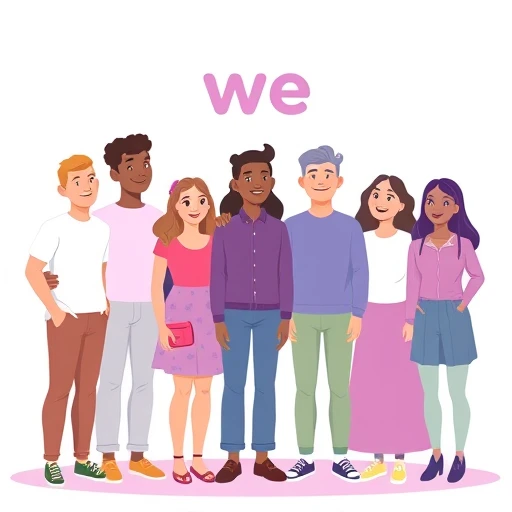
wir in 30 Seconds
- The German pronoun 'wir' translates to 'we' and is used as the subject of a sentence to represent a group including the speaker.
- Verbs conjugated with 'wir' typically end in '-en', which is identical to the infinitive form, except for the verb 'sein' (sind).
- The object form of 'wir' is 'uns' for both accusative and dative cases, and the possessive form is 'unser'.
- It is a central word for expressing community, teamwork, and shared identity in both casual and formal German contexts.
The German word wir is the fundamental first-person plural pronoun, serving as the equivalent of the English word 'we'. At its most basic level, it represents a group of people that includes the speaker. However, in the German language, wir carries a weight of collective identity that manifests in various social, political, and domestic contexts. It is the cornerstone of group dynamics, used to express shared actions, common beliefs, and mutual experiences. Whether you are sitting at a dinner table with family, participating in a corporate meeting, or standing in a stadium with thousands of fellow fans, wir is the linguistic glue that binds the individual to the collective. In German culture, the concept of the 'Wir-Gefühl' (the 'we-feeling') is highly valued, emphasizing solidarity and community over pure individualism. This pronoun is used consistently across all levels of formality, from the most intimate conversations between partners to the most formal proclamations of the state. Unlike some languages that distinguish between an 'inclusive we' (you and I) and an 'exclusive we' (they and I, but not you), German uses wir for both, relying on context to clarify the specific group being referenced.
- Grammatical Function
- As a personal pronoun, 'wir' functions as the subject of a sentence in the nominative case. It dictates the conjugation of the verb, which almost always ends in '-en' in the present tense, mirroring the infinitive form.
In diesem Haus sprechen wir Deutsch.
Beyond simple identification, wir is often used rhetorically. Politicians use it to create a sense of national unity, while advertisers use it to make consumers feel like part of an exclusive club. In a professional setting, 'wir' is preferred over 'ich' (I) to demonstrate teamwork and shared responsibility. For example, saying 'Wir haben das Projekt abgeschlossen' (We finished the project) sounds much more collaborative than taking individual credit. In daily life, you will hear it in common invitations like 'Wollen wir gehen?' (Shall we go?) or in expressions of shared state like 'Wir sind müde' (We are tired). It is one of the first words a learner must master, as it opens the door to describing social interactions and group activities. The pronunciation is straightforward but requires a soft 'v' sound at the beginning, distinct from the English 'w'. Mastering wir is not just about grammar; it is about learning how to position yourself within the social fabric of German-speaking society.
- Social Context
- The use of 'wir' can signal 'In-group' status. Using it correctly helps you integrate into German social circles by emphasizing your participation in the group.
Was machen wir heute Abend?
Interestingly, wir can also be used in a slightly patronizing or 'nursing' way, similar to English. A doctor might ask a patient, 'Wie fühlen wir uns heute?' (How are we feeling today?), even though the doctor is not the one feeling sick. This 'sympathetic we' is common in healthcare and childcare. Furthermore, in academic writing, the 'Authorial We' (Autoren-Wir) is frequently used to guide the reader through an argument, even if there is only one author. This makes the text feel more like a shared journey of discovery rather than a lecture. Understanding these nuances allows a learner to transition from basic communication to sophisticated linguistic awareness. Whether you are cheering for 'wir' (the national team) during the World Cup or discussing 'wir' (the family) at a holiday gathering, this pronoun is the essential building block of German collective life.
- Historical Usage
- Historically, 'wir' was used as the 'Pluralis Majestatis' by monarchs to denote that they spoke for the entire realm, a usage that is now mostly found in historical dramas or literature.
Wenn wir zusammenarbeiten, erreichen wir mehr.
Using wir in a sentence is one of the most straightforward aspects of German grammar, yet it requires attention to verb endings and case changes. As the subject of a sentence, wir is in the nominative case. The verb that follows must be conjugated to match the first-person plural. Fortunately for learners, the conjugation for wir in the present tense is almost always identical to the infinitive form of the verb. For example, the infinitive 'gehen' (to go) becomes 'wir gehen'. This consistency makes wir a 'safe' pronoun for beginners to use when they are unsure of complex conjugation patterns. However, it is important to remember that this rule has a few exceptions, most notably the verb 'sein' (to be), where 'wir sind' is the required form. When constructing sentences, wir typically occupies the first position or the third position (after the verb) if another element like a time expression starts the sentence, following the V2 (verb-second) rule of German syntax.
- Basic Sentence Structure
- Subject (Wir) + Verb (conjugated) + Objects/Adverbs. Example: 'Wir essen heute Pizza.'
Morgen fahren wir nach Berlin.
When wir moves into different cases, it changes its form entirely. In the accusative case (direct object), wir becomes uns. For example, 'Er sieht uns' (He sees us). In the dative case (indirect object), it also remains uns, as in 'Das gehört uns' (That belongs to us). This overlap between accusative and dative forms simplifies things for the learner, as you only need to memorize one form for both object cases. Additionally, the possessive adjective associated with wir is unser (our). This adjective must decline to match the gender, number, and case of the noun it precedes. For instance, 'unser Hund' (our dog, masculine nominative) vs. 'unsere Katze' (our cat, feminine nominative). Understanding these transformations is crucial for moving beyond simple subject-verb-object sentences into more complex German communication.
- Reflexive Usage
- When an action is performed by 'wir' upon themselves, the reflexive pronoun 'uns' is used. Example: 'Wir waschen uns' (We wash ourselves).
Können wir uns morgen treffen?
In questions, wir often follows the verb directly, as in 'Haben wir Zeit?' (Do we have time?). This inversion is a standard feature of German interrogative sentences. Furthermore, wir is frequently used in the imperative mood to form suggestions, similar to 'let's' in English. By saying 'Gehen wir!' or 'Singen wir!', you are proposing a collective action. In these instances, the verb comes first, followed immediately by wir. This is a very common way to suggest plans or coordinate activities with friends. As you progress to higher levels of German, you will encounter wir in passive constructions and complex subordinate clauses, but the core principle remains: it represents the collective 'us' and requires the '-en' verb ending. Whether you are writing a formal report or texting a friend, mastering the placement and conjugation of wir is essential for clear and natural-sounding German.
- The 'Wir' Suggestion
- Using 'Verb + wir' is the most common way to say 'Let's...'. Example: 'Essen wir!' (Let's eat!).
Vielleicht sollten wir später noch einmal darüber reden.
The word wir is omnipresent in German-speaking life, echoing through various environments from the domestic to the public sphere. In a typical German household, you will hear it constantly during meal times or when planning the day: 'Was essen wir?' (What are we eating?) or 'Wir müssen einkaufen gehen' (We have to go shopping). It defines the family unit and its shared responsibilities. In schools and universities, teachers and professors use wir to foster a collaborative learning environment, often saying 'Heute lernen wir...' (Today we are learning...) to include the students in the educational process. This usage minimizes the distance between the instructor and the learner, creating a sense of shared intellectual pursuit. If you visit a German office, wir is the language of the team. 'Wir haben ein Meeting' (We have a meeting) or 'Wir schaffen das' (We can do it/We will manage) are common refrains that emphasize collective effort over individual ego.
- In Sports
- Fans often say 'Wir haben gewonnen!' (We won!) even if they were only watching the game. This demonstrates the deep identification fans have with their teams.
Komm schon, wir schaffen das!
In the realm of politics and media, wir is a powerful tool for mobilization and national identity. One of the most famous modern uses of the word was Angela Merkel's 'Wir schaffen das' during the 2015 refugee crisis, a phrase that sparked intense debate about national capability and responsibility. In news broadcasts, anchors often use wir to refer to the nation or society as a whole: 'Wir erleben derzeit eine Veränderung...' (We are currently experiencing a change...). This usage helps to construct a shared reality for the audience. On the streets, you'll hear it in casual conversation between friends making plans: 'Gehen wir ins Kino?' (Are we going to the cinema?). Even in the service industry, a waiter might ask, 'Was bekommen wir?' (What are we getting? / What can I get for you?), using the 'sympathetic we' to make the interaction feel more personal and attentive.
- In Advertising
- Companies use 'wir' to sound more approachable. A slogan might be 'Wir lieben Lebensmittel' (We love groceries), used by the supermarket chain Edeka.
Bei Edeka wir lieben Lebensmittel.
In music and literature, wir is used to express universal human experiences. German pop songs frequently use the pronoun to create anthems of togetherness, while poets use it to speak for a generation. In religious settings, 'wir' is central to communal prayer and hymns, reinforcing the bond between the congregation and the divine. Even in the digital world, social media groups often use wir in their names or descriptions to define their community. Ultimately, wherever there is a group of two or more people in a German-speaking context, wir is the primary linguistic tool used to navigate their shared existence. Hearing and using wir correctly is not just a matter of fluency; it is a sign that you are beginning to understand the collective heart of the German language.
- Public Announcements
- On trains, you might hear 'Wir erreichen in Kürze...' (We will shortly reach...), where 'wir' refers to the train staff and the passengers together.
In wenigen Minuten erreichen wir den Hauptbahnhof.
For English speakers learning German, the pronoun wir seems deceptively simple because it translates directly to 'we'. However, several common pitfalls can lead to grammatical errors or social awkwardness. The most frequent mistake is confusing wir with the phonetically similar word wer (who). Because the German 'w' is pronounced like an English 'v', and the 'i' in wir is a long 'ee' sound, beginners often mix it up with wer, which has an 'eh' sound. This can lead to confusing sentences like 'Wer sind hier' (Who are here) when the speaker meant 'Wir sind hier' (We are here). Another common error involves verb conjugation. While wir usually takes the infinitive form of the verb, students often forget the irregular conjugation of 'sein' (to be), incorrectly saying 'Wir sein' instead of the correct 'Wir sind'.
- Pronunciation Trap
- Mistaking 'wir' [viːɐ̯] for 'wer' [veːɐ̯]. Remember: 'wir' sounds like 'veer', and 'wer' sounds like 'vair'.
Falsch: Wer gehen jetzt. Richtig: Wir gehen jetzt.
Another significant area of confusion is the use of the object forms. English speakers are used to 'we' (subject) and 'us' (object). In German, wir becomes uns in both the accusative and dative cases. A common mistake is trying to invent a different dative form or using the possessive unser as an object. For example, saying 'Er gibt unser das Buch' instead of the correct 'Er gibt uns das Buch' (He gives us the book). Additionally, the possessive unser itself causes trouble because it must be declined. Beginners often forget to add the correct endings, saying 'unser Tasche' instead of 'unsere Tasche' (our bag). Furthermore, learners sometimes confuse wir with ihr (you plural). While wir includes the speaker, ihr excludes the speaker and addresses a group of others. Mixing these up can lead to significant misunderstandings about who is responsible for an action.
- The 'Sein' Exception
- Many learners say 'Wir sind' correctly but then struggle with the past tense, saying 'Wir war' instead of 'Wir waren'.
Falsch: Wir war im Kino. Richtig: Wir waren im Kino.
Finally, there is the 'false friend' issue with the English word 'where'. Because 'where' starts with a 'w', some very early learners occasionally substitute wir for 'where', even though the German word for where is wo. This is rare but happens in the heat of a fast conversation. Another nuance is the 'inclusive vs. exclusive' distinction mentioned earlier. While not a grammatical error, using wir when you actually mean 'some of us but not you' can sometimes be ambiguous in German. To be clearer, Germans might use phrases like 'einige von uns' (some of us). Avoiding these common mistakes requires a combination of careful listening, practice with declensions, and a solid grasp of the most common irregular verbs. By paying attention to the 'ee' sound in wir and the '-en' ending of the associated verbs, you can avoid the most frequent traps and communicate clearly.
- Case Confusion
- Using 'wir' when an object is needed. Example: 'Komm mit wir' is wrong; it must be 'Komm mit uns'.
Komm mit uns nach Hause!
While wir is the primary way to say 'we', the German language offers several alternatives and related words that can change the tone or scope of the collective group. One of the most common alternatives is the indefinite pronoun man. While man is often translated as 'one' or 'you' (in a general sense), it is frequently used in German where English would use 'we'. For example, 'Hier spricht man Deutsch' (One speaks German here / We speak German here). Using man makes the statement more general and less about a specific group of people. Another alternative, especially in more formal or slightly dated contexts, is unsereiner (the likes of us / people like us). This word carries a sense of social class or specific group identity, often used to contrast 'us' with 'them'.
- Wir vs. Man
- 'Wir' is specific and personal; 'man' is general and impersonal. Use 'wir' for your friends and 'man' for general rules.
Was kann man hier machen? (What can one/we do here?)
In casual speech, Germans often use wir beide (the two of us) to be more specific about the size of the group. If the group is larger, they might say wir alle (all of us). These additions help to clarify the scope of wir. Another related concept is miteinander (with each other), which emphasizes the interaction within the 'we'. For example, 'Wir reden miteinander' (We are talking with each other). In professional settings, you might hear die Belegschaft (the workforce) or das Team used as collective nouns that function as a 'we'. Instead of saying 'Wir haben uns entschieden', a manager might say 'Das Team hat sich entschieden', which shifts the focus from the individuals to the organizational unit.
- Wir vs. Ihr
- 'Wir' includes the speaker. 'Ihr' is the plural 'you'. This is a fundamental distinction in German that must be mastered early.
Wir beide sollten mal wieder zusammen kochen.
When referring to a group that includes the speaker but is defined by a specific role, words like unsereins (people like us) can be used to express a shared perspective or plight. For example, 'Unsereins muss hart arbeiten' (People like us have to work hard). This is more common in dialect or older literature but still crops up in modern speech to create a sense of 'us against the world'. Additionally, the word gemeinsam (together) is often used in conjunction with wir to reinforce the idea of unity: 'Wir arbeiten gemeinsam an dem Projekt'. While wir is the essential pronoun, understanding these alternatives allows you to fine-tune your meaning, whether you want to be more inclusive, more general, or more formal. By choosing between wir, man, or a collective noun, you can navigate the complexities of German social interaction with greater precision.
- The 'Inclusive We'
- To ensure someone knows they are included in the 'wir', Germans often use 'wir zusammen' (we together).
Das haben wir zusammen geschafft!
How Formal Is It?
Fun Fact
The word 'wir' has remained remarkably stable in its form and meaning for over a thousand years, surviving the transition from Old High German to Modern German with very little change.
Pronunciation Guide
- Pronouncing the 'w' like an English 'w' (with rounded lips) instead of a 'v' sound.
- Confusing the vowel sound with 'wer' (who), which has an 'eh' sound.
- Pronouncing the 'r' too harshly like a rolled 'r' at the end of the word.
- Shortening the 'i' sound so it sounds like 'wirr' (confused).
- Making it sound like the English word 'we'.
Difficulty Rating
Very easy to recognize; it's short and appears frequently.
Simple to spell, but requires correct verb conjugation.
Pronunciation of the 'w' as 'v' and the long 'i' needs practice.
Can be confused with 'wer' in fast speech.
What to Learn Next
Prerequisites
Learn Next
Advanced
Grammar to Know
Verb Conjugation (First Person Plural)
Wir spielen (Infinitive: spielen).
Personal Pronouns in Accusative
Er sieht uns.
Personal Pronouns in Dative
Das gehört uns.
Possessive Adjectives
Das ist unser Auto.
Imperative with 'wir'
Gehen wir!
Examples by Level
Wir sind hier.
We are here.
Uses the irregular verb 'sein'.
Wir essen Brot.
We are eating bread.
Standard -en ending for 'wir'.
Wir gehen nach Hause.
We are going home.
Verb in second position.
Wir lernen Deutsch.
We are learning German.
Present tense action.
Wir haben einen Hund.
We have a dog.
Verb 'haben' with 'wir'.
Trinken wir Kaffee?
Are we drinking coffee?
Question form with inversion.
Wir wohnen in Berlin.
We live in Berlin.
Stating location.
Wir spielen Fußball.
We play soccer.
Collective activity.
Er sieht uns.
He sees us.
Accusative form 'uns'.
Das ist unser Haus.
That is our house.
Possessive adjective 'unser'.
Wir haben gestern getanzt.
We danced yesterday.
Perfekt tense with 'haben'.
Können wir helfen?
Can we help?
Modal verb 'können'.
Wir waren im Urlaub.
We were on vacation.
Präteritum of 'sein'.
Sie gibt uns die Schlüssel.
She gives us the keys.
Dative form 'uns'.
Wir müssen jetzt gehen.
We must go now.
Modal verb 'müssen'.
Unsere Kinder sind klein.
Our children are small.
Possessive 'unsere' (plural).
Wir freuen uns auf den Sommer.
We are looking forward to the summer.
Reflexive verb 'sich freuen'.
Wir sollten mehr Wasser trinken.
We should drink more water.
Subjunctive II for advice.
Wir haben uns im Kino getroffen.
We met (each other) at the cinema.
Reflexive/Reciprocal 'uns'.
Wir wissen nicht, was passiert ist.
We don't know what happened.
Subordinate clause.
Könnten wir das Fenster öffnen?
Could we open the window?
Polite request with 'könnten'.
Wir interessieren uns für Kunst.
We are interested in art.
Reflexive verb with preposition.
Wir hoffen, dass ihr kommt.
We hope that you (plural) are coming.
Conjunction 'dass'.
Wir haben uns umentschieden.
We changed our minds.
Reflexive verb 'sich umentscheiden'.
Wir setzen voraus, dass Sie pünktlich sind.
We assume that you are on time.
Formal 'wir' representing a company.
Wir haben das Problem gemeinsam gelöst.
We solved the problem together.
Emphasis on collective action.
Wir beziehen uns auf Ihr Schreiben vom Mai.
We refer to your letter from May.
Formal business German.
Wir sind uns der Verantwortung bewusst.
We are aware of the responsibility.
Genitive construction with 'bewusst'.
Wir möchten Sie herzlich willkommen heißen.
We would like to welcome you warmly.
Formal greeting.
Wir bedauern die Verzögerung sehr.
We deeply regret the delay.
Formal apology.
Wir streben eine langfristige Partnerschaft an.
We aim for a long-term partnership.
Professional goal setting.
Wir müssen die Kosten im Auge behalten.
We must keep an eye on the costs.
Idiomatic expression 'im Auge behalten'.
Wir als Gesellschaft müssen umdenken.
We as a society must rethink.
Societal 'wir'.
Wir gehen davon aus, dass die Theorie stimmt.
We assume that the theory is correct.
Academic 'wir'.
Wir können diese Entwicklung nicht ignorieren.
We cannot ignore this development.
Rhetorical 'wir'.
Wir müssen uns kritisch mit der Geschichte auseinandersetzen.
We must critically engage with history.
Reflexive 'sich auseinandersetzen'.
Wir fordern eine gerechte Verteilung der Ressourcen.
We demand a fair distribution of resources.
Political 'wir'.
Wir haben die Daten sorgfältig analysiert.
We have carefully analyzed the data.
Authorial 'wir' in research.
Wir befinden uns in einer Phase des Umbruchs.
We find ourselves in a phase of upheaval.
Elevated register.
Wir appellieren an Ihre Vernunft.
We appeal to your reason.
Formal appeal.
Wir, das Volk, erklären hiermit...
We, the people, hereby declare...
Formal declaration.
Wir müssen das Menschsein neu definieren.
We must redefine what it means to be human.
Philosophical 'wir'.
Wir sind nur Gast auf dieser Erde.
We are only guests on this earth.
Existential 'wir'.
Wir haben uns in den Labyrinthen der Bürokratie verirrt.
We have lost ourselves in the labyrinths of bureaucracy.
Metaphorical usage.
Wir, Wilhelm von Gottes Gnaden...
We, Wilhelm by the Grace of God...
Pluralis Majestatis (Royal We).
Wir sind Zeugen einer Zeitenwende.
We are witnesses to a turning point in history.
Historical significance.
Wir müssen die Grenzen des Sagbaren erweitern.
We must expand the boundaries of what can be said.
Linguistic philosophy.
Wir sind die Summe unserer Erfahrungen.
We are the sum of our experiences.
Axiomatic statement.
Synonyms
Antonyms
Common Collocations
Common Phrases
— A famous phrase meaning 'We can do it' or 'We will manage'.
Keine Sorge, wir schaffen das!
— A standard question for 'What are we doing?'.
Ich bin gelangweilt. Was machen wir?
— An informal way to say 'We are even'.
Hier sind deine 5 Euro, jetzt sind wir quitt.
— Means 'We are lost' (on foot).
Wo ist die Karte? Wir haben uns verlaufen.
Often Confused With
Means 'who'. Confused due to similar pronunciation.
Means 'you (plural)'. Confused because both refer to a group.
Means 'they'. Confused because both are plural pronouns.
Idioms & Expressions
— We are all in the same boat; facing the same challenges.
In dieser Krise sitzen wir alle im selben Boot.
neutral— We will manage it; we will get the job done.
Das Projekt ist schwer, aber wir werden das Kind schon schaukeln.
informal— We are at our wit's end; we don't know what to do anymore.
Das Auto geht nicht an, wir sind mit unserem Latein am Ende.
neutral— We won't get carried away; we'll keep things realistic.
Es ist nur ein kleiner Erfolg, wir lassen die Kirche im Dorf.
neutral— We are working together towards a common goal.
Wenn wir an einem Strang ziehen, gewinnen wir.
neutral— We are doing things properly; making a final decision.
Genug geredet, wir machen jetzt Nägel mit Köpfen.
neutral— We are on the wrong track; we are mistaken.
Ich glaube, mit dieser Strategie sind wir auf dem Holzweg.
neutral— Now we're in a mess; now we have a problem.
Du hast den Schlüssel vergessen? Jetzt haben wir den Salat.
informal— We are out of the woods; the worst is over.
Die Prüfung ist vorbei, wir sind aus dem Schneider.
informal— We are only human; we don't have any magic solutions.
Keine Angst vor der Konkurrenz, die kochen auch nur mit Wasser.
neutralEasily Confused
Phonetic similarity.
'Wir' means 'we' (includes speaker), 'wer' means 'who' (interrogative).
Wer ist das? Wir sind das.
Both are plural pronouns.
'Wir' includes the speaker, 'ihr' addresses others and excludes the speaker.
Wir gehen nach Hause, aber ihr bleibt hier.
Almost identical spelling and sound.
'Wir' is a pronoun, 'wirr' is an adjective meaning 'confused' or 'tangled'.
Seine Haare sind wirr.
Both start with 'wi'.
'Wir' is 'we', 'wie' is 'how' or 'as'.
Wie machen wir das?
Both are short words starting with 'w'.
'Wir' is 'we', 'wo' is 'where'.
Wo sind wir?
Sentence Patterns
Wir + Verb + Object.
Wir trinken Wasser.
Wir sind + Adjective.
Wir sind müde.
Wir + Modal Verb + Infinitive.
Wir können kochen.
Verb + wir + Object? (Question)
Haben wir Brot?
Wir + Reflexive Verb.
Wir treffen uns.
Wir + Subjunctive II.
Wir würden gerne kommen.
Wir + Passive Voice.
Wir werden informiert.
Wir + Subordinate Clause.
Wir hoffen, dass alles gut geht.
Word Family
Nouns
Adjectives
Related
How to Use It
Extremely high; it is one of the top 20 most used words in the German language.
-
Wir sein hier.
→
Wir sind hier.
The verb 'sein' is irregular and must be 'sind' for 'wir'.
-
Wer gehen jetzt?
→
Wir gehen jetzt.
Confusing 'wer' (who) with 'wir' (we) due to pronunciation.
-
Er hilft wir.
→
Er hilft uns.
Using the nominative 'wir' instead of the dative object 'uns'.
-
Das ist unser Tasche.
→
Das ist unsere Tasche.
The possessive 'unser' must match the feminine noun 'Tasche'.
-
Wir war im Kino.
→
Wir waren im Kino.
Using the singular past tense 'war' instead of the plural 'waren'.
Tips
Verb Ending
Always check that your verb ends in '-en' when using 'wir'. It's the easiest way to stay grammatically correct.
The 'V' Sound
Remember that German 'w' is always pronounced like an English 'v'. Bite your lower lip slightly!
Be Inclusive
Use 'wir' to build rapport with German speakers. It shows you see yourself as part of the group.
Object Forms
Memorize 'uns' early. It covers both 'us' (direct object) and 'to us' (indirect object).
Professionalism
In a job interview, use 'wir' when talking about your previous team's successes to show you are a team player.
National Identity
Pay attention to how 'wir' is used in news headlines; it often refers to the entire German population.
Rhyme Time
Rhyme 'wir' with 'hier' (here). 'Wir sind hier' (We are here) is a perfect mnemonic phrase.
Wir vs. Wer
If you mean 'who', use 'wer'. If you mean 'we', use 'wir'. Don't let the similar sounds trip you up.
Subjunctive
Use 'Wir würden gerne...' to make polite requests. It sounds much better than 'Wir wollen'.
Shortcuts
In casual speech, 'wir' can sound like 'wa' or 'mer' in certain dialects, but stick to 'wir' as a learner.
Memorize It
Mnemonic
Think of 'wir' as 'WE-R' (We are). The 'w' is a 'v', so it sounds like 'veer'. Imagine a group of people in a car that you are driving, and you all 'veer' to the right together.
Visual Association
Visualize a large circle with you and your friends inside it. In the center of the circle, the word 'WIR' is written in bright, bold letters, representing the bond that holds you together.
Word Web
Challenge
Try to spend one whole hour only describing things you do with others using 'wir'. For example, 'Wir trinken Tee', 'Wir schauen Fernsehen', 'Wir reden'.
Word Origin
The word 'wir' comes from the Old High German 'wir', which is derived from the Proto-Germanic '*wīz'. It is cognate with the English 'we', the Dutch 'wij', and the Old Norse 'vér'.
Original meaning: The original meaning has always been the first-person plural pronoun, designating a group including the speaker.
Indo-European > Germanic > West Germanic > German.Cultural Context
Be mindful that 'wir' can be used to exclude others ('exclusive we'), so in diverse settings, speakers may use 'wir alle' to be explicitly inclusive.
English speakers use 'we' similarly, but German 'wir' is more strictly tied to verb conjugation and case endings. The 'authorial we' is common in both languages.
Practice in Real Life
Real-World Contexts
Family/Home
- Wir essen jetzt.
- Wir gehen schlafen.
- Wir räumen auf.
- Wir schauen einen Film.
Work/Office
- Wir haben ein Meeting.
- Wir arbeiten am Projekt.
- Wir brauchen Hilfe.
- Wir sind fertig.
Sports/Hobbies
- Wir haben gewonnen!
- Wir spielen Fußball.
- Wir trainieren heute.
- Wir sind ein Team.
Travel/Directions
- Wir sind hier.
- Wir fahren nach Berlin.
- Wir haben uns verlaufen.
- Wir suchen das Hotel.
Socializing
- Wir sehen uns.
- Wir gehen aus.
- Wir trinken ein Bier.
- Wir haben Spaß.
Conversation Starters
"Was machen wir heute Abend nach der Arbeit?"
"Wollen wir am Wochenende zusammen wandern gehen?"
"Wir sollten mal wieder zusammen kochen, oder?"
"Glauben wir, dass das Wetter morgen besser wird?"
"Wie können wir dieses Problem am besten lösen?"
Journal Prompts
Schreibe über eine Aktivität, die wir als Familie oft zusammen machen.
Was haben wir heute in der Deutschstunde gelernt? Beschreibe den Unterricht.
Denke an deine beste Freundin oder deinen besten Freund. Was machen wir gerne zusammen?
Stell dir vor, wir gewinnen im Lotto. Was würden wir mit dem Geld machen?
Warum ist das 'Wir-Gefühl' in einer Gesellschaft so wichtig?
Frequently Asked Questions
10 questionsAlmost always! In the present tense, the 'wir' form is identical to the infinitive (e.g., wir gehen, wir machen). The main exception is 'wir sind' (we are).
'Wir' is the subject (nominative), while 'uns' is the object (accusative or dative). Example: 'Wir (subject) sehen uns (object)'.
You use 'unser'. Remember that it needs an ending to match the noun, like 'unser Hund' or 'unsere Katze'.
Yes! You put the verb first followed by 'wir'. For example, 'Gehen wir!' means 'Let's go!'.
Sometimes, but 'man' is more common for general statements. 'Wir' is usually more specific to a group including the speaker.
In standard German, the 'r' at the end of 'wir' is vocalized, sounding like a very short 'uh' sound. It is not rolled.
It is when a single author uses 'wir' in a text to include the reader in the thought process, common in academic writing.
Grammatically, no. 'Wir' is used for both. You have to use context or extra words like 'wir alle' to be more specific.
This is the 'sympathetic we', used to show care and connection, even though only the patient is feeling the symptoms.
It translates to 'we-feeling' and refers to the sense of belonging and solidarity within a group.
Test Yourself 200 questions
Write a sentence using 'wir' and 'essen'.
Well written! Good try! Check the sample answer below.
Write a sentence using 'wir' and 'wohnen'.
Well written! Good try! Check the sample answer below.
Write a sentence using 'wir' and 'haben'.
Well written! Good try! Check the sample answer below.
Write a sentence using 'wir' and 'sind'.
Well written! Good try! Check the sample answer below.
Write a sentence using 'wir' and 'gehen'.
Well written! Good try! Check the sample answer below.
Write a sentence using 'wir' and 'lernen'.
Well written! Good try! Check the sample answer below.
Write a sentence using 'wir' and 'sehen'.
Well written! Good try! Check the sample answer below.
Write a sentence using 'wir' and 'machen'.
Well written! Good try! Check the sample answer below.
Write a sentence using 'wir' and 'trinken'.
Well written! Good try! Check the sample answer below.
Write a sentence using 'wir' and 'spielen'.
Well written! Good try! Check the sample answer below.
Write a sentence using 'wir' and 'können'.
Well written! Good try! Check the sample answer below.
Write a sentence using 'wir' and 'müssen'.
Well written! Good try! Check the sample answer below.
Write a sentence using 'wir' and 'waren'.
Well written! Good try! Check the sample answer below.
Write a sentence using 'wir' and 'uns'.
Well written! Good try! Check the sample answer below.
Write a sentence using 'unser'.
Well written! Good try! Check the sample answer below.
Write a sentence using 'wir' and 'treffen'.
Well written! Good try! Check the sample answer below.
Write a sentence using 'wir' and 'freuen'.
Well written! Good try! Check the sample answer below.
Write a sentence using 'wir' and 'denken'.
Well written! Good try! Check the sample answer below.
Write a sentence using 'wir' and 'wissen'.
Well written! Good try! Check the sample answer below.
Write a sentence using 'wir' and 'glauben'.
Well written! Good try! Check the sample answer below.
Say: 'We are here.' in German.
Read this aloud:
You said:
Speech recognition is not supported in your browser. Try Chrome or Edge.
Say: 'We are learning German.' in German.
Read this aloud:
You said:
Speech recognition is not supported in your browser. Try Chrome or Edge.
Say: 'We have time.' in German.
Read this aloud:
You said:
Speech recognition is not supported in your browser. Try Chrome or Edge.
Say: 'We are going home.' in German.
Read this aloud:
You said:
Speech recognition is not supported in your browser. Try Chrome or Edge.
Say: 'We are eating bread.' in German.
Read this aloud:
You said:
Speech recognition is not supported in your browser. Try Chrome or Edge.
Say: 'We live in Berlin.' in German.
Read this aloud:
You said:
Speech recognition is not supported in your browser. Try Chrome or Edge.
Say: 'We are happy.' in German.
Read this aloud:
You said:
Speech recognition is not supported in your browser. Try Chrome or Edge.
Say: 'We are drinking water.' in German.
Read this aloud:
You said:
Speech recognition is not supported in your browser. Try Chrome or Edge.
Say: 'We play soccer.' in German.
Read this aloud:
You said:
Speech recognition is not supported in your browser. Try Chrome or Edge.
Say: 'We see you.' in German.
Read this aloud:
You said:
Speech recognition is not supported in your browser. Try Chrome or Edge.
Say: 'We can help.' in German.
Read this aloud:
You said:
Speech recognition is not supported in your browser. Try Chrome or Edge.
Say: 'We must go.' in German.
Read this aloud:
You said:
Speech recognition is not supported in your browser. Try Chrome or Edge.
Say: 'We were in Berlin.' in German.
Read this aloud:
You said:
Speech recognition is not supported in your browser. Try Chrome or Edge.
Say: 'He sees us.' in German.
Read this aloud:
You said:
Speech recognition is not supported in your browser. Try Chrome or Edge.
Say: 'That is our house.' in German.
Read this aloud:
You said:
Speech recognition is not supported in your browser. Try Chrome or Edge.
Say: 'We are meeting tomorrow.' in German.
Read this aloud:
You said:
Speech recognition is not supported in your browser. Try Chrome or Edge.
Say: 'We are looking forward to it.' in German.
Read this aloud:
You said:
Speech recognition is not supported in your browser. Try Chrome or Edge.
Say: 'We solved the problem.' in German.
Read this aloud:
You said:
Speech recognition is not supported in your browser. Try Chrome or Edge.
Say: 'We assume that...' in German.
Read this aloud:
You said:
Speech recognition is not supported in your browser. Try Chrome or Edge.
Say: 'We, the people...' in German.
Read this aloud:
You said:
Speech recognition is not supported in your browser. Try Chrome or Edge.
Listen and write: 'Wir sind hier.'
Listen and write: 'Wir essen Brot.'
Listen and write: 'Wir gehen jetzt.'
Listen and write: 'Wir haben Zeit.'
Listen and write: 'Wir lernen Deutsch.'
Listen and write: 'Wir wohnen in Berlin.'
Listen and write: 'Wir sind glücklich.'
Listen and write: 'Wir trinken Tee.'
Listen and write: 'Wir spielen Fußball.'
Listen and write: 'Wir sehen uns.'
Listen and write: 'Wir können helfen.'
Listen and write: 'Wir müssen gehen.'
Listen and write: 'Er sieht uns.'
Listen and write: 'Das ist unser Haus.'
Listen and write: 'Wir freuen uns.'
/ 200 correct
Perfect score!
Summary
Mastering 'wir' is essential for A1 learners as it is the primary way to describe group activities. Remember: 'Wir' + Verb (usually infinitive form) = 'We do something'. Example: 'Wir gehen' (We go).
- The German pronoun 'wir' translates to 'we' and is used as the subject of a sentence to represent a group including the speaker.
- Verbs conjugated with 'wir' typically end in '-en', which is identical to the infinitive form, except for the verb 'sein' (sind).
- The object form of 'wir' is 'uns' for both accusative and dative cases, and the possessive form is 'unser'.
- It is a central word for expressing community, teamwork, and shared identity in both casual and formal German contexts.
Verb Ending
Always check that your verb ends in '-en' when using 'wir'. It's the easiest way to stay grammatically correct.
The 'V' Sound
Remember that German 'w' is always pronounced like an English 'v'. Bite your lower lip slightly!
Be Inclusive
Use 'wir' to build rapport with German speakers. It shows you see yourself as part of the group.
Object Forms
Memorize 'uns' early. It covers both 'us' (direct object) and 'to us' (indirect object).
Example
Wir gehen ins Kino.
Related Content
![BE DEUTSCH! [Achtung! Germans on the rise!] | NEO MAGAZIN ROYALE mit Jan Böhmermann - ZDFneo](https://www.sublearn.com/storage/thumbnails/HMQkV5cTuoY.jpg)
Related Phrases
More general words
ab
A1from, off (starting from a point)
abends
A2in the evening
aber
A1But/However (introduces a contrast)
abgelegen
B1remote
ablehnen
A2to refuse, to decline
abschließen
A2to conclude, to lock
abseits
A2aside, off the beaten track; to one side.
acht
A1Eight (the number 8)
Achte
A1Eighth (ordinal number).
achten
A2to pay attention; to be careful or mindful.

