goodfellas
A slang term used to describe members of the Italian-American Mafia or organized crime syndicates. It implies that an individual is a trusted insider who adheres to a specific code of loyalty and silence.
goodfellas in 30 Seconds
- Goodfellas is a slang term for members of the Italian-American Mafia, popularized by the 1990 film. It implies deep loyalty and insider status.
- The word is a euphemism, meaning 'good fellows,' but it specifically refers to criminals who follow a strict code of silence and brotherhood.
- Used mostly in informal contexts or pop-culture references, it evokes a specific image of mid-20th-century urban American crime and social structures.
- While it literally means 'good men,' its usage is ironic, focusing on the quality of loyalty to the 'family' rather than moral goodness.
The term goodfellas is a multifaceted noun that primarily serves as a colloquialism within the American English lexicon to describe members of organized crime syndicates, specifically the Italian-American Mafia. While the literal components of the word suggest 'good fellows' or 'nice men,' its usage is almost exclusively ironic or euphemistic. It refers to individuals who are 'made men' or trusted associates within a criminal hierarchy. The term gained global prominence following the release of Martin Scorsese's 1990 film of the same name, which was based on the non-fiction book 'Wiseguy' by Nicholas Pileggi. In the context of the underworld, being a goodfella means you are part of the inner circle, someone who adheres to the strict code of omertà, or the law of silence. This word is used to distinguish between those who are 'one of us' and those who are 'outsiders' or 'civilians.'
- Sociological Context
- In tight-knit immigrant communities, the term was used to identify men who provided protection or services outside the legal system, often viewed with a mix of fear and respect.
Beyond its literal criminal definition, the word is often used in modern conversation to describe a group of men who are exceptionally loyal to one another, often to a fault. When people use this word today, they are frequently making a pop-culture reference. For instance, a group of friends who have been together since childhood and share a deep, secretive bond might jokingly refer to themselves as goodfellas. However, the shadow of the criminal connotation always looms over the term. It implies a level of loyalty that transcends standard friendship, suggesting that these individuals would go to great lengths to protect one another's interests and reputations. It is a word steeped in the mythology of the American Dream gone wrong, where the 'good' in the name refers not to moral goodness, but to the quality of one's loyalty to the 'family' or the organization.
The neighborhood elders knew that the young men hanging out at the social club were aspiring goodfellas looking for a way into the organization.
- Cultural Nuance
- The term is a euphemism. By calling a criminal a 'good fellow,' the speaker avoids using harsher terms like 'murderer' or 'thief,' focusing instead on the social bond.
The word also carries a sense of nostalgia for a specific era of American history—the mid-20th century in cities like New York, Chicago, and Philadelphia. It evokes images of tailored suits, social clubs, and a specific dialect. In this sense, calling someone a goodfella is not just about their job; it is about their identity, their heritage, and their adherence to a very specific, albeit illegal, social contract. It is a word that encapsulates the tension between being a 'good' member of a small, private group while being a 'bad' member of the larger society. This duality is what makes the term so enduring in literature, film, and everyday slang. It represents the ultimate 'insider' status.
He walked into the restaurant with the confidence of one of the goodfellas, knowing that his table was always reserved.
- Linguistic Evolution
- Originally two words 'good fellows,' the compound 'goodfellas' was popularized as a single noun to denote a specific criminal archetype.
In contemporary usage, you might hear the term used sarcastically. If a group of people is acting overly secretive or 'tough,' someone might ask, 'Who do you think you are, the goodfellas?' This highlights the word's transition from a serious underworld designation to a recognizable cultural trope. Despite this, the core meaning remains: a goodfella is someone who is 'in' on the secret, someone who can be trusted with the most dangerous information, and someone who puts the group above all else. It is a term of endearment within the group and a term of warning for those outside of it.
The documentary explored how the real-life goodfellas managed to control the docks for decades.
They were just a bunch of goodfellas from the old neighborhood, trying to make a buck any way they could.
To the police, they were criminals; to the locals, they were the goodfellas who kept the streets safe from petty thieves.
Using the word goodfellas correctly requires an understanding of its plural nature and its specific register. While 'goodfella' can be used in the singular to describe one person, the term is most frequently encountered in its plural form to describe a collective or a specific social class within the Mafia. When constructing sentences, it is important to decide whether you are using the term literally (referring to actual mobsters), figuratively (referring to a loyal group of friends), or as a pop-culture allusion. Because it is a slang term, it fits best in informal writing, dialogue, or descriptive narratives that aim to evoke a specific gritty or cinematic atmosphere. It is rarely appropriate for academic or professional business communication unless the topic is specifically about organized crime or film studies.
- Grammatical Note
- The word functions as a countable noun. You can have 'one goodfella' or 'many goodfellas.' It is often used with the definite article 'the' to signify a specific, known group.
In a literal sense, you might use it to describe the subjects of a crime investigation. For example: 'The FBI spent years tracking the movements of the local goodfellas.' Here, the word serves as a synonym for 'mobsters' but carries a more specific cultural flavor. It suggests that these individuals are not just random criminals, but part of a structured, traditional organization. In a more figurative or ironic sense, you might use it to describe a group of friends who are acting in a way that mimics the movies. For instance: 'After winning the championship, the team walked into the diner like they were the goodfellas of the school.' This uses the word as a simile to describe a sense of swagger, importance, and exclusive belonging.
The old man told stories about the goodfellas who used to run the gambling dens on 5th Street.
- Sentence Variation
- You can use the term as a subject, an object, or part of a prepositional phrase. It is highly versatile in narrative structures.
Another way to use the term is to describe the 'code' or lifestyle associated with it. You might say, 'He lived by the rules of the goodfellas, never talking to the police and always looking out for his partners.' This highlights the behavioral aspect of the word. It is not just about what they do, but how they live. When writing dialogue, the term can be used as a form of address or a way to categorize someone. 'Is he a goodfella?' is a common way to ask if someone is a 'made man' or a trusted member of the organization. This usage is very common in crime fiction and screenwriting. It adds an authentic, 'street' feel to the dialogue that more formal terms like 'organized crime member' lack.
Every Friday night, the goodfellas would gather in the back of the bakery to discuss their business.
- Contextual Appropriateness
- In a news report, 'goodfellas' might be used in a headline for impact, but the body of the article would likely use 'suspects' or 'alleged mobsters.'
Finally, consider the emotional tone of the sentence. The word can be used with a sense of admiration for the loyalty it represents, or with a sense of condemnation for the violence associated with it. 'They were just goodfellas looking out for their own' sounds sympathetic, whereas 'The goodfellas terrorized the small business owners' sounds accusatory. The word is a powerful tool for characterization because it carries so much pre-existing meaning. By simply using the word, you invoke a whole world of history, film, and social dynamics. It is a 'loaded' word that does a lot of work for the writer, provided it is used in the right context and with the right understanding of its origins.
The movie portrays the rise and fall of three goodfellas over three decades of crime.
He wasn't a made man, but he was a 'friend of ours,' a guy the goodfellas could rely on.
The legend of the goodfellas often ignores the reality of the victims they left behind.
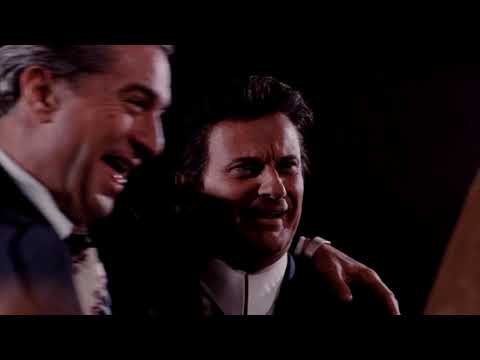
The word goodfellas is a staple of American pop culture, and you are most likely to encounter it in media related to crime, history, and the Italian-American experience. Its primary 'home' is in the cinema. Since the 1990 release of Martin Scorsese's masterpiece, the word has become shorthand for the entire genre of mob movies. You will hear it in film reviews, documentaries about Hollywood, and discussions about the greatest movies of all time. Beyond the film itself, the term is frequently used in true crime podcasts and television shows like 'The Sopranos' or 'Boardwalk Empire,' where characters might use the term or its variations to describe their peers. It is a word that immediately sets a scene of smoke-filled rooms, expensive suits, and high-stakes illegal dealings.
- Media Usage
- Entertainment news often uses the term when discussing actors like Robert De Niro, Joe Pesci, or Ray Liotta, who are famous for playing these roles.
In the real world, you might hear this word in specific urban environments, particularly in East Coast cities like New York, Newark, or Philadelphia. In neighborhoods with a strong Italian-American heritage, the term might still be used by older generations to refer to the 'men of honor' who once held sway in the community. However, in these contexts, it is often spoken with a degree of discretion. You won't hear people shouting it on the street; rather, it is used in quiet conversations in cafes, social clubs, or family dinners. It carries a sense of 'insider' knowledge. If you hear someone using the term casually in a New York deli, they are likely either a local who grew up around that culture or someone making a conscious reference to the cinematic archetype.
The podcast host described the 1978 Lufthansa heist as the work of a crew of goodfellas from Queens.
- Literature and Journalism
- Journalists covering organized crime trials often use the term in headlines to grab attention, even if the legal terms are more technical.
The word also appears frequently in literature, particularly in 'noir' fiction or historical novels set in the mid-20th century. Authors use it to ground their stories in a specific reality and to give their characters a certain 'voice.' Furthermore, in the world of fashion and lifestyle, you might see 'goodfellas' used to describe a certain aesthetic—think sharp tailoring, slicked-back hair, and a classic, masculine style. Men's grooming brands or vintage clothing stores might use the name to evoke a sense of 'old-school' cool and brotherhood. This shows how the word has moved from the shadows of the criminal underworld into the mainstream as a symbol of a particular type of masculine identity.
In his memoir, the former detective recalled the difficulty of getting any of the goodfellas to testify against their boss.
- Global Reach
- Because of the movie's international success, the term is understood by English speakers worldwide, even those with no connection to American crime history.
Lastly, you will hear this word in the context of legal history and criminology. When studying the history of the American Mafia, 'goodfellas' is used to describe the specific rank and file of the Five Families of New York. It is a term that helps historians and students understand the social structure of these organizations. It highlights that these groups were not just gangs, but communities with their own language, rituals, and definitions of 'goodness.' Whether you are watching a classic film, listening to a crime story, or walking through a historic neighborhood, the word goodfellas serves as a linguistic bridge to a complex and often romanticized part of American history.
The museum exhibit featured photographs of the goodfellas who frequented the social clubs of Little Italy in the 1950s.
The tour guide pointed out the old restaurant where the goodfellas used to hold their secret meetings.
He grew up watching the goodfellas from his window, fascinated by their power and their cars.
One of the most frequent mistakes learners make with the word goodfellas is using it too broadly. Because the literal meaning is 'good fellows,' some might assume it can be used to describe any group of nice men. However, in American English, the word is so heavily associated with the Mafia that using it for a group of polite coworkers or friendly neighbors would be confusing and potentially humorous. It is essential to remember that the term is a specific cultural marker. If you want to say a group of men are 'good people,' use 'good guys' or 'nice men.' Reserve 'goodfellas' for when you are specifically referencing the criminal underworld or making a deliberate pop-culture joke. Using it incorrectly can make you sound like you don't understand the nuances of American slang.
- Capitalization Error
- When referring to the movie, it should be capitalized: 'Goodfellas.' When referring to the people in a general sense, it is usually lowercase: 'the goodfellas.'
Another common error is applying the term to the wrong ethnic or criminal groups. As mentioned previously, 'goodfellas' specifically refers to the Italian-American Mafia. It would be incorrect to use it to describe members of a British crime firm, a Russian cartel, or a Japanese Yakuza. Each of these groups has its own specific terminology (e.g., 'gangsters,' 'vory,' 'yakuza'). Using 'goodfellas' for these groups shows a lack of cultural precision. Similarly, don't confuse 'goodfellas' with 'wiseguys.' While they are often used interchangeably, 'wiseguy' is a more general slang term for a mobster, whereas 'goodfella' often implies a higher level of trust or a specific 'made' status within the organization's hierarchy.
Incorrect: The goodfellas in the London gang were very dangerous. (Better: The gangsters in the London gang...)
- Spelling Confusion
- Avoid writing it as two words ('good fellas') unless you literally mean 'good men.' The single-word compound is the slang term.
Learners also sometimes struggle with the register of the word. Because it is slang, it should not be used in formal academic essays or professional business reports. If you are writing a paper on the history of crime, use terms like 'organized crime figures' or 'Mafia associates.' Using 'goodfellas' in a formal context can make your writing seem unprofessional or overly influenced by movies. Conversely, in very informal settings, using the term too seriously can come across as 'trying too hard' to sound like a movie character. The key is to use it knowingly—either as a precise historical/cultural term or as a clear reference to the film and its tropes.
Incorrect: I met some goodfellas at the library who helped me find my book. (Better: I met some nice guys...)
- Singular vs. Plural
- Mistake: 'He is a goodfellas.' Correct: 'He is a goodfella' or 'They are goodfellas.'
Finally, be careful with the pronunciation and the 'attitude' behind the word. It is often spoken with a specific East Coast American accent (e.g., 'good-fell-uhs'). While you don't need to mimic the accent, understanding that the word is part of a specific dialect helps in using it correctly. Avoid using it in a way that glamorizes real-life violence. While the movie is a work of art, the real-life individuals the term describes were often involved in brutal activities. Using the word with too much enthusiasm in the wrong company can be seen as insensitive. Always consider your audience and the context before dropping this particular slang term into a conversation.
The reporter was criticized for calling the suspects goodfellas, as it seemed to romanticize their crimes.
Don't assume that every Italian-American man is one of the goodfellas; that is a harmful stereotype.
The lawyer argued that his client was just a driver, not one of the goodfellas involved in the planning.
When exploring the semantic field of goodfellas, it is helpful to look at other terms used within the same criminal and social contexts. Each of these alternatives carries a slightly different nuance, register, and level of formality. Understanding these differences will help you choose the most precise word for your needs. The most common synonym is 'wiseguys,' which is also a slang term for members of the Mafia. While 'goodfellas' emphasizes the bond and the 'made' status, 'wiseguy' often highlights the street-smart, clever, and often arrogant nature of these individuals. Another closely related term is 'made man,' which is a more technical term within the Mafia hierarchy, signifying someone who has been officially inducted into a crime family. While all 'made men' are goodfellas, not all goodfellas (associates) are necessarily 'made.'
- Mobster vs. Goodfella
- 'Mobster' is a more general, slightly more formal term for any member of a criminal 'mob.' 'Goodfella' is more intimate and culturally specific.
For a more formal or journalistic context, you might use 'organized crime figure' or 'Mafia associate.' these terms are neutral and avoid the romanticized or cinematic connotations of 'goodfellas.' If you are talking about the leaders of these groups, you would use 'boss,' 'don,' or 'underboss.' These terms specify the individual's rank within the hierarchy. On the other hand, if you are referring to someone who works for the organization but is not a full member, 'associate' or 'soldier' might be more appropriate. 'Soldier' is the lowest rank of a 'made man,' while an 'associate' is someone who works with the family but hasn't been officially inducted. 'Goodfellas' is often used as a broad umbrella term that can include both soldiers and high-level associates.
The police referred to them as 'organized crime figures,' but in the neighborhood, they were known as goodfellas.
- Friend of Ours vs. Friend of Mine
- In Mafia slang, a 'friend of ours' is a fellow made man (a goodfella), while a 'friend of mine' is just an associate.
If you are looking for a term that captures the 'loyalty' aspect without the criminal connotation, you might use 'brothers-in-arms,' 'comrades,' or 'thick as thieves.' These terms describe a deep, unbreakable bond between people who have faced challenges together. 'Thick as thieves' is particularly interesting because it uses a criminal metaphor to describe a non-criminal friendship, much like how 'goodfellas' is sometimes used today. In a more modern, urban slang context, you might hear 'crew' or 'posse' used to describe a loyal group of friends. While these don't have the same historical weight as 'goodfellas,' they serve a similar social function in identifying an 'in-group.'
The three friends were as close as goodfellas, sharing every secret and supporting each other through every crisis.
- Euphemisms
- Terms like 'connected guys' or 'people who are 'in the life'' are common euphemisms used by those who want to avoid the word 'Mafia.'
In summary, while 'goodfellas' is a unique and powerful word, it is part of a rich tapestry of language used to describe social bonds and criminal organizations. Choosing the right alternative depends on whether you want to be formal, slangy, specific about rank, or focused on the emotional connection between the people involved. By understanding the 'family' of words that 'goodfellas' belongs to, you can more effectively navigate the complex world of American English slang and cultural references. Whether you are writing a screenplay, a news article, or just chatting with friends, having these alternatives at your disposal will make your communication more precise and engaging.
He preferred the term 'businessman,' but everyone knew he was one of the city's most powerful goodfellas.
The story follows a group of goodfellas as they navigate the changing landscape of the 1970s.
They weren't just criminals; they were goodfellas, bound by a code that the police could never understand.
How Formal Is It?
""
""
""
""
""
Fun Fact
The movie 'Goodfellas' was originally going to be called 'Wiseguy,' but the title was changed because there was already a TV show and a movie with similar names. The term 'goodfellas' actually appears very few times in the film's dialogue.
Pronunciation Guide
- Pronouncing it as two distinct words with equal stress.
- Using a long 'oo' sound like in 'food' instead of the short 'oo' in 'good'.
- Over-enunciating the 't' if they say 'good fellows' instead of the slang 'goodfellas'.
- Dropping the 's' at the end when referring to a group.
- Confusing the pronunciation with 'Godfather'.
Difficulty Rating
The word itself is easy to read, but the cultural context requires some background knowledge.
It is difficult to use correctly without sounding like a movie cliché or being culturally insensitive.
Pronunciation is straightforward, but it's a very specific slang term for certain situations.
Very easy to recognize in movies and podcasts due to its distinct sound.
What to Learn Next
Prerequisites
Learn Next
Advanced
Grammar to Know
Compound Nouns
Goodfella is formed by joining 'good' and 'fella'.
Euphemisms in English
Using 'goodfellas' instead of 'murderers' is a classic euphemism.
Pluralization of Slang
Most slang nouns follow standard pluralization (fella -> fellas).
Definite Article with Groups
We say 'the goodfellas' to refer to a specific, known group.
Adjectives from Nouns
Using 'goodfellas-style' as a compound adjective.
Examples by Level
The movie is about some goodfellas.
La película trata sobre unos 'goodfellas' (mafiosos).
Plural noun.
Are they goodfellas?
¿Son ellos 'goodfellas'?
Question form.
He wants to be a goodfella.
Él quiere ser un 'goodfella'.
Singular form.
The goodfellas have a secret.
Los 'goodfellas' tienen un secreto.
Subject of the sentence.
I saw the goodfellas in the car.
Vi a los 'goodfellas' en el coche.
Object of the sentence.
They are loyal goodfellas.
Son 'goodfellas' leales.
Adjective + noun.
The goodfellas live in New York.
Los 'goodfellas' viven en Nueva York.
Present simple tense.
My dad likes the movie Goodfellas.
A mi papá le gusta la película Goodfellas.
Proper noun (title).
The goodfellas always help their friends.
Los 'goodfellas' siempre ayudan a sus amigos.
Adverb of frequency.
He is not one of the goodfellas.
Él no es uno de los 'goodfellas'.
Negative sentence.
The goodfellas met at the restaurant.
Los 'goodfellas' se reunieron en el restaurante.
Past simple tense.
Do you know any goodfellas?
¿Conoces a algún 'goodfella'?
Interrogative with 'any'.
The goodfellas were wearing expensive suits.
Los 'goodfellas' llevaban trajes caros.
Past continuous tense.
He became a goodfella many years ago.
Se convirtió en 'goodfella' hace muchos años.
Past simple with 'ago'.
The goodfellas don't talk to the police.
Los 'goodfellas' no hablan con la policía.
Negative present simple.
Everyone in the neighborhood feared the goodfellas.
Todos en el barrio temían a los 'goodfellas'.
Verb + object.
To be one of the goodfellas, you had to be 100% Italian.
Para ser uno de los 'goodfellas', tenías que ser 100% italiano.
Infinitive of purpose.
The goodfellas followed a strict code of silence.
Los 'goodfellas' seguían un estricto código de silencio.
Adjective + noun phrase.
He was introduced as a 'friend of ours,' meaning he was one of the goodfellas.
Fue presentado como un 'amigo nuestro', lo que significaba que era uno de los 'goodfellas'.
Participial phrase.
The goodfellas controlled most of the local businesses.
Los 'goodfellas' controlaban la mayoría de los negocios locales.
Active voice, past tense.
If you crossed the goodfellas, you would be in big trouble.
Si traicionabas a los 'goodfellas', estarías en grandes problemas.
First conditional.
The goodfellas often met in the back of a social club.
Los 'goodfellas' a menudo se reunían en la parte trasera de un club social.
Prepositional phrase of place.
Being a goodfella meant having power and respect in the streets.
Ser un 'goodfella' significaba tener poder y respeto en las calles.
Gerund as subject.
The documentary explains how the goodfellas operated in the 1970s.
El documental explica cómo operaban los 'goodfellas' en la década de 1970.
Indirect question.
The term 'goodfellas' is often used euphemistically to refer to mobsters.
El término 'goodfellas' se utiliza a menudo de forma eufemística para referirse a los mafiosos.
Passive voice with an adverb.
Despite their crimes, the goodfellas were seen as protectors by some locals.
A pesar de sus crímenes, los 'goodfellas' eran vistos como protectores por algunos lugareños.
Concession clause with 'despite'.
The goodfellas' influence extended into the city's political sphere.
La influencia de los 'goodfellas' se extendió a la esfera política de la ciudad.
Possessive noun.
He spent his youth running errands for the local goodfellas.
Pasó su juventud haciendo recados para los 'goodfellas' locales.
Verb + -ing structure.
The goodfellas were known for their elaborate initiation rituals.
Los 'goodfellas' eran conocidos por sus elaborados rituales de iniciación.
Adjective phrase.
It was difficult for the FBI to infiltrate the circle of goodfellas.
Fue difícil para el FBI infiltrarse en el círculo de los 'goodfellas'.
Dummy 'it' subject.
The goodfellas' code of loyalty was often tested by the threat of prison.
El código de lealtad de los 'goodfellas' a menudo era puesto a prueba por la amenaza de la cárcel.
Passive voice.
Many young men were seduced by the glamorous lifestyle of the goodfellas.
Muchos jóvenes se sintieron seducidos por el glamuroso estilo de vida de los 'goodfellas'.
Past participle as adjective.
The cinematic portrayal of goodfellas often blurs the line between hero and villain.
La representación cinematográfica de los 'goodfellas' a menudo desdibuja la línea entre héroe y villano.
Complex subject with 'portrayal'.
Sociologically, the goodfellas represented a parallel power structure in immigrant communities.
Sociológicamente, los 'goodfellas' representaban una estructura de poder paralela en las comunidades de inmigrantes.
Adverbial sentence starter.
The term goodfellas implies a level of trust that is rarely found in the legitimate business world.
El término 'goodfellas' implica un nivel de confianza que rara vez se encuentra en el mundo de los negocios legítimos.
Relative clause with 'that'.
His fall from grace began when he decided to testify against his fellow goodfellas.
Su caída en desgracia comenzó cuando decidió testificar contra sus compañeros 'goodfellas'.
Noun phrase 'fall from grace'.
The goodfellas' internal economy was based on tribute and extortion.
La economía interna de los 'goodfellas' se basaba en el tributo y la extorsión.
Compound nouns.
The myth of the goodfellas persists despite the brutal reality of their actions.
El mito de los 'goodfellas' persiste a pesar de la brutal realidad de sus acciones.
Contrastive prepositional phrase.
In the underworld, being called a goodfella was the ultimate validation of one's character.
En el inframundo, ser llamado 'goodfella' era la validación definitiva del carácter de uno.
Gerund phrase as subject.
The goodfellas' narrative is inextricably linked to the history of American labor unions.
La narrativa de los 'goodfellas' está inextricablemente ligada a la historia de los sindicatos estadounidenses.
Adverb + adjective.
The nomenclature of 'goodfellas' serves as a linguistic veneer for the systemic violence of the Mafia.
La nomenclatura de 'goodfellas' sirve como un barniz lingüístico para la violencia sistémica de la Mafia.
Academic vocabulary ('nomenclature', 'veneer').
Scorsese’s 'Goodfellas' deconstructs the romanticized notion of the 'wise guy' through a lens of visceral realism.
El 'Goodfellas' de Scorsese deconstruye la noción romántica del 'wise guy' a través de una lente de realismo visceral.
Complex sentence with multiple prepositional phrases.
The transition from 'good fellows' to the compound 'goodfellas' mirrors the professionalization of American crime.
La transición de 'good fellows' al compuesto 'goodfellas' refleja la profesionalización del crimen estadounidense.
Verb 'mirrors' used metaphorically.
To understand the goodfellas is to understand the failure of the state to provide social security to marginalized groups.
Entender a los 'goodfellas' es entender el fracaso del Estado para proporcionar seguridad social a los grupos marginados.
Infinitive phrases as subject and complement.
The goodfellas' adherence to omertà functioned as a form of social capital within their hermetic community.
La adhesión de los 'goodfellas' a la omertà funcionó como una forma de capital social dentro de su comunidad hermética.
Sociological terminology ('social capital', 'hermetic').
The term 'goodfellas' operates as a shibboleth, distinguishing the initiated from the uninitiated.
El término 'goodfellas' funciona como un santo y seña, distinguiendo a los iniciados de los no iniciados.
Appositive phrase.
The enduring fascination with goodfellas speaks to a collective cultural ambivalence toward authority.
La fascinación duradera por los 'goodfellas' habla de una ambivalencia cultural colectiva hacia la autoridad.
Abstract noun phrase.
By invoking the term goodfellas, the author situates the narrative within a specific historical and ethnic milieu.
Al invocar el término 'goodfellas', el autor sitúa la narrativa dentro de un entorno histórico y étnico específico.
Participial phrase with 'by'.
Common Collocations
Common Phrases
one of the goodfellas
act like goodfellas
friend of the goodfellas
goodfellas style
the goodfellas movie
goodfellas code
old-school goodfellas
the world of goodfellas
goodfellas and wiseguys
become a goodfella
Often Confused With
Good guys are morally good people; goodfellas are criminals who are loyal to their group.
Very similar, but 'wiseguy' is a broader term for any mobster, while 'goodfella' often implies a specific 'made' status.
Gangsters is a general term for any gang member; goodfellas is specific to the Italian-American Mafia.
Idioms & Expressions
"friend of ours"
A coded way for one goodfella to introduce another made man to a third member.
Don't worry, he's a friend of ours.
slang"friend of mine"
A coded way to introduce an associate who is not a 'made' member.
This is Tony, he's a friend of mine.
slang"made man"
Someone who has been officially inducted into the Mafia.
Once he became a made man, he was untouchable.
slang"take a walk"
To go somewhere private to discuss illegal business away from microphones.
The goodfellas decided to take a walk in the park to talk.
slang"sleep with the fishes"
To be murdered and disposed of in water (popularized by 'The Godfather').
If he talks to the FBI, he'll be sleeping with the fishes.
slang/cliché"on the arm"
To get something for free, usually because of one's status as a goodfella.
He never paid for his drinks; they were always on the arm.
slang"the life"
A term used by members to refer to the Mafia lifestyle.
He's been in the life since he was a teenager.
slang"button man"
A low-level member or hitman for the organization.
He started out as a button man for the Lucchese family.
slang"break a leg"
In a Mafia context, this might literally mean to cause physical harm as a warning.
The goodfellas sent someone to break his leg over the gambling debt.
slang"keep your mouth shut"
The fundamental rule of the goodfellas; to never inform on others.
The first rule of being a goodfella is to keep your mouth shut.
informalEasily Confused
It sounds the same.
Fellows is a general, polite word for men. Goodfellas is a specific slang term for mobsters.
The professors were distinguished fellows. The men at the social club were goodfellas.
They refer to the same people.
Made men is a technical term within the Mafia. Goodfellas is a more colloquial, everyday term.
He was officially inducted as a made man. Everyone in the neighborhood knew him as one of the goodfellas.
Both work for the Mafia.
Associates are not full members. Goodfellas usually refers to full members or very high-level associates.
The associates did the dirty work, but the goodfellas made the decisions.
Both refer to organized crime.
The Mob is the organization. Goodfellas are the individual members of that organization.
He worked for the Mob as one of their top goodfellas.
They are synonyms.
Wiseguys is often used by the police or outsiders. Goodfellas is often used by the members themselves.
The detectives were watching the wiseguys. The goodfellas were having dinner.
Sentence Patterns
They are [noun].
They are goodfellas.
He is one of the [noun].
He is one of the goodfellas.
The [noun] followed a [adjective] code.
The goodfellas followed a secret code.
Being a [noun] meant [gerund].
Being a goodfella meant keeping secrets.
The [noun] represented a [adjective] structure.
The goodfellas represented a parallel power structure.
Despite [noun], the [noun] were [verb].
Despite their crimes, the goodfellas were respected.
The nomenclature of [noun] serves as [noun phrase].
The nomenclature of goodfellas serves as a linguistic veneer.
By [verb-ing] the term [noun], the author [verb].
By invoking the term goodfellas, the author situates the narrative.
Word Family
Nouns
Adjectives
Related
How to Use It
Common in pop culture and crime-related media; rare in daily professional life.
-
Using 'goodfellas' for any group of nice men.
→
Use 'good guys' or 'nice fellows'.
Goodfellas has a very strong criminal connotation. Using it for nice people will confuse your listeners.
-
Saying 'He is a goodfellas.'
→
He is a goodfella.
Goodfellas is plural. You must use the singular 'goodfella' when talking about one person.
-
Using 'goodfellas' in a business email.
→
Use 'associates' or 'partners'.
The word is highly informal slang and associated with crime. It is completely inappropriate for professional settings.
-
Applying the term to non-Italian gangs.
→
Use 'gangsters' or 'members'.
The term is culturally specific to the Italian-American Mafia. Using it for other groups is linguistically inaccurate.
-
Capitalizing 'goodfellas' when not referring to the movie.
→
The goodfellas met at the club.
As a general noun, it should be lowercase. Only capitalize it when it's part of a title like 'Goodfellas'.
Tips
Movie Reference
If you use this word, most people will immediately think of the Martin Scorsese movie. Use it if you want to evoke that specific 'vibe'.
Ethnic Specificity
Remember that this word is specifically tied to Italian-American culture. Using it for other groups can sound out of place.
Plural vs. Singular
Don't forget the 's'! 'Goodfellas' is for the group, 'goodfella' is for the individual. 'They are goodfellas' is correct.
Keep it Informal
This is a street-level word. Use it in casual conversation, stories, or creative writing, but never in formal documents.
Loyalty is Key
The core of the word is loyalty. A goodfella is someone who never 'rats' (talks to the police) and always helps his friends.
One Word
In its slang sense, it is usually written as one word: 'goodfellas.' Writing 'good fellas' makes it sound like you just mean 'nice guys'.
The 'Fella' Sound
The 'a' at the end of 'fella' is very short, almost like an 'uh' sound. This gives it a more authentic American slang feel.
Urban Setting
The word feels most 'at home' in descriptions of big cities like New York or Chicago. It carries that urban, gritty atmosphere.
Ironic Usage
You can use the word sarcastically to describe a group of men who are acting too tough or being overly secretive.
Synonym Choice
If you want to be more formal, use 'organized crime members.' If you want to be more general, use 'mobsters'.
Memorize It
Mnemonic
Think of 'Good' + 'Fellas'. They are 'Good' to their friends (the 'Fellas'), but bad to everyone else.
Visual Association
Imagine a group of men in sharp suits standing in a dark alley, whispering and looking loyal to each other.
Word Web
Challenge
Try to explain the difference between a 'good guy' and a 'goodfella' to a friend using at least three sentences.
Word Origin
The term is a compound of the adjective 'good' and the informal noun 'fellas' (a variation of 'fellows'). While 'good fellow' has been used for centuries to mean a companion, the specific compound 'goodfella' emerged in the 20th century within the Italian-American community. It was used as a euphemism to identify members of the Mafia without using the word 'Mafia' itself.
Original meaning: Literally 'good men' or 'good companions,' used to signify someone who is part of the trusted inner circle.
Germanic (good) + Germanic/Old Norse (fellow).Cultural Context
Be careful using this term around Italian-Americans, as it can reinforce negative stereotypes if used carelessly.
In the US, the word is iconic due to the movie. In the UK, it is understood but mostly seen as an Americanism.
Practice in Real Life
Real-World Contexts
Discussing Movies
- Is it a goodfellas-type movie?
- The acting in Goodfellas was incredible.
- It's a classic goodfellas story.
- He plays a goodfella in the new film.
True Crime Discussions
- The real goodfellas were much more violent.
- He was an associate of the goodfellas.
- The FBI finally caught the goodfellas.
- They lived like goodfellas for years.
Talking about Loyalty
- They are like goodfellas, always together.
- He has the loyalty of a goodfella.
- It's a goodfellas kind of bond.
- They keep secrets like goodfellas.
Urban History
- The goodfellas had a lot of power in this city.
- This was a famous hangout for goodfellas.
- The era of the goodfellas is mostly over.
- He grew up around the goodfellas.
Sarcastic Comments
- Who are you guys, the goodfellas?
- Look at these goodfellas over here.
- Stop acting like a goodfella.
- He thinks he's one of the goodfellas.
Conversation Starters
"Have you ever seen the movie 'Goodfellas'? What did you think of the characters?"
"Why do you think people are so fascinated by the lifestyle of goodfellas?"
"In your culture, is there a specific word for a group of very loyal, secret friends?"
"Do you think the term 'goodfellas' makes criminals sound better than they actually are?"
"If you had to choose a 'goodfella' name for yourself, what would it be and why?"
Journal Prompts
Write about a time you felt a 'goodfellas' level of loyalty to a group of friends. What happened?
Discuss the pros and cons of using euphemisms like 'goodfellas' to describe people involved in crime.
Imagine you are a detective in 1970s New York. Describe your first encounter with the local goodfellas.
How has cinema influenced your understanding of the word 'goodfellas' and the culture it represents?
Reflect on the idea of 'omertà' (silence). Is it ever okay to keep a secret for a friend if they did something wrong?
Frequently Asked Questions
10 questionsNo, it is not a swear word or a slur, but it is a slang term for criminals. Using it to describe someone who is not a criminal might be seen as a joke or a mistake. It is important to use it in the right context, usually when talking about movies or history.
Yes, but only as a joke or a pop-culture reference. If you and your friends are very loyal and always hang out together, you might jokingly call yourselves 'the goodfellas.' However, people will know you are referencing the movie.
The singular form is 'goodfella.' For example: 'He is a real goodfella.' It follows the same rules as 'fella' and 'fellas.'
In its original and most common usage, yes. It specifically refers to the Italian-American Mafia. Using it for other groups is technically incorrect, although people might use it metaphorically for any tight-knit group.
The title refers to the way the characters see themselves. They don't see themselves as 'bad guys'; they see themselves as 'good fellows' who are loyal to their friends and their 'family.' It highlights the irony of their lifestyle.
It is very informal. It is a slang term. You should never use it in a business letter, a school essay (unless you are writing about the movie), or a formal speech.
Yes, historically, it was one of the terms used by members and associates to identify each other and their status within the organization, along with terms like 'wiseguy' and 'friend of ours.'
A 'made man' is someone who has gone through a formal ceremony to join the Mafia. A 'goodfella' is a more general term that can include made men and their very close, trusted associates.
It is mostly used when talking about the past or when referencing the movie. The era of the 'classic' goodfella has changed, but the word remains a very popular part of English slang.
Almost never. The term is very gender-specific to men. There is no common female equivalent, as the traditional Mafia structure was almost entirely male-dominated.
Test Yourself 200 questions
Describe the main characteristics of a 'goodfella' based on what you have learned.
Well written! Good try! Check the sample answer below.
Explain why the term 'goodfellas' is considered a euphemism.
Well written! Good try! Check the sample answer below.
Write a short dialogue between two people using the word 'goodfellas' or 'goodfella'.
Well written! Good try! Check the sample answer below.
Compare the terms 'goodfella' and 'wiseguy'. How are they similar and how are they different?
Well written! Good try! Check the sample answer below.
How has the movie 'Goodfellas' changed the way people use this word?
Well written! Good try! Check the sample answer below.
Discuss the role of 'loyalty' in the world of the goodfellas.
Well written! Good try! Check the sample answer below.
Imagine you are writing a review for the movie 'Goodfellas'. Use the word at least three times.
Well written! Good try! Check the sample answer below.
What are the dangers of romanticizing 'goodfellas' in popular culture?
Well written! Good try! Check the sample answer below.
Write a sentence using 'goodfellas' in a sarcastic way.
Well written! Good try! Check the sample answer below.
Explain the difference between a 'friend of mine' and a 'friend of ours'.
Well written! Good try! Check the sample answer below.
Describe a 'goodfella's' appearance based on movie tropes.
Well written! Good try! Check the sample answer below.
Why is 'omertà' so important to the goodfellas?
Well written! Good try! Check the sample answer below.
Write a short story (5 sentences) about an 'aspiring goodfella'.
Well written! Good try! Check the sample answer below.
How does the term 'goodfellas' relate to the American Dream?
Well written! Good try! Check the sample answer below.
Is the term 'goodfellas' still relevant in the 21st century?
Well written! Good try! Check the sample answer below.
Use 'goodfellas' in a sentence about a sports team.
Well written! Good try! Check the sample answer below.
What is the difference between a 'gangster' and a 'goodfella'?
Well written! Good try! Check the sample answer below.
Explain the phrase 'on the arm' in your own words.
Well written! Good try! Check the sample answer below.
Why do goodfellas often meet in social clubs?
Well written! Good try! Check the sample answer below.
Reflect on the ending of the movie 'Goodfellas'. What does it say about the life of a goodfella?
Well written! Good try! Check the sample answer below.
Pronounce the word 'goodfellas' correctly. Focus on the stress on the first syllable.
Read this aloud:
You said:
Speech recognition is not supported in your browser. Try Chrome or Edge.
Explain the meaning of 'goodfellas' to someone who has never heard it.
Read this aloud:
You said:
Speech recognition is not supported in your browser. Try Chrome or Edge.
Tell a short story about a group of friends who act like 'goodfellas'.
Read this aloud:
You said:
Speech recognition is not supported in your browser. Try Chrome or Edge.
Discuss your favorite crime movie and whether it features 'goodfellas'.
Read this aloud:
You said:
Speech recognition is not supported in your browser. Try Chrome or Edge.
Explain the concept of 'omertà' and why it is important for goodfellas.
Read this aloud:
You said:
Speech recognition is not supported in your browser. Try Chrome or Edge.
What are the pros and cons of being a 'goodfella' as shown in movies?
Read this aloud:
You said:
Speech recognition is not supported in your browser. Try Chrome or Edge.
How would you use 'goodfellas' sarcastically in a conversation?
Read this aloud:
You said:
Speech recognition is not supported in your browser. Try Chrome or Edge.
Why do you think the term 'goodfellas' has become so popular globally?
Read this aloud:
You said:
Speech recognition is not supported in your browser. Try Chrome or Edge.
Describe the difference between a 'goodfella' and a 'civilian'.
Read this aloud:
You said:
Speech recognition is not supported in your browser. Try Chrome or Edge.
Is 'goodfella' a compliment or an insult?
Read this aloud:
You said:
Speech recognition is not supported in your browser. Try Chrome or Edge.
What does 'friend of ours' mean? Explain it as if you were in a movie.
Read this aloud:
You said:
Speech recognition is not supported in your browser. Try Chrome or Edge.
How does the 'goodfellas' lifestyle compare to a normal job?
Read this aloud:
You said:
Speech recognition is not supported in your browser. Try Chrome or Edge.
Do you think 'goodfellas' are heroes or villains?
Read this aloud:
You said:
Speech recognition is not supported in your browser. Try Chrome or Edge.
What is a 'made man' and why is it a big deal?
Read this aloud:
You said:
Speech recognition is not supported in your browser. Try Chrome or Edge.
Can you think of any other words that are similar to 'goodfellas'?
Read this aloud:
You said:
Speech recognition is not supported in your browser. Try Chrome or Edge.
How would you describe the 'goodfellas' accent?
Read this aloud:
You said:
Speech recognition is not supported in your browser. Try Chrome or Edge.
Why is loyalty so important in a group like the goodfellas?
Read this aloud:
You said:
Speech recognition is not supported in your browser. Try Chrome or Edge.
What is the 'American Dream' and how do goodfellas fit into it?
Read this aloud:
You said:
Speech recognition is not supported in your browser. Try Chrome or Edge.
If you were a director, how would you film a scene with goodfellas?
Read this aloud:
You said:
Speech recognition is not supported in your browser. Try Chrome or Edge.
What is the most famous line from the movie 'Goodfellas'?
Read this aloud:
You said:
Speech recognition is not supported in your browser. Try Chrome or Edge.
Listen to a clip from the movie (or imagine it). What is the tone of the speaker when he says 'I always wanted to be a gangster'?
In a conversation, if someone says 'He's a goodfella,' are they likely talking about a priest?
If you hear a New York accent saying 'fellas,' what word might they be part of?
Listen for the word 'omertà'. What does it usually follow in a sentence about goodfellas?
If a speaker sounds sarcastic and says 'Okay, goodfellas,' what are they doing?
What is the difference in sound between 'good fellas' and 'goodfellas'?
In a documentary, if they mention 'the five families,' what group are they likely talking about?
If someone is called a 'rat' in a movie about goodfellas, what did they do?
Listen for the phrase 'friend of ours'. Is it a formal or informal introduction?
If a narrator says 'He lived the life of a goodfella,' what kind of life was it?
What sound does the 'oo' in 'goodfellas' make?
If you hear the word 'syndicate' in a news report, could they be talking about goodfellas?
In a movie, if a goodfella says 'forget about it,' what does he mean?
What is the emotional feeling of the word 'goodfellas' in a nostalgic story?
If a podcast is about 'The Lufthansa Heist,' who are the main characters likely to be?
/ 200 correct
Perfect score!
Summary
The term goodfellas describes the 'made men' and trusted associates of the Mafia, emphasizing a bond of loyalty that transcends legal and moral boundaries. For example: 'He was a goodfella, which meant he would never betray his friends to the police.'
- Goodfellas is a slang term for members of the Italian-American Mafia, popularized by the 1990 film. It implies deep loyalty and insider status.
- The word is a euphemism, meaning 'good fellows,' but it specifically refers to criminals who follow a strict code of silence and brotherhood.
- Used mostly in informal contexts or pop-culture references, it evokes a specific image of mid-20th-century urban American crime and social structures.
- While it literally means 'good men,' its usage is ironic, focusing on the quality of loyalty to the 'family' rather than moral goodness.
Movie Reference
If you use this word, most people will immediately think of the Martin Scorsese movie. Use it if you want to evoke that specific 'vibe'.
Ethnic Specificity
Remember that this word is specifically tied to Italian-American culture. Using it for other groups can sound out of place.
Plural vs. Singular
Don't forget the 's'! 'Goodfellas' is for the group, 'goodfella' is for the individual. 'They are goodfellas' is correct.
Keep it Informal
This is a street-level word. Use it in casual conversation, stories, or creative writing, but never in formal documents.