









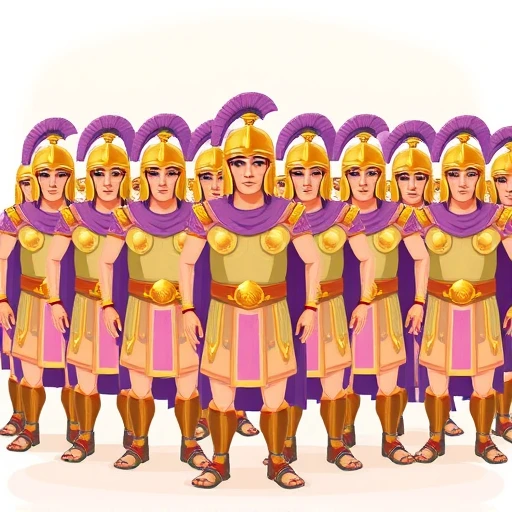
spartans in 30 Seconds
- Spartans were ancient Greek warriors known for their incredible discipline and military strength.
- The word is used today to describe people who live very simply and avoid luxury.
- Being a Spartan means being brave, tough, and focused on essentials rather than comfort.
- The term comes from the city-state of Sparta, where children were trained as soldiers from age seven.
The term Spartans primarily refers to the inhabitants of Sparta, a prominent city-state in ancient Greece. However, in modern English, the word has transcended its historical roots to become a powerful metaphor for a specific way of life. When we talk about Spartans today, we are often invoking an image of individuals who are incredibly disciplined, physically resilient, and indifferent to luxury. The historical Spartans were legendary for their military training, known as the agoge, which began in childhood and aimed to produce the most formidable soldiers in the ancient world. This rigorous upbringing stripped away comforts, focusing instead on endurance, stealth, and absolute loyalty to the state. Consequently, when a person is described as having 'Spartan' qualities, it implies they possess a rugged determination and a preference for the essential over the ornamental. This usage is common in contexts ranging from sports and fitness to interior design and personal philosophy.
- Historical Context
- The Spartans were the dominant military force in Greece for centuries, famously holding the pass at Thermopylae against a massive Persian army. Their society was structured entirely around the military, with a strict social hierarchy and a focus on communal living.
The ancient Spartans were taught from a young age that the needs of the city-state always came before their own personal desires.
Beyond the history books, you will encounter the word in discussions about minimalism. If someone says, 'They live like Spartans,' they are likely referring to a home that is sparsely furnished, lacking in decorative clutter, and focused on functionality. This metaphorical extension captures the 'austere' nature of the original Greek culture. In a world of consumerism, the idea of the Spartan represents a counter-culture of self-denial and mental toughness. It is not just about being poor; it is about choosing to live without excess to sharpen the mind and body. Athletes often adopt a 'Spartan' regimen, which involves waking up early, eating a restricted diet, and pushing through physical pain to achieve a goal. The word carries a sense of respect for this self-imposed hardship.
- Modern Application
- In the business world, a 'Spartan' approach to a project might mean cutting out all unnecessary features to focus on a core, functional product that works perfectly under pressure.
The software developers took a lesson from the Spartans, stripping the app of every non-essential feature to ensure maximum speed.
Culturally, the Spartans are often contrasted with the Athenians. While Athens is remembered for philosophy, art, and democracy, Sparta is remembered for action, discipline, and order. This dichotomy is still used in literature and film to represent the struggle between the intellectual and the physical, or between freedom and security. When you call a group 'Spartans,' you are highlighting their unity and their ability to withstand pressure. It is a word that evokes a sense of ancient power and timeless grit. Whether you are studying the Peloponnesian War or just looking at a very empty, modern apartment, the concept of the Spartan remains a relevant and evocative descriptor of human behavior and environmental simplicity.
Even in the face of overwhelming odds, the defenders fought like Spartans, refusing to yield an inch of ground.
- Linguistic Nuance
- The word 'laconic' also comes from the region of Sparta (Laconia), referring to the Spartans' famous habit of using very few words. To be Spartan is not just to live simply, but often to speak simply as well.
The coach's instructions were as brief as those of the Spartans: 'Win or do not come back.'
Many modern marathon runners view themselves as modern-day Spartans because of the intense discipline required for their training.
Using the word Spartans correctly requires an understanding of its dual role as a historical proper noun and a modern metaphorical noun. When referring to the historical people, it should always be capitalized. For example, 'The Spartans defeated the Athenians in the Peloponnesian War.' In this context, it functions as a collective noun representing a specific group of people from a specific time and place. It is often preceded by the definite article 'the' because it refers to a well-defined historical entity. You can use it as the subject of a sentence to describe their actions, or as the object to describe what happened to them. Because they were a warrior society, verbs associated with them often include 'fought,' 'trained,' 'conquered,' or 'endured.'
- Historical Usage
- 'The Spartans were renowned for their phalanx formation, a tactical wall of shields that was nearly impenetrable.' Here, the word identifies the specific military unit of the city-state.
Historians still debate the social structures that allowed the Spartans to maintain such a high level of military readiness for centuries.
When using 'Spartans' metaphorically, you are comparing modern people to the ancient ones. This is often done using the preposition 'like' or 'as.' For instance, 'The monks lived like Spartans in their remote mountain monastery.' This suggests that the monks shared the ancient Spartans' commitment to a simple, rigorous, and disciplined lifestyle. In this metaphorical sense, the word can sometimes be lowercase ('spartans'), but keeping it capitalized maintains the strength of the allusion. You might also use it to describe a team or a group that shows exceptional toughness. 'The underdog team played like Spartans, defending their goal with everything they had.' This usage emphasizes the qualities of bravery and resilience rather than the historical facts of ancient Greece.
- Metaphorical Usage
- 'During the economic crisis, many families became unwilling Spartans, cutting all luxury spending to survive.' This shows how the word describes a forced or chosen state of austerity.
The startup founders were true Spartans, sleeping on office floors and eating ramen to keep their dream alive.
Another way to use the word is in the context of education or training. You might say, 'The bootcamp turned the recruits into Spartans.' This implies a transformation from softness to hardness, from lack of discipline to strict adherence to rules. It is a very evocative word that paints a vivid picture of the subject. When writing, consider the tone you want to convey. Using 'Spartans' usually adds a layer of seriousness and respect to the description. It is rarely used in a lighthearted or silly way; it carries the weight of history and the gravity of the battlefield. Ensure that the context supports this level of intensity. If you are describing someone who just likes to keep their desk clean, 'Spartans' might be too strong a word; 'minimalists' might be more appropriate.
- Comparative Usage
- 'Compared to the lavish lifestyle of the neighboring city, the Spartans appeared almost monastic in their habits.'
The coach told his players to be Spartans on the field: silent, focused, and relentless.
In the movie, the 300 Spartans are portrayed as the ultimate defenders of freedom against tyranny.
You are likely to encounter the word Spartans in several distinct environments. The most obvious is in an academic or educational setting. History classes, documentaries about ancient civilizations, and archaeological reports frequently discuss the Spartans' unique societal structure and their impact on Western history. In these contexts, the word is used with precision to describe the citizens of the Lacedaemonian state. You will hear about their laws, their kings, and their military campaigns. If you visit Greece, specifically the Peloponnese region, the word is part of the local identity and tourism industry. Museums and historical sites in modern Sparta (Sparti) use the term to connect the present-day location with its illustrious and formidable past.
- Academic Environment
- 'The Spartans were unique among Greeks for the degree of social and legal equality among their citizen class, though this was built on the labor of the helots.'
The documentary explored how the Spartans managed to maintain a stable government for over five hundred years.
In the world of sports and fitness, 'Spartans' has become a brand. The 'Spartan Race' is a globally recognized series of obstacle course races that challenge participants' physical and mental strength. Here, the word is used to inspire a sense of warrior-like perseverance. Participants are encouraged to 'find their inner Spartan.' You will hear athletes, coaches, and fitness influencers use the word to describe a mindset of 'no excuses' and 'total commitment.' In this setting, the word is synonymous with 'tough' and 'unbreakable.' It has moved away from historical accuracy and toward a motivational archetype. If you are in a gym and someone says, 'Let's go, Spartans!', they are calling for a collective burst of intense effort and discipline.
- Sports and Fitness
- 'The training camp was designed to turn ordinary people into Spartans through a series of grueling physical challenges.'
After completing the marathon in the pouring rain, the runners felt like true Spartans.
You will also hear the word in discussions about lifestyle and design. Minimalist bloggers and interior designers might use 'Spartan' to describe a room that has only the bare essentials. 'The apartment was very Spartan, with just a bed, a desk, and a single chair.' In this context, it isn't necessarily a compliment or a criticism; it is a neutral description of a lack of clutter and luxury. Similarly, in business or politics, a 'Spartan budget' refers to a financial plan that includes only the most necessary expenses, with no room for 'fluff' or waste. When a CEO says, 'We need to be Spartans this quarter,' they are telling their employees to be extremely frugal and focused on the bottom line. This hearing of the word is common in financial news and corporate meetings.
- Business and Lifestyle
- 'The company's Spartan approach to office perks helped them survive the market downturn while competitors failed.'
Living as Spartans for a year allowed the couple to save enough money for a down payment on a house.
The commander praised his troops, saying they had fought with the courage of the ancient Spartans.
One of the most frequent mistakes when using the word Spartans is failing to capitalize it when referring to the historical people or the city-state. Because it is a proper noun derived from the name of a place (Sparta), it follows the same rules as 'Americans,' 'Londoners,' or 'Parisians.' Writing 'the spartans were brave' in a history essay would be considered a grammatical error. However, when the word is used as an adjective ('a spartan lifestyle'), capitalization is optional but often omitted in modern usage to indicate that the word has become a general descriptor. Another common error is confusing the Spartans with other ancient groups, such as the Romans or the Trojans. While they were all ancient warriors, the Spartans had a very specific culture of austerity that sets them apart. Calling a luxurious Roman banquet 'Spartan' would be a contradiction in terms.
- Capitalization Error
- Incorrect: 'The spartans lived in Greece.' Correct: 'The Spartans lived in Greece.' Proper nouns always require a capital letter.
Many students forget that Spartans refers to a specific nationality and should be capitalized accordingly.
Another mistake is using 'Spartans' to mean simply 'poor' or 'impoverished.' While the Spartans lived without luxury, they were not necessarily poor; they were a powerful and wealthy city-state that chose a lifestyle of self-denial for military purposes. Using the word to describe someone who is struggling financially might come across as insensitive or inaccurate. 'Spartan' implies a choice or a disciplined state, whereas 'poor' implies a lack of resources. For example, a billionaire who chooses to sleep on a floor is living like a Spartan; a person who has no bed because they cannot afford one is simply poor. Understanding this distinction is key to using the word with the correct nuance. Furthermore, don't confuse 'Spartan' with 'Stoic.' While they share similarities (both value endurance), Stoicism is a specific school of philosophy, whereas being Spartan is a lifestyle and cultural identity.
- Contextual Confusion
- Incorrect: 'The homeless man lived a Spartan life.' (Unless he is choosing it for discipline). Better: 'The monk lived a Spartan life.'
It is a mistake to assume all Spartans were identical; they had complex social roles beyond just being soldiers.
Lastly, be careful with the pluralization. 'Spartans' is the plural noun, but 'Spartan' is the singular noun and the adjective. Sometimes people say 'He is a Spartans,' which is grammatically incorrect. It should be 'He is a Spartan.' Conversely, don't say 'The Spartan were brave' when you mean the whole group; use 'The Spartans were brave.' This is a basic subject-verb agreement issue that often trips up English learners. Also, avoid overusing the word. Because it is such a strong, evocative term, using it to describe every minor instance of simplicity can dilute its impact. Reserve it for situations that truly embody the spirit of extreme discipline or significant austerity. If a room just has a few less pillows than usual, it's probably not 'Spartan.'
- Grammar Check
- Incorrect: 'He is a Spartans.' Correct: 'He is a Spartan.' Use the singular form for one person.
The teacher corrected the student, explaining that 'the Spartans' refers to the group, while 'a Spartan' refers to an individual.
Using the term Spartans to describe any ancient Greek is a common overgeneralization.
If you find yourself using the word Spartans too often, or if it doesn't quite fit the tone of your writing, there are several alternatives you can use. Each has a slightly different nuance. 'Minimalists' is a common modern alternative. While 'Spartans' implies a historical or warrior-like discipline, 'minimalists' suggests a conscious aesthetic or lifestyle choice to live with less. It is a softer, more contemporary term. If you are describing someone who avoids all forms of indulgence for religious or moral reasons, 'ascetics' might be a better choice. Asceticism is often associated with monks or hermits and carries a spiritual weight that 'Spartan' lacks. If the focus is on emotional endurance and the ability to remain calm under pressure, 'Stoics' is the appropriate term, referring to the followers of the Stoic philosophy.
- Spartans vs. Minimalists
- Spartans implies a rugged, perhaps harsh discipline (e.g., 'They trained like Spartans'). Minimalists implies a clean, organized, and intentional simplicity (e.g., 'Their home is a minimalist's dream').
While the Spartans were forced into austerity by law, modern minimalists choose it for peace of mind.
Another set of alternatives focuses on the military or physical aspect. 'Warriors' is a broader term that can apply to any culture, whereas 'Spartans' is specific to Greece. If you want to emphasize the elite nature of a group, 'the vanguard' or 'the elite' could work. In a modern military context, 'marines' or 'special forces' often carry the same connotations of extreme toughness and specialized training that 'Spartans' once did. If you are describing a very simple and unadorned environment, you might use 'austere,' 'stark,' or 'bare-bones.' For example, 'The office was austere' sounds more professional than 'The office was like the Spartans.' Each of these words allows you to fine-tune your description to match the exact feeling you want to convey.
- Spartans vs. Ascetics
- Ascetics avoid pleasure for spiritual purity; Spartans avoid luxury for military efficiency. One is for the soul, the other for the state.
The desert hermits were more like ascetics than Spartans, as their goal was prayer, not combat.
For describing speech, 'laconic' is the direct synonym derived from the Spartan region of Laconia. If you say someone is 'laconic,' you mean they use very few words, just like the Spartans were famous for doing. Other alternatives for this include 'terse,' 'succinct,' or 'pithy.' If you are describing a person who is very strict and disciplined, you might call them a 'disciplinarian' or a 'martinet.' These words focus more on the enforcement of rules than on the lifestyle itself. Finally, 'puritans' can be used to describe people who are very strict about morals and avoid pleasure, though this has a religious and historical context tied to 17th-century England and America. Choosing the right word depends on whether you want to emphasize the history, the discipline, the simplicity, or the lack of speech.
- Spartans vs. Puritans
- Puritans are associated with moral and religious strictness; Spartans are associated with physical and military strictness.
The headmaster was a bit of a Spartan, expecting the students to be in their seats at exactly 8:00 AM every day.
While some call them minimalists, I prefer to call them Spartans because of the sheer grit they show in their daily lives.
How Formal Is It?
Fun Fact
The Spartans were so famous for their short, direct speech that the word 'laconic' (from Laconia, the region of Sparta) became a permanent part of the English language to describe that style of talking.
Pronunciation Guide
- Pronouncing the 't' too softly in UK English so it sounds like 'spar-anz'.
- Adding an extra vowel sound between 't' and 'n', making it 'spar-tens'.
- Failing to pronounce the 's' at the end when referring to the group.
- Pronouncing the 'a' in 'tans' like the 'a' in 'apple' (it should be a schwa sound /ə/).
- Putting the stress on the second syllable: spar-TANS.
Difficulty Rating
The word is common in history books and news, but the metaphorical use requires some cultural knowledge.
Learners must remember to capitalize it as a proper noun and use it correctly as a plural.
The pronunciation is straightforward, though the US glottal stop can be tricky.
It is easily recognized in historical contexts but might be missed when used metaphorically in fast speech.
What to Learn Next
Prerequisites
Learn Next
Advanced
Grammar to Know
Capitalization of Proper Nouns
Always write 'Spartans' with a capital 'S' when referring to the people.
Plural Noun Agreement
The Spartans 'were' (not 'was') famous for their shields.
Similes with 'Like'
They fought 'like' Spartans.
Possessive Plural
The Spartans' shields were made of bronze.
Adjective vs. Noun Use
Use 'Spartan' as an adjective (Spartan life) and 'Spartans' as a plural noun.
Examples by Level
The Spartans were very strong soldiers.
Los espartanos eran soldados muy fuertes.
Plural noun subject.
Spartans did not like big houses.
A los espartanos no les gustaban las casas grandes.
Negative past tense.
They lived like Spartans in the camp.
Vivían como espartanos en el campamento.
Simile using 'like'.
The Spartans had a simple life.
Los espartanos tenían una vida sencilla.
Simple past tense.
Are you a Spartan?
¿Eres un espartano?
Interrogative sentence.
The Spartans were from Greece.
Los espartanos eran de Grecia.
Prepositional phrase 'from Greece'.
Spartans were brave in battle.
Los espartanos eran valientes en la batalla.
Adjective 'brave' describing the noun.
We can be Spartans today.
Podemos ser espartanos hoy.
Modal verb 'can'.
The Spartans trained every day to be ready for war.
Los espartanos entrenaban todos los días para estar listos para la guerra.
Infinitive of purpose 'to be ready'.
Children in Sparta were raised to be Spartans.
Los niños en Esparta eran criados para ser espartanos.
Passive voice 'were raised'.
The Spartans did not have many toys or games.
Los espartanos no tenían muchos juguetes o juegos.
Plural count nouns 'toys' and 'games'.
The Spartans were famous for their red cloaks.
Los espartanos eran famosos por sus capas rojas.
Adjective phrase 'famous for'.
If you are very disciplined, people might call you Spartans.
Si eres muy disciplinado, la gente podría llamarlos espartanos.
First conditional structure.
The Spartans lived in a city without walls.
Los espartanos vivían en una ciudad sin murallas.
Preposition 'without'.
They were the best Spartans in the army.
Eran los mejores espartanos del ejército.
Superlative 'the best'.
Spartans valued strength more than money.
Los espartanos valoraban la fuerza más que el dinero.
Comparative 'more than'.
The Spartans were known for their laconic wit and short answers.
Los espartanos eran conocidos por su ingenio lacónico y sus respuestas cortas.
Compound adjectives 'laconic' and 'short'.
Historians study how the Spartans organized their society.
Los historiadores estudian cómo los espartanos organizaban su sociedad.
Indirect question 'how the Spartans organized'.
The athletes lived like Spartans during the three-month training period.
Los atletas vivieron como espartanos durante el período de entrenamiento de tres meses.
Prepositional phrase of duration.
The Spartans' bravery at Thermopylae is still remembered today.
La valentía de los espartanos en las Termópilas todavía se recuerda hoy.
Possessive plural 'Spartans''.
Many people admire the Spartans for their incredible self-control.
Mucha gente admira a los espartanos por su increíble autocontrol.
Verb 'admire' followed by 'for'.
The Spartans refused to surrender, even when they were outnumbered.
Los espartanos se negaron a rendirse, incluso cuando eran superados en número.
Concessive clause 'even when'.
To be called Spartans was a great honor in the ancient world.
Ser llamados espartanos era un gran honor en el mundo antiguo.
Infinitive phrase as subject.
The Spartans' lifestyle was a reaction to the constant threat of war.
El estilo de vida de los espartanos fue una reacción a la constante amenaza de guerra.
Noun phrase 'reaction to'.
The Spartans' rigid social hierarchy ensured that the military remained the priority.
La rígida jerarquía social de los espartanos aseguraba que el ejército siguiera siendo la prioridad.
Complex sentence with a 'that' clause.
By living as Spartans, the monks were able to focus entirely on their spiritual growth.
Al vivir como espartanos, los monjes pudieron concentrarse por completo en su crecimiento espiritual.
Gerund phrase 'By living' as an adverbial of manner.
The Spartans' legacy is often romanticized in modern films and literature.
El legado de los espartanos a menudo se romantiza en las películas y la literatura modernas.
Present simple passive 'is romanticized'.
Despite their reputation for being uncultured, the Spartans had a unique form of music and poetry.
A pesar de su reputación de ser incultos, los espartanos tenían una forma única de música y poesía.
Preposition 'Despite' followed by a noun phrase.
The Spartans' discipline was so intense that it became a model for later military organizations.
La disciplina de los espartanos era tan intensa que se convirtió en un modelo para organizaciones militares posteriores.
Result clause 'so... that'.
The Spartans were essentially a society of professional soldiers supported by a large labor force.
Los espartanos eran esencialmente una sociedad de soldados profesionales apoyados por una gran fuerza de trabajo.
Adverb 'essentially' modifying the verb 'were'.
Critics argue that the Spartans' focus on war led to their eventual decline.
Los críticos argumentan que el enfoque de los espartanos en la guerra llevó a su eventual declive.
Noun clause as object of 'argue'.
The Spartans' system of government was a mix of monarchy, oligarchy, and democracy.
El sistema de gobierno de los espartanos era una mezcla de monarquía, oligarquía y democracia.
List of nouns.
The Spartans' ethos of self-sacrifice was deeply embedded in their educational system, the agoge.
El espíritu de autosacrificio de los espartanos estaba profundamente arraigado en su sistema educativo, la agogé.
Passive participle 'embedded' used as an adjective.
In the face of modern consumerism, some individuals choose to live as Spartans to reclaim their autonomy.
Frente al consumismo moderno, algunos individuos eligen vivir como espartanos para reclamar su autonomía.
Infinitive of purpose 'to reclaim'.
The Spartans' refusal to engage in the typical Greek pursuit of wealth made them an anomaly in the ancient world.
La negativa de los espartanos a participar en la típica búsqueda griega de la riqueza los convirtió en una anomalía en el mundo antiguo.
Complex subject 'The Spartans' refusal to engage...'.
Historians often contrast the Spartans' collective identity with the Athenian emphasis on individual expression.
Los historiadores a menudo contrastan la identidad colectiva de los espartanos con el énfasis ateniense en la expresión individual.
Verb 'contrast' with 'with'.
The Spartans' military hegemony in Greece was eventually challenged by the rising power of Thebes.
La hegemonía militar de los espartanos en Grecia fue finalmente desafiada por el creciente poder de Tebas.
Past simple passive with 'by' agent.
The Spartans' laconic response to Philip II of Macedon's threats remains a classic example of their defiant nature.
La respuesta lacónica de los espartanos a las amenazas de Filipo II de Macedonia sigue siendo un ejemplo clásico de su naturaleza desafiante.
Possessive noun phrase as subject.
To understand the Spartans, one must look beyond the battlefield and examine their unique social contracts.
Para entender a los espartanos, uno debe mirar más allá del campo de batalla y examinar sus contratos sociales únicos.
Modal 'must' for logical necessity.
The Spartans' domestic policy was largely dictated by the need to suppress the helot population.
La política interna de los espartanos estaba dictada en gran medida por la necesidad de suprimir a la población de ilotas.
Adverb 'largely' modifying the passive verb.
The Spartans' sociopolitical structure, while ostensibly egalitarian among citizens, was predicated upon the systemic subjugation of the helots.
La estructura sociopolítica de los espartanos, aunque ostensiblemente igualitaria entre los ciudadanos, se basaba en la subyugación sistémica de los ilotas.
Concessive clause 'while ostensibly egalitarian'.
The enduring allure of the Spartans in Western thought speaks to a perennial fascination with the triumph of will over circumstance.
El atractivo perdurable de los espartanos en el pensamiento occidental habla de una fascinación perenne por el triunfo de la voluntad sobre las circunstancias.
Abstract noun phrase as subject.
Modern interpretations of the Spartans often oscillate between admiring their discipline and condemning their xenophobia.
Las interpretaciones modernas de los espartanos a menudo oscilan entre admirar su disciplina y condenar su xenofobia.
Parallel gerund phrases after 'between'.
The Spartans' rejection of coinage in favor of iron spits was a deliberate attempt to stifle economic inequality and greed.
El rechazo de los espartanos a la acuñación en favor de los asadores de hierro fue un intento deliberado de sofocar la desigualdad económica y la codicia.
Prepositional phrase 'in favor of'.
The Spartans' strategic caution, often misinterpreted as cowardice, was frequently a calculated move to preserve their limited citizen-manpower.
La cautela estratégica de los espartanos, a menudo malinterpretada como cobardía, fue frecuentemente un movimiento calculado para preservar su limitada mano de obra ciudadana.
Appositive phrase 'often misinterpreted as cowardice'.
The Spartans' cultural isolationism served as a double-edged sword, fostering internal stability while rendering them vulnerable to external ideological shifts.
El aislacionismo cultural de los espartanos sirvió como una espada de doble filo, fomentando la estabilidad interna mientras los hacía vulnerables a los cambios ideológicos externos.
Participial phrases 'fostering...' and 'rendering...'.
In the philosophical tradition, the Spartans are frequently invoked as the antithesis of the decadent sophists of Athens.
En la tradición filosófica, los espartanos son invocados frecuentemente como la antítesis de los sofistas decadentes de Atenas.
Passive voice with 'as' complement.
The Spartans' collapse after the Battle of Leuctra underscored the inherent fragility of a state built solely on military prestige.
El colapso de los espartanos después de la batalla de Leuctra subrayó la fragilidad inherente de un estado construido únicamente sobre el prestigio militar.
Noun phrase 'inherent fragility of a state'.
Common Collocations
Common Phrases
— A famous movie quote used to show defiance or extreme pride in one's strength.
When the competitor tried to intimidate him, he shouted, 'This is Sparta!'
— A way of living that is very basic and has no unnecessary items.
The design of the new phone focuses on Spartan simplicity.
— Bravery that is quiet, firm, and does not show fear.
She showed Spartan courage throughout her long illness.
— A life that is very hard and lacks any comfort.
The researcher led a Spartan existence in the Arctic circle.
— Very difficult and strict preparation for a task.
The dancers underwent Spartan training before the opening night.
— An environment that is bare and unadorned.
The monk felt at peace in his Spartan surroundings.
— Extreme strictness and attention to detail.
The professor graded the papers with Spartan rigor.
— Being raised with very strict rules and few luxuries.
His Spartan upbringing made him very resilient as an adult.
— A very strong and unchanging determination.
With Spartan resolve, they continued the search through the night.
— A system where resources are used very carefully and nothing is wasted.
The wartime government enforced a Spartan economy on the nation.
Often Confused With
Spartacus was a Roman gladiator who led a slave revolt; he was not a Spartan.
Stoics are followers of a philosophy; Spartans are a cultural/historical group. They overlap but are different.
The Athenians were the rivals of the Spartans and valued art and democracy over military discipline.
Idioms & Expressions
— To come home victorious or to die trying; a famous Spartan saying.
The coach told the team to return 'with your shield or on it.'
Literary— Using very few words to say something very important.
The CEO's email had a certain laconic brevity that scared the staff.
Formal— A very hard or uncomfortable place to sleep.
After the luxury hotel, the camping mat felt like a Spartan's bed.
Informal— A very simple or unappealing meal eaten for health or duty.
The hospital food was little more than Spartan broth.
Informal— To handle a difficult situation without complaining or showing emotion.
He was a Spartan about his broken leg and didn't make a sound.
Neutral— Doing things in the most disciplined and least luxurious manner possible.
We decided to do the road trip the Spartan way: no hotels, just tents.
Neutral— Extremely strong control over oneself, often associated with Spartans.
It took iron discipline to wake up at 4 AM every day.
Neutral— To be even more disciplined or austere than the most famous examples.
By giving away his last chair, he managed to out-Spartan the Spartans.
Informal— A refusal to speak or complain even under great pressure.
The prisoner maintained a Spartan silence during the interrogation.
Literary— A personality that is brave, tough, and unemotional.
She has a Spartan heart and never lets anyone see her cry.
PoeticEasily Confused
It looks the same as the singular noun.
The adjective describes a thing (a Spartan room), while the noun describes a person (He is a Spartan).
He lives in a Spartan apartment.
Similar starting letters.
Spastic is a medical term (often used as an offensive slang) related to muscle control; it has nothing to do with Spartans.
Avoid using the word 'spastic' as it is offensive.
It is the verb form.
Spartans are the people; Spartanize is the action of making something like them.
We need to Spartanize our office to save money.
Closely related to Spartan culture.
Laconic refers specifically to speech, while Spartan refers to the whole lifestyle.
His laconic reply was very Spartan.
Both are Greek warriors.
A hoplite is a type of soldier; a Spartan is a nationality. Most Spartans were hoplites, but not all hoplites were Spartans.
The Spartan hoplites were the best in Greece.
Sentence Patterns
The Spartans were [adjective].
The Spartans were brave.
They lived like [noun].
They lived like Spartans.
The Spartans are known for [noun/gerund].
The Spartans are known for their military training.
It was a [adjective] lifestyle, much like the Spartans.
It was a simple lifestyle, much like the Spartans.
The Spartans' [noun] served as a [noun].
The Spartans' discipline served as a model for others.
Predicated upon [noun], the Spartans' society [verb].
Predicated upon military prowess, the Spartans' society flourished.
Compared to [noun], the Spartans were [adjective].
Compared to the Athenians, the Spartans were austere.
To be a Spartan is to [verb].
To be a Spartan is to endure.
Word Family
Nouns
Verbs
Adjectives
Related
How to Use It
Common in history, sports, and lifestyle discussions.
-
Writing 'spartans' with a lowercase 's' when referring to the Greeks.
→
Spartans
It is a proper noun based on the city Sparta.
-
Saying 'He is a Spartans.'
→
He is a Spartan.
You cannot use a plural noun with the singular article 'a'.
-
Confusing Spartans with Romans.
→
Spartans (Greek), Romans (Italy).
They are from different countries and different time periods of peak power.
-
Using 'Spartan' to mean 'messy' or 'dirty'.
→
Spartan means simple and clean, not messy.
Spartans were very organized and disciplined, so their environments were tidy, just bare.
-
Thinking 'Spartans' only refers to men.
→
Spartans (the whole people).
While the soldiers were men, the term refers to the entire citizen class of the city-state.
Tips
Capitalize for History
Always use a capital 'S' when you are talking about the people of ancient Greece. This shows you understand it is a proper noun.
Use 'Laconic' for Speech
If you want to describe how a Spartan talks, use the word 'laconic.' It's a more precise word for their short and direct speaking style.
Metaphorical Strength
Use 'Spartans' to describe a group that is working very hard under difficult conditions. It adds a heroic feeling to your description.
Contrast with Athens
In history essays, contrasting the Spartans with the Athenians is a great way to show the different values of ancient Greek society.
Plural vs. Singular
Remember: 'The Spartans were...' (plural) but 'He was a Spartan...' (singular). Don't mix them up!
The 'R' Sound
In US English, make sure the 'r' in 'Spar' is strong. In UK English, the 'r' is often silent, making it sound like 'Spah-tans'.
Avoid Overuse
Don't call every simple thing 'Spartan.' Save it for things that are truly extreme in their lack of comfort or their high level of discipline.
Modern Mascots
If you are in the US, be aware that many people will associate 'Spartans' with Michigan State University sports teams.
The Helot Factor
Remember that the Spartans' lifestyle was possible because they had a large population of forced laborers called helots. This adds depth to historical discussions.
Shield Association
Whenever you hear 'Spartans,' picture a large bronze shield. It represents both their military power and their 'shield' against luxury.
Memorize It
Mnemonic
Think of 'SPAR' (like a boxing match) and 'TANS' (like being out in the sun). Spartans are tough warriors who 'spar' in the sun and don't need fancy things.
Visual Association
Imagine a red cape and a bronze shield. These are the classic symbols of the Spartans. When you see a room with no furniture, imagine a Spartan warrior standing in it.
Word Web
Challenge
Try to describe your bedroom using only 'Spartan' qualities. Then, try to spend one hour living like the Spartans by turning off all your electronics and sitting in a simple chair.
Word Origin
The word comes from the Greek 'Spartiates', referring to the citizens of the city-state Sparta. It entered English in the 14th century through Latin and Old French. The city's name itself is of uncertain origin but may be related to 'spartē' (sown land) or 'sparton' (rope).
Original meaning: A citizen of the city of Sparta in the Peloponnese region of Greece.
Indo-European (Greek -> Latin -> French -> English).Cultural Context
Be aware that while the military aspect is admired, the historical Spartans also practiced infanticide and relied on slave labor, which are sensitive topics in historical discussions.
In English-speaking countries, calling someone a 'Spartan' is almost always a compliment about their toughness or discipline.
Practice in Real Life
Real-World Contexts
History Class
- The Spartans defeated...
- Spartan social structure
- The laws of the Spartans
- Spartans vs. Persians
Gym / Fitness
- Spartan workout
- Train like Spartans
- Spartan mindset
- Inner Spartan
Interior Design
- Spartan aesthetic
- Spartan decor
- A Spartan room
- Spartan simplicity
Business / Finance
- Spartan budget
- Spartan operations
- Living like Spartans to save
- Spartan efficiency
Literature / Film
- The 300 Spartans
- Spartan bravery
- A Spartan hero
- Spartan sacrifice
Conversation Starters
"Do you think you could live like the Spartans for a week without any internet or luxury?"
"Why do you think the Spartans are still so famous today, thousands of years later?"
"If you had to design a 'Spartan' room, what are the only three things you would keep?"
"Do you prefer the Spartan focus on discipline or the Athenian focus on art and philosophy?"
"Have you ever seen a movie or read a book about the Spartans that you enjoyed?"
Journal Prompts
Write about a time when you had to be a 'Spartan' and show extreme discipline to achieve a goal.
Describe what a 'Spartan' version of your current life would look like. What would you give up?
Research the Battle of Thermopylae and write a short reflection on why the Spartans' actions are still remembered.
Do you think modern society needs more 'Spartan' qualities, or are we better off with our current comforts?
Imagine you are a young Spartan in ancient Greece. Describe your typical day of training.
Frequently Asked Questions
10 questionsIt is a proper noun derived from the name of a specific place, Sparta. Just like 'Americans' or 'Europeans,' it must start with a capital letter to be grammatically correct.
No, 'Spartans' is plural. To describe one person, you should use 'a Spartan.' For example, 'He is a true Spartan.'
A minimalist chooses a simple life for aesthetic or mental peace. A Spartan lifestyle usually implies a tougher, more disciplined, and perhaps more difficult version of simplicity, often for a specific goal or duty.
No, Sparta had a large army. The '300' refers specifically to the elite bodyguard of King Leonidas who fought at the Battle of Thermopylae alongside several thousand other Greeks.
Usually, yes. It suggests that a person is brave, disciplined, and doesn't complain. However, if you describe a hotel room as 'Spartan,' it might be a complaint that the room is too basic and uncomfortable.
The Spartans lived in a region called Laconia. They were famous for using very few words, so 'laconic' became the word to describe that short, direct style of speaking.
Yes, and Spartan women were famous for being more independent and better educated than women in other Greek city-states. They also underwent physical training.
Only in name and spirit. It is a modern obstacle course designed to test fitness, but it uses the name 'Spartan' to evoke the toughness of the ancient warriors.
The agoge was the rigorous education and training program mandated for all male Spartan citizens, except for the firstborn sons of the ruling houses.
In American English, it is often pronounced 'SPAR-t'nz,' where the 't' is almost skipped and the 'n' follows immediately with a small catch in the throat.
Test Yourself 191 questions
Describe a 'Spartan' room in three sentences.
Well written! Good try! Check the sample answer below.
Why do you think the Spartans were so disciplined?
Well written! Good try! Check the sample answer below.
Compare the lifestyle of a Spartan to a modern person.
Well written! Good try! Check the sample answer below.
Write a short story about a modern person living like a Spartan.
Well written! Good try! Check the sample answer below.
Explain the meaning of 'laconic' and how it relates to Spartans.
Well written! Good try! Check the sample answer below.
Discuss the pros and cons of a Spartan education.
Well written! Good try! Check the sample answer below.
What does it mean to have a 'Spartan budget' in business?
Well written! Good try! Check the sample answer below.
Describe the Battle of Thermopylae from a Spartan's perspective.
Well written! Good try! Check the sample answer below.
How has the image of Spartans changed in modern movies?
Well written! Good try! Check the sample answer below.
Write a dialogue between a Spartan and an Athenian.
Well written! Good try! Check the sample answer below.
Is being a 'Spartan' a good thing today? Why or why not?
Well written! Good try! Check the sample answer below.
Describe the physical training of the Spartans.
Well written! Good try! Check the sample answer below.
What can we learn from the Spartans' focus on essentials?
Well written! Good try! Check the sample answer below.
Write a motivational speech for a team of 'Spartans'.
Well written! Good try! Check the sample answer below.
Analyze the social hierarchy of ancient Sparta.
Well written! Good try! Check the sample answer below.
How does the word 'Spartan' differ from 'Minimalist'?
Well written! Good try! Check the sample answer below.
Describe a Spartan meal.
Well written! Good try! Check the sample answer below.
Why did the Spartans avoid using gold and silver?
Well written! Good try! Check the sample answer below.
What is the significance of the Spartan shield?
Well written! Good try! Check the sample answer below.
Write about a person you know who is a 'Spartan'.
Well written! Good try! Check the sample answer below.
Describe a Spartan lifestyle in your own words.
Read this aloud:
You said:
Speech recognition is not supported in your browser. Try Chrome or Edge.
Would you like to be a Spartan? Why or why not?
Read this aloud:
You said:
Speech recognition is not supported in your browser. Try Chrome or Edge.
Tell a story about a brave person you know.
Read this aloud:
You said:
Speech recognition is not supported in your browser. Try Chrome or Edge.
Explain the difference between a Spartan and a minimalist.
Read this aloud:
You said:
Speech recognition is not supported in your browser. Try Chrome or Edge.
Discuss the importance of discipline in your life.
Read this aloud:
You said:
Speech recognition is not supported in your browser. Try Chrome or Edge.
Describe the Battle of Thermopylae to a friend.
Read this aloud:
You said:
Speech recognition is not supported in your browser. Try Chrome or Edge.
What are the benefits of living with fewer things?
Read this aloud:
You said:
Speech recognition is not supported in your browser. Try Chrome or Edge.
How do you think Spartan children felt during their training?
Read this aloud:
You said:
Speech recognition is not supported in your browser. Try Chrome or Edge.
Give a short speech about 'Spartan courage'.
Read this aloud:
You said:
Speech recognition is not supported in your browser. Try Chrome or Edge.
Discuss whether the Spartans were too harsh.
Read this aloud:
You said:
Speech recognition is not supported in your browser. Try Chrome or Edge.
What is your favorite historical movie and why?
Read this aloud:
You said:
Speech recognition is not supported in your browser. Try Chrome or Edge.
How can someone be a 'Spartan' in the modern world?
Read this aloud:
You said:
Speech recognition is not supported in your browser. Try Chrome or Edge.
Explain the concept of 'laconic' speech with an example.
Read this aloud:
You said:
Speech recognition is not supported in your browser. Try Chrome or Edge.
Talk about a time you had to endure something difficult.
Read this aloud:
You said:
Speech recognition is not supported in your browser. Try Chrome or Edge.
What would a Spartan think of our modern world?
Read this aloud:
You said:
Speech recognition is not supported in your browser. Try Chrome or Edge.
Describe the ideal qualities of a Spartan warrior.
Read this aloud:
You said:
Speech recognition is not supported in your browser. Try Chrome or Edge.
Discuss the role of women in Spartan society.
Read this aloud:
You said:
Speech recognition is not supported in your browser. Try Chrome or Edge.
How does discipline lead to freedom?
Read this aloud:
You said:
Speech recognition is not supported in your browser. Try Chrome or Edge.
Tell us about the 'Spartan Race' and if you would do it.
Read this aloud:
You said:
Speech recognition is not supported in your browser. Try Chrome or Edge.
What is the most 'Spartan' thing you own?
Read this aloud:
You said:
Speech recognition is not supported in your browser. Try Chrome or Edge.
Listen to a description of Sparta and list three facts.
Listen to a teacher talk about the agoge and identify the starting age.
Listen to a dialogue about a Spartan room and identify what is missing.
Listen to a historical podcast about King Leonidas and summarize his speech.
Listen to an interview with a Spartan Race runner and identify their goal.
Listen to a lecture on Spartan politics and identify the role of the Ephors.
Listen to a story about a Spartan mother and identify her famous phrase.
Listen to a comparison of Sparta and Athens and identify one similarity.
Listen to a news report on a 'Spartan budget' and identify what was cut.
Listen to a poem about the 300 and identify the tone.
Listen to a guide at a museum in Sparta and list two artifacts mentioned.
Listen to a debate about Spartan ethics and summarize the main arguments.
Listen to a description of the phalanx and identify the key weapon.
Listen to a talk on 'laconic' wit and identify the punchline of the joke.
Listen to a child's story about a brave Spartan and identify the hero.
/ 191 correct
Perfect score!
Summary
The word 'Spartans' connects historical military excellence with a modern philosophy of minimalism and grit; it describes those who choose discipline over comfort. Example: 'The team worked like Spartans to finish the project on time.'
- Spartans were ancient Greek warriors known for their incredible discipline and military strength.
- The word is used today to describe people who live very simply and avoid luxury.
- Being a Spartan means being brave, tough, and focused on essentials rather than comfort.
- The term comes from the city-state of Sparta, where children were trained as soldiers from age seven.
Capitalize for History
Always use a capital 'S' when you are talking about the people of ancient Greece. This shows you understand it is a proper noun.
Use 'Laconic' for Speech
If you want to describe how a Spartan talks, use the word 'laconic.' It's a more precise word for their short and direct speaking style.
Metaphorical Strength
Use 'Spartans' to describe a group that is working very hard under difficult conditions. It adds a heroic feeling to your description.
Contrast with Athens
In history essays, contrasting the Spartans with the Athenians is a great way to show the different values of ancient Greek society.
![300 Best Quotes [HD] [1080p]](https://sublearn.com/storage/thumbnails/V0DJqixXAUU.jpg)

