









venom in 30 Seconds
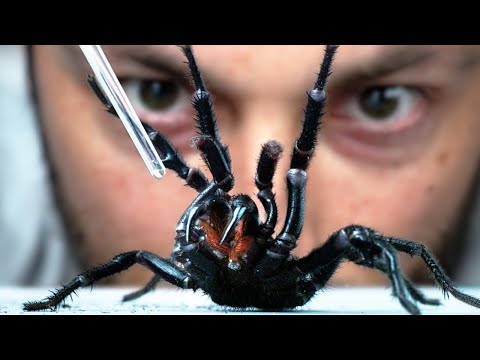
- Venom is a toxin injected by animals like snakes and spiders through bites or stings for defense or hunting.
- Metaphorically, venom describes extreme malice, spite, or bitterness in a person's words, tone, or written language.
- It is a noun, usually uncountable, and is distinct from 'poison,' which is typically ingested rather than injected.
- Commonly used in nature documentaries, literature, and political commentary to describe either biological danger or emotional toxicity.
The word 'venom' serves a dual purpose in the English language, acting as both a biological descriptor and a powerful metaphor for human emotion. In its primary, scientific sense, venom refers to a specialized type of poison that is actively injected into a victim through a bite or a sting. This distinguishes it from 'poison,' which is typically inhaled, swallowed, or absorbed through the skin. Animals like cobras, black widow spiders, and box jellyfish use venom as a tool for hunting or self-defense. When we discuss biology, 'venom' is a neutral, technical term. However, the word undergoes a dramatic transformation when applied to human behavior. Figuratively, venom describes extreme bitterness, malice, or spite. It is the 'poison' of the soul expressed through language. When someone speaks with venom, their words are intended to wound, degrade, or destroy the recipient's spirit. This usage is common in literature, political commentary, and descriptions of intense personal conflicts.
- Biological Context
- Used when describing the toxins produced by snakes, scorpions, and insects. It implies an active delivery system like fangs or a stinger.
The king cobra's venom is powerful enough to kill an elephant within hours.
- Metaphorical Context
- Used to describe speech or writing that is exceptionally cruel, hateful, or spiteful. It suggests a desire to cause emotional harm.
The critic's review was filled with such venom that the young actor considered quitting the profession entirely.
In modern discourse, 'venom' is frequently used to describe the atmosphere of social media or political debates. When people talk about 'toxic' environments, they are often referring to the venomous nature of the interactions. The word carries a weight of intentionality; venom is not an accident. It is a concentrated effort to hurt. Whether it is the physical toxin of a predator or the verbal toxin of a rival, the essence of venom remains the same: a potent substance designed to incapacitate. Understanding this word allows you to describe both the wonders of the natural world and the complexities of human animosity with precision.
- Historical Usage
- Historically, the word has been used to describe anything that 'corrupts' or 'taints,' including bad ideas or moral failings.
He spat his words with pure venom, revealing years of hidden resentment.
Scientists are studying spider venom to develop new types of non-addictive painkillers.
The political campaign was characterized by personal venom rather than policy discussion.
Using 'venom' correctly requires an understanding of its grammatical role as an uncountable noun in most contexts. When referring to the biological substance, you might discuss 'types of venom' or 'the venom of a specific animal.' When using it figuratively, it often follows verbs like 'spew,' 'spit,' 'pour,' or 'contain.' It is almost always used to describe a quality of speech, tone, or writing. For instance, one might say 'Her voice was dripping with venom.' This imagery suggests that the malice is so thick it is physically oozing from her words. Another common pattern is 'the venom of [something],' such as 'the venom of his pen,' referring to a writer's harsh critiques.
- Subject Position
- The venom acts as the primary focus of the sentence, often describing its effects.
The venom traveled quickly through the bloodstream, causing immediate paralysis.
- Object Position
- The venom is what is being produced, injected, or expressed by someone or something.
He couldn't hide the venom in his eyes when he saw his rival succeed.
In descriptive writing, 'venom' is a high-impact word. It is stronger than 'anger' or 'dislike.' If you say someone is 'angry,' they might just be shouting. If you say they are 'full of venom,' you are implying a deep-seated, poisonous hatred. This makes it an excellent choice for fiction writers who want to convey a character's intense negative emotions. It also works well in journalistic contexts to describe particularly nasty public disputes. For example, 'The debate descended into personal venom' suggests that the participants stopped arguing about facts and started trying to hurt each other personally.
- Prepositional Phrases
- Commonly used with 'with' or 'of' to add descriptive depth.
She spoke with such venom that the room went silent.
The venom of the scorpion is rarely fatal to healthy adults but can be very painful.
There was a trace of venom in his laughter, hinting at his true feelings.
You will encounter 'venom' in several distinct environments. The most obvious is in nature documentaries or scientific journals. Narrators often use the word to build suspense when describing a predator's lethal capabilities. You might hear, 'The snake waits, its glands filled with deadly venom.' In these contexts, the word is literal and descriptive. Beyond the natural world, 'venom' is a staple of political commentary. Pundits often complain about the 'venom' in modern politics, referring to the aggressive and insulting way politicians speak about one another. This usage highlights the corrosive effect of such language on civil society.
- In Literature
- Authors use 'venom' to describe the internal state of villains or the intensity of a betrayal.
Shakespeare often used the imagery of venom to describe jealousy and treachery.
- In Pop Culture
- The Marvel character 'Venom' is a prime example, named for his aggressive and 'poisonous' nature as an anti-hero.
The movie Venom explores the relationship between a human and a powerful alien symbiote.
In daily conversation, 'venom' is less common than 'anger' but is used when someone wants to emphasize the cruelty of an interaction. You might hear a friend say, 'I couldn't believe the venom in her voice when she talked about her ex.' This tells you that the speaker was shocked by the intensity of the hatred. In sports, commentators might talk about the 'venom' in a player's shot, meaning it was hit with incredible power and speed, though this is a more specialized, almost slang-like usage. Overall, 'venom' is a word that signals intensity, whether it's the intensity of a biological toxin or the intensity of human emotion.
- In Medical Settings
- Doctors and toxicologists use the word when discussing antivenom and treatment for bites.
The hospital keeps a supply of snake venom antiserum for emergencies.
Social media platforms are often criticized for allowing users to spread venom anonymously.
The old man's heart was full of venom after years of being ignored by his family.
The most frequent mistake learners make is confusing 'venom' with 'poison.' While they are related, they are not interchangeable in scientific or precise English. 'Venom' is a toxin that is injected (bite or sting), whereas 'poison' is a toxin that is ingested, inhaled, or absorbed. If you say a snake is 'poisonous,' a biologist might correct you and say it is 'venomous.' Another common error is using 'venom' as a verb. While you can 'poison' someone, you cannot 'venom' someone. You must use phrases like 'inject with venom' or 'speak with venom.' Additionally, learners sometimes use 'venom' to describe simple anger. Remember, venom implies a specific kind of cold, calculated, or intense malice.
- Venom vs. Poison
- Venom is delivered via a wound; poison is delivered via the digestive or respiratory system.
Incorrect: The snake's poison was deadly. Correct: The snake's venom was deadly.
- Part of Speech Errors
- Do not use 'venom' as a verb. Use 'venomous' as an adjective or 'venom' as a noun.
Incorrect: He venomed his words. Correct: He spoke with venom.
Another mistake is overusing the word in situations where 'bitterness' or 'resentment' would be more appropriate. 'Venom' is a very strong word. If you use it to describe a mild disagreement, it can sound hyperbolic or dramatic. For example, saying 'My teacher had venom in her voice because I forgot my homework' is likely an exaggeration unless the teacher was truly hateful. Finally, be careful with the spelling. It is 'venom,' not 'venum' or 'venome.' The pronunciation is /'ven.əm/, with the stress on the first syllable and a very short, neutral second syllable.
- Intensity Overuse
- Reserve 'venom' for situations involving genuine malice or lethal toxins.
The venom in the editorial was aimed at the corrupt officials.
Be careful not to confuse the noun venom with the adjective venomous.
Many people mistakenly call a rattlesnake 'poisonous' when it is actually venomous.
When you want to describe a toxic substance or a toxic attitude, 'venom' is a great choice, but there are several alternatives depending on the nuance you want to convey. For biological toxins, 'toxin' is the most general term. For figurative malice, 'vitriol' is perhaps the closest synonym. 'Vitriol' specifically refers to cruel and bitter criticism. 'Malice' refers to the desire to do evil, while 'spite' is a desire to hurt, annoy, or offend someone. 'Bitterness' is a more internal feeling of resentment, whereas 'venom' is that resentment being expressed outwardly to hurt someone else.
- Vitriol
- Focuses on harsh, caustic language. Often used in political or literary criticism.
The senator's speech was full of vitriol against his opponents.
- Toxin
- A more scientific and broad term for any poisonous substance produced by a living organism.
The toxins in the environment are a major concern for public health.
Other words to consider include 'acrimony,' which describes a bitter and ill-natured animosity in relationships or negotiations. 'Malevolence' is a more formal word for the wish to do evil to others. If you are talking about the physical effects of a bite, you might use 'poisoning' or 'envenomation' (the medical term for the process of injecting venom). In a more casual setting, you might just say someone is being 'nasty' or 'mean,' but these lack the 'poisonous' intensity of 'venom.' Choosing the right word depends on whether you want to emphasize the scientific nature of the substance or the emotional depth of the hostility.
- Acrimony
- Refers to bitterness or ill feeling, especially in a long-standing dispute.
The divorce was settled without the usual acrimony.
The malevolence in his plan was clear to everyone involved.
The envenomation required immediate treatment with specialized antivenom.
How Formal Is It?
Fun Fact
The Latin root 'venenum' is actually related to the name of the goddess Venus. This is because the root originally meant 'desire' or 'charm,' which later evolved into 'potion' (both good and bad).
Pronunciation Guide
- Pronouncing the 'o' as a long 'o' like in 'home'. It should be a short 'uh' sound.
- Putting the stress on the second syllable.
- Confusing the 'v' sound with a 'b' sound in some languages.
- Adding an 'e' sound at the end (venom-eh).
- Pronouncing the 'n' too softly.
Difficulty Rating
The literal meaning is easy, but the figurative meaning requires some context.
Using it correctly as an uncountable noun and choosing the right collocations can be tricky.
The pronunciation is straightforward, but it's a strong word to use in conversation.
Easy to recognize in nature shows or dramatic movies.
What to Learn Next
Prerequisites
Learn Next
Advanced
Grammar to Know
Uncountable Nouns
We say 'much venom' or 'a lot of venom', not 'many venoms'.
Adjective Formation
Add '-ous' to 'venom' to make the adjective 'venomous'.
Prepositional Phrases
Use 'with' to describe the manner: 'He spoke with venom'.
Compound Nouns
Combining two nouns: 'snake venom', 'spider venom'.
Passive Voice with Verbs of Action
The venom was injected into the victim.
Examples by Level
The snake has venom.
Le serpent a du venin.
Venom is a noun here.
Is the venom dangerous?
Le venin est-il dangereux ?
This is a question with the verb 'to be'.
A spider uses venom to eat.
Une araignée utilise du venin pour manger.
Present simple tense.
The venom is in the teeth.
Le venin est dans les dents.
Using 'in' to show location.
Don't touch the venom.
Ne touche pas au venin.
Imperative (command) form.
Some bees have venom too.
Certaines abeilles ont aussi du venin.
'Too' means also.
The venom is very strong.
Le venin est très fort.
Adjective 'strong' describes the noun.
I read about venom in a book.
J'ai lu sur le venin dans un livre.
Past simple of 'read'.
The snake's venom is very powerful.
Le venin du serpent est très puissant.
Possessive 's' shows the venom belongs to the snake.
He spoke with venom in his voice.
Il a parlé avec du venin dans la voix.
Figurative use meaning 'with malice'.
Doctors use antivenom to stop the venom.
Les médecins utilisent l'antivenin pour arrêter le venin.
'Antivenom' is the cure for venom.
The spider injected its venom into the fly.
L'araignée a injecté son venin dans la mouche.
The verb 'injected' is commonly used with venom.
I saw a documentary about snake venom.
J'ai vu un documentaire sur le venin de serpent.
Compound noun: 'snake venom'.
The venom can cause a lot of pain.
Le venin peut causer beaucoup de douleur.
Modal verb 'can' shows possibility.
Is there venom in every snake?
Y a-t-il du venin dans chaque serpent ?
Question using 'is there'.
The cat was bitten, but the venom was weak.
Le chat a été mordu, mais le venin était faible.
Passive voice: 'was bitten'.
She couldn't hide the venom in her eyes when she saw him.
Elle ne pouvait pas cacher le venin dans ses yeux quand elle l'a vu.
Figurative use describing an emotion.
The scorpion's venom is used in some medical research.
Le venin du scorpion est utilisé dans certaines recherches médicales.
Passive voice: 'is used'.
His words were full of venom after the argument.
Ses paroles étaient pleines de venin après la dispute.
Adjective phrase 'full of venom'.
The venom of the black widow is famous for being toxic.
Le venin de la veuve noire est célèbre pour être toxique.
Gerund 'being' after a preposition.
He spat his words with pure venom.
Il a craché ses mots avec un pur venin.
Metaphorical use of 'spat'.
Scientists are studying how venom affects the heart.
Les scientifiques étudient comment le venin affecte le cœur.
Indirect question starting with 'how'.
There was a trace of venom in her otherwise polite reply.
Il y avait une trace de venin dans sa réponse par ailleurs polie.
'Otherwise' shows contrast.
The venom acted quickly, paralyzing the small animal.
Le venin a agi rapidement, paralysant le petit animal.
Participle phrase 'paralyzing...'.
The political campaign was marred by personal venom and insults.
La campagne politique a été gâchée par le venin personnel et les insultes.
Passive voice 'was marred'.
The venom of certain sea snails can be lethal to humans.
Le venin de certains escargots de mer peut être mortel pour l'homme.
Adjective 'lethal' is a higher-level word for 'deadly'.
Her voice was dripping with venom as she listed his failures.
Sa voix dégoulinait de venin alors qu'elle énumérait ses échecs.
Idiomatic expression 'dripping with venom'.
The critic's venom was directed at the director's latest film.
Le venin du critique était dirigé contre le dernier film du réalisateur.
Subject-verb agreement with 'was'.
Researchers hope to turn snake venom into life-saving medicine.
Les chercheurs espèrent transformer le venin de serpent en médicament salvateur.
Infinitive phrase 'to turn... into'.
The venom in the atmosphere was palpable during the meeting.
Le venin dans l'atmosphère était palpable pendant la réunion.
Adjective 'palpable' means it can be felt.
He poured venom into his writing, attacking everyone he disliked.
Il a versé du venin dans ses écrits, attaquant tous ceux qu'il n'aimait pas.
Metaphorical use of 'poured'.
The snake's venom glands are located behind its eyes.
Les glandes à venin du serpent sont situées derrière ses yeux.
Technical description.
The editorial was a masterclass in subtle venom and character assassination.
L'éditorial était une leçon de venin subtil et de diffamation.
Use of 'masterclass' and 'character assassination'.
The evolution of venom delivery systems is a fascinating subject in biology.
L'évolution des systèmes de diffusion du venin est un sujet fascinant en biologie.
Complex noun phrase as subject.
She delivered the news with a cold venom that left him speechless.
Elle a annoncé la nouvelle avec un venin froid qui l'a laissé sans voix.
Relative clause 'that left him speechless'.
The venom of his betrayal stung more than any physical wound could.
Le venin de sa trahison a piqué plus que n'importe quelle blessure physique ne le pourrait.
Comparative structure.
The debate was characterized by a toxic mix of ignorance and venom.
Le débat était caractérisé par un mélange toxique d'ignorance et de venin.
Parallelism in 'ignorance and venom'.
The potency of the venom depends on the age and health of the snake.
La puissance du venin dépend de l'âge et de la santé du serpent.
Noun 'potency' is a formal synonym for 'strength'.
He tried to neutralize the venom of her remarks with a joke.
Il a essayé de neutraliser le venin de ses remarques par une plaisanterie.
Metaphorical use of 'neutralize'.
The venomous rhetoric of the extremist group was widely condemned.
La rhétorique venimeuse du groupe extrémiste a été largement condamnée.
Adjective 'venomous' used for speech.
The play explores the corrosive venom of jealousy within a marriage.
La pièce explore le venin corrosif de la jalousie au sein d'un mariage.
Adjective 'corrosive' adds intensity.
The complex cocktail of proteins in the venom baffled the researchers.
Le cocktail complexe de protéines dans le venin a déconcerté les chercheurs.
Technical vocabulary: 'cocktail of proteins', 'baffled'.
His silence was pregnant with a venom that no words could adequately convey.
Son silence était lourd d'un venin qu'aucun mot ne pouvait exprimer adéquatement.
Idiomatic use of 'pregnant with'.
The author uses the imagery of venom to underscore the protagonist's moral decay.
L'auteur utilise l'imagerie du venin pour souligner la déchéance morale du protagoniste.
Literary analysis terminology.
The venom of the cone snail contains hundreds of different toxins.
Le venin de l'escargot cône contient des centaines de toxines différentes.
Precise scientific statement.
The political discourse had become so saturated with venom that compromise was impossible.
Le discours politique était devenu si saturé de venin que tout compromis était impossible.
Result clause 'so... that'.
She managed to distill her resentment into a single, venom-filled sentence.
Elle a réussi à distiller son ressentiment en une seule phrase remplie de venin.
Metaphorical use of 'distill'.
The envenomation process in vipers is a highly evolved biological mechanism.
Le processus d'envenimation chez les vipères est un mécanisme biologique hautement évolué.
Use of technical term 'envenomation'.
Synonyms
Antonyms
Common Collocations
Common Phrases
— Doing something in a very mean or spiteful way. It usually refers to speaking.
She spoke with venom about her former boss.
— To speak very angrily and meanly to someone. It evokes the image of a snake.
The coach began to spit venom at the referee after the bad call.
— Containing a lot of hate or malice. Can describe a person, a look, or a piece of writing.
The article was full of venom against the new policy.
— A facial expression that shows intense hatred or spite.
He gave me a venomous look when I sat in his chair.
— A way of describing someone who frequently says mean or hurtful things.
Watch out for her venomous tongue; she can be very cruel.
— The process of taking venom from an animal, usually for scientific or medical use.
Experts extract venom from snakes to create life-saving antivenom.
— The organ in an animal's body that produces and stores venom.
The scientist pointed out the venom gland in the spider's head.
— To make the venom harmless, either physically with medicine or figuratively with kindness.
The antivenom worked quickly to neutralize the venom in his system.
— A bite from an animal that has injected venom into the victim.
A venomous bite requires immediate medical attention.
— The harsh and insulting language used in political debates and campaigns.
The public is tired of the constant political venom on the news.
Often Confused With
Venom is injected; poison is swallowed or touched.
Vitriol is only for words; venom can be biological or emotional.
Malice is the feeling; venom is the expression of that feeling.
Idioms & Expressions
— To speak in a way that is extremely and obviously spiteful or mean.
Her voice was dripping with venom as she greeted her ex-husband.
Informal/Descriptive— To express extreme anger or hatred through speech.
He was spitting venom after he found out he had been lied to.
Informal— A person who says very sharp, mean, and hurtful things.
The old gossip was known for her venomous tongue.
General— To say mean or false things about someone else to influence a listener.
She spent the whole evening pouring venom into his ear about his friends.
Literary— The harshness or cruelty found in someone's writing.
The author felt the venom of the pen in the latest literary review.
Formal/Literary— To be a person who is deeply bitter and hateful.
He lived a lonely life with a heart full of venom.
General— To talk at length in a very hateful or aggressive manner.
The internet troll continued to spew venom in the comments section.
Informal— Something (like a comment or a joke) that has a hidden mean or hurtful intent.
His compliment was laced with venom, making her feel insulted instead of happy.
General— A situation or environment where there is a lot of hostility and bad feeling.
The office had a venomous atmosphere after the layoffs were announced.
General— A specific instance of someone being very mean or hurtful.
He wasn't prepared for the dose of venom he received from his sister.
InformalEasily Confused
Both are toxic substances.
Venom is a specialized toxin injected via a bite or sting. Poison is a general term for toxins that are inhaled, ingested, or absorbed.
The snake's venom killed the mouse, but the poison in the mushrooms killed the hiker.
They are often used as synonyms.
Toxin is the broad category for any poisonous substance produced by a living organism. Venom is a specific type of toxin delivered through a wound.
Venom is a type of toxin found in scorpions.
Both describe mean language.
Vitriol specifically refers to harsh, burning, or caustic criticism. Venom is a broader term for any spiteful or bitter expression.
The critic's vitriol was evident in his venomous review.
Both relate to bitterness.
Acrimony usually describes the bitter atmosphere of a relationship or dispute. Venom describes the 'poisonous' quality of the words used.
The acrimony of the divorce led to a lot of venom in their conversations.
Both are biological fluids used metaphorically for anger.
Bile (from the liver) suggests a grumpy, irritable bitterness. Venom suggests a more active, harmful malice.
He was full of bile in his old age, but his words still carried venom.
Sentence Patterns
The [animal] has venom.
The snake has venom.
The [animal]'s venom is [adjective].
The spider's venom is strong.
He/She spoke with venom in [his/her] voice.
She spoke with venom in her voice.
The [noun] was full of venom.
The review was full of venom.
[Noun] was characterized by [adjective] venom.
The debate was characterized by personal venom.
The [adjective] venom of [abstract noun] [verb].
The corrosive venom of jealousy destroyed them.
There was a trace of venom in [noun].
There was a trace of venom in his smile.
[Verb] venom into [noun].
He poured venom into the letter.
Word Family
Nouns
Verbs
Adjectives
Related
How to Use It
Common in specific domains (nature, politics, literature), less common in basic daily tasks.
-
Calling a snake 'poisonous'.
→
Calling a snake 'venomous'.
Snakes inject toxins, so they are venomous. Poisonous things are harmful if you touch or eat them.
-
Using 'venom' as a verb: 'He venomed me'.
→
He spoke with venom.
Venom is a noun. You cannot use it as a verb to describe an action.
-
Saying 'many venoms'.
→
A lot of venom / different types of venom.
Venom is usually uncountable. 'Venoms' is only for scientific contexts comparing different chemical types.
-
Using 'venom' for mild anger.
→
Using 'annoyance' or 'irritation'.
Venom implies deep, poisonous malice. It's too strong for small problems.
-
Spelling it 'venum'.
→
Venom.
The word ends in '-om', not '-um'.
Tips
Choosing the Right Word
Use 'venom' when the malice feels 'poisonous' and intended to hurt. If it's just general anger, 'fury' or 'rage' might be better.
Venom vs. Poison
Remember: If you bite it and you die, it's poison. If it bites you and you die, it's venom. This simple rule helps you stay accurate.
Adjective Form
Don't forget the adjective 'venomous.' It's very common to describe 'venomous snakes' or 'venomous remarks.'
Vivid Verbs
Pair 'venom' with verbs like 'spew,' 'spit,' or 'pour' to make your descriptions more powerful and visual.
Online Context
In modern English, 'venom' is often used to describe 'toxic' online comments. It's a great word for discussing internet culture.
Antivenom
Always use 'antivenom' (one word) when talking about the cure. It's a specific medical term you should know for safety.
Hidden Venom
Venom can be 'subtle.' You can describe a 'trace of venom' in a polite sentence to show hidden tension.
Uncountable
Treat 'venom' like 'water' or 'air.' Don't use 'a' or 'an' before it unless you have an adjective (e.g., 'a deadly venom').
Intensity
Because 'venom' is so strong, using it makes your writing more dramatic. Use it for the climax of a story or a very serious critique.
Latin Roots
Knowing it comes from 'venenum' (poison/potion) helps you understand why it's used for both science and magic/emotion.
Memorize It
Mnemonic
Think of a 'V' shape. A snake's fangs make a 'V' shape when they bite. 'V' is for Venom. Venom is the liquid that comes from those 'V' fangs.
Visual Association
Imagine a bright green liquid dripping from a sharp snake fang. The liquid is glowing, showing how dangerous it is. This is 'venom.'
Word Web
Challenge
Try to use 'venom' and 'venomous' in three different sentences today: one about an animal, one about a person's voice, and one about a movie or book review.
Word Origin
The word 'venom' comes from the Old French word 'venim,' which was derived from the Latin 'venenum.' In Latin, 'venenum' had a broad range of meanings, including poison, drug, medical potion, or even a charm or magic potion. It is related to the Latin word 'venus,' meaning love or desire, possibly suggesting a 'love potion' that could also be a poison.
Original meaning: A poisonous substance or a drug.
Indo-European (Latin -> Romance -> English)Cultural Context
Be careful when using 'venom' to describe people from specific groups, as it can be a very strong and insulting term.
In English-speaking countries, the distinction between 'venomous' and 'poisonous' is a common 'fun fact' that people use to show they are knowledgeable about nature.
Practice in Real Life
Real-World Contexts
Nature and Biology
- venomous snake
- inject venom
- venom glands
- deadly venom
Personal Conflicts
- spoke with venom
- dripping with venom
- full of venom
- venomous look
Politics and Media
- political venom
- venomous rhetoric
- spew venom
- venom of the press
Medical Emergencies
- antivenom treatment
- venomous bite
- neutralize the venom
- effects of the venom
Literature and Art
- venomous character
- imagery of venom
- venom of jealousy
- laced with venom
Conversation Starters
"Have you ever seen a venomous snake in real life?"
"Do you think social media is full of too much venom these days?"
"What's the best way to handle someone who is speaking with venom to you?"
"Are you more afraid of spiders or snakes and their venom?"
"Have you ever read a book where the villain was described as venomous?"
Journal Prompts
Describe a time when you felt someone's words were full of venom. How did you react?
Write about a 'venomous' situation in the news recently. Why was it so toxic?
If you were a scientist, what kind of animal venom would you want to study and why?
Reflect on a time when you might have spoken with venom. What caused those feelings?
How can we reduce the amount of venom in public debates today?
Frequently Asked Questions
10 questionsMost snakes are venomous because they inject their toxin through a bite. If you eat a snake and get sick, it might be poisonous, but that is very rare. Usually, 'venomous' is the correct scientific term for snakes.
No, 'venom' is a noun. To describe the action, you can use 'envenom' (rare) or phrases like 'inject with venom' or 'speak with venom.' The adjective form is 'venomous.'
Venom can be a real biological substance or a metaphor for hate. Vitriol is only used as a metaphor for very harsh, burning criticism or language. You can't have 'vitriol' from a snake.
Literally, it's a dangerous toxin, but scientists use it to make medicines. Figuratively, it is always negative, describing hate or malice.
It is pronounced /'ven.əm/. The first part sounds like 'ten' with a 'v', and the second part is a very short 'uh' sound. The stress is on the first part.
Usually, it is uncountable. You say 'a lot of venom.' You only use 'venoms' if you are talking about different chemical types of venom in a scientific context.
It's an idiom that means someone is speaking in an extremely mean and spiteful way. It makes the listener imagine the hate is like a liquid oozing out of their words.
Yes, bees and wasps have venom that they inject through their stinger. This is why bee stings can be painful or dangerous for people with allergies.
Antivenom is a medicine made to stop the effects of venom. It is created by using small amounts of venom to help the body (or an animal's body) create antibodies.
He is named Venom because he is aggressive, dangerous, and has a 'poisonous' relationship with his host. The name reflects his dark and lethal nature.
Test Yourself 200 questions
Write a sentence about a venomous animal.
Well written! Good try! Check the sample answer below.
Describe a person speaking with venom.
Well written! Good try! Check the sample answer below.
Explain the difference between venom and poison.
Well written! Good try! Check the sample answer below.
Write a short story about a snake and its venom.
Well written! Good try! Check the sample answer below.
How is 'venom' used in political news? Give an example.
Well written! Good try! Check the sample answer below.
Describe a 'venomous look' you once saw.
Well written! Good try! Check the sample answer below.
Discuss the importance of antivenom in medicine.
Well written! Good try! Check the sample answer below.
Write a dialogue between two people where one is full of venom.
Well written! Good try! Check the sample answer below.
Use the phrase 'dripping with venom' in a sentence.
Well written! Good try! Check the sample answer below.
Reflect on the 'venom' found on social media today.
Well written! Good try! Check the sample answer below.
Write a sentence using 'venom' in a scientific context.
Well written! Good try! Check the sample answer below.
Describe the physical effects of a venomous bite.
Well written! Good try! Check the sample answer below.
Use 'trace of venom' to describe a character's reaction.
Well written! Good try! Check the sample answer below.
Write a formal paragraph about the evolution of venom.
Well written! Good try! Check the sample answer below.
Create a mnemonic to remember the meaning of venom.
Well written! Good try! Check the sample answer below.
Compare 'venom' and 'vitriol' in two sentences.
Well written! Good try! Check the sample answer below.
Write a sentence about a scorpion's venom.
Well written! Good try! Check the sample answer below.
Describe a 'venomous atmosphere' at a workplace.
Well written! Good try! Check the sample answer below.
How does the Marvel character Venom fit his name?
Well written! Good try! Check the sample answer below.
Write a sentence using 'venomously'.
Well written! Good try! Check the sample answer below.
Pronounce the word 'venom' clearly.
Read this aloud:
You said:
Speech recognition is not supported in your browser. Try Chrome or Edge.
Explain the meaning of 'venom' to a friend.
Read this aloud:
You said:
Speech recognition is not supported in your browser. Try Chrome or Edge.
Tell a story about a time you saw a venomous animal.
Read this aloud:
You said:
Speech recognition is not supported in your browser. Try Chrome or Edge.
Discuss why some people use 'venom' in their speech.
Read this aloud:
You said:
Speech recognition is not supported in your browser. Try Chrome or Edge.
Compare venom and poison out loud.
Read this aloud:
You said:
Speech recognition is not supported in your browser. Try Chrome or Edge.
Use 'dripping with venom' in a sentence about a movie.
Read this aloud:
You said:
Speech recognition is not supported in your browser. Try Chrome or Edge.
Debate the use of venom in medical research.
Read this aloud:
You said:
Speech recognition is not supported in your browser. Try Chrome or Edge.
Describe a 'venomous look' using your own words.
Read this aloud:
You said:
Speech recognition is not supported in your browser. Try Chrome or Edge.
Talk about the 'venom' in modern politics.
Read this aloud:
You said:
Speech recognition is not supported in your browser. Try Chrome or Edge.
How would you explain 'antivenom' to a child?
Read this aloud:
You said:
Speech recognition is not supported in your browser. Try Chrome or Edge.
Describe the sound of a 'venomous voice'.
Read this aloud:
You said:
Speech recognition is not supported in your browser. Try Chrome or Edge.
What would you do if you saw a venomous snake?
Read this aloud:
You said:
Speech recognition is not supported in your browser. Try Chrome or Edge.
Discuss the cultural symbolism of snakes and venom.
Read this aloud:
You said:
Speech recognition is not supported in your browser. Try Chrome or Edge.
Use 'venomously' in a sentence about a sports game.
Read this aloud:
You said:
Speech recognition is not supported in your browser. Try Chrome or Edge.
Explain the etymology of 'venom' briefly.
Read this aloud:
You said:
Speech recognition is not supported in your browser. Try Chrome or Edge.
Name five collocations for 'venom'.
Read this aloud:
You said:
Speech recognition is not supported in your browser. Try Chrome or Edge.
Is 'venom' a common word in your native language?
Read this aloud:
You said:
Speech recognition is not supported in your browser. Try Chrome or Edge.
How does 'venom' feel as a word? Is it soft or sharp?
Read this aloud:
You said:
Speech recognition is not supported in your browser. Try Chrome or Edge.
Give an example of 'venomous rhetoric'.
Read this aloud:
You said:
Speech recognition is not supported in your browser. Try Chrome or Edge.
What is the stress pattern of 'venom'?
Read this aloud:
You said:
Speech recognition is not supported in your browser. Try Chrome or Edge.
Listen to the word: /'ven.əm/. What is the first letter?
Listen to the sentence: 'The snake's venom is lethal.' What is lethal?
Listen to the tone: 'She spoke with venom.' Was she happy or angry?
Listen for the word 'venom' in a nature clip.
Listen to a news report about 'political venom.' What is the topic?
Identify the stress in the word 'venomous'.
Listen to the difference between 'venom' and 'poison' in a lecture.
Listen for the idiom 'dripping with venom' in a movie scene.
How many times did the speaker say 'venom' in the talk?
Listen to the pronunciation of 'antivenom'.
Listen to a scientist talk about 'venom peptides'.
Listen for 'venom' in a song lyric.
Identify the 'v' sound at the start of 'venom'.
Listen to a description of a spider's bite.
Listen for the word 'vitriol' and compare it to 'venom'.
The snake's poison was injected into the mouse.
Snakes have venom, not poison, when it is injected.
He venomed his words during the fight.
Venom is a noun, not a verb.
I saw many venoms in the lab.
Venom is usually uncountable.
She has a venom tongue.
Use the adjective 'venomous' to describe the noun 'tongue'.
The antivenom neutralized the poison.
Antivenom is specifically for venom.
His voice was dripping of venom.
The correct preposition is 'with'.
Is that snake poisonous?
Venomous is more accurate for snakes.
He spat venum at me.
Check the spelling of 'venom'.
The venom glands is small.
Subject-verb agreement (plural).
He was full with venom.
The correct phrase is 'full of'.
/ 200 correct
Perfect score!
Summary
Venom is a potent substance, whether biological or emotional, designed to wound. Example: 'The snake's venom was lethal, just like the venom in the critic's review.'
- Venom is a toxin injected by animals like snakes and spiders through bites or stings for defense or hunting.
- Metaphorically, venom describes extreme malice, spite, or bitterness in a person's words, tone, or written language.
- It is a noun, usually uncountable, and is distinct from 'poison,' which is typically ingested rather than injected.
- Commonly used in nature documentaries, literature, and political commentary to describe either biological danger or emotional toxicity.
Choosing the Right Word
Use 'venom' when the malice feels 'poisonous' and intended to hurt. If it's just general anger, 'fury' or 'rage' might be better.
Venom vs. Poison
Remember: If you bite it and you die, it's poison. If it bites you and you die, it's venom. This simple rule helps you stay accurate.
Adjective Form
Don't forget the adjective 'venomous.' It's very common to describe 'venomous snakes' or 'venomous remarks.'
Vivid Verbs
Pair 'venom' with verbs like 'spew,' 'spit,' or 'pour' to make your descriptions more powerful and visual.
Example
The scientist studied the composition of spider venom to find new pain killers.
Related Content
See it in Videos
More Animals words
lice
B1Lice are tiny, wingless, parasitic insects that live on the skin of humans and animals and feed on their blood. They are the plural form of 'louse' and are most commonly known for infesting human hair.
mice
B1Mice are small rodents characterized by a pointed snout, large rounded ears, and a long, usually hairless tail. It is the irregular plural form of the word 'mouse'.
penguins
B1Penguins are flightless aquatic birds that live almost exclusively in the Southern Hemisphere, particularly in Antarctica. They are well-known for their black and white tuxedo-like appearance and their ability to swim expertly in cold ocean waters.
bedbugs
B1Small, reddish-brown parasitic insects that feed on the blood of humans and animals, typically while they sleep. They are known for living in the cracks and crevices of beds, furniture, and walls.
bedbug
B1A bedbug is a small, reddish-brown, nocturnal insect that feeds on the blood of humans and other warm-blooded animals, typically found in mattresses, furniture, or cracks in walls. These parasitic creatures are a common nuisance, especially in hotels, apartments, and dormitories, causing itchy bites and significant discomfort to their hosts. The term often carries a strong negative connotation, evoking feelings of disgust, infestation, and a lack of cleanliness, even though their presence doesn't necessarily indicate poor hygiene.
goose
B1A large water bird with a long neck, short legs, webbed feet, and a broad bill, typically larger than a duck and smaller than a swan. It can also refer to the meat of this bird or, informally, a foolish or silly person.
dogs
A1The plural form of dog. 'Dogs' refers to domesticated carnivorous mammals that are commonly kept as pets, used for work, or for hunting. They are known for their loyalty, companionship, and diverse breeds.
octopus
B1An octopus is a sea animal with a soft oval body and eight long arms called tentacles. It is known for its high intelligence, ability to change color for camouflage, and releasing ink when threatened.
breeding
B2Breeding refers to the process of producing offspring, especially in a controlled or systematic way for animals or plants. It can also describe the upbringing or education of a person that results in refined social manners.
den
B1A wild animal's hidden home, such as a cave or a hole in the ground; also, a small, comfortable room in a house used for relaxation, hobbies, or private work.

