









volcanoes in 30 Seconds
- Volcanoes are geological vents that allow magma, ash, and gases to escape from beneath the Earth's crust, often forming mountain-like structures over time through repeated eruptions.
- They are primarily located at tectonic plate boundaries or hotspots and are classified as active, dormant, or extinct based on their current eruptive potential and history.
- While volcanoes pose significant natural hazards like lava flows and ash clouds, they also provide benefits such as fertile soil and sustainable geothermal energy resources.
- The study of volcanoes, called volcanology, is essential for disaster prevention, understanding Earth's history, and monitoring the planet's internal heat and chemical cycles.
The term volcanoes refers to specific geological structures that serve as conduits between the Earth's molten interior and its surface. At its most fundamental level, a volcano is an opening, or rupture, in the planet's crust. This opening allows hot magma, volcanic ash, and various gases to escape from a magma chamber below the surface. The word itself is plural, referring to more than one of these majestic and often terrifying natural features. When we speak of volcanoes, we are often discussing the dynamic nature of our planet, which is far from a static rock floating in space. Instead, the presence of volcanoes indicates a living, breathing geological system driven by internal heat and the movement of tectonic plates. Scientists categorize volcanoes based on their activity levels: active, dormant, or extinct. An active volcano is one that has erupted recently or is expected to erupt soon. A dormant volcano is like a sleeping giant; it has not erupted in a long time but still has the potential to wake up. An extinct volcano is one that scientists believe will never erupt again because its magma supply has been cut off. The study of volcanoes, known as volcanology, is a critical field that helps us understand the history of the Earth and predict future events that could impact human civilization. Volcanoes are not just found on land; many of the world's most active volcanic systems are located deep underwater along mid-ocean ridges. These submarine volcanoes play a vital role in creating new seafloor and regulating ocean chemistry.
- Geological Definition
- A vent in the earth's crust through which lava, steam, ashes, etc., are expelled, either continuously or at irregular intervals.
Scientists are monitoring several active volcanoes in the Ring of Fire to predict potential eruptions.
In everyday conversation, people use the word volcanoes to describe both the physical mountain-like structures and the catastrophic events associated with them. For example, one might say, 'We visited the volcanoes in Hawaii,' referring to the physical landforms. Alternatively, a news report might state, 'The region is home to several dangerous volcanoes,' highlighting the risk they pose. Beyond the literal geological meaning, the word is sometimes used metaphorically. A person with a volatile temper might be described as a 'human volcano,' ready to erupt with emotion at any moment. This metaphorical usage draws on the shared cultural understanding of volcanoes as symbols of pent-up energy and sudden, explosive release. The visual imagery associated with volcanoes—glowing red lava, dark plumes of ash, and the sheer scale of the mountain—makes them a powerful subject in literature, film, and art. They represent both the destructive power of nature and its creative potential, as volcanic soil is often incredibly fertile, supporting rich ecosystems and agriculture. This duality is a key reason why volcanoes have fascinated humans for millennia, appearing in the mythologies of almost every culture that lived near them. From the Roman god Vulcan to the Hawaiian goddess Pele, volcanoes are often personified as powerful, unpredictable deities who must be respected and appeased.
- Tectonic Context
- Most volcanoes occur near the boundaries of tectonic plates, where plates are either pulling apart or pushing together.
The eruption of underwater volcanoes can create entirely new islands over thousands of years.
Furthermore, the impact of volcanoes extends far beyond their immediate vicinity. Large eruptions can inject massive amounts of ash and sulfur dioxide into the stratosphere, which can reflect sunlight and lead to a temporary cooling of the Earth's climate. This phenomenon, known as 'volcanic winter,' has occurred several times in history, leading to crop failures and social upheaval. For instance, the 1815 eruption of Mount Tambora led to the 'Year Without a Summer' in 1816. Thus, when we talk about volcanoes, we are often talking about global systems and the interconnectedness of geology, climate, and human history. In modern times, the monitoring of volcanoes has become a high-tech endeavor, utilizing satellite imagery, seismometers, and gas sensors to provide early warnings to populations living in the shadow of these giants. The conversation around volcanoes today often involves disaster preparedness, risk assessment, and the incredible beauty of volcanic landscapes that attract millions of tourists annually. Whether it is the perfect cone of Mount Fuji or the bubbling lava lakes of Erta Ale, volcanoes remain some of the most iconic and influential features of our planet's surface.
- Types of Volcanoes
- Common types include shield volcanoes, which are broad and flat, and stratovolcanoes, which are tall and conical.
Ancient civilizations often built temples near volcanoes to honor the spirits they believed lived within.
The fertile soil surrounding dormant volcanoes is ideal for growing grapes and other crops.
Many islands in the Pacific Ocean were formed by the repeated eruptions of shield volcanoes.
Using the word volcanoes correctly involves understanding its role as a plural noun and the specific verbs and adjectives that typically accompany it. Because volcanoes are geological features, they are often the subject of verbs like 'erupt,' 'spew,' 'dormant,' 'form,' and 'threaten.' When describing the state of a volcano, we use adjectives such as 'active,' 'dormant,' 'extinct,' 'volatile,' or 'majestic.' For example, in a scientific context, you might write: 'The volcanoes of the Andes mountains are primarily stratovolcanoes formed by subduction.' Here, the word is used to categorize a group of mountains by their geological origin. In a more descriptive or narrative context, you might say: 'The horizon was dominated by the jagged peaks of twin volcanoes, their summits hidden by a perpetual shroud of sulfurous steam.' This usage emphasizes the visual and atmospheric presence of the landforms. It is important to note that 'volcanoes' can be used both as a general category and to refer to a specific set of geographical entities. When discussing the risks associated with them, sentences often focus on the impact on human populations: 'Local authorities have developed evacuation plans for communities living near active volcanoes.' This highlights the practical, real-world implications of volcanic activity.
- Subject-Verb Agreement
- Since 'volcanoes' is plural, it requires plural verb forms: 'Volcanoes are...' or 'Volcanoes erupt...'
Throughout history, volcanoes have both destroyed civilizations and created the very land we live on.
Another common way to use the word is in the context of plate tectonics. You might hear a teacher say, 'Most volcanoes are found along the edges of tectonic plates.' This explains the spatial distribution of these features. In news reporting, the word is often linked to specific events: 'The sudden eruption of several volcanoes in the region has grounded all international flights due to ash clouds.' Here, the focus is on the disruptive power of volcanic emissions. When using the word metaphorically, it often appears in comparisons or idioms. For instance, 'The political situation was like a cluster of volcanoes, each one ready to explode at the slightest provocation.' This uses the literal danger of volcanoes to describe a tense social or political environment. In academic writing, 'volcanoes' is frequently paired with technical terms like 'pyroclastic flow,' 'magma chamber,' and 'caldera.' For example: 'The collapse of these volcanoes often results in the formation of large calderas.' This demonstrates a high level of precision in describing geological processes. Whether you are writing a science report, a travel blog, or a piece of fiction, the word 'volcanoes' carries a weight of power, danger, and natural wonder that should be reflected in the surrounding language.
- Adjective Pairings
- Common adjectives include: active, dormant, extinct, shield, composite, submarine, and terrestrial.
The tour guide explained that these volcanoes have been dormant for over ten thousand years.
Furthermore, the word is often used in the possessive form, 'volcanoes'', though this is less common than 'volcano's' (singular). For example, 'The volcanoes' impact on the local climate was significant.' This refers to the collective effect of multiple volcanoes. In terms of sentence structure, 'volcanoes' can function as the direct object: 'The satellite photographed the volcanoes from space.' It can also be part of a prepositional phrase: 'We hiked between the two massive volcanoes.' Understanding these different syntactic roles allows for more varied and sophisticated writing. In environmental science, you might see it used in the context of geothermal energy: 'The heat from these volcanoes can be harnessed to provide clean electricity for the entire island.' This shifts the focus from the danger of volcanoes to their potential as a resource. Finally, in historical contexts, the word is often used to describe the setting of ancient events: 'The city of Pompeii was buried by one of the most famous volcanoes in history, Mount Vesuvius.' This connects the geological feature to human tragedy and archaeological discovery. By mastering these various ways to use 'volcanoes' in sentences, you can communicate complex ideas about geography, history, and the environment with clarity and impact.
- Common Verbs
- Erupt, spew, discharge, form, lie (dormant), threaten, shape, and monitor.
If these volcanoes were to erupt simultaneously, the global temperature could drop by several degrees.
The park is famous for its chain of extinct volcanoes which now serve as popular hiking trails.
Geologists use seismic data to listen to the 'heartbeat' of active volcanoes.
You are likely to encounter the word volcanoes in a variety of professional and educational settings. One of the most common places is in a geography or earth science classroom. Teachers use the term to explain the internal structure of the Earth, the theory of plate tectonics, and the rock cycle. Students learn about the different types of volcanoes and the specific locations where they are most prevalent, such as the 'Ring of Fire' around the Pacific Ocean. In this academic context, the word is used with precision and is often accompanied by diagrams and maps. Another frequent setting is in news broadcasts and journalism. When a volcano erupts anywhere in the world, it becomes major international news. Journalists use the word to report on evacuations, the height of ash plumes, and the potential for air travel disruption. You might hear a news anchor say, 'Experts are concerned about the increased activity of several volcanoes in Indonesia.' This usage is often urgent and focuses on the immediate threat to life and property. Documentaries, particularly those produced by National Geographic or the BBC, are also rich sources of this vocabulary. Narrators describe the raw power of nature, using 'volcanoes' to frame stories about planetary evolution and the resilience of life in extreme environments.
- Academic Setting
- In lectures about geology, environmental science, and physical geography.
The documentary featured stunning 4K footage of active volcanoes erupting at night.
In the travel and tourism industry, 'volcanoes' is a major selling point for certain destinations. Travel agents and tour guides in places like Iceland, Hawaii, Italy, and Costa Rica use the word to attract adventurous travelers. You might see brochures advertising 'Hikes Across Ancient Volcanoes' or 'Luxury Resorts with Views of Active Volcanoes.' In this context, the word is associated with excitement, beauty, and a unique experience of nature. For travelers, volcanoes are bucket-list destinations, offering the chance to see the Earth's internal heat manifesting on the surface. Furthermore, the word appears frequently in the context of emergency management and public safety. Government agencies like the USGS (United States Geological Survey) or the Civil Protection departments in various countries issue bulletins and warnings regarding volcanoes. They use the word in technical reports and public service announcements to educate people on how to stay safe during an eruption. You might hear a radio announcement saying, 'Residents are advised to stay away from the restricted zones around the volcanoes.' This usage is formal and instructional, emphasizing the need for caution and adherence to safety protocols.
- News & Media
- In reports on natural disasters, climate change, and geological discoveries.
The news anchor reported that the ash from the volcanoes had reached the upper atmosphere.
In popular culture, volcanoes are a staple of action movies and disaster films. Characters are often shown fleeing from flowing lava or trying to stop an eruption. In these movies, the word 'volcanoes' is used to heighten tension and create a sense of overwhelming danger. While these portrayals are often scientifically inaccurate, they contribute to the general public's fascination with the word. You might also hear the word in discussions about history and archaeology. Historians talk about how volcanoes have shaped human settlement patterns and how specific eruptions, like that of Mount Vesuvius or Santorini, have altered the course of history. Archaeologists use the word when discussing sites that have been preserved by volcanic ash, providing a 'time capsule' of ancient life. Finally, in the world of climate science, volcanoes are discussed in terms of their long-term impact on the atmosphere. Scientists debate the role of volcanic CO2 emissions versus human-made emissions, and how large-scale volcanic activity in the past has triggered mass extinctions. In all these varied contexts—from the classroom to the cinema, and from the travel agency to the research lab—the word 'volcanoes' remains a powerful and evocative term that connects us to the deep, restless forces of our planet.
- Tourism Context
- In travel blogs, brochures, and guided tours of volcanic national parks.
Many tourists visit Iceland specifically to see the country's famous volcanoes and glaciers.
The local legend says that the two volcanoes were once lovers who were turned into stone.
During the safety briefing, we were told what to do if the volcanoes started to show signs of unrest.
One of the most frequent mistakes people make with the word volcanoes is its spelling. While both 'volcanoes' and 'volcanos' are technically acceptable, 'volcanoes' (with the 'e') is the preferred spelling in British English and is more common in formal American English. Using 'volcanos' is not strictly wrong, but it can sometimes look less professional in academic or scientific writing. Another common error is confusing the terms 'magma' and 'lava' when talking about volcanoes. Magma is the molten rock located beneath the Earth's surface, while lava is what it is called once it erupts and flows out of the volcano. People often say 'the volcano spewed magma,' but technically, once it is spewed out, it becomes lava. Similarly, the plural form is often misused in terms of subject-verb agreement. Because it ends in 'es', some learners might treat it as a singular collective noun, but it is a standard plural and requires plural verbs. For example, saying 'The volcanoes is active' is a grammatical error; it must be 'The volcanoes are active.'
- Spelling Confusion
- Choosing between 'volcanoes' and 'volcanos'. Stick to 'volcanoes' for consistency in formal writing.
Incorrect: The volcanoes has been quiet for years. Correct: The volcanoes have been quiet for years.
A more conceptual mistake involves the classification of volcanoes. Many people assume that all volcanoes are mountain-shaped. However, some volcanoes, like shield volcanoes or calderas, can be very flat or even look like large depressions in the ground. Using the word 'volcanoes' only to describe tall, conical peaks is a limited understanding of the term. Additionally, people often confuse 'dormant' and 'extinct' volcanoes. A dormant volcano is still capable of erupting, whereas an extinct one is not. Calling a dormant volcano 'extinct' can lead to a false sense of security, which is a significant issue in disaster communication. Another common mistake is the pronunciation of the plural. Some speakers might try to emphasize the 'e' too much, but the 'es' should sound like a simple /z/ sound at the end of the word. Furthermore, in writing, people sometimes forget the apostrophe when using the possessive form, or they place it incorrectly. 'The volcano's eruption' refers to one volcano, while 'The volcanoes' eruptions' refers to multiple. Misplacing the apostrophe can change the entire meaning of the sentence.
- Terminology Error
- Confusing 'dormant' (sleeping) with 'extinct' (dead). This is a crucial distinction in geology.
Mistake: People often think these volcanoes are extinct, but they are actually just dormant.
Finally, there is the mistake of over-generalizing the cause of volcanoes. While most are caused by tectonic plate boundaries, some are caused by 'hotspots' in the middle of plates (like Hawaii). Saying 'all volcanoes are at plate boundaries' is a common scientific inaccuracy. In terms of usage, some people use 'volcanoes' when they actually mean 'eruptions.' For example, 'We saw three volcanoes yesterday' implies you saw three physical mountains, whereas 'We saw three eruptions' means you saw the events. Using the mountain to mean the event can be confusing in certain contexts. Also, be careful with the word 'volcanic.' It is an adjective, not a noun. You cannot say 'The volcanic was huge'; you must say 'The volcanic eruption was huge' or 'The volcano was huge.' Avoiding these common pitfalls will help you use the word more accurately and professionally, whether you are discussing science, history, or travel. By paying attention to spelling, technical distinctions, and grammatical rules, you can ensure that your communication about these powerful natural features is both clear and correct.
- Possessive Form
- Singular: volcano's. Plural: volcanoes'. Make sure the apostrophe is after the 's' for the plural.
The volcanoes' ash clouds can be seen from the International Space Station.
It is a mistake to assume all volcanoes look like the classic cone shape of Mount Fuji.
The spelling 'volcanos' is more common in older texts, but modern science uses volcanoes.
When discussing volcanoes, it is often useful to have a range of related terms and alternatives to avoid repetition and to provide more specific detail. A common alternative is 'vents,' which refers specifically to the openings through which volcanic material is ejected. While all volcanoes have vents, not all vents are considered full-scale volcanoes. Another related term is 'craters,' which are the bowl-shaped depressions at the top of a volcano. You might say, 'The volcanoes' craters were filled with rainwater,' to be more descriptive. For very large, collapsed volcanoes, the term 'calderas' is used. This is a more technical and precise word for a specific type of volcanic feature. If you are describing the physical shape of the volcano, you might use 'peaks,' 'mounts,' or 'cones.' For example, 'The snow-capped volcanic cones rose majestically above the plains.' These words emphasize the mountain-like appearance of the volcanoes rather than their geological function.
- Volcano vs. Mountain
- A mountain is a general landform; a volcano is a specific type of mountain formed by eruptive material.
While they look like mountains, these volcanoes are actually built from layers of ash and lava.
In a more poetic or archaic context, you might encounter the term 'fire-mountains.' This is a literal translation of the word for volcano in many languages and evokes a more dramatic image. In scientific literature, you might see the term 'igneous structures' or 'volcanic edifices.' These are more formal ways to refer to the physical bodies of volcanoes. When talking about the activity itself, you might use 'fissures' to describe long cracks in the ground that spew lava, which are a type of volcanic feature but don't always form a mountain. Another important distinction is between 'terrestrial volcanoes' (on land) and 'submarine volcanoes' (under the sea). Using these specific terms can make your writing much clearer. If you are looking for synonyms for the action of volcanoes, words like 'eruption,' 'outburst,' or 'explosion' can be used depending on the intensity of the event. However, 'volcanoes' itself is a unique noun that doesn't have a perfect one-word synonym that covers all its meanings. It is a foundational term in geology that stands on its own.
- Technical Alternatives
- Caldera, fissure, vent, igneous edifice, and geothermal feature.
The island is a complex of several volcanoes and geothermal vents.
Furthermore, when comparing volcanoes to other natural phenomena, you might use terms like 'geysers' or 'hot springs,' which are often found near volcanoes and are part of the same geothermal system. While they are not volcanoes themselves, they are 'volcanic features.' In metaphorical usage, alternatives for 'volcano' might include 'powder keg,' 'tinderbox,' or 'time bomb.' These all convey the idea of a situation that is ready to explode, similar to the way we use 'volcano' metaphorically. For example, 'The city was a powder keg of social unrest' is a similar sentiment to 'The city was sitting on a volcano of social unrest.' Choosing the right alternative depends on whether you want to be more scientific, more descriptive, or more metaphorical. By expanding your vocabulary to include these related terms, you can describe the complex world of volcanic activity with much greater nuance and precision. Whether you are discussing the 'vents' of a submarine ridge or the 'calderas' of the American West, having these words at your disposal will enhance your ability to communicate about the Earth's most powerful geological forces.
- Metaphorical Synonyms
- Powder keg, tinderbox, time bomb, pressure cooker, and flashpoint.
The geologist explained that these volcanoes are part of a larger volcanic arc.
The ancient Greeks believed that volcanoes were the workshops of the god Hephaestus.
The study of these volcanoes provides clues about the early history of the Earth's atmosphere.
How Formal Is It?
Fun Fact
The island of Vulcano in the Aeolian Islands of Italy is the namesake for all volcanoes. The Romans believed it was the actual home of the god Vulcan.
Pronunciation Guide
- Pronouncing the 'es' as a separate syllable 'no-ess'. It should be one syllable 'nohz'.
- Putting the stress on the first syllable: VOL-ca-noes.
- Confusing the 'a' sound with 'ah' as in 'father'.
Difficulty Rating
Common in news and science texts, but requires understanding of plural spelling.
Spelling 'volcanoes' vs 'volcanos' can be tricky for learners.
Pronunciation is generally straightforward but watch the stress.
Easily recognizable due to its distinct phonetic structure.
What to Learn Next
Prerequisites
Learn Next
Advanced
Grammar to Know
Pluralization of nouns ending in -o
Volcano -> Volcanoes (like Potato -> Potatoes).
Subject-Verb Agreement with plural nouns
The volcanoes *are* (not is) active.
Use of 'The' with geographical features
The volcanoes of Hawaii are shield volcanoes.
Adjective order
The *massive active* volcanoes (Size before Condition).
Possessive plural
The volcanoes' (plural) ash vs the volcano's (singular) ash.
Examples by Level
The volcanoes are very high.
Les volcans sont très hauts.
Plural subject 'volcanoes' takes the plural verb 'are'.
I see two volcanoes.
Je vois deux volcans.
Number 'two' precedes the plural noun 'volcanoes'.
Volcanoes have hot lava.
Les volcans ont de la lave chaude.
General statement using the plural 'volcanoes'.
Are the volcanoes dangerous?
Les volcans sont-ils dangereux ?
Question form with 'Are' and plural 'volcanoes'.
The volcanoes are in Italy.
Les volcans sont en Italie.
Prepositional phrase 'in Italy' follows the subject.
Look at the big volcanoes!
Regardez les grands volcans !
Imperative sentence with plural object.
Some volcanoes are under the sea.
Certains volcans sont sous la mer.
'Some' is used with plural 'volcanoes'.
My book is about volcanoes.
Mon livre parle des volcans.
'About' followed by the plural noun.
Many volcanoes are located in the Ring of Fire.
De nombreux volcans sont situés dans la ceinture de feu.
'Many' is used for countable plural nouns like 'volcanoes'.
Active volcanoes can erupt at any time.
Les volcans actifs peuvent entrer en éruption à tout moment.
Adjective 'active' modifies the plural noun.
We learned about volcanoes in school today.
Nous avons appris des choses sur les volcans à l'école aujourd'hui.
Past tense 'learned' with plural object.
There are several volcanoes on this island.
Il y a plusieurs volcans sur cette île.
'There are' is used for plural subjects.
Dormant volcanoes are like sleeping giants.
Les volcans endormis sont comme des géants qui dorment.
Simile comparing volcanoes to giants.
Volcanoes make the soil very good for farming.
Les volcans rendent le sol très bon pour l'agriculture.
Causal relationship expressed with 'make'.
Scientists monitor volcanoes to keep people safe.
Les scientifiques surveillent les volcans pour assurer la sécurité des gens.
Infinitive of purpose 'to keep'.
The ash from volcanoes can travel far away.
Les cendres des volcans peuvent voyager très loin.
Prepositional phrase 'from volcanoes' modifies 'ash'.
Volcanoes are formed by the movement of tectonic plates.
Les volcans sont formés par le mouvement des plaques tectoniques.
Passive voice 'are formed by'.
The eruption of these volcanoes caused widespread damage.
L'éruption de ces volcans a causé des dégâts étendus.
Demonstrative 'these' with plural 'volcanoes'.
Geologists study volcanoes to understand Earth's history.
Les géologues étudient les volcans pour comprendre l'histoire de la Terre.
Subject-verb-object structure.
Most volcanoes are found along plate boundaries.
La plupart des volcans se trouvent le long des limites de plaques.
'Most' used as a quantifier.
The heat from volcanoes can be used for geothermal energy.
La chaleur des volcans peut être utilisée pour l'énergie géothermique.
Modal 'can be used' in passive voice.
Shield volcanoes have gentle slopes and broad bases.
Les volcans boucliers ont des pentes douces et des bases larges.
Descriptive adjectives with plural noun.
Volcanoes can release harmful gases into the atmosphere.
Les volcans peuvent libérer des gaz nocifs dans l'atmosphère.
Modal 'can' expressing possibility.
Many ancient civilizations lived in the shadow of volcanoes.
De nombreuses civilisations anciennes vivaient à l'ombre des volcans.
Metaphorical phrase 'in the shadow of'.
The stratovolcanoes in this region are known for their explosive eruptions.
Les stratovolcans de cette région sont connus pour leurs éruptions explosives.
Specific type 'stratovolcanoes' used as a subject.
Monitoring volcanoes requires sophisticated equipment and constant vigilance.
La surveillance des volcans nécessite un équipement sophistiqué et une vigilance constante.
Gerund 'Monitoring' as the subject.
Volcanoes play a crucial role in recycling the Earth's crust.
Les volcans jouent un rôle crucial dans le recyclage de la croûte terrestre.
Idiomatic expression 'play a role in'.
The ash clouds from large volcanoes can disrupt global air travel.
Les nuages de cendres des grands volcans peuvent perturber les voyages aériens mondiaux.
Compound noun 'ash clouds' followed by prepositional phrase.
Submarine volcanoes are often found along mid-ocean ridges.
Les volcans sous-marins se trouvent souvent le long des dorsales médio-océaniques.
Adjective 'submarine' modifies 'volcanoes'.
The fertile slopes of extinct volcanoes are ideal for viticulture.
Les pentes fertiles des volcans éteints sont idéales pour la viticulture.
Technical term 'viticulture' (grape growing).
Volcanoes are classified based on their shape and eruptive style.
Les volcans sont classés en fonction de leur forme et de leur style éruptif.
Phrase 'based on' used for classification.
The study of volcanoes provides insights into the composition of the mantle.
L'étude des volcans donne un aperçu de la composition du manteau.
Abstract noun 'insights' with plural object.
The distribution of volcanoes is a direct consequence of lithospheric plate interactions.
La distribution des volcans est une conséquence directe des interactions des plaques lithosphériques.
Formal academic tone with 'lithospheric'.
Volcanoes serve as vital conduits for the degassing of the Earth's interior.
Les volcans servent de conduits vitaux pour le dégazage de l'intérieur de la Terre.
Technical term 'degassing'.
The morphological diversity of volcanoes reflects the varying viscosity of their magmas.
La diversité morphologique des volcans reflète la viscosité variable de leurs magmas.
Subject 'diversity' with plural 'volcanoes' in prepositional phrase.
Large-scale eruptions of volcanoes can induce significant short-term climate forcing.
Les éruptions à grande échelle de volcans peuvent induire un forçage climatique important à court terme.
Technical term 'climate forcing'.
The petrological analysis of rocks from these volcanoes reveals their complex history.
L'analyse pétrologique des roches de ces volcans révèle leur histoire complexe.
Adjective 'petrological' (study of rocks).
Volcanoes are integral to the geochemical cycles that sustain life on Earth.
Les volcans font partie intégrante des cycles géochimiques qui soutiennent la vie sur Terre.
Adjective 'integral' with plural noun.
The hazards associated with volcanoes include pyroclastic flows and lahars.
Les dangers associés aux volcans comprennent les coulées pyroclastiques et les lahars.
List of technical hazards.
InSAR technology is used to monitor the ground deformation of active volcanoes.
La technologie InSAR est utilisée pour surveiller la déformation du sol des volcans actifs.
Acronym 'InSAR' with plural object.
The paroxysmal eruptions of certain volcanoes have precipitated historical societal collapses.
Les éruptions paroxystiques de certains volcans ont précipité des effondrements sociétaux historiques.
Advanced vocabulary 'paroxysmal' and 'precipitated'.
Volcanoes are the primary drivers of volatile flux between the solid Earth and the atmosphere.
Les volcans sont les principaux moteurs du flux de substances volatiles entre la Terre solide et l'atmosphère.
Technical term 'volatile flux'.
The rheological properties of lava determine the eventual geometry of volcanoes.
Les propriétés rhéologiques de la lave déterminent la géométrie finale des volcans.
Advanced term 'rheological' (flow of matter).
Subduction-related volcanoes exhibit a distinct geochemical signature compared to hotspot volcanoes.
Les volcans liés à la subduction présentent une signature géochimique distincte par rapport aux volcans de points chauds.
Comparative structure with technical modifiers.
The episodic nature of volcanoes necessitates long-term monitoring strategies.
La nature épisodique des volcans nécessite des stratégies de surveillance à long terme.
Adjective 'episodic' describing the noun's behavior.
Volcanoes act as windows into the thermodynamic state of the upper mantle.
Les volcans agissent comme des fenêtres sur l'état thermodynamique du manteau supérieur.
Metaphorical use in a scientific context.
The catastrophic failure of volcanic edifices can trigger tsunamis of immense proportions.
La défaillance catastrophique des édifices volcaniques peut déclencher des tsunamis aux proportions immenses.
Formal term 'edifices' for volcanoes.
Deciphering the precursory signals of volcanoes remains a paramount challenge in geophysics.
Déchiffrer les signaux précurseurs des volcans reste un défi majeur en géophysique.
Gerund phrase as the subject.
Common Collocations
Common Phrases
— A major area in the basin of the Pacific Ocean where many volcanoes and earthquakes occur.
Most of the world's active volcanoes are located in the Ring of Fire.
— To be in a place or situation where a big trouble or danger may happen at any time.
With the current political tension, the country is sitting on a volcano.
— A person who is about to have a sudden and strong outburst of feelings.
He was a volcano of emotion, ready to explode after the bad news.
— Very small pieces of rock and glass that are thrown into the air by a volcano.
The volcanic ash covered the entire city in a grey layer.
— A moving stream of molten rock that comes out of a volcano.
The lava flow destroyed several houses in the valley.
— A large pool of liquid rock beneath the surface of the Earth.
The magma chamber under the volcanoes is slowly filling up.
— A fast-moving current of hot gas and volcanic matter.
The pyroclastic flow from the volcanoes is the most dangerous part of an eruption.
— A reduction in global temperatures caused by volcanic ash and droplets of sulfuric acid obscuring the sun.
A massive eruption could trigger a volcanic winter lasting several years.
— Volcanic activity that occurs in the middle of a tectonic plate.
Hawaii is the most famous example of hotspot volcanism.
— The release of steam and gases from vents in a volcanic area.
The increased fumarole activity suggested the volcanoes were becoming more active.
Often Confused With
All volcanoes are mountains (or hills), but not all mountains are volcanoes. Volcanoes have a vent for magma.
These often happen together, but earthquakes are shaking ground, while volcanoes are erupting rock.
Geysers shoot hot water; volcanoes shoot molten rock and ash.
Idioms & Expressions
— To suddenly express strong anger or emotion.
When he found out the truth, he erupted like a volcano.
Informal— To enjoy oneself while in a very dangerous or unstable situation.
The stock market is booming, but many feel we are just dancing on a volcano.
Literary— Something that is currently quiet but has the potential to become very active or dangerous.
Their old rivalry is a dormant volcano that could wake up at any moment.
Metaphorical— To speak very angrily or aggressively (like a volcano).
The boss was spewing fire after the project failed.
Informal— Living in a state of constant, looming danger.
The refugees lived under the volcano of constant border skirmishes.
Literary— To lose one's temper suddenly (similar to a volcanic eruption).
He really blew his top when he saw the broken window.
Slang— A large amount of problems (often used when a volcano is about to erupt).
The company is facing a mountain of trouble with the new regulations.
General— While not volcanic, often used in contrast to show that the visible part of a volcano is small compared to the magma system below.
The small tremor was just the tip of the iceberg; the volcanoes were ready to blow.
General— To take dangerous risks.
Hiking near active volcanoes without a guide is playing with fire.
General— A situation where tension is building up, like steam inside a volcano.
The office had become a pressure cooker of stress.
InformalEasily Confused
Both are molten rock.
Magma is the term used when the molten rock is still underground, inside the volcano.
The magma chamber is deep below the volcanoes.
Both are molten rock.
Lava is the term used once the molten rock has reached the surface and is flowing out.
The red lava flowed down the side of the volcanoes.
People think it's like wood ash.
Volcanic ash is actually tiny fragments of rock and glass, not burnt organic material.
The volcanoes spewed clouds of sharp volcanic ash.
Confused with extinct.
Dormant means 'sleeping' and can wake up; extinct means it will never erupt again.
These volcanoes are dormant, so we must still monitor them.
Confused with the whole volcano.
The crater is just the hole at the top, while the volcano is the entire structure.
We looked down into the smoking craters of the volcanoes.
Sentence Patterns
The [Noun] is [Adjective].
The volcanoes are big.
There are [Number] [Noun] in [Location].
There are many volcanoes in Japan.
[Noun] are formed by [Process].
Volcanoes are formed by tectonic movements.
While [Noun] are [Adjective], they also [Verb].
While volcanoes are dangerous, they also create fertile soil.
The [Noun] of [Noun] is [Adjective].
The monitoring of volcanoes is essential.
[Gerund] [Noun] requires [Noun].
Deciphering volcanoes requires advanced geophysics.
[Noun] erupt and [Verb].
Volcanoes erupt and release ash.
Living near [Noun] is [Adjective].
Living near volcanoes is risky.
Word Family
Nouns
Verbs
Adjectives
Related
How to Use It
Common in educational, scientific, and news contexts.
-
The volcanoes is erupting.
→
The volcanoes are erupting.
Volcanoes is a plural noun and requires the plural verb 'are'.
-
I saw many volcanos.
→
I saw many volcanoes.
While 'volcanos' is sometimes used, 'volcanoes' is the preferred and more common spelling.
-
The volcano spewed magma onto the field.
→
The volcano spewed lava onto the field.
Once molten rock leaves the volcano, it is called lava, not magma.
-
These volcanoes are extinct because they haven't erupted in 50 years.
→
These volcanoes are dormant because they haven't erupted in 50 years.
Extinct means they will never erupt again; 50 years is a very short time in geological terms, so 'dormant' is correct.
-
The volcano's ash clouds were huge.
→
The volcanoes' ash clouds were huge.
If you are talking about more than one volcano, the apostrophe must go after the 's'.
Tips
The 'E' Matters
Always remember to include the 'e' in 'volcanoes' for the plural form. While 'volcanos' exists, 'volcanoes' is the standard in most professional writing.
Magma vs. Lava
Impress your teachers by using 'magma' for underground and 'lava' for above-ground molten rock. It shows you understand the science of volcanoes.
Plural Verbs
Since 'volcanoes' is plural, always use 'are' or 'have'. For example: 'The volcanoes are beautiful.'
Dormant is not Dead
Never assume a dormant volcano is safe. It just means it's resting. Always check local alerts when visiting volcanic regions.
The Ring of Fire
If you are talking about volcanoes, mentioning the 'Ring of Fire' is a great way to show you know where most of them are located.
Stress the 'CA'
Put the emphasis on the second syllable: vol-CA-noes. This makes your speech sound more natural and clear.
Vivid Adjectives
Use words like 'majestic', 'volatile', 'towering', or 'smoking' to make your descriptions of volcanoes more engaging.
Types of Volcanoes
Learn the difference between 'shield' and 'stratovolcanoes'. It helps you describe their physical appearance more accurately.
Metaphorical Use
You can use 'volcano' to describe a person's temper. It's a powerful way to use the word in creative writing.
Key Indicators
When listening to news about volcanoes, listen for words like 'evacuation' or 'ash cloud' to understand the severity of the situation.
Memorize It
Mnemonic
Think of a 'Volume' of 'Cane' sugar 'Nose'. VOL-CANE-NOES. Or remember: Vulcan (God of Fire) + Oes (Plural).
Visual Association
Imagine a giant triangle wearing a hat of smoke and a scarf of red lava. The 'V' shape of the word 'Volcano' matches the shape of many volcanic mountains.
Word Web
Challenge
Try to name five famous volcanoes around the world and use the word in a sentence describing each one's location.
Word Origin
The word comes from the Italian 'vulcano', which in turn comes from 'Vulcanus', the Roman god of fire. In Roman mythology, volcanoes were believed to be the chimneys of Vulcan's forge, where he made weapons for the gods.
Original meaning: Burning mountain or the forge of Vulcan.
Indo-European (Latin -> Italian -> English).Cultural Context
Be respectful when discussing volcanoes in cultures where they are considered sacred deities or ancestors.
In English literature, volcanoes often symbolize repressed passion or sudden change (e.g., 'Under the Volcano' by Malcolm Lowry).
Practice in Real Life
Real-World Contexts
Geography Class
- tectonic plates
- Ring of Fire
- magma chamber
- crust
News Report
- evacuation order
- ash plume
- seismic activity
- lava flow
Travel Planning
- hiking trail
- national park
- guided tour
- scenic view
History Lesson
- ancient civilization
- Pompeii
- Vesuvius
- archaeological site
Climate Science
- global cooling
- sulfur dioxide
- atmospheric impact
- volcanic winter
Conversation Starters
"Have you ever seen any active volcanoes in person?"
"What do you think is the most famous of all the volcanoes in history?"
"Would you ever be brave enough to live near one of the world's volcanoes?"
"How do volcanoes help the environment even though they are dangerous?"
"Do you know which country has the most volcanoes?"
Journal Prompts
Imagine you are a scientist studying volcanoes. Describe a day in your life working near a crater.
Write a story about a town that lives at the base of two dormant volcanoes that suddenly start to smoke.
Compare the destructive power of volcanoes with their ability to create new life and fertile land.
If you could visit any of the world's volcanoes, which one would you choose and why?
Explain how volcanoes have influenced the mythology or legends of a culture you know about.
Frequently Asked Questions
10 questionsThere are approximately 1,500 active volcanoes around the world today. Many of these are located in the Ring of Fire, a large area in the Pacific Ocean. Scientists monitor these volcanoes closely to protect nearby communities from potential eruptions.
The main difference is how they are formed. Mountains are usually formed by the folding of the Earth's crust over millions of years. Volcanoes are formed by the accumulation of lava and ash that erupts from a vent in the crust. Thus, volcanoes are a specific type of mountain.
Yes, a large number of volcanoes are located on the ocean floor. These are called submarine volcanoes. When they erupt, they can create new islands if the lava builds up enough to reach the surface, as seen in the formation of Hawaii.
People live near volcanoes for several reasons. The most common reason is that volcanic ash makes the surrounding soil extremely fertile and excellent for farming. Additionally, volcanic areas often provide geothermal energy and attract tourists, which helps the local economy.
While all active volcanoes have the potential to be dangerous, the level of risk varies. Some volcanoes have 'quiet' eruptions with slow-moving lava, while others are highly explosive. Extinct volcanoes are not considered dangerous as they are no longer active.
The Ring of Fire is a 40,000 km horseshoe-shaped area in the Pacific Ocean. it is home to about 75% of the world's active and dormant volcanoes. This area is very geologically active because several tectonic plates meet there.
Scientists use various tools to monitor volcanoes. They look for small earthquakes (seismic activity), changes in the shape of the mountain (ground deformation), and the release of specific gases like sulfur dioxide. These signs often increase before an eruption.
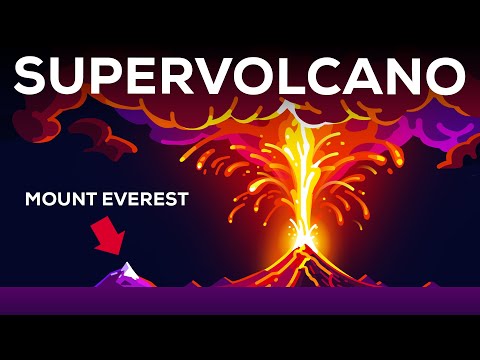
A super-volcano is a volcano capable of producing an eruption with a volume greater than 1,000 cubic kilometers. This is thousands of times larger than normal eruptions. An example is the Yellowstone Caldera in the United States.
A volcanic winter occurs after a massive eruption when ash and sulfur droplets stay in the atmosphere and block sunlight. This causes the Earth's temperature to drop, which can lead to crop failures and changes in weather patterns worldwide.
Currently, humans do not have the technology or power to stop volcanoes from erupting. The forces involved are far too great. Instead, we focus on monitoring volcanoes and creating evacuation plans to keep people safe when an eruption occurs.
Test Yourself 180 questions
Describe what volcanoes look like to someone who has never seen one.
Well written! Good try! Check the sample answer below.
Explain the difference between active, dormant, and extinct volcanoes.
Well written! Good try! Check the sample answer below.
Write a short paragraph about why people choose to live near volcanoes.
Well written! Good try! Check the sample answer below.
Discuss the environmental impact of a large volcanic eruption.
Well written! Good try! Check the sample answer below.
Compare and contrast shield volcanoes and stratovolcanoes.
Well written! Good try! Check the sample answer below.
Explain how plate tectonics are responsible for the formation of volcanoes.
Well written! Good try! Check the sample answer below.
Analyze the role of volcanoes in the Earth's carbon cycle.
Well written! Good try! Check the sample answer below.
Write a news report about a fictional eruption of several volcanoes.
Well written! Good try! Check the sample answer below.
Describe the cultural significance of volcanoes in a specific country.
Well written! Good try! Check the sample answer below.
How can technology help us monitor volcanoes more effectively?
Well written! Good try! Check the sample answer below.
Write a story about a journey to the center of one of the world's volcanoes.
Well written! Good try! Check the sample answer below.
Discuss the pros and cons of using volcanoes for geothermal energy.
Well written! Good try! Check the sample answer below.
Explain the term 'Ring of Fire' and its importance in geology.
Well written! Good try! Check the sample answer below.
What should people do to prepare for an eruption of nearby volcanoes?
Well written! Good try! Check the sample answer below.
Describe the visual beauty of volcanoes in a poetic way.
Well written! Good try! Check the sample answer below.
How do volcanoes influence global weather patterns?
Well written! Good try! Check the sample answer below.
Explain the process of subduction and how it creates volcanoes.
Well written! Good try! Check the sample answer below.
Write a dialogue between two scientists monitoring active volcanoes.
Well written! Good try! Check the sample answer below.
What are the most dangerous hazards associated with volcanoes?
Well written! Good try! Check the sample answer below.
Discuss the impact of the Vesuvius eruption on the city of Pompeii.
Well written! Good try! Check the sample answer below.
Describe a famous volcano you know about.
Read this aloud:
You said:
Speech recognition is not supported in your browser. Try Chrome or Edge.
Discuss whether you would like to visit an active volcano.
Read this aloud:
You said:
Speech recognition is not supported in your browser. Try Chrome or Edge.
Explain the benefits and risks of living near volcanoes.
Read this aloud:
You said:
Speech recognition is not supported in your browser. Try Chrome or Edge.
Give a short presentation on how volcanoes are formed.
Read this aloud:
You said:
Speech recognition is not supported in your browser. Try Chrome or Edge.
Debate the importance of funding for volcano monitoring programs.
Read this aloud:
You said:
Speech recognition is not supported in your browser. Try Chrome or Edge.
Describe the visual impact of a volcanic eruption using descriptive language.
Read this aloud:
You said:
Speech recognition is not supported in your browser. Try Chrome or Edge.
Talk about a movie or book you've seen that features volcanoes.
Read this aloud:
You said:
Speech recognition is not supported in your browser. Try Chrome or Edge.
Explain the concept of the Ring of Fire to a friend.
Read this aloud:
You said:
Speech recognition is not supported in your browser. Try Chrome or Edge.
Discuss how volcanoes can affect the global climate.
Read this aloud:
You said:
Speech recognition is not supported in your browser. Try Chrome or Edge.
Describe the difference between lava and magma.
Read this aloud:
You said:
Speech recognition is not supported in your browser. Try Chrome or Edge.
Talk about the cultural importance of volcanoes in Japan or Hawaii.
Read this aloud:
You said:
Speech recognition is not supported in your browser. Try Chrome or Edge.
Explain what a pyroclastic flow is and why it is dangerous.
Read this aloud:
You said:
Speech recognition is not supported in your browser. Try Chrome or Edge.
Discuss the potential for volcanoes on other planets like Mars.
Read this aloud:
You said:
Speech recognition is not supported in your browser. Try Chrome or Edge.
Describe the process of an eruption from start to finish.
Read this aloud:
You said:
Speech recognition is not supported in your browser. Try Chrome or Edge.
Talk about the role of volcanoes in creating new land.
Read this aloud:
You said:
Speech recognition is not supported in your browser. Try Chrome or Edge.
Discuss the use of geothermal energy in volcanic regions.
Read this aloud:
You said:
Speech recognition is not supported in your browser. Try Chrome or Edge.
Explain the term 'dormant' and how it applies to volcanoes.
Read this aloud:
You said:
Speech recognition is not supported in your browser. Try Chrome or Edge.
Describe a visit to a volcanic national park.
Read this aloud:
You said:
Speech recognition is not supported in your browser. Try Chrome or Edge.
Discuss the historical impact of the Vesuvius eruption.
Read this aloud:
You said:
Speech recognition is not supported in your browser. Try Chrome or Edge.
Talk about the challenges scientists face when studying volcanoes.
Read this aloud:
You said:
Speech recognition is not supported in your browser. Try Chrome or Edge.
Listen to a news report about an eruption and note the name of the volcano.
Listen to a lecture about plate tectonics and identify the three types of plate boundaries mentioned.
Listen to a tour guide describing a volcanic landscape and list the features they mention.
Listen to a scientist explaining how they monitor volcanoes and note the tools used.
Listen to a story about a volcanic eruption and describe the emotions of the characters.
Listen to a podcast about the history of volcanoes and note the date of the Krakatoa eruption.
Listen to a child talking about volcanoes and identify what they think is the most exciting part.
Listen to a weather report discussing an ash cloud and note the affected areas.
Listen to a documentary clip about submarine volcanoes and note how they differ from land ones.
Listen to a debate about living near volcanoes and list one argument for and one against.
Listen to a description of different types of volcanoes and match the name to the shape.
Listen to a warning broadcast and identify the immediate actions people should take.
Listen to a poem about volcanoes and note the sounds the poet uses to describe them.
Listen to a conversation between two geologists and identify their main concern.
Listen to a summary of the benefits of volcanoes and note two of them.
/ 180 correct
Perfect score!
Summary
Volcanoes are dynamic openings in the Earth's crust that act as a release valve for internal pressure and heat. They are not just destructive forces but are also creators of new land and essential contributors to the planet's atmospheric and geological evolution. For example, the Hawaiian Islands were formed entirely by the activity of shield volcanoes over millions of years.
- Volcanoes are geological vents that allow magma, ash, and gases to escape from beneath the Earth's crust, often forming mountain-like structures over time through repeated eruptions.
- They are primarily located at tectonic plate boundaries or hotspots and are classified as active, dormant, or extinct based on their current eruptive potential and history.
- While volcanoes pose significant natural hazards like lava flows and ash clouds, they also provide benefits such as fertile soil and sustainable geothermal energy resources.
- The study of volcanoes, called volcanology, is essential for disaster prevention, understanding Earth's history, and monitoring the planet's internal heat and chemical cycles.
The 'E' Matters
Always remember to include the 'e' in 'volcanoes' for the plural form. While 'volcanos' exists, 'volcanoes' is the standard in most professional writing.
Magma vs. Lava
Impress your teachers by using 'magma' for underground and 'lava' for above-ground molten rock. It shows you understand the science of volcanoes.
Plural Verbs
Since 'volcanoes' is plural, always use 'are' or 'have'. For example: 'The volcanoes are beautiful.'
Dormant is not Dead
Never assume a dormant volcano is safe. It just means it's resting. Always check local alerts when visiting volcanic regions.
Example
The scientists are monitoring the volcanoes for any signs of increased seismic activity.
Related Content
See it in Videos
More Environment words
abyss
B2An abyss is an extremely deep or seemingly bottomless hole, chasm, or void. Metaphorically, it refers to a catastrophic situation, a profound difference between two things, or an overwhelming state of negative emotion like despair.
acclimate
C1To adapt or become accustomed to a new climate, environment, or situation. It involves physiological or psychological adjustment to different conditions, such as temperature, altitude, or social atmosphere.
adaptation
B2Adaptation is the process of changing something so that it is suitable for a new purpose, situation, or environment. It can also refer to a movie, television program, or stage play that is based on a written work like a book.
afforestation
B2Afforestation is the process of establishing a forest on land that has not recently been covered by trees. It involves planting seeds or saplings to create new wooded areas, often to improve the environment or for commercial timber.
air
A1The invisible mixture of gases that surrounds the Earth and which humans and animals breathe. It also refers to the open space above the ground or the general atmosphere of a place.
ambient
B2Refers to the surrounding environment or the background conditions of a particular area, such as temperature or light. As a noun, it specifically identifies a genre of electronic music characterized by atmospheric sounds and a lack of a persistent beat.
antimanment
C1The systematic opposition to or reversal of human management and intervention within a specific system or environment. It typically refers to the policy of allowing natural or organic processes to occur without external control or supervision.
aquifer
B2An aquifer is an underground layer of water-bearing rock, gravel, sand, or silt from which groundwater can be extracted using a water well. It serves as a natural storage system that sustains many of the world's freshwater needs.
arid
C1Describes land or a climate that is extremely dry because it receives very little rain, making it difficult for plants to grow. Figuratively, it can also describe something that is dull, lifeless, or lacking in interest and new ideas.
aridity
C2The state of being deficiency in moisture, especially regarding a climate or land that is extremely dry and unable to support much vegetation. Figuratively, it refers to a lack of interest, excitement, or creative spirit in a piece of work or a person's life.

