The video owner has disabled playback on external websites.
This video is no longer available on YouTube.
This video cannot be played right now.
Watch on YouTube
ابزارهای یادگیری هوش مصنوعی را باز کنید
ثبتنام کنید تا به ابزارهای قدرتمندی دسترسی پیدا کنید که به شما کمک میکنند سریعتر از هر ویدیو یاد بگیرید.
The rise of Xi Jinping, explained
آمار یادگیری
سطح CEFR
سختی
زیرنویسها (487 بخشها)
[audience applause]
These are the 7 most powerful men in China.
They represent the top leadership positions of the ruling party...
and their identities are revealed every five years...
at a carefully choreographed political event
called the National Congress.
“China's Communist Party unveiled its new leadership
over the next five years.”
The order of appearance is symbolic.
The first person to emerge
is the head of the party for the next five years.
At the most recent event in October 2022...
that person was Xi Jinping
China's president for the last ten years...
who walked out in the top spot a historic third time
after getting rid of China's presidential term limit
that restricted all his predecessors to two terms.
A signal that he may be planning to stay in power for life.
The world hasn't seen a Chinese leader like this
since Mao Zedong...
the revolutionary founder of the People's Republic of China...
whose ruthless dictatorship
scarred the Chinese people for generations.
Xi has been compared to Mao a lot.
And he clearly draws from Mao's playbook.
But there's something else that connects these two.
When Xi was just a young boy...
Mao ruined his life.
Generations apart, their paths crossed unexpectedly
and a teenage Xi from an elite family in Beijing...
ended up in exile.
Condemned to hard labor in the countryside.
50 years later
Xi is one of the most powerful political figures in the world
and the only leader since Mao
to have unchecked power over China.
So how did he go from being banished in his country...
to taking complete control of it?
[sinister, electronic music]
[music fades]
Xi Jinping's connection to Mao formed
long before Xi was even born.
[dark, pensive music]
It goes back to when a bloody civil war was raging in China.
A group of radical communist revolutionaries, including Mao
gained influence over large swaths of mainland China...
and controlled a communist military called the Red Army...
that fought the Nationalist Party
ruling the Republic of China at the time.
At this point, the Communists were losing bad.
The bulk of their army was pinned down here...
in a communist controlled region originally established by Mao...
now surrounded by Nationalist forces.
And they were running low on food.
So the Red Army decided to launch a bold attack...
to break through the Nationalist forces and evacuate the roughly
130,000 communist soldiers and civilians stuck here.
On October 16th, 1934, they made their move...
and attacked a weaker part of the enemy line.
They broke through.
And even though their numbers quickly dropped
with thousands dying and thousands more
fleeing to the countryside...
around 86,000 stuck together and pushed on.
This was the beginning of a year-long
historic retreat called the Long March.
The journey to establish a new communist base...
far from the Nationalist forces.
Mao, who used to be a military leader
wasn't in charge at this time.
He'd insisted on using guerrilla tactics
which had heavily influenced the Red Army earlier in the war.
But that approach had fallen out of favor and he was demoted.
The Long March changed that.
After escaping the siege here
the Red Army continued to suffer relentless attacks
by the pursuing Nationalist army.
The military leaders of the march
had pushed for a more traditional wartime strategy
of direct confrontation...
rather than Mao's guerrilla tactics.
And the result was catastrophic for the Red Army.
Less than half of the original escape group
survived the first three months alone.
So it was at this first stopping point
where Communist Party leader Zhou Enlai...
handed military leadership back to Mao.
And Mao picked an end point for the march... here.
800 miles away in rural northern China.
But they didn't go straight for it.
Mao led the Red Army deep into the mountains
where he predicted lighter resistance.
And he was right.
But the journey was still brutal.
It was nine more months of nonstop marching
and fighting along this several thousand mile route...
before they ultimately arrived in northern China...
where a guerrilla base led by a communist revolutaionary
زیرنویس کامل در پخشکننده ویدیو موجود است
با تمرینها یاد بگیرید
تمرینهای واژگان، گرامر و درک مطلب از این ویدیو بسازید
نظرات (0)
برای نظر دادن وارد شویدثبتنام کن و همه امکانات رو باز کن
پیشرفتت رو دنبال کن، واژگان رو ذخیره کن و تمرین کن
حالت تعاملی
آزمون
پاسخ صحیح:
ویدیوهای مرتبط
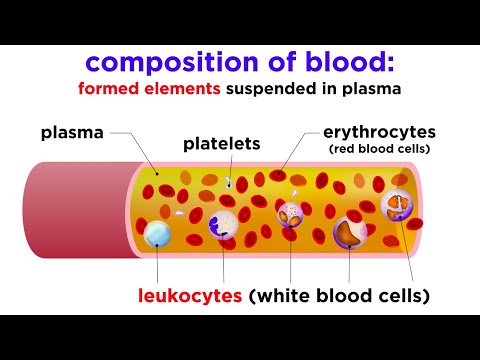
The Composition and Function of Blood

YouTube Shorts is Changing YouTube - Smarter Every Day 266

Maddy Perez Growing up *iCoNiC* EUPHORIA S1 EP4

Epic😳FREE Full Stack Developer COURSES to learn in 30DAYS🔴💯

Jordan Peterson debate on the gender pay gap, campus protests and postmodernism

Vox
آزمون
پاسخ صحیح:
آزمونها هنگام تماشای ویدیو ظاهر میشوند
راهنمای حفظ
از این ویدیو
شروع رایگان یادگیری زبان

