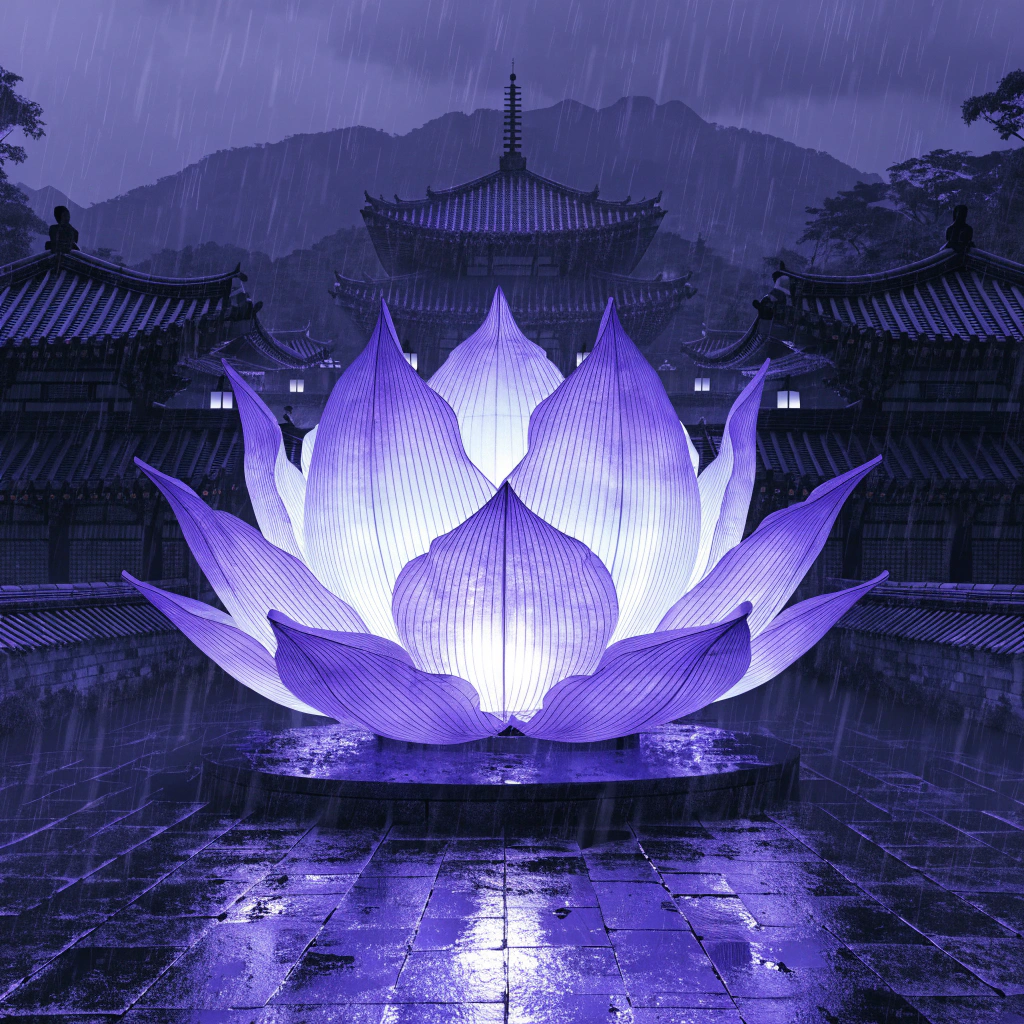
Buddha's Birthday in Korea
Buddha's Birthday is a big holiday in South Korea. It is in the spring. People call it Seokga Tansinil. Many people visit Buddhist temples. They see many beautiful lanterns. These lanterns look like lotus flowers. They have many bright colors like pink, yellow, and red. Families eat special food together. They walk in the streets. There is a very big parade in Seoul. It is beautiful at night. The lanterns shine. People are happy and kind on this day. It is a peaceful time for everyone in Korea.
Grammatik-Spotlight
Muster: Present Simple 'Be'
"Buddha's Birthday is a big holiday in South Korea."
We use 'is' with singular subjects like 'it' or 'the holiday'. It describes a state or a fact.
Muster: Present Simple (Plural Subject)
"Families eat special food together."
With plural subjects like 'families' or 'they', we use the base form of the verb without an 's'.
Teste dein Verständnis
10 Fragen · A1 Anfänger · 1 kostenlose Vorschau
Teste, was du aus diesem Artikel gelernt hast. Beantworte alle Fragen und sammle XP!
Where is the big parade?
Möchtest du das Quiz beenden?
9 weitere Fragen warten auf dich. Registriere dich kostenlos, um das vollständige Quiz freizuschalten und XP zu sammeln!
Kostenlos registrierenHast du schon ein Konto? Anmelden
Gut gemacht!
Weiter üben!
Bereits abgeschlossen — keine zusätzlichen XP
Registriere dich, um XP zu verdienenFragenübersicht
Where is the big parade?
Deine Antwort:
Richtige Antwort: In Seoul
The lanterns look like lotus flowers.
Deine Antwort:
Richtige Antwort: Richtig
What does 'peaceful' mean?
Deine Antwort:
Richtige Antwort: Quiet and calm
They see many beautiful _____.
Deine Antwort:
Richtige Antwort: lanterns
Buddha's Birthday in South Korea
In South Korea, people celebrate a special holiday called Seokga Tansinil. This is Buddha’s Birthday. It is a very old tradition because Buddhism started in Korea more than 1,600 years ago. The holiday usually happens in May, and it is a public holiday.
The most famous part is the Lotus Lantern Festival. For many weeks, thousands of colorful lanterns hang in the streets of Seoul. These lanterns look like lotus flowers. At night, the city is brighter and more beautiful than usual. There is also a big parade with music and dancing.
On this day, many people visit Buddhist temples. The temples are more crowded than on other days. Visitors can eat a special meal called bibimbap for free. It is a healthy meal with rice and vegetables. People also light lanterns to make a wish for their families. It is a peaceful and happy time for everyone in Korea.
Grammatik-Spotlight
Muster: Comparative Adjectives
"At night, the city is brighter and more beautiful than usual."
We use comparatives to compare two things. For short adjectives like 'bright', we add '-er'. For long adjectives like 'beautiful', we use 'more' before the word.
Muster: Past Simple
"Buddhism started in Korea more than 1,600 years ago."
The past simple describes finished actions in the past. We add '-ed' to regular verbs like 'start' to show it happened a long time ago.
Teste dein Verständnis
11 Fragen · A2 Grundkenntnisse · 1 kostenlose Vorschau
Teste, was du aus diesem Artikel gelernt hast. Beantworte alle Fragen und sammle XP!
When does Buddha's Birthday usually happen?
Möchtest du das Quiz beenden?
10 weitere Fragen warten auf dich. Registriere dich kostenlos, um das vollständige Quiz freizuschalten und XP zu sammeln!
Kostenlos registrierenHast du schon ein Konto? Anmelden
Gut gemacht!
Weiter üben!
Bereits abgeschlossen — keine zusätzlichen XP
Registriere dich, um XP zu verdienenFragenübersicht
When does Buddha's Birthday usually happen?
Deine Antwort:
Richtige Antwort: May
The Lotus Lantern Festival lasts for only one day.
Deine Antwort:
Richtige Antwort: Falsch
What is a 'temple'?
Deine Antwort:
Richtige Antwort: A building for prayer
Visitors can eat a special meal called _____ for free.
Deine Antwort:
Richtige Antwort: bibimbap
Why do people light lanterns at the temple?
Deine Antwort:
Richtige Antwort: To make a wish
Seokga Tansinil: The Festival of Light in South Korea
Buddha's Birthday, known in South Korea as Seokga Tansinil, is a vibrant and peaceful celebration. For over 1,600 years, Buddhism has influenced Korean culture, and this heritage is still visible today. The holiday usually falls in May, according to the lunar calendar, and it has become one of the most beautiful times to visit the country.
The centerpiece of the celebration is the 'Yeon Deung Hoe', or the Lotus Lantern Festival. This event is so significant that it has been designated a UNESCO Intangible Cultural Heritage of Humanity. In the weeks leading up to the holiday, thousands of colorful lanterns are hung across the streets of Seoul and near temples. These lanterns, which are often shaped like lotus flowers, symbolize the wisdom and compassion of Buddha.
During the festival, a massive parade is held in the city center. Traditional music is played, and people wear beautiful hanbok while carrying their own lanterns. At Buddhist temples, visitors are offered free meals, usually consisting of rice and vegetables. Many people also participate in 'tabdori', a ritual where they walk around a stone pagoda while praying for their families.
Even though only a portion of the population identifies as Buddhist, Seokga Tansinil is enjoyed by everyone. It is a public holiday that allows people to take a break from their busy lives. The streets are transformed into a sea of light, creating a magical atmosphere. Through this festival, the ancient traditions of Korea have been preserved for future generations to enjoy. It is a time when the past and the present meet in a display of color and light.
Grammatik-Spotlight
Muster: Passive Voice
"This event is so significant that it has been designated a UNESCO Intangible Cultural Heritage of Humanity."
The passive voice is used when the action is more important than the person doing it. It is formed using 'be' + past participle.
Muster: Relative Clauses
"These lanterns, which are often shaped like lotus flowers, symbolize the wisdom and compassion of Buddha."
Non-defining relative clauses provide extra information about a noun. They use 'which' for objects and are separated by commas.
Teste dein Verständnis
11 Fragen · B1 Mittelstufe · 1 kostenlose Vorschau
Teste, was du aus diesem Artikel gelernt hast. Beantworte alle Fragen und sammle XP!
What is the main purpose of the Lotus Lantern Festival?
Möchtest du das Quiz beenden?
10 weitere Fragen warten auf dich. Registriere dich kostenlos, um das vollständige Quiz freizuschalten und XP zu sammeln!
Kostenlos registrierenHast du schon ein Konto? Anmelden
Gut gemacht!
Weiter üben!
Bereits abgeschlossen — keine zusätzlichen XP
Registriere dich, um XP zu verdienenFragenübersicht
What is the main purpose of the Lotus Lantern Festival?
Deine Antwort:
Richtige Antwort: To celebrate the birth of Gautama Buddha
Only Buddhists participate in the Seokga Tansinil celebrations in Korea.
Deine Antwort:
Richtige Antwort: Falsch
What does 'transformed' mean?
Deine Antwort:
Richtige Antwort: Completely changed
The lanterns are often shaped like lotus _____, symbolizing wisdom.
Deine Antwort:
Richtige Antwort: flowers
What do people do during the 'tabdori' ritual?
Deine Antwort:
Richtige Antwort: Walk around a stone pagoda
Illuminating Tradition: The Cultural Significance of Seokga Tansinil in South Korea
Every spring, the urban landscapes of South Korea undergo a vibrant transformation as the nation prepares for Seokga Tansinil, also known as Buddha’s Birthday. This public holiday, which officially commemorates the birth of Siddhartha Gautama, is not merely a religious observance but a profound manifestation of Korean cultural identity. Having flourished for over 1,600 years, Buddhism has left an indelible mark on the peninsula’s history. This rich heritage is most spectacularly displayed through the 'Yeon Deung Hoe' (Lotus Lantern Festival), an event that has been designated a UNESCO Intangible Cultural Heritage of Humanity, reflecting its immense global significance.
In the weeks preceding the holiday, thousands of meticulously crafted lotus-shaped lanterns are suspended across the country, symbolizing the light of wisdom breaking through the darkness of ignorance. The artistry involved in creating these lanterns is a testament to the country's dedication to craftsmanship. Historically, lantern lighting was a practice that dates back to the Goryeo Dynasty, where it was already a significant state-sponsored event. Over the centuries, the techniques have evolved, yet the core materials—traditional 'hanji' paper and bamboo frames—remain central to the process. This blend of ancient technique and modern artistic expression allows the festival to remain visually stunning while staying true to its roots.
The centerpiece of the festivities is a massive parade in downtown Seoul, where monks and laypeople alike carry intricate lanterns. These range from traditional shapes to elaborate contemporary designs, such as glowing dragons and majestic peacocks. Although the event is deeply rooted in ancient religious tradition, it fosters a sense of communal solidarity that transcends individual faith, inviting people of all backgrounds to participate in the celebration.
On the day of Seokga Tansinil, Buddhist temples become hubs of activity. Visitors often participate in the ritual of 'bathing' a statue of the baby Buddha, a symbolic gesture intended to purify one’s soul and mind. Furthermore, temples traditionally offer free vegetarian meals, typically bibimbap, to all attendees. This act of sharing food promotes a spirit of generosity and equality, which are core tenets of the faith. In the face of rapid modernization, the continued popularity of Seokga Tansinil illustrates how traditional values can be successfully integrated into contemporary life. The festival serves as a vital reminder of the importance of spiritual enlightenment and cultural preservation in an increasingly digital world.
Grammatik-Spotlight
Muster: Non-defining Relative Clauses
"This public holiday, which officially commemorates the birth of Siddhartha Gautama, is not merely a religious observance..."
This pattern is used to add extra information about a noun that is already clearly identified. It is separated from the rest of the sentence by commas and uses 'which' or 'who'.
Muster: Perfect Participle Clauses
"Having flourished for over 1,600 years, Buddhism has left an indelible mark on the peninsula’s history."
This structure (Having + Past Participle) is used to show that one action happened before another. It provides a more formal way to express a cause or sequence of events.
Muster: Present Perfect Passive
"...an event that has been designated a UNESCO Intangible Cultural Heritage of Humanity..."
This pattern combines 'has/have been' with a past participle to emphasize the action or status rather than the person who performed it, specifically for events linked to the present.
Teste dein Verständnis
11 Fragen · B2 Obere Mittelstufe · 1 kostenlose Vorschau
Teste, was du aus diesem Artikel gelernt hast. Beantworte alle Fragen und sammle XP!
What is the primary significance of the 'Yeon Deung Hoe' festival mentioned in the text?
Möchtest du das Quiz beenden?
10 weitere Fragen warten auf dich. Registriere dich kostenlos, um das vollständige Quiz freizuschalten und XP zu sammeln!
Kostenlos registrierenHast du schon ein Konto? Anmelden
Gut gemacht!
Weiter üben!
Bereits abgeschlossen — keine zusätzlichen XP
Registriere dich, um XP zu verdienenFragenübersicht
What is the primary significance of the 'Yeon Deung Hoe' festival mentioned in the text?
Deine Antwort:
Richtige Antwort: It is a UNESCO-recognized cultural heritage.
The lanterns used in the festival are meant to symbolize the light of wisdom.
Deine Antwort:
Richtige Antwort: Richtig
What does the word 'intricate' mean in the context of the lantern parade?
Deine Antwort:
Richtige Antwort: Extremely complex and detailed
This rich _____ is most spectacularly displayed through the 'Yeon Deung Hoe'.
Deine Antwort:
Richtige Antwort: heritage
What is the symbolic purpose of 'bathing' the baby Buddha statue?
Deine Antwort:
Richtige Antwort: To purify the participant's soul and mind
The Luminous Legacy: Navigating the Cultural and Spiritual Tapestry of Seokga Tansinil
In the heart of South Korea, as spring reaches its zenith, the nation undergoes a profound transformation. Celebrated on the eighth day of the fourth lunar month, Seokga Tansinil, or Buddha’s Birthday, represents more than a mere religious observance; it is a quintessential manifestation of Korea’s historical and spiritual evolution. Having permeated the peninsula for over 1,600 years, Buddhism has woven itself into the very fabric of Korean identity. Not only does the festival commemorate the birth of Siddhartha Gautama, but it also serves as a vibrant testament to the enduring power of communal heritage.
The centerpiece of this period is undoubtedly the Yeon Deung Hoe, or the Lotus Lantern Festival. Recently designated a UNESCO Intangible Cultural Heritage of Humanity, this event transcends simple pageantry. It is an intricate confluence of artistic expression and religious devotion. The meticulous craftsmanship involved in constructing thousands of lotus-shaped lanterns reflects a deep-seated commitment to traditional aesthetics. These lanterns, illuminating the bustling streets of Seoul, symbolize the light of wisdom dispelling the darkness of ignorance—a core tenet of Buddhist philosophy.
One might argue that the festival’s significance lies in its ability to bridge the gap between the ephemeral nature of modern life and the timelessness of spiritual practice. The juxtaposition of ancient temples nestled against the backdrop of towering glass skyscrapers creates a unique visual narrative. It is this profound synthesis of ancient ritual and contemporary community that underscores the resilience of Korean Buddhism. While the grandeur of the lantern parade attracts millions, the underlying message remains one of individual piety and collective harmony.
Furthermore, the ritualistic bathing of the baby Buddha, known as Gwanbul, further exemplifies the holiday's spiritual depth. Devotees pour water over a small statue of the infant Buddha, a gesture symbolizing the purification of one's own mind and the washing away of worldly delusions. This act of humility and introspection provides a stark contrast to the outward spectacle of the lantern parade. It is through such intimate rituals that the core tenets of Buddhism—compassion, mindfulness, and the pursuit of enlightenment—are internalized by the populace.
Finally, the festival provides a platform for critical analysis regarding the role of tradition in a rapidly globalizing society. The preservation of these traditions serves as a testament to the nation's desire to maintain cultural continuity. By engaging in the ritual of lantern making, practitioners find a sense of transcendence, momentarily detaching themselves from the material world. Consequently, Seokga Tansinil functions as both a celebration of the past and a beacon for future generations, ensuring that the light of wisdom continues to glow in the modern era.
Grammatik-Spotlight
Muster: Inversion with Negative Adverbials
"Not only does the festival commemorate the birth of Siddhartha Gautama, but it also serves as a vibrant testament to the enduring power of communal heritage."
Inversion occurs when the auxiliary verb is placed before the subject after certain negative or restrictive adverbials like 'Not only'. This structure is used for emphasis in formal writing.
Muster: It-Cleft Sentences
"It is this profound synthesis of ancient ritual and contemporary community that underscores the resilience of Korean Buddhism."
Cleft sentences focus on a specific part of the sentence using 'It is/was... that'. This highlights the specific cause or subject as the most important information.
Muster: Nominalization
"The preservation of these traditions serves as a testament to the nation's desire to maintain cultural continuity."
Nominalization turns verbs or adjectives into nouns (e.g., 'preservation' from 'preserve'). It creates a more formal, objective, and academic tone characteristic of C1 English.
Teste dein Verständnis
12 Fragen · C1 Fortgeschritten · 1 kostenlose Vorschau
Teste, was du aus diesem Artikel gelernt hast. Beantworte alle Fragen und sammle XP!
What is the primary purpose of the 'Yeon Deung Hoe' festival as described in the article?
Möchtest du das Quiz beenden?
11 weitere Fragen warten auf dich. Registriere dich kostenlos, um das vollständige Quiz freizuschalten und XP zu sammeln!
Kostenlos registrierenHast du schon ein Konto? Anmelden
Gut gemacht!
Weiter üben!
Bereits abgeschlossen — keine zusätzlichen XP
Registriere dich, um XP zu verdienenFragenübersicht
What is the primary purpose of the 'Yeon Deung Hoe' festival as described in the article?
Deine Antwort:
Richtige Antwort: To express religious devotion through artistic confluence
The lotus lanterns are primarily intended to represent the physical beauty of flowers.
Deine Antwort:
Richtige Antwort: Falsch
What does 'ephemeral' mean in the context of the text?
Deine Antwort:
Richtige Antwort: Lasting for a very short time
The ______ of ancient temples against skyscrapers creates a unique visual narrative.
Deine Antwort:
Richtige Antwort: juxtaposition
What does the ritual of 'Gwanbul' symbolize?
Deine Antwort:
Richtige Antwort: The purification of the mind and removal of delusions
The Lotus Lantern Festival has been recognized by UNESCO as an intangible cultural heritage.
Deine Antwort:
Richtige Antwort: Richtig
Ephemeral Radiance: The Ontological and Socio-Cultural Dimensions of Seokga Tansinil
To contemplate the annual observance of Seokga Tansinil—Buddha’s Birthday—within the South Korean peninsula is to engage with a profound tapestry of temporal continuity and spiritual rejuvenation. While the superficial observer might perceive a mere public holiday, the discerning scholar recognizes a complex synthesis of Goryeo-era traditions and the exigencies of modern secularism. Central to this phenomenon is the Yeon Deung Hoe, or Lotus Lantern Festival, an event so culturally significant that its designation as a UNESCO Intangible Cultural Heritage of Humanity seems almost a perfunctory acknowledgement of its intrinsic value.
Were one to traverse the labyrinthine thoroughfares of Seoul during the lunar month preceding the festivities, the sheer aesthetic magnitude of the myriad lanterns would be palpable. These luminous constructs, far from being mere decorative artifacts, serve as metaphorical manifestations of enlightenment, intended to dispel the ignorance that shrouds the human condition. It is within these interstitial spaces between the mundane and the divine that the Korean populace finds a collective resonance. The festival acts as a cultural ballast, anchoring a society characterized by breakneck technological advancement to its 1,600-year-old Buddhist heritage.
Furthermore, the philosophical underpinnings of Seokga Tansinil invite an analytical inquiry into the concept of interconnectedness. This ontological perspective, often likened to 'Indra’s Net' where every jewel reflects every other, suggests that the individual’s celebration is inextricably linked to the cosmic whole. It is perhaps through this lens that the syncretism of Korean Buddhism—incorporating elements of shamanism and Confucianism—becomes most apparent. The celebration is not merely a commemoration of a historical birth; rather, it is a re-actualization of the Buddha-nature inherent within all sentient beings.
Academic hedging is necessary when discussing the societal impact of such a tradition. It could be argued that the commercialization of the festival threatens to dilute its spiritual potency; however, the counter-argument posits that such visibility is essential for the perpetuation of the faith in a pluralistic society. Not only does the festival foster a sense of national identity, but it also provides a sanctuary for introspection amidst the cacophony of the 21st-century zeitgeist. The zenith of the celebrations, marked by grand processions and the rhythmic chanting of sutras, offers a fleeting glimpse into a transcendental reality that remains a vestige of Korea’s pre-modern soul.
Ultimately, Seokga Tansinil represents more than a chronological milestone. It is a testament to the resilience of a tradition that has navigated the turbulent waters of colonization, war, and rapid industrialization. As the lanterns eventually fade, the ephemeral nature of the display serves as a poignant reminder of the Buddhist doctrine of impermanence. Yet, the profound psychological and social impact ensures that the spirit of the occasion remains deeply ingrained in the Korean psyche, awaiting its next cyclical manifestation.
Grammatik-Spotlight
Muster: Inverted Conditional (Subjunctive)
"Were one to traverse the labyrinthine thoroughfares of Seoul during the lunar month preceding the festivities, the sheer aesthetic magnitude of the myriad lanterns would be palpable."
This structure replaces 'If one were to traverse...' by inverting the subject and the verb 'were'. It is used in formal or academic writing to express a hypothetical condition with a high degree of elegance.
Muster: Negative Inversion
"Not only does the festival foster a sense of national identity, but it also provides a sanctuary for introspection..."
When a sentence starts with a negative or restrictive expression like 'Not only', the auxiliary verb comes before the subject. This is used for rhetorical emphasis and to vary sentence structure.
Muster: Nominalization for Academic Tone
"Academic hedging is necessary when discussing the societal impact of such a tradition."
Nominalization involves turning verbs or adjectives into nouns (e.g., 'hedging' from 'to hedge'). This shifts the focus from actions to concepts, creating a more objective and analytical tone.
Teste dein Verständnis
12 Fragen · C2 Meisterschaft · 1 kostenlose Vorschau
Teste, was du aus diesem Artikel gelernt hast. Beantworte alle Fragen und sammle XP!
What does the author suggest by using the term 'cultural ballast' in relation to the festival?
Möchtest du das Quiz beenden?
11 weitere Fragen warten auf dich. Registriere dich kostenlos, um das vollständige Quiz freizuschalten und XP zu sammeln!
Kostenlos registrierenHast du schon ein Konto? Anmelden
Gut gemacht!
Weiter üben!
Bereits abgeschlossen — keine zusätzlichen XP
Registriere dich, um XP zu verdienenFragenübersicht
What does the author suggest by using the term 'cultural ballast' in relation to the festival?
Deine Antwort:
Richtige Antwort: The festival provides stability and historical grounding for a rapidly changing society.
The author argues that the commercialization of Seokga Tansinil has unequivocally destroyed its spiritual value.
Deine Antwort:
Richtige Antwort: Falsch
Which word describes the 'amalgamation of different religious elements' mentioned in the text?
Deine Antwort:
Richtige Antwort: Syncretism
The author notes that the lanterns are _____ manifestations of enlightenment.
Deine Antwort:
Richtige Antwort: metaphorical
According to the text, what does 'Indra's Net' represent in the context of the celebration?
Deine Antwort:
Richtige Antwort: The philosophical concept of universal interconnectedness.
The Yeon Deung Hoe has been recognized by UNESCO as an Intangible Cultural Heritage of Humanity.
Deine Antwort:
Richtige Antwort: Richtig

