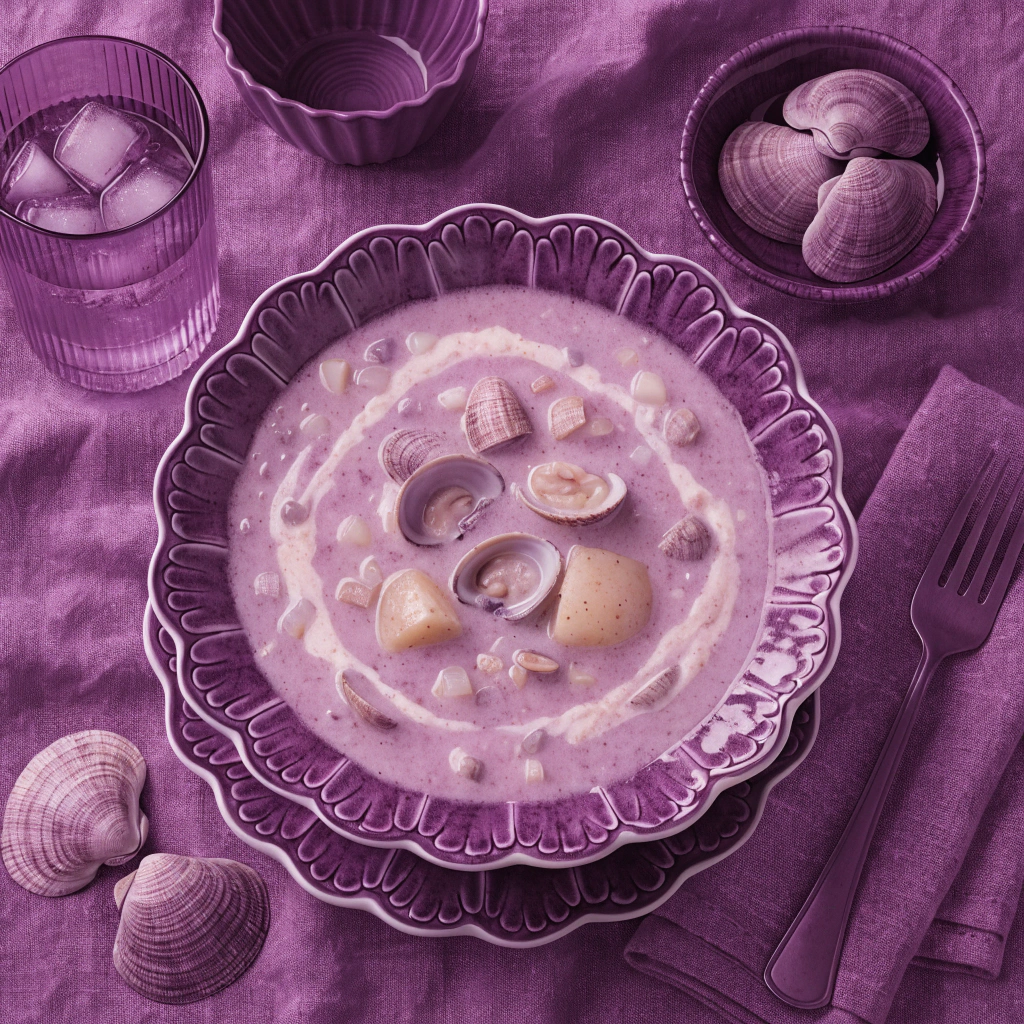
A Famous Soup from America
New England Clam Chowder is a very famous soup in America. It comes from the Northeast coast. People there love the ocean and seafood.
The soup has many ingredients. It has fresh clams from the cold water. It also has white potatoes and onions. The soup is white because it has milk or cream. It is very thick and warm.
Many people eat this soup in the winter. They eat it with small crackers. It is a traditional meal for families. It is delicious and popular.
Grammatik-Spotlight
Muster: Present Simple 'to be'
"New England Clam Chowder is a very famous soup in America."
We use 'is' for singular subjects to describe facts or states. In this sentence, it describes what the soup is.
Muster: Present Simple with 'have'
"The soup has many ingredients."
We use 'has' with singular nouns like 'the soup' to talk about possession or parts of something.
Teste dein Verständnis
10 Fragen · A1 Anfänger · 1 kostenlose Vorschau
Teste, was du aus diesem Artikel gelernt hast. Beantworte alle Fragen und sammle XP!
Where does the soup come from?
Möchtest du das Quiz beenden?
9 weitere Fragen warten auf dich. Registriere dich kostenlos, um das vollständige Quiz freizuschalten und XP zu sammeln!
Kostenlos registrierenHast du schon ein Konto? Anmelden
Gut gemacht!
Weiter üben!
Bereits abgeschlossen — keine zusätzlichen XP
Registriere dich, um XP zu verdienenFragenübersicht
Where does the soup come from?
Deine Antwort:
Richtige Antwort: The Northeast coast
The soup is red.
Deine Antwort:
Richtige Antwort: Falsch
What does 'thick' mean?
Deine Antwort:
Richtige Antwort: Heavy and not like water
Many people eat this soup in the _____.
Deine Antwort:
Richtige Antwort: winter
A Classic American Soup: New England Clam Chowder
New England Clam Chowder is a very famous soup in the United States. It comes from the Northeast coast. This soup is a special symbol of the Atlantic Ocean. It is white, creamy, and very delicious.
The name 'chowder' probably comes from a French word for a large cooking pot. Many years ago, sailors from Europe arrived in America. They saw many fresh clams in the cold water. They mixed these clams with milk, potatoes, and onions. This soup became very popular because it was warm and filling for the workers.
Today, New England Clam Chowder is more famous than other regional soups. It is thicker and richer than vegetable soup because it uses heavy cream. People usually eat it with small, salty crackers called 'oyster crackers.' It is the best meal to eat on a cold, rainy day by the sea. Many families have their own special recipes for this traditional American dish.
Grammatik-Spotlight
Muster: Past Simple
"Many years ago, sailors from Europe arrived in America."
We use the past simple to talk about completed actions in the past. For regular verbs like 'arrive', we add '-ed' to the end.
Muster: Comparatives with 'More'
"New England Clam Chowder is more famous than other regional soups."
To compare two things with long adjectives (like 'famous'), we use 'more' + adjective + 'than'. It shows one thing has more of a quality than another.
Teste dein Verständnis
11 Fragen · A2 Grundkenntnisse · 1 kostenlose Vorschau
Teste, was du aus diesem Artikel gelernt hast. Beantworte alle Fragen und sammle XP!
Where does New England Clam Chowder come from?
Möchtest du das Quiz beenden?
10 weitere Fragen warten auf dich. Registriere dich kostenlos, um das vollständige Quiz freizuschalten und XP zu sammeln!
Kostenlos registrierenHast du schon ein Konto? Anmelden
Gut gemacht!
Weiter üben!
Bereits abgeschlossen — keine zusätzlichen XP
Registriere dich, um XP zu verdienenFragenübersicht
Where does New England Clam Chowder come from?
Deine Antwort:
Richtige Antwort: The Northeast coast
The name 'chowder' likely comes from a French word for a cooking pot.
Deine Antwort:
Richtige Antwort: Richtig
What does the word 'filling' mean in the article?
Deine Antwort:
Richtige Antwort: Makes you feel full
The soup is white and _____ because it uses heavy cream.
Deine Antwort:
Richtige Antwort: creamy
What are 'oyster crackers'?
Deine Antwort:
Richtige Antwort: Small, salty crackers
A Taste of the Coast: New England Clam Chowder
New England Clam Chowder is more than just a soup; it is a symbol of the American Northeast. This creamy dish, which is famous for its rich flavor, has been a favorite for centuries. It is often served in a bread bowl or with small, salty crackers called "oyster crackers."
The word "chowder" has an interesting history. It probably comes from the French word "chaudière," which was a large pot used by fishermen. In the past, sailors combined their fresh catch with whatever ingredients they had. Over time, the recipe was changed by settlers who found abundant clams along the Atlantic coast.
To make a traditional New England chowder, several ingredients are needed. These include fresh clams, potatoes, onions, and heavy cream. Unlike the version from Manhattan, New England chowder is never made with tomatoes. Many people believe that adding tomatoes to this soup is a serious mistake!
In modern times, this dish has become a popular comfort food across the United States. It is especially enjoyed during the cold winter months when people want something warm and filling. Although there are many different types of seafood stews, this specific recipe remains the most iconic. It represents the history and the rugged spirit of the people who live by the sea.
Grammatik-Spotlight
Muster: Relative Clauses
"This creamy dish, which is famous for its rich flavor, has been a favorite for centuries."
Relative clauses provide extra information about a noun. Here, 'which' introduces details about the dish without starting a new sentence.
Muster: Passive Voice
"To make a traditional New England chowder, several ingredients are needed."
The passive voice focuses on the action or the object rather than who is doing it. It is formed using 'to be' + the past participle.
Teste dein Verständnis
11 Fragen · B1 Mittelstufe · 1 kostenlose Vorschau
Teste, was du aus diesem Artikel gelernt hast. Beantworte alle Fragen und sammle XP!
What is the main difference between New England chowder and Manhattan chowder?
Möchtest du das Quiz beenden?
10 weitere Fragen warten auf dich. Registriere dich kostenlos, um das vollständige Quiz freizuschalten und XP zu sammeln!
Kostenlos registrierenHast du schon ein Konto? Anmelden
Gut gemacht!
Weiter üben!
Bereits abgeschlossen — keine zusätzlichen XP
Registriere dich, um XP zu verdienenFragenübersicht
What is the main difference between New England chowder and Manhattan chowder?
Deine Antwort:
Richtige Antwort: New England chowder never uses tomatoes.
The name 'chowder' likely comes from a French word for a large pot.
Deine Antwort:
Richtige Antwort: Richtig
What does 'iconic' mean in the context of the article?
Deine Antwort:
Richtige Antwort: Very famous and representative.
New England clam chowder is often served in a bread _____.
Deine Antwort:
Richtige Antwort: bowl
Where did the settlers find many clams?
Deine Antwort:
Richtige Antwort: Along the Atlantic coast.
A Taste of History: The Evolution of New England Clam Chowder
New England Clam Chowder stands as a definitive pillar of American culinary heritage, representing more than just a simple seafood stew. Its origins are deeply rooted in the history of the Northeastern United States, where the rugged Atlantic coastline provided an abundant supply of quahogs, which are hard-shell clams that were a staple for indigenous populations long before European arrival. The dish is thought to have derived its name from the French 'chaudière,' referring to the heavy iron cauldrons used by Breton fishermen to prepare communal meals.
The evolution of this soup reflects a fascinating intersection of cultures. As English and French settlers adapted to the new environment, they combined European techniques with local ingredients. Unlike its counterparts in other regions, the New England variety is characterized by its creamy, white base, typically composed of milk or heavy cream, potatoes, and salt pork. This specific composition has become a matter of regional pride, often leading to substantial debates regarding the authenticity of various recipes.
Perhaps the most famous of these debates involves the historical rivalry between New England and Manhattan clam chowders. While the New England version remains loyal to its dairy-based roots, the Manhattan style incorporates tomatoes, a variation that many traditionalists in the North consider a culinary transgression. In fact, the opposition to tomatoes was so intense that in 1939, a bill was introduced in the Maine legislature to effectively ban the use of tomatoes in clam chowder. Although the bill did not become law, it illustrates the profound cultural significance attached to this dish.
Today, clam chowder is celebrated not only as a comforting meal but also as a symbol of the resilience and resourcefulness of early coastal communities. To appreciate a bowl of authentic chowder is to engage with centuries of history. Consequently, many modern chefs continue to respect the traditional preparation methods, ensuring that the essence of the dish remains unchanged. Whether enjoyed in a sophisticated restaurant or a seaside shack, New England Clam Chowder continues to be a substantial part of the American identity, bridging the gap between the past and the present.
Grammatik-Spotlight
Muster: Passive Voice with 'It' and 'Thought'
"The dish is thought to have derived its name from the French 'chaudière'..."
This structure is used to report general beliefs or opinions in a formal way. It is formed by 'it' or the subject + the passive form of a reporting verb (think, believe, say) + to + infinitive.
Muster: Non-defining Relative Clauses
"...quahogs, which are hard-shell clams that were a staple for indigenous populations..."
These clauses provide extra information about a noun that is already identified. They are separated by commas and use 'which' for objects or animals.
Muster: Concessive Clauses with 'Although'
"Although the bill did not become law, it illustrates the profound cultural significance..."
Used to show contrast or a surprising connection between two ideas. 'Although' is followed by a subject and a verb.
Teste dein Verständnis
11 Fragen · B2 Obere Mittelstufe · 1 kostenlose Vorschau
Teste, was du aus diesem Artikel gelernt hast. Beantworte alle Fragen und sammle XP!
Where does the word 'chowder' likely originate from?
Möchtest du das Quiz beenden?
10 weitere Fragen warten auf dich. Registriere dich kostenlos, um das vollständige Quiz freizuschalten und XP zu sammeln!
Kostenlos registrierenHast du schon ein Konto? Anmelden
Gut gemacht!
Weiter üben!
Bereits abgeschlossen — keine zusätzlichen XP
Registriere dich, um XP zu verdienenFragenübersicht
Where does the word 'chowder' likely originate from?
Deine Antwort:
Richtige Antwort: A French word for a heavy cauldron
The 1939 Maine bill successfully banned tomatoes in clam chowder.
Deine Antwort:
Richtige Antwort: Falsch
Which word means 'originating naturally in a particular place'?
Deine Antwort:
Richtige Antwort: Indigenous
The debate over ingredients has become a _____ part of the American identity.
Deine Antwort:
Richtige Antwort: substantial
What distinguishes New England Clam Chowder from the Manhattan variety?
Deine Antwort:
Richtige Antwort: The use of a creamy white base instead of tomatoes
A Culinary Anchor: The Sophisticated Legacy of New England Clam Chowder
Rarely does a dish evoke such intense provincial fervor as New England Clam Chowder, a culinary staple that serves as a shorthand for the rugged Atlantic coastline of the American Northeast. While many contemporary diners perceive it as a mere comfort food, it is, in fact, a complex historical artifact that mirrors the socio-economic evolution of the region. The etymological roots of the word 'chowder' likely trace back to the French 'chaudière,' referring to the heavy cauldrons utilized by Breton fishermen for their communal stews. This linguistic heritage suggests a shared maritime culture that crossed the Atlantic, eventually taking root in the rocky soils of New England.
It was the interaction between European settlers and the indigenous peoples of the Americas that catalyzed the evolution of this dish. The abundance of quahogs—hard-shell clams found in the frigid coastal waters—provided the necessary sustenance for early colonies, shifting the culinary focus from the fish stews of the Old World to the shellfish-centric identity of the New. These clams were not merely a food source; they were integral to the local economy and culture, with their shells even being used for wampum. As the colonies grew, so did the specific requirements for what constituted an 'authentic' chowder.
The codification of these culinary norms, however, was not without significant controversy. The divergence between the white, cream-based New England variety and the red, tomato-based Manhattan version sparked a cultural feud so profound that it reached the halls of government. In 1939, a Maine legislator proposed a bill to forbid the use of tomatoes in chowder, arguing that such an addition was a culinary sacrilege. Such legislative fervor underscores the degree to which regional identity is inextricably tied to the communal pot. To the New Englander, the inclusion of tomatoes was not merely a matter of taste, but a betrayal of historical purity.
Central to the sensory appeal of the dish is the careful juxtaposition of textures and flavors. The saltiness of the salt pork—a preservation necessity in the days before refrigeration—complements the sweetness of the clams. Potatoes, another staple of the region, provide a starchy thickness that anchors the soup. The nominalization of the cooking process—the transition from 'to stew' as an action to 'the stew' as a cultural icon—reflects a broader societal shift toward the institutionalization of heritage. Every ingredient serves a purpose, both culinary and historical, creating a layered narrative within a single bowl.
Furthermore, the resilience of New England Clam Chowder in the face of modern culinary globalization is remarkable. Despite the influx of international cuisines and the trend toward fusion cooking, the traditional recipe remains largely unchanged in its heartland. It serves as a culinary anchor, grounding the local population in a shared past while inviting outsiders to experience a taste of the Atlantic’s rugged history. Whether it is enjoyed in a sophisticated Boston establishment or a humble seaside shack, the chowder remains a testament to the enduring power of regional tradition and the nuanced history of the American Northeast.
Grammatik-Spotlight
Muster: Inversion
"Rarely does a dish evoke such intense provincial fervor as New England Clam Chowder..."
This pattern places the auxiliary verb before the subject after a negative or restrictive adverb. It is used in formal writing to emphasize the rarity or intensity of the action.
Muster: Cleft Sentences
"It was the interaction between European settlers and the indigenous peoples of the Americas that catalyzed the evolution of this dish."
Cleft sentences use the structure 'It + be + focus + relative clause' to highlight a specific piece of information. Here, it emphasizes the specific cause of the dish's evolution.
Muster: Nominalization
"The codification of these culinary norms, however, was not without significant controversy."
Nominalization turns verbs (codify) into nouns (codification). This creates a more formal, academic tone and allows the writer to discuss complex concepts as abstract entities.
Teste dein Verständnis
12 Fragen · C1 Fortgeschritten · 1 kostenlose Vorschau
Teste, was du aus diesem Artikel gelernt hast. Beantworte alle Fragen und sammle XP!
What is the likely linguistic origin of the word 'chowder'?
Möchtest du das Quiz beenden?
11 weitere Fragen warten auf dich. Registriere dich kostenlos, um das vollständige Quiz freizuschalten und XP zu sammeln!
Kostenlos registrierenHast du schon ein Konto? Anmelden
Gut gemacht!
Weiter üben!
Bereits abgeschlossen — keine zusätzlichen XP
Registriere dich, um XP zu verdienenFragenübersicht
What is the likely linguistic origin of the word 'chowder'?
Deine Antwort:
Richtige Antwort: A French word for a heavy cauldron
In 1939, a Maine legislator attempted to legally ban the use of tomatoes in clam chowder.
Deine Antwort:
Richtige Antwort: Richtig
What does the word 'sustenance' mean in the context of the article?
Deine Antwort:
Richtige Antwort: Nourishment for survival
The author uses the word _____ to describe the capacity of the dish to remain unchanged despite globalization.
Deine Antwort:
Richtige Antwort: resilience
What role did salt pork play in the original recipe?
Deine Antwort:
Richtige Antwort: It was a flavor enhancer and a preservation necessity.
The article suggests that the New England variety of chowder is red and tomato-based.
Deine Antwort:
Richtige Antwort: Falsch
Die kulinarische Essenz Neuenglands: Eine hermeneutische Betrachtung des Clam Chowders
Der New England Clam Chowder, ein Gericht von unbestreitbarer kultureller Signifikanz, fungiert nicht bloß als eine schmackhafte Speise, sondern vielmehr als ein kulinarisches Aushängeschild und ein substanzieller Bestandteil der regionalen Identität Neuenglands. Seine Geschichte, so reichhaltig und vielschichtig wie seine Konsistenz, spiegelt die dynamische Konvergenz europäischer Siedlerkulturen, indigener Traditionen und der maritimen Gegebenheiten der amerikanischen Nordostküste wider. Es ist ein Gericht, das weit über seinen primären Nährwert hinausweist und tief in das kollektive Gedächtnis einer ganzen Region eingeschrieben ist.
Obgleich die genaue etymologische Herkunft des Begriffs „Chowder“ mitunter Gegenstand wissenschaftlicher Diskurse ist, wird gemeinhin angenommen, dass er sich vom französischen „chaudière“ ableitet. Jenes Wort bezeichnete nicht nur einen schweren Kessel, sondern auch die Art von Eintopf, die bretonische Fischer traditionell an Bord ihrer Schiffe zubereiteten. Diese frühen europäischen Immigranten brachten ihre kulinarischen Gepflogenheiten mit in die Neue Welt, wo sie auf eine Fülle unbekannter Ressourcen trafen. Die Begegnung mit den indigenen Völkern der Amerikas, deren Ernährungsgewohnheiten maßgeblich von den reichen Fischbeständen und Muschelvorkommen der Küsten geprägt waren, führte zu einer Adaption und Fusion der Küchen. Insbesondere die hartschaligen Venusmuscheln, die sogenannten Quahogs, die in den kalten Gewässern Neuenglands im Überfluss vorhanden waren, erwiesen sich als ideale Ergänzung zu den überlieferten Eintopfrezepten.
Die Entwicklung des New England Clam Chowders, wie wir ihn heute kennen, vollzog sich sukzessive über Jahrhunderte. Die prägenden Zutaten – frische Venusmuscheln, Kartoffeln, Zwiebeln, Salzspeck und vor allem Sahne – etablierten sich als unabdingbare Komponenten dieses Gerichts. Die Sahne, die dem Chowder seine charakteristische cremige Textur und seinen milden, doch reichhaltigen Geschmack verleiht, ist es auch, die ihn von seinen Verwandten, wie dem tomatenbasierten Manhattan Clam Chowder, abgrenzt. Dieser Disput um die „richtige“ Art des Chowders – Sahne oder Tomate – ist mehr als nur eine geschmackliche Präferenz; er stellt eine Klammer dar, die die regionalen Identitäten festigt und die tiefe Verwurzelung des Gerichts in der Kultur Neuenglands unterstreicht. Es ließe sich argumentieren, dass die Ablehnung der Tomate im Neuengland-Chowder nicht zuletzt eine Abgrenzung von anderen, später hinzugekommenen kulinarischen Einflüssen symbolisiert und somit die „Reinheit“ der eigenen Tradition bewahrt werden soll.
Die Zubereitung eines authentischen New England Clam Chowders ist weit mehr als das bloße Zusammenfügen von Zutaten; es ist ein Ritual, das Sorgfalt und ein Verständnis für die Balance der Aromen erfordert. Der Speck wird knusprig gebraten, die Zwiebeln darin angedünstet, bevor Kartoffeln und Muscheln hinzugefügt werden. Abschließend wird die Brühe mit Sahne verfeinert und sanft geköchelt, bis die Aromen sich zu einer harmonischen Einheit verbinden. Oftmals wird er mit Crackern oder frischem Brot serviert, was die rustikale, bodenständige Natur dieses Gerichtes noch hervorhebt.
In einer globalisierten Welt, in der kulinarische Grenzen zunehmend verschwimmen, bleibt der New England Clam Chowder ein unverrückbares Monument regionaler Kochkunst. Er repräsentiert nicht nur eine historische Kontinuität, sondern auch die Fähigkeit einer Küche, sich im Laufe der Zeit anzupassen und dennoch ihre Essenz zu bewahren. Seine anhaltende Popularität zeugt von seiner zeitlosen Anziehungskraft und seiner Funktion als ein kulinarisches Erbe, das von Generation zu Generation weitergegeben wird und stets aufs Neue die Verbundenheit mit der rauen Schönheit der neuenglischen Küste zelebriert. Man könnte gar meinen, dass in jedem Löffel dieses cremigen Eintopfs ein Stück der Seefahrerseele und der beständigen Natur der Region mitschwingt, eine Reminiszenz an die Ursprünge und die unaufhörliche Kraft der Tradition.
Grammatik-Spotlight
Muster: Konjunktiv I für indirekte Rede und Annahmen
"Obgleich die genaue etymologische Herkunft des Begriffs „Chowder“ mitunter Gegenstand wissenschaftlicher Diskurse ist, wird gemeinhin angenommen, dass er sich vom französischen „chaudière“ ableitet."
Der Konjunktiv I wird hier verwendet, um eine indirekte Aussage oder eine allgemeine Annahme auszudrücken, ohne die eigene Überzeugung des Autors zu implizieren. Er dient der Distanzierung von der Aussage und ist typisch für akademische und formelle Texte.
Muster: Nominalisierung von Verben und Adjektiven
"Es ließe sich argumentieren, dass die Ablehnung der Tomate im Neuengland-Chowder nicht zuletzt eine Abgrenzung von anderen, später hinzugekommenen kulinarischen Einflüssen symbolisiert und somit die „Reinheit“ der eigenen Tradition bewahrt werden soll."
Nominalisierung, wie in „Ablehnung“ (von ablehnen) und „Abgrenzung“ (von abgrenzen), wandelt Verben oder Adjektive in Nomen um. Dies verleiht dem Satz eine höhere Dichte und einen formelleren, abstrakteren Stil, der in wissenschaftlichen Texten häufig anzutreffen ist.
Muster: Konzessivsatz mit „obgleich“
"Obgleich die genaue etymologische Herkunft des Begriffs „Chowder“ mitunter Gegenstand wissenschaftlicher Diskurse ist, wird gemeinhin angenommen, dass er sich vom französischen „chaudière“ ableitet."
Ein Konzessivsatz, eingeleitet durch „obgleich“ (oder „obwohl“, „wenngleich“), drückt einen Einwand oder eine Einschränkung aus, die dem Hauptsatz gegenübersteht, dessen Aussage aber nicht verhindert. Er zeigt einen Gegensatz auf und ist ein Merkmal komplexer Satzstrukturen.
Teste dein Verständnis
12 Fragen · C2 Meisterschaft · 1 kostenlose Vorschau
Teste, was du aus diesem Artikel gelernt hast. Beantworte alle Fragen und sammle XP!
Welche Rolle spielt der New England Clam Chowder laut Artikel für die Region Neuengland?
Möchtest du das Quiz beenden?
11 weitere Fragen warten auf dich. Registriere dich kostenlos, um das vollständige Quiz freizuschalten und XP zu sammeln!
Kostenlos registrierenHast du schon ein Konto? Anmelden
Gut gemacht!
Weiter üben!
Bereits abgeschlossen — keine zusätzlichen XP
Registriere dich, um XP zu verdienenFragenübersicht
Welche Rolle spielt der New England Clam Chowder laut Artikel für die Region Neuengland?
Deine Antwort:
Richtige Antwort: Er fungiert als kulinarisches Aushängeschild und ist ein substanzieller Bestandteil der regionalen Identität.
Die etymologische Herkunft des Wortes „Chowder“ ist zweifelsfrei und eindeutig geklärt.
Deine Antwort:
Richtige Antwort: Falsch
Was bedeutet „unabdingbar“ im Kontext des Artikels?
Deine Antwort:
Richtige Antwort: Absolut notwendig oder unverzichtbar
Die hartschaligen Venusmuscheln, auch bekannt als _______, waren in den kalten Gewässern Neuenglands im Überfluss vorhanden.
Deine Antwort:
Richtige Antwort: Quahogs
Welche Zutat grenzt den New England Clam Chowder primär vom Manhattan Clam Chowder ab?
Deine Antwort:
Richtige Antwort: Sahne
Die Zubereitung eines authentischen New England Clam Chowders wird im Artikel als ein einfaches, schnelles Zusammenfügen von Zutaten beschrieben.
Deine Antwort:
Richtige Antwort: Falsch

