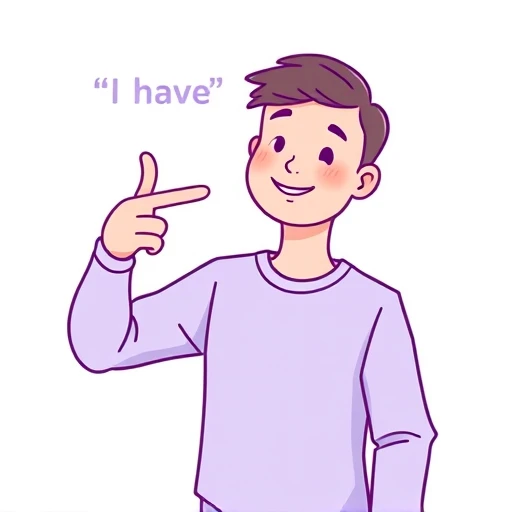
hab in 30 Sekunden
- Short for 'habe' (I have) or the singular command 'Have!'.
- Essential for natural-sounding spoken German and casual writing.
- Functions as both a main verb and an auxiliary for the past tense.
- Common in idioms like 'Hab keine Angst' or 'Ich hab Hunger'.
The word hab is a fascinating linguistic artifact in the German language, primarily serving as the shortened, colloquial form of the first-person singular present indicative verb habe (I have), or as the standard singular imperative form of the verb haben. To understand its usage, one must first appreciate the concept of Apokope, which is the omission of a final unstressed vowel. In spoken German, the final '-e' in many first-person singular verb forms is frequently dropped to facilitate a faster, more fluid speech rhythm. While habe is the grammatically complete form taught in traditional textbooks, hab is what you will actually encounter in over 90% of casual conversations, text messages, and modern literature aiming for realism.
- Grammatical Function
- In the indicative mood, it represents 'ich hab' (I have). In the imperative mood, it serves as the command 'Hab...!' (Have...!).
- Register and Tone
- Informal to semi-formal. It is ubiquitous in spoken German but should be used with caution in highly formal academic or legal writing unless representing speech.
The imperative use of hab is particularly important. Unlike many other verbs where the imperative singular might retain an optional '-e' (e.g., gehe vs. geh), hab is the dominant form in phrases like Hab keine Angst! (Don't be afraid!). It conveys a sense of immediacy and directness. When used as a shortened version of habe, it often merges with following pronouns, a process known as cliticization. For example, habe ich often becomes hab ich or even hab ich's (I have it).
Ich hab heute leider keine Zeit für das Treffen.
Historically, the deletion of the final '-e' has been a trend in Upper and Central German dialects for centuries. While Northern German (Hannover area) is often cited as the standard for 'pure' German, even there, the apocope of the first-person '-e' is standard in speech. Linguistically, this reflects the Germanic tendency to stress the root syllable and reduce or eliminate unstressed suffixes. For a learner at the B1 level, mastering the use of hab is a key step toward sounding more like a native speaker and less like a recorded textbook exercise.
Furthermore, hab acts as an auxiliary verb in the construction of the perfect tense (Perfekt). When a speaker says Ich hab das schon gemacht (I have already done that), the word hab is doing the heavy lifting of indicating the person and tense, while the past participle gemacht provides the specific action. This dual role—as both a main verb of possession and an auxiliary verb of tense—makes it one of the most frequently uttered syllables in the German language. It is the backbone of past-tense narration in everyday life.
Hab doch ein bisschen Geduld mit mir!
- Dialectal Variation
- In some Southern dialects (Bavarian/Austrian), the 'b' might be softened or the word might be replaced by 'ha', but 'hab' remains the standard colloquial bridge across almost all German-speaking regions.
In summary, hab is the pragmatic version of habe. It represents the efficiency of the German language in its spoken form. Whether you are expressing possession, state of being, or giving a command, this three-letter word is an essential tool in your linguistic toolkit. It bridges the gap between formal grammar and the living, breathing language of the streets, homes, and workplaces of Germany, Austria, and Switzerland.
Ich hab dich lieb.
Using hab correctly involves understanding its syntactic placement and its role as either a primary verb or an auxiliary. In German, the verb usually occupies the second position in a main clause (V2 rule). When you use hab as the first-person singular, it follows this rule strictly. For example, in the sentence Heute hab ich viel zu tun (Today I have a lot to do), hab is in the second position, following the adverb Heute.
- The 'Ich' Inversion
- When 'hab' is followed by 'ich', the 'i' sounds often merge. 'Hab ich' sounds like 'habbich' in fast speech. This is a hallmark of native-level fluency.
As an imperative, hab moves to the first position of the sentence. This is the standard position for commands in German. Hab Mut! (Have courage!) or Hab einen schönen Tag! (Have a nice day!). Note that while 'Habe einen schönen Tag' is technically correct, it sounds overly stiff and almost archaic in a casual setting. The short form is much more welcoming and idiomatic.
Ich hab mir das anders vorgestellt.
When using hab in the perfect tense, it must be paired with a past participle at the end of the sentence. This creates the 'sentence bracket' (Satzklammer), which is a fundamental structure in German grammar. For instance: Ich hab das Buch gestern gelesen. Here, hab is the conjugated auxiliary in position two, and gelesen is the participle at the very end. Even in this complex structure, the colloquial shortening of habe to hab is perfectly acceptable in most spoken contexts.
Another common usage is in fixed expressions where the verb haben describes a state rather than physical possession. Expressions like Hunger hab (to be hungry), Recht hab (to be right), or Glück hab (to be lucky) are frequently used with the shortened form. In a text message, you might simply write Hab Hunger! as a shorthand for Ich habe Hunger. This demonstrates how hab can even stand alone in highly elliptical, informal communication.
Hab Dank für deine Hilfe!
- Negation with 'kein'
- 'Ich hab kein Geld' is the standard way to say 'I have no money'. The use of 'hab' makes the statement feel more direct and personal.
In subordinate clauses, the verb moves to the end. Even here, the '-e' can be dropped, though it is slightly less common than in main clauses. ...weil ich keine Lust hab (...because I don't feel like it). In this position, the dropping of the '-e' often serves to emphasize the preceding word or to maintain a specific poetic meter in songs or rhymes. As a learner, observing where native speakers keep the '-e' and where they drop it will give you deep insight into the natural melody of the German language.
Wenn ich Zeit hab, komme ich vorbei.
If you were to step onto a train in Berlin, a cafe in Munich, or a office in Hamburg, hab would likely be one of the first words you hear. It is the 'workhorse' of the German spoken language. Unlike some slang terms that are restricted to specific age groups or subcultures, hab is used by everyone from teenagers to grandmothers, provided the setting is not strictly formal. It is the sound of German efficiency—why say two syllables when one will do?
- Pop Culture and Music
- From the rap lyrics of Capital Bra to the pop songs of Mark Forster, 'hab' is the standard. It fits the rhythmic requirements of modern music perfectly.
In the world of German cinema and television, dialogue writers use hab to make characters sound authentic. A character saying Ich habe es dir doch gesagt sounds like they are reading from a script; a character saying Ich hab's dir doch gesagt sounds like a real person expressing frustration. This subtle difference is crucial for actors and writers aiming for Alltagsnähe (closeness to everyday life). When watching German Netflix series like 'Dark' or 'How to Sell Drugs Online (Fast)', pay close attention to the first-person singular verbs—you will hear the '-e' being dropped constantly.
"Ich hab da mal eine Frage..." (Common way to start a conversation in an office).
Social media is another primary habitat for hab. On platforms like Twitter (X), Instagram, and WhatsApp, brevity is king. Users almost always opt for the shorter form. You will see captions like Hab heute den besten Kaffee getrunken or Hab euch lieb!. In these digital spaces, the formal habe can actually come across as cold, distant, or even slightly sarcastic, whereas hab feels warm and immediate.
In professional environments, the usage is nuanced. During a formal presentation, a speaker might use habe to maintain a professional distance. However, during the coffee break or in a brainstorming session, they will almost certainly switch to hab. This 'code-switching' is a vital social skill in Germany. Using the short form signals that you are 'off the clock' or that you view the listener as a peer. For a learner, using hab in these informal professional moments can help build rapport with German colleagues.
"Hab ich das jetzt richtig verstanden?" (Checking for understanding).
- Public Announcements
- Even in semi-formal announcements, like a train conductor explaining a delay, you might hear 'Ich hab leider eine schlechte Nachricht'. It humanizes the speaker.
Finally, in literature, especially modern novels and 'Gegenwartsliteratur', hab is used in interior monologues to represent the natural flow of a character's thoughts. Since we don't usually 'think' in perfect, formal grammar, the use of hab in a book helps the reader get closer to the character's psyche. It represents the internal voice of the modern German speaker—direct, efficient, and slightly informal.
"Ich hab keine Ahnung, was ich machen soll." (Common expression of doubt).
While hab is incredibly common, its usage is not without pitfalls for the English-speaking learner. The most frequent mistake is over-applying the 'shortening' rule to other persons or tenses where it doesn't belong. For example, you cannot shorten hast (you have) to has or hat (he/she/it has) to ha in standard colloquial German. The apocope of the final '-e' is specifically a feature of the first-person singular (ich) and the imperative singular.
- The Formal Writing Trap
- Using 'hab' in a formal cover letter, a university essay, or a legal document is a significant stylistic error. In these contexts, the full form 'habe' is mandatory.
Another common error involves the imperative. English speakers often want to use the infinitive haben for commands, saying things like Haben Geduld!. This is incorrect. The singular imperative is hab, and the plural is habt. Misusing these forms can make a command sound like a broken translation. Remember: Hab Geduld! (Singular) vs. Habt Geduld! (Plural) vs. Haben Sie Geduld! (Formal).
Falsch: Ich hat gestern Zeit. (Confusing 'hab' with 'hat' or 'hatte').
Confusion between hab and the past tense hatte is also frequent. Because hab is short, learners sometimes mistakenly use it to refer to the past without an auxiliary. For example, saying Ich hab ein Auto when they mean Ich hatte ein Auto (I had a car). hab is strictly present tense (or an auxiliary for the perfect tense). If you want to say you 'had' something in the past using hab, you must use the perfect: Ich hab ein Auto gehabt.
Learners also struggle with the placement of hab in complex sentences. In a subordinate clause, if you drop the '-e', you must still ensure the verb is at the very end. A mistake like ...weil ich hab keine Zeit is common because it mimics English word order. The correct colloquial form would be ...weil ich keine Zeit hab. Even when being informal, German syntax rules (like verb-final position in 'weil' clauses) remain largely intact.
Richtig: Ich hab das schon erledigt. (Correct use as auxiliary).
- Apostrophe Confusion
- Some learners over-use apostrophes: 'Ich hab' das'. While not strictly wrong, it looks dated. Modern German style guides suggest omitting the apostrophe for common elisions like 'hab'.
Finally, be careful with the phrase Ich hab's. While it usually means 'I have it' or 'I've got it' (an idea), it can also be a very short way of saying Ich habe es in a physical sense. However, in some contexts, Ich hab's can sound dismissive or impatient if the tone is wrong. Like all colloquialisms, hab carries a certain emotional weight that depends heavily on prosody and context.
Falsch: Hab Sie einen Moment Zeit? (Mixing 'hab' with formal 'Sie').
While hab is the most common way to express possession or auxiliary function, German offers several alternatives depending on the desired level of precision or formality. Understanding these synonyms helps you navigate different social registers and express yourself more vividly.
- besitzen (to possess/own)
- Used for legal or physical ownership. 'Ich besitze ein Haus' sounds more permanent and significant than 'Ich hab ein Haus'.
- verfügen über (to have at one's disposal)
- A more sophisticated alternative, often used in professional contexts. 'Ich verfüge über langjährige Erfahrung' (I have many years of experience).
In the context of the imperative, alternatives to hab often involve more descriptive verbs. Instead of saying Hab Geduld!, one might say Sei geduldig! (Be patient!). While they mean the same thing, sei (from sein - to be) focuses on the state of being, whereas hab focuses on the 'possession' of the quality. Another alternative for 'have' in the sense of 'holding' is halten. If you want someone to hold something, you say Halt das mal! rather than Hab das mal!.
Ich besitze zwar kein Auto, aber ich hab ein Ticket für die Bahn.
When hab is used to describe a feeling (e.g., Ich hab Angst), alternatives include fühlen (to feel) or empfinden (to sense/feel). Saying Ich fühle Angst is much more dramatic and literary than the everyday Ich hab Angst. Similarly, Ich hab Hunger can be replaced by the adjective Ich bin hungrig, though the former is much more common in idiomatic German.
In terms of auxiliary verbs, hab only competes with sein (to be). German verbs of movement or change of state use sein in the perfect tense (e.g., Ich bin gegangen), while most other verbs use haben (e.g., Ich hab gegessen). There is no colloquial shortening of bin that is equivalent to hab, making hab a unique marker of the first-person singular in the perfect tense.
Statt "Ich hab keine Zeit", könnte man sagen: "Mir fehlt die Zeit".
- bekommen (to get/receive)
- Often confused by English speakers. 'I have a gift' is 'Ich hab ein Geschenk'. 'I get a gift' is 'Ich bekomme ein Geschenk'.
Lastly, consider the word innehaben, which means to hold a position or office. 'Er hat das Amt inne' (He holds the office). This is a formal, specialized version of haben. While you would never shorten this to innhab in formal writing, in a very casual conversation about politics, you might hear Ich hab das Amt jetzt inne. This shows that even complex, prefixed versions of the verb are subject to the gravitational pull of the shortened hab form in spoken German.
Ich hab's eilig! (I'm in a hurry!)
How Formal Is It?
Wusstest du?
It is cognate with the Latin 'capere' (to take), not the Latin 'habere', despite the striking similarity in sound and meaning.
Aussprachehilfe
- Pronouncing the 'b' as a voiced 'b' (it should sound like 'p').
- Making the 'a' sound too long like in 'half'.
- Adding a phantom 'e' at the end when trying to be too correct.
- Confusing the vowel with 'u' (hub).
- Not stressing the word enough in a sentence.
Schwierigkeitsgrad
Very easy to recognize as 'habe'.
Tricky to know when to use it vs. 'habe'.
Easy to say, but requires natural rhythm.
Can be missed in fast speech.
Was du als Nächstes lernen solltest
Voraussetzungen
Als Nächstes lernen
Fortgeschritten
Wichtige Grammatik
Apokope
The dropping of the final -e in 'habe' -> 'hab'.
V2 Word Order
In 'Heute hab ich Zeit', 'hab' is in the second position.
Imperative Formation
The singular imperative of 'haben' is 'hab'.
Perfekt Auxiliary
'Haben' is used for most verbs in the perfect tense.
Auslautverhärtung
The 'b' in 'hab' is pronounced like a 'p'.
Beispiele nach Niveau
Ich hab Hunger.
I have hunger (I'm hungry).
Colloquial shortening of 'habe'.
Hab keine Angst!
Don't have fear!
Imperative singular form.
Ich hab ein Buch.
I have a book.
Simple possession.
Hab einen schönen Tag!
Have a nice day!
Common imperative greeting.
Ich hab zwei Katzen.
I have two cats.
Plural object.
Hab Geduld!
Have patience!
Abstract noun with imperative.
Ich hab das.
I have that / I've got it.
Direct object pronoun.
Hab Spaß!
Have fun!
Common imperative.
Ich hab das schon gemacht.
I have already done that.
Auxiliary verb in Perfekt tense.
Ich hab heute keine Zeit.
I have no time today.
Negation with 'keine'.
Hab ich dir das gesagt?
Did I tell you that?
Inversion in a question.
Ich hab Lust auf Eis.
I feel like having ice cream.
Fixed expression 'Lust haben'.
Ich hab Glück gehabt.
I was lucky (I had luck).
Perfekt tense of 'haben'.
Hab Dank für alles!
Have thanks for everything!
Slightly formal but common imperative.
Ich hab's eilig.
I'm in a hurry.
Contraction 'hab' + 'es'.
Ich hab eine Idee.
I have an idea.
Common possession of abstract noun.
Ich hab mir das anders vorgestellt.
I imagined that differently.
Reflexive use in Perfekt.
Hab Mut, deine Meinung zu sagen!
Have courage to say your opinion!
Imperative with infinitive clause.
Ich hab das Gefühl, dass es regnet.
I have the feeling that it's raining.
Introducing a subordinate clause.
Ich hab mich gestern verspätet.
I was late yesterday.
Auxiliary for reflexive verb.
Hab ich recht oder nicht?
Am I right or not?
Question with fixed expression 'Recht haben'.
Ich hab viel zu tun diese Woche.
I have a lot to do this week.
'haben' + 'zu' + infinitive.
Hab Vertrauen in dich selbst!
Have trust in yourself!
Imperative with prepositional object.
Ich hab keine Ahnung.
I have no idea.
Very common colloquial idiom.
Ich hab die Absicht, nächstes Jahr zu reisen.
I have the intention to travel next year.
Noun-verb combination (Funktionsverbgefüge).
Hab Acht vor den Gefahren!
Watch out for the dangers!
Archaic/Formal imperative still used in idioms.
Ich hab das Problem bereits gelöst.
I have already solved the problem.
Auxiliary in professional context.
Hab ich das deutlich genug ausgedrückt?
Did I express that clearly enough?
Self-reflective question.
Ich hab mich dazu entschlossen.
I have decided on that.
Auxiliary for decision-making verb.
Hab Nachsicht mit den Anfängern.
Have leniency with the beginners.
Imperative with abstract noun.
Ich hab's satt!
I'm fed up with it!
Idiomatic expression with contraction.
Ich hab den Eindruck, dass Sie zögern.
I have the impression that you are hesitating.
Formal-casual hybrid usage.
Ich hab die Befürchtung, dass wir scheitern könnten.
I have the fear that we might fail.
Sophisticated noun-verb combination.
Hab Erbarmen!
Have mercy!
High-register imperative.
Ich hab das alles nur für dich getan.
I did all this only for you.
Emphatic auxiliary use.
Hab ich etwa zu viel versprochen?
Did I perhaps promise too much?
Rhetorical question.
Ich hab mich in der Zeit geirrt.
I was mistaken about the time.
Auxiliary for reflexive error verb.
Hab Teil an unserer Freude!
Share in our joy!
Imperative with 'teilhaben'.
Ich hab's kommen sehen.
I saw it coming.
Double infinitive construction with auxiliary.
Ich hab das Projekt zum Abschluss gebracht.
I brought the project to a conclusion.
Formal Funktionsverbgefüge in spoken form.
Ich hab mein Hab und Gut verloren.
I lost all my worldly possessions.
Idiomatic phrase 'Hab und Gut'.
Hab keine Scheu, mich jederzeit zu kontaktieren.
Don't hesitate to contact me anytime.
Polished imperative.
Ich hab mich der Stimme enthalten.
I abstained from voting.
Genitive object with auxiliary.
Hab ich das rechtlich einwandfrei formuliert?
Did I formulate that in a legally sound way?
High-level professional inquiry.
Ich hab's mir zur Aufgabe gemacht, zu helfen.
I have made it my task to help.
Complex idiomatic construction.
Hab Acht, dass du nicht vom Weg abkommst.
Take care that you don't stray from the path.
Metaphorical imperative.
Ich hab die Ehre, Sie begrüßen zu dürfen.
I have the honor of being allowed to welcome you.
Very formal expression in spoken form.
Ich hab das Ganze noch einmal Revue passieren lassen.
I reviewed the whole thing once more.
Sophisticated idiom with auxiliary.
Synonyme
Gegenteile
Häufige Kollokationen
Häufige Phrasen
Wird oft verwechselt mit
Learners confuse 'hab' (I) with 'hat' (he/she/it).
Learners use 'hab' when they mean the past tense 'hatte'.
Learners sometimes drop the 't' in 'hast', making it sound like 'has' or 'hab'.
Redewendungen & Ausdrücke
— To be in control of a situation.
In dieser Firma hab ich das Heft in der Hand.
colloquial— To have a skeleton in the closet / to have done something wrong.
Er tut so unschuldig, aber er hat Dreck am Stecken.
informal— To have a bone to pick with someone.
Komm mal her, ich hab ein Hühnchen mit dir zu rupfen.
informal— To have the knack of something / to understand how it works.
Nach zwei Tagen hab ich den Bogen raus.
colloquial— To be blind to something obvious.
Hast du das Schild nicht gesehen? Du hab wohl Tomaten auf den Augen!
slang— To be crazy / out of one's mind.
Du willst da hochklettern? Du hab wohl einen Vogel!
slang— To be sick and tired of something.
Ich hab die Nase voll von diesem Wetter.
informalLeicht verwechselbar
It is the same word.
'Habe' is formal/written, 'hab' is spoken/informal.
Ich habe (written) vs Ich hab (spoken).
Similar sound.
'Hab' is for 'ich', 'hat' is for 'er/sie/es'.
Ich hab Zeit. Er hat Zeit.
Rhymes and looks similar.
'Ab' is a preposition meaning 'from/off'.
Ab morgen hab ich Urlaub.
Rhymes.
'Gab' is the past tense of 'geben' (to give).
Es gab kein Brot.
Contains 'hab'.
'Halb' means 'half'.
Es ist halb eins.
Satzmuster
Ich hab [Noun].
Ich hab ein Auto.
Ich hab [Noun] [Past Participle].
Ich hab das Buch gekauft.
Hab [Noun]!
Hab keine Sorge!
Ich hab [Adverb] zu [Infinitive].
Ich hab viel zu lernen.
Hab ich [Pronoun] [Adjective] [Verb]?
Hab ich mich klar ausgedrückt?
Ich hab [Noun] [Prepositional Phrase].
Ich hab Vertrauen in die Zukunft.
Ich hab's [Adjective] [Infinitive].
Ich hab's eilig zu gehen.
Ich hab [Noun] [Verb in Subordinate Clause].
Ich hab das Gefühl, dass wir gewinnen.
Wortfamilie
Substantive
Verben
Adjektive
Verwandt
So verwendest du es
Extremely high (Top 10 most used words in spoken German).
-
Ich hab gestern ein Buch.
→
Ich hatte gestern ein Buch / Ich hab gestern ein Buch gehabt.
'Hab' is present tense. For past, use 'hatte' or 'hab...gehabt'.
-
Hab Sie Zeit?
→
Haben Sie Zeit?
'Hab' is informal. Use 'Haben' with the formal 'Sie'.
-
Er hab ein Auto.
→
Er hat ein Auto.
'Hab' is only for 'ich'. 'Er' takes 'hat'.
-
Habt keine Angst! (to one person)
→
Hab keine Angst!
'Habt' is plural. Use 'Hab' for one person.
-
Ich habe keine Zeit. (in a casual chat)
→
Ich hab keine Zeit.
Not 'wrong', but sounds too stiff for a casual conversation.
Tipps
Texting
Always use 'hab' in WhatsApp. 'Habe' looks too formal for friends.
The P sound
Remember that 'hab' ends with a 'p' sound. Practice saying 'hap'.
Imperative
Use 'hab' for 'Have a nice day!' -> 'Hab einen schönen Tag!'
Auxiliary
Listen for 'hab' before a verb at the end of a sentence to identify the past tense.
Natural Flow
Dropping the -e makes you sound more like a native and less like a robot.
Idioms
Learn 'Ich hab keine Ahnung' first. It's the most useful 'hab' phrase.
Regionality
Even if you hear 'i han' in the south, 'ich hab' will always be understood.
Essays
Never use 'hab' in a university essay. Stick to 'habe'.
Clitics
Practice 'habich' as one word to improve your speaking speed.
Visual
Visualize the 'e' falling off the word 'habe' as it runs into a sentence.
Einprägen
Eselsbrücke
Think of 'Hab' as a 'Hand' grabbing something. You 'hab' what you 'grab'.
Visuelle Assoziation
Imagine a giant hand holding a clock (Zeit hab) and a sandwich (Hunger hab).
Word Web
Herausforderung
Try to use 'hab' in five different sentences today instead of 'habe'. See how much faster you speak!
Wortherkunft
Derived from the Old High German 'habēn', which comes from the Proto-Germanic '*habjaną'.
Ursprüngliche Bedeutung: To take, grasp, or hold.
Germanic (Indo-European).Kultureller Kontext
No specific sensitivities, but avoid 'hab' in formal legal or academic contexts.
English speakers often struggle with when to be informal. 'Hab' is much more common in German than 'I've' is in formal English writing.
Im Alltag üben
Kontexte aus dem Alltag
Expressing Hunger/Thirst
- Ich hab Hunger.
- Ich hab Durst.
- Hab ich was zu essen?
- Ich hab schon gegessen.
Giving Encouragement
- Hab Mut!
- Hab Geduld!
- Hab Vertrauen!
- Hab keine Angst!
Talking about Time
- Ich hab keine Zeit.
- Hab ich noch Zeit?
- Ich hab den ganzen Tag Zeit.
- Wann hab ich Zeit?
Past Tense Actions
- Ich hab das gemacht.
- Ich hab's gesehen.
- Ich hab's vergessen.
- Ich hab angerufen.
Social Goodbyes
- Hab einen schönen Abend!
- Hab ein schönes Wochenende!
- Hab viel Spaß!
- Hab's gut!
Gesprächseinstiege
"Ich hab da mal eine Frage zu deinem Projekt."
"Hab ich dir eigentlich schon von meinem Urlaub erzählt?"
"Ich hab heute so viel zu tun, wie sieht's bei dir aus?"
"Hab keine Angst, die Prüfung wird sicher gut laufen."
"Ich hab gehört, dass du ein neues Auto hast. Stimmt das?"
Tagebuch-Impulse
Schreibe über etwas, wovor du früher Angst hattest (Ich hab keine Angst mehr vor...).
Was hast du heute alles erledigt? (Ich hab heute...)
Beschreibe einen Moment, in dem du viel Glück hattest (Ich hab Glück gehabt, als...).
Was hast du diese Woche noch vor? (Ich hab vor, ... zu machen).
Wofür hast du heute Dankbarkeit empfunden? (Ich hab Dank für...)
Häufig gestellte Fragen
10 FragenYes, in spoken German and informal writing, it is considered a standard variant. In formal writing, 'habe' is required.
Use it when giving a singular, informal command like 'Hab Geduld!' or 'Hab Spaß!'. It is the standard form for this.
No, modern German spelling usually omits the apostrophe for 'hab' in everyday use.
No, 'hab' is only for 'ich' or as an imperative for 'du'. The 'du' form is 'hast'.
No, it is used throughout the German-speaking world in colloquial speech, though some dialects have their own versions.
It's a phonetic contraction. The 'b' and 'i' merge to make speech more efficient.
It's better to use 'habe' to show respect and professionalism, though 'hab' might slip in naturally.
Meaning is the same, but 'Ich hab's' is much more common when you suddenly understand something or find something.
Only as an auxiliary verb: 'Ich hab's gemacht'. The simple past of 'haben' is 'hatte'.
No, for plural you must use 'Habt', as in 'Habt Spaß!'.
Teste dich selbst 200 Fragen
Schreibe einen Satz mit 'hab' und 'Hunger'.
Well written! Good try! Check the sample answer below.
Schreibe einen Satz mit 'hab' als Hilfsverb.
Well written! Good try! Check the sample answer below.
Schreibe einen Imperativ mit 'hab'.
Well written! Good try! Check the sample answer below.
Übersetze: 'I have no time.' (colloquial)
Well written! Good try! Check the sample answer below.
Übersetze: 'Have a nice day!'
Well written! Good try! Check the sample answer below.
Schreibe einen Satz mit 'hab' und 'Glück'.
Well written! Good try! Check the sample answer below.
Schreibe einen Satz mit 'hab' und 'Lust'.
Well written! Good try! Check the sample answer below.
Übersetze: 'I love you.' (to a friend)
Well written! Good try! Check the sample answer below.
Schreibe einen Satz mit 'hab' und 'Ahnung'.
Well written! Good try! Check the sample answer below.
Schreibe einen Satz mit 'hab' und 'Geld'.
Well written! Good try! Check the sample answer below.
Übersetze: 'I've got it!'
Well written! Good try! Check the sample answer below.
Schreibe einen Satz mit 'hab' und 'Zeit'.
Well written! Good try! Check the sample answer below.
Schreibe einen Satz mit 'hab' und 'Geduld'.
Well written! Good try! Check the sample answer below.
Übersetze: 'I thought so.'
Well written! Good try! Check the sample answer below.
Schreibe einen Satz mit 'hab' und 'Angst'.
Well written! Good try! Check the sample answer below.
Schreibe einen Satz mit 'hab' und 'Spaß'.
Well written! Good try! Check the sample answer below.
Übersetze: 'I have a lot to do.'
Well written! Good try! Check the sample answer below.
Schreibe einen Satz mit 'hab' und 'Recht'.
Well written! Good try! Check the sample answer below.
Schreibe einen Satz mit 'hab' und 'Idee'.
Well written! Good try! Check the sample answer below.
Übersetze: 'I'm in a hurry.'
Well written! Good try! Check the sample answer below.
Sprich: 'Ich hab Hunger.'
Read this aloud:
Du hast gesagt:
Speech recognition is not supported in your browser. Try Chrome or Edge.
Sprich: 'Hab keine Angst!'
Read this aloud:
Du hast gesagt:
Speech recognition is not supported in your browser. Try Chrome or Edge.
Sprich: 'Ich hab's getan.'
Read this aloud:
Du hast gesagt:
Speech recognition is not supported in your browser. Try Chrome or Edge.
Sprich: 'Hab einen schönen Tag!'
Read this aloud:
Du hast gesagt:
Speech recognition is not supported in your browser. Try Chrome or Edge.
Sprich: 'Ich hab keine Zeit.'
Read this aloud:
Du hast gesagt:
Speech recognition is not supported in your browser. Try Chrome or Edge.
Sprich: 'Hab Geduld!'
Read this aloud:
Du hast gesagt:
Speech recognition is not supported in your browser. Try Chrome or Edge.
Sprich: 'Ich hab's eilig.'
Read this aloud:
Du hast gesagt:
Speech recognition is not supported in your browser. Try Chrome or Edge.
Sprich: 'Hab ich dir das gesagt?'
Read this aloud:
Du hast gesagt:
Speech recognition is not supported in your browser. Try Chrome or Edge.
Sprich: 'Ich hab dich lieb.'
Read this aloud:
Du hast gesagt:
Speech recognition is not supported in your browser. Try Chrome or Edge.
Sprich: 'Hab Spaß!'
Read this aloud:
Du hast gesagt:
Speech recognition is not supported in your browser. Try Chrome or Edge.
Sprich: 'Ich hab keine Ahnung.'
Read this aloud:
Du hast gesagt:
Speech recognition is not supported in your browser. Try Chrome or Edge.
Sprich: 'Hab Mut!'
Read this aloud:
Du hast gesagt:
Speech recognition is not supported in your browser. Try Chrome or Edge.
Sprich: 'Ich hab's geschafft!'
Read this aloud:
Du hast gesagt:
Speech recognition is not supported in your browser. Try Chrome or Edge.
Sprich: 'Hab Dank!'
Read this aloud:
Du hast gesagt:
Speech recognition is not supported in your browser. Try Chrome or Edge.
Sprich: 'Ich hab's mir gedacht.'
Read this aloud:
Du hast gesagt:
Speech recognition is not supported in your browser. Try Chrome or Edge.
Sprich: 'Hab Vertrauen!'
Read this aloud:
Du hast gesagt:
Speech recognition is not supported in your browser. Try Chrome or Edge.
Sprich: 'Ich hab Pech gehabt.'
Read this aloud:
Du hast gesagt:
Speech recognition is not supported in your browser. Try Chrome or Edge.
Sprich: 'Hab Acht!'
Read this aloud:
Du hast gesagt:
Speech recognition is not supported in your browser. Try Chrome or Edge.
Sprich: 'Ich hab Lust auf Eis.'
Read this aloud:
Du hast gesagt:
Speech recognition is not supported in your browser. Try Chrome or Edge.
Sprich: 'Hab ich recht?'
Read this aloud:
Du hast gesagt:
Speech recognition is not supported in your browser. Try Chrome or Edge.
Hör zu: 'Ich hab's vergessen.' Was hat die Person getan?
Hör zu: 'Hab keine Sorge.' Was soll man nicht haben?
Hör zu: 'Ich hab heute frei.' Muss die Person arbeiten?
Hör zu: 'Hab viel Spaß!' Was ist das?
Hör zu: 'Ich hab's eilig.' Warum rennt die Person?
Hör zu: 'Hab ich das gesagt?' Was ist das?
Hör zu: 'Ich hab Hunger.' Was braucht die Person?
Hör zu: 'Hab Geduld.' Was ist das?
Hör zu: 'Ich hab's gefunden.' Was ist passiert?
Hör zu: 'Hab Dank.' Was bedeutet das?
Hör zu: 'Ich hab keine Lust.' Will die Person etwas tun?
Hör zu: 'Hab Mut.' Was soll man haben?
Hör zu: 'Ich hab's mir gedacht.' War es eine Überraschung?
Hör zu: 'Hab einen schönen Abend.' Was ist das?
Hör zu: 'Ich hab's geschafft.' Ist die Person fertig?
/ 200 correct
Perfect score!
Summary
The word 'hab' is the heart of casual German communication, transforming the formal 'habe' into a quick, efficient syllable that powers everything from basic possession to complex past-tense storytelling. Example: 'Ich hab's geschafft!' (I made it!).
- Short for 'habe' (I have) or the singular command 'Have!'.
- Essential for natural-sounding spoken German and casual writing.
- Functions as both a main verb and an auxiliary for the past tense.
- Common in idioms like 'Hab keine Angst' or 'Ich hab Hunger'.
Texting
Always use 'hab' in WhatsApp. 'Habe' looks too formal for friends.
The P sound
Remember that 'hab' ends with a 'p' sound. Practice saying 'hap'.
Imperative
Use 'hab' for 'Have a nice day!' -> 'Hab einen schönen Tag!'
Auxiliary
Listen for 'hab' before a verb at the end of a sentence to identify the past tense.