









circle in 30 Sekunden
- A perfectly round 2D shape.
- A group of connected people.
- A repeating cycle of events.
- To move around something.
The word circle is one of the most fundamental and versatile nouns in the English language, serving as a cornerstone for both basic geometry and complex social metaphors. At its most literal and primary level, a circle is a perfectly round plane figure where every single point on its outer boundary, known as the circumference, is located at the exact same distance from the central point. This geometric definition is introduced to children very early in their educational journey, making it a foundational concept for understanding shapes, spatial relationships, and later, advanced mathematics like trigonometry and calculus. However, the utility of the word extends far beyond the confines of a mathematics classroom. In everyday conversation, people frequently use the word circle to describe physical objects that share this round shape, such as a ring, a hoop, a wheel, or even a group of people sitting together around a campfire. Furthermore, the concept of a circle is deeply embedded in human culture as a symbol of unity, eternity, and completeness, because a circle has no beginning and no end. This symbolic meaning gives rise to its secondary, metaphorical uses. For instance, when we talk about a 'social circle' or a 'circle of friends,' we are referring to a group of people who are connected by shared interests, backgrounds, or relationships, forming a closed loop of interaction. The word is also used to describe cycles or processes that repeat continuously, sometimes in a negative context, such as a 'vicious circle' where one problem causes another, which in turn exacerbates the first problem. Understanding the multifaceted nature of this word is essential for learners, as it bridges the gap between concrete physical descriptions and abstract social or logical concepts.
- Geometric Shape
- A two-dimensional round figure where all boundary points are equidistant from the center, used in math and design.
The teacher asked the students to draw a perfect circle on the chalkboard using a compass.
- Social Group
- A specific group of people who associate with one another, often sharing common interests, professions, or social status.
She is very well-known and highly respected within the local artistic circle.
- Continuous Process
- A series of events or actions that repeat in a continuous loop, often returning to the original starting point.
Poverty and lack of education often create a vicious circle that is incredibly difficult to break.
Only those in the president's inner circle knew about the secret negotiations.
The children sat in a wide circle around the storyteller, listening intently to every word.
Mastering the usage of the word circle in sentences requires an understanding of the specific prepositions and adjectives that naturally collocate with it. When describing physical positioning, the most common preposition used is 'in'. For example, people sit, stand, or gather 'in a circle'. This prepositional phrase highlights the formation or arrangement of the subjects. Conversely, if you are talking about drawing or creating the shape, you might use verbs like 'draw', 'form', or 'make' followed by the noun. For instance, 'They formed a circle by holding hands.' When the word is used to denote a social group, it is frequently preceded by possessive pronouns or descriptive adjectives, such as 'my circle of friends', 'a wide circle of acquaintances', or 'academic circles'. Notice that in the plural form, 'circles', it often refers to specific domains of society or professional fields, as in 'He is well known in political circles.' This plural usage is quite common in news reporting and formal writing. Another important grammatical structure involves the phrase 'come full circle', an idiom meaning that a series of events has returned to its starting point, often after a long journey or process. In terms of adjectives, a circle can be 'perfect', 'concentric' (meaning multiple circles sharing the same center), 'vicious' (a negative cycle), or 'virtuous' (a positive cycle). When constructing sentences, it is crucial to ensure that the context clearly distinguishes whether you are referring to the geometric shape, the social group, or the metaphorical cycle, as this dictates the appropriate verbs and modifiers to employ. The versatility of the word allows it to function seamlessly as both a subject and an object in a wide variety of sentence structures.
- Physical Arrangement
- Using 'in a circle' to describe how objects or people are positioned relative to one another.
The campers arranged their tents in a circle around the central fire pit.
- Social Domains
- Using the plural 'circles' to refer to specific communities, professions, or social classes.
The controversial theory was widely debated in scientific circles for many years.
- Idiomatic Completion
- Using the phrase 'come full circle' to indicate a return to the original situation or starting point.
After traveling the world for ten years, her life has come full circle as she returns to teach at her old school.
The dancers moved gracefully, forming a perfect circle on the stage.
He felt isolated because he was no longer part of their exclusive social circle.
The word circle permeates almost every aspect of daily life, making it a high-frequency vocabulary item that you will encounter in numerous distinct contexts. Naturally, the most literal and immediate place you will hear this word is in educational settings, particularly in mathematics, geometry, and art classes. Teachers will instruct students to calculate the area of a circle, measure its radius, or use a compass to draw one. Beyond the classroom, you will frequently hear the word in social contexts. People constantly talk about their 'circle of friends' when discussing their social lives, weekend plans, or interpersonal relationships. In professional and business environments, the term is used to describe networks and spheres of influence. For example, a professional might mention that a certain topic is a major talking point in 'financial circles' or 'tech circles'. Another common place you will hear this word is in traffic and navigation. Many countries use the term 'traffic circle' (often synonymous with roundabout) to describe a circular intersection where traffic flows continuously in one direction around a central island. In the realm of entertainment and literature, the concept of a circle is often used to describe mystical or magical boundaries, such as a 'magic circle' drawn by a wizard, or the 'crop circles' that mysteriously appear in agricultural fields and are often associated with science fiction and extraterrestrial lore. Furthermore, in theaters and concert halls, the seating areas are sometimes divided into sections like the 'dress circle' or the 'grand circle'. Because the word applies to shapes, social groups, traffic patterns, and abstract concepts, it is virtually impossible to consume English media—whether it be news broadcasts, casual podcasts, movies, or literature—without encountering the word circle on a regular basis.
- Mathematics and Education
- Used extensively in geometry to describe the 2D shape, its properties, and related calculations like circumference and diameter.
To find the area of the circle, you must multiply pi by the square of the radius.
- Traffic and Navigation
- Used to describe circular road intersections designed to keep traffic moving without stop signs or signals.
Take the second exit when you reach the traffic circle at the end of the highway.
- Entertainment and Seating
- Refers to specific curved seating areas in traditional theaters, often located above the main stalls.
We managed to get excellent front-row seats in the dress circle for the opera tonight.
The mysterious crop circles attracted tourists and researchers from all over the country.
She prefers to keep her professional life completely separate from her personal circle.
When learning to use the word circle, students frequently encounter a few specific pitfalls related to prepositions, geometric distinctions, and spelling. The most common grammatical mistake involves the incorrect choice of prepositions when describing people forming the shape. Many learners say 'sit on a circle' or 'stand at a circle', translating directly from their native languages. The correct English phrasing is always 'sit in a circle' or 'form a circle'. Another frequent error is confusing a circle with a sphere or a round object in three dimensions. A circle is strictly a two-dimensional, flat plane figure. Therefore, describing a basketball or a globe as a circle is geometrically incorrect; they are spheres. While native speakers might casually use 'round' to describe both, 'circle' should be reserved for flat shapes like coins, plates, or drawings on a piece of paper. Spelling is another area where mistakes occur, particularly for early learners. Because the letter 'c' produces an 's' sound before 'i', and the 'cle' ending sounds like 'ul', common misspellings include 'sircle', 'circel', or 'sercle'. Remembering the 'c-i-r-c-l-e' sequence is crucial. Furthermore, learners sometimes confuse the noun form with the verb form. While 'circle' can be a verb meaning to move around something (e.g., 'The plane circled the airport'), using it incorrectly in a sentence structure can lead to confusion. For example, saying 'He made a circle around the building' is acceptable, but 'He circled around the building' is often more natural when expressing the action. Lastly, in metaphorical uses, learners might misuse idiomatic expressions, such as saying 'come to a full circle' instead of the correct idiom 'come full circle'. Paying close attention to these nuances will significantly improve your fluency and accuracy.
- Preposition Errors
- Using 'on' or 'at' instead of 'in' when describing a group formation.
Incorrect: We sat on a circle. Correct: We sat in a circle.
- Dimensional Confusion
- Calling a three-dimensional round object (like a ball) a circle instead of a sphere.
Incorrect: The Earth is a giant circle. Correct: The Earth is a giant sphere, but its orbit is nearly a circle.
- Idiom Misuse
- Adding unnecessary prepositions to established idiomatic phrases.
Incorrect: The story came to a full circle. Correct: The story came full circle.
Make sure you draw a perfect circle, not an oval or an ellipse.
He is not in my circle of friends, so I do not know him well.
While circle is a highly specific geometric term, there are several similar words and alternatives that are used depending on the exact context, dimension, and nuance required. The most common synonym in everyday language is 'ring'. A ring is also circular, but it specifically implies a shape that is hollow in the middle, like a piece of jewelry or a boxing ring. Another related word is 'loop', which describes a shape produced by a curve that bends around and crosses itself, often used when talking about rope, wire, or computer programming sequences. If you are referring to a three-dimensional round object, the correct alternatives are 'sphere', 'globe', or 'orb'. A sphere is the strict mathematical term for a perfectly round 3D object, while globe is often used for maps of the Earth, and orb has a more poetic or mystical connotation. When discussing social groups, alternatives to 'circle' include 'group', 'clique', 'network', or 'club'. A 'clique' carries a slightly negative connotation of being exclusive and unwelcoming to outsiders, whereas a 'network' implies a professional or practical web of connections. In the context of continuous processes, words like 'cycle', 'circuit', or 'revolution' are excellent alternatives. A 'cycle' emphasizes the repeating nature of events, while a 'circuit' often refers to a physical path that starts and ends at the same place, such as an electrical circuit or a racing track. Understanding these subtle differences allows you to choose the most precise and evocative word for your intended meaning, elevating your English proficiency from basic to advanced.
- Ring vs. Circle
- A ring specifically emphasizes the hollow center or the band itself, whereas a circle can refer to the entire enclosed area or just the boundary.
Saturn is famous for the beautiful, icy rings that orbit its massive circle-like profile.
- Sphere vs. Circle
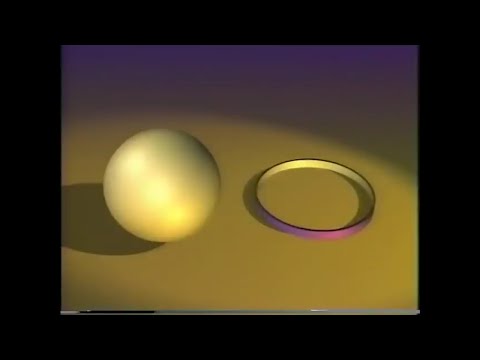
- A sphere is three-dimensional (like a ball), while a circle is strictly two-dimensional (like a drawing on paper).
The shadow cast by the sphere on the flat wall looked exactly like a perfect circle.
- Clique vs. Circle
- A clique is an exclusive, often snobbish group, while a circle is a more neutral term for a group of friends or associates.
Unlike the high school clique, her university circle was welcoming and diverse.
The electrical circuit forms a continuous loop, much like a circle, allowing power to flow.
He tied a loop in the rope, creating a small circle to hook onto the peg.
How Formal Is It?
Wusstest du?
The Latin root 'circus' is the same root that gives us the word for the entertainment show with clowns and acrobats, because the performances originally took place in a large circular arena.
Aussprachehilfe
- Pronouncing the 'c' as a 'k' sound (kirkle).
- Adding a strong vowel sound at the end (cir-coo).
- Mispronouncing the 'ir' as 'ear' (sear-cle).
- Failing to pronounce the dark 'l' in the second syllable.
- Spelling pronunciation: trying to pronounce the silent 'e' at the end.
Schwierigkeitsgrad
Very easy to read and recognize. Taught at the earliest levels of English acquisition.
Spelling can be slightly tricky for beginners due to the 'c' making an 's' sound and the 'cle' ending.
Pronunciation requires mastering the 'ir' sound and the dark 'l', which can be difficult for some non-native speakers.
Easily distinguishable in spoken English due to its distinct rhythm and common usage.
Was du als Nächstes lernen solltest
Voraussetzungen
Als Nächstes lernen
Fortgeschritten
Wichtige Grammatik
Prepositions of Place
Use 'in' for static position (sit in a circle) and 'into' for movement (get into a circle).
Adjective Order
When describing a circle, opinion/size comes before shape (a beautiful large circle).
Pluralization
Add 's' to make it plural (one circle, two circles).
Noun as Adjective
'Circle' can modify other nouns in compound structures (circle skirt, circle graph).
Verb Conversion
The noun 'circle' can be used directly as a regular verb (to circle, circled, circling).
Beispiele nach Niveau
Look at the clock, it is a circle.
Identify the basic shape.
Used as a simple noun to identify a shape.
Please draw a red circle.
Instruction to create the shape.
Object of the verb 'draw'.
The plate is a big circle.
Describing an everyday object.
Used as a subject complement.
I see a circle on the door.
Locating a shape.
Object of a prepositional phrase indicating location.
A coin is a small circle.
Comparing size and shape.
Modified by the adjective 'small'.
Color the circle blue.
Command for a coloring activity.
Direct object in an imperative sentence.
The wheel is a circle.
Identifying vehicle parts.
Subject complement defining the subject.
She cut a circle from the paper.
Action involving the shape.
Direct object of the verb 'cut'.
We sat in a circle on the floor.
Describing a physical arrangement of people.
Used in the prepositional phrase 'in a circle'.
Stand in a circle and hold hands.
Instruction for a group activity.
Imperative sentence using 'in a circle'.
The dog ran in a circle.
Describing a path of movement.
Indicates the trajectory of the action.
Drive around the traffic circle carefully.
Navigating a road feature.
Compound noun 'traffic circle'.
He drew a circle around the correct answer.
Using the shape to highlight something.
Direct object, followed by a prepositional phrase of location.
The chairs are arranged in a circle.
Describing room setup.
Passive voice construction with 'in a circle'.
Make a circle with your arms.
Physical gesture.
Direct object of the verb 'make'.
There is a dark circle under her eye.
Describing a physical feature.
Modified by the adjective 'dark'.
She has a very large circle of friends.
Referring to a social group.
Used in the phrase 'circle of friends'.
He is not in my social circle.
Indicating exclusion from a group.
Modified by the adjective 'social'.
The birds flew in wide circles above us.
Describing continuous, sweeping movement.
Plural form used to describe multiple loops.
We need to break this circle of bad habits.
Referring to a repeating pattern.
Metaphorical use meaning a cycle or pattern.
The news spread quickly through our circle.
Information moving within a specific group.
Used as a noun representing a community.
They danced in a circle around the fire.
A traditional or celebratory formation.
Prepositional phrase indicating formation and location.
I highlighted the word with a red circle.
Using a drawn shape for emphasis.
Object of a preposition, modified by 'red'.
Introduce yourself to the rest of the circle.
Addressing a gathered group.
Metonymy where 'circle' means the people in it.
The country is trapped in a vicious circle of debt and poverty.
A situation where one problem causes another.
Collocation 'vicious circle'.
Her fashion style has come full circle, returning to the trends of her youth.
Returning to the original starting point.
Idiomatic expression 'come full circle'.
The rumor was widely discussed in political circles.
Specific professional or social domains.
Plural form 'circles' indicating specific communities.
He was admitted into the CEO's inner circle of advisors.
An exclusive, trusted group.
Collocation 'inner circle'.
The ripples formed concentric circles on the surface of the pond.
Multiple rings sharing the same center.
Adjective 'concentric' modifying the plural noun.
It is difficult to break into that elite circle of artists.
Gaining entry to an exclusive group.
Modified by 'elite', used with the phrasal verb 'break into'.
We seem to be talking in circles without reaching a decision.
Discussing something without making progress.
Idiomatic phrase 'talking in circles'.
The author's new book is highly regarded in literary circles.
Respected within a specific field.
Plural form indicating a professional domain.
His argument was fundamentally flawed due to its reliance on circular reasoning, essentially arguing in a circle.
A logical fallacy where the premise assumes the conclusion.
Idiomatic phrase 'arguing in a circle'.
The esoteric knowledge was closely guarded by a small, hermetic circle of scholars.
A very private, sealed-off group.
Modified by advanced adjectives 'hermetic' and 'small'.
The policy changes initiated a virtuous circle of economic growth and increased investment.
A positive cycle where good events cause more good events.
Collocation 'virtuous circle', the opposite of vicious circle.
She navigated the complex overlapping circles of influence within the diplomatic corps.
Interacting networks of power.
Complex noun phrase 'overlapping circles of influence'.
The narrative structure of the novel brings the protagonist's journey full circle with devastating irony.
A literary return to the beginning, but with changed circumstances.
Advanced application of the idiom 'brings... full circle'.
The geometry problem required calculating the area of the inscribed circle within the triangle.
A specific mathematical condition.
Technical mathematical usage 'inscribed circle'.
He operates on the fringes of the city's avant-garde artistic circles.
The outer edges of a specific community.
Used in the phrase 'fringes of... circles'.
The expanding circle of the blast radius caused catastrophic damage to the infrastructure.
The outward moving boundary of an explosion.
Used to describe a dynamic, expanding physical boundary.
Dante's allegorical journey descends through the nine concentric circles of Hell, each representing a deeper moral failing.
A profound literary and philosophical reference.
Literary allusion using 'concentric circles'.
The treaty was an attempt to formalize the geopolitical spheres and circles of influence in the post-war era.
High-level political terminology for areas of control.
Compound phrase 'spheres and circles of influence'.
The philosopher posited that time is not a linear progression but an infinite, repeating circle.
An abstract, metaphysical concept of time.
Metaphorical use representing eternity and recurrence.
Her critique dismantled the hermeneutic circle that had long dominated the interpretation of the ancient texts.
A concept in textual interpretation regarding parts and the whole.
Highly specialized academic term 'hermeneutic circle'.
The megalithic stone circle stands as a silent testament to the astronomical prowess of our Neolithic ancestors.
Referring to ancient, monumental architecture.
Historical/archaeological usage 'stone circle'.
The symphony's final movement brings the thematic material full circle, resolving the dissonant chords introduced in the overture.
A sophisticated analysis of musical structure.
Advanced application of 'full circle' in a musical context.
He was a polymath whose intellectual circle encompassed the greatest scientific and literary minds of his generation.
A vast and prestigious network of acquaintances.
Used as a subject representing a collective network.
The insidious nature of the propaganda created a closed epistemic circle, rendering outside facts entirely impotent.
A system of belief that cannot be penetrated by external evidence.
Advanced philosophical/sociological term 'epistemic circle'.
Synonyme
Gegenteile
Häufige Kollokationen
Häufige Phrasen
— Arranged in a round shape. Used to describe how people or things are positioned.
The children sat in a circle on the floor.
— To waste time and energy doing something without achieving any results.
We've been running in circles all day trying to fix this bug.
— To talk a lot without making a clear point or coming to a conclusion.
The politician just talked in circles when asked about the scandal.
— To return to a topic or issue at a later time. Common in business jargon.
Let's circle back to this issue in next week's meeting.
— To prepare to defend against an attack or criticism by joining together.
The company had to circle the wagons after the PR disaster.
— The natural process of birth, life, and death.
The documentary beautifully illustrated the circle of life in the savanna.
— The area or people over which someone has power or impact.
Focus your energy on things within your circle of influence.
— The first level of seating above the ground floor in a theater.
We bought tickets for the dress circle to get a better view.
— The imaginary line around the Earth near the North Pole.
They went on an expedition to the Arctic Circle.
— To attempt an impossible task. Derived from an ancient mathematical problem.
Trying to please everyone is like trying to square the circle.
Wird oft verwechselt mit
A sphere is 3D (like a ball), while a circle is 2D (like a drawing).
A cycle refers to a process in time, while a circle usually refers to a shape in space or a group of people.
Round is usually an adjective describing the shape, while circle is the noun for the shape itself.
Redewendungen & Ausdrücke
— To return to the original situation or starting point after a long series of events.
His career has come full circle; he is now teaching at the school where he was once a student.
neutral— To be very active but achieve very little because of disorganization or confusion.
Without a clear plan, the team is just running around in circles.
informal— To do something that is considered impossible.
The government is trying to square the circle by cutting taxes while increasing public spending.
formal/journalistic— To use a circular argument where the conclusion is used as the premise.
You are arguing in a circle; you can't prove the book is true just by quoting the book itself.
academic/formal— To be close to death, failure, or ruin.
With sales dropping every month, the company is clearly circling the drain.
informal/slang— A recurring cycle of events, the result of each one being to increase the beneficial effect of the next.
Exercise and good sleep create a virtuous circle for your overall health.
formal— A sequence of reciprocal cause and effect in which two or more elements intensify and aggravate each other.
Stress causes insomnia, and insomnia causes more stress; it's a vicious circle.
neutral— A small, exclusive group of people who trust each other completely.
You have been admitted into our circle of trust, do not betray it.
informal/humorous— To isolate or highlight something as important or separate.
We need to draw a circle around this specific problem and solve it first.
business/informal— British variant of 'run around in circles'; making no progress in an argument or task.
The committee has been going round in circles for hours without a decision.
neutralLeicht verwechselbar
Both start with 'circ-' and refer to loops.
A circuit is usually a functional path (like electricity or a race track), while a circle is a pure geometric shape or social group.
The electricity flows through the circuit, not the circle.
Both are round shapes.
A ring implies a hollow center (like jewelry), while a circle can be a solid flat shape.
She wore a gold ring on her finger.
Both are curved shapes without corners.
An oval is elongated like an egg, while a circle is perfectly round and equidistant from the center.
A rugby ball is an oval, a soccer ball looks like a circle on paper.
Both refer to round things.
A globe is a 3D model of the Earth, a circle is a flat 2D shape.
We looked at the countries on the globe.
Both can mean a repeating process.
Cycle is preferred for natural or mechanical repeating events (water cycle), circle is used in specific idioms (vicious circle).
The washing machine has a spin cycle.
Satzmuster
[Subject] is a circle.
The clock is a circle.
[Verb] in a circle.
We sat in a circle.
[Possessive pronoun] circle of [Noun].
My circle of friends.
Come full circle.
The story has come full circle.
Vicious/Virtuous circle of [Noun].
A vicious circle of poverty.
Concentric circles of [Noun].
Concentric circles of influence.
[Verb] around in circles.
We are running around in circles.
Inner circle.
He is in the president's inner circle.
Wortfamilie
Substantive
Verben
Adjektive
Verwandt
So verwendest du es
Very High. It is in the top 2000 most frequently used words in the English language.
-
We sat on a circle.
→
We sat in a circle.
When describing the physical arrangement of people or things forming a ring, the correct preposition in English is 'in', not 'on'.
-
The Earth is a big circle.
→
The Earth is a big sphere.
A circle is strictly a flat, two-dimensional shape. A three-dimensional round object like a planet or a ball must be called a sphere.
-
He draw a sircle.
→
He drew a circle.
This contains two errors: the past tense of draw is 'drew', and circle is spelled with a 'c' at the beginning, not an 's'.
-
The story came to a full circle.
→
The story came full circle.
The idiom 'come full circle' does not take the preposition 'to' or the article 'a'. It is a fixed phrase that must be used exactly as is.
-
I have a big circle of friend.
→
I have a big circle of friends.
The phrase 'circle of friends' always requires the plural form 'friends', because a circle must be made up of multiple people.
Tipps
Preposition 'In'
Always use the preposition 'in' when talking about a group formation. Say 'We sat in a circle', never 'We sat on a circle'.
Two C's, Two Sounds
Remember that the word 'circle' has two 'c's, but they make different sounds. The first 'c' sounds like 's', and the second 'c' sounds like 'k'.
Noun vs. Adjective
Do not confuse the noun 'circle' with the adjective 'round'. A plate is round (adjective), but the shape of the plate is a circle (noun).
Full Circle
Use the phrase 'come full circle' when a situation returns to exactly how it started after a long time. It is a great phrase to use in essays or storytelling.
Circling Back
If you don't have an answer to a question during a meeting, say 'Let me circle back to you on that.' It sounds professional and buys you time.
Silent R in UK English
If you are learning British English, remember not to pronounce the 'r'. It sounds more like 'suh-kull'. In American English, the 'r' is pronounced clearly.
Social Circles
Use 'circle of friends' instead of 'group of friends' to sound more natural and fluent when talking about your social life.
2D vs 3D
Only use 'circle' for flat, two-dimensional shapes. If you are talking about a ball or the Earth, use the word 'sphere' instead.
Vicious Circle
When writing about social issues like poverty or addiction, 'vicious circle' is a powerful term to describe problems that feed into each other.
Running in Circles
If you feel like you are working hard but making no progress, tell your colleagues 'I feel like I'm running in circles.'
Einprägen
Eselsbrücke
Think of the word 'SIR' standing in the middle of a 'C' and an 'L' making a round shape: SIR-C-L-E. Or remember that a CIRCus takes place in a CIRCle.
Visuelle Assoziation
Imagine a knight named Sir Cull drawing a perfect round ring on the ground with his sword. Sir Cull = Circle.
Word Web
Herausforderung
Draw three different types of circles on a piece of paper: a geometric circle, a diagram of your social circle, and a drawing of a traffic circle. Label each one in English.
Wortherkunft
The word 'circle' entered the English language in the 14th century. It comes from the Old French word 'cercle', which in turn derives from the Latin word 'circulus'. 'Circulus' is a diminutive form of 'circus', which means a ring. This root is also the origin of words like 'circus' and 'circuit'.
Ursprüngliche Bedeutung: Originally meant a small ring or a circular geometric shape.
Indo-European > Italic > Latin > Old French > Middle EnglishKultureller Kontext
There are no major cultural sensitivities or offensive connotations associated with the word 'circle'. It is a universally neutral and safe word to use.
In English-speaking corporate culture, 'circling back' is a very common, sometimes mocked, buzzword meaning to return to a topic later.
Im Alltag üben
Kontexte aus dem Alltag
Mathematics Class
- draw a circle
- calculate the area
- the radius of the circle
- the circumference of the circle
Social Gatherings
- sit in a circle
- circle of friends
- inner circle
- form a circle
Driving and Navigation
- traffic circle
- go around the circle
- take the exit at the circle
- roundabout
Business Meetings
- circle back
- circle the wagons
- circle of influence
- virtuous circle
Art and Design
- perfect circle
- concentric circles
- color the circle
- overlapping circles
Gesprächseinstiege
“Who would you consider to be in your inner circle of friends?”
“Do you think fashion trends always come full circle eventually?”
“Have you ever felt like you were just running in circles trying to solve a problem?”
“What is the most difficult geometric shape for you to draw perfectly by hand, a circle or a square?”
“Do you prefer driving through a traffic circle or a traditional intersection with traffic lights?”
Tagebuch-Impulse
Describe your current circle of friends. How did you all meet?
Write about a time in your life when a situation came full circle.
Identify a 'vicious circle' in society today. How do you think it can be broken?
Draw a circle on the page and write inside it the things you can control, and outside it the things you cannot.
Reflect on a time when you felt outside of a social circle. How did it make you feel?
Häufig gestellte Fragen
10 FragenIn everyday language, a coin is described as a circle because we focus on its flat, round face. However, in strict geometric terms, because it has thickness, it is actually a very short cylinder. For English learners, calling a coin a circle is perfectly acceptable and natural.
Yes, 'circle of life' is a very common and poetic phrase in English. It refers to the natural progression of birth, growth, reproduction, and death in nature. It was made especially famous by the Disney movie The Lion King.
'Circle' is a noun, representing the shape itself (e.g., 'Draw a circle'). 'Round' is an adjective used to describe something that has the shape of a circle or a sphere (e.g., 'The table is round'). You cannot say 'Draw a round'.
'Circle back' is corporate jargon that means to return to a topic of discussion at a later time. It creates a visual metaphor of moving away from a point and then looping back around to it. It is often used to politely delay a conversation.
The 'inner circle' refers to a very small, exclusive, and highly trusted group of friends or advisors surrounding a powerful or important person. If you are in the inner circle, you have access to secrets that the general public does not.
When referring to people or objects arranged in that shape, you always use 'in a circle' (e.g., 'We sat in a circle'). You would only use 'on a circle' in a strict mathematical context, like 'a point on a circle'.
A 'vicious circle' (also called a vicious cycle) is a negative situation where one problem causes another problem, which then makes the first problem even worse. For example, being stressed makes you unable to sleep, and not sleeping makes you more stressed.
It is spelled C-I-R-C-L-E. A common mistake is spelling it with an 's' (sircle) because the first 'c' makes a soft 's' sound. Remember that it starts with 'cir-' just like 'circus'.
Yes, 'circle' is frequently used as a verb. It means to move all the way around something (e.g., 'The plane circled the airport') or to draw a ring around something (e.g., 'Circle the correct answer on your test').
A 'traffic circle' is a type of road intersection where traffic moves continuously in one direction around a central island. In British English, and increasingly in American English, this is more commonly called a 'roundabout'.
Teste dich selbst 200 Fragen
Write a sentence using the word 'circle' to describe a shape.
Well written! Good try! Check the sample answer below.
Write a sentence using the phrase 'circle of friends'.
Well written! Good try! Check the sample answer below.
Write a sentence using 'in a circle'.
Well written! Good try! Check the sample answer below.
Explain what a 'vicious circle' is in your own words.
Well written! Good try! Check the sample answer below.
Write a sentence using 'come full circle'.
Well written! Good try! Check the sample answer below.
Write a sentence using 'circle' as a verb.
Well written! Good try! Check the sample answer below.
Describe the difference between a circle and a sphere.
Well written! Good try! Check the sample answer below.
Write a sentence about a 'traffic circle'.
Well written! Good try! Check the sample answer below.
Use the phrase 'inner circle' in a sentence about a leader.
Well written! Good try! Check the sample answer below.
Write a sentence using 'circle back'.
Well written! Good try! Check the sample answer below.
Write a sentence using 'concentric circles'.
Well written! Good try! Check the sample answer below.
Explain the idiom 'running in circles'.
Well written! Good try! Check the sample answer below.
Write a sentence about the 'Arctic Circle'.
Well written! Good try! Check the sample answer below.
Use 'circle the wagons' in a business context.
Well written! Good try! Check the sample answer below.
Write a sentence using 'virtuous circle'.
Well written! Good try! Check the sample answer below.
Describe a 'crop circle'.
Well written! Good try! Check the sample answer below.
Write a sentence using 'talking in circles'.
Well written! Good try! Check the sample answer below.
Use the plural form 'circles' to describe a professional group.
Well written! Good try! Check the sample answer below.
Write a sentence using 'dress circle'.
Well written! Good try! Check the sample answer below.
Explain what 'circling the drain' means.
Well written! Good try! Check the sample answer below.
Pronounce the word 'circle' clearly.
Read this aloud:
Du hast gesagt:
Speech recognition is not supported in your browser. Try Chrome or Edge.
Say the phrase 'in a circle'.
Read this aloud:
Du hast gesagt:
Speech recognition is not supported in your browser. Try Chrome or Edge.
Read aloud: 'We sat in a circle.'
Read this aloud:
Du hast gesagt:
Speech recognition is not supported in your browser. Try Chrome or Edge.
Read aloud: 'Circle of friends.'
Read this aloud:
Du hast gesagt:
Speech recognition is not supported in your browser. Try Chrome or Edge.
Read aloud: 'Vicious circle.'
Read this aloud:
Du hast gesagt:
Speech recognition is not supported in your browser. Try Chrome or Edge.
Read aloud: 'Come full circle.'
Read this aloud:
Du hast gesagt:
Speech recognition is not supported in your browser. Try Chrome or Edge.
Read aloud: 'Inner circle.'
Read this aloud:
Du hast gesagt:
Speech recognition is not supported in your browser. Try Chrome or Edge.
Read aloud: 'Traffic circle.'
Read this aloud:
Du hast gesagt:
Speech recognition is not supported in your browser. Try Chrome or Edge.
Read aloud: 'Circle back.'
Read this aloud:
Du hast gesagt:
Speech recognition is not supported in your browser. Try Chrome or Edge.
Read aloud: 'Running in circles.'
Read this aloud:
Du hast gesagt:
Speech recognition is not supported in your browser. Try Chrome or Edge.
Read aloud: 'Concentric circles.'
Read this aloud:
Du hast gesagt:
Speech recognition is not supported in your browser. Try Chrome or Edge.
Read aloud: 'Arctic Circle.'
Read this aloud:
Du hast gesagt:
Speech recognition is not supported in your browser. Try Chrome or Edge.
Read aloud: 'Dress circle.'
Read this aloud:
Du hast gesagt:
Speech recognition is not supported in your browser. Try Chrome or Edge.
Read aloud: 'Virtuous circle.'
Read this aloud:
Du hast gesagt:
Speech recognition is not supported in your browser. Try Chrome or Edge.
Read aloud: 'Crop circle.'
Read this aloud:
Du hast gesagt:
Speech recognition is not supported in your browser. Try Chrome or Edge.
Read aloud: 'Circle the wagons.'
Read this aloud:
Du hast gesagt:
Speech recognition is not supported in your browser. Try Chrome or Edge.
Read aloud: 'Talking in circles.'
Read this aloud:
Du hast gesagt:
Speech recognition is not supported in your browser. Try Chrome or Edge.
Read aloud: 'Political circles.'
Read this aloud:
Du hast gesagt:
Speech recognition is not supported in your browser. Try Chrome or Edge.
Read aloud: 'Circling the drain.'
Read this aloud:
Du hast gesagt:
Speech recognition is not supported in your browser. Try Chrome or Edge.
Read aloud: 'Draw a perfect circle.'
Read this aloud:
Du hast gesagt:
Speech recognition is not supported in your browser. Try Chrome or Edge.
Listen and type the word you hear: [Audio of 'circle']
Listen and complete the sentence: 'We sat in a ___.'
Listen and complete: 'He is in my ___ of friends.'
Listen and complete: 'The story came full ___.'
Listen and complete: 'It is a vicious ___.'
Listen and complete: 'Only the inner ___ knew.'
Listen and complete: 'Take the traffic ___.'
Listen and complete: 'Let's ___ back later.'
Listen and complete: 'Running in ___.'
Listen and complete: 'Concentric ___.'
Listen and complete: 'Arctic ___.'
Listen and complete: 'Dress ___.'
Listen and complete: 'Virtuous ___.'
Listen and complete: 'Crop ___.'
Listen and complete: 'Circle the ___.'
/ 200 correct
Perfect score!
Summary
The word 'circle' refers to a round shape, but is also widely used to describe groups of friends (social circle) or repeating situations (vicious circle).
- A perfectly round 2D shape.
- A group of connected people.
- A repeating cycle of events.
- To move around something.
Preposition 'In'
Always use the preposition 'in' when talking about a group formation. Say 'We sat in a circle', never 'We sat on a circle'.
Two C's, Two Sounds
Remember that the word 'circle' has two 'c's, but they make different sounds. The first 'c' sounds like 's', and the second 'c' sounds like 'k'.
Noun vs. Adjective
Do not confuse the noun 'circle' with the adjective 'round'. A plate is round (adjective), but the shape of the plate is a circle (noun).
Full Circle
Use the phrase 'come full circle' when a situation returns to exactly how it started after a long time. It is a great phrase to use in essays or storytelling.
Verwandte Inhalte


Im Kontext lernen
Dieses Wort in anderen Sprachen
Verwandte Redewendungen
Mehr general Wörter
to be
A1Ich bin ein Lehrer und du bist ein Schüler.
at
A2Wird verwendet, um einen genauen Ort oder eine genaue Zeit anzugeben. Beispiel: 'Ich bin zu Hause.'
must
A2Du musst deine Hausaufgaben machen.
to have
A1Haben. Ich habe ein Auto (I have a car). Er hat gegessen (He has eaten).
clearly
A2Er hat das Problem deutlich erklärt.
false
A2Die Behauptung, dass die Erde flach ist, ist offensichtlich falsch.
event
A2Ein Ereignis ist ein geplanter öffentlicher oder sozialer Anlass.
to do
A1Eine Handlung oder Aufgabe ausführen.
slowly
A2Er ging langsam durch den Park, um die Aussicht zu genießen.
mistake
A2Ein Fehler ist eine Handlung oder ein Urteil, das falsch oder unangebracht ist. Es geschieht meist unbeabsichtigt.
