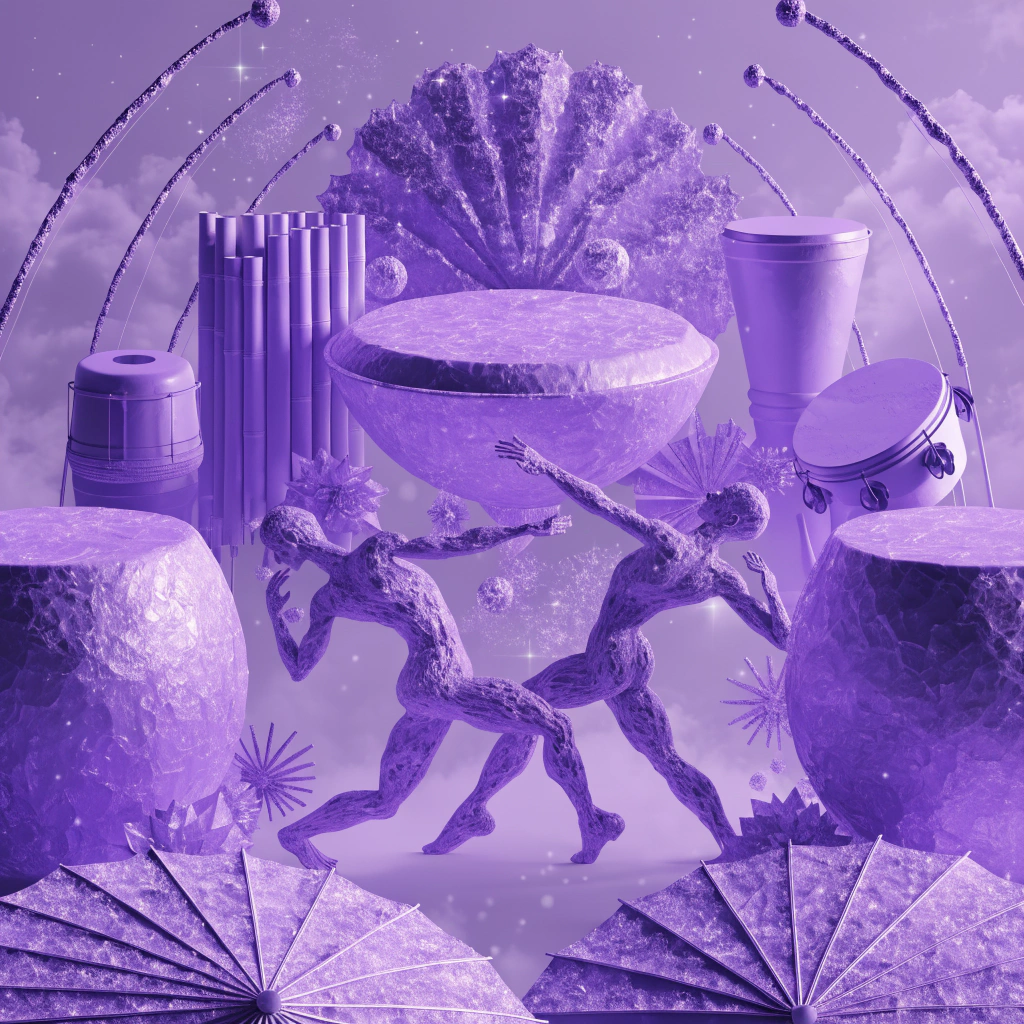
The Capoeira Circle in Brazil
Capoeira is a special dance from Brazil. People make a big circle. This is a 'Roda'. Two people go inside the circle. They play a game. They move their bodies very fast. They jump and kick. It looks like a fight, but it is a dance. There is music too. People play instruments like the berimbau. Capoeira is very old. It is about history and freedom. Today, many people learn capoeira in schools. It is fun and healthy for everyone. It is a beautiful part of Brazil.
Grammar Spotlight
Pattern: Present Simple (Positive)
"People make a big circle."
We use the base form of the verb with plural subjects like 'people'. This talks about facts or regular actions.
Pattern: Subject + 'is' + Adjective
"It is fun and healthy for everyone."
We use 'is' with 'it' to describe something. Adjectives like 'fun' tell us more about the subject.
Test Your Understanding
10 questions · A1 Beginner · 1 free preview
Test what you learned from this article. Answer all questions to earn XP!
Where is Capoeira from?
Want to finish the quiz?
9 more questions are waiting for you. Sign up free to unlock the full quiz and earn XP!
Sign Up FreeAlready have an account? Sign In
Question Breakdown
Where is Capoeira from?
Your answer:
Correct answer: Brazil
Capoeira is only a fight and not a dance.
Your answer:
Correct answer: False
What does 'dance' mean?
Your answer:
Correct answer: Moving to music
People play _____ like the berimbau.
Your answer:
Correct answer: instruments
The Magic of the Capoeira Circle
Capoeira is a famous sport and dance from Brazil. It started many years ago. Enslaved people from Africa created it. They needed to defend themselves, but they had to be careful. Because of this, they made it look like a dance. It was a clever way to practice fighting.
Today, people practice capoeira in a circle called a 'Roda'. Two people go into the middle of the circle. They move their bodies very fast. They use their legs to kick, but they do not usually hit each other. It is faster and more exciting than many other sports. It looks like an acrobatic show.
Music is the most important part of the circle. People play drums and sing loud songs. Everyone in the circle claps their hands to the rhythm. Capoeira is now more popular than in the past. People all over the world love it because it is a beautiful part of Brazilian culture.
Grammar Spotlight
Pattern: Past Simple
"Enslaved people from Africa created it."
The past simple is used for finished actions in the past. We usually form it by adding '-ed' to the end of regular verbs.
Pattern: Comparatives
"It is faster and more exciting than many other sports."
We use comparatives to compare two things. Add '-er' to short adjectives like 'fast' and use 'more' before long adjectives like 'exciting'.
Test Your Understanding
11 questions · A2 Elementary · 1 free preview
Test what you learned from this article. Answer all questions to earn XP!
Where does Capoeira come from?
Want to finish the quiz?
10 more questions are waiting for you. Sign up free to unlock the full quiz and earn XP!
Sign Up FreeAlready have an account? Sign In
Question Breakdown
Where does Capoeira come from?
Your answer:
Correct answer: Brazil
Capoeira started as a way for people to defend themselves.
Your answer:
Correct answer: True
What does 'clever' mean?
Your answer:
Correct answer: Smart or intelligent
People play _____ and sing loud songs during the Roda.
Your answer:
Correct answer: drums
Why did people make Capoeira look like a dance?
Your answer:
Correct answer: Because they wanted to be careful and hide their training
The Magic of the Capoeira Circle
The Capoeira Circle, known as the 'Roda de Capoeira', is a unique cultural tradition from Brazil. It is more than just a sport; it is a combination of music, ritual, and self-defense. This art form was developed by enslaved Africans who wanted to protect themselves without their masters knowing. Therefore, they disguised their fighting techniques as a dance to hide them from colonial oppression.
Today, the practice has become a powerful symbol of resistance and freedom. A typical session takes place inside a human circle where participants sing and play instruments. The most important instrument is the berimbau, which is a bow-shaped wooden stick. While the music plays, two people enter the center to perform a simulated fight. They must follow the rhythm of the music to decide the speed of their movements.
The movements in Capoeira are fluid and acrobatic. Instead of hitting each other, the players use kicks and sweeps that are controlled and graceful. This requires great balance and strength. Because the players do not actually want to hurt each other, the game looks like a beautiful conversation between two bodies.
In recent years, Capoeira has been recognized by UNESCO as an important part of world heritage. It has spread to many countries, and people of all ages now enjoy learning this Brazilian art. Through its history and energy, the Capoeira Circle continues to teach us about the importance of community and respect.
Grammar Spotlight
Pattern: Passive Voice
"This art form was developed by enslaved Africans..."
The passive voice is used here because the focus is on the 'art form' rather than the specific people. It is formed using 'was/were' + the past participle.
Pattern: Relative Clauses
"The most important instrument is the berimbau, which is a bow-shaped wooden stick."
A relative clause starting with 'which' provides extra information about the noun before it. It helps to combine two sentences into one more complex sentence.
Test Your Understanding
11 questions · B1 Intermediate · 1 free preview
Test what you learned from this article. Answer all questions to earn XP!
Why did enslaved Africans disguise Capoeira as a dance?
Want to finish the quiz?
10 more questions are waiting for you. Sign up free to unlock the full quiz and earn XP!
Sign Up FreeAlready have an account? Sign In
Question Breakdown
Why did enslaved Africans disguise Capoeira as a dance?
Your answer:
Correct answer: To hide their self-defense training from their masters
The players in a Capoeira circle usually try to hurt each other with strong hits.
Your answer:
Correct answer: False
What does the word 'fluid' mean in the context of the article?
Your answer:
Correct answer: Moving in a smooth and graceful way
Capoeira has been recognized by _____ as an important part of world heritage.
Your answer:
Correct answer: UNESCO
What determines the speed of the players' movements?
Your answer:
Correct answer: The rhythm of the music
The Roda de Capoeira: A Symphony of Resistance and Movement
The Capoeira Circle, known in Brazil as the Roda de Capoeira, represents a multifaceted cultural expression that seamlessly integrates sport, ritual, music, and theatrical performance. Originating in the 17th century, it was developed by enslaved Africans as a sophisticated method of self-defense. Crucially, these techniques were disguised as a dance to evade the suspicion of colonial authorities. Consequently, Capoeira became a powerful symbol of resistance against systemic oppression and a means for practitioners to reclaim their cultural identity through physical movement.
The practice occurs within a human circle, formed by other capoeiristas who provide the rhythmic foundation through clapping and singing. At the heart of the Roda, two participants engage in a simulated combat characterized by acrobatic movements, fluid sweeps, and strategic kicks. Unlike traditional martial arts, the objective is not to strike the opponent but to demonstrate physical mastery and cleverness. The movements are remarkably fluid, requiring both strength and coordination to maintain the flow of the 'game'. Furthermore, the philosophy of the Roda emphasizes 'malícia'—a term referring to the wit and deception used to outsmart an opponent. This intellectual aspect is just as vital as the physical prowess displayed.
Music plays an instrumental role in the Roda. The berimbau, a single-stringed percussion instrument, dictates the tempo and style of the interaction. Depending on the rhythm, the players may move slowly and cautiously or engage in a rapid, high-energy exchange. This musical element ensures that the Roda remains a communal experience, where the energy of the crowd directly influences the performance of the two individuals in the center. Every gesture is a question and every evasion is an answer, creating a dialogue of bodies.
Despite being outlawed for many years during the 19th century, the tradition survived underground and eventually gained legal recognition. In the modern era, Capoeira has transcended its Brazilian roots to become a global phenomenon. In 2014, UNESCO granted the Roda de Capoeira 'Intangible Cultural Heritage' status, highlighting its importance in the preservation of social memory and the promotion of mutual respect. Today, it serves as a testament to the resilience of the human spirit, teaching practitioners the value of dialogue over conflict and the importance of community solidarity.
Grammar Spotlight
Pattern: Passive Voice
"Crucially, these techniques were disguised as a dance to evade the suspicion of colonial authorities."
The passive voice is used here because the action (disguising) is more important than the specific people doing it. It is formed using 'were' + the past participle 'disguised'.
Pattern: Relative Clauses
"This musical element ensures that the Roda remains a communal experience, where the energy of the crowd directly influences the performance..."
The relative adverb 'where' introduces a clause that provides more information about the 'communal experience'. This adds complexity and detail to the sentence structure.
Pattern: Concessive Clauses with 'Despite'
"Despite being outlawed for many years during the 19th century, the tradition survived underground."
The word 'despite' is used to show contrast or unexpected results. It is followed by a gerund ('being') to link the historical ban with the survival of the art form.
Test Your Understanding
11 questions · B2 Upper Intermediate · 1 free preview
Test what you learned from this article. Answer all questions to earn XP!
Why did enslaved Africans disguise Capoeira as a dance?
Want to finish the quiz?
10 more questions are waiting for you. Sign up free to unlock the full quiz and earn XP!
Sign Up FreeAlready have an account? Sign In
Question Breakdown
Why did enslaved Africans disguise Capoeira as a dance?
Your answer:
Correct answer: To avoid being caught practicing combat by authorities
The primary goal of the Roda is to physically injure the opponent.
Your answer:
Correct answer: False
What does 'multifaceted' mean in the context of the article?
Your answer:
Correct answer: Having many different aspects or parts
The _____ is a single-stringed instrument that controls the speed of the Capoeira match.
Your answer:
Correct answer: berimbau
What status did UNESCO give to the Roda de Capoeira in 2014?
Your answer:
Correct answer: Intangible Cultural Heritage
The Roda de Capoeira: A Choreographed Defiance of Colonial Hegemony
The Roda de Capoeira stands not merely as a spectacle of physical prowess but as a sophisticated socio-historical manifestation of Brazilian identity. Emerging from the crucible of the transatlantic slave trade, this multifaceted discipline represents a synthesis of West African traditions adapted to the harsh realities of colonial subjugation. Seldom has a cultural practice embodied such a profound synthesis of artistic expression and tactical subversion as the Capoeira circle. By weaving together elements of dance, acrobatics, and ritual, the enslaved population developed a unique mechanism for both physical defense and psychological liberation.
Historically, the practice served as a clandestine method of self-defense for the marginalized. By camouflaging combat techniques within the rhythmic structures of dance and music, practitioners could sharpen their skills under the very eyes of their oppressors. What the Portuguese authorities perceived as innocuous leisure was, in fact, a rigorous preparation for resistance. This clever juxtaposition of beauty and lethality remains central to the Roda's philosophy today, where the intent of a strike is often masked by the elegance of a transition. The constant motion, or 'ginga', ensures that the capoeirista remains an elusive target, reflecting the historical necessity of being unpredictable in the face of overwhelming power.
The Roda itself is a human ring, a symbolic space where the berimbau—a single-stringed percussion instrument—dictates the tempo and style of the engagement. It is through the rhythmic pulse of the berimbau that the 'capoeiristas' understand the required intensity of their interaction. The circle is not merely a boundary but a communal support system, where the singing and clapping of the participants provide the energy required for the two players in the center. The movements are characterized by fluidity and 'malícia', a term denoting a strategic cunning that prioritizes evasion and psychological advantage over brute force. The interaction is less a duel and more a physical dialogue, where each kick or sweep is a question demanding a sophisticated response.
The 20th century witnessed the institutionalization of Capoeira, transitioning it from a criminalized activity of the urban poor to a celebrated pillar of Brazilian heritage. However, this transition has prompted critical analysis regarding the potential dilution of its subversive roots. While its inclusion on UNESCO’s Intangible Cultural Heritage list ensures preservation, some scholars argue that the commercialization of the Roda risks stripping away its visceral connection to social struggle. The tension between maintaining the raw, combative essence of the practice and its adaptation for global consumption remains a point of intense debate within the community.
Ultimately, the Roda de Capoeira serves as a didactic tool, teaching practitioners about the nuances of power, balance, and community. It remains a testament to the resilience of the human spirit, illustrating how creativity can be forged in the fires of oppression to create something of enduring beauty and cultural significance. Whether viewed as a sport, a dance, or a ritual, the Roda continues to challenge hegemony, reminding us that movement can be a form of speech for those who were once silenced.
Grammar Spotlight
Pattern: Negative Inversion
"Seldom has a cultural practice embodied such a profound synthesis of artistic expression and tactical subversion as the Capoeira circle."
When using negative or restrictive adverbs like 'seldom' at the start of a sentence for emphasis, the auxiliary verb is placed before the subject.
Pattern: Cleft Sentences
"It is through the rhythmic pulse of the berimbau that the 'capoeiristas' understand the required intensity of their interaction."
Cleft sentences (It is + [noun phrase] + that...) are used to focus on specific information, in this case, emphasizing the role of the berimbau.
Pattern: Nominalisation
"The 20th century witnessed the institutionalization of Capoeira."
Nominalisation involves turning verbs or adjectives into nouns (e.g., 'institutionalize' becomes 'institutionalization') to create a more formal, academic tone typical of C1 writing.
Test Your Understanding
12 questions · C1 Advanced · 1 free preview
Test what you learned from this article. Answer all questions to earn XP!
What was the primary reason for camouflaging Capoeira as a dance?
Want to finish the quiz?
11 more questions are waiting for you. Sign up free to unlock the full quiz and earn XP!
Sign Up FreeAlready have an account? Sign In
Question Breakdown
What was the primary reason for camouflaging Capoeira as a dance?
Your answer:
Correct answer: To hide combat training from oppressors
The berimbau is used only for background music and does not influence the speed of the movements.
Your answer:
Correct answer: False
What does 'malícia' refer to in the context of the Roda?
Your answer:
Correct answer: Strategic cunning
_____ has a cultural practice embodied such a profound synthesis of art and subversion.
Your answer:
Correct answer: Seldom
Which of the following describes a concern regarding the modern status of Capoeira?
Your answer:
Correct answer: Commercialization might dilute its historical connection to struggle
Capoeira was historically a criminalized activity in Brazil.
Your answer:
Correct answer: True
The Hermeneutics of the Roda: Capoeira as a Subversive Choreography of Resistance
To observe the Roda de Capoeira is to witness a profound socio-historical palimpsest, wherein layers of resistance, spirituality, and rhythmic sophistication coalesce into a singular, kinetic narrative. Emerging from the harrowing crucible of the transatlantic slave trade, Capoeira was initially conceived not merely as a pastime, but as a strategic subterfuge—a lethal martial art camouflaged beneath the guise of an innocuous dance. Were one to scrutinize the interplay between the 'capoeiristas' within the circle, it would become ostensibly clear that the 'ginga'—the fundamental rocking movement—serves as an epistemological foundation for a broader philosophy of survival. It is an axiomatic truth within the community that the Roda is not merely a physical space but a sacred microcosm where the power dynamics of the outside world are momentarily suspended and inverted.
Central to this practice is the concept of 'mandinga', a term that defies simplistic translation but encompasses a blend of cunning, spiritual protection, and expressive flair. The mandingueiro does not merely strike; they deceive, using fluid acrobatics and feints to destabilize their opponent's equilibrium. This reliance on stratagem over brute force reflects the historical necessity for the enslaved to outmaneuver their oppressors through wit rather than direct confrontation. Seldom has a cultural manifestation so effectively weaponized aesthetics to preserve the dignity of a marginalized collective. The music, anchored by the resonant vibrations of the berimbau, acts as the ontological heartbeat of the Roda, dictating the tempo and the very nature of the engagement. Should the rhythm accelerate, the movements must follow suit, transitioning from a playful dialogue to a more confrontational, albeit still ritualized, combat.
Furthermore, the Roda functions as a syncretic vessel, preserving West African traditions while evolving within the specific socio-political landscape of Brazil. It is imperative that the practitioner remain attuned not only to their opponent but to the collective energy of the surrounding circle. This communal participation ensures that the Roda remains an indefatigable symbol of solidarity. Despite centuries of criminalization and systemic marginalization, Capoeira has ascended to the status of a global paradigm for cultural resilience, eventually being recognized as UNESCO Intangible Cultural Heritage. This transition from a clandestine vestige of rebellion to a celebrated national treasure illustrates the shifting sands of Brazilian hegemony. However, one might venture to suggest that the true essence of Capoeira remains rooted in its inherent subversiveness, forever challenging the observer to look beyond the surface level of the performance.
In contemporary discourse, the Roda is often analyzed through a post-colonial lens, highlighting how it serves as a site of decolonial praxis. The practitioners embody a history that was once suppressed, reclaiming their bodily autonomy through every sweep and kick. It is not merely a dance, nor is it strictly a sport; it is an enduring testament to the human spirit's capacity to transform oppression into art. As the berimbau falls silent and the circle disperses, the echoes of the 'ladainha'—the introductory litany—linger, reminding us that the Roda is a living archive, a bridge between a traumatic past and a liberated future. Thus, the Roda de Capoeira stands as a monumental achievement in human culture, a sophisticated synthesis of movement and meaning that continues to resonate across the globe.
Grammar Spotlight
Pattern: Inverted Conditional (Subjunctive)
"Were one to scrutinize the interplay between the 'capoeiristas' within the circle, it would become ostensibly clear..."
This formal structure replaces 'If one were to...' by inverting the subject and verb. It is used in C2 English to express hypothetical situations with a high degree of formality and theoretical distance.
Pattern: Negative Inversion
"Seldom has a cultural manifestation so effectively weaponized aesthetics to preserve the dignity of a marginalized collective."
When an adverb with a negative or restrictive meaning (like 'seldom') starts a sentence, the auxiliary verb comes before the subject. This creates a rhetorical, emphatic effect common in scholarly writing.
Pattern: Subjunctive Mood with 'Imperative'
"It is imperative that the practitioner remain attuned not only to their opponent but to the collective energy..."
After adjectives expressing necessity (imperative, crucial, essential), the base form of the verb ('remain' instead of 'remains') is used in the 'that' clause, regardless of the subject.
Test Your Understanding
12 questions · C2 Mastery · 1 free preview
Test what you learned from this article. Answer all questions to earn XP!
What does the author suggest by calling Capoeira a 'socio-historical palimpsest'?
Want to finish the quiz?
11 more questions are waiting for you. Sign up free to unlock the full quiz and earn XP!
Sign Up FreeAlready have an account? Sign In
Question Breakdown
What does the author suggest by calling Capoeira a 'socio-historical palimpsest'?
Your answer:
Correct answer: It contains layers of history that are still visible through its current form.
The article states that Capoeira was always recognized as a national treasure in Brazil.
Your answer:
Correct answer: False
What does 'stratagem' mean in the context of the Roda?
Your answer:
Correct answer: A clever plan to outwit an opponent
Capoeira was initially conceived as a strategic _____, hiding a martial art as a dance.
Your answer:
Correct answer: subterfuge
According to the text, what role does the berimbau play?
Your answer:
Correct answer: It serves as the ontological heartbeat, controlling the tempo and nature of the fight.
The text argues that 'mandinga' is a simple concept that is easily translated into other languages.
Your answer:
Correct answer: False
