









enhydro in 30 Sekunden
- A geological specimen containing trapped ancient water or fluid.
- Commonly found in quartz, agate, or chalcedony crystals.
- Features a characteristic 'moving bubble' visible when tilted.
- Valued by scientists for paleoclimate data and by collectors for rarity.
The term enhydro refers to a fascinating geological phenomenon where a bubble of liquid—most commonly water, but sometimes petroleum or methane—becomes permanently trapped within a mineral as it crystallizes. This process typically occurs over millions of years, effectively creating a microscopic time capsule of the Earth's ancient atmosphere and hydrosphere. When you hold an enhydro agate or quartz, you are literally holding water that may have fallen as rain during the era of the dinosaurs. This word is primarily used in the fields of mineralogy, geology, and gemology, but it has also found a significant niche in the metaphysical and holistic healing communities where these stones are prized for their perceived connection to emotional fluidity and ancient wisdom.
- Scientific Classification
- In strict geological terms, an enhydro is a type of fluid inclusion. However, the term is specifically reserved for larger, visible pockets of water within chalcedony, agate, or quartz, rather than the microscopic inclusions found in many other minerals.
The geologist carefully tilted the specimen to observe the moving bubble within the enhydro quartz, noting that the water had remained sealed for over fifty million years.
The formation of an enhydro occurs when silica-rich water seeps into cavities in volcanic rock. As the mineral walls grow inward, they sometimes seal off a portion of the fluid. Because the surrounding rock is often porous, the water can actually evaporate over centuries if the stone is kept in a dry environment, which is why collectors often store them in water or high-humidity containers. This vulnerability adds a layer of 'living' quality to the stone, making it a dynamic object of study rather than a static piece of rock.
- Market Value
- The value of an enhydro is determined by the clarity of the crystal, the size of the water pocket, and the visibility of the bubble's movement. Specimens from Brazil and Madagascar are particularly sought after by high-end collectors.
Collectors often pay a premium for an enhydro that features multiple moving bubbles, as these are exceptionally rare in the natural world.
In a broader sense, the word evokes a sense of preservation and isolation. It is used in academic papers discussing paleohydrology to describe the chemical composition of the trapped fluids, which provide clues about the Earth's climate at the time of the crystal's formation. Outside of science, poets and writers might use 'enhydro' as a metaphor for a preserved memory or a hidden truth that remains fluid and 'alive' despite being encased in a hard, unchanging exterior.
Her heart was like an enhydro, a cold and stony surface protecting a small, ancient reservoir of tears that refused to dry up.
- Etymological Roots
- Derived from the Greek 'en' (within) and 'hydor' (water), the word literally translates to 'water within.' This simple etymology belies the complex geological processes required to create such a specimen.
The museum's latest acquisition is a massive enhydro geode, weighing over ten kilograms and containing nearly a deciliter of prehistoric water.
During the lecture, the professor explained that an enhydro is essentially a closed system, making it a perfect subject for isotopic analysis.
Using the word enhydro correctly requires an understanding of its role as both a noun and, occasionally, an attributive adjective. In most professional and hobbyist contexts, it functions as a noun referring to the specimen itself. For example, one might say, 'I bought a rare enhydro at the gem show.' When used as an adjective, it modifies the type of mineral, such as 'enhydro quartz' or 'enhydro agate.' It is important to distinguish between the stone and the inclusion; the enhydro is the entire object containing the fluid.
The jeweler chose an enhydro chalcedony for the pendant, ensuring the water bubble was visible through the polished surface.
In scientific writing, the term is often paired with verbs like 'encapsulate,' 'contain,' 'exhibit,' or 'analyze.' Because enhydros are geological anomalies, they are frequently the subject of passive constructions in academic papers, such as 'The fluid was found to be enhydro in nature,' though this is less common than using the noun form. When describing the movement of the bubble, words like 'motile,' 'buoyant,' or 'trapped' are excellent companions.
- Sentence Pattern: The [Adjective] Enhydro
- 'The pristine enhydro sat atop the velvet cushion, its internal bubble dancing with every slight vibration of the room.'
By studying the enhydro, researchers were able to determine the salinity of the groundwater from the Cretaceous period.
In more creative or metaphorical contexts, enhydro can be used to describe anything that preserves a liquid or fluid state within a solid shell. This could be a culinary description of a chocolate with a liquid center, though this is a highly stylized and non-standard use. More effectively, it describes emotional states: 'His stoicism was merely an enhydro for a deep well of grief.' Here, the word provides a sophisticated alternative to 'container' or 'vessel,' emphasizing the ancient and trapped nature of the contents.
The child was mesmerized by the enhydro, shaking the rock gently to watch the prehistoric bubble rise and fall.
- Technical Usage
- 'The presence of an enhydro inclusion suggests that the host crystal formed in a low-temperature hydrothermal environment.'
While most agates are solid, the enhydro variety remains a prized exception due to its aqueous core.
Finally, when discussing the care of these stones, the word is often used in instructional contexts. 'To prevent your enhydro from drying out, keep it away from radiators.' This usage highlights the unique physical properties of the object—it is a rock that requires 'hydration' or at least the prevention of dehydration, a paradox that makes the word particularly evocative in descriptive prose.
She kept her enhydro collection in a humidified display case to preserve the integrity of the ancient fluids.
You are most likely to encounter the word enhydro in specialized environments. The first and most obvious is a gem and mineral show. Vendors from around the world display these 'water stones,' and the air is often filled with the word as collectors haggle over the clarity of a bubble in a piece of Brazilian enhydro quartz. In this setting, the word is spoken with a sense of wonder and technical appreciation. You might hear a dealer say, 'This enhydro has a three-phase inclusion,' referring to the presence of a solid, liquid, and gas all within the same pocket.
'Look at the movement in this enhydro!' the enthusiast exclaimed, pointing to a tiny, shimmering bubble.
In academic settings, specifically within geology departments and research laboratories, enhydro is used during discussions on fluid inclusions and mineral formation. Professors use it to illustrate how minerals can trap environmental data. You might hear it in a lecture about the 'paragenesis' of quartz, where the enhydro serves as a primary piece of evidence for the temperature and pressure conditions at the time of crystallization. Here, the tone is clinical and analytical.
- Metaphysical Circles
- In New Age shops and crystal healing workshops, 'enhydro' is a buzzword. It is often associated with the heart chakra and emotional cleansing. Practitioners might speak of the 'enhydro's energy' being particularly soothing because of its ancient water content.
The meditation guide suggested holding an enhydro to connect with the primordial waters of the Earth.
Museums and natural history exhibits are another common venue. Labels on display cases often use the term to explain the unique nature of a specimen. 'Enhydro Agate: Note the trapped water bubble,' is a standard sign. In this context, the word serves an educational purpose, bridging the gap between complex geology and public curiosity. It is a word that invites people to look closer, to squint at a piece of rock until they see the miracle of liquid trapped in stone.
The documentary narrator described the enhydro as a 'geological time capsule' that held secrets of the ancient oceans.
Lastly, you might encounter the word in high-end jewelry design. Modern lapidaries (stone cutters) sometimes create 'window' cuts in agates specifically to showcase an enhydro bubble. In a luxury boutique, a salesperson might use the word to justify the high price of a piece, emphasizing its rarity and the fact that the water inside is millions of years old. In this world, 'enhydro' is synonymous with 'exclusive' and 'natural wonder.'
The designer featured a raw enhydro in the centerpiece of the necklace, allowing the wearer to feel the movement of the ancient fluid.
One of the most frequent mistakes people make with the word enhydro is confusing it with the adjective anhydrous. While they share a root ('hydor'), they are opposites in meaning. Anhydrous means 'without water,' often referring to a chemical substance that has had all water removed. In contrast, an enhydro is defined by the presence of water. Using 'anhydrous' when you mean 'enhydro' would lead to a complete reversal of your intended meaning, which could be particularly embarrassing in a scientific or technical context.
- Confusion with 'Hydro'
- Many learners assume 'enhydro' is just a fancy way of saying 'hydrated.' However, hydration refers to the chemical bonding of water to a substance, whereas an enhydro is a physical trapping of liquid water in a cavity. A hydrated mineral (like gypsum) doesn't have a moving bubble; an enhydro does.
Incorrect: 'The chemist analyzed the enhydro powder.' (Powder cannot be an enhydro; it would be 'hydrated' or 'aqueous').
Another common error is misidentifying any geode as an enhydro. While many enhydros are geodes, not all geodes are enhydros. A geode is simply a hollow rock with crystals inside. It only becomes an enhydro if it contains trapped liquid. Calling a dry amethyst geode an 'enhydro' is a factual error that will be quickly corrected by any mineralogist. Similarly, confusing 'enhydro' with 'inclusion' is a mistake of specificity. All enhydros are inclusions, but not all inclusions (like needles of rutile or flecks of carbon) are enhydros.
Correct: 'The enhydro is a specific type of fluid inclusion found in chalcedony.'
In terms of pronunciation, some people stress the wrong syllable. The correct stress is on the second syllable: en-HY-dro. Pronouncing it as EN-hy-dro can make it sound like a brand name or a different technical term. Furthermore, in writing, people often forget that 'enhydro' is a noun. They might try to use it as a verb ('the rock enhydroed the water'), which is non-standard and confusing. Stick to using it as a noun or an adjective modifying a mineral name.
- Misuse in Metaphor
- When using the word metaphorically, ensure the 'trapped' and 'ancient' qualities are relevant. Calling a modern water bottle an 'enhydro' is technically incorrect and loses the poetic weight of the word, which implies a natural, long-term geological process.
Avoid: 'The enhydro of the swimming pool.' (This is nonsensical; use 'basin' or 'enclosure').
While enhydro is a very specific term, there are several related words that you might use depending on the context. The most scientifically accurate alternative is fluid inclusion. This is a broader category that includes microscopic pockets of gas or liquid in any mineral. If you are writing a technical paper, 'fluid inclusion' is often preferred for its precision, while 'enhydro' is used for larger, visible examples in quartz or agate.
- Enhydro vs. Geode
- A geode is a hollow rock lined with crystals. An enhydro is a geode (or similar structure) that specifically contains water. You can have a dry geode, but you cannot have a dry enhydro.
- Enhydro vs. Vug
- A 'vug' is a small to medium-sized cavity in a rock, often lined with crystals. If that vug is sealed and contains water, it becomes an enhydro. 'Vug' refers to the space; 'enhydro' refers to the water-filled state.
The researcher compared the enhydro to other fluid inclusions to map the hydrothermal history of the region.
Another related term is vuggy quartz. This describes quartz that is full of small cavities. While not all vugs contain water, the term is often used in the same breath as enhydro when describing the texture of a specimen. In the gem trade, you might also hear the term manifestation crystal. This is a metaphysical term for a crystal that has another smaller crystal growing inside it. While different from an enhydro (which contains liquid), they are often sold to the same collectors who appreciate 'crystals within crystals.'
Unlike a standard inclusion, an enhydro provides a dynamic visual element due to the moving bubble.
For those looking for more poetic alternatives, aqueous capsule or lithic reservoir could work, though they are not standard terms. These phrases emphasize the protective and storage aspects of the enhydro. In literature, one might describe an enhydro as a 'stone heart' or a 'fossilized tear,' though these are purely artistic and should be avoided in any factual description. Ultimately, 'enhydro' remains the most effective and recognized term for this specific natural marvel.
- Enhydro vs. Chalcedony
- Chalcedony is the mineral (a form of silica). Enhydro is the condition of having water inside. Most enhydros are made of chalcedony, but not all chalcedony is enhydro.
The museum display showcased both dry geodes and rare enhydros to illustrate different stages of mineral formation.
How Formal Is It?
Wusstest du?
The term was once used in ancient medicine to describe certain types of internal fluids before it became strictly a geological term.
Aussprachehilfe
- Pronouncing it as EN-hy-dro (stressing the first syllable).
- Confusing the 'hy' sound with 'hee' (en-HEE-dro).
- Adding an 's' to the end in the singular (enhydros).
Schwierigkeitsgrad
Requires knowledge of geological terms and Greek roots.
Difficult to spell and use correctly without context.
Pronunciation is tricky but follows logical rules.
Can be confused with 'hydro' or 'anhydrous' in fast speech.
Was du als Nächstes lernen solltest
Voraussetzungen
Als Nächstes lernen
Fortgeschritten
Wichtige Grammatik
Using 'an' before vowels
An enhydro (Correct) vs A enhydro (Incorrect).
Countable vs Uncountable
I have three enhydros (Countable).
Attributive Nouns
The enhydro agate (Enhydro acts as an adjective).
Passive Voice in Science
The enhydro was discovered in 1920.
Relative Clauses
The enhydro, which contains water, is rare.
Beispiele nach Niveau
I saw a rock called an enhydro today.
I saw a [water-rock] today.
Uses 'an' before 'enhydro' because it starts with a vowel sound.
The enhydro has water inside it.
The [water-rock] has water inside.
Simple subject-verb-object structure.
Look at the bubble in the enhydro!
Look at the bubble in the [water-rock]!
Imperative sentence using 'look'.
This enhydro is very old.
This [water-rock] is very old.
Adjective 'old' describes the noun 'enhydro'.
Can I touch the enhydro?
Can I touch the [water-rock]?
Question form using 'can'.
The enhydro is from Brazil.
The [water-rock] is from Brazil.
Prepositional phrase 'from Brazil'.
The water in the enhydro moves.
The water in the [water-rock] moves.
Present simple tense for a general fact.
It is a beautiful enhydro.
It is a beautiful [water-rock].
Adjective 'beautiful' precedes the noun.
The scientist found an enhydro in the cave.
The scientist found a [trapped-water-stone] in the cave.
Past simple tense 'found'.
You can see the bubble move inside the enhydro.
You can see the bubble move inside the [trapped-water-stone].
Use of 'can' for ability/possibility.
An enhydro is a rock with a secret.
An [enhydro] is a rock with a secret.
Metaphorical description.
Collectors buy enhydros at the market.
Collectors buy [enhydros] at the market.
Plural form 'enhydros'.
The water inside the enhydro is very clean.
The water inside the [enhydro] is very clean.
Adjective 'clean' modifying 'water'.
Don't drop the enhydro because it might break.
Don't drop the [enhydro] because it might break.
Negative imperative 'don't drop'.
The enhydro agate is very heavy.
The [enhydro] agate is very heavy.
Compound noun 'enhydro agate'.
My teacher showed us a real enhydro.
My teacher showed us a real [enhydro].
Indirect object 'us' and direct object 'enhydro'.
An enhydro contains water that was trapped millions of years ago.
An [enhydro] contains water that was [caught] millions of years ago.
Relative clause 'that was trapped...'
If you heat an enhydro, the internal pressure will increase.
If you heat an [enhydro], the [inside] pressure will increase.
First conditional structure.
The most valuable enhydros have large, clear bubbles.
The most [expensive] [enhydros] have large, clear bubbles.
Superlative 'the most valuable'.
She decided to buy the enhydro because of its unique appearance.
She decided to buy the [enhydro] because of its [special] appearance.
Reason clause using 'because of'.
The bubble in the enhydro acts like a natural level.
The bubble in the [enhydro] [works] like a natural level.
Simile using 'acts like'.
Many enhydros are found in volcanic rocks in Brazil.
Many [enhydros] are found in [lava] rocks in Brazil.
Passive voice 'are found'.
You should store your enhydro in a cool, damp place.
You should [keep] your [enhydro] in a cool, damp place.
Modal verb 'should' for advice.
The geologist explained how the enhydro was formed.
The geologist explained how the [enhydro] was [made].
Noun clause 'how the enhydro was formed'.
The enhydro is essentially a prehistoric time capsule of the Earth's water.
The [enhydro] is [basically] a prehistoric time capsule...
Adverb 'essentially' modifying the verb 'is'.
Unlike microscopic inclusions, an enhydro features a visible pocket of fluid.
Unlike [tiny] inclusions, an [enhydro] [shows] a visible pocket...
Contrastive preposition 'unlike'.
The integrity of the enhydro depends on the porosity of the surrounding mineral.
The [strength] of the [enhydro] depends on the [holes] of the mineral.
Verb 'depends on' followed by a noun phrase.
Researchers analyzed the gas within the enhydro to study the ancient atmosphere.
Researchers [studied] the gas within the [enhydro] to study the ancient [air].
Infinitive of purpose 'to study'.
The movement of the bubble within the enhydro is caused by gravity.
The movement of the bubble within the [enhydro] is [due to] gravity.
Passive construction 'is caused by'.
An enhydro agate can lose its water over time if kept in a dry environment.
An [enhydro] agate can [lose] its water... if kept in a dry [place].
Conditional 'if' clause with a past participle.
The jeweler polished the enhydro to reveal the internal water pocket.
The jeweler [shined] the [enhydro] to [show] the internal water pocket.
Transitive verb 'polished' with a direct object.
While common in quartz, an enhydro is much rarer in other minerals.
[Although] common in quartz, an [enhydro] is much [more rare]...
Concessive clause starting with 'while'.
The isotopic signature of the water in the enhydro provided clues about the paleoclimate.
The [chemical mark] of the water in the [enhydro] provided clues...
Complex noun phrase as the subject.
The specimen was identified as a true enhydro rather than a synthetic imitation.
The [sample] was identified as a [real] [enhydro] rather than a [fake]...
Passive voice with 'rather than' for contrast.
Fluctuations in temperature can cause the enhydro's host crystal to fracture.
[Changes] in temperature can cause the [enhydro's] [main] crystal to [break].
Possessive form 'enhydro's'.
The enhydro's fluid inclusion remained pristine due to the impermeable nature of the quartz.
The [enhydro's] fluid [pocket] remained [perfect] due to the [solid] nature...
Adjective 'impermeable' describing 'nature'.
Artisans often create a 'window' in the stone to accentuate the enhydro's bubble.
Artisans often [make] a 'window' in the stone to [highlight] the bubble.
Verb 'accentuate' meaning to make more noticeable.
The discovery of an enhydro in such a remote region was geologically significant.
The [finding] of an [enhydro] in such a [far] region was [important].
Adverb 'geologically' modifying 'significant'.
The enhydro's internal cavity was partially filled with a saline solution.
The [enhydro's] internal [hole] was [partly] filled with a [salty] solution.
Adverb 'partially' modifying the participle 'filled'.
The presence of an enhydro suggests a low-temperature hydrothermal formation environment.
The [existence] of an [enhydro] [implies] a low-temperature... environment.
Verb 'suggests' followed by a complex noun phrase.
The enhydro serves as a quintessential example of primary fluid sequestration in silicate minerals.
The [enhydro] [is] a [perfect] example of [early] fluid [trapping]...
Use of 'quintessential' and 'sequestration' for high-level register.
Analysis of the enhydro's aqueous phase revealed trace amounts of primordial methane.
Analysis of the [enhydro's] [water part] revealed [tiny] amounts of [ancient] methane.
Technical term 'aqueous phase'.
The specimen's value was diminished by the gradual transpiration of its enhydro pocket.
The [sample's] value was [lowered] by the [slow leaking] of its [enhydro] pocket.
Passive voice 'was diminished' and technical term 'transpiration'.
The enhydro's bubble exhibited a remarkable degree of motility within its chalcedonic prison.
The [enhydro's] bubble [showed] a [high] degree of [movement]...
Metaphorical use of 'prison' and technical 'motility'.
Geochemical modeling indicates that the enhydro formed under specific barometric conditions.
[Earth-science] modeling [shows] that the [enhydro] formed under [pressure] conditions.
Noun clause 'that the enhydro formed...'.
The enhydro's longevity is a testament to the structural stability of the host geode.
The [enhydro's] [long life] is [proof] of the [strength] of the [rock].
Abstract noun 'longevity' and phrase 'is a testament to'.
The collector specialized in enhydros, meticulously documenting the provenance of each piece.
The collector [focused on] [enhydros], [carefully] [recording] the [origin]...
Participial phrase 'meticulously documenting...'.
The enhydro's fluid, once extracted, provided a snapshot of the Holocene's hydrological cycle.
The [enhydro's] fluid... provided a [look at] the [Holocene's] [water] cycle.
Appositive phrase 'once extracted'.
Häufige Kollokationen
Häufige Phrasen
— A specimen that definitely contains original, moving water.
Is this a true enhydro or just a wet rock?
— The air or gas bubble inside the trapped water.
The enhydro bubble was surprisingly large.
— Water that has been sealed for geological ages.
The enhydro holds ancient water from the Cretaceous.
— A common descriptive name for an enhydro.
She collects moving water stones from all over the world.
— Permanently trapped within a mineral structure.
The fluid was sealed in stone for fifty million years.
— The scientific term for the water in an enhydro.
The primary fluid inclusion was analyzed in the lab.
— An enhydro containing solid, liquid, and gas.
A three-phase enhydro is a rare find for any collector.
— An enhydro that has lost its water (an oxymoron).
Sadly, this old enhydro has become a dry enhydro.
— Often used colloquially to refer to the water in an enhydro.
The crystal water is said to have healing properties.
Wird oft verwechselt mit
Anhydrous means NO water; enhydro means WITH water.
Hydrated is chemically bonded water; enhydro is physically trapped water.
Inclusion is any foreign material; enhydro is specifically a liquid pocket.
Redewendungen & Ausdrücke
— Something that appears hard on the outside but contains something fluid or hidden.
His personality was like an enhydro; cold exterior, but a soft heart within.
Literary— Remaining unchanged while the world moves on.
The enhydro is literally trapped in time.
General— Something fragile protected by something strong.
Their secret was a bubble in stone, safe from the world.
Poetic— Extremely old and well-preserved.
That manuscript is as ancient as an enhydro.
Creative— Finding flexibility in a rigid situation.
He found the fluid within the rock of the corporate rules.
Metaphorical— The most precious or hidden part of something.
To find the truth, you must reach the heart of the enhydro.
Literary— A paradox of internal movement within a static frame.
The enhydro is moving but still, a perfect meditation aid.
Metaphysical— Permanently closed off.
The enhydro's water is sealed for eternity.
Dramatic— Something that allows us to see history directly.
Every enhydro is a window into the past.
Educational— A poetic way to describe the water inside.
She called the enhydros 'the rock's tears'.
PoeticLeicht verwechselbar
Both relate to water.
Hydro is a prefix or slang for hydroelectricity; enhydro is a specific noun for a rock.
We need more hydro power vs I found an enhydro.
Many enhydros are geodes.
A geode is a hollow rock; an enhydro is a rock with liquid inside. Not all geodes have liquid.
This geode is empty, but that one is an enhydro.
Both refer to cavities.
A vug is the hole itself; an enhydro is the water inside the hole.
The crystals grew in a vug vs the water is in the enhydro.
An enhydro is a type of inclusion.
Inclusion is a general term for anything inside a crystal (like dirt or other crystals).
That black spot is a carbon inclusion, but that bubble is an enhydro.
Both hold water underground.
An aquifer is a large underground layer of water-bearing rock; an enhydro is a single small specimen.
The city gets water from an aquifer, not an enhydro.
Satzmuster
This is a [noun].
This is an enhydro.
The [noun] has [noun].
The enhydro has water.
The [noun] contains [noun] that [verb].
The enhydro contains water that moves.
Unlike [noun], the [noun] [verb].
Unlike solid rocks, the enhydro contains liquid.
The [noun] is characterized by [noun phrase].
The enhydro is characterized by its macroscopic fluid inclusion.
The [noun] serves as a [noun phrase] for [noun phrase].
The enhydro serves as a geochemical archive for paleohydrological research.
If [clause], then [clause].
If the enhydro is heated, it will explode.
Because of [noun phrase], [clause].
Because of its trapped water, the enhydro is very valuable.
Wortfamilie
Substantive
Adjektive
Verwandt
So verwendest du es
Rare in general English; common in geology and gemology.
-
Calling any geode an enhydro.
→
Only geodes with trapped liquid are enhydros.
A geode is just a hollow rock. If it's dry, it's just a geode. If it has water, it's an enhydro geode.
-
Spelling it 'inhydro'.
→
Enhydro.
The prefix is the Greek 'en-', not the English 'in-'.
-
Using 'enhydrous' to mean 'enhydro'.
→
An enhydro (noun) or enhydro quartz (adjective).
'Enhydrous' is a rare adjective; 'enhydro' is the standard noun for the specimen.
-
Thinking the water is always pure.
→
The water is often a saline or mineral-rich solution.
Because it formed from mineral-heavy fluids, the water is rarely 'pure' H2O.
-
Assuming the bubble is air.
→
The bubble is often water vapor or other gases like methane.
Since it was sealed deep underground, it's not 'atmosphere' air but geological gases.
Tipps
Prevent Evaporation
Store your enhydro in a small, sealed container with a damp cotton ball to maintain humidity and prevent the ancient water from escaping.
Use a Strong Light
To see the bubble clearly, use a high-lumen flashlight behind the stone. This backlighting will make the bubble's edges pop and its movement easier to track.
Avoid Heat
Never use steam cleaners or ultrasonic cleaners on an enhydro. The heat and vibrations can cause the internal pressure to rise and crack the stone.
Check for Fakes
Be wary of 'enhydros' that look too perfect. Some unscrupulous sellers drill holes, inject water, and seal them with resin. Look for a seamless, natural surface.
Capture the Movement
If you want to photograph an enhydro, take a video instead. The movement of the bubble is its most impressive feature and cannot be captured in a still photo.
Isotopic Signatures
If you are a student, remember that enhydros are used for 'stable isotope analysis' to determine the origin of the water.
Museum Standards
When displaying an enhydro, use a stand that allows the stone to be tilted slightly so visitors can see the bubble without touching the specimen.
Greek Roots
Remember 'En' (In) and 'Hydro' (Water). This will help you never forget the definition of the word.
Meditation
Many people find the slow movement of an enhydro bubble to be a perfect focal point for breath-work and meditation.
Labeling
Always record the location (provenance) where your enhydro was found. This adds significant scientific and resale value to the piece.
Einprägen
Eselsbrücke
Think of 'EN-HY-DRO' as 'ENside HYdration in a ROck'. The 'EN' is for inside, 'HY' for water, and 'RO' for rock.
Visuelle Assoziation
Imagine a clear glass marble with a single drop of water and a tiny bubble inside it. Now imagine that marble is a natural rock found deep in the earth.
Word Web
Herausforderung
Try to describe an enhydro to a friend without using the word 'water' or 'rock'. Focus on the 'ancient liquid' and the 'mineral shell'.
Wortherkunft
The word 'enhydro' comes from the Ancient Greek prefix 'en-' meaning 'in' or 'within' and the word 'hydor' meaning 'water'. It was adopted into scientific Latin and then into English in the 19th century to describe minerals containing water.
Ursprüngliche Bedeutung: Water within.
Indo-European (Greek roots).Kultureller Kontext
No specific cultural sensitivities, though they are highly valued and should be handled with respect for their age.
Commonly found in natural history museums and high-end gem shops in the US and UK.
Im Alltag üben
Kontexte aus dem Alltag
Geology Lab
- Analyze the inclusion
- Determine the salinity
- Measure the cavity
- Check for leaks
Gem Show
- How much for the enhydro?
- Is the bubble mobile?
- Where was this found?
- Is it natural?
Museum Exhibit
- Trapped for millions of years
- Aqueous pocket
- Natural wonder
- Do not touch
Metaphysical Shop
- Ancient wisdom
- Emotional healing
- Connect with water
- Soothing energy
Jewelry Making
- Window cut
- Showcase the bubble
- Fragile specimen
- Unique pendant
Gesprächseinstiege
"Have you ever seen an enhydro? It's a rock with water trapped inside for millions of years."
"I'm looking for a high-quality enhydro quartz with a very mobile bubble."
"Did you know that the water in an enhydro is basically a time capsule from the dinosaur era?"
"I'm worried my enhydro is drying out; do you have any tips for preserving it?"
"What's the most unusual inclusion you've ever seen in a crystal? Mine is a three-phase enhydro."
Tagebuch-Impulse
If you were trapped inside an enhydro for a million years, what would you want to see when you were finally found?
Describe the feeling of holding a piece of the Earth's ancient past in your hand.
Write a poem about the 'moving bubble' that never stops searching for the light.
How does the concept of an enhydro change your perspective on how 'solid' rocks really are?
Imagine you are a scientist analyzing the water from an enhydro. What secrets do you hope to find?
Häufig gestellte Fragen
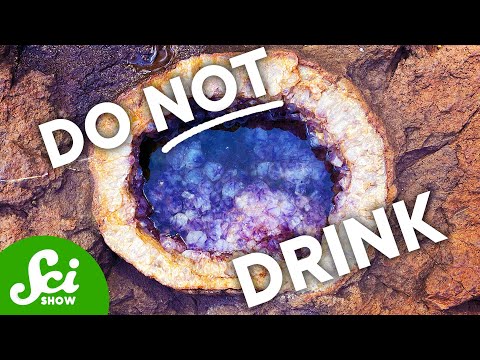
10 FragenWhile technically possible, it is highly discouraged. The water is millions of years old and could contain ancient bacteria or high levels of dissolved minerals that are toxic. Furthermore, you would have to break a valuable and rare specimen to get to it. It is much better to leave the water where it is for scientific study or display.
The age of the water is the same as the age of the host crystal. Depending on where it was found, the water could be anywhere from a few million to over 100 million years old. For example, enhydros from the Cretaceous period are roughly 66 to 145 million years old.
Yes, they can. Many minerals, especially chalcedony, are slightly porous. Over decades, the water can slowly evaporate through the microscopic pores of the stone. To prevent this, collectors often keep their enhydros in high-humidity environments or even submerged in distilled water.
The price varies wildly. A small, common enhydro agate might cost $20, while a large, clear quartz crystal with multiple moving bubbles and a documented history could cost thousands of dollars. Rarity, clarity, and bubble movement are the main factors in pricing.
They are found all over the world, but the most famous locations are Brazil, Madagascar, and the United States (specifically Oregon and Wyoming). They usually form in volcanic areas where gas bubbles in lava provide the perfect cavities for crystals and water to meet.
No. A manifestation crystal has a smaller crystal growing inside a larger one. An enhydro has liquid inside. While both are types of inclusions, they are physically very different. However, they are often found in the same types of mineral deposits.
Yes, if you go to a known agate-hunting location. You have to look for geodes or nodules and shake them near your ear to hear a 'sloshing' sound, or hold them up to a strong light to look for a bubble. It requires patience and a good eye!
The bubble moves because the cavity is not 100% full of water. There is a small amount of gas (usually air or water vapor) that forms a bubble. Because the gas is lighter than the water, it always floats to the top. When you tilt the stone, the bubble 'moves' to stay at the highest point.
Not directly in consumer technology, but they are vital in geological research. They help scientists understand the history of the Earth's water and atmosphere, which can inform our understanding of climate change and planetary formation.
If the water inside an enhydro freezes, it will expand. Since the rock around it is solid and cannot expand, the pressure will almost certainly cause the crystal to shatter. This is why you should never leave an enhydro in a car during winter or in a freezer.
Teste dich selbst 200 Fragen
Describe what an enhydro looks like to someone who has never seen one.
Well written! Good try! Check the sample answer below.
Explain the scientific importance of enhydros.
Well written! Good try! Check the sample answer below.
Write a short story about finding an enhydro in a cave.
Well written! Good try! Check the sample answer below.
Compare an enhydro to a regular geode.
Well written! Good try! Check the sample answer below.
How should a museum curator care for an enhydro specimen?
Well written! Good try! Check the sample answer below.
Use the word 'enhydro' in a metaphorical sentence.
Well written! Good try! Check the sample answer below.
Why is 'enhydro' a good name for this rock? (Use etymology).
Well written! Good try! Check the sample answer below.
Describe the movement of the bubble in an enhydro.
Well written! Good try! Check the sample answer below.
What are the risks of buying an enhydro online?
Well written! Good try! Check the sample answer below.
Write a dialogue between a geologist and a student about an enhydro.
Well written! Good try! Check the sample answer below.
Explain the difference between 'enhydro' and 'anhydrous'.
Well written! Good try! Check the sample answer below.
Why do enhydros form in volcanic regions?
Well written! Good try! Check the sample answer below.
What does an enhydro represent in the metaphysical community?
Well written! Good try! Check the sample answer below.
Describe a 'three-phase' enhydro inclusion.
Well written! Good try! Check the sample answer below.
How can you tell if an enhydro is real or fake?
Well written! Good try! Check the sample answer below.
Write a poem about an enhydro bubble.
Well written! Good try! Check the sample answer below.
What is the role of 'porosity' in an enhydro's life?
Well written! Good try! Check the sample answer below.
Why is the bubble in an enhydro often called a 'spirit level'?
Well written! Good try! Check the sample answer below.
Describe the formation of an enhydro in three steps.
Well written! Good try! Check the sample answer below.
Summarize the main points of the 'Common Mistakes' section.
Well written! Good try! Check the sample answer below.
Pronounce the word 'enhydro' three times, focusing on the stress.
Read this aloud:
Du hast gesagt:
Speech recognition is not supported in your browser. Try Chrome or Edge.
Explain to a partner how an enhydro forms.
Read this aloud:
Du hast gesagt:
Speech recognition is not supported in your browser. Try Chrome or Edge.
Describe the 'moving bubble' phenomenon.
Read this aloud:
Du hast gesagt:
Speech recognition is not supported in your browser. Try Chrome or Edge.
Discuss the scientific value of ancient water inclusions.
Read this aloud:
Du hast gesagt:
Speech recognition is not supported in your browser. Try Chrome or Edge.
Debate whether it is ethical to break an enhydro for research.
Read this aloud:
Du hast gesagt:
Speech recognition is not supported in your browser. Try Chrome or Edge.
Give a short presentation on the care and preservation of enhydros.
Read this aloud:
Du hast gesagt:
Speech recognition is not supported in your browser. Try Chrome or Edge.
Use 'enhydro' in a sentence about a museum visit.
Read this aloud:
Du hast gesagt:
Speech recognition is not supported in your browser. Try Chrome or Edge.
Explain the etymology of 'enhydro' to a friend.
Read this aloud:
Du hast gesagt:
Speech recognition is not supported in your browser. Try Chrome or Edge.
Describe the difference between an enhydro and a regular geode.
Read this aloud:
Du hast gesagt:
Speech recognition is not supported in your browser. Try Chrome or Edge.
Talk about why someone might find an enhydro 'magical'.
Read this aloud:
Du hast gesagt:
Speech recognition is not supported in your browser. Try Chrome or Edge.
Describe a 'three-phase' enhydro in detail.
Read this aloud:
Du hast gesagt:
Speech recognition is not supported in your browser. Try Chrome or Edge.
Warn someone about the dangers of heating an enhydro.
Read this aloud:
Du hast gesagt:
Speech recognition is not supported in your browser. Try Chrome or Edge.
Discuss the market for enhydros at gem shows.
Read this aloud:
Du hast gesagt:
Speech recognition is not supported in your browser. Try Chrome or Edge.
Use the word 'transpiration' in a sentence about an enhydro.
Read this aloud:
Du hast gesagt:
Speech recognition is not supported in your browser. Try Chrome or Edge.
Describe the color and texture of a typical enhydro agate.
Read this aloud:
Du hast gesagt:
Speech recognition is not supported in your browser. Try Chrome or Edge.
Explain why 'enhydro' is a C2 level word.
Read this aloud:
Du hast gesagt:
Speech recognition is not supported in your browser. Try Chrome or Edge.
Talk about the 'Eagle Stone' folklore.
Read this aloud:
Du hast gesagt:
Speech recognition is not supported in your browser. Try Chrome or Edge.
Summarize how to identify a fake enhydro.
Read this aloud:
Du hast gesagt:
Speech recognition is not supported in your browser. Try Chrome or Edge.
Describe the feeling of holding an enhydro.
Read this aloud:
Du hast gesagt:
Speech recognition is not supported in your browser. Try Chrome or Edge.
Say 'enhydros' in a sentence about a collection.
Read this aloud:
Du hast gesagt:
Speech recognition is not supported in your browser. Try Chrome or Edge.
Listen to the description: 'A rock with a moving bubble.' What is the word?
Identify the stress in 'enhydro' from a recording.
Listen for the mineral name: 'The enhydro was found in a piece of chalcedony.'
What is the age mentioned? 'This enhydro is fifty million years old.'
Listen for the warning: 'Do not expose the enhydro to direct sunlight.'
What is the process called? 'The water is lost through transpiration.'
Listen for the country: 'These enhydros come from Madagascar.'
Is the bubble air? 'The bubble is actually water vapor.'
What is the scientific term used? 'It is a primary fluid inclusion.'
How many phases are mentioned? 'This is a rare three-phase specimen.'
What should you listen for when shaking the rock? 'Listen for the sloshing sound.'
What is the root of the word? 'It comes from the Greek hydor.'
What is the condition of the water? 'The water is ancient and saline.'
Why is it valuable? 'Its value comes from its rarity and clarity.'
What is the host mineral? 'The enhydro is encased in agate.'
/ 200 correct
Perfect score!
Summary
An enhydro is a natural 'time capsule' consisting of a mineral that has sealed ancient water within its structure, providing a unique macroscopic view of prehistoric fluids. Example: 'The museum's prize specimen was an enhydro geode with a perfectly preserved bubble of water from the Eocene epoch.'
- A geological specimen containing trapped ancient water or fluid.
- Commonly found in quartz, agate, or chalcedony crystals.
- Features a characteristic 'moving bubble' visible when tilted.
- Valued by scientists for paleoclimate data and by collectors for rarity.
Prevent Evaporation
Store your enhydro in a small, sealed container with a damp cotton ball to maintain humidity and prevent the ancient water from escaping.
Use a Strong Light
To see the bubble clearly, use a high-lumen flashlight behind the stone. This backlighting will make the bubble's edges pop and its movement easier to track.
Avoid Heat
Never use steam cleaners or ultrasonic cleaners on an enhydro. The heat and vibrations can cause the internal pressure to rise and crack the stone.
Check for Fakes
Be wary of 'enhydros' that look too perfect. Some unscrupulous sellers drill holes, inject water, and seal them with resin. Look for a seamless, natural surface.
Beispiel
The researcher used a syringe to extract ancient fluid from the enhydro for isotopic analysis.
Verwandte Inhalte
In Videos ansehen
Mehr Other Wörter
abate
C1Der Sturm begann gegen Morgen nachzulassen.
abcarndom
C1Der Forscher beschloss, den Versuchsablauf zu abcarndom, um Verzerrungen zu vermeiden.
abcenthood
C1Der Zustand des Abwesendseins, besonders wenn Ihre Anwesenheit erwartet oder wichtig ist. (The state of being absent, especially when your presence is expected or important.) Die anhaltende Abwesenheit des Leiters führte zu Verwirrung. (The sustained absence of the leader led to confusion.)
abcitless
C1Beschreibt etwas, dem ein grundlegender, notwendiger Teil fehlt, wodurch es unvollständig oder unlogisch wird. (Describes something missing a basic, necessary part that makes something complete or logical.)
abcognacy
C1Der Zustand des Nichtwissens oder der Unkenntnis über ein bestimmtes Thema, oft in einem spezialisierten oder akademischen Kontext. Die Forscher diskutierten die historische ABCognasie der Gesellschaft in Bezug auf den Klimawandel.
abdocion
C1Beschreibt eine Bewegung oder Kraft, die von einer zentralen Achse oder einem Standard wegführt.
abdocly
C1Beschreibt etwas, das versteckt, vertieft oder auf eine verborgene Weise auftritt, die für den Beobachter nicht sofort sichtbar ist. Es wird primär in technischen oder akademischen Kontexten verwendet, um strukturelle Elemente oder biologische Prozesse zu bezeichnen, die innerhalb eines größeren Systems verborgen sind.
aberration
B2Eine Aberration ist eine Abweichung von dem, was normal oder üblich ist.
abfacible
C1Um die ursprüngliche Struktur des Gebäudes zu verstehen, mussten die Restauratoren die nachträglichen Verputzschichten <strong>abfacible</strong>n. Diese sorgfältige Entfernung legte die darunterliegende historische Bausubstanz frei.
abfactency
C1Abfactency beschreibt eine Eigenschaft oder einen Zustand, der grundlegend von empirischen Fakten oder der objektiven Realität getrennt ist.

