









fates in 30 Sekunden
- The word 'fates' refers to the inevitable outcomes of lives or events, often seen as being outside of human control or influence.
- It is frequently used in the plural to describe the collective or individual destinies of a group of people or entities.
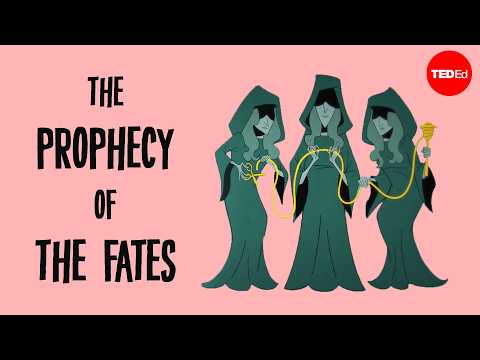
- In mythology, 'The Fates' are the three goddesses who were believed to spin, measure, and cut the thread of human life.
- The term is common in literature, history, and sports to add a sense of drama, finality, and cosmic significance to a narrative.
The word fates is a multifaceted noun that primarily refers to the ultimate outcomes or destinies of individuals, groups, or even entire nations. At its core, it suggests a sequence of events that are inevitable and beyond human intervention. When we speak of 'fates' in the plural, we are often highlighting the diverse and separate paths that different people take, even if those paths are directed by the same underlying force of destiny. In a more specific historical and mythological context, the 'Fates' (often capitalized) refer to the three goddesses of Greek and Roman mythology—Clotho, Lachesis, and Atropos—who were believed to spin, measure, and cut the thread of human life, thereby determining every mortal's birth, lifespan, and death. This mythological weight gives the word a sense of gravity and ancient power that synonyms like 'results' or 'outcomes' simply do not possess.
- The Mythological Dimension
- In ancient traditions, the Fates were even more powerful than the gods themselves, representing the immutable laws of the universe that no one, not even Zeus, could fully bypass. This context is why we use the word today to describe situations where we feel powerless.
In modern usage, 'fates' is frequently employed in literature, journalism, and high-stakes storytelling to describe the resolution of a conflict or the final state of a person's life. For example, a historian might discuss the 'fates of the Roman emperors,' implying a series of tragic or significant endings that seem almost scripted by history itself. The word carries a connotation of finality; once the fates have decided, there is no turning back. It is a word used when the stakes are high—life and death, success and ruin, or the rise and fall of civilizations.
The fates of the two rival families were inextricably linked by a single, ancient curse that neither could escape.
Furthermore, the term is often used in sports and politics to describe the unpredictable nature of luck and timing. A commentator might say, 'The fates were kind to the underdog today,' suggesting that some external, mystical force favored the weaker team. This usage bridges the gap between ancient superstition and modern metaphorical language, allowing us to express the feeling that some things are just 'meant to be' or are the result of a cosmic roll of the dice. It is a word that acknowledges the limits of human agency and the presence of the unknown.
- Metaphorical Threads
- The metaphor of 'spinning a fate' comes directly from the ancient practice of weaving. When we say someone is 'weaving their own fate,' we are using a literary image that has persisted for over three thousand years.
As the jury deliberated, the fates of the defendants hung in the balance, suspended by the thin thread of legal interpretation.
- Collective Destiny
- We often use the plural 'fates' to describe how the lives of many people are joined together by a single event, such as a war, a natural disaster, or a major economic shift.
The fates of the passengers were sealed the moment the ship hit the iceberg in the dead of night.
Using the word fates correctly requires an understanding of its plural nature and its dramatic weight. It is most commonly used as the subject or object of a sentence where the outcome is beyond the characters' control. For instance, you might say, 'The fates conspired against them,' which personifies the concept of destiny as an active, almost malicious force working to prevent success. This personification is a hallmark of literary English and adds a layer of depth to your writing that simpler words like 'luck' cannot achieve.
- Active Verbs with Fates
- Common verbs that pair with 'fates' include: conspire, decree, intertwine, collide, and seal. These verbs emphasize the power and movement of destiny.
Another common way to use 'fates' is in the context of comparison or collective outcomes. When discussing a group of people who have experienced different but equally significant life paths, 'fates' is the appropriate term. For example, 'The fates of the graduates varied wildly; some became famous artists, while others found peace in quiet, rural lives.' Here, the word acknowledges that while they started from the same point, the 'hand of destiny' led them to vastly different conclusions. It is also used to describe the final state of objects or institutions, such as 'the fates of the ancient libraries' or 'the fates of the lost colonies.'
No one could have predicted the strange fates that awaited the explorers in the heart of the uncharted jungle.
In academic or formal writing, 'fates' can be used to discuss historical trends or the consequences of policy. A political scientist might write about 'the fates of democratic institutions in the 21st century,' implying that these institutions are subject to forces that may be larger than any single politician's actions. This usage elevates the discussion from simple cause-and-effect to a more philosophical consideration of historical inevitability. It suggests that there are patterns in human history that repeat, almost as if dictated by a higher order.
- Prepositional Phrases
- We often see 'fates' in phrases like 'at the mercy of the fates' or 'by a twist of the fates.' These phrases highlight our lack of control over certain life events.
By a cruel twist of the fates, the cure arrived just one day after the patient had passed away.
- The Mythological 'The Fates'
- When referring to the Greek goddesses, always use 'The Fates' with a capital 'F' and the definite article 'the'.
In the epic poem, the hero tries to bargain with the Fates to save his fallen comrade.
The word fates is a staple of high-quality storytelling and intellectual discourse. You will frequently encounter it in classical literature, from the plays of William Shakespeare to the epic novels of the 19th century. In these contexts, 'fates' is used to underscore the tragic nature of human existence, where characters struggle against forces they cannot hope to defeat. For instance, in Romeo and Juliet, the 'star-crossed lovers' are victims of their fates, a concept that resonates through the ages. If you enjoy reading fantasy or historical fiction, you will find this word used to add a sense of epic scale to the narrative.
- In Modern Cinema
- Movies like 'The Adjustment Bureau' or 'Clash of the Titans' explicitly deal with the concept of fates, often portraying them as physical entities or bureaucratic systems that control human life.
In the world of sports journalism, 'fates' is used to describe the unpredictable turns of a season or a specific game. A headline might read, 'The Fates Smile on the Underdogs,' or a commentator might remark on how the 'fates of the two teams' were decided by a single controversial refereeing decision. This usage adds a touch of drama and narrative flair to sports reporting, transforming a simple game into a story of destiny and chance. It is also common in political commentary, where the 'fates of nations' or 'the fates of political parties' are discussed in relation to major elections or global events.
The documentary explored the tragic fates of the sailors who disappeared during the Great Storm of 1913.
You will also hear 'fates' in legal and philosophical discussions. In law, particularly in cases involving negligence or accidents, the 'fates' might be mentioned metaphorically to describe events that were truly unavoidable. Philosophically, the word is central to debates about free will versus determinism. When people discuss whether our lives are 'pre-written' or if we have the power to change our 'fates,' they are engaging with a question that has occupied human thought for millennia. This makes the word essential for anyone interested in deep, meaningful conversation.
- In Popular Music
- Songwriters often use 'fates' to rhyme with 'states', 'gates', or 'mates', usually in songs about long journeys, lost love, or the mysteries of life.
The lyrics spoke of how our fates are written in the stars, long before we ever draw our first breath.
- In News Headlines
- News outlets use 'fates' to create a sense of urgency and importance, such as 'The Fates of Thousands Rest on This Peace Treaty'.
The world watched as the fates of the trapped miners were decided by the heroic efforts of the rescue team.
One of the most frequent mistakes learners make with the word fates is confusing it with the phonetically similar word 'faiths'. While 'fates' refers to destiny and outcomes, 'faiths' refers to religious beliefs or systems of trust. Saying 'Our faiths are sealed' when you mean 'Our fates are sealed' would significantly change the meaning of your sentence from one of destiny to one of religious conviction. It is crucial to distinguish between the 't' sound in fates and the 'th' sound in faiths to ensure clarity in both speaking and writing.
- Fate vs. Fates
- Another common error is using the plural 'fates' when the singular 'fate' is more appropriate. Use 'fate' for a single person's destiny (e.g., 'His fate was decided'). Use 'fates' for multiple people or the mythological goddesses.
Another mistake involves the register or tone of the word. Because 'fates' is a heavy, dramatic word, using it in a very casual or trivial context can sound strange or unintentionally funny. For example, saying 'The fates decided I should drop my ice cream' might be seen as overly dramatic or sarcastic. Unless you are trying to be humorous, it is better to use words like 'luck' or 'accident' for minor daily mishaps. 'Fates' should be reserved for moments of genuine significance or when you want to evoke a sense of grandeur.
Incorrect: We must respect all the different fates in the world. (Should be 'faiths' if referring to religions).
Learners also sometimes struggle with the capitalization of the word. When you are referring to the concept of destiny in general, 'fates' should be lowercase. However, when you are referring to the specific mythological figures (Clotho, Lachesis, and Atropos), it should be capitalized as 'The Fates'. Failing to capitalize in the mythological sense can lead to confusion, especially in academic or literary analysis where the distinction between the abstract concept and the personified goddesses is important.
- Agreement Errors
- Ensure that your verbs agree with the plural 'fates'. For example: 'The fates are (not is) cruel.' This is a basic but frequent error for those used to the singular 'fate'.
Incorrect: The fates of the company was in jeopardy. (Correct: 'The fates of the company were in jeopardy').
- Overuse of 'The'
- Sometimes 'the' is unnecessary. You can say 'Fates conspired against him' in a poetic sense, though 'The fates' is more common in standard prose.
Correct: We are all subject to the fates that govern this world.
While fates is a powerful word, there are several alternatives that might be more suitable depending on the context. The most direct synonym is 'destinies'. Both words refer to the future path of a person's life, but 'destinies' often has a slightly more positive or neutral connotation, whereas 'fates' can lean toward the tragic or the inevitable. If you are talking about a bright future, 'destinies' might be the better choice. If you are talking about a dark or inescapable end, 'fates' is more evocative.
- Fate vs. Destiny
- 'Fate' is often seen as something imposed upon you (external), while 'destiny' is sometimes seen as something you are meant to achieve (internal potential).
Another alternative is 'fortunes'. This word is often used when discussing wealth, success, or the changing nature of luck. You might talk about the 'changing fortunes of a business' or the 'fortunes of war'. Unlike 'fates', which implies a fixed and unchangeable outcome, 'fortunes' suggests something that can rise and fall. If you want to emphasize the element of chance and fluctuation, 'fortunes' is an excellent alternative. For a more religious or spiritual context, you might use 'providence', which refers to the protective care of God or nature as a spiritual power.
The fortunes of the family improved greatly after they discovered oil on their land.
In more formal or academic settings, you might use 'outcomes' or 'consequences'. These words are more clinical and objective, lacking the mystical or dramatic overtones of 'fates'. If you are writing a scientific report or a business analysis, 'outcomes' is the appropriate term. However, if you are writing a narrative or a persuasive essay, 'fates' can provide the emotional resonance you need. Other related words include 'doom' (usually a very negative fate) and 'lot' (as in 'one's lot in life', referring to one's situation or circumstances).
- Comparison Table
-
- Fates: Inevitable, often tragic, plural destinies.
- Destinies: Future paths, can be positive or negative.
- Fortunes: Fluctuating luck or wealth.
- Doom: A terrible, unavoidable end.
- Kismet: Poetic, often implies a sense of 'meant to be'.
He accepted his lot in life with a quiet dignity that impressed everyone who knew him.
- Formal Alternatives
- In legal or technical writing, use 'final determinations' or 'eventualities' to avoid the poetic connotations of 'fates'.
The outcomes of the clinical trials were more positive than the researchers had initially hoped.
How Formal Is It?
Wusstest du?
In Greek mythology, the three Fates were so powerful that even the king of the gods, Zeus, was subject to their decrees. This shows how deeply the concept of inevitable destiny was rooted in ancient thought.
Aussprachehilfe
- Pronouncing it like 'fades' (with a 'z' sound at the end).
- Confusing the 't' with a 'th' sound, making it 'faiths'.
- Adding an extra syllable at the end (e.g., 'fay-tez').
- Making the 'a' sound too short, like in 'fat'.
- Dropping the final 's' completely.
Schwierigkeitsgrad
Common in literature and news, but requires understanding of nuance.
Hard to use without sounding overly dramatic or using it in the wrong register.
Easy to pronounce, but less common in everyday casual speech.
Can be confused with 'faiths' or 'fades' in fast speech.
Was du als Nächstes lernen solltest
Voraussetzungen
Als Nächstes lernen
Fortgeschritten
Wichtige Grammatik
Plural Noun Agreement
The fates **are** (not is) often unpredictable.
Capitalization for Proper Nouns
In mythology, **The Fates** (capitalized) are powerful goddesses.
Use of the Definite Article
**The** fates of the two explorers were linked.
Prepositional Collocations
He was **at** the mercy **of** the fates.
Passive Voice with 'Fated'
They **were fated** to meet in the most unlikely of places.
Beispiele nach Niveau
The fates of the two cats were very different.
What happened to the two cats was very different.
Plural noun 'fates' followed by plural verb 'were'.
We do not know our fates.
We don't know what will happen to us in the end.
Possessive adjective 'our' before 'fates'.
The fates were kind to him today.
He had good luck today.
The word 'fates' acts as the subject.
The story tells the fates of three sisters.
The story tells what happened to three sisters.
Direct object of the verb 'tells'.
Is it our fates to be friends?
Are we meant to be friends?
Question form using 'is it'.
The fates decided the winner.
Luck decided who won.
Simple past tense 'decided'.
Their fates are in the stars.
Their future is decided by the stars.
Prepositional phrase 'in the stars'.
He was afraid of the fates.
He was scared of what might happen.
Object of the preposition 'of'.
The fates of the lost explorers are still a mystery.
No one knows what happened to the explorers.
Complex subject 'The fates of the lost explorers'.
Sometimes the fates bring people together.
Sometimes destiny makes people meet.
Adverb 'sometimes' modifying the sentence.
The fates of the old buildings were to be destroyed.
The old buildings were meant to be knocked down.
Infinitive phrase 'to be destroyed'.
She believed the fates would help her.
She thought destiny would assist her.
Future in the past 'would help'.
The fates of the two countries changed after the war.
What happened to the countries was different after the war.
Past tense 'changed'.
We are all waiting for the fates to speak.
We are waiting to see what happens.
Present continuous 'are waiting'.
The fates of the players depend on this last goal.
The players' future depends on this goal.
Subject-verb agreement: 'fates' and 'depend'.
He accepted the fates that were given to him.
He accepted his life as it was.
Relative clause 'that were given to him'.
The fates of the small businesses were sealed by the new law.
The new law decided the future of the small businesses.
Passive voice 'were sealed'.
By a strange twist of the fates, they met again in Paris.
By a weird accident of destiny, they met in Paris.
Idiomatic expression 'twist of the fates'.
The fates of the characters in the novel are very tragic.
The people in the book have very sad endings.
Adjective 'tragic' describing 'fates'.
Many people feel they are at the mercy of the fates.
Many people feel they have no control over their lives.
Prepositional phrase 'at the mercy of'.
The fates of the environment depend on our actions today.
The future of nature depends on what we do now.
Metaphorical use of 'fates' for non-humans.
Ancient people used to offer gifts to the Fates.
People long ago gave presents to the goddesses of destiny.
Capitalized 'Fates' referring to goddesses.
The fates of the two projects were linked from the start.
The two projects were connected and would end the same way.
Past participle 'linked' as an adjective.
No one can escape the fates that await them.
You cannot avoid what is meant to happen to you.
Relative pronoun 'that' introducing a clause.
The fates of the political prisoners hung in the balance for months.
The future of the prisoners was uncertain for a long time.
Idiom 'hung in the balance'.
The fates of the two empires collided in a massive battle.
The destinies of the two empires met in a big fight.
Dynamic verb 'collided'.
It seemed as though the fates had conspired to ruin his reputation.
It looked like destiny worked together to destroy his name.
Past perfect 'had conspired'.
The fates of the various species are threatened by climate change.
The future of many animals is in danger because of the weather.
Passive voice 'are threatened'.
Historians often debate the fates of the lost colonies.
Historians talk about what happened to the colonies that disappeared.
Present simple for habitual action.
The fates of the survivors were diverse and unexpected.
The people who lived had many different and surprising lives later.
Adjectives 'diverse' and 'unexpected'.
We must accept the fates that we cannot change.
We have to accept the things in our life we can't control.
Modal verb 'must'.
The fates of the economy were tied to the price of oil.
The future of the economy depended on how much oil cost.
Passive construction 'were tied to'.
The fates of the indigenous tribes were irrevocably altered by colonialism.
The future of the native people was changed forever by new settlers.
Adverb 'irrevocably' modifying 'altered'.
In Greek tragedy, the protagonist is often a puppet of the fates.
In old plays, the main character is controlled by destiny.
Metaphorical use of 'puppet'.
The fates of the two rival ideologies were decided on the battlefield.
The future of the two different ways of thinking was settled by war.
Noun 'ideologies' as a modifier.
The fates of the masterpieces were uncertain during the looting of the city.
No one knew if the great paintings would be safe during the war.
Noun 'masterpieces' referring to art.
She reflected on the divergent fates of her childhood friends.
She thought about how her friends' lives went in different directions.
Adjective 'divergent' meaning moving apart.
The fates of the planet's ecosystems are inextricably linked.
The future of all nature is tied together so they cannot be separated.
Adverb 'inextricably' meaning impossible to untangle.
The fates of the dynasty were intertwined with the health of the king.
The future of the royal family depended on the king being well.
Passive voice 'were intertwined'.
One cannot help but wonder about the fates of those who were left behind.
You have to think about what happened to the people who didn't go.
Idiomatic phrase 'cannot help but wonder'.
The fates of the ancient texts were subject to the whims of time and fire.
The survival of the old books depended on luck and whether they burned.
Abstract noun 'whims' used with 'fates'.
He wrote extensively on the tragic fates of the Romantic poets.
He wrote a lot about the sad lives and deaths of poets like Keats and Shelley.
Adverb 'extensively' modifying 'wrote'.
The fates of the various philosophical schools were often determined by political patronage.
Whether different ways of thinking survived depended on who gave them money.
Compound noun 'political patronage'.
The fates of the urban poor were largely ignored by the ruling elite.
The rich leaders didn't care what happened to the poor people in the city.
Passive voice with an adverbial modifier 'largely'.
The fates of the stars themselves are dictated by the laws of physics.
What happens to stars is decided by the rules of science.
Reflexive pronoun 'themselves' for emphasis.
In his final symphony, the composer seemed to be wrestling with the fates.
In his last music, the writer seemed to be fighting against destiny.
Continuous infinitive 'to be wrestling'.
The fates of the two languages were bound together through centuries of trade.
The future of the two ways of speaking became one because of business.
Prepositional phrase 'through centuries of trade'.
The fates of the explorers were a testament to the harshness of the Antarctic winter.
What happened to the explorers showed how cold and difficult the South Pole is.
Noun 'testament' meaning proof or evidence.
Häufige Kollokationen
Häufige Phrasen
— Used when something very bad and unfair happens. It suggests destiny is unkind.
The fates are cruel to take him away so young.
— A way to introduce a surprising or coincidental event. It means 'as it happened'.
As the fates would have it, we were on the same flight.
— Used when what happens to one person will also happen to another. They are connected.
If the company fails, our fates are linked; we all lose our jobs.
— To stop trying to control a situation and wait to see what happens naturally.
I've done my best; now I'll leave it to the fates.
— Used when a final decision has been made and cannot be changed. It is over.
The election is over; the fates have spoken.
— When two important paths or destinies cross each other. A significant moment.
Their marriage was a meeting of fates that changed history.
— Trying very hard to change a situation that seems impossible to fix. Fighting destiny.
He spent his life wrestling with the fates to save his family.
— When many different things go wrong at once, as if they were planning it.
The fates conspired to make me late for my own wedding.
— Coming to terms with what has happened and not fighting it anymore.
After years of struggle, she was finally accepting her fates.
— A poetic way to talk about human life and the things that happen to people.
The old poet sang about the fates of men and the glory of gods.
Wird oft verwechselt mit
Refers to religious beliefs, while 'fates' refers to destiny. They sound similar but have very different meanings.
A verb meaning to lose color or strength. The final 's' in 'fades' sounds like a 'z', while in 'fates' it is a soft 's'.
Things that are known to be true. In fast speech, the 't' in 'fates' and 'facts' can sometimes be confused.
Redewendungen & Ausdrücke
— To make it certain that something (usually bad) will happen to them.
The testimony of the witness sealed the fates of the robbers.
formal— An unexpected change in a sequence of events.
By a strange twist of fate, he won the lottery with a found ticket.
neutral— Doing something risky that might bring bad luck.
Not wearing a helmet is just tempting the fates.
informal— Out of one's own control and dependent on luck or destiny.
The plan is ready; now it's in the lap of the fates.
literary— To act in a way that ignores or defies destiny or obvious danger.
To sail in this weather is to fly in the face of the fates.
literary— When everything happens perfectly to allow something to succeed.
When the fates align, everything seems easy.
neutral— To have total control over one's own life and future.
He believed he was the master of his own fates.
formal— A reference to the mythological idea of life being a thread that can be cut.
The thread of the fates is thin and easily broken.
literary— A situation that is so terrible it would be better to be dead.
Being trapped in that prison was a fate worse than death.
dramatic— The idea that destiny is always turning, bringing good and bad luck.
The wheel of the fates has turned against him this year.
literaryLeicht verwechselbar
It is the singular form of 'fates'.
Use 'fate' for one person's destiny and 'fates' for multiple people or the goddesses. 'Fates' is often more dramatic.
His fate was sealed, but the fates of his friends were still unknown.
They are very close synonyms.
Destiny often implies a purposeful or positive goal, while fate/fates can imply a blind, indifferent, or tragic force.
It was her destiny to be queen, but the fates were not kind to her reign.
Both deal with luck and the future.
Fortune often relates to wealth or a change in luck (up or down), whereas fates implies a fixed, unchangeable end.
He lost his fortune, but he accepted his fates with courage.
Both refer to an unavoidable end.
Doom is always negative and terrible. Fates can be mysterious, neutral, or tragic, but not always purely 'evil'.
The army marched toward their doom, guided by the cruel fates.
Both refer to one's situation in life.
One's 'lot' is more about current circumstances, while 'fates' is about the ultimate outcome or the force behind it.
She was content with her lot, even though the fates had been harsh.
Satzmuster
The fates of [plural noun] were [adjective].
The fates of the two dogs were happy.
We don't know the fates of [noun phrase].
We don't know the fates of the lost hikers.
By a [adjective] twist of the fates, [clause].
By a strange twist of the fates, I found my lost ring.
The fates of [noun phrase] hang in the balance.
The fates of the small villages hang in the balance.
[Noun phrase] are inextricably linked to the fates of [noun phrase].
Our lives are inextricably linked to the fates of our neighbors.
To wrestle with the fates is to [verb phrase].
To wrestle with the fates is to challenge the very nature of existence.
The fates conspired to [verb phrase].
The fates conspired to prevent the meeting from happening.
At the mercy of the fates, [clause].
At the mercy of the fates, the small boat drifted out to sea.
Wortfamilie
Substantive
Verben
Adjektive
Verwandt
So verwendest du es
Medium-High in written English; Medium in spoken English.
-
Using 'fates' to mean religions.
→
Use 'faiths'.
This is a common phonetic error. 'Faiths' are religions; 'fates' are destinies.
-
The fates of the man was sad.
→
The fates of the men were sad. (Or: The fate of the man was sad.)
If you use the plural 'fates', you must use the plural verb 'were'.
-
The fates decided I should lose my pencil.
→
I lost my pencil by accident.
Using 'fates' for such a small thing sounds too dramatic and unnatural in English.
-
I am looking for my fates.
→
I am looking for my destiny/future.
You don't usually 'look for' your fates; they are something that happens to you.
-
The Fates is spinning the thread.
→
The Fates are spinning the thread.
Even when referring to the group of goddesses, the word remains plural.
Tipps
Dramatic Effect
Use 'fates' when you want to make a situation sound more important or unavoidable. It works great in creative writing.
The 'T' is Key
Make sure you clearly pronounce the 't' before the 's'. This helps distinguish 'fates' from 'faiths' and 'fades'.
Plural Verbs
Always remember that 'fates' is plural. Use 'were' and 'are' instead of 'was' and 'is' when 'fates' is the subject.
Synonym Choice
Choose 'fates' over 'destinies' if you want to imply a sense of tragedy or a lack of human control.
Mythological Allusion
When you use 'the Fates,' you are making a reference to ancient Greek culture. This can make your writing sound more educated.
Avoid Overuse
Don't use 'fates' for small, everyday things unless you are being funny. It's a 'big' word that needs a 'big' context.
Context Clues
If you hear 'fates' in a movie, look at the characters' faces. They usually look serious or worried because the word is so heavy.
Idiom Practice
Try using the phrase 'at the mercy of the fates' next time you talk about something you can't control, like the weather.
Visualizing Threads
To remember the word, imagine many threads being woven together. Each thread is one of the 'fates' of a person.
Personification
You can treat 'the fates' like people. You can say they 'conspired,' 'smiled,' or 'were cruel' to add life to your writing.
Einprägen
Eselsbrücke
Think of 'Fates' as 'Final States'. The fates are the final states of people's lives that cannot be changed.
Visuelle Assoziation
Imagine three old women spinning a long golden thread. One spins it, one measures it, and one cuts it with scissors. This is the classic image of the Fates.
Word Web
Herausforderung
Try to write a paragraph about a historical event using the word 'fates' at least three times to describe different groups of people.
Wortherkunft
The word 'fates' comes from the Latin 'fata', which is the plural of 'fatum', meaning 'that which has been spoken'. This suggests that destiny is something that has already been declared by a higher power. It entered Middle English via Old French 'fat'.
Ursprüngliche Bedeutung: In Latin, 'fatum' literally meant an 'oracle' or a 'prophetic declaration'.
Indo-European (Italic branch).Kultureller Kontext
The word is generally neutral but can sound overly dramatic or fatalistic if used in sensitive personal situations (e.g., telling someone their 'fates' are bad after a loss).
In English literature, 'tempting the fates' is a common trope where a character's arrogance leads to their downfall.
Im Alltag üben
Kontexte aus dem Alltag
Mythology and Folklore
- The three Fates
- Spinning the thread of life
- Decreed by the Fates
- Bargaining with the Fates
Sports and Competition
- The fates were on their side
- A cruel twist of the fates
- Their fates were decided in overtime
- Tempting the fates with a risky play
History and Politics
- The fates of nations
- The fates of the prisoners
- Deciding the fates of millions
- The tragic fates of the leaders
Literature and Film
- Star-crossed fates
- The fates of the protagonists
- Wrestling with one's fates
- A meeting of fates
Everyday Philosophy
- It's in the hands of the fates
- Accepting our fates
- The fates are unpredictable
- Our fates are linked
Gesprächseinstiege
"Do you believe our fates are already decided, or do we make our own choices?"
"Can you think of a time when the fates seemed to be working against you?"
"If you could ask the Fates one question about your future, what would it be?"
"In movies, do you prefer stories where characters escape their fates or accept them?"
"How do the fates of people in different countries compare in today's world?"
Tagebuch-Impulse
Write about a 'twist of the fates' that changed the direction of your life in a surprising way.
Reflect on the fates of your ancestors. How did their choices or luck lead to you being here today?
If you were one of the three Fates, how would you decide the length and quality of a person's life?
Describe a situation where you felt you were 'at the mercy of the fates.' How did you handle it?
Discuss the fates of a fictional character you admire. Was their ending fair or earned?
Häufig gestellte Fragen
10 FragenNo, 'fate' is the singular form. However, 'fates' is very common when referring to the collective destinies of a group or the three goddesses of mythology. You use 'fates' to emphasize the complexity of different paths.
You should capitalize 'The Fates' when you are referring specifically to the three goddesses from Greek or Roman mythology. In all other cases, such as 'the fates of the players,' it should be lowercase.
This is a common pronunciation mistake. 'Fates' (with a 't') refers to destiny and outcomes. 'Faiths' (with a 'th') refers to religious beliefs or systems of trust. They are not interchangeable.
Yes, it can. For example, 'The fates were kind to us.' However, it often has a slightly more serious or even tragic connotation than the word 'luck' or 'destiny'.
It means to do something that makes a particular (usually bad) outcome certain. For example, 'His decision to lie sealed his fates.' It implies there is no way to change the result now.
Yes, it is generally considered more formal or literary. In casual conversation, people usually say 'luck,' 'what happened,' or 'destiny.' Using 'fates' adds a dramatic or serious tone.
The 's' in 'fates' is unvoiced, meaning it sounds like a soft 's' (as in 'hiss' or 'cats'). It does not sound like a 'z' (as in 'fades' or 'dogs').
The word 'fate' can be used as a verb, but it is almost always used in the passive form 'to be fated.' For example, 'They were fated to meet.' The plural 'fates' is only a noun.
In Greek mythology, they are Clotho (the spinner), Lachesis (the measurer), and Atropos (the cutter). Together, they are known as 'The Fates'.
A 'twist of fate' (or 'twist of the fates') is a common idiom meaning an unexpected or ironic turn of events that changes everything. It's often used in storytelling.
Teste dich selbst 200 Fragen
Write a sentence using 'fates' to describe the ending of a movie.
Well written! Good try! Check the sample answer below.
Describe a 'twist of fate' that happened to you or someone you know.
Well written! Good try! Check the sample answer below.
Write a short paragraph about the 'fates of two rival kingdoms'.
Well written! Good try! Check the sample answer below.
Use the phrase 'at the mercy of the fates' in a sentence about a traveler.
Well written! Good try! Check the sample answer below.
Explain the difference between 'fates' and 'faiths' in your own words.
Well written! Good try! Check the sample answer below.
Write a sentence using 'fates' in a humorous or ironic way.
Well written! Good try! Check the sample answer below.
How would you use 'fates' in a formal report about a failed project?
Well written! Good try! Check the sample answer below.
Write a sentence about the mythological Fates spinning a thread.
Well written! Good try! Check the sample answer below.
Use 'intertwined fates' in a sentence about two best friends.
Well written! Good try! Check the sample answer below.
Write a sentence about the 'fates of the environment'.
Well written! Good try! Check the sample answer below.
Describe a situation where someone might 'tempt the fates'.
Well written! Good try! Check the sample answer below.
Write a sentence about the 'fates of ancient civilizations'.
Well written! Good try! Check the sample answer below.
Use 'seal one's fates' in a sentence about a sports game.
Well written! Good try! Check the sample answer below.
Write a dialogue between two people discussing whether they believe in fates.
Well written! Good try! Check the sample answer below.
Use 'the fates conspired' in a sentence about a bad day.
Well written! Good try! Check the sample answer below.
Write a sentence about the 'fates of the stars'.
Well written! Good try! Check the sample answer below.
Describe the 'divergent fates' of two siblings.
Well written! Good try! Check the sample answer below.
Write a sentence using 'fates' to describe the result of an election.
Well written! Good try! Check the sample answer below.
Use 'a meeting of fates' in a sentence about a historic event.
Well written! Good try! Check the sample answer below.
Write a sentence about the 'fates of the lost explorers'.
Well written! Good try! Check the sample answer below.
Explain what 'fates' means to a friend who doesn't know the word.
Read this aloud:
Du hast gesagt:
Speech recognition is not supported in your browser. Try Chrome or Edge.
Tell a short story about a character whose 'fates were sealed'.
Read this aloud:
Du hast gesagt:
Speech recognition is not supported in your browser. Try Chrome or Edge.
Discuss whether you believe in 'fates' or 'free will'.
Read this aloud:
Du hast gesagt:
Speech recognition is not supported in your browser. Try Chrome or Edge.
Pronounce the word 'fates' clearly, emphasizing the 'ts' sound.
Read this aloud:
Du hast gesagt:
Speech recognition is not supported in your browser. Try Chrome or Edge.
Describe a 'twist of fate' from a movie you have seen.
Read this aloud:
Du hast gesagt:
Speech recognition is not supported in your browser. Try Chrome or Edge.
Use the phrase 'at the mercy of the fates' in a short speech.
Read this aloud:
Du hast gesagt:
Speech recognition is not supported in your browser. Try Chrome or Edge.
Explain the mythological origin of the word 'Fates'.
Read this aloud:
Du hast gesagt:
Speech recognition is not supported in your browser. Try Chrome or Edge.
Talk about the 'fates of your favorite sports team' this season.
Read this aloud:
Du hast gesagt:
Speech recognition is not supported in your browser. Try Chrome or Edge.
How would you use 'fates' in a formal presentation about history?
Read this aloud:
Du hast gesagt:
Speech recognition is not supported in your browser. Try Chrome or Edge.
Give an example of 'tempting the fates' in everyday life.
Read this aloud:
Du hast gesagt:
Speech recognition is not supported in your browser. Try Chrome or Edge.
Discuss the 'fates of the environment' in the next 50 years.
Read this aloud:
Du hast gesagt:
Speech recognition is not supported in your browser. Try Chrome or Edge.
Describe the 'divergent fates' of two famous people.
Read this aloud:
Du hast gesagt:
Speech recognition is not supported in your browser. Try Chrome or Edge.
Use 'the fates conspired' to describe a day when everything went wrong.
Read this aloud:
Du hast gesagt:
Speech recognition is not supported in your browser. Try Chrome or Edge.
Explain why 'fates' is often used in the plural.
Read this aloud:
Du hast gesagt:
Speech recognition is not supported in your browser. Try Chrome or Edge.
Talk about a time when you felt 'lucky' vs. when you felt it was 'fate'.
Read this aloud:
Du hast gesagt:
Speech recognition is not supported in your browser. Try Chrome or Edge.
Discuss the 'fates of ancient languages' and why they disappear.
Read this aloud:
Du hast gesagt:
Speech recognition is not supported in your browser. Try Chrome or Edge.
How do you think the 'fates of the world' are connected?
Read this aloud:
Du hast gesagt:
Speech recognition is not supported in your browser. Try Chrome or Edge.
Describe a 'meeting of fates' between two historical figures.
Read this aloud:
Du hast gesagt:
Speech recognition is not supported in your browser. Try Chrome or Edge.
Use 'fates' in a sentence about the future of technology.
Read this aloud:
Du hast gesagt:
Speech recognition is not supported in your browser. Try Chrome or Edge.
Explain the difference in pronunciation between 'fates' and 'faiths'.
Read this aloud:
Du hast gesagt:
Speech recognition is not supported in your browser. Try Chrome or Edge.
Listen to the sentence: 'The fates of the two explorers were unknown.' What was unknown?
A speaker says, 'It was a cruel twist of fate.' Is the speaker happy or sad?
Listen for the 'ts' sound in 'fates'. Is it voiced or unvoiced?
A narrator says, 'The Fates have spoken.' Does this mean the story is beginning or ending?
Listen to: 'Their fates are linked.' Are the people independent or connected?
A news report mentions 'the fates of the refugees.' What is the focus of the report?
Listen to: 'Don't tempt the fates.' Is this a suggestion to be careful?
A speaker says 'faiths' instead of 'fates'. How does the meaning change?
Listen to: 'The fates of the empires collided.' What kind of event is being described?
A poet says, 'The thread of the fates is thin.' What is the poet talking about?
Listen to: 'The fates were kind today.' Did something good or bad happen?
A speaker says, 'We are at the mercy of the fates.' Do they feel in control?
Listen to: 'The fates of the two projects were intertwined.' Were the projects separate?
A historian mentions 'the tragic fates of the kings.' What happened to the kings?
Listen to: 'The fates of the stars are written in physics.' Is this about mythology?
/ 200 correct
Perfect score!
Summary
The word 'fates' is a powerful noun used to describe the unchangeable outcomes of our lives. For example, 'The fates of the two explorers were sealed when the storm hit,' shows how the word emphasizes a lack of control over one's destiny.
- The word 'fates' refers to the inevitable outcomes of lives or events, often seen as being outside of human control or influence.
- It is frequently used in the plural to describe the collective or individual destinies of a group of people or entities.
- In mythology, 'The Fates' are the three goddesses who were believed to spin, measure, and cut the thread of human life.
- The term is common in literature, history, and sports to add a sense of drama, finality, and cosmic significance to a narrative.
Dramatic Effect
Use 'fates' when you want to make a situation sound more important or unavoidable. It works great in creative writing.
The 'T' is Key
Make sure you clearly pronounce the 't' before the 's'. This helps distinguish 'fates' from 'faiths' and 'fades'.
Plural Verbs
Always remember that 'fates' is plural. Use 'were' and 'are' instead of 'was' and 'is' when 'fates' is the subject.
Synonym Choice
Choose 'fates' over 'destinies' if you want to imply a sense of tragedy or a lack of human control.
Beispiel
The treaty sealed the fates of both countries for a generation.
Verwandte Inhalte
In Videos ansehen
Mehr Culture Wörter
creon
C2Kreon ist der Herrscher von Theben in der griechischen Mythologie, bekannt aus den Tragödien von Sophokles.
ethnic
B2Ein Angehöriger einer ethnischen Gruppe ist eine Person mit einem spezifischen kulturellen Hintergrund.
wukong’s
B1Die Possessivform von Wukong, die sich auf Dinge bezieht, die dem Affenkönig gehören.
germanic
B2Bezieht sich auf die Sprachfamilie, zu der Deutsch und Englisch gehören. Die germanischen Stämme besiedelten Europa.
hercules
C1Herkules ist ein Held der römischen Mythologie, der für seine übermenschliche Kraft bekannt ist.
moroccan
A2Bezieht sich auf das Land Marokko, seine Menschen oder seine Kultur. Ein Marokkaner ist ein Einwohner Marokkos.
daedalus
B2Daedalus war ein legendärer griechischer Erfinder und Baumeister, der das Labyrinth für König Minos entwarf.
oedipus’
C1Oedipus' ist die Possessivform des Namens Ödipus und bezieht sich auf Dinge, die ihm gehören oder mit ihm verbunden sind.
turkish
A1Bezieht sich auf die Türkei, ihre Menschen oder ihre Sprache.
imp
B2Ein Imp ist ein kleiner, schelmischer Teufel oder Kobold in der Folklore.

