thailand in 30 Sekunden
- Thailand is a Southeast Asian country famous for tourism, culture, and food.
- Known as the 'Land of Smiles,' it has a rich history and was never colonized.
- It is a constitutional monarchy with a diverse landscape of mountains and islands.
- Thailand is a major economic hub and a founding member of ASEAN.
Thailand is a vibrant and culturally rich nation located in the heart of Southeast Asia. When people use the word Thailand, they are referring to a sovereign state known for its independence, diverse geography, and deep-rooted traditions. Historically called Siam, the country officially changed its name to Thailand in 1939, a name that translates to 'Land of the Free.' This is a point of immense national pride, as Thailand is the only country in Southeast Asia that was never colonized by a European power. In everyday conversation, the word is most frequently used in the context of travel, international relations, and culinary discussions. For instance, someone might say they are planning a vacation to Thailand to explore its world-renowned islands like Phuket or Koh Samui. The term evokes images of golden temples, bustling street markets, and lush tropical landscapes. Beyond tourism, Thailand is a significant economic hub in the region, often discussed in business contexts regarding manufacturing, agriculture, and its role in ASEAN (the Association of Southeast Asian Nations). When you hear the word, it often carries a connotation of hospitality, warmth, and a relaxed pace of life, frequently summarized by the nickname 'The Land of Smiles.' This moniker reflects the friendly nature of the Thai people and the cultural importance of maintaining social harmony and a positive demeanor. In academic or formal settings, Thailand is discussed as a constitutional monarchy with a complex political history and a unique blend of modern development and traditional Buddhist values. The word is a proper noun, and in English, it is used without a preceding article, unlike 'the Netherlands' or 'the United Kingdom.' Understanding the word Thailand involves recognizing it not just as a geographical location on a map, but as a symbol of resilience, cultural beauty, and a bridge between ancient traditions and 21st-century globalization.
- Geographical Context
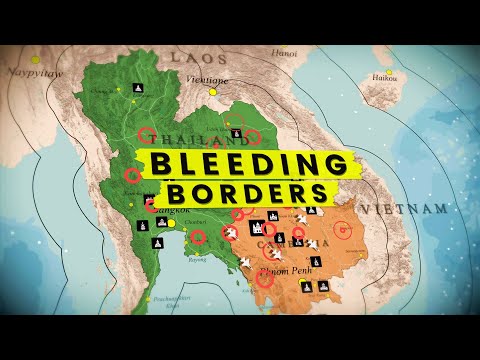
- Thailand is bordered by Myanmar to the north and west, Laos to the north and east, Cambodia to the southeast, and Malaysia to the south. It has extensive coastlines along the Gulf of Thailand and the Andaman Sea.
Many travelers consider thailand to be the ultimate gateway to Southeast Asia due to its excellent infrastructure and welcoming atmosphere.
- Cultural Identity
- The identity of Thailand is deeply intertwined with Theravada Buddhism, which is practiced by the vast majority of the population and influences everything from daily rituals to national holidays.
The economy of thailand relies heavily on exports, including electronics, automobiles, and agricultural products like rice and rubber.
Exploring the northern regions of thailand offers a glimpse into the misty mountains and the unique traditions of the hill tribe communities.
- Political Structure
- Thailand is a constitutional monarchy where the King serves as the Head of State, a position held in extremely high regard by the Thai people.
The street food culture in thailand is legendary, offering an explosion of flavors from spicy som tum to sweet mango sticky rice.
During the Songkran festival, the whole of thailand transforms into a massive, joyful water fight to celebrate the traditional New Year.
Using the word Thailand in a sentence is generally straightforward because it functions as a proper noun designating a specific country. However, there are nuances in how it is paired with prepositions and verbs to convey different meanings. Most commonly, it follows the preposition 'to' when indicating travel or movement, as in 'We are flying to Thailand next week.' It follows 'in' when describing a state of being or an event occurring within the country's borders, such as 'I lived in Thailand for three years.' When discussing the country's attributes, it often acts as the subject of the sentence: 'Thailand offers a unique blend of ancient history and modern convenience.' It is important to remember that 'Thailand' refers to the entity of the state, while 'Thai' is the adjective used for its people, language, and culture. For example, you would say 'I love Thailand' (the place) but 'I love Thai food' (the cuisine). In formal writing, Thailand is often referred to by its full official title, 'The Kingdom of Thailand,' especially in diplomatic or legal documents. When discussing regional geography, Thailand is frequently grouped with its neighbors, such as in the phrase 'Thailand and its neighboring countries in the Mekong subregion.' Because it is a proper noun, it must always be capitalized. Unlike some other country names, it does not require a definite article; saying 'the Thailand' is a common grammatical error for non-native speakers. In creative writing, Thailand might be personified or used metonymically to represent its government or its national spirit. For instance, 'Thailand welcomed the international delegates with open arms' uses the country name to represent the collective hospitality of its people and officials. In business English, Thailand is often used as a location marker for supply chains or market expansion, such as 'Our company is looking to establish a manufacturing base in Thailand.' Whether you are writing a travel blog, a news report, or a personal letter, the word Thailand serves as a clear and evocative identifier for this Southeast Asian nation.
- Travel and Tourism
- Sentences often focus on the experience of visiting. Example: 'Thailand remains a top choice for backpackers seeking adventure on a budget.'
After graduating from university, Sarah spent six months teaching English in rural thailand.
- Economic Context
- Sentences may describe trade or industry. Example: 'Thailand is one of the world's largest exporters of natural rubber.'
The biodiversity found in the national parks of thailand is truly staggering, featuring elephants, tigers, and rare birds.
Investors are closely monitoring the political developments in thailand to assess market stability.
- Comparative Usage
- Used to compare with other nations. Example: 'Compared to its neighbors, Thailand has a much more developed tourism infrastructure.'
The film industry in thailand has gained international acclaim for its unique horror and action movies.
Many digital nomads choose to base themselves in thailand because of the high quality of life and low cost of living.
The word Thailand is a staple in various global discourses, ranging from casual travel planning to high-level geopolitical analysis. In the realm of travel and lifestyle, you will hear it constantly in airports, travel agencies, and on social media platforms like Instagram and YouTube, where influencers showcase the country's stunning landscapes. Travel documentaries frequently feature Thailand's rich history, from the ancient ruins of Ayutthaya to the modern skyline of Bangkok. In the culinary world, Thailand is a dominant topic. Food critics, chefs, and home cooks discuss Thailand when exploring the balance of sweet, sour, salty, and spicy flavors that define its cuisine. You'll hear it mentioned in restaurant reviews or when friends are deciding what type of food to order for dinner. In the news, Thailand appears in reports concerning Southeast Asian politics, economic trends, and environmental issues like ocean conservation or climate change impacts on tropical regions. Business news often mentions Thailand in the context of global supply chains, particularly in the electronics and automotive sectors, as it is a major manufacturing hub. In academic settings, historians and political scientists use the word when discussing the history of the Indochinese Peninsula, the Cold War's impact on Southeast Asia, or the evolution of monarchies in the modern world. Sports fans might hear it during international competitions like the Olympics or the Asian Games, particularly in sports where Thailand excels, such as Muay Thai (Thai boxing), volleyball, or badminton. Furthermore, in the context of international development and NGOs, Thailand is often discussed as a middle-income country that has made significant strides in poverty reduction and healthcare, such as its universal health coverage model. Even in pop culture, Thailand is a frequent filming location for major Hollywood movies, leading to its mention in 'behind-the-scenes' features and entertainment news. Whether it's a conversation about a dream holiday, a debate on regional security, or a simple mention of where a product was manufactured, the word Thailand is ubiquitous in the modern global lexicon.
- News and Media
- Used in reporting on regional events. Example: 'The summit in Thailand focused on trade agreements across Asia.'
I heard on the news that thailand is implementing new visa rules to encourage long-term stays for remote workers.
- Culinary Conversations
- Common in food-related contexts. Example: 'The authentic spices used in this dish were imported directly from Thailand.'
During the travel expo, the booth for thailand was the most popular, offering free samples of traditional snacks.
The documentary highlighted how thailand has successfully preserved its marine life in several protected areas.
- Academic and Business
- Used in professional analysis. Example: 'Thailand's strategic location makes it a vital partner for regional logistics.'
The professor explained that thailand underwent a significant industrial transformation in the late 20th century.
Many international corporations have moved their regional headquarters to thailand to take advantage of its skilled workforce.
While the word Thailand is a common proper noun, learners of English often make several recurring mistakes when using it. The most frequent error is the inclusion of the definite article 'the' before the name. Unlike 'the United States' or 'the Philippines,' Thailand does not require 'the.' Saying 'I am going to the Thailand' is incorrect; the correct form is 'I am going to Thailand.' This mistake often stems from a learner's native language rules or a misunderstanding of English country-naming conventions. Another common confusion lies in the distinction between 'Thailand' and 'Thai.' 'Thailand' is the noun referring to the country, while 'Thai' is the adjective and the noun for the people and the language. Learners might incorrectly say 'I like Thailand food' instead of 'I like Thai food,' or 'He is a Thailand person' instead of 'He is Thai.' Additionally, pronunciation can be a hurdle. The 'th' in Thailand is pronounced as a hard 't' sound (/ˈtaɪlænd/), not as the soft 'th' sound found in 'think' or 'this.' Mispronouncing it with a soft 'th' is a hallmark of a non-native speaker and can sometimes lead to confusion. Spelling is another area where errors occur, particularly with the placement of the 'h.' Some might spell it 'Tailand' or 'Thialand.' It is also important to use the word in the correct register. While 'Siam' is the historical name, using it in a modern context is outdated and can seem strange unless specifically discussing history. In terms of cultural sensitivity, a common mistake is failing to capitalize the word. As a proper noun, 'thailand' should always be 'Thailand.' Furthermore, when discussing the country's geography, some learners mistakenly refer to 'the island of Thailand.' Thailand is a large peninsula and mainland country, not an island, although it possesses many famous islands. Finally, in formal writing, some may forget that Thailand is a monarchy and might use terminology that doesn't reflect its official status as a Kingdom. Avoiding these common pitfalls will ensure that your use of the word is grammatically correct, phonetically accurate, and culturally respectful.
- Article Usage
- Mistake: 'The Thailand is beautiful.' Correct: 'Thailand is beautiful.'
It is a common error to say 'I want to learn the thailand language' instead of 'I want to learn Thai.'
- Noun vs. Adjective
- Mistake: 'She is a Thailand.' Correct: 'She is Thai' or 'She is from Thailand.'
Don't confuse the country thailand with its historical name Siam when speaking about modern events.
Writing 'thailand' with a lowercase 't' is a grammatical mistake; always capitalize thailand.
- Geographical Accuracy
- Mistake: Referring to Thailand as an island. Correct: Thailand is a country with many islands.
Many people mistakenly think the 'th' in thailand is pronounced like 'thaw'.
Ensure you don't say 'I am living at thailand'; the correct preposition is 'in'.
While Thailand is a specific proper noun with no direct synonyms that carry the exact same meaning, there are several words and phrases used as alternatives depending on the context. In a historical context, the word 'Siam' is the most significant alternative. Used until 1939 and briefly again in the late 1940s, 'Siam' evokes the era of the absolute monarchy and the traditional culture of the region. You might see it in terms like 'Siamese cats' or 'Siamese twins.' In formal and diplomatic settings, 'The Kingdom of Thailand' is the official designation, emphasizing its political structure as a monarchy. Another common alternative is the poetic nickname 'The Land of Smiles,' which highlights the country's reputation for hospitality and the friendly nature of its citizens. In regional discussions, Thailand is often referred to as part of 'Southeast Asia' or 'Indochina,' though the latter is more historical and specifically refers to the mainland area. When focusing on its economic role, it might be called an 'Emerging Economy' or a 'Newly Industrialized Country' (NIC). From a geographical perspective, terms like 'The Golden Peninsula' (referring to the Suvarnabhumi region) are sometimes used in literature or tourism marketing. It's also useful to compare Thailand with its neighbors to understand its unique position. Unlike 'Vietnam,' 'Laos,' or 'Cambodia,' Thailand was never a French colony. Unlike 'Malaysia,' it was never a British colony. This sense of independence is central to its name and identity. When discussing the culture, the word 'Thai' is the essential alternative, serving as the adjective for everything related to the country. While you cannot replace 'Thailand' with 'Thai' in a sentence like 'I am going to Thailand,' you must use 'Thai' in 'I am eating Thai food.' Understanding these alternatives helps in choosing the right word for the right register, whether you are writing a history paper, a travel brochure, or a business report. By using these varied terms, you can add depth and precision to your descriptions of this multifaceted nation.
- Siam vs. Thailand
- 'Siam' is historical and nostalgic; 'Thailand' is modern and official. Use 'Siam' for history and 'Thailand' for current events.
While some old maps still label the region as Siam, the modern world knows it exclusively as thailand.
- The Land of Smiles
- A popular nickname used in tourism to emphasize the welcoming culture of Thailand.
The phrase 'The Land of Smiles' has become synonymous with thailand in the global travel industry.
In diplomatic circles, the representative from the Kingdom of thailand spoke about regional cooperation.
- Southeast Asia
- A broader geographical term. Thailand is often the primary focus when people discuss Southeast Asian tourism.
Many people use the term 'mainland Southeast Asia' to distinguish thailand and its neighbors from the island nations.
The term 'Suvarnabhumi,' meaning 'Golden Land,' is an ancient name for the region that includes thailand.
How Formal Is It?
Wusstest du?
Thailand is the only country in Southeast Asia that was never colonized by a European power, which is why the name 'Land of the Free' is so significant.
Aussprachehilfe
- Pronouncing the 'th' as a soft sound like in 'think'.
- Adding a 'the' before the name.
- Misplacing the stress on the second syllable.
- Pronouncing 'Thai' as 'thay'.
- Treating it as a three-syllable word.
Schwierigkeitsgrad
Very easy to recognize and read as a common country name.
Easy, but remember the silent 'h' and capitalization.
Easy, but avoid the soft 'th' sound.
Very easy to identify in spoken English.
Was du als Nächstes lernen solltest
Voraussetzungen
Als Nächstes lernen
Fortgeschritten
Wichtige Grammatik
Proper Nouns
Thailand must always be capitalized.
Zero Article with Countries
We say 'Thailand', not 'the Thailand'.
Prepositions of Place
Use 'in' for being inside the country: 'I am in Thailand'.
Prepositions of Movement
Use 'to' for going there: 'I am going to Thailand'.
Adjective Formation
The adjective for Thailand is 'Thai'.
Beispiele nach Niveau
I want to go to Thailand.
Je veux aller en Thaïlande.
Use 'to' for destination.
Thailand is in Asia.
La Thaïlande est en Asie.
No article before Thailand.
Is Thailand hot?
Est-ce qu'il fait chaud en Thaïlande ?
Question form with 'is'.
I like Thailand.
J'aime la Thaïlande.
Subject + verb + object.
Thailand has many beaches.
La Thaïlande a beaucoup de plages.
Third person singular 'has'.
He is from Thailand.
Il vient de Thaïlande.
Use 'from' for origin.
Thailand is a big country.
La Thaïlande est un grand pays.
Adjective before noun.
We visit Thailand in winter.
Nous visitons la Thaïlande en hiver.
Present simple for habits.
Thailand is famous for its food.
La Thaïlande est célèbre pour sa cuisine.
Famous for + noun.
I saw many temples in Thailand.
J'ai vu beaucoup de temples en Thaïlande.
Past simple 'saw'.
The weather in Thailand is usually sunny.
Le temps en Thaïlande est généralement ensoleillé.
Adverb of frequency 'usually'.
Have you ever been to Thailand?
Es-tu déjà allé en Thaïlande ?
Present perfect for experience.
Thailand is a very beautiful place.
La Thaïlande est un endroit très beau.
Intensifier 'very'.
I want to buy a map of Thailand.
Je veux acheter une carte de la Thaïlande.
Infinitive 'to buy'.
Thailand has a king.
La Thaïlande a un roi.
Simple statement of fact.
Many tourists go to Thailand every year.
Beaucoup de touristes vont en Thaïlande chaque année.
Quantifier 'many'.
Thailand is known as the Land of Smiles.
La Thaïlande est connue comme le pays du sourire.
Passive voice 'is known as'.
While I was in Thailand, I learned to cook.
Pendant que j'étais en Thaïlande, j'ai appris à cuisiner.
Conjunction 'while'.
Thailand's economy depends on tourism.
L'économie de la Thaïlande dépend du tourisme.
Possessive 's.
I am interested in the history of Thailand.
Je m'intéresse à l'histoire de la Thaïlande.
Adjective + preposition 'interested in'.
Thailand is much warmer than my country.
La Thaïlande est beaucoup plus chaude que mon pays.
Comparative 'warmer than'.
If I save enough money, I will visit Thailand.
Si j'économise assez d'argent, je visiterai la Thaïlande.
First conditional.
Thailand offers a wide variety of activities.
La Thaïlande offre une grande variété d'activités.
Noun phrase 'a wide variety of'.
The culture of Thailand is very unique.
La culture de la Thaïlande est très unique.
Unique as an absolute adjective.
Thailand has seen significant growth in recent years.
La Thaïlande a connu une croissance significative ces dernières années.
Present perfect for recent trends.
The political situation in Thailand is quite complex.
La situation politique en Thaïlande est assez complexe.
Complex adjective usage.
Thailand is a major exporter of electronic components.
La Thaïlande est un exportateur majeur de composants électroniques.
Noun as a modifier.
Despite the rain, we enjoyed our trip to Thailand.
Malgré la pluie, nous avons apprécié notre voyage en Thaïlande.
Preposition 'despite'.
Thailand is striving to become a regional tech hub.
La Thaïlande s'efforce de devenir un centre technologique régional.
Present continuous for current goals.
The biodiversity in Thailand must be protected.
La biodiversité en Thaïlande doit être protégée.
Modal verb 'must' in passive voice.
Thailand's infrastructure has improved remarkably.
L'infrastructure de la Thaïlande s'est remarquablement améliorée.
Adverb 'remarkably'.
I was impressed by the hospitality in Thailand.
J'ai été impressionné par l'hospitalité en Thaïlande.
Passive construction 'was impressed by'.
Thailand's strategic position in ASEAN is undeniable.
La position stratégique de la Thaïlande au sein de l'ASEAN est indéniable.
Advanced adjective 'undeniable'.
The cultural nuances of Thailand are deeply fascinating.
Les nuances culturelles de la Thaïlande sont profondément fascinantes.
Noun phrase 'cultural nuances'.
Thailand has successfully navigated various economic crises.
La Thaïlande a réussi à traverser diverses crises économiques.
Metaphorical use of 'navigated'.
The influence of Buddhism permeates every aspect of life in Thailand.
L'influence du bouddhisme imprègne chaque aspect de la vie en Thaïlande.
Advanced verb 'permeates'.
Thailand's commitment to renewable energy is growing.
L'engagement de la Thaïlande envers les énergies renouvelables s'accroît.
Abstract noun 'commitment'.
The disparity between urban and rural Thailand is stark.
La disparité entre la Thaïlande urbaine et rurale est frappante.
Advanced adjective 'stark'.
Thailand serves as a crucial link in the global supply chain.
La Thaïlande sert de lien crucial dans la chaîne d'approvisionnement mondiale.
Functional phrase 'serves as'.
The evolution of Thailand's monarchy is a subject of much study.
L'évolution de la monarchie thaïlandaise est un sujet de nombreuses études.
Formal noun 'evolution'.
Thailand's geopolitical maneuvers require careful analysis.
Les manœuvres géopolitiques de la Thaïlande nécessitent une analyse minutieuse.
High-level vocabulary 'maneuvers'.
The socio-economic fabric of Thailand is undergoing a transformation.
Le tissu socio-économique de la Thaïlande subit une transformation.
Metaphorical 'fabric'.
Thailand's soft power is projected through its global culinary reach.
Le soft power de la Thaïlande est projeté à travers son rayonnement culinaire mondial.
Political science term 'soft power'.
The intricacies of Thailand's legal system can be daunting for outsiders.
Les complexités du système juridique thaïlandais peuvent être intimidantes pour les étrangers.
Advanced noun 'intricacies'.
Thailand's historical resilience is a testament to its national spirit.
La résilience historique de la Thaïlande est un témoignage de son esprit national.
Formal phrase 'a testament to'.
The juxtaposition of tradition and modernity in Thailand is striking.
La juxtaposition de la tradition et de la modernité en Thaïlande est frappante.
Advanced noun 'juxtaposition'.
Thailand's environmental policies are at a critical juncture.
Les politiques environnementales de la Thaïlande sont à un tournant critique.
Idiomatic 'at a critical juncture'.
The multifaceted nature of Thailand's identity defies simple categorization.
La nature multiforme de l'identité thaïlandaise défie toute catégorisation simple.
Complex subject-verb agreement.
Häufige Kollokationen
Häufige Phrasen
— A standard greeting for arrivals.
The sign at the airport says, 'Welcome to Thailand!'
— Refers to low-budget travel across the country.
Backpacking in Thailand is a rite of passage for many young travelers.
— Refers to either Bangkok or the central region.
We stayed in the heart of Thailand for our vacation.
— Refers to residency in the country.
Living in Thailand has been a wonderful experience for me.
— Refers to the entire extent of the country.
The festival is celebrated across Thailand.
— Refers to the highest quality things from the country.
We only offer Thailand's best silk products.
Wird oft verwechselt mit
Both are Asian countries starting with 'Tai', but they are distinct nations.
Thai is the adjective/language; Thailand is the country.
Siam is the old name; Thailand is the current name.
Redewendungen & Ausdrücke
— A common Thai-English expression meaning things are similar but not identical.
The two islands are same same but different.
Informal— A Thai phrase often used in English contexts meaning 'it doesn't matter' or 'no worries'.
You missed the bus? Mai pen rai, another one is coming.
Informal— Refers to Thailand's reputation for friendliness.
You can really feel why it's called the Land of Smiles.
Neutral— Refers to experiencing Thai food or culture briefly.
This restaurant gives you a real taste of Thailand.
Neutral— A humorous reference to a more relaxed approach to punctuality.
He's running on Thai time, so he'll be ten minutes late.
Informal— A Thai word for Westerners, often heard by travelers in Thailand.
The market was full of farangs looking for souvenirs.
Informal— A poetic way to describe the prosperity or beauty of Thailand.
The sun set over the Golden Land, painting the sky orange.
Literary— A historical nickname for Bangkok due to its many canals.
Bangkok was once known as the Venice of the East.
Historical— Refers to the central importance of rice in Thailand.
In Thailand, they say rice is life because it's so essential.
Cultural— A Thai expression for being very relaxed or comfortable.
I'm just sitting by the beach, feeling sabai sabai.
InformalLeicht verwechselbar
Similar spelling and starting sound.
Taiwan is an island in East Asia; Thailand is a country in Southeast Asia.
I am going to Thailand, not Taiwan.
One is a noun, one is an adjective.
Thailand is the place; Thai is the description.
I love Thai food from Thailand.
This is the Spanish/Italian name.
In English, the name is Thailand.
In English, we call it Thailand.
Learners think all countries need 'the'.
Thailand never takes 'the'.
Thailand is beautiful.
Mispronunciation.
It should be pronounced 'Tie-land'.
Pronounce it like a necktie: Thailand.
Satzmuster
I like [Country].
I like Thailand.
[Country] is famous for [Noun].
Thailand is famous for beaches.
I have been to [Country] [Number] times.
I have been to Thailand two times.
The economy of [Country] is [Adjective].
The economy of Thailand is developing.
Given its [Adjective] position, [Country] is [Adjective].
Given its strategic position, Thailand is vital.
The [Noun] of [Country] reflects its [Noun].
The resilience of Thailand reflects its national spirit.
Is [Country] [Adjective]?
Is Thailand big?
If I go to [Country], I will [Verb].
If I go to Thailand, I will eat pad thai.
Wortfamilie
Substantive
Verben
Adjektive
Verwandt
So verwendest du es
Very high in travel, food, and international news contexts.
-
I am going to the Thailand.
→
I am going to Thailand.
Thailand does not take a definite article.
-
I love Thailand food.
→
I love Thai food.
Use the adjective 'Thai' to describe things from Thailand.
-
He is a Thailand.
→
He is Thai.
Use 'Thai' for nationality.
-
Thailand is an island.
→
Thailand is a country with islands.
Thailand is a mainland country.
-
I live at Thailand.
→
I live in Thailand.
Use 'in' for countries.
Tipps
No Article
Never say 'the Thailand'. It's a common mistake that makes you sound like a beginner.
Silent H
The 'h' in Thailand is silent. Pronounce it just like 'tie'.
Noun vs Adjective
Use 'Thailand' for the place and 'Thai' for the food, people, or language.
Capital T
Always capitalize the 'T' in Thailand because it is a proper noun.
Respect
When talking about Thailand, always show respect for their King and religion.
Region
Remember that Thailand is in Southeast Asia, not East Asia.
Prepositions
Use 'to' when going to Thailand and 'in' when you are already there.
Nickname
Using the phrase 'Land of Smiles' is a great way to show you know about Thai culture.
Old Name
Knowing that Thailand was once called Siam is a great piece of trivia.
ASEAN
In a business context, mention Thailand's role in ASEAN to sound more professional.
Einprägen
Eselsbrücke
Think of a 'Thai' (tie) on a piece of 'land'. You wear a tie to a fancy dinner in Thailand!
Visuelle Assoziation
Imagine a golden elephant standing on a map of Southeast Asia. The elephant is a national symbol of Thailand.
Word Web
Herausforderung
Try to write three sentences about Thailand without using the word 'the' before it.
Wortherkunft
The name 'Thailand' was adopted in 1939 to replace 'Siam'. It is derived from the word 'Thai', which is the name of the ethnic group that makes up the majority of the population.
Ursprüngliche Bedeutung: The word 'Thai' is traditionally believed to mean 'free' in the Thai language, making Thailand the 'Land of the Free'.
Tai-Kadai (for the word 'Thai') combined with the English word 'land'.Kultureller Kontext
Avoid making jokes about the monarchy or religious symbols, as these are very sensitive topics in Thailand.
In English-speaking countries, Thailand is primarily seen as a top-tier vacation spot and a source of popular cuisine.
Im Alltag üben
Kontexte aus dem Alltag
Tourism
- Book a flight to Thailand
- Thailand vacation packages
- Best time to visit Thailand
- Thailand travel guide
Cuisine
- Authentic Thailand flavors
- Thailand street food
- Spices from Thailand
- Thailand's culinary heritage
Business
- Market entry in Thailand
- Thailand's manufacturing sector
- Invest in Thailand
- Thailand's trade balance
Geography
- Map of Thailand
- Regions of Thailand
- Thailand's climate
- Bordering Thailand
History
- Ancient Thailand
- Kings of Thailand
- Thailand's independence
- Modern history of Thailand
Gesprächseinstiege
"Have you ever thought about visiting Thailand for a holiday?"
"What is the first thing that comes to your mind when you hear the word Thailand?"
"Do you like the food from Thailand, or do you find it too spicy?"
"Would you prefer to visit the mountains or the beaches in Thailand?"
"How much do you know about the history of Thailand and its name change?"
Tagebuch-Impulse
Describe what your dream trip to Thailand would look like, from the cities to the islands.
Write about why you think Thailand is called the 'Land of Smiles' based on what you know.
Compare the culture of Thailand with your own country's culture. What are the main differences?
If you lived in Thailand for a year, what skills or hobbies would you want to learn there?
Discuss the importance of tourism to a country like Thailand. Is it always a good thing?
Häufig gestellte Fragen
10 FragenIt is always just 'Thailand'. You do not use the word 'the' before it in English. For example, 'I am traveling to Thailand' is correct.
Before 1939, Thailand was known as Siam. The name was changed to reflect the 'Thai' people who live there.
No, Thailand is a country on the mainland of Southeast Asia, though it has many famous islands like Phuket.
It is pronounced 'Tie-land'. The 'h' is silent, so it sounds like the word for a necktie.
It means 'Land of the Free'. 'Thai' means free, and 'land' means country.
The capital of Thailand is Bangkok, which is also the largest city in the country.
No, Thailand is a separate country located south of China in Southeast Asia.
The official language of Thailand is Thai.
Yes, Thailand is a constitutional monarchy with a King as the head of state.
It is a nickname given because of the friendly and welcoming nature of the Thai people.
Teste dich selbst 190 Fragen
Write a short paragraph about why you would like to visit Thailand.
Well written! Good try! Check the sample answer below.
Describe the typical weather in Thailand.
Well written! Good try! Check the sample answer below.
Compare Thailand with another country you have visited.
Well written! Good try! Check the sample answer below.
Explain the significance of the name 'Thailand'.
Well written! Good try! Check the sample answer below.
Write a formal letter requesting information about a visa for Thailand.
Well written! Good try! Check the sample answer below.
Describe a famous Thai festival in detail.
Well written! Good try! Check the sample answer below.
What are the pros and cons of tourism in Thailand?
Well written! Good try! Check the sample answer below.
Write a story about a traveler's first day in Bangkok, Thailand.
Well written! Good try! Check the sample answer below.
Discuss the role of Buddhism in Thailand's daily life.
Well written! Good try! Check the sample answer below.
Write a review of a Thai restaurant you have been to.
Well written! Good try! Check the sample answer below.
How has Thailand changed in the last 50 years?
Well written! Good try! Check the sample answer below.
Describe the geography of Thailand.
Well written! Good try! Check the sample answer below.
Write five sentences using the word 'Thailand' correctly.
Well written! Good try! Check the sample answer below.
Discuss the importance of the monarchy in Thailand.
Well written! Good try! Check the sample answer below.
Write a blog post about the best islands in Thailand.
Well written! Good try! Check the sample answer below.
Explain why Thailand was never colonized.
Well written! Good try! Check the sample answer below.
Describe the street food culture in Thailand.
Well written! Good try! Check the sample answer below.
Write a dialogue between two people planning a trip to Thailand.
Well written! Good try! Check the sample answer below.
Discuss environmental challenges facing Thailand today.
Well written! Good try! Check the sample answer below.
Summarize the history of the name change from Siam to Thailand.
Well written! Good try! Check the sample answer below.
Tell a partner about a place in Thailand you would like to visit.
Read this aloud:
Du hast gesagt:
Speech recognition is not supported in your browser. Try Chrome or Edge.
Discuss the differences between your country and Thailand.
Read this aloud:
Du hast gesagt:
Speech recognition is not supported in your browser. Try Chrome or Edge.
Give a short presentation on the history of Thailand.
Read this aloud:
Du hast gesagt:
Speech recognition is not supported in your browser. Try Chrome or Edge.
Debate the impact of tourism on Thailand's environment.
Read this aloud:
Du hast gesagt:
Speech recognition is not supported in your browser. Try Chrome or Edge.
Explain the importance of the 'Land of Smiles' nickname.
Read this aloud:
Du hast gesagt:
Speech recognition is not supported in your browser. Try Chrome or Edge.
Describe a Thai dish and how it is made.
Read this aloud:
Du hast gesagt:
Speech recognition is not supported in your browser. Try Chrome or Edge.
Talk about a festival in Thailand you find interesting.
Read this aloud:
Du hast gesagt:
Speech recognition is not supported in your browser. Try Chrome or Edge.
Discuss Thailand's role in Southeast Asian politics.
Read this aloud:
Du hast gesagt:
Speech recognition is not supported in your browser. Try Chrome or Edge.
Role-play booking a hotel in Thailand over the phone.
Read this aloud:
Du hast gesagt:
Speech recognition is not supported in your browser. Try Chrome or Edge.
Describe the national symbols of Thailand.
Read this aloud:
Du hast gesagt:
Speech recognition is not supported in your browser. Try Chrome or Edge.
Talk about the benefits of teaching English in Thailand.
Read this aloud:
Du hast gesagt:
Speech recognition is not supported in your browser. Try Chrome or Edge.
Discuss the challenges of learning the Thai language.
Read this aloud:
Du hast gesagt:
Speech recognition is not supported in your browser. Try Chrome or Edge.
Explain why Thailand was never colonized in your own words.
Read this aloud:
Du hast gesagt:
Speech recognition is not supported in your browser. Try Chrome or Edge.
Talk about your favorite Thai movie or book.
Read this aloud:
Du hast gesagt:
Speech recognition is not supported in your browser. Try Chrome or Edge.
Describe the architecture of Thai temples.
Read this aloud:
Du hast gesagt:
Speech recognition is not supported in your browser. Try Chrome or Edge.
Discuss the future of Thailand's economy.
Read this aloud:
Du hast gesagt:
Speech recognition is not supported in your browser. Try Chrome or Edge.
Talk about the importance of the Mekong River to Thailand.
Read this aloud:
Du hast gesagt:
Speech recognition is not supported in your browser. Try Chrome or Edge.
Describe a typical day for someone living in Bangkok.
Read this aloud:
Du hast gesagt:
Speech recognition is not supported in your browser. Try Chrome or Edge.
Discuss the variety of wildlife found in Thailand.
Read this aloud:
Du hast gesagt:
Speech recognition is not supported in your browser. Try Chrome or Edge.
Talk about the relationship between Thailand and its neighbors.
Read this aloud:
Du hast gesagt:
Speech recognition is not supported in your browser. Try Chrome or Edge.
Listen to a travel guide and identify the three cities mentioned in Thailand.
Listen to a news report and note the current weather in Thailand.
Listen to a conversation about a trip to Thailand and list the activities planned.
Listen to a lecture on Thai history and identify the year the name changed.
Listen to a Thai person describing their hometown and identify the region.
Listen to a podcast about Thai food and list the main spices mentioned.
Listen to a documentary clip about Thailand's wildlife.
Listen to an interview with a business leader in Thailand.
Listen to instructions on how to perform a 'wai' correctly.
Listen to a song about Thailand and identify the theme.
Listen to a weather forecast for different regions of Thailand.
Listen to a story about a festival in Thailand.
Listen to a debate about environmental protection in Thailand.
Listen to a guide explaining the rules of a Thai temple.
Listen to a report on Thailand's infrastructure development.
/ 190 correct
Perfect score!
Summary
Thailand is a unique and independent nation in Southeast Asia that offers a rich blend of traditional Buddhist culture and modern economic development, making it a global center for tourism and trade. For example, 'Thailand's ability to maintain its independence throughout history has shaped its strong national identity.'
- Thailand is a Southeast Asian country famous for tourism, culture, and food.
- Known as the 'Land of Smiles,' it has a rich history and was never colonized.
- It is a constitutional monarchy with a diverse landscape of mountains and islands.
- Thailand is a major economic hub and a founding member of ASEAN.
No Article
Never say 'the Thailand'. It's a common mistake that makes you sound like a beginner.
Silent H
The 'h' in Thailand is silent. Pronounce it just like 'tie'.
Noun vs Adjective
Use 'Thailand' for the place and 'Thai' for the food, people, or language.
Capital T
Always capitalize the 'T' in Thailand because it is a proper noun.