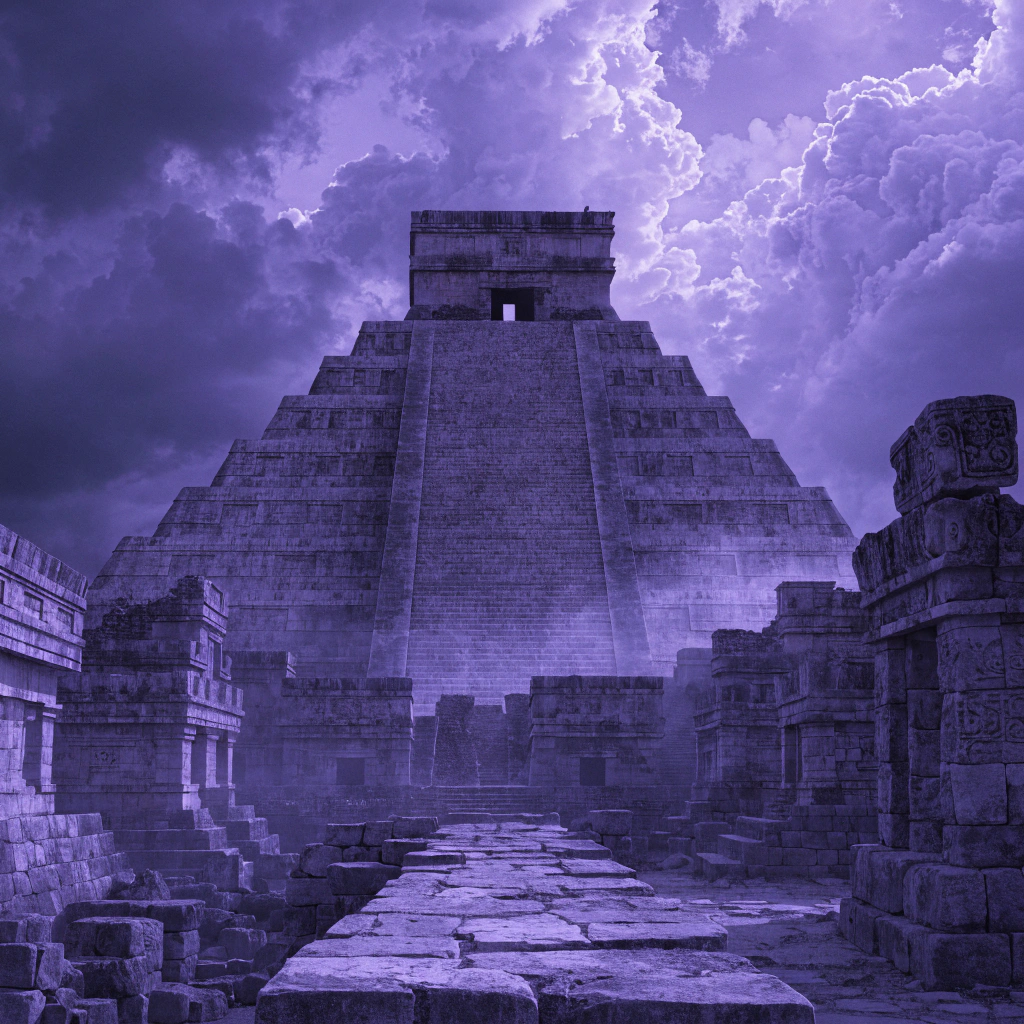
Chichén Itzá: Un Lugar Especial en México
Chichén Itzá es un lugar muy especial en México. Está en la península de Yucatán. Es una ciudad antigua de la cultura maya. Aquí hay pirámides grandes y edificios bonitos. La pirámide más famosa es El Castillo. También hay un campo de juego de pelota. Mucha gente visita Chichén Itzá cada año. Los turistas vienen de muchos países. Es un lugar con mucha historia. Es importante para México y para el mundo. Puedes ver piedras viejas y aprender sobre los mayas. Es un sitio maravilloso y grande. ¡Es una maravilla del mundo!
Gramática destacada
Patrón: El verbo "Ser"
"Chichén Itzá es un lugar muy especial."
Usamos 'ser' para hablar de características permanentes, identidad o lo que algo es. Por ejemplo, 'Yo soy estudiante' o 'Ella es alta'.
Patrón: El verbo "Estar"
"Está en la península de Yucatán."
Usamos 'estar' para hablar de la ubicación de algo o alguien, o de estados temporales. Por ejemplo, 'El libro está en la mesa' o 'Yo estoy feliz'.
Pon a prueba tu comprensión
10 preguntas · A1 Principiante · 1 vista previa gratis
Pon a prueba lo que aprendiste en este artículo. ¡Responde todas las preguntas para ganar XP!
¿Dónde está Chichén Itzá?
¿Quieres terminar el quiz?
9 preguntas más te esperan. ¡Regístrate gratis para desbloquear el quiz completo y ganar XP!
Regístrate gratis¿Ya tienes cuenta? Acceder
Desglose de preguntas
¿Dónde está Chichén Itzá?
Tu respuesta:
Respuesta correcta: en la península de Yucatán
Chichén Itzá es una ciudad nueva.
Tu respuesta:
Respuesta correcta: Falso
¿Qué significa "gente"?
Tu respuesta:
Respuesta correcta: muchas personas
La pirámide más famosa es El _____.
Tu respuesta:
Respuesta correcta: Castillo
The Magic of Chichén Itzá
Chichén Itzá is a famous ancient site in Mexico. It is in the Yucatán Peninsula. A long time ago, it was a very big and important city for the Maya people. They built many stone buildings there.
The most famous building is a tall pyramid called El Castillo. It has four sides and many steps. In total, there are 365 steps. This is the same as the number of days in a year! The Maya were very smart because they studied the stars and the sun.
Life in Chichén Itzá was busy between the years 600 and 1200. People lived, worked, and prayed there. Today, the city is older than many modern cities, but the stone temples are still strong.
Now, millions of tourists visit Chichén Itzá every year. It is one of the New Seven Wonders of the World. It is more popular than many other sites in Mexico because it is very beautiful. You can learn a lot about history there.
Gramática destacada
Patrón: Past Simple (to be and regular verbs)
"A long time ago, it was a very big and important city for the Maya people."
We use the past simple to talk about things that happened and finished in the past. For 'be', we use 'was' or 'were', and for regular verbs, we usually add '-ed'.
Patrón: Comparatives
"It is more popular than many other sites in Mexico because it is very beautiful."
We use 'more + adjective + than' for long adjectives (like 'popular') to compare two things. For short adjectives, we add '-er' to the end.
Pon a prueba tu comprensión
11 preguntas · A2 Básico · 1 vista previa gratis
Pon a prueba lo que aprendiste en este artículo. ¡Responde todas las preguntas para ganar XP!
Where is Chichén Itzá located?
¿Quieres terminar el quiz?
10 preguntas más te esperan. ¡Regístrate gratis para desbloquear el quiz completo y ganar XP!
Regístrate gratis¿Ya tienes cuenta? Acceder
Desglose de preguntas
Where is Chichén Itzá located?
Tu respuesta:
Respuesta correcta: Mexico
The pyramid called El Castillo has 365 steps.
Tu respuesta:
Respuesta correcta: Verdadero
What does the word 'ancient' mean?
Tu respuesta:
Respuesta correcta: From a long time ago
The Maya were very _____ because they studied the stars.
Tu respuesta:
Respuesta correcta: smart
When was the city of Chichén Itzá busy with life?
Tu respuesta:
Respuesta correcta: Between 600 and 1200
Chichén Itzá: The Mystery of the Maya Pyramid
Chichén Itzá is a famous historical site in Mexico that has been visited by millions of people from all over the world. Located in the Yucatán Peninsula, this ancient city was once a powerful center for the Maya people. It was built between 600 AD and 1200 AD and shows how advanced their civilization was.
The most famous building in the city is El Castillo, which is a giant pyramid that served as a temple. This structure has been designed with incredible mathematical precision. Interestingly, the pyramid has 365 steps, which represents the number of days in a year. Scientists have discovered that the Maya people were experts in astronomy and used their buildings to track the movements of the stars.
Twice a year, during the spring and autumn equinoxes, a special event occurs. A shadow that looks like a giant snake can be seen moving down the stairs of the pyramid. This happens because of the specific way the sun hits the stone edges. This amazing sight attracts thousands of tourists who want to witness the genius of ancient engineering.
Chichén Itzá, which was abandoned hundreds of years ago, is now recognized as one of the New Seven Wonders of the World. Although time has passed, the beauty of the site has been preserved for modern visitors. It remains a place where history and mystery meet, offering a glimpse into a world that existed long before our own.
Gramática destacada
Patrón: Passive Voice
"This structure has been designed with incredible mathematical precision."
The passive voice is used when the focus is on the action or the object rather than the person performing the action. It is formed using the verb 'to be' followed by the past participle of the main verb.
Patrón: Relative Clauses
"The most famous building in the city is El Castillo, which is a giant pyramid that served as a temple."
Relative clauses give us more information about a person or thing. 'Which' and 'that' are relative pronouns used to connect these clauses to the main noun.
Pon a prueba tu comprensión
11 preguntas · B1 Intermedio · 1 vista previa gratis
Pon a prueba lo que aprendiste en este artículo. ¡Responde todas las preguntas para ganar XP!
What is the name of the most famous pyramid in Chichén Itzá?
¿Quieres terminar el quiz?
10 preguntas más te esperan. ¡Regístrate gratis para desbloquear el quiz completo y ganar XP!
Regístrate gratis¿Ya tienes cuenta? Acceder
Desglose de preguntas
What is the name of the most famous pyramid in Chichén Itzá?
Tu respuesta:
Respuesta correcta: El Castillo
The pyramid has 365 steps to represent the days in a year.
Tu respuesta:
Respuesta correcta: Verdadero
What does 'preserved' mean?
Tu respuesta:
Respuesta correcta: Kept in its original state
The snake shadow appears during the spring and autumn _____.
Tu respuesta:
Respuesta correcta: equinoxes
Why did the Maya people track the stars?
Tu respuesta:
Respuesta correcta: They were experts in astronomy
The Architectural Genius of Chichén Itzá: A Window into the Maya-Toltec World
Chichén Itzá, located in the heart of the Yucatán Peninsula, represents one of the most sophisticated examples of ancient urban planning in the world. As a major hub of the Maya-Toltec civilization, it flourished between 600 and 1200 AD, serving as a vibrant center of political and economic power. Although many contemporary tourists visit primarily for the visual aesthetics, the site offers deep insights into the astronomical and mathematical prowess of its creators.
The most iconic structure, the Temple of Kukulcán, also known as El Castillo, demonstrates an incredible level of architectural precision. During the spring and autumn equinoxes, the sunlight hits the pyramid at a specific angle, creating a shadow that resembles a serpent descending the stairs. This phenomenon suggests that the Maya possessed an advanced understanding of celestial movements, which they integrated seamlessly into their religious architecture. Had they not mastered these complex calculations, such a precise alignment would have been impossible to achieve.
Beyond its religious importance, Chichén Itzá served as a crucial economic crossroads. Its strategic location allowed it to dominate regional trade, connecting the coastal areas with the inland territories of Mesoamerica. The Great Ball Court, which is the largest of its kind discovered so far, highlights the cultural importance of ritualistic games in Mayan society. Furthermore, the Sacred Cenote, a natural limestone sinkhole, provided a vital source of water and acted as a place for precious offerings, reflecting the deep spiritual connection the people maintained with the natural environment.
By the 13th century, however, the city began to decline, eventually being abandoned for reasons that remain a subject of intense academic debate. Some historians argue that severe environmental factors, such as prolonged droughts, played a decisive role, while others point to internal political conflict and shifting trade routes. Regardless of its eventual fall, the site remains a testament to human ingenuity and resilience. Today, it stands not only as a UNESCO World Heritage site but also as a bridge connecting modern society to a complex, ancient world that continues to fascinate researchers and travelers alike. Its preservation allows us to appreciate the legacy of a civilization that reached the pinnacle of its development centuries ago.
Gramática destacada
Patrón: Inverted Third Conditional
"Had they not mastered these complex calculations, such a precise alignment would have been impossible to achieve."
This structure is a formal way to express an unreal condition in the past. It replaces 'If they had not mastered' by inverting the auxiliary 'had' and the subject.
Patrón: Non-defining Relative Clauses
"The most iconic structure, the Temple of Kukulcán, also known as El Castillo, demonstrates an incredible level of architectural precision."
These clauses provide extra information about a noun but are not essential to the sentence's meaning. They are always separated by commas.
Patrón: Passive Voice with Present Participle
"...eventually being abandoned for reasons that remain a subject of intense academic debate."
The 'being + past participle' form is used here to describe a state or action happening to the subject without focusing on who performed the action.
Pon a prueba tu comprensión
11 preguntas · B2 Intermedio alto · 1 vista previa gratis
Pon a prueba lo que aprendiste en este artículo. ¡Responde todas las preguntas para ganar XP!
What occurs at El Castillo during the equinoxes?
¿Quieres terminar el quiz?
10 preguntas más te esperan. ¡Regístrate gratis para desbloquear el quiz completo y ganar XP!
Regístrate gratis¿Ya tienes cuenta? Acceder
Desglose de preguntas
What occurs at El Castillo during the equinoxes?
Tu respuesta:
Respuesta correcta: A shadow resembling a snake appears on the stairs.
Historians have reached a final agreement on why Chichén Itzá was abandoned.
Tu respuesta:
Respuesta correcta: Falso
What does the word 'sophisticated' mean in the context of the article?
Tu respuesta:
Respuesta correcta: Highly complex and advanced
By the 13th century, the city began to _____, eventually being abandoned.
Tu respuesta:
Respuesta correcta: decline
What was the primary function of the Sacred Cenote?
Tu respuesta:
Respuesta correcta: A source of water and a location for religious offerings
The Architectural Synthesis of Chichén Itzá: A Monument to Celestial Ambition
Rarely does a site encapsulate the intellectual and militaristic zenith of a civilization as poignantly as Chichén Itzá. Situated within the dense scrub forests of the Yucatán Peninsula, this ancient metropolis serves as a testament to the sophisticated synthesis of Mayan and Toltec cultures. At the heart of this urban sprawl lies El Castillo, the Temple of Kukulcán, which stands as a monolithic calendar in stone. It is the precise alignment of this pyramid with the sun that creates the illusion of a serpent descending the staircase during the spring and autumn equinox. Such celestial precision reflects a profound understanding of astronomy and mathematics, highlighting the scientific prowess of its inhabitants.
The city’s layout and architectural motifs suggest a complex narrative of cultural subjugation and integration. While the earlier structures exhibit the ornate Puuc Mayan style, the later additions, such as the Great Ball Court, demonstrate the stark, militaristic influence of the Toltecs from central Mexico. This amalgamation of styles created a unique aesthetic vanguard in pre-Columbian history. The manifestation of such complex urban planning underscores a civilization in its prime, one that dominated regional trade and religious life for centuries. However, the decline of Chichén Itzá remains somewhat enigmatic, with scholars debating whether internal socio-political collapse or external environmental pressures led to its eventual abandonment around 1200 AD.
Critically analyzing the site today involves acknowledging the tension between its historical grandeur and its contemporary status as a global tourist destination. The preservation of the limestone structures is a constant battle against the humid tropical climate. Furthermore, the commercialization of the site raises questions about the balance between heritage conservation and economic exploitation. Despite these modern challenges, Chichén Itzá remains the pinnacle of ancient Mesoamerican engineering, inviting us to contemplate the transience of even the most powerful human empires. It was the strategic control of the 'cenotes' or natural sinkholes that provided the city with the life-sustaining water necessary for such a large population to thrive in an otherwise arid landscape. Ultimately, the site’s enduring legacy lies in its ability to bridge the gap between terrestrial power and celestial mystery.
Gramática destacada
Patrón: Negative Inversion
"Rarely does a site encapsulate the intellectual and militaristic zenith of a civilization as poignantly as Chichén Itzá."
When a sentence starts with a negative or restrictive adverb like 'rarely', the subject and auxiliary verb are inverted. This is used for emphasis and is typical of formal, C1-level writing.
Patrón: Cleft Sentences
"It is the precise alignment of this pyramid with the sun that creates the illusion of a serpent."
Cleft sentences use the structure 'It is/was... that...' to focus on a specific part of the sentence. Here, it emphasizes the 'precise alignment' as the cause of the illusion.
Patrón: Nominalisation
"The manifestation of such complex urban planning underscores a civilization in its prime."
Nominalisation involves turning verbs or adjectives into nouns (e.g., 'manifest' to 'manifestation'). This creates a more academic and concise tone by focusing on concepts rather than actions.
Pon a prueba tu comprensión
12 preguntas · C1 Avanzado · 1 vista previa gratis
Pon a prueba lo que aprendiste en este artículo. ¡Responde todas las preguntas para ganar XP!
What is the primary architectural significance of El Castillo mentioned in the text?
¿Quieres terminar el quiz?
11 preguntas más te esperan. ¡Regístrate gratis para desbloquear el quiz completo y ganar XP!
Regístrate gratis¿Ya tienes cuenta? Acceder
Desglose de preguntas
What is the primary architectural significance of El Castillo mentioned in the text?
Tu respuesta:
Respuesta correcta: It functions as a monolithic stone calendar aligned with the sun.
The decline of Chichén Itzá is attributed to a single, well-documented historical event.
Tu respuesta:
Respuesta correcta: Falso
What does the word 'pinnacle' mean in the context of the article?
Tu respuesta:
Respuesta correcta: The most successful or powerful point.
The city relied on natural sinkholes called _____ for its water supply.
Tu respuesta:
Respuesta correcta: cenotes
Which two cultures' styles were synthesized in Chichén Itzá's architecture?
Tu respuesta:
Respuesta correcta: Mayan and Toltec
The Puuc style is associated with the later additions to the city, such as the Great Ball Court.
Tu respuesta:
Respuesta correcta: Falso
Chichén Itzá: Palimpsesto Arquitectónico de una Cosmovisión Milenaria
Chichén Itzá se erige como uno de los sitios arqueológicos más emblemáticos y arquitectónicamente sofisticados del orbe, constituyendo el epítome de la civilización maya-tolteca. Enclavada en el corazón de la península de Yucatán, esta antigua metrópolis fungió como un vibrante epicentro de poder político, económico y religioso, abarcando un período que se extiende aproximadamente del 600 d.C. al 1200 d.C. El sitio es una cátedra magistral de ingeniería precolombina, amalgamando el estilo Puuc maya tradicional con las influencias militaristas y cosmogónicas del pueblo tolteca, proveniente del centro de México.
La singularidad de Chichén Itzá reside en su capacidad de sintetizar y reinterpretar, con una maestría sin parangón, las tradiciones arquitectónicas y simbólicas de dos culturas trascendentales. El Castillo, o Pirámide de Kukulcán, es quizás el monumento más reconocido, una estructura que no solo sirve como calendario astronómico de precisión asombrosa, sino que también encarna la intrincada cosmovisión de sus constructores. Durante los equinoccios, la proyección de sombras crea la ilusión de una serpiente emplumada descendiendo por la escalinata, un fenómeno que aún hoy suscita admiración y reverencia entre quienes lo presencian. Esta manifestación no es meramente un prodigio arquitectónico, sino una profunda declaración de la interconexión entre el cosmos, la deidad y la existencia humana.
El Gran Juego de Pelota, el más grande de Mesoamérica, atestigua la importancia ritual y social de este deporte. Sus dimensiones colosales y los intrincados relieves que adornan sus muros sugieren que los partidos trascendían la mera competición lúdica, adquiriendo un significado profundamente sacro, vinculado a ciclos cósmicos y sacrificios propiciatorios. La acústica del campo es tan excepcional que un susurro pronunciado en un extremo puede ser escuchado nítidamente en el opuesto, una proeza ingenieril que sigue desconcertando a los expertos contemporáneos.
La presencia de estructuras como el Templo de los Guerreros, con sus mil columnas, y el Cenote Sagrado, un pozo natural utilizado para ofrendas y sacrificios, subraya la complejidad de la organización social y religiosa de Chichén Itzá. El Cenote, en particular, ha revelado un tesoro de artefactos y restos humanos, proporcionando una ventana invaluable a las prácticas rituales y las creencias de estas antiguas civilizaciones. La persistencia de tales vestigios arqueológicos nos conmina a reflexionar sobre la efímera naturaleza del poder y la perenne búsqueda humana de trascendencia.
Aunque el declive de Chichén Itzá alrededor del siglo XIII permanece envuelto en cierto misterio, se postula que factores como las sequías prolongadas, los conflictos internos o el colapso de las rutas comerciales pudieron haber contribuido a su eventual abandono. No obstante, su legado perdura, no solo en la magnificencia de sus ruinas, sino también en la influencia cultural que ejerció sobre civilizaciones posteriores y en la fascinación que continúa inspirando en la actualidad. Estudiar Chichén Itzá no es solo descifrar piedras; es intentar comprender la intrincada madeja de la historia, la astronomía, la religión y la ingeniería que forjaron una de las culturas más enigmáticas y esplendorosas de la humanidad.
En última instancia, Chichén Itzá nos interpela, desafiándonos a desentrañar los arcanos de una civilización que supo armonizar su existencia con el orden cósmico, dejando un testimonio imperecedero de su ingenio y su profunda conexión con lo sagrado. Es un testimonio palpable de que, incluso en la antigüedad, el ser humano aspiraba a construir monumentos que desafiaran el tiempo, que hablaran de su fe y de su dominio sobre el entorno. La visita a este lugar no es meramente un acto turístico, sino una inmersión en un pasado que, a pesar de su lejanía, sigue resonando con una pertinencia y una elocuencia asombrosas en nuestro presente. Que su estudio y preservación sean una prioridad ineludible para las generaciones venideras, a fin de que el conocimiento que atesora no se disipe en el olvido, sino que continúe iluminando la senda de nuestra comprensión cultural y antropológica.
Gramática destacada
Patrón: El Subjuntivo en Cláusulas Sustantivas (para expresar emociones o valoraciones)
"Esta manifestación no es meramente un prodigio arquitectónico, sino una profunda declaración de la interconexión entre el cosmos, la deidad y la existencia humana."
Aunque este ejemplo no contiene un subjuntivo explícito en una cláusula sustantiva con emoción, el texto sí lo usa en otras partes. Por ejemplo, 'Que su estudio y preservación sean una prioridad ineludible' usa el subjuntivo para expresar un deseo o una valoración. Se forma con el presente de subjuntivo para acciones presentes o futuras, y el imperfecto de subjuntivo para acciones pasadas o hipotéticas, a menudo introducido por verbos de emoción, duda o valoración.
Patrón: La Voz Pasiva con 'se' (Pasiva Refleja)
"Aunque el declive de Chichén Itzá alrededor del siglo XIII permanece envuelto en cierto misterio, se postula que factores como las sequías prolongadas, los conflictos internos o el colapso de las rutas comerciales pudieron haber contribuido a su eventual abandono."
La pasiva refleja con 'se' se utiliza para expresar una acción pasiva cuando el agente no es importante o se desconoce. Se forma con 'se' seguido de un verbo en tercera persona del singular o plural, concordando con el objeto que recibe la acción. Es muy común en textos académicos y formales para generalizar o evitar especificar al sujeto.
Patrón: Perífrasis Verbal de Probabilidad o Hipótesis (Poder haber contribuido)
"se postula que factores como las sequías prolongadas, los conflictos internos o el colapso de las rutas comerciales pudieron haber contribuido a su eventual abandono."
Esta perífrasis verbal, 'poder + haber + participio', se emplea para expresar una posibilidad o hipótesis sobre una acción que ocurrió en el pasado. Sugiere que algo 'pudo haber sucedido' sin afirmarlo categóricamente. Es crucial para introducir un grado de incertidumbre o especulación, muy útil en el discurso académico y analítico.
Pon a prueba tu comprensión
12 preguntas · C2 Dominio · 1 vista previa gratis
Pon a prueba lo que aprendiste en este artículo. ¡Responde todas las preguntas para ganar XP!
¿Cuál es una de las principales características que hacen de Chichén Itzá un sitio único según el artículo?
¿Quieres terminar el quiz?
11 preguntas más te esperan. ¡Regístrate gratis para desbloquear el quiz completo y ganar XP!
Regístrate gratis¿Ya tienes cuenta? Acceder
Desglose de preguntas
¿Cuál es una de las principales características que hacen de Chichén Itzá un sitio único según el artículo?
Tu respuesta:
Respuesta correcta: La síntesis magistral de tradiciones arquitectónicas maya y tolteca.
El Castillo de Kukulcán es solo una estructura decorativa sin función astronómica.
Tu respuesta:
Respuesta correcta: Falso
¿Qué significa la palabra 'epítome' en el contexto del artículo?
Tu respuesta:
Respuesta correcta: La representación perfecta o el modelo de algo.
La acústica excepcional del Gran Juego de Pelota es una proeza ______ que sigue desconcertando a los expertos.
Tu respuesta:
Respuesta correcta: ingenieril
¿Qué se postula como posible causa del declive de Chichén Itzá?
Tu respuesta:
Respuesta correcta: Sequías prolongadas, conflictos internos o el colapso de rutas comerciales.
El Cenote Sagrado solo se utilizaba para el abastecimiento de agua potable.
Tu respuesta:
Respuesta correcta: Falso
Chichén Itzá: ¡Hola, México!
Chichén Itzá es un lugar grande. Está en México. México es un país bonito. En Chichén Itzá hay pirámides. La pirámide es muy alta. Es vieja. Es famosa. Muchas personas visitan este lugar. Es un sitio importante. ¡Es maravilloso!
Gramática destacada
Patrón: Ser y Estar: Descripción y Ubicación
"Chichén Itzá es un lugar grande. Está en México."
Usamos 'es' (del verbo ser) para describir algo. Por ejemplo: 'Chichén Itzá es grande'. Usamos 'está' (del verbo estar) para decir dónde está algo. Por ejemplo: 'Chichén Itzá está en México'.
Pon a prueba tu comprensión
10 preguntas · A0 Pre-principiante · 1 vista previa gratis
Pon a prueba lo que aprendiste en este artículo. ¡Responde todas las preguntas para ganar XP!
¿Qué es Chichén Itzá?
¿Quieres terminar el quiz?
9 preguntas más te esperan. ¡Regístrate gratis para desbloquear el quiz completo y ganar XP!
Regístrate gratis¿Ya tienes cuenta? Acceder
Desglose de preguntas
¿Qué es Chichén Itzá?
Tu respuesta:
Respuesta correcta: Un lugar
Chichén Itzá está en España.
Tu respuesta:
Respuesta correcta: Falso
¿Qué significa 'grande'?
Tu respuesta:
Respuesta correcta: Muy grande
Chichén Itzá es un _____ grande.
Tu respuesta:
Respuesta correcta: lugar

