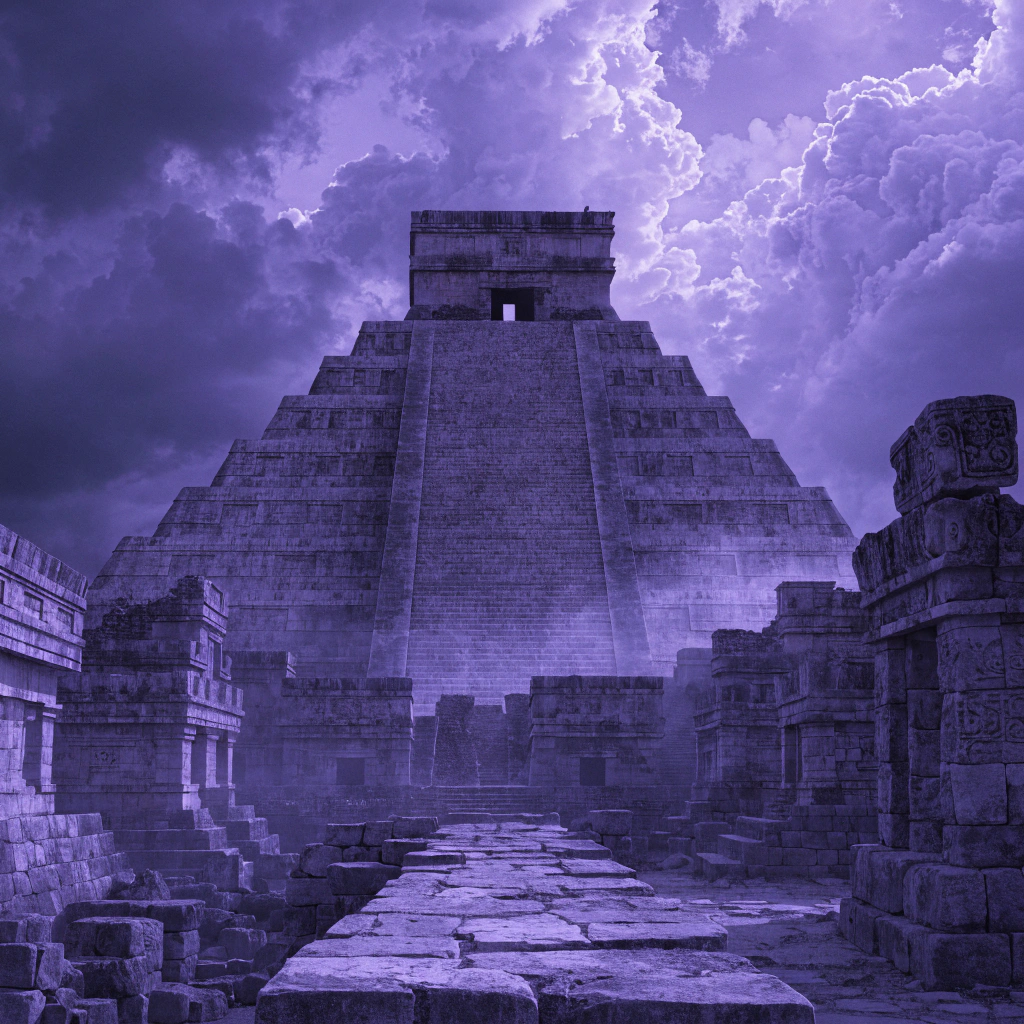
Chichén Itzá: A Famous Old City
Chichén Itzá is a very old city in Mexico. It is in the Yucatán. It is a famous place for tourists. Many people visit this place every year.
The city has a big pyramid. The name of the pyramid is El Castillo. It is very tall and beautiful. The Maya people built this city a long time ago.
There are also big stones and old buildings. The weather is usually hot and sunny. It is a very special place in history.
문법 스포트라이트
패턴: Present Simple 'to be'
"Chichén Itzá is a very old city in Mexico."
We use 'is' with singular subjects like a city or a person. It is used to describe facts and states.
패턴: Present Simple (Plural)
"Many people visit this place every year."
We use the base form of the verb when the subject is plural (many people). It describes a regular activity.
이해도를 테스트하세요
10 질문 · A1 초급 · 무료 미리보기 1회
이 기사에서 배운 내용을 테스트하세요. 모든 질문에 답하여 XP를 획득하세요!
Where is Chichén Itzá?
문제별 결과
Where is Chichén Itzá?
내 답변:
정답: Mexico
The pyramid is called El Castillo.
내 답변:
정답: 참
What does 'tall' mean?
내 답변:
정답: High in height
Chichén Itzá is a very _____ city.
내 답변:
정답: old
The Magic of Chichén Itzá
Chichén Itzá is a famous ancient site in Mexico. It is in the Yucatán Peninsula. A long time ago, it was a very big and important city for the Maya people. They built many stone buildings there.
The most famous building is a tall pyramid called El Castillo. It has four sides and many steps. In total, there are 365 steps. This is the same as the number of days in a year! The Maya were very smart because they studied the stars and the sun.
Life in Chichén Itzá was busy between the years 600 and 1200. People lived, worked, and prayed there. Today, the city is older than many modern cities, but the stone temples are still strong.
Now, millions of tourists visit Chichén Itzá every year. It is one of the New Seven Wonders of the World. It is more popular than many other sites in Mexico because it is very beautiful. You can learn a lot about history there.
문법 스포트라이트
패턴: Past Simple (to be and regular verbs)
"A long time ago, it was a very big and important city for the Maya people."
We use the past simple to talk about things that happened and finished in the past. For 'be', we use 'was' or 'were', and for regular verbs, we usually add '-ed'.
패턴: Comparatives
"It is more popular than many other sites in Mexico because it is very beautiful."
We use 'more + adjective + than' for long adjectives (like 'popular') to compare two things. For short adjectives, we add '-er' to the end.
이해도를 테스트하세요
11 질문 · A2 초등급 · 무료 미리보기 1회
이 기사에서 배운 내용을 테스트하세요. 모든 질문에 답하여 XP를 획득하세요!
Where is Chichén Itzá located?
문제별 결과
Where is Chichén Itzá located?
내 답변:
정답: Mexico
The pyramid called El Castillo has 365 steps.
내 답변:
정답: 참
What does the word 'ancient' mean?
내 답변:
정답: From a long time ago
The Maya were very _____ because they studied the stars.
내 답변:
정답: smart
When was the city of Chichén Itzá busy with life?
내 답변:
정답: Between 600 and 1200
Chichén Itzá: The Mystery of the Maya Pyramid
Chichén Itzá is a famous historical site in Mexico that has been visited by millions of people from all over the world. Located in the Yucatán Peninsula, this ancient city was once a powerful center for the Maya people. It was built between 600 AD and 1200 AD and shows how advanced their civilization was.
The most famous building in the city is El Castillo, which is a giant pyramid that served as a temple. This structure has been designed with incredible mathematical precision. Interestingly, the pyramid has 365 steps, which represents the number of days in a year. Scientists have discovered that the Maya people were experts in astronomy and used their buildings to track the movements of the stars.
Twice a year, during the spring and autumn equinoxes, a special event occurs. A shadow that looks like a giant snake can be seen moving down the stairs of the pyramid. This happens because of the specific way the sun hits the stone edges. This amazing sight attracts thousands of tourists who want to witness the genius of ancient engineering.
Chichén Itzá, which was abandoned hundreds of years ago, is now recognized as one of the New Seven Wonders of the World. Although time has passed, the beauty of the site has been preserved for modern visitors. It remains a place where history and mystery meet, offering a glimpse into a world that existed long before our own.
문법 스포트라이트
패턴: Passive Voice
"This structure has been designed with incredible mathematical precision."
The passive voice is used when the focus is on the action or the object rather than the person performing the action. It is formed using the verb 'to be' followed by the past participle of the main verb.
패턴: Relative Clauses
"The most famous building in the city is El Castillo, which is a giant pyramid that served as a temple."
Relative clauses give us more information about a person or thing. 'Which' and 'that' are relative pronouns used to connect these clauses to the main noun.
이해도를 테스트하세요
11 질문 · B1 중급 · 무료 미리보기 1회
이 기사에서 배운 내용을 테스트하세요. 모든 질문에 답하여 XP를 획득하세요!
What is the name of the most famous pyramid in Chichén Itzá?
문제별 결과
What is the name of the most famous pyramid in Chichén Itzá?
내 답변:
정답: El Castillo
The pyramid has 365 steps to represent the days in a year.
내 답변:
정답: 참
What does 'preserved' mean?
내 답변:
정답: Kept in its original state
The snake shadow appears during the spring and autumn _____.
내 답변:
정답: equinoxes
Why did the Maya people track the stars?
내 답변:
정답: They were experts in astronomy
The Architectural Genius of Chichén Itzá: A Window into the Maya-Toltec World
Chichén Itzá, located in the heart of the Yucatán Peninsula, represents one of the most sophisticated examples of ancient urban planning in the world. As a major hub of the Maya-Toltec civilization, it flourished between 600 and 1200 AD, serving as a vibrant center of political and economic power. Although many contemporary tourists visit primarily for the visual aesthetics, the site offers deep insights into the astronomical and mathematical prowess of its creators.
The most iconic structure, the Temple of Kukulcán, also known as El Castillo, demonstrates an incredible level of architectural precision. During the spring and autumn equinoxes, the sunlight hits the pyramid at a specific angle, creating a shadow that resembles a serpent descending the stairs. This phenomenon suggests that the Maya possessed an advanced understanding of celestial movements, which they integrated seamlessly into their religious architecture. Had they not mastered these complex calculations, such a precise alignment would have been impossible to achieve.
Beyond its religious importance, Chichén Itzá served as a crucial economic crossroads. Its strategic location allowed it to dominate regional trade, connecting the coastal areas with the inland territories of Mesoamerica. The Great Ball Court, which is the largest of its kind discovered so far, highlights the cultural importance of ritualistic games in Mayan society. Furthermore, the Sacred Cenote, a natural limestone sinkhole, provided a vital source of water and acted as a place for precious offerings, reflecting the deep spiritual connection the people maintained with the natural environment.
By the 13th century, however, the city began to decline, eventually being abandoned for reasons that remain a subject of intense academic debate. Some historians argue that severe environmental factors, such as prolonged droughts, played a decisive role, while others point to internal political conflict and shifting trade routes. Regardless of its eventual fall, the site remains a testament to human ingenuity and resilience. Today, it stands not only as a UNESCO World Heritage site but also as a bridge connecting modern society to a complex, ancient world that continues to fascinate researchers and travelers alike. Its preservation allows us to appreciate the legacy of a civilization that reached the pinnacle of its development centuries ago.
문법 스포트라이트
패턴: Inverted Third Conditional
"Had they not mastered these complex calculations, such a precise alignment would have been impossible to achieve."
This structure is a formal way to express an unreal condition in the past. It replaces 'If they had not mastered' by inverting the auxiliary 'had' and the subject.
패턴: Non-defining Relative Clauses
"The most iconic structure, the Temple of Kukulcán, also known as El Castillo, demonstrates an incredible level of architectural precision."
These clauses provide extra information about a noun but are not essential to the sentence's meaning. They are always separated by commas.
패턴: Passive Voice with Present Participle
"...eventually being abandoned for reasons that remain a subject of intense academic debate."
The 'being + past participle' form is used here to describe a state or action happening to the subject without focusing on who performed the action.
이해도를 테스트하세요
11 질문 · B2 중상급 · 무료 미리보기 1회
이 기사에서 배운 내용을 테스트하세요. 모든 질문에 답하여 XP를 획득하세요!
What occurs at El Castillo during the equinoxes?
문제별 결과
What occurs at El Castillo during the equinoxes?
내 답변:
정답: A shadow resembling a snake appears on the stairs.
Historians have reached a final agreement on why Chichén Itzá was abandoned.
내 답변:
정답: 거짓
What does the word 'sophisticated' mean in the context of the article?
내 답변:
정답: Highly complex and advanced
By the 13th century, the city began to _____, eventually being abandoned.
내 답변:
정답: decline
What was the primary function of the Sacred Cenote?
내 답변:
정답: A source of water and a location for religious offerings
The Architectural Synthesis of Chichén Itzá: A Monument to Celestial Ambition
Rarely does a site encapsulate the intellectual and militaristic zenith of a civilization as poignantly as Chichén Itzá. Situated within the dense scrub forests of the Yucatán Peninsula, this ancient metropolis serves as a testament to the sophisticated synthesis of Mayan and Toltec cultures. At the heart of this urban sprawl lies El Castillo, the Temple of Kukulcán, which stands as a monolithic calendar in stone. It is the precise alignment of this pyramid with the sun that creates the illusion of a serpent descending the staircase during the spring and autumn equinox. Such celestial precision reflects a profound understanding of astronomy and mathematics, highlighting the scientific prowess of its inhabitants.
The city’s layout and architectural motifs suggest a complex narrative of cultural subjugation and integration. While the earlier structures exhibit the ornate Puuc Mayan style, the later additions, such as the Great Ball Court, demonstrate the stark, militaristic influence of the Toltecs from central Mexico. This amalgamation of styles created a unique aesthetic vanguard in pre-Columbian history. The manifestation of such complex urban planning underscores a civilization in its prime, one that dominated regional trade and religious life for centuries. However, the decline of Chichén Itzá remains somewhat enigmatic, with scholars debating whether internal socio-political collapse or external environmental pressures led to its eventual abandonment around 1200 AD.
Critically analyzing the site today involves acknowledging the tension between its historical grandeur and its contemporary status as a global tourist destination. The preservation of the limestone structures is a constant battle against the humid tropical climate. Furthermore, the commercialization of the site raises questions about the balance between heritage conservation and economic exploitation. Despite these modern challenges, Chichén Itzá remains the pinnacle of ancient Mesoamerican engineering, inviting us to contemplate the transience of even the most powerful human empires. It was the strategic control of the 'cenotes' or natural sinkholes that provided the city with the life-sustaining water necessary for such a large population to thrive in an otherwise arid landscape. Ultimately, the site’s enduring legacy lies in its ability to bridge the gap between terrestrial power and celestial mystery.
문법 스포트라이트
패턴: Negative Inversion
"Rarely does a site encapsulate the intellectual and militaristic zenith of a civilization as poignantly as Chichén Itzá."
When a sentence starts with a negative or restrictive adverb like 'rarely', the subject and auxiliary verb are inverted. This is used for emphasis and is typical of formal, C1-level writing.
패턴: Cleft Sentences
"It is the precise alignment of this pyramid with the sun that creates the illusion of a serpent."
Cleft sentences use the structure 'It is/was... that...' to focus on a specific part of the sentence. Here, it emphasizes the 'precise alignment' as the cause of the illusion.
패턴: Nominalisation
"The manifestation of such complex urban planning underscores a civilization in its prime."
Nominalisation involves turning verbs or adjectives into nouns (e.g., 'manifest' to 'manifestation'). This creates a more academic and concise tone by focusing on concepts rather than actions.
이해도를 테스트하세요
12 질문 · C1 고급 · 무료 미리보기 1회
이 기사에서 배운 내용을 테스트하세요. 모든 질문에 답하여 XP를 획득하세요!
What is the primary architectural significance of El Castillo mentioned in the text?
문제별 결과
What is the primary architectural significance of El Castillo mentioned in the text?
내 답변:
정답: It functions as a monolithic stone calendar aligned with the sun.
The decline of Chichén Itzá is attributed to a single, well-documented historical event.
내 답변:
정답: 거짓
What does the word 'pinnacle' mean in the context of the article?
내 답변:
정답: The most successful or powerful point.
The city relied on natural sinkholes called _____ for its water supply.
내 답변:
정답: cenotes
Which two cultures' styles were synthesized in Chichén Itzá's architecture?
내 답변:
정답: Mayan and Toltec
The Puuc style is associated with the later additions to the city, such as the Great Ball Court.
내 답변:
정답: 거짓
Architectural Syncretism and Celestial Alignment: The Socio-Political Hegemony of Chichén Itzá
The archaeological site of Chichén Itzá, nestled within the dense scrub forests of the Yucatán Peninsula, stands not merely as a relic of antiquity but as a profound testament to the intellectual zenith of the Maya-Toltec civilization. To traverse its grounds is to witness a masterclass in pre-Columbian engineering, where the aesthetic sensibilities of the Puuc Mayan style merged seamlessly with the militaristic rigor of the Toltec people. This cultural syncretism, occurring roughly between 600 AD and 1200 AD, birthed a metropolis that served as the ideological and economic fulcrum of the region. It is imperative that any modern observer acknowledge the profound astronomical precision of the Maya, for whom architecture was an extension of cosmology. Nowhere is this more evident than in the Temple of Kukulcán, colloquially known as El Castillo. Not only does the Temple of Kukulcán serve as a monument to divinity, but it also functions as a sophisticated solar calendar of immense complexity. Were one to examine the pyramid during the vernal equinox, one would witness the descent of the feathered serpent, a shadow play choreographed with such mathematical exactitude that it remains a marvel of the modern age. This phenomenon suggests that the city’s layout was not arbitrary; rather, it was a deliberate attempt to harmonize the terrestrial realm with the celestial. Furthermore, the presence of the Sacred Cenote, a subterranean limestone sinkhole, underscores the city's religious hegemony. It functioned as a portal to the underworld, where offerings were made to Chaac, the rain god. Should the archaeological evidence be interpreted correctly, the decline of Chichén Itzá might well have been precipitated by environmental degradation and prolonged droughts rather than internal strife alone. The sophistication of their water management systems, while advanced, may eventually have succumbed to the relentless pressures of a changing climate. Ultimately, Chichén Itzá remains an evocative symbol of human ingenuity, challenging our contemporary understanding of historical progression. Its enduring structures demand that we reconsider the perceived dichotomy between ancient mysticism and scientific empiricism.
문법 스포트라이트
패턴: Inversion for emphasis
"Not only does the Temple of Kukulcán serve as a monument to divinity, but it also functions as a sophisticated solar calendar."
When 'not only' starts a sentence, the auxiliary verb 'does' comes before the subject 'the Temple of Kukulcán' to create a more formal and emphatic tone.
패턴: The Subjunctive Mood
"It is imperative that any modern observer acknowledge the profound astronomical precision of the Maya."
The subjunctive 'acknowledge' (instead of acknowledges) is used following adjectives of necessity like 'imperative' to express a requirement or recommendation.
패턴: Mixed Conditional / Inverted Condition
"Were one to examine the pyramid during the vernal equinox, one would witness the descent of the feathered serpent."
This uses 'Were + subject + to-infinitive' as a formal alternative to 'If someone were to examine', used here to discuss a hypothetical situation in a scholarly tone.
이해도를 테스트하세요
12 질문 · C2 마스터 · 무료 미리보기 1회
이 기사에서 배운 내용을 테스트하세요. 모든 질문에 답하여 XP를 획득하세요!
What does the author suggest was the primary reason for Chichén Itzá's architectural style?
문제별 결과
What does the author suggest was the primary reason for Chichén Itzá's architectural style?
내 답변:
정답: A blend of Mayan aesthetics and Toltec military influence
The author argues that the city's layout was entirely random and lacked planning.
내 답변:
정답: 거짓
What is the meaning of 'syncretism' in the context of the article?
내 답변:
정답: The merging of different cultural or religious styles
The decline of the city might have been _____ by environmental factors like drought.
내 답변:
정답: precipitated
What is the significance of the shadow on El Castillo during the equinox?
내 답변:
정답: It represents a feathered serpent descending the stairs
The Sacred Cenote was used for religious purposes and offerings.
내 답변:
정답: 참

