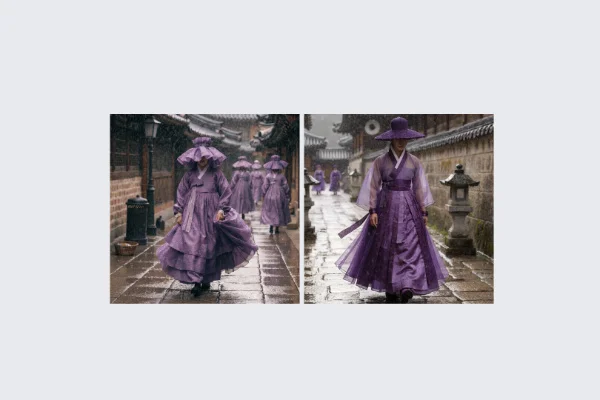
Taskiwin: Una Danza de Marruecos
Taskiwin es una danza muy especial. Es de Marruecos, un país en África. Las personas Amazigh de las montañas bailan Taskiwin. Es una parte importante de su cultura y su historia.
Los hombres bailan esta danza. Ellos usan un objeto especial. Este objeto se llama 'tiskt'. Es un cuerno decorado. Los bailarines llevan el tiskt en el hombro izquierdo.
La danza Taskiwin muestra fuerza y unión. Es un símbolo de la comunidad Amazigh. UNESCO dice que es una danza muy importante. Es antigua y bonita. Muchas personas admiran Taskiwin hoy.
Gramática destacada
Patrón: El Verbo "Ser" (Identidad)
"Taskiwin es una danza muy especial."
Usamos el verbo 'ser' para hablar de la identidad de algo o alguien. También lo usamos para decir qué es o de dónde es. Por ejemplo, 'Taskiwin es una danza' significa que Taskiwin tiene la identidad de ser una danza.
Patrón: Sustantivos y Artículos Plurales
"Las personas Amazigh de las montañas bailan Taskiwin."
Para hablar de más de una cosa, usamos sustantivos en plural, como 'personas' o 'montañas'. Los artículos que van con ellos también son plurales, por ejemplo, 'las' (femenino plural) o 'los' (masculino plural).
Pon a prueba tu comprensión
10 preguntas · A1 Principiante · 1 vista previa gratis
Pon a prueba lo que aprendiste en este artículo. ¡Responde todas las preguntas para ganar XP!
¿Qué es Taskiwin?
¿Quieres terminar el quiz?
9 preguntas más te esperan. ¡Regístrate gratis para desbloquear el quiz completo y ganar XP!
Regístrate gratis¿Ya tienes cuenta? Acceder
Desglose de preguntas
¿Qué es Taskiwin?
Tu respuesta:
Respuesta correcta: Una danza
Taskiwin es de España.
Tu respuesta:
Respuesta correcta: Falso
¿Qué significa 'cuerno'?
Tu respuesta:
Respuesta correcta: Una parte dura en la cabeza de algunos animales
Los hombres _____ esta danza.
Tu respuesta:
Respuesta correcta: bailan
Taskiwin: Un Tesoro Cultural de Marruecos
Taskiwin es una danza muy antigua y especial de Marruecos. Esta danza viene de las comunidades Amazigh, que viven en las altas montañas del Atlas. Es un baile que expresa la identidad colectiva de estas personas y su rica historia.
Los bailarines de Taskiwin llevan algo llamado 'tiskt' en su hombro izquierdo. El tiskt es un cuerno decorado, similar a un pequeño recipiente para pólvora. Este objeto es muy importante porque da nombre a la danza. Taskiwin es más que solo un baile; es una expresión de la antigua cultura guerrera de la región. Muestra fuerza, buena coordinación y también la resistencia del pueblo Amazigh.
En el año 2017, la UNESCO reconoció a Taskiwin. Dijo que era un Patrimonio Cultural Inmaterial muy importante y que necesitaba protección urgente. Es una tradición que ha pasado de generación en generación. Preservar Taskiwin es crucial para las nuevas generaciones, porque es un tesoro cultural que une a la comunidad y cuenta su historia de una manera única.
Gramática destacada
Patrón: El Pretérito Indefinido (Pasado Simple)
"En el año 2017, la UNESCO reconoció a Taskiwin."
Usamos el pretérito indefinido para hablar de acciones que terminaron en un momento específico en el pasado. Se usa para eventos que ocurrieron y finalizaron. Por ejemplo, 'reconoció' viene del verbo 'reconocer'.
Patrón: Comparativo de Superioridad (más que)
"Taskiwin es más que solo un baile."
Esta estructura se usa para comparar dos cosas y decir que una tiene una cualidad en mayor grado que la otra. Se forma con 'más' + adjetivo o sustantivo + 'que'. Aquí, 'Taskiwin' tiene más significado que 'solo un baile'.
Pon a prueba tu comprensión
11 preguntas · A2 Básico · 1 vista previa gratis
Pon a prueba lo que aprendiste en este artículo. ¡Responde todas las preguntas para ganar XP!
¿Qué es Taskiwin?
¿Quieres terminar el quiz?
10 preguntas más te esperan. ¡Regístrate gratis para desbloquear el quiz completo y ganar XP!
Regístrate gratis¿Ya tienes cuenta? Acceder
Desglose de preguntas
¿Qué es Taskiwin?
Tu respuesta:
Respuesta correcta: Una danza tradicional
Taskiwin es un baile muy moderno.
Tu respuesta:
Respuesta correcta: Falso
¿Qué significa la palabra "antigua" en el artículo?
Tu respuesta:
Respuesta correcta: Algo que existe desde hace mucho tiempo
Los bailarines de Taskiwin llevan un _____ en su hombro izquierdo.
Tu respuesta:
Respuesta correcta: tiskt
¿Dónde viven las comunidades Amazigh que practican Taskiwin?
Tu respuesta:
Respuesta correcta: En las altas montañas del Atlas
Taskiwin: The Ancient Warrior Dance of the High Atlas
Taskiwin is an ancient martial dance that has been practiced for centuries by the Amazigh communities in Morocco’s western High Atlas Mountains. This powerful tradition is more than just a performance; it represents the history and identity of the mountain people. The dance is named after the 'tiskt,' which is a decorated powder horn that dancers carry on their left shoulder. This object was historically used by soldiers to carry gunpowder.
In the past, Taskiwin was used to prepare young men for war. It taught them discipline, coordination, and strength. Today, it is performed at festivals and local celebrations. The dancers, who usually wear white clothes and red belts, move their shoulders and stomp their feet to the fast rhythm of drums and flutes. This collective movement shows the unity of the group and their connection to the land. Because of its military history, Taskiwin is often called a 'warrior dance.'
However, this beautiful tradition has faced many challenges in recent years. In 2017, Taskiwin was recognized by UNESCO as an Intangible Cultural Heritage in Need of Urgent Safeguarding. This means that special efforts have been made to protect the dance from disappearing. Many young people have started to learn the complex movements from their elders so the tradition can continue for future generations.
The dance has been preserved because the local people are proud of their unique heritage. When you watch a performance, you can feel the energy and spirit of the mountains. It is a special experience that connects the past with the present. By supporting these cultural practices, we ensure that the stories and skills of the High Atlas are never forgotten.
Gramática destacada
Patrón: Present Perfect (Passive and Active)
"Taskiwin is an ancient martial dance that has been practiced for centuries..."
The present perfect is used here to show an action that started in the past and continues to the present. 'Has been practiced' is the passive form, focusing on the dance rather than the people doing it.
Patrón: Relative Clauses
"The dancers, who usually wear white clothes and red belts, move their shoulders..."
Relative clauses starting with 'who' or 'which' provide extra information about a noun. In this sentence, the clause explains what the dancers are wearing without starting a new sentence.
Pon a prueba tu comprensión
11 preguntas · B1 Intermedio · 1 vista previa gratis
Pon a prueba lo que aprendiste en este artículo. ¡Responde todas las preguntas para ganar XP!
Where is the Taskiwin dance traditionally practiced?
¿Quieres terminar el quiz?
10 preguntas más te esperan. ¡Regístrate gratis para desbloquear el quiz completo y ganar XP!
Regístrate gratis¿Ya tienes cuenta? Acceder
Desglose de preguntas
Where is the Taskiwin dance traditionally practiced?
Tu respuesta:
Respuesta correcta: In the western High Atlas Mountains
The 'tiskt' is a type of drum used during the performance.
Tu respuesta:
Respuesta correcta: Falso
What does the word 'heritage' mean in the context of the article?
Tu respuesta:
Respuesta correcta: Traditions and history passed down through generations
In the past, Taskiwin was used to prepare young men for _____.
Tu respuesta:
Respuesta correcta: war
Why did UNESCO recognize Taskiwin in 2017?
Tu respuesta:
Respuesta correcta: Because it needs urgent protection to avoid disappearing
Taskiwin: The Martial Echo of the High Atlas Mountains
Taskiwin is an ancient martial dance performed by the Amazigh communities residing in the western High Atlas Mountains of Morocco. While it might appear to be a mere artistic display, it serves as a profound manifestation of historical warrior culture. Named after the 'tiskt'—a decorated powder horn worn on the shoulder—the dance has been recognized by UNESCO as an Intangible Cultural Heritage in Need of Urgent Safeguarding. Historically, Taskiwin was not intended for entertainment but rather for military preparation. Through rhythmic footwork and synchronized movements, young men would demonstrate their strength and agility. This collective performance fostered a sense of unity and resilience among the tribes, which was essential for survival in the harsh mountain environment. Despite its historical significance, the practice has faced numerous challenges in the modern era. The intricate steps of the dance involve a series of rapid shoulder movements and rhythmic stomping, which are accompanied by traditional instruments like the flute and tambourine. Each movement is symbolic, representing the bravery and coordination required in battle. Furthermore, the dance acts as a bridge between generations, allowing the youth to connect with their ancestral identity. However, the transmission of this heritage has become increasingly difficult. As younger generations migrate to urban centers in search of employment, the number of active practitioners has significantly declined. Consequently, the dance has reached a point of vulnerability that necessitates immediate intervention. Various local initiatives have been established to ensure that the knowledge and skills associated with Taskiwin are passed down to future performers. In conclusion, Taskiwin is not simply a relic of the past; it is a living expression of Amazigh identity. By analyzing its cultural importance and the risks it faces, we can better appreciate the efforts being made to preserve this unique art form. If these preservation strategies are successful, the rhythmic echoes of the High Atlas will continue to resonate for centuries to come.
Gramática destacada
Patrón: Present Perfect Passive
"the dance has been recognized by UNESCO as an Intangible Cultural Heritage"
This is used to describe an action that happened at an unspecified time in the past and has a result in the present, focusing on the receiver of the action.
Patrón: Relative Clauses
"the western High Atlas Mountains of Morocco, which are accompanied by traditional instruments"
Non-defining relative clauses provide extra information about a noun. They are separated by commas and use 'which' for things.
Patrón: First Conditional
"If these preservation strategies are successful, the rhythmic echoes of the High Atlas will continue to resonate"
This structure is used to talk about possible future events and their likely results, using 'if' + present simple and 'will' + base verb.
Pon a prueba tu comprensión
11 preguntas · B2 Intermedio alto · 1 vista previa gratis
Pon a prueba lo que aprendiste en este artículo. ¡Responde todas las preguntas para ganar XP!
What was the primary historical purpose of the Taskiwin dance?
¿Quieres terminar el quiz?
10 preguntas más te esperan. ¡Regístrate gratis para desbloquear el quiz completo y ganar XP!
Regístrate gratis¿Ya tienes cuenta? Acceder
Desglose de preguntas
What was the primary historical purpose of the Taskiwin dance?
Tu respuesta:
Respuesta correcta: Military preparation and warrior culture
The name 'Taskiwin' comes from the type of flute used during the performance.
Tu respuesta:
Respuesta correcta: Falso
What does 'intricate' mean in the context of the article?
Tu respuesta:
Respuesta correcta: Highly detailed and complex
The dance serves as a profound _____ of historical warrior culture.
Tu respuesta:
Respuesta correcta: manifestation
Why is the transmission of Taskiwin currently at risk?
Tu respuesta:
Respuesta correcta: Because young people are moving to urban areas
The Resonance of the Horn: Taskiwin and the Preservation of Amazigh Warrior Identity
Rarely has a cultural artifact managed to encapsulate the martial history of a people as poignantly as the Taskiwin dance of the western High Atlas Mountains. Rooted in the Amazigh communities of Morocco, this intricate performance serves as a communal repository of collective memory. Central to the spectacle is the 'tiskt', a meticulously decorated powder horn from which the dance derives its name. Suspended from the dancers’ left shoulders, these artifacts are not merely ornamental; they are symbolic conduits to a bygone era of regional skirmishes and tribal solidarity. The nominalization of these aesthetic choices reveals a deep-seated connection to the land and a history defined by resistance and resilience.
What makes Taskiwin particularly compelling is the synchronization required of its practitioners. The performance is characterized by a series of rhythmic shoulder shakes, synchronized footwork, and the percussive resonance of the 'tiskt' against the dancers' bodies. Such is the complexity of these movements that years of rigorous apprenticeship are often necessary to achieve proficiency. The dance is an embodiment of military discipline, where the individual is subsumed into the collective, echoing the strategic coordination once vital for survival in the rugged mountainous terrain. The auditory landscape is further enriched by the haunting melodies of the flute and the deep, resonant pulse of the 'tbel' drum, creating an atmosphere that is both celebratory and solemn.
However, the contemporary landscape poses significant challenges to the continuity of this tradition. It was the recognition by UNESCO in 2017 as an Intangible Cultural Heritage in Need of Urgent Safeguarding that finally brought global attention to its precarious state. The migration of youth to urban centers for economic opportunities has led to a dwindling number of practitioners, threatening to sever the lineage of oral and physical transmission. Furthermore, the encroachment of homogenized global culture risks diluting the raw, unadulterated essence of the dance, potentially relegating it to a mere folkloric curiosity for tourists rather than a living practice.
The debate surrounding the safeguarding of Taskiwin often centers on the tension between preservation and evolution. While some argue for a rigid adherence to ancestral forms, others suggest that for the dance to remain relevant, it must adapt to modern sensibilities. Yet, it is the authenticity of the experience that provides the Amazigh people with a sense of continuity. Taskiwin is not just a relic; it is a dynamic assertion of identity. Only by fostering a renewed sense of pride among the younger generation can the survival of Taskiwin be ensured. Not only must the physical movements be taught, but the philosophical underpinnings of the warrior code must also be understood to truly honor this heritage.
Gramática destacada
Patrón: Inversion with Negative Adverbials
"Rarely has a cultural artifact managed to encapsulate the martial history of a people as poignantly as the Taskiwin dance..."
When a negative or restrictive adverbial (like 'rarely') starts a sentence, the auxiliary verb comes before the subject. This is used in formal writing to add emphasis and dramatic effect.
Patrón: Cleft Sentences for Focus
"It was the recognition by UNESCO in 2017... that finally brought global attention to its precarious state."
A cleft sentence (It + is/was + focus + relative clause) is used to emphasize a specific piece of information. Here, it highlights that the UNESCO recognition was the specific catalyst for global attention.
Patrón: Inversion with 'Not only... but also'
"Not only must the physical movements be taught, but the philosophical underpinnings of the warrior code must also be understood..."
When 'Not only' begins a clause, the subject and auxiliary verb are inverted. This structure is used to balance two related points with equal or increasing importance.
Pon a prueba tu comprensión
12 preguntas · C1 Avanzado · 1 vista previa gratis
Pon a prueba lo que aprendiste en este artículo. ¡Responde todas las preguntas para ganar XP!
What is the primary significance of the 'tiskt' in the dance?
¿Quieres terminar el quiz?
11 preguntas más te esperan. ¡Regístrate gratis para desbloquear el quiz completo y ganar XP!
Regístrate gratis¿Ya tienes cuenta? Acceder
Desglose de preguntas
What is the primary significance of the 'tiskt' in the dance?
Tu respuesta:
Respuesta correcta: It is a decorated powder horn representing the warrior heritage.
UNESCO recognized Taskiwin as a heritage in need of urgent safeguarding in 2017.
Tu respuesta:
Respuesta correcta: Verdadero
What does the word 'subsumed' mean in the context of the article?
Tu respuesta:
Respuesta correcta: To be absorbed into a larger whole.
The migration of youth to urban centers is a major factor in the _____ state of Taskiwin.
Tu respuesta:
Respuesta correcta: precarious
According to the text, what is a potential risk of global cultural homogenization for Taskiwin?
Tu respuesta:
Respuesta correcta: It could result in the dance being treated as a mere curiosity for tourists.
The article suggests that teaching physical movements alone is sufficient to preserve the heritage.
Tu respuesta:
Respuesta correcta: Falso
The Ethnochoreography of Taskiwin: Martial Resonance and the Precariousness of Heritage
The High Atlas Mountains of Morocco serve as a rugged, majestic cradle for Taskiwin, an ethnochoreographic spectacle that transcends mere entertainment to embody the very quintessence of Amazigh martial history. Seldom has a cultural practice so poignantly captured the spirit of resistance and communal cohesion as this ancient dance. Named after the 'tiskt'—an ornately decorated powder horn traditionally worn on the left shoulder—Taskiwin is not merely a rhythmic display but a vestigial fragment of a warrior culture that once defined the social fabric of the western High Atlas. Were one to witness the synchronized tremors of the dancers, one would be struck by the visceral resonance of a bygone era, where every movement served as a mnemonic for survival and strength.
The performance itself constitutes a masterclass in collective coordination and physical discipline. Dancers, predominantly male, form intricate lines or concentric circles, their movements punctuated by the rhythmic thud of feet against the arid earth and sharp, staccato clapping that mirrors the firing of ancient muskets. This choreography is ostensibly a ritualized rehearsal of combat, a paradigmatic display of masculine endurance and tribal unity. Should the synchronization falter, the symbolic integrity of the community is perceived to diminish; for in the logic of Taskiwin, the individual is inseparable from the collective. The nomenclature of the dance is intrinsically linked to the 'tiskt', which serves as a constant reminder of the defensive capabilities required for survival in the unforgiving mountain terrain.
Furthermore, the auditory landscape of Taskiwin is as complex as its physical execution. The interplay between the 'tbel' (drum) and the 'ghaita' (flute) creates a poly-rhythmic foundation upon which the dancers build their narrative. One might argue that the music functions as a vessel for historical consciousness, anchoring ancestral triumphs within the contemporary psyche. However, the transmission of this esoteric knowledge has become increasingly precarious. As the forces of globalization exert pressure on traditional lifestyles, the younger generation often finds itself at a crossroads between the pull of ancestral duty and the allure of modern aspiration. It is within this interstitial space that the survival of Taskiwin is currently contested.
Following its 2017 induction into UNESCO’s List of Intangible Cultural Heritage in Need of Urgent Safeguarding, the discourse surrounding Taskiwin has shifted toward a more analytical and protective framework. It is imperative that the youth embrace these ancestral rhythms, lest the tradition vanish into the annals of historical obsolescence. This safeguarding process, however, is fraught with the risk of reification—the danger of turning a living, breathing social practice into a static museum artifact for the consumption of tourists. To avoid such a fate, the nuances of the dance must be meticulously documented and taught within their original socio-cultural context, ensuring that the dance remains a functional expression of identity rather than a commodified relic.
The evocative power of Taskiwin remains undiminished for those who reside in the High Atlas. It provides a sense of continuity in a rapidly shifting world, acting as a bridge between the martial exigencies of the past and the cultural aspirations of the present. Ultimately, the survival of Taskiwin hinges upon the collective will of the Amazigh communities to honor their lineage while navigating the complexities of the twenty-first century. Whether the 'tiskt' will continue to vibrate against the shoulders of future generations remains to be seen, yet its current resonance suggests a tradition that is as resilient as the mountains from which it sprang.
Gramática destacada
Patrón: Inversion for Emphasis
"Seldom has a cultural practice so poignantly captured the spirit of resistance and communal cohesion as this ancient dance."
Inversion of the subject and auxiliary verb occurs after negative or restrictive adverbs to add formal emphasis. It shifts the focus to the rarity or intensity of the action.
Patrón: The Subjunctive Mood
"It is imperative that the youth embrace these ancestral rhythms, lest the tradition vanish into the annals of historical obsolescence."
The subjunctive is used here after 'imperative' (base form 'embrace') and 'lest' (base form 'vanish') to express necessity or a hypothetical undesirable outcome.
Patrón: Inverted Conditional (Zero/First Hybrid)
"Should the synchronization falter, the symbolic integrity of the community is perceived to diminish."
Replacing 'if' with 'should' and inverting the subject creates a more formal, academic tone for expressing a condition and its subsequent result.
Pon a prueba tu comprensión
12 preguntas · C2 Dominio · 1 vista previa gratis
Pon a prueba lo que aprendiste en este artículo. ¡Responde todas las preguntas para ganar XP!
What is the primary function of the 'tiskt' according to the text?
¿Quieres terminar el quiz?
11 preguntas más te esperan. ¡Regístrate gratis para desbloquear el quiz completo y ganar XP!
Regístrate gratis¿Ya tienes cuenta? Acceder
Desglose de preguntas
What is the primary function of the 'tiskt' according to the text?
Tu respuesta:
Respuesta correcta: A decorative powder horn symbolizing martial heritage
The author suggests that globalization has made the transmission of Taskiwin knowledge more secure.
Tu respuesta:
Respuesta correcta: Falso
Which word describes the danger of turning a dynamic culture into a static object?
Tu respuesta:
Respuesta correcta: Reification
The survival of Taskiwin is described as _____, meaning it is in a dangerously unstable state.
Tu respuesta:
Respuesta correcta: precarious
What does the 'staccato clapping' in the dance represent?
Tu respuesta:
Respuesta correcta: The firing of ancient muskets
Taskiwin was recognized by UNESCO in 2017 for its need of urgent safeguarding.
Tu respuesta:
Respuesta correcta: Verdadero

