Welcome to Al-Balad
Al-Balad is a very old place in Saudi Arabia. It is the historic center of the city of Jeddah. It is near the Red Sea. Many people visit this place every year.
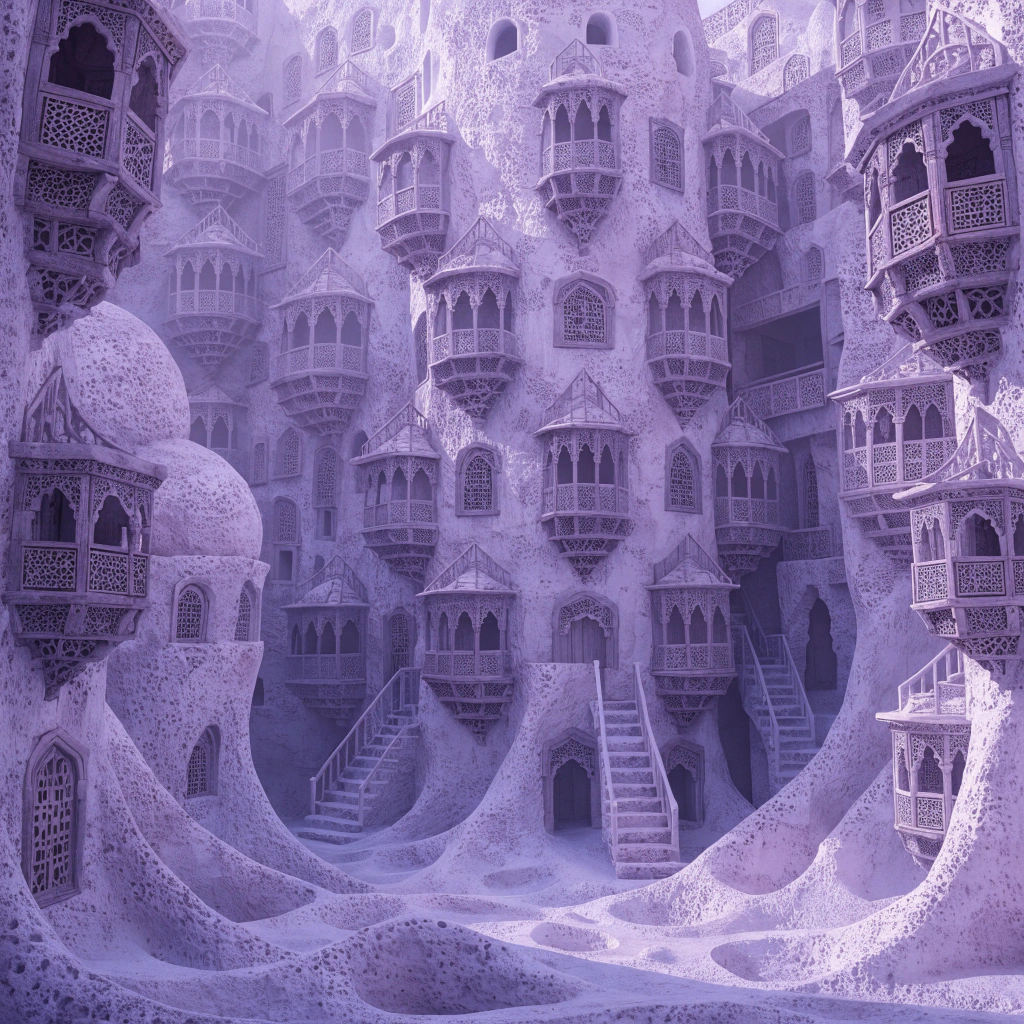
The houses in Al-Balad are very special. They are made of coral stone from the sea. The houses have beautiful wooden windows. These windows are called Roshan. They keep the houses cool in the summer.
Visitors walk in the small streets. There are many markets and shops. You can see the history in every building. It is a famous and beautiful part of Saudi Arabia.
Gramática destacada
Patrón: Present Simple (to be)
"Al-Balad is a very old place in Saudi Arabia."
We use 'is' with singular subjects like Al-Balad to describe facts or states. It is the most common verb for descriptions.
Patrón: Plural Nouns
"The houses have beautiful wooden windows."
To make a noun plural in English, we usually add -s or -es. For example, one house becomes many houses.
Pon a prueba tu comprensión
10 preguntas · A1 Principiante · 1 vista previa gratis
Pon a prueba lo que aprendiste en este artículo. ¡Responde todas las preguntas para ganar XP!
Where is Al-Balad located?
¿Quieres terminar el quiz?
9 preguntas más te esperan. ¡Regístrate gratis para desbloquear el quiz completo y ganar XP!
Regístrate gratis¿Ya tienes cuenta? Acceder
Desglose de preguntas
Where is Al-Balad located?
Tu respuesta:
Respuesta correcta: Jeddah
The houses are made of coral stone from the sea.
Tu respuesta:
Respuesta correcta: Verdadero
What does 'beautiful' mean?
Tu respuesta:
Respuesta correcta: Very nice to look at
Visitors walk in the small _____.
Tu respuesta:
Respuesta correcta: streets
Al-Balad: The Old Heart of Jeddah
Al-Balad is the historic center of Jeddah, Saudi Arabia. It is a very old place because it started in the 7th century. Today, it is a UNESCO World Heritage site. Many people visit Al-Balad to see the beautiful buildings and feel the history.
For a long time, Al-Balad was the main gateway for pilgrims. These people traveled by sea to reach the holy city of Mecca. Because so many people came from different countries, Al-Balad became a special place with many cultures. Traders also sold spices and clothes in the busy markets.
The buildings in Al-Balad are unique. Workers used coral stone from the Red Sea to build them. The houses have famous wooden windows called 'Roshan'. These windows are more colorful than modern windows. They also help to keep the houses cool in the hot summer. Al-Balad is a wonderful place to learn about the past.
Gramática destacada
Patrón: Past Simple
"Workers used coral stone from the Red Sea to build them."
We use the past simple to talk about completed actions in the past. To form it with regular verbs, we usually add '-ed' to the base verb.
Patrón: Comparatives
"These windows are more colorful than modern windows."
We use 'more + adjective + than' to compare two things when the adjective is long (two or more syllables). It shows the difference between the two objects.
Pon a prueba tu comprensión
11 preguntas · A2 Básico · 1 vista previa gratis
Pon a prueba lo que aprendiste en este artículo. ¡Responde todas las preguntas para ganar XP!
Where is Al-Balad located?
¿Quieres terminar el quiz?
10 preguntas más te esperan. ¡Regístrate gratis para desbloquear el quiz completo y ganar XP!
Regístrate gratis¿Ya tienes cuenta? Acceder
Desglose de preguntas
Where is Al-Balad located?
Tu respuesta:
Respuesta correcta: Jeddah
Al-Balad is a new part of the city built recently.
Tu respuesta:
Respuesta correcta: Falso
What does 'unique' mean?
Tu respuesta:
Respuesta correcta: The only one of its kind
Al-Balad started in the 7th _____.
Tu respuesta:
Respuesta correcta: century
Why was Al-Balad important for pilgrims?
Tu respuesta:
Respuesta correcta: It was the main gateway to reach Mecca
Al-Balad: El Corazón Histórico de Yeda
Al-Balad, el corazón histórico de Yeda en Arabia Saudita, ha sido un lugar de gran importancia durante más de mil años. Esta antigua ciudad, que fue fundada en el siglo VII, es hoy un sitio del Patrimonio Mundial de la UNESCO. Durante siglos, Al-Balad ha servido como la puerta principal para los peregrinos musulmanes que llegaban por mar en su camino hacia la ciudad santa de La Meca. Esta historia de tránsito y comercio ha creado una cultura única y muy cosmopolita, donde diferentes ideas y personas se han encontrado.
La arquitectura de Al-Balad es muy distintiva y fácilmente reconocible. Los edificios, que a menudo tienen varios pisos, son construidos con piedra de coral del Mar Rojo, lo que les da un color y una textura especiales. Lo más famoso de estas casas son las "Roshan", que son ventanas de madera elaboradamente decoradas que sobresalen de las fachadas. Estas Roshan no solo son hermosas; también ofrecían privacidad a las familias y ayudaban a mantener los interiores frescos en el clima cálido de Yeda. El diseño de las calles estrechas y los patios interiores también ha conservado la esencia de la vida tradicional y la comunidad.
En los últimos años, se han realizado muchos esfuerzos de restauración para preservar este tesoro arquitectónico y cultural. Gracias a estas iniciativas, Al-Balad no es solo un museo al aire libre; es un lugar vibrante donde la gente vive, trabaja y visita. Los mercados tradicionales siguen activos, y se organizan eventos culturales y festivales que atraen a locales y turistas. Visitar Al-Balad es como viajar en el tiempo y entender mejor la rica historia de la región. Es un testimonio vivo de una era pasada que sigue inspirando a las nuevas generaciones.
Gramática destacada
Patrón: Pretérito Perfecto Compuesto (Present Perfect)
"Al-Balad... ha sido un lugar de gran importancia durante más de mil años."
Usamos el pretérito perfecto compuesto para hablar de acciones pasadas que tienen una conexión con el presente o que ocurrieron en un periodo de tiempo que aún no ha terminado. Se forma con el verbo 'haber' (he, has, ha, hemos, habéis, han) y el participio pasado del verbo principal (terminado en -ado o -ido).
Patrón: Voz Pasiva (Passive Voice)
"Los edificios... son construidos con piedra de coral del Mar Rojo."
La voz pasiva se usa para enfocar la atención en la acción y en el objeto que recibe la acción, en lugar de en quién realiza la acción. Se forma con el verbo 'ser' en el tiempo adecuado y el participio pasado del verbo principal. El agente (quién realiza la acción) a menudo no se menciona o se introduce con 'por'.
Pon a prueba tu comprensión
11 preguntas · B1 Intermedio · 1 vista previa gratis
Pon a prueba lo que aprendiste en este artículo. ¡Responde todas las preguntas para ganar XP!
¿Cuál fue el papel histórico más importante de Al-Balad?
¿Quieres terminar el quiz?
10 preguntas más te esperan. ¡Regístrate gratis para desbloquear el quiz completo y ganar XP!
Regístrate gratis¿Ya tienes cuenta? Acceder
Desglose de preguntas
¿Cuál fue el papel histórico más importante de Al-Balad?
Tu respuesta:
Respuesta correcta: La puerta principal para los peregrinos a La Meca
Actualmente, Al-Balad es solo un museo al aire libre y no hay gente viviendo allí.
Tu respuesta:
Respuesta correcta: Falso
¿Qué significa la palabra 'Patrimonio'?
Tu respuesta:
Respuesta correcta: Bienes o valores heredados que son importantes
Las '______' son ventanas de madera elaboradamente decoradas que sobresalen de las fachadas.
Tu respuesta:
Respuesta correcta: Roshan
¿Con qué material principal se construyen los edificios de Al-Balad?
Tu respuesta:
Respuesta correcta: Piedra de coral del Mar Rojo
Al-Balad: El Corazón Histórico de Yeda y Crisol Cultural
Yeda, la vibrante metrópolis saudí a orillas del Mar Rojo, alberga un tesoro invaluable que ha sido testigo de siglos de historia y confluencia cultural: Al-Balad, su casco antiguo. Fundada en el siglo VII, esta venerable ciudad histórica no es solo un conjunto de edificios antiguos, sino un testimonio vivo de la riqueza y diversidad que caracterizaron a la región durante más de un milenio.
La importancia de Al-Balad radica principalmente en su función como la principal puerta de entrada marítima para millones de peregrinos musulmanes que, a lo largo de los siglos, se dirigían a la sagrada ciudad de La Meca. Esta constante afluencia de viajeros de todo el mundo islámico transformó a Yeda en un verdadero crisol de culturas, donde las tradiciones y costumbres de Asia, África y el Medio Oriente se entrelazaban, dejando una huella indeleble en su tejido social y arquitectónico.
La arquitectura de Al-Balad es, sin duda, una de sus características más singulares y admiradas. Los edificios, algunos de los cuales se elevan hasta siete pisos, están construidos con piedra de coral extraída directamente del Mar Rojo, lo que les confiere un aspecto distintivo y una resistencia notable al clima árido. Sin embargo, lo que realmente captura la atención de los visitantes son las "Roshan" o "mashrabiyas": intrincadas celosías de madera que adornan las fachadas. Estas elaboradas ventanas salientes no solo tienen una función estética, sino que también proporcionan sombra, ventilación natural y privacidad, elementos esenciales en la vida cotidiana de sus habitantes.
El entramado urbano de Al-Balad, con sus estrechas callejuelas y plazas escondidas, invita a la exploración y al descubrimiento. Cada rincón parece contar una historia, desde los antiguos zocos donde se comerciaba con especias y perfumes, hasta las majestuosas casas mercantiles que reflejan el esplendor económico de antaño. A pesar de los desafíos del tiempo y la modernización, Al-Balad ha logrado preservar su esencia, siendo reconocida como Patrimonio de la Humanidad por la UNESCO, un estatus que subraya su valor universal excepcional.
Hoy en día, Al-Balad no es solo un museo al aire libre, sino un centro cultural y comercial en revitalización. Proyectos de restauración ambiciosos buscan preservar su legado, asegurando que las futuras generaciones puedan apreciar la autenticidad y el espíritu cosmopolita que han definido a este extraordinario lugar. Visitar Al-Balad es realizar un viaje en el tiempo, una experiencia que permite comprender la profunda conexión entre la historia, la fe y la cultura que ha moldeado esta fascinante región del mundo.
Gramática destacada
Patrón: Uso del Pretérito Imperfecto de Subjuntivo para expresar propósito o resultado
"La constante afluencia de viajeros de todo el mundo islámico transformó a Yeda en un verdadero crisol de culturas, donde las tradiciones y costumbres de Asia, África y el Medio Oriente se entrelazaban, dejando una huella indeleble en su tejido social y arquitectónico."
El pretérito imperfecto de subjuntivo se usa aquí en la cláusula 'donde las tradiciones... se entrelazaban' para describir una acción habitual o continua en el pasado que era parte de un contexto o resultado. Se forma con la raíz del pretérito indefinido de la tercera persona del plural (e.g., 'transformaron' -> 'transforma-') más las terminaciones -ra, -ras, -ra, -ramos, -rais, -ran o -se, -ses, -se, -semos, -seis, -sen.
Patrón: Voz Pasiva con "ser" + participio pasado
"Fundada en el siglo VII, esta venerable ciudad histórica no es solo un conjunto de edificios antiguos, sino un testimonio vivo de la riqueza y diversidad que caracterizaron a la región durante más de un milenio."
La voz pasiva se utiliza para enfocar la acción en el objeto que la recibe, no en quien la realiza. Se forma con el verbo 'ser' conjugado (en este caso, 'Fundada' implícitamente 'fue fundada') seguido del participio pasado del verbo principal, que concuerda en género y número con el sujeto pasivo. Es común en contextos formales o históricos.
Patrón: Oraciones de Relativo con Pronombres Relativos (que, donde)
"La importancia de Al-Balad radica principalmente en su función como la principal puerta de entrada marítima para millones de peregrinos musulmanes que, a lo largo de los siglos, se dirigían a la sagrada ciudad de La Meca."
Las oraciones de relativo (o subordinadas adjetivas) se usan para añadir información sobre un sustantivo. El pronombre relativo 'que' se refiere a 'millones de peregrinos musulmanes', introduciendo una cláusula que los describe. 'Donde' se usa para referirse a un lugar. Ayudan a conectar ideas y a construir frases más complejas.
Pon a prueba tu comprensión
11 preguntas · B2 Intermedio alto · 1 vista previa gratis
Pon a prueba lo que aprendiste en este artículo. ¡Responde todas las preguntas para ganar XP!
¿Cuál fue la función principal de Al-Balad durante más de un milenio?
¿Quieres terminar el quiz?
10 preguntas más te esperan. ¡Regístrate gratis para desbloquear el quiz completo y ganar XP!
Regístrate gratis¿Ya tienes cuenta? Acceder
Desglose de preguntas
¿Cuál fue la función principal de Al-Balad durante más de un milenio?
Tu respuesta:
Respuesta correcta: La principal puerta de entrada para peregrinos a La Meca.
Las "Roshan" son un tipo de piedra de coral utilizada en la construcción de Al-Balad.
Tu respuesta:
Respuesta correcta: Falso
¿Qué significa la palabra "crisol" en el contexto del artículo?
Tu respuesta:
Respuesta correcta: Un lugar donde diferentes culturas se mezclan.
Los edificios de Al-Balad están construidos con piedra de _____ extraída del Mar Rojo.
Tu respuesta:
Respuesta correcta: coral
¿Qué reconocimiento internacional ha recibido Al-Balad?
Tu respuesta:
Respuesta correcta: Patrimonio de la Humanidad por la UNESCO.
The Coral Sentinels: Navigating the Architectural and Social Tapestry of Al-Balad
Seldom has an urban landscape encapsulated the historical convergence of maritime commerce and spiritual devotion as profoundly as Al-Balad, the historic heart of Jeddah. Established in the 7th century, this labyrinthine district served for over a millennium as the quintessential gateway for Muslim pilgrims traversing the Red Sea en route to the holy city of Mecca. It was this constant influx of diverse populations that fostered a uniquely cosmopolitan culture, the vestiges of which remain etched into the very fabric of the city’s architecture. The district’s evolution reflects a nuanced history where trade routes and religious duty intertwined to create a society that was as outward-looking as it was deeply rooted in local tradition.
The architectural identity of Al-Balad is primarily defined by its coral-stone edifices, which rise several stories high, defying the conventional horizontal sprawl of many ancient settlements. What distinguishes these structures is the intricate woodwork known as 'Roshan'—elaborate, projecting balconies that serve both aesthetic and functional purposes. These wooden screens, often featuring delicate latticework, were designed to maximize airflow while ensuring the privacy of the inhabitants. Not only do these balconies mitigate the sweltering heat of the Hijaz region, but they also symbolize the social nuances of a society that valued both hospitality and domestic seclusion. The use of coral stone, harvested from the nearby Red Sea, provided a porous yet sturdy material that allowed the buildings to breathe, a testament to early sustainable engineering.
However, the preservation of Al-Balad is not without its complexities. The institutionalization of conservation efforts, particularly following its designation as a UNESCO World Heritage site, has sparked critical debates regarding the balance between historical authenticity and modern functionality. Critics argue that the gentrification of such districts may lead to the displacement of the very communities that imbue the area with its ephemeral charm. Conversely, proponents of restoration emphasize that without rigorous structural interventions, the coral-stone foundations—already weakened by time and humidity—would inevitably crumble. The challenge lies in maintaining the district as a living entity rather than a static museum.
The tenacity of Al-Balad’s heritage lies in its ability to adapt to changing geopolitical realities. While the lynchpin of its economy has shifted from pilgrim transit to heritage tourism, the district retains a sublime atmosphere that transcends mere commercialization. Walking through its narrow alleys, one is struck by the juxtaposition of the ancient and the contemporary. The subtle interplay of light through the Roshan screens provides a poignant reminder of Jeddah’s maritime past. Ultimately, Al-Balad stands as a testament to human ingenuity in the face of environmental challenges, offering a sophisticated narrative of a city that has long served as a bridge between the Arabian Peninsula and the wider world.
Gramática destacada
Patrón: Inversion
"Seldom has an urban landscape encapsulated the historical convergence of maritime commerce and spiritual devotion as profoundly as Al-Balad."
Inversion is used here by placing a negative adverbial ('Seldom') at the beginning of the sentence followed by the auxiliary verb 'has'. This structure is used for emphasis and is common in formal C1 writing.
Patrón: Cleft Sentences
"It was this constant influx of diverse populations that fostered a uniquely cosmopolitan culture."
A cleft sentence (It + be + subject + relative clause) is used to focus on a specific piece of information. Here, it emphasizes that the 'influx of populations' was the primary cause of the culture.
Patrón: Nominalisation
"The institutionalization of conservation efforts has sparked critical debates."
Nominalisation involves turning verbs or adjectives into nouns (e.g., 'institutionalize' to 'institutionalization'). This creates a more formal, academic tone typical of advanced English.
Pon a prueba tu comprensión
12 preguntas · C1 Avanzado · 1 vista previa gratis
Pon a prueba lo que aprendiste en este artículo. ¡Responde todas las preguntas para ganar XP!
What was the primary historical function of Al-Balad?
¿Quieres terminar el quiz?
11 preguntas más te esperan. ¡Regístrate gratis para desbloquear el quiz completo y ganar XP!
Regístrate gratis¿Ya tienes cuenta? Acceder
Desglose de preguntas
What was the primary historical function of Al-Balad?
Tu respuesta:
Respuesta correcta: A gateway for pilgrims traveling to Mecca
The Roshan balconies were designed solely for decorative purposes without any functional use.
Tu respuesta:
Respuesta correcta: Falso
What does the word 'edifices' mean in the context of the article?
Tu respuesta:
Respuesta correcta: Large, imposing buildings
The _____ of conservation efforts has sparked debates regarding historical authenticity.
Tu respuesta:
Respuesta correcta: institutionalization
Why did architects in Al-Balad use coral stone?
Tu respuesta:
Respuesta correcta: It was a local, porous material that allowed buildings to breathe
Critics worry that gentrification might displace the communities that give the district its charm.
Tu respuesta:
Respuesta correcta: Verdadero
The Architectural Palimpsest of Al-Balad: A Socio-Historical Analysis of Jeddah’s Vernacular Urbanism
The historical district of Al-Balad in Jeddah stands as a profound architectural palimpsest, where layers of history, commerce, and devotion intersect within a singular urban fabric. Founded in the seventh century, this littoral enclave was not merely a residential hub but functioned as the preeminent gateway for the Islamic world, facilitating the transit of pilgrims toward the sanctuary of Mecca. Such a role necessitated an urban design that was both utilitarian and deeply symbolic, reflecting a confluence of diverse cultural influences that arrived with the tides of the Red Sea. For over a millennium, the district has served as a crucible for cosmopolitanism, where the exchange of goods and ideas was as constant as the maritime winds.
At the heart of Al-Balad’s idiosyncratic charm is its vernacular architecture, predominantly characterized by the use of coral stone—hewn from the nearby reefs—and the intricate 'Roshan' latticework. The choice of material was dictated by environmental necessity, yet it introduced a structural fragility; coral stone is notoriously porous and susceptible to the corrosive effects of the Tihama plain’s humidity. Notwithstanding these vulnerabilities, the multi-story edifices of Al-Balad achieved a verticality that was rare for its time, embodying a socio-economic hegemony where the height of one’s residence often signaled one's mercantile success. These 'tower houses' represent a sophisticated adaptation to limited spatial availability within the city walls, creating a dense, vertical urbanism that maximized shade and airflow.
The Roshan, arguably the district's most iconic feature, serves as a masterclass in passive climatic regulation. These elaborate wooden projections were designed to capture the sea breeze while simultaneously preserving the domestic privacy of the inhabitants. It is through these apertures that the juxtaposition of the private and public spheres becomes most apparent. To the observer, the Roshan is an aesthetic marvel of geometric precision; to the inhabitant, it was a vital conduit for ventilation and a vantage point from which the ephemeral bustle of the market could be surveyed without personal exposure. This architectural element reflects a nuanced understanding of social boundaries in a transit-heavy society.
Were one to traverse the labyrinthine corridors of the Al-Mazloom district today, the olfactory weight of spice and brine would immediately manifest, evoking the cosmopolitanism that has defined Jeddah for a millennium. This was never a monolithic society; rather, it was a microcosm of the Islamic world, where Persian, Indian, and East African influences merged with local Hejazi traditions. Not only did this exchange influence the culinary and linguistic landscape, but it also prevented the ossification of local culture, ensuring that Al-Balad remained a dynamic, albeit dense, urban center. The resulting cultural synthesis is what scholars now identify as the 'Jeddawi' identity—a hybridity born of the sea.
However, the preservation of such a site presents a profound paradox. The very modernization that propelled Saudi Arabia into the twenty-first century threatened to render Al-Balad an archaic relic. It is imperative that conservation efforts do not merely fossilize the district for the sake of tourism, but rather integrate it into the contemporary urban narrative. The tension between historical authenticity and functional modernization is antithetical to simplistic solutions. Critics argue that for Al-Balad to survive, it must remain a living entity, avoiding the fate of becoming a curated museum piece devoid of its original vitality. Scarcely had the district been named a UNESCO World Heritage site before discussions regarding the 'gentrification vs. restoration' dichotomy began to dominate the academic discourse.
In conclusion, Al-Balad remains a testament to the enduring power of transit and trade. Its coral walls and wooden screens are not merely historical artifacts; they are the physical manifestations of a centuries-old dialogue between the desert and the sea. As global attention focuses on its preservation, the challenge remains to honor its past while facilitating a future where its labyrinthine streets continue to pulse with the lifeblood of Jeddah. The district stands not as a static monument to the past, but as a resilient urban organism that continues to negotiate its place within a rapidly evolving global landscape.
Gramática destacada
Patrón: Past Subjunctive / Hypothetical Inversion
"Were one to traverse the labyrinthine corridors of the Al-Mazloom district today, the olfactory weight of spice and brine would immediately manifest."
This inversion of 'If one were to' is used in formal, academic English to express a hypothetical situation. It places the verb 'were' at the start for rhetorical emphasis.
Patrón: Negative Inversion
"Not only did this exchange influence the culinary and linguistic landscape, but it also prevented the ossification of local culture."
When a sentence begins with a negative or restrictive expression like 'Not only,' the subject and auxiliary verb are inverted. This is used to add emphasis and variety in sophisticated writing.
Patrón: Negative Inversion with 'Scarcely'
"Scarcely had the district been named a UNESCO World Heritage site before discussions regarding the 'gentrification vs. restoration' dichotomy began to dominate."
Using 'Scarcely had... before' is a C2-level structure to indicate that one event happened immediately after another. It requires subject-verb inversion (had the district been).
Pon a prueba tu comprensión
12 preguntas · C2 Dominio · 1 vista previa gratis
Pon a prueba lo que aprendiste en este artículo. ¡Responde todas las preguntas para ganar XP!
What does the author suggest about the height of the 'tower houses' in Al-Balad?
¿Quieres terminar el quiz?
11 preguntas más te esperan. ¡Regístrate gratis para desbloquear el quiz completo y ganar XP!
Regístrate gratis¿Ya tienes cuenta? Acceder
Desglose de preguntas
What does the author suggest about the height of the 'tower houses' in Al-Balad?
Tu respuesta:
Respuesta correcta: It served as a physical indicator of the resident's social and commercial status.
The author argues that coral stone was the ideal building material due to its extreme durability against humidity.
Tu respuesta:
Respuesta correcta: Falso
Which term best describes the 'Jeddawi' identity as presented in the text?
Tu respuesta:
Respuesta correcta: Hybridity
The author warns that conservation should not result in the district becoming a curated _____ piece.
Tu respuesta:
Respuesta correcta: museum
What is the primary function of the 'Roshan' according to the text?
Tu respuesta:
Respuesta correcta: To regulate temperature while maintaining social privacy.
The text suggests that the cultural diversity of Al-Balad was a direct result of its role as a gateway to Mecca.
Tu respuesta:
Respuesta correcta: Verdadero

