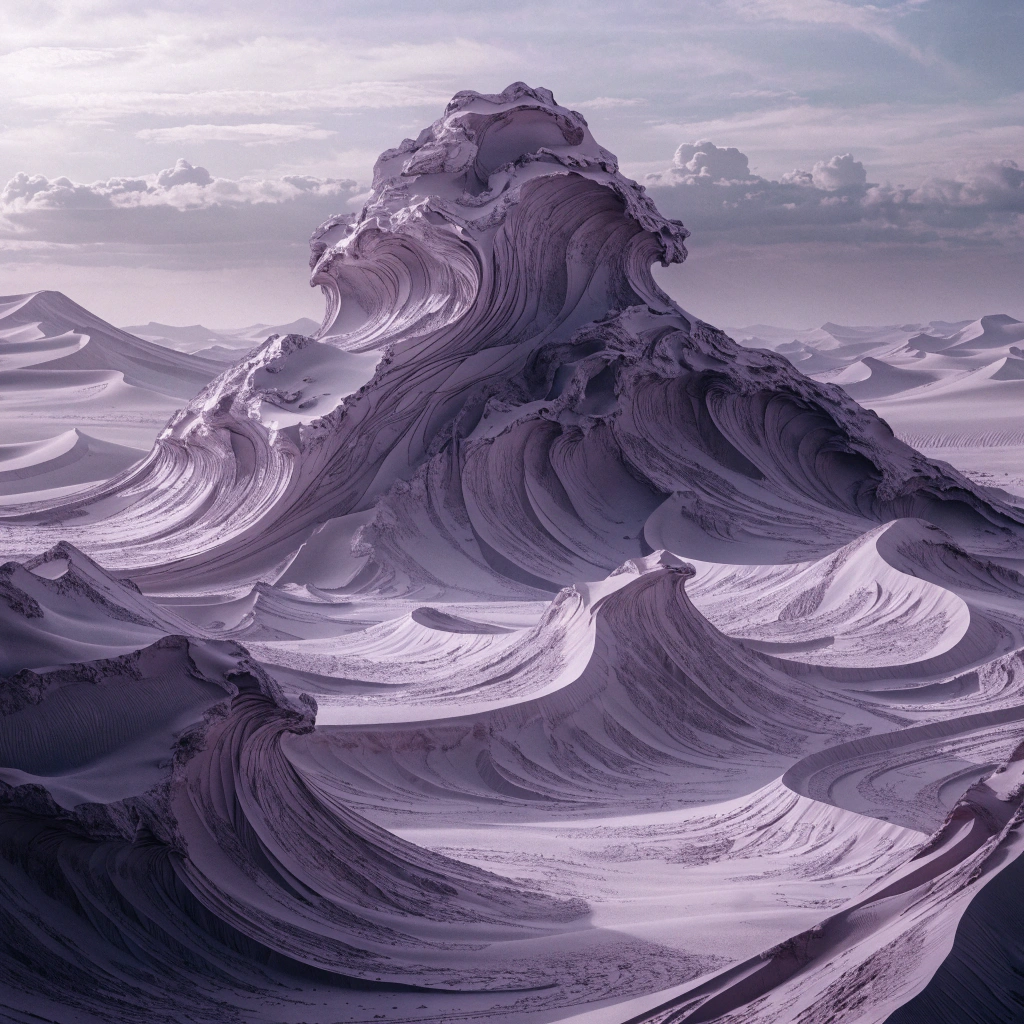
The Big Desert: The Empty Quarter
The Empty Quarter is a very big desert in Saudi Arabia. It is in the south of the country. People call it the Rub' al Khali. It is a very hot and dry place. There is a lot of sand. The sand dunes are very tall. Some dunes are 250 meters high. The wind moves the sand every day.
The desert is beautiful but it is very quiet. There are not many plants or animals. It is larger than France. Many people visit the desert to see the stars at night. The sky is very clear. It is a special part of the world.
Gramática destacada
Patrón: Present Simple of 'to be'
"The Empty Quarter is a very big desert in Saudi Arabia."
We use 'is' for singular subjects to describe facts. It connects the subject to an adjective or noun.
Patrón: Present Simple (Third Person Singular)
"The wind moves the sand every day."
In the present simple, we add an 's' to the verb when the subject is he, she, or it. Here, 'the wind' is the subject.
Pon a prueba tu comprensión
10 preguntas · A1 Principiante · 1 vista previa gratis
Pon a prueba lo que aprendiste en este artículo. ¡Responde todas las preguntas para ganar XP!
Where is the Empty Quarter?
¿Quieres terminar el quiz?
9 preguntas más te esperan. ¡Regístrate gratis para desbloquear el quiz completo y ganar XP!
Regístrate gratis¿Ya tienes cuenta? Acceder
Desglose de preguntas
Where is the Empty Quarter?
Tu respuesta:
Respuesta correcta: In Saudi Arabia
The sand dunes are very small.
Tu respuesta:
Respuesta correcta: Falso
What does 'quiet' mean?
Tu respuesta:
Respuesta correcta: Very little noise
The Empty Quarter is a very big _____.
Tu respuesta:
Respuesta correcta: desert
The Amazing Empty Quarter
The Empty Quarter, or Rub' al Khali, is a very large desert in Saudi Arabia. It is bigger than France and covers a lot of the Arabian Peninsula. People call it the 'Empty Quarter' because it is a very quiet and lonely place.
The desert is famous for its beautiful sand dunes. Some dunes are taller than big buildings. They can reach 250 meters high! These dunes are called 'star dunes' because of their shape. The wind moves the sand every day, so the landscape is always changing.
In the past, travelers crossed the desert on camels. It was a difficult journey because the weather was very hot. Today, the Empty Quarter is still one of the most beautiful places on Earth. Many people visit it to see the orange sand and the clear night sky. It is a special part of the world.
Gramática destacada
Patrón: Comparatives (adjective + er + than)
"It is bigger than France and covers a lot of the Arabian Peninsula."
We use comparatives to compare two things. For short words like 'big', we add '-er' and use the word 'than' after it.
Patrón: Past Simple
"In the past, travelers crossed the desert on camels."
We use the past simple to talk about finished actions in the past. For regular verbs like 'cross', we add '-ed' to the end.
Pon a prueba tu comprensión
11 preguntas · A2 Básico · 1 vista previa gratis
Pon a prueba lo que aprendiste en este artículo. ¡Responde todas las preguntas para ganar XP!
How big is the Empty Quarter desert?
¿Quieres terminar el quiz?
10 preguntas más te esperan. ¡Regístrate gratis para desbloquear el quiz completo y ganar XP!
Regístrate gratis¿Ya tienes cuenta? Acceder
Desglose de preguntas
How big is the Empty Quarter desert?
Tu respuesta:
Respuesta correcta: It is bigger than France.
The sand dunes in the desert never move.
Tu respuesta:
Respuesta correcta: Falso
What does 'journey' mean?
Tu respuesta:
Respuesta correcta: Traveling from one place to another
The wind moves the _____ every day.
Tu respuesta:
Respuesta correcta: sand
Why is it called the 'Empty Quarter'?
Tu respuesta:
Respuesta correcta: Because it is a quiet and lonely place.
The Wonders of the Empty Quarter
The Rub' al Khali, which is also known as the 'Empty Quarter,' is one of the most incredible places in the world. This vast desert covers the southern part of the Arabian Peninsula, and it is larger than the country of France. For centuries, it has been a place of mystery and beauty. Many people are surprised by its size and its silence.
The landscape is famous for its massive sand dunes, which can reach heights of 250 meters. These dunes are constantly reshaped by the wind, so the desert never looks the same twice. Some of these are called 'star dunes' because of their unique shapes. Although the environment is very dry, life has always existed here. The Bedouin people have traveled across these sands for generations, using their deep knowledge of the land to survive.
In recent years, many secrets have been discovered beneath the sand. Archaeologists have found evidence of ancient cities that were lost a long time ago. Fossils of animals that lived thousands of years ago have also been found by researchers. These discoveries show that the region was once much greener than it is today.
Today, the Empty Quarter is visited by brave travelers and scientists who want to explore its wonders. It is considered a difficult place to live, but it is also admired for its peaceful silence and stunning sunsets. It remains a powerful symbol of the natural beauty of Saudi Arabia.
Gramática destacada
Patrón: Relative Clauses with 'which'
"The Rub' al Khali, which is also known as the 'Empty Quarter,' is one of the most incredible places in the world."
A relative clause provides extra information about a noun. We use 'which' for things and 'who' for people.
Patrón: Passive Voice (Present Simple)
"These dunes are constantly reshaped by the wind."
The passive voice is used when the action is more important than the person or thing doing it. It is formed with 'to be' + past participle.
Pon a prueba tu comprensión
11 preguntas · B1 Intermedio · 1 vista previa gratis
Pon a prueba lo que aprendiste en este artículo. ¡Responde todas las preguntas para ganar XP!
How large is the Rub' al Khali compared to European countries?
¿Quieres terminar el quiz?
10 preguntas más te esperan. ¡Regístrate gratis para desbloquear el quiz completo y ganar XP!
Regístrate gratis¿Ya tienes cuenta? Acceder
Desglose de preguntas
How large is the Rub' al Khali compared to European countries?
Tu respuesta:
Respuesta correcta: It is larger than France
The sand dunes in the desert stay in the same position forever.
Tu respuesta:
Respuesta correcta: Falso
What does 'massive' mean in the context of the dunes?
Tu respuesta:
Respuesta correcta: Very large
The Rub' al Khali, which is also _____ as the 'Empty Quarter,' is vast.
Tu respuesta:
Respuesta correcta: known
Who has lived and traveled in the desert for generations?
Tu respuesta:
Respuesta correcta: The Bedouin people
The Majestic Silence: Exploring the Rub' al Khali
The Rub' al Khali, commonly known as the 'Empty Quarter', represents one of the most monumental geographical features on our planet. This vast expanse of sand, which occupies the southern third of the Arabian Peninsula, covers approximately 650,000 square kilometers. To put this into perspective, the desert is larger than the entire territory of France. Despite its intimidating name suggesting a total void, the region is a place of perpetual movement and striking natural beauty. The climate of the Rub' al Khali is defined by its hyper-aridity, where annual rainfall rarely exceeds 35 millimeters. During the summer months, temperatures frequently soar above 50 degrees Celsius, making physical exertion nearly impossible for those who are not acclimatized.
The landscape is characterized by its massive ridges and 'star dunes,' some of which reach heights of 250 meters. These structures are not static; rather, they are constantly reshaped by the wind, creating a topography that is in a state of continuous evolution. From an ecological perspective, the environment appears entirely inhospitable to the casual observer. However, the desert supports a surprising level of biodiversity, with various species of flora and fauna having adapted to the extreme temperatures and lack of water. This extreme heat, combined with the lack of reliable water sources, creates a formidable barrier for any expedition. Nevertheless, the allure of the desert’s silence and its untouched vistas continues to draw adventurous souls who seek to experience the sublime scale of the wilderness.
Historically, the Rub' al Khali was not as isolated as it seems today. For centuries, nomadic Bedouin tribes have demonstrated incredible resilience by navigating this challenging terrain. They relied on their deep knowledge of the stars and the behavior of the sands to survive. Moreover, archaeological evidence suggests that the desert once hosted ancient civilizations. If modern technology had not been developed, many of the remnants of these lost cities, buried deep beneath the dunes, might never have been discovered. Consequently, the area remains a significant site for researchers who are eager to uncover the secrets of the past. Ultimately, the Rub' al Khali stands as a testament to the enduring power of nature and the historical depth of the Arabian Peninsula.
Gramática destacada
Patrón: Present Simple Passive
"The landscape is characterized by its massive ridges and 'star dunes.'"
The passive voice is used here to focus on the landscape itself rather than the agent that characterizes it. It is formed using 'is/are' + the past participle of the verb.
Patrón: Non-defining Relative Clauses
"This vast expanse of sand, which occupies the southern third of the Arabian Peninsula, covers approximately 650,000 square kilometers."
These clauses add extra information about a noun but are not essential for the sentence to make sense. They are always separated by commas and use relative pronouns like 'which' or 'who'.
Patrón: Third Conditional
"If modern technology had not been developed, many of the remnants of these lost cities might never have been discovered."
This pattern is used to talk about a hypothetical situation in the past and its imaginary result. It is formed with 'If + past perfect' and 'might/would have + past participle'.
Pon a prueba tu comprensión
11 preguntas · B2 Intermedio alto · 1 vista previa gratis
Pon a prueba lo que aprendiste en este artículo. ¡Responde todas las preguntas para ganar XP!
How does the size of the Rub' al Khali compare to France?
¿Quieres terminar el quiz?
10 preguntas más te esperan. ¡Regístrate gratis para desbloquear el quiz completo y ganar XP!
Regístrate gratis¿Ya tienes cuenta? Acceder
Desglose de preguntas
How does the size of the Rub' al Khali compare to France?
Tu respuesta:
Respuesta correcta: It is larger than the entire territory of France.
The sand dunes in the Empty Quarter remain in the same position permanently.
Tu respuesta:
Respuesta correcta: Falso
What does 'inhospitable' mean in the context of the article?
Tu respuesta:
Respuesta correcta: A harsh environment that is difficult to survive in.
For centuries, nomadic Bedouin tribes have demonstrated incredible _____ by navigating this challenging terrain.
Tu respuesta:
Respuesta correcta: resilience
What can happen to temperatures in the Rub' al Khali during summer?
Tu respuesta:
Respuesta correcta: They frequently exceed 50 degrees Celsius.
Rub' al Khali: La Inmensidad Inhóspita y Majestuosa de Arabia
Pocas son las regiones en la Tierra que evocan una sensación tan profunda de aislamiento y grandiosidad como el Rub' al Khali, o el "Cuarto Vacío", en la Península Arábiga. Este vasto desierto de arena, cuya extensión de aproximadamente 650.000 kilómetros cuadrados supera la de países enteros como Francia, ocupa el tercio meridional de la península y es, sin lugar a dudas, uno de los entornos más inhóspitos, y a la vez más bellos, del planeta.
Es en sus dunas, algunas de ellas verdaderas montañas de arena que alcanzan los 250 metros de altura, donde reside gran parte de su mística. Lo que más asombra de estas formaciones es su naturaleza efímera; lejos de ser estáticas, son constantemente remodeladas por los caprichos del viento, que las esculpe en formas hipnóticas, incluyendo las famosas "dunas en estrella". Este dinamismo geológico crea un paisaje en perpetuo cambio, un lienzo donde la naturaleza pinta y borra con cada ráfaga.
La travesía por el Rub' al Khali es una experiencia que desafía la percepción humana de la escala y la soledad. Si bien hoy en día la tecnología permite exploraciones más seguras, el desierto mantiene su carácter indomable. Antaño, su cruce era una gesta reservada a los más intrépidos beduinos, quienes conocían los escasos pozos de agua y las rutas a través de este mar de arena. La resiliencia de quienes se aventuraban en él, así como la de la escasa vida silvestre adaptada a sus extremas condiciones, es verdaderamente admirable.
Desde una perspectiva geológica, el Rub' al Khali es un tesoro. Sus estratos arenosos guardan secretos milenarios sobre climas pasados, revelando periodos en los que esta desolación actual fue un vergel exuberante, cruzado por ríos y habitado por una fauna diversa. La mera contemplación de su inmensidad transporta al observador a un tiempo primigenio, donde la humanidad apenas era un pensamiento lejano.
Lo que el "Cuarto Vacío" nos enseña es la dualidad inherente a la naturaleza: la belleza puede coexistir con la brutalidad, y la vida, por precaria que parezca, encuentra siempre un camino. No es solo un desierto; es un monumento natural a la paciencia del tiempo y al poder incesante de los elementos. Aquellos que han tenido el privilegio de contemplarlo atestiguan una transformación interna, una revaloración de la insignificancia humana frente a la magnificencia de la Tierra. Su estudio y conservación son fundamentales, no solo por su valor ecológico y geológico, sino por el recordatorio que representa de la fragilidad de nuestro planeta y la tenacidad de la vida en sus rincones más extremos.
Gramática destacada
Patrón: Inversión del Sujeto
"Pocas son las regiones en la Tierra que evocan una sensación tan profunda de aislamiento y grandiosidad como el Rub' al Khali."
La inversión del sujeto (colocar el sujeto después del verbo) es una estructura avanzada que añade énfasis o formalidad. En este caso, "Pocas son las regiones" resalta la escasez de lugares con tal cualidad, en lugar de la más común "Las regiones son pocas".
Patrón: Oraciones Hendidas (Cleft Sentences)
"Es en sus dunas, algunas de ellas verdaderas montañas de arena que alcanzan los 250 metros de altura, donde reside gran parte de su mística."
Las oraciones hendidas (o "cleft sentences") se utilizan para enfatizar una parte específica de la oración, a menudo usando la estructura "Es/Fue... lo que/donde/quien...". Aquí, se pone de relieve el lugar ("en sus dunas") como la fuente principal de la mística del desierto.
Patrón: Nominalización
"La travesía por el Rub' al Khali es una experiencia que desafía la percepción humana de la escala y la soledad."
La nominalización es la transformación de un verbo o adjetivo en un sustantivo (por ejemplo, 'percibir' a 'percepción', 'solo' a 'soledad'). Este recurso permite expresar ideas complejas de manera más concisa y formal, elevando el nivel de sofisticación del texto.
Pon a prueba tu comprensión
12 preguntas · C1 Avanzado · 1 vista previa gratis
Pon a prueba lo que aprendiste en este artículo. ¡Responde todas las preguntas para ganar XP!
¿Cuál de las siguientes afirmaciones sobre el Rub' al Khali es correcta según el artículo?
¿Quieres terminar el quiz?
11 preguntas más te esperan. ¡Regístrate gratis para desbloquear el quiz completo y ganar XP!
Regístrate gratis¿Ya tienes cuenta? Acceder
Desglose de preguntas
¿Cuál de las siguientes afirmaciones sobre el Rub' al Khali es correcta según el artículo?
Tu respuesta:
Respuesta correcta: Es considerado uno de los entornos más inhóspitos y bellos del planeta.
El artículo menciona que el Rub' al Khali ocupa el tercio septentrional de la Península Arábiga.
Tu respuesta:
Respuesta correcta: Falso
¿Qué significa la palabra 'efímera' en el contexto del artículo?
Tu respuesta:
Respuesta correcta: Que dura por muy poco tiempo o es transitorio.
Las dunas del Rub' al Khali son constantemente _____ por los caprichos del viento.
Tu respuesta:
Respuesta correcta: remodeladas
¿Qué tipo de dunas se mencionan específicamente por sus formas hipnóticas?
Tu respuesta:
Respuesta correcta: Dunas en estrella
El artículo sugiere que la tecnología moderna ha eliminado por completo el carácter indomable del desierto.
Tu respuesta:
Respuesta correcta: Falso
The Rub' al Khali: An Ontological Inquiry into the Sublime Desolation of the Empty Quarter
The Rub' al Khali, colloquially known as the 'Empty Quarter,' constitutes a formidable geomorphological entity that transcends the mere definition of a desert. Spanning an astronomical 650,000 square kilometers, it represents the largest contiguous sand body on the planet, an expanse of hyper-arid desolation that encompasses the southern third of the Arabian Peninsula. To the uninitiated observer, this vast wilderness might appear as a monochromatic and static void; however, such a reductionist view fails to account for the intricate aeolian processes that render the landscape a theater of perpetual transformation. Here, the topography is defined by undulating dunes of staggering proportions, with star-shaped ridges and barchans ascending to heights of 250 meters. These structures, forged by the relentless vicissitudes of seasonal winds, are in a state of constant flux, ensuring that the desert remains a transient masterpiece of natural engineering.
The aesthetic allure of the Rub' al Khali is inextricably linked to its inherent inhospitality. The sand itself, often imbued with a vibrant ochre hue due to the presence of iron oxides, possesses a primordial quality that evokes a sense of time before the dawn of civilization. One of the most enigmatic phenomena within this realm is the 'singing sands'—a low-frequency hum produced by the friction of shifting grains, which adds a haunting, auditory dimension to the visual spectacle. Were one to traverse these depths, the experience would likely be one of profound ontological displacement. The sheer scale of the desert serves to diminish the human ego, positioning the individual within a landscape that is fundamentally indifferent to biological survival.
Historically, the Rub' al Khali has functioned as a crucible for human resilience. While the Bedouin tribes have navigated its periphery for centuries, possessing an intimate, ancestral knowledge of its hidden water sources and seasonal shifts, the interior remained largely impenetrable to outsiders until the 20th century. It was within this 'limit-experience' that explorers such as Wilfred Thesiger sought the quintessence of the human spirit. For Thesiger, the desert was not merely a geographic challenge but a spiritual one, a place where the absence of modern distraction allowed for a clarity of consciousness. His chronicles emphasize that the Rub' al Khali is not 'empty' in a literal sense, but rather filled with a silence so palpable it becomes a presence in its own right.
Furthermore, the desert is shrouded in the mists of legend, most notably the myth of Iram of the Pillars, the 'Atlantis of the Sands.' It is often posited that ancient trade routes once crisscrossed this now-lethal terrain, supporting prosperous civilizations that were eventually reclaimed by the encroaching dunes. While archaeological evidence remains sparse, the allure of discovering lost subterranean cities continues to captivate the academic imagination. This interplay between historical reality and mythic narrative reinforces the desert’s status as a repository of the unknown.
From an ecological perspective, the region is a testament to the tenacity of life. Despite the absence of perennial surface water, the desert is not entirely devoid of biological activity. Ephemeral flora emerges with startling speed following rare rainfall events, and specialized fauna have evolved sophisticated physiological mechanisms to thrive in hyper-arid conditions. Moreover, the existence of vast subterranean aquifers suggests a hidden complexity beneath the parched surface. However, the integrity of this delicate ecosystem is increasingly threatened by the anthropogenic pressures of the modern era, from resource extraction to the broader implications of global climatic instability.
In conclusion, the Rub' al Khali remains one of the few remaining bastions of true wilderness on Earth. It is a landscape that demands both intellectual inquiry and visceral respect. Seldom does a landscape command such visceral reverence, and it remains a vital sanctuary of wilderness in an increasingly crowded world. To preserve it is to preserve a piece of the world's soul, a place where the human ego is rightfully humbled by the infinite.
Gramática destacada
Patrón: Negative Inversion
"Seldom does a landscape command such visceral reverence..."
This structure places a negative adverbial at the beginning of the sentence for rhetorical emphasis. It requires the inversion of the subject and the auxiliary verb (does a landscape command).
Patrón: Inverted Conditional (Subjunctive)
"Were one to traverse these depths, the experience would likely be one of profound ontological displacement."
This uses 'were' in an inverted position to replace 'if' in a formal second conditional. It expresses a hypothetical or unlikely situation in a highly scholarly tone.
Patrón: Academic Hedging with Passive Voice
"It is often posited that ancient trade routes once crisscrossed this now-lethal terrain..."
This uses a dummy subject 'it' followed by a passive reporting verb (posited). This is a standard academic device used to present a theory without attributing it to a specific person, maintaining neutrality.
Pon a prueba tu comprensión
12 preguntas · C2 Dominio · 1 vista previa gratis
Pon a prueba lo que aprendiste en este artículo. ¡Responde todas las preguntas para ganar XP!
According to the text, why is the Rub' al Khali considered a 'theater of perpetual transformation'?
¿Quieres terminar el quiz?
11 preguntas más te esperan. ¡Regístrate gratis para desbloquear el quiz completo y ganar XP!
Regístrate gratis¿Ya tienes cuenta? Acceder
Desglose de preguntas
According to the text, why is the Rub' al Khali considered a 'theater of perpetual transformation'?
Tu respuesta:
Respuesta correcta: Due to the constant reshaping of dunes by wind processes.
The 'singing sands' phenomenon is caused by the presence of iron oxides in the dunes.
Tu respuesta:
Respuesta correcta: Falso
Which word describes something that exists from the very beginning of time?
Tu respuesta:
Respuesta correcta: Primordial
The landscape is described as _____, meaning it is impermanent and constantly changing.
Tu respuesta:
Respuesta correcta: transient
What did Wilfred Thesiger seek to find during his exploration of the desert?
Tu respuesta:
Respuesta correcta: The quintessence of the human spirit and endurance.
Despite the lack of surface water, the desert contains underground aquifers.
Tu respuesta:
Respuesta correcta: Verdadero
Un Desierto Grande
Hola. Este es un desierto. El desierto se llama Rub' al Khali. Es un lugar en Arabia Saudita. Es muy grande. Hay mucha arena. La arena es marrón. Hace mucho calor. No hay agua. Es un lugar bonito. Es difícil para vivir.
Gramática destacada
Patrón: Es + [adjetivo/sustantivo]
"Es muy grande."
Usamos 'es' para describir algo o decir qué es. 'Es' viene del verbo 'ser'. Por ejemplo, 'Es grande' o 'Es un lugar'.
Pon a prueba tu comprensión
9 preguntas · A0 Pre-principiante · 1 vista previa gratis
Pon a prueba lo que aprendiste en este artículo. ¡Responde todas las preguntas para ganar XP!
¿Dónde está el desierto Rub' al Khali?
¿Quieres terminar el quiz?
8 preguntas más te esperan. ¡Regístrate gratis para desbloquear el quiz completo y ganar XP!
Regístrate gratis¿Ya tienes cuenta? Acceder
Desglose de preguntas
¿Dónde está el desierto Rub' al Khali?
Tu respuesta:
Respuesta correcta: En Arabia Saudita
El desierto Rub' al Khali es pequeño.
Tu respuesta:
Respuesta correcta: Falso
¿Qué significa "arena"?
Tu respuesta:
Respuesta correcta: Tierra pequeña

