The Big Desert: The Empty Quarter
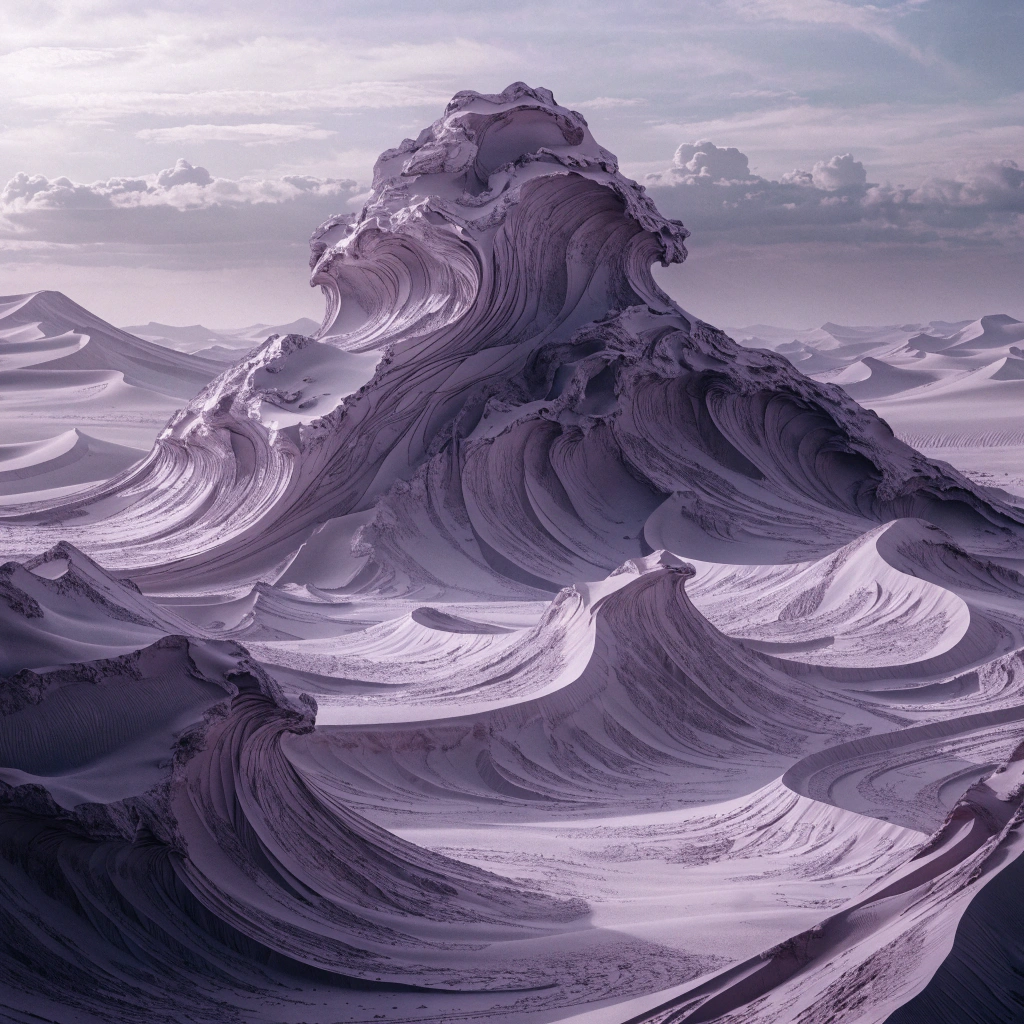
The Empty Quarter is a very big desert in Saudi Arabia. It is in the south of the country. People call it the Rub' al Khali. It is a very hot and dry place. There is a lot of sand. The sand dunes are very tall. Some dunes are 250 meters high. The wind moves the sand every day.
The desert is beautiful but it is very quiet. There are not many plants or animals. It is larger than France. Many people visit the desert to see the stars at night. The sky is very clear. It is a special part of the world.
Grammar Spotlight
Pattern: Present Simple of 'to be'
"The Empty Quarter is a very big desert in Saudi Arabia."
We use 'is' for singular subjects to describe facts. It connects the subject to an adjective or noun.
Pattern: Present Simple (Third Person Singular)
"The wind moves the sand every day."
In the present simple, we add an 's' to the verb when the subject is he, she, or it. Here, 'the wind' is the subject.
Test Your Understanding
10 questions · A1 Beginner · 1 free preview
Test what you learned from this article. Answer all questions to earn XP!
Where is the Empty Quarter?
Want to finish the quiz?
9 more questions are waiting for you. Sign up free to unlock the full quiz and earn XP!
Sign Up FreeAlready have an account? Sign In
Question Breakdown
Where is the Empty Quarter?
Your answer:
Correct answer: In Saudi Arabia
The sand dunes are very small.
Your answer:
Correct answer: False
What does 'quiet' mean?
Your answer:
Correct answer: Very little noise
The Empty Quarter is a very big _____.
Your answer:
Correct answer: desert
The Amazing Empty Quarter
The Empty Quarter, or Rub' al Khali, is a very large desert in Saudi Arabia. It is bigger than France and covers a lot of the Arabian Peninsula. People call it the 'Empty Quarter' because it is a very quiet and lonely place.
The desert is famous for its beautiful sand dunes. Some dunes are taller than big buildings. They can reach 250 meters high! These dunes are called 'star dunes' because of their shape. The wind moves the sand every day, so the landscape is always changing.
In the past, travelers crossed the desert on camels. It was a difficult journey because the weather was very hot. Today, the Empty Quarter is still one of the most beautiful places on Earth. Many people visit it to see the orange sand and the clear night sky. It is a special part of the world.
Grammar Spotlight
Pattern: Comparatives (adjective + er + than)
"It is bigger than France and covers a lot of the Arabian Peninsula."
We use comparatives to compare two things. For short words like 'big', we add '-er' and use the word 'than' after it.
Pattern: Past Simple
"In the past, travelers crossed the desert on camels."
We use the past simple to talk about finished actions in the past. For regular verbs like 'cross', we add '-ed' to the end.
Test Your Understanding
11 questions · A2 Elementary · 1 free preview
Test what you learned from this article. Answer all questions to earn XP!
How big is the Empty Quarter desert?
Want to finish the quiz?
10 more questions are waiting for you. Sign up free to unlock the full quiz and earn XP!
Sign Up FreeAlready have an account? Sign In
Question Breakdown
How big is the Empty Quarter desert?
Your answer:
Correct answer: It is bigger than France.
The sand dunes in the desert never move.
Your answer:
Correct answer: False
What does 'journey' mean?
Your answer:
Correct answer: Traveling from one place to another
The wind moves the _____ every day.
Your answer:
Correct answer: sand
Why is it called the 'Empty Quarter'?
Your answer:
Correct answer: Because it is a quiet and lonely place.
The Wonders of the Empty Quarter
The Rub' al Khali, which is also known as the 'Empty Quarter,' is one of the most incredible places in the world. This vast desert covers the southern part of the Arabian Peninsula, and it is larger than the country of France. For centuries, it has been a place of mystery and beauty. Many people are surprised by its size and its silence.
The landscape is famous for its massive sand dunes, which can reach heights of 250 meters. These dunes are constantly reshaped by the wind, so the desert never looks the same twice. Some of these are called 'star dunes' because of their unique shapes. Although the environment is very dry, life has always existed here. The Bedouin people have traveled across these sands for generations, using their deep knowledge of the land to survive.
In recent years, many secrets have been discovered beneath the sand. Archaeologists have found evidence of ancient cities that were lost a long time ago. Fossils of animals that lived thousands of years ago have also been found by researchers. These discoveries show that the region was once much greener than it is today.
Today, the Empty Quarter is visited by brave travelers and scientists who want to explore its wonders. It is considered a difficult place to live, but it is also admired for its peaceful silence and stunning sunsets. It remains a powerful symbol of the natural beauty of Saudi Arabia.
Grammar Spotlight
Pattern: Relative Clauses with 'which'
"The Rub' al Khali, which is also known as the 'Empty Quarter,' is one of the most incredible places in the world."
A relative clause provides extra information about a noun. We use 'which' for things and 'who' for people.
Pattern: Passive Voice (Present Simple)
"These dunes are constantly reshaped by the wind."
The passive voice is used when the action is more important than the person or thing doing it. It is formed with 'to be' + past participle.
Test Your Understanding
11 questions · B1 Intermediate · 1 free preview
Test what you learned from this article. Answer all questions to earn XP!
How large is the Rub' al Khali compared to European countries?
Want to finish the quiz?
10 more questions are waiting for you. Sign up free to unlock the full quiz and earn XP!
Sign Up FreeAlready have an account? Sign In
Question Breakdown
How large is the Rub' al Khali compared to European countries?
Your answer:
Correct answer: It is larger than France
The sand dunes in the desert stay in the same position forever.
Your answer:
Correct answer: False
What does 'massive' mean in the context of the dunes?
Your answer:
Correct answer: Very large
The Rub' al Khali, which is also _____ as the 'Empty Quarter,' is vast.
Your answer:
Correct answer: known
Who has lived and traveled in the desert for generations?
Your answer:
Correct answer: The Bedouin people
The Majestic Silence: Exploring the Rub' al Khali
The Rub' al Khali, commonly known as the 'Empty Quarter', represents one of the most monumental geographical features on our planet. This vast expanse of sand, which occupies the southern third of the Arabian Peninsula, covers approximately 650,000 square kilometers. To put this into perspective, the desert is larger than the entire territory of France. Despite its intimidating name suggesting a total void, the region is a place of perpetual movement and striking natural beauty. The climate of the Rub' al Khali is defined by its hyper-aridity, where annual rainfall rarely exceeds 35 millimeters. During the summer months, temperatures frequently soar above 50 degrees Celsius, making physical exertion nearly impossible for those who are not acclimatized.
The landscape is characterized by its massive ridges and 'star dunes,' some of which reach heights of 250 meters. These structures are not static; rather, they are constantly reshaped by the wind, creating a topography that is in a state of continuous evolution. From an ecological perspective, the environment appears entirely inhospitable to the casual observer. However, the desert supports a surprising level of biodiversity, with various species of flora and fauna having adapted to the extreme temperatures and lack of water. This extreme heat, combined with the lack of reliable water sources, creates a formidable barrier for any expedition. Nevertheless, the allure of the desert’s silence and its untouched vistas continues to draw adventurous souls who seek to experience the sublime scale of the wilderness.
Historically, the Rub' al Khali was not as isolated as it seems today. For centuries, nomadic Bedouin tribes have demonstrated incredible resilience by navigating this challenging terrain. They relied on their deep knowledge of the stars and the behavior of the sands to survive. Moreover, archaeological evidence suggests that the desert once hosted ancient civilizations. If modern technology had not been developed, many of the remnants of these lost cities, buried deep beneath the dunes, might never have been discovered. Consequently, the area remains a significant site for researchers who are eager to uncover the secrets of the past. Ultimately, the Rub' al Khali stands as a testament to the enduring power of nature and the historical depth of the Arabian Peninsula.
Grammar Spotlight
Pattern: Present Simple Passive
"The landscape is characterized by its massive ridges and 'star dunes.'"
The passive voice is used here to focus on the landscape itself rather than the agent that characterizes it. It is formed using 'is/are' + the past participle of the verb.
Pattern: Non-defining Relative Clauses
"This vast expanse of sand, which occupies the southern third of the Arabian Peninsula, covers approximately 650,000 square kilometers."
These clauses add extra information about a noun but are not essential for the sentence to make sense. They are always separated by commas and use relative pronouns like 'which' or 'who'.
Pattern: Third Conditional
"If modern technology had not been developed, many of the remnants of these lost cities might never have been discovered."
This pattern is used to talk about a hypothetical situation in the past and its imaginary result. It is formed with 'If + past perfect' and 'might/would have + past participle'.
Test Your Understanding
11 questions · B2 Upper Intermediate · 1 free preview
Test what you learned from this article. Answer all questions to earn XP!
How does the size of the Rub' al Khali compare to France?
Want to finish the quiz?
10 more questions are waiting for you. Sign up free to unlock the full quiz and earn XP!
Sign Up FreeAlready have an account? Sign In
Question Breakdown
How does the size of the Rub' al Khali compare to France?
Your answer:
Correct answer: It is larger than the entire territory of France.
The sand dunes in the Empty Quarter remain in the same position permanently.
Your answer:
Correct answer: False
What does 'inhospitable' mean in the context of the article?
Your answer:
Correct answer: A harsh environment that is difficult to survive in.
For centuries, nomadic Bedouin tribes have demonstrated incredible _____ by navigating this challenging terrain.
Your answer:
Correct answer: resilience
What can happen to temperatures in the Rub' al Khali during summer?
Your answer:
Correct answer: They frequently exceed 50 degrees Celsius.
The Sublime Desolation: Re-evaluating the Rub' al Khali’s Place in the Global Consciousness
Rarely does a landscape command such visceral respect and existential dread as the Rub' al Khali. Spanning approximately 650,000 square kilometers of the southern Arabian Peninsula, this 'Empty Quarter' represents a paradoxical intersection of absolute desolation and breathtaking aesthetic beauty. To the uninitiated, it may appear as a static wasteland; however, the reality is a dynamic environment characterized by the perpetual reconfiguration of its topography. The sheer vastness of this desert, surpassing the territorial extent of France, serves as a humbling reminder of nature’s indifference to human scale.
Central to the allure of the Rub' al Khali are its monumental dunes, some of which ascend to heights of 250 meters. It is the interplay between the shifting sands and the relentless winds that produces the iconic star dunes, geological marvels that oscillate between stability and motion. The nominalisation of these geographic features—transforming fluid movement into a noun-based identity—often masks the fact that the desert is in a state of constant flux. These colossal ridges are not merely piles of silica; they are living archives of climatic history, shaped by aeolian processes that have persisted for millennia. Never before have scientists encountered a more complex laboratory for studying wind-driven erosion and deposition.
Despite its inhospitable reputation, the desert has never been truly empty. It is the resilience of the Bedouin tribes that historically transformed this void into a navigable, albeit treacherous, home. Their survival was predicated on an intimate knowledge of the environment, a cognitive mapping that predates modern GPS by centuries. Today, however, the discourse surrounding the Rub' al Khali has shifted toward a more critical analysis of its ecological and economic significance. While the extraction of hydrocarbons remains a dominant narrative, there is a burgeoning movement advocating for the preservation of its ethereal silence and unique biodiversity.
Furthermore, the Empty Quarter presents a profound philosophical enigma. In an era defined by hyper-connectivity and urban sprawl, such a massive expanse of untouched wilderness offers a rare space for contemplation. Yet, the encroachment of tourism and industrial activity poses a significant threat to its pristine state. The challenge for the modern age lies in balancing the economic exploitation of its sub-surface riches with the moral imperative to protect its surface integrity. Ultimately, the Rub' al Khali remains a testament to the sublime—a place that simultaneously invites exploration and warns against the hubris of over-familiarity.
Grammar Spotlight
Pattern: Negative Inversion
"Rarely does a landscape command such visceral respect and existential dread as the Rub' al Khali."
This structure places a negative or restrictive adverb at the beginning of the sentence for emphasis, followed by auxiliary verb inversion (verb before subject). It is used to create a formal and dramatic tone.
Pattern: Cleft Sentences
"It is the resilience of the Bedouin tribes that historically transformed this void into a navigable home."
Cleft sentences use 'It is/was' to focus on a specific part of the information. Here, it emphasizes the 'resilience of the Bedouin' as the primary factor for survival.
Pattern: Nominalisation
"The perpetual reconfiguration of these geological giants defies static mapping."
Nominalisation involves turning verbs or adjectives into nouns (e.g., 'reconfigure' to 'reconfiguration'). This makes the writing more concise, abstract, and academic in nature.
Test Your Understanding
12 questions · C1 Advanced · 1 free preview
Test what you learned from this article. Answer all questions to earn XP!
What is the primary reason the author describes the Rub' al Khali as a 'paradox'?
Want to finish the quiz?
11 more questions are waiting for you. Sign up free to unlock the full quiz and earn XP!
Sign Up FreeAlready have an account? Sign In
Question Breakdown
What is the primary reason the author describes the Rub' al Khali as a 'paradox'?
Your answer:
Correct answer: It combines total desolation with extreme aesthetic beauty.
The author suggests that the star dunes are static landmarks that never change position.
Your answer:
Correct answer: False
What does 'ethereal' mean in the context of the article?
Your answer:
Correct answer: Delicate and seemingly not of this world
The challenge for the modern age lies in balancing economic exploitation with the moral _____ to protect the desert.
Your answer:
Correct answer: imperative
According to the text, how did the Bedouin survive in such an environment?
Your answer:
Correct answer: Through an intimate cognitive mapping of the landscape.
The Rub' al Khali is larger in territorial extent than France.
Your answer:
Correct answer: True
The Rub' al Khali: An Ontological Inquiry into the Sublime Desolation of the Empty Quarter
The Rub' al Khali, colloquially known as the 'Empty Quarter,' constitutes a formidable geomorphological entity that transcends the mere definition of a desert. Spanning an astronomical 650,000 square kilometers, it represents the largest contiguous sand body on the planet, an expanse of hyper-arid desolation that encompasses the southern third of the Arabian Peninsula. To the uninitiated observer, this vast wilderness might appear as a monochromatic and static void; however, such a reductionist view fails to account for the intricate aeolian processes that render the landscape a theater of perpetual transformation. Here, the topography is defined by undulating dunes of staggering proportions, with star-shaped ridges and barchans ascending to heights of 250 meters. These structures, forged by the relentless vicissitudes of seasonal winds, are in a state of constant flux, ensuring that the desert remains a transient masterpiece of natural engineering.
The aesthetic allure of the Rub' al Khali is inextricably linked to its inherent inhospitality. The sand itself, often imbued with a vibrant ochre hue due to the presence of iron oxides, possesses a primordial quality that evokes a sense of time before the dawn of civilization. One of the most enigmatic phenomena within this realm is the 'singing sands'—a low-frequency hum produced by the friction of shifting grains, which adds a haunting, auditory dimension to the visual spectacle. Were one to traverse these depths, the experience would likely be one of profound ontological displacement. The sheer scale of the desert serves to diminish the human ego, positioning the individual within a landscape that is fundamentally indifferent to biological survival.
Historically, the Rub' al Khali has functioned as a crucible for human resilience. While the Bedouin tribes have navigated its periphery for centuries, possessing an intimate, ancestral knowledge of its hidden water sources and seasonal shifts, the interior remained largely impenetrable to outsiders until the 20th century. It was within this 'limit-experience' that explorers such as Wilfred Thesiger sought the quintessence of the human spirit. For Thesiger, the desert was not merely a geographic challenge but a spiritual one, a place where the absence of modern distraction allowed for a clarity of consciousness. His chronicles emphasize that the Rub' al Khali is not 'empty' in a literal sense, but rather filled with a silence so palpable it becomes a presence in its own right.
Furthermore, the desert is shrouded in the mists of legend, most notably the myth of Iram of the Pillars, the 'Atlantis of the Sands.' It is often posited that ancient trade routes once crisscrossed this now-lethal terrain, supporting prosperous civilizations that were eventually reclaimed by the encroaching dunes. While archaeological evidence remains sparse, the allure of discovering lost subterranean cities continues to captivate the academic imagination. This interplay between historical reality and mythic narrative reinforces the desert’s status as a repository of the unknown.
From an ecological perspective, the region is a testament to the tenacity of life. Despite the absence of perennial surface water, the desert is not entirely devoid of biological activity. Ephemeral flora emerges with startling speed following rare rainfall events, and specialized fauna have evolved sophisticated physiological mechanisms to thrive in hyper-arid conditions. Moreover, the existence of vast subterranean aquifers suggests a hidden complexity beneath the parched surface. However, the integrity of this delicate ecosystem is increasingly threatened by the anthropogenic pressures of the modern era, from resource extraction to the broader implications of global climatic instability.
In conclusion, the Rub' al Khali remains one of the few remaining bastions of true wilderness on Earth. It is a landscape that demands both intellectual inquiry and visceral respect. Seldom does a landscape command such visceral reverence, and it remains a vital sanctuary of wilderness in an increasingly crowded world. To preserve it is to preserve a piece of the world's soul, a place where the human ego is rightfully humbled by the infinite.
Grammar Spotlight
Pattern: Negative Inversion
"Seldom does a landscape command such visceral reverence..."
This structure places a negative adverbial at the beginning of the sentence for rhetorical emphasis. It requires the inversion of the subject and the auxiliary verb (does a landscape command).
Pattern: Inverted Conditional (Subjunctive)
"Were one to traverse these depths, the experience would likely be one of profound ontological displacement."
This uses 'were' in an inverted position to replace 'if' in a formal second conditional. It expresses a hypothetical or unlikely situation in a highly scholarly tone.
Pattern: Academic Hedging with Passive Voice
"It is often posited that ancient trade routes once crisscrossed this now-lethal terrain..."
This uses a dummy subject 'it' followed by a passive reporting verb (posited). This is a standard academic device used to present a theory without attributing it to a specific person, maintaining neutrality.
Test Your Understanding
12 questions · C2 Mastery · 1 free preview
Test what you learned from this article. Answer all questions to earn XP!
According to the text, why is the Rub' al Khali considered a 'theater of perpetual transformation'?
Want to finish the quiz?
11 more questions are waiting for you. Sign up free to unlock the full quiz and earn XP!
Sign Up FreeAlready have an account? Sign In
Question Breakdown
According to the text, why is the Rub' al Khali considered a 'theater of perpetual transformation'?
Your answer:
Correct answer: Due to the constant reshaping of dunes by wind processes.
The 'singing sands' phenomenon is caused by the presence of iron oxides in the dunes.
Your answer:
Correct answer: False
Which word describes something that exists from the very beginning of time?
Your answer:
Correct answer: Primordial
The landscape is described as _____, meaning it is impermanent and constantly changing.
Your answer:
Correct answer: transient
What did Wilfred Thesiger seek to find during his exploration of the desert?
Your answer:
Correct answer: The quintessence of the human spirit and endurance.
Despite the lack of surface water, the desert contains underground aquifers.
Your answer:
Correct answer: True
