Welcome to Al-Balad
Al-Balad is a very old place in Saudi Arabia. It is the historic center of the city of Jeddah. It is near the Red Sea. Many people visit this place every year.
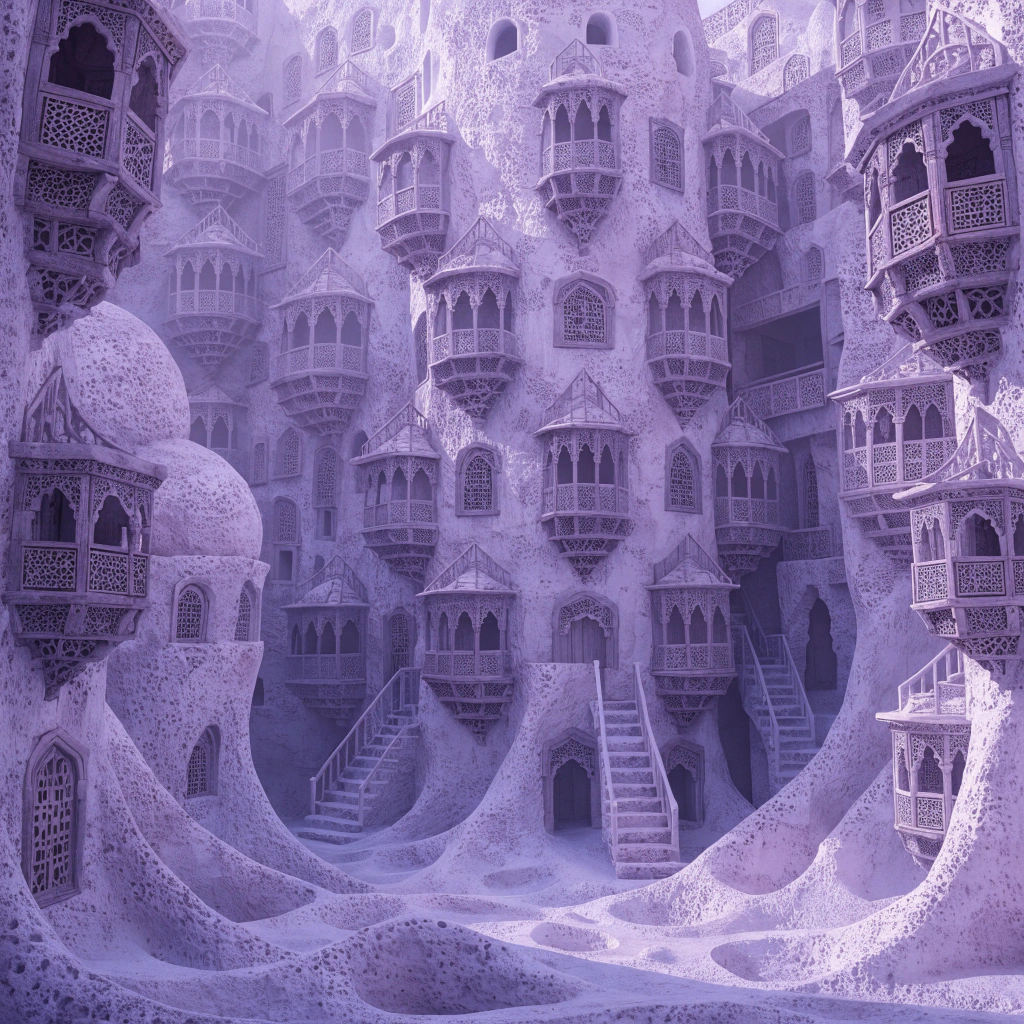
The houses in Al-Balad are very special. They are made of coral stone from the sea. The houses have beautiful wooden windows. These windows are called Roshan. They keep the houses cool in the summer.
Visitors walk in the small streets. There are many markets and shops. You can see the history in every building. It is a famous and beautiful part of Saudi Arabia.
语法聚焦
句型: Present Simple (to be)
"Al-Balad is a very old place in Saudi Arabia."
We use 'is' with singular subjects like Al-Balad to describe facts or states. It is the most common verb for descriptions.
句型: Plural Nouns
"The houses have beautiful wooden windows."
To make a noun plural in English, we usually add -s or -es. For example, one house becomes many houses.
测试你的理解
10 个问题 · A1 初学 · 1 次免费预览
测试你从这篇文章中学到的知识。回答所有问题即可获得经验值!
题目详情
Where is Al-Balad located?
你的回答:
正确答案: Jeddah
The houses are made of coral stone from the sea.
你的回答:
正确答案: 正确
What does 'beautiful' mean?
你的回答:
正确答案: Very nice to look at
Visitors walk in the small _____.
你的回答:
正确答案: streets
Al-Balad: The Old Heart of Jeddah
Al-Balad is the historic center of Jeddah, Saudi Arabia. It is a very old place because it started in the 7th century. Today, it is a UNESCO World Heritage site. Many people visit Al-Balad to see the beautiful buildings and feel the history.
For a long time, Al-Balad was the main gateway for pilgrims. These people traveled by sea to reach the holy city of Mecca. Because so many people came from different countries, Al-Balad became a special place with many cultures. Traders also sold spices and clothes in the busy markets.
The buildings in Al-Balad are unique. Workers used coral stone from the Red Sea to build them. The houses have famous wooden windows called 'Roshan'. These windows are more colorful than modern windows. They also help to keep the houses cool in the hot summer. Al-Balad is a wonderful place to learn about the past.
语法聚焦
句型: Past Simple
"Workers used coral stone from the Red Sea to build them."
We use the past simple to talk about completed actions in the past. To form it with regular verbs, we usually add '-ed' to the base verb.
句型: Comparatives
"These windows are more colorful than modern windows."
We use 'more + adjective + than' to compare two things when the adjective is long (two or more syllables). It shows the difference between the two objects.
测试你的理解
11 个问题 · A2 基础 · 1 次免费预览
测试你从这篇文章中学到的知识。回答所有问题即可获得经验值!
题目详情
Where is Al-Balad located?
你的回答:
正确答案: Jeddah
Al-Balad is a new part of the city built recently.
你的回答:
正确答案: 错误
What does 'unique' mean?
你的回答:
正确答案: The only one of its kind
Al-Balad started in the 7th _____.
你的回答:
正确答案: century
Why was Al-Balad important for pilgrims?
你的回答:
正确答案: It was the main gateway to reach Mecca
Al-Balad: The Historic Heart of Jeddah
Al-Balad is known as the historic heart of Jeddah, a city on the Red Sea coast of Saudi Arabia. It was founded in the 7th century and has served as a gateway for pilgrims traveling to Mecca for over a thousand years. Because of its incredible history and unique style, it has been named a UNESCO World Heritage site.
The architecture of Al-Balad is unlike anything else in the world. The old buildings were constructed using coral stone from the sea. One of the most famous features is the 'Roshan', which are beautiful wooden balconies that cover the windows. These balconies were designed to let cool air into the houses while protecting the privacy of the families inside. Walking through the narrow streets, you can see how these tall houses have stood for centuries.
For many years, the district has been a place where different cultures meet. Since it was the main port for travelers arriving by sea, people from all over the world have brought their traditions and food to Jeddah. This has created a cosmopolitan atmosphere that still exists today.
Recently, many of the historic buildings have been restored to preserve the city’s heritage. Local artists and shops have moved into the area, making it a lively place for both tourists and residents. Although Jeddah has grown into a modern city with huge malls and skyscrapers, Al-Balad remains a special place where the past is still alive.
语法聚焦
句型: Passive Voice
"The old buildings were constructed using coral stone from the sea."
The passive voice is used when the action is more important than the person who did it. It is formed using the verb 'to be' and the past participle.
句型: Relative Clauses
"One of the most famous features is the 'Roshan', which are beautiful wooden balconies that cover the windows."
Relative clauses give extra information about a noun. We use 'which' for things and 'who' for people.
测试你的理解
11 个问题 · B1 中级 · 1 次免费预览
测试你从这篇文章中学到的知识。回答所有问题即可获得经验值!
Why is Al-Balad historically important for pilgrims?
题目详情
Why is Al-Balad historically important for pilgrims?
你的回答:
正确答案: It served as the main gateway for those traveling to Mecca.
Al-Balad was founded in the 7th century.
你的回答:
正确答案: 正确
What does 'heritage' mean?
你的回答:
正确答案: The history and traditions of a place.
The buildings in Al-Balad were constructed using _____ stone.
你的回答:
正确答案: coral
What is the primary function of the 'Roshan' balconies?
你的回答:
正确答案: To provide cool air and privacy for families.
Al-Balad: The Timeless Soul of Jeddah
Located on the eastern shore of the Red Sea, Al-Balad serves as a living testament to the rich history of Jeddah. Founded in the 7th century, this historic district was established as the primary gateway for Muslim pilgrims arriving by sea on their spiritual journey to the holy city of Mecca. Consequently, for over a millennium, Al-Balad has been a melting pot of cultures, where traders and travelers from across the Indian Ocean and beyond converged, creating a uniquely cosmopolitan atmosphere. This cultural fusion is most visibly reflected in the district's distinctive architectural style, which differs significantly from other regions in Saudi Arabia.
The most striking feature of Al-Balad is undoubtedly its traditional tower houses. These structures were primarily constructed using coral stone, harvested from the nearby Red Sea reefs. To mitigate the intense heat of the region, builders incorporated 'Roshan'—elaborate, intricate wooden balconies that provide both shade and ventilation. These balconies allowed residents to enjoy a cool breeze while maintaining their privacy. Having served as the residential heart of the city for centuries, many of these buildings are now being carefully restored. If the district had not been designated a UNESCO World Heritage site in 2014, much of this invaluable heritage might have been lost to modern urban development.
In recent years, the Saudi government has initiated extensive renovation projects to ensure the preservation of Al-Balad's historical integrity. These efforts are not merely about maintaining old walls; they represent a broader vision of sustainable cultural tourism. By the time visitors walk through the narrow, winding alleys today, they can witness a delicate balance between ancient tradition and modern revitalization. Artisans have been employed to use traditional methods to repair the coral stone, ensuring that the soul of the district remains intact.
Ultimately, Al-Balad is more than just a collection of old buildings; it is a symbol of Jeddah's enduring identity. Despite the rapid modernization seen elsewhere in the kingdom, this district continues to evoke a sense of nostalgia and pride. It offers a profound analysis of how maritime trade and religious significance can shape the urban landscape of a nation. As preservation efforts continue, Al-Balad will undoubtedly remain a cornerstone of Saudi Arabia's cultural legacy, bridging the gap between its storied past and its ambitious future.
语法聚焦
句型: Third Conditional (Hypothetical Past)
"If the district had not been designated a UNESCO site, much of its history might have been lost."
This structure is used to imagine a different past. It uses 'if' + past perfect, followed by 'might/would have' + past participle to describe a result that did not actually happen.
句型: Present Perfect Passive
"Many of these buildings are now being carefully restored."
This pattern focuses on the action being performed on the subject rather than who is doing it. It is formed using 'am/is/are' + 'being' + past participle to describe an ongoing process of change.
句型: Participle Clauses
"Having served as the residential heart of the city for centuries, many of these buildings are now being carefully restored."
The perfect participle 'Having served' is used to show that one action was completed before another. It helps to vary sentence structure and provide background information efficiently.
测试你的理解
11 个问题 · B2 中高级 · 1 次免费预览
测试你从这篇文章中学到的知识。回答所有问题即可获得经验值!
What was the primary historical function of Al-Balad?
题目详情
What was the primary historical function of Al-Balad?
你的回答:
正确答案: A main entry point for pilgrims heading to Mecca
The 'Roshan' balconies were designed solely for aesthetic beauty without any functional purpose.
你的回答:
正确答案: 错误
What does 'cosmopolitan' mean in the context of the article?
你的回答:
正确答案: A place influenced by many different cultures
The buildings in Al-Balad were primarily constructed using _____ stone.
你的回答:
正确答案: coral
What triggered the increased focus on preserving Al-Balad's historical integrity?
你的回答:
正确答案: Its designation as a UNESCO World Heritage site
The Coral Sentinels: Navigating the Architectural and Social Tapestry of Al-Balad
Seldom has an urban landscape encapsulated the historical convergence of maritime commerce and spiritual devotion as profoundly as Al-Balad, the historic heart of Jeddah. Established in the 7th century, this labyrinthine district served for over a millennium as the quintessential gateway for Muslim pilgrims traversing the Red Sea en route to the holy city of Mecca. It was this constant influx of diverse populations that fostered a uniquely cosmopolitan culture, the vestiges of which remain etched into the very fabric of the city’s architecture. The district’s evolution reflects a nuanced history where trade routes and religious duty intertwined to create a society that was as outward-looking as it was deeply rooted in local tradition.
The architectural identity of Al-Balad is primarily defined by its coral-stone edifices, which rise several stories high, defying the conventional horizontal sprawl of many ancient settlements. What distinguishes these structures is the intricate woodwork known as 'Roshan'—elaborate, projecting balconies that serve both aesthetic and functional purposes. These wooden screens, often featuring delicate latticework, were designed to maximize airflow while ensuring the privacy of the inhabitants. Not only do these balconies mitigate the sweltering heat of the Hijaz region, but they also symbolize the social nuances of a society that valued both hospitality and domestic seclusion. The use of coral stone, harvested from the nearby Red Sea, provided a porous yet sturdy material that allowed the buildings to breathe, a testament to early sustainable engineering.
However, the preservation of Al-Balad is not without its complexities. The institutionalization of conservation efforts, particularly following its designation as a UNESCO World Heritage site, has sparked critical debates regarding the balance between historical authenticity and modern functionality. Critics argue that the gentrification of such districts may lead to the displacement of the very communities that imbue the area with its ephemeral charm. Conversely, proponents of restoration emphasize that without rigorous structural interventions, the coral-stone foundations—already weakened by time and humidity—would inevitably crumble. The challenge lies in maintaining the district as a living entity rather than a static museum.
The tenacity of Al-Balad’s heritage lies in its ability to adapt to changing geopolitical realities. While the lynchpin of its economy has shifted from pilgrim transit to heritage tourism, the district retains a sublime atmosphere that transcends mere commercialization. Walking through its narrow alleys, one is struck by the juxtaposition of the ancient and the contemporary. The subtle interplay of light through the Roshan screens provides a poignant reminder of Jeddah’s maritime past. Ultimately, Al-Balad stands as a testament to human ingenuity in the face of environmental challenges, offering a sophisticated narrative of a city that has long served as a bridge between the Arabian Peninsula and the wider world.
语法聚焦
句型: Inversion
"Seldom has an urban landscape encapsulated the historical convergence of maritime commerce and spiritual devotion as profoundly as Al-Balad."
Inversion is used here by placing a negative adverbial ('Seldom') at the beginning of the sentence followed by the auxiliary verb 'has'. This structure is used for emphasis and is common in formal C1 writing.
句型: Cleft Sentences
"It was this constant influx of diverse populations that fostered a uniquely cosmopolitan culture."
A cleft sentence (It + be + subject + relative clause) is used to focus on a specific piece of information. Here, it emphasizes that the 'influx of populations' was the primary cause of the culture.
句型: Nominalisation
"The institutionalization of conservation efforts has sparked critical debates."
Nominalisation involves turning verbs or adjectives into nouns (e.g., 'institutionalize' to 'institutionalization'). This creates a more formal, academic tone typical of advanced English.
测试你的理解
12 个问题 · C1 高级 · 1 次免费预览
测试你从这篇文章中学到的知识。回答所有问题即可获得经验值!
What was the primary historical function of Al-Balad?
题目详情
What was the primary historical function of Al-Balad?
你的回答:
正确答案: A gateway for pilgrims traveling to Mecca
The Roshan balconies were designed solely for decorative purposes without any functional use.
你的回答:
正确答案: 错误
What does the word 'edifices' mean in the context of the article?
你的回答:
正确答案: Large, imposing buildings
The _____ of conservation efforts has sparked debates regarding historical authenticity.
你的回答:
正确答案: institutionalization
Why did architects in Al-Balad use coral stone?
你的回答:
正确答案: It was a local, porous material that allowed buildings to breathe
Critics worry that gentrification might displace the communities that give the district its charm.
你的回答:
正确答案: 正确
The Architectural Palimpsest of Al-Balad: A Socio-Historical Analysis of Jeddah’s Vernacular Urbanism
The historical district of Al-Balad in Jeddah stands as a profound architectural palimpsest, where layers of history, commerce, and devotion intersect within a singular urban fabric. Founded in the seventh century, this littoral enclave was not merely a residential hub but functioned as the preeminent gateway for the Islamic world, facilitating the transit of pilgrims toward the sanctuary of Mecca. Such a role necessitated an urban design that was both utilitarian and deeply symbolic, reflecting a confluence of diverse cultural influences that arrived with the tides of the Red Sea. For over a millennium, the district has served as a crucible for cosmopolitanism, where the exchange of goods and ideas was as constant as the maritime winds.
At the heart of Al-Balad’s idiosyncratic charm is its vernacular architecture, predominantly characterized by the use of coral stone—hewn from the nearby reefs—and the intricate 'Roshan' latticework. The choice of material was dictated by environmental necessity, yet it introduced a structural fragility; coral stone is notoriously porous and susceptible to the corrosive effects of the Tihama plain’s humidity. Notwithstanding these vulnerabilities, the multi-story edifices of Al-Balad achieved a verticality that was rare for its time, embodying a socio-economic hegemony where the height of one’s residence often signaled one's mercantile success. These 'tower houses' represent a sophisticated adaptation to limited spatial availability within the city walls, creating a dense, vertical urbanism that maximized shade and airflow.
The Roshan, arguably the district's most iconic feature, serves as a masterclass in passive climatic regulation. These elaborate wooden projections were designed to capture the sea breeze while simultaneously preserving the domestic privacy of the inhabitants. It is through these apertures that the juxtaposition of the private and public spheres becomes most apparent. To the observer, the Roshan is an aesthetic marvel of geometric precision; to the inhabitant, it was a vital conduit for ventilation and a vantage point from which the ephemeral bustle of the market could be surveyed without personal exposure. This architectural element reflects a nuanced understanding of social boundaries in a transit-heavy society.
Were one to traverse the labyrinthine corridors of the Al-Mazloom district today, the olfactory weight of spice and brine would immediately manifest, evoking the cosmopolitanism that has defined Jeddah for a millennium. This was never a monolithic society; rather, it was a microcosm of the Islamic world, where Persian, Indian, and East African influences merged with local Hejazi traditions. Not only did this exchange influence the culinary and linguistic landscape, but it also prevented the ossification of local culture, ensuring that Al-Balad remained a dynamic, albeit dense, urban center. The resulting cultural synthesis is what scholars now identify as the 'Jeddawi' identity—a hybridity born of the sea.
However, the preservation of such a site presents a profound paradox. The very modernization that propelled Saudi Arabia into the twenty-first century threatened to render Al-Balad an archaic relic. It is imperative that conservation efforts do not merely fossilize the district for the sake of tourism, but rather integrate it into the contemporary urban narrative. The tension between historical authenticity and functional modernization is antithetical to simplistic solutions. Critics argue that for Al-Balad to survive, it must remain a living entity, avoiding the fate of becoming a curated museum piece devoid of its original vitality. Scarcely had the district been named a UNESCO World Heritage site before discussions regarding the 'gentrification vs. restoration' dichotomy began to dominate the academic discourse.
In conclusion, Al-Balad remains a testament to the enduring power of transit and trade. Its coral walls and wooden screens are not merely historical artifacts; they are the physical manifestations of a centuries-old dialogue between the desert and the sea. As global attention focuses on its preservation, the challenge remains to honor its past while facilitating a future where its labyrinthine streets continue to pulse with the lifeblood of Jeddah. The district stands not as a static monument to the past, but as a resilient urban organism that continues to negotiate its place within a rapidly evolving global landscape.
语法聚焦
句型: Past Subjunctive / Hypothetical Inversion
"Were one to traverse the labyrinthine corridors of the Al-Mazloom district today, the olfactory weight of spice and brine would immediately manifest."
This inversion of 'If one were to' is used in formal, academic English to express a hypothetical situation. It places the verb 'were' at the start for rhetorical emphasis.
句型: Negative Inversion
"Not only did this exchange influence the culinary and linguistic landscape, but it also prevented the ossification of local culture."
When a sentence begins with a negative or restrictive expression like 'Not only,' the subject and auxiliary verb are inverted. This is used to add emphasis and variety in sophisticated writing.
句型: Negative Inversion with 'Scarcely'
"Scarcely had the district been named a UNESCO World Heritage site before discussions regarding the 'gentrification vs. restoration' dichotomy began to dominate."
Using 'Scarcely had... before' is a C2-level structure to indicate that one event happened immediately after another. It requires subject-verb inversion (had the district been).
测试你的理解
12 个问题 · C2 精通 · 1 次免费预览
测试你从这篇文章中学到的知识。回答所有问题即可获得经验值!
What does the author suggest about the height of the 'tower houses' in Al-Balad?
题目详情
What does the author suggest about the height of the 'tower houses' in Al-Balad?
你的回答:
正确答案: It served as a physical indicator of the resident's social and commercial status.
The author argues that coral stone was the ideal building material due to its extreme durability against humidity.
你的回答:
正确答案: 错误
Which term best describes the 'Jeddawi' identity as presented in the text?
你的回答:
正确答案: Hybridity
The author warns that conservation should not result in the district becoming a curated _____ piece.
你的回答:
正确答案: museum
What is the primary function of the 'Roshan' according to the text?
你的回答:
正确答案: To regulate temperature while maintaining social privacy.
The text suggests that the cultural diversity of Al-Balad was a direct result of its role as a gateway to Mecca.
你的回答:
正确答案: 正确

