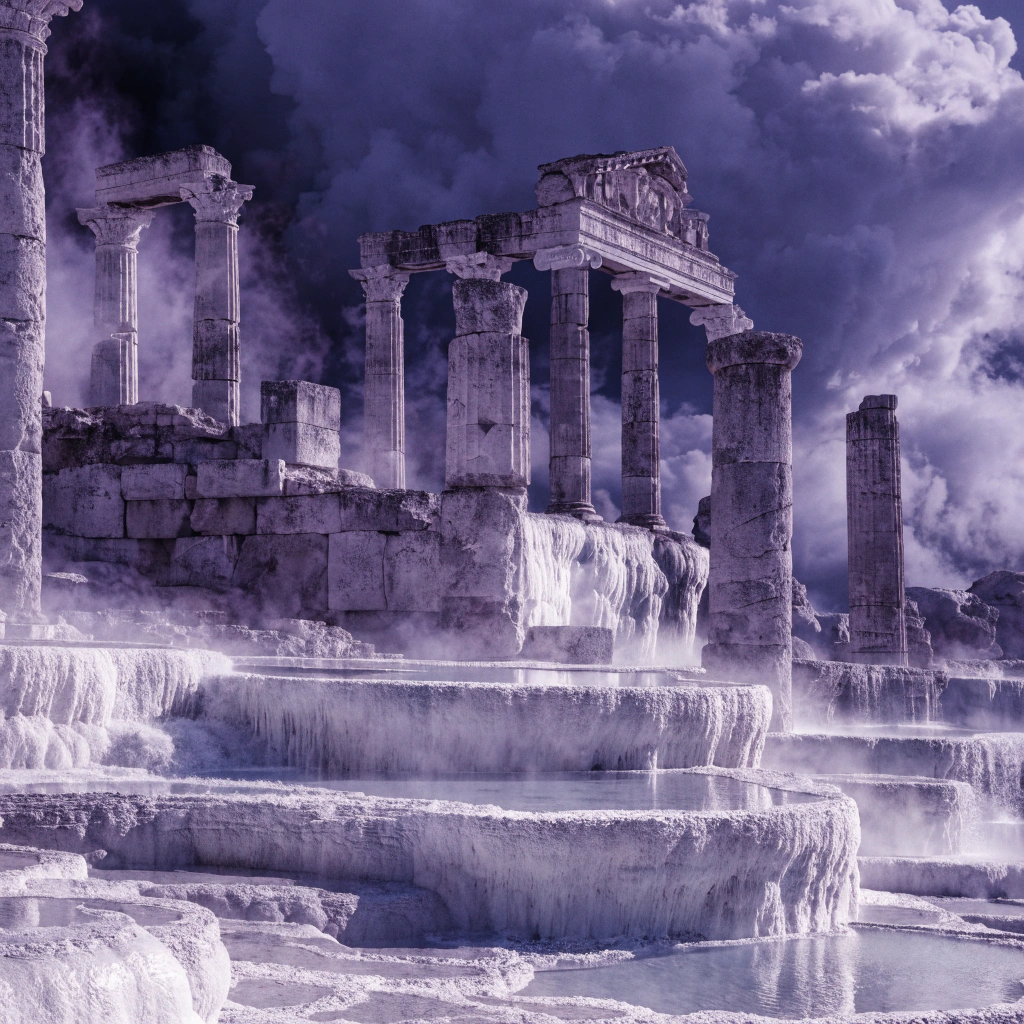
Pamukkale: La Montaña de Algodón
Pamukkale es un lugar muy bonito en Turquía. Su nombre significa "Castillo de Algodón". Vemos montañas blancas. Parecen algodón. El agua es muy caliente y viene de la tierra. Esta agua tiene minerales.
Los minerales hacen las montañas blancas. Mucha gente visita Pamukkale. Es un paisaje especial. Puedes ver piscinas naturales con agua clara. Es un sitio famoso en el mundo. La gente camina y disfruta el sol. Pamukkale tiene una historia antigua también. Es un buen lugar para vacaciones.
Gramática destacada
Patrón: El verbo "ser" (es)
"Pamukkale es un lugar muy bonito en Turquía."
Usamos "es" para describir cosas o identificar algo. "Es" viene del verbo "ser". Por ejemplo, "Ella es alta" o "Esto es una manzana".
Patrón: El verbo "tener" (tiene)
"Esta agua tiene minerales."
Usamos "tiene" para decir que algo posee otra cosa o una característica. "Tiene" viene del verbo "tener". Por ejemplo, "Él tiene un coche" o "La casa tiene un jardín".
Pon a prueba tu comprensión
10 preguntas · A1 Principiante · 1 vista previa gratis
Pon a prueba lo que aprendiste en este artículo. ¡Responde todas las preguntas para ganar XP!
¿Qué significa "Pamukkale"?
¿Quieres terminar el quiz?
9 preguntas más te esperan. ¡Regístrate gratis para desbloquear el quiz completo y ganar XP!
Regístrate gratis¿Ya tienes cuenta? Acceder
Desglose de preguntas
¿Qué significa "Pamukkale"?
Tu respuesta:
Respuesta correcta: Castillo de Algodón
Pamukkale está en España.
Tu respuesta:
Respuesta correcta: Falso
¿Qué significa la palabra "agua"?
Tu respuesta:
Respuesta correcta: Líquido para beber
Pamukkale es un lugar muy _____.
Tu respuesta:
Respuesta correcta: bonito
El Castillo de Algodón: Pamukkale
Pamukkale se encuentra en el suroeste de Turquía y es un lugar único en el mundo. En el idioma turco, su nombre significa "Castillo de Algodón". Cuando los turistas llegan, ven una montaña blanca que parece estar cubierta de nieve o hielo. Sin embargo, no hace frío allí.
Este paisaje tan especial se formó por el agua de las fuentes termales. El agua sale de la tierra a temperaturas muy altas, entre 35 y 100 grados centígrados. Esta agua tiene muchos minerales, especialmente calcio. Cuando el agua cae por la montaña, el calcio se endurece y crea terrazas blancas y piscinas naturales.
En el pasado, muchas personas visitaron Pamukkale porque creían que el agua era buena para la salud. Los romanos construyeron una ciudad llamada Hierápolis cerca de las fuentes. Hoy, Pamukkale es más famoso que otros sitios turísticos de Turquía. Es un lugar protegido por la UNESCO porque es Patrimonio de la Humanidad. Es una experiencia increíble caminar por estas terrazas blancas y sentir el agua templada en los pies.
Gramática destacada
Patrón: El comparativo de superioridad
"Pamukkale es más famoso que otros sitios turísticos de Turquía."
Se usa para comparar dos cosas indicando que una tiene una cualidad superior. Se forma con la estructura: más + adjetivo + que.
Patrón: El pretérito indefinido
"Los romanos construyeron una ciudad llamada Hierápolis."
Se usa para hablar de acciones terminadas en un momento específico del pasado. Para verbos en -ir como construir, la terminación de la tercera persona plural es -yeron.
Pon a prueba tu comprensión
11 preguntas · A2 Básico · 1 vista previa gratis
Pon a prueba lo que aprendiste en este artículo. ¡Responde todas las preguntas para ganar XP!
¿En qué país está Pamukkale?
¿Quieres terminar el quiz?
10 preguntas más te esperan. ¡Regístrate gratis para desbloquear el quiz completo y ganar XP!
Regístrate gratis¿Ya tienes cuenta? Acceder
Desglose de preguntas
¿En qué país está Pamukkale?
Tu respuesta:
Respuesta correcta: Turquía
La montaña está blanca porque tiene mucha nieve fría.
Tu respuesta:
Respuesta correcta: Falso
¿Qué significa 'castillo'?
Tu respuesta:
Respuesta correcta: Un edificio grande y fuerte
Pamukkale significa _____ de algodón.
Tu respuesta:
Respuesta correcta: castillo
¿Cuál es la temperatura máxima del agua?
Tu respuesta:
Respuesta correcta: 100 grados
Discovering the Cotton Castle of Turkey
Pamukkale, which literally translates to 'Cotton Castle' in Turkish, is one of the most incredible natural wonders in the world. Located in southwestern Turkey, this site has attracted visitors for thousands of years because of its surreal appearance. The landscape looks like a giant, frozen waterfall or a field of soft white cotton, but it is actually made of carbonate minerals left by flowing thermal spring water.
The warm water has emerged from the earth at high temperatures for centuries. It is heavily saturated with calcium, which creates the famous white terraces. As the water spills over the edge of the plateau, carbon dioxide escapes, and the minerals stay behind to form the hard white stone. These natural pools have been used as a healing spa since the time of the Romans. In fact, the ancient city of Hierapolis was built on top of this 'white castle,' and many of its ruins are still visible today.
In recent years, Pamukkale has been protected as a UNESCO World Heritage site to preserve its beauty. To keep the terraces white and clean, strict rules have been introduced. For example, visitors must take off their shoes before they walk on the mineral surfaces. Many tourists have described the experience as walking on a soft, warm cloud, though the ground is actually quite hard.
If you visit, you can also swim in the 'Antique Pool,' which is filled with warm mineral water. Ancient marble columns have fallen into this pool over time, allowing you to swim among history. Pamukkale has become a popular destination for travelers who want to see a place where history and nature are combined perfectly. It is truly a unique location that everyone should experience at least once.
Gramática destacada
Patrón: Present Perfect Tense
"this site has attracted visitors for thousands of years"
We use the present perfect (has/have + past participle) to talk about an action that started in the past and continues to the present. It emphasizes the connection between the past and now.
Patrón: Passive Voice
"the ancient city of Hierapolis was built on top of this 'white castle'"
The passive voice is used when the action or the object (the city) is more important than who did it. It is formed using the verb 'to be' and the past participle of the main verb.
Pon a prueba tu comprensión
11 preguntas · B1 Intermedio · 1 vista previa gratis
Pon a prueba lo que aprendiste en este artículo. ¡Responde todas las preguntas para ganar XP!
Why is the site called 'Pamukkale'?
¿Quieres terminar el quiz?
10 preguntas más te esperan. ¡Regístrate gratis para desbloquear el quiz completo y ganar XP!
Regístrate gratis¿Ya tienes cuenta? Acceder
Desglose de preguntas
Why is the site called 'Pamukkale'?
Tu respuesta:
Respuesta correcta: Because its appearance resembles white cotton
Visitors are allowed to wear shoes while walking on the white terraces.
Tu respuesta:
Respuesta correcta: Falso
What does 'ancient' mean?
Tu respuesta:
Respuesta correcta: Very old and from the distant past
Pamukkale is located in _____ Turkey.
Tu respuesta:
Respuesta correcta: southwestern
What created the white terraces over centuries?
Tu respuesta:
Respuesta correcta: Carbonate minerals from thermal water
The Timeless Allure of Pamukkale: Turkey’s Cotton Castle
Situated in the Denizli Province of southwestern Turkey, Pamukkale presents one of the most spectacular natural sights in the world. Often referred to as the 'Cotton Castle' due to its fluffy appearance, this geological phenomenon consists of a series of white travertine terraces that appear to cascade down the mountainside like a frozen waterfall. This unique landscape was formed over millennia as thermal spring water, emerging from the earth at temperatures between 35 and 100 degrees Celsius, flowed over the cliffs. As the water spilled over the plateau and the carbon dioxide escaped, calcium carbonate was deposited as a soft gel, eventually hardening into the brilliant white limestone structures that visitors marvel at today.
Historically, Pamukkale has been recognized not only for its aesthetic beauty but also for its therapeutic properties. The ancient Greco-Roman city of Hierapolis was established atop the white 'castle' during the second century BC, allowing citizens to benefit from the mineral-rich waters which were believed to cure various ailments. Even today, the archaeological ruins of Hierapolis, including a remarkably well-preserved theater, a grand colonnaded street, and a vast necropolis, stand as a testament to the region's historical significance. Consequently, the site was designated a UNESCO World Heritage site in 1988, acknowledging both its natural and cultural importance as a bridge between the physical world and human antiquity.
Nevertheless, the immense popularity of Pamukkale has brought significant challenges regarding its preservation. In the mid-20th century, the site faced a crisis when the construction of hotels and roads directly on the travertines led to severe damage and discoloration. The delicate ecosystem was nearly destroyed by unregulated tourism and the diversion of thermal waters for hotel pools. Since then, the Turkish government has implemented strict measures to ensure sustainable tourism. For instance, visitors are now required to remove their shoes before walking on the terraces to prevent erosion and pollution. Furthermore, the flow of water is now carefully managed by a computerized system to ensure that the terraces maintain their iconic white color and do not turn grey due to algae growth.
In conclusion, Pamukkale represents a delicate balance between natural wonder and human history. While the site continues to attract millions of tourists seeking the healing power of its thermal springs, the ongoing efforts to protect the environment are crucial. If the authorities had not intervened decades ago, the 'Cotton Castle' might have lost its luster entirely. Today, it remains a breathtaking symbol of how geological processes and human civilization can coexist, provided that preservation remains a top priority for future generations.
Gramática destacada
Patrón: Passive Voice
"This unique landscape was formed over millennia as thermal spring water... flowed over the cliffs."
The passive voice is used here to focus on the action (the formation of the landscape) rather than the agent. It is formed using 'was/were' followed by the past participle.
Patrón: Relative Clauses
"The ancient Greco-Roman city of Hierapolis was established atop the white 'castle' during the second century BC, allowing citizens to benefit from the mineral-rich waters which were believed to cure various ailments."
The word 'which' introduces a relative clause that provides additional information about the 'waters'. In B2 English, these are used to combine ideas and add detail to nouns.
Patrón: Third Conditional
"If the authorities had not intervened decades ago, the 'Cotton Castle' might have lost its luster entirely."
This pattern is used to talk about an imaginary situation in the past and its imaginary result. It uses 'if + past perfect' and 'might/would have + past participle'.
Pon a prueba tu comprensión
11 preguntas · B2 Intermedio alto · 1 vista previa gratis
Pon a prueba lo que aprendiste en este artículo. ¡Responde todas las preguntas para ganar XP!
What is the main chemical component responsible for the white terraces?
¿Quieres terminar el quiz?
10 preguntas más te esperan. ¡Regístrate gratis para desbloquear el quiz completo y ganar XP!
Regístrate gratis¿Ya tienes cuenta? Acceder
Desglose de preguntas
What is the main chemical component responsible for the white terraces?
Tu respuesta:
Respuesta correcta: Calcium carbonate
The city of Hierapolis was built primarily for military defense purposes.
Tu respuesta:
Respuesta correcta: Falso
What does 'sustainable' mean in the context of tourism?
Tu respuesta:
Respuesta correcta: Meeting current needs without compromising future generations
To prevent damage to the terraces, visitors are required to remove their _____.
Tu respuesta:
Respuesta correcta: shoes
Why is the water flow currently managed by a computerized system?
Tu respuesta:
Respuesta correcta: To prevent algae growth and maintain the white color
The Ephemeral Splendour of the Cotton Castle: Geological Marvels and Environmental Imperatives
The sheer visual impact of Pamukkale’s travertine terraces is unparalleled in the natural world. Nestled in the Menderes River valley in southwestern Turkey, this 'Cotton Castle' presents a landscape so surreal it appears almost otherworldly. Seldom does nature manifest its chemical processes with such overt aesthetic brilliance. The formation of these white cascades is a masterclass in geochemistry: thermal waters, heavily saturated with calcium bicarbonate, surge from the earth at temperatures ranging from 35 to 100 degrees Celsius. As this water spills over the plateau’s edge, the subsequent release of carbon dioxide triggers the precipitation of calcium carbonate, which eventually hardens into the crystalline travertine we see today.
However, the site is far more than a geological curiosity; it is a palimpsest of human history. It was the therapeutic allure of these thermal springs that prompted the Romans to establish the spa city of Hierapolis atop the plateau. For centuries, the site served as a sanctuary for those seeking the purported healing properties of the mineral-rich waters. Today, the ruins of Hierapolis—including its vast necropolis and well-preserved theatre—stand in silent testimony to the enduring human fascination with this ephemeral landscape. The juxtaposition of ancient stone and white mineral deposits creates a visual dialogue between the permanence of human architecture and the fluid, evolving nature of the earth.
Yet, the very popularity that brings global recognition to Pamukkale also poses its greatest threat. The encroachment of modern infrastructure and the sheer volume of foot traffic have necessitated stringent conservation measures. In the late 20th century, the site suffered significant degradation due to unregulated hotel construction and the diversion of thermal waters for swimming pools. Only through the implementation of rigorous management plans, including the demolition of hotels and the restriction of visitor access to certain areas, has the site begun to recover its pristine character. The restoration process highlights the fragility of such natural wonders when faced with the demands of mass tourism.
Striking a balance between the preservation of this delicate ecosystem and its accessibility as a global heritage site remains a contentious issue. While tourism provides the economic impetus for conservation, it simultaneously exerts pressure on the fragile mineral formations. The imperative to protect Pamukkale is not merely an aesthetic one; it is a duty to preserve a unique record of the Earth's history. As we navigate the complexities of sustainable travel, Pamukkale serves as a poignant reminder that even the most seemingly solid structures are, in fact, vulnerable to the passage of time and the impact of human presence. To visit Pamukkale today is to witness a landscape in constant flux, a testament to the power of water to both build and erode.
Gramática destacada
Patrón: Negative Inversion
"Seldom does nature manifest its chemical processes with such overt aesthetic brilliance."
Inversion is used after negative or restrictive adverbs (like 'seldom') to add emphasis. The auxiliary verb comes before the subject.
Patrón: Cleft Sentence
"It was the therapeutic allure of these thermal springs that prompted the Romans to establish the spa city of Hierapolis atop the plateau."
Cleft sentences (It + is/was + subject + that/who) are used to focus on a specific piece of information, in this case, the reason for the city's location.
Patrón: Nominalisation
"The encroachment of modern infrastructure and the sheer volume of foot traffic have necessitated stringent conservation measures."
Nominalisation turns verbs (encroach) into nouns (encroachment) to create a more formal, academic tone typical of C1 level writing.
Pon a prueba tu comprensión
12 preguntas · C1 Avanzado · 1 vista previa gratis
Pon a prueba lo que aprendiste en este artículo. ¡Responde todas las preguntas para ganar XP!
What primary chemical process leads to the formation of the white terraces at Pamukkale?
¿Quieres terminar el quiz?
11 preguntas más te esperan. ¡Regístrate gratis para desbloquear el quiz completo y ganar XP!
Regístrate gratis¿Ya tienes cuenta? Acceder
Desglose de preguntas
What primary chemical process leads to the formation of the white terraces at Pamukkale?
Tu respuesta:
Respuesta correcta: The precipitation of calcium carbonate as CO2 escapes
The city of Hierapolis was built primarily for military defense due to its high plateau location.
Tu respuesta:
Respuesta correcta: Falso
Which word best describes something that is controversial and likely to cause disagreement?
Tu respuesta:
Respuesta correcta: Contentious
The release of carbon dioxide triggers the _____ of calcium carbonate.
Tu respuesta:
Respuesta correcta: precipitation
What led to the significant degradation of the site in the late 20th century?
Tu respuesta:
Respuesta correcta: Unregulated hotel construction and water diversion
Current conservation efforts include the demolition of some hotels previously built on the site.
Tu respuesta:
Respuesta correcta: Verdadero
Pamukkale: La Efervescencia Geológica y el Palimpsesto Histórico de la Anatolia Sudoccidental
Enclavado en la provincia de Denizli, al suroeste de la actual Turquía, emerge un fenómeno que desafía la lógica visual del espectador: Pamukkale, cuyo nombre se traduce literalmente del turco como «Castillo de Algodón». Esta formación geológica, que a lo lejos se asemeja a un glaciar perenne o a una cascada de nieve petrificada, es en realidad el resultado de un proceso milenario de sedimentación de travertino. La génesis de este paisaje onírico reside en la actividad tectónica de la falla del valle del río Menderes, la cual permite que aguas termales, saturadas de bicarbonato de calcio, emanen de las entrañas de la tierra a temperaturas que oscilan entre los 35 y los 100 grados Celsius. Al emerger a la superficie y desparramarse por la ladera de la montaña, el dióxido de carbono se desprende de la solución, provocando la precipitación del carbonato de calcio en forma de un gel blando que, con el transcurrir del tiempo, se solidifica hasta conformar las icónicas terrazas de un blanco inmaculado.
No obstante, la relevancia de Pamukkale trasciende su incuestionable valor geológico, pues este enclave constituye un palimpsesto histórico donde la naturaleza y la civilización se han entrelazado de forma inextricable. En la cúspide de estas formaciones se erigen las ruinas de Hierápolis, la «Ciudad Sagrada», fundada por los reyes atálidas de Pérgamo en el siglo II a.C. Para los antiguos, las propiedades curativas de estas aguas no eran fruto de la química mineral, sino una dádiva divina. Hierápolis se transformó así en un centro balneario de primer orden en el mundo helenístico y romano, donde acudían ciudadanos de todo el Imperio en busca de alivio para sus dolencias, dejando tras de sí una necrópolis que hoy se cuenta entre las mejor conservadas de la cuenca mediterránea. Resulta fascinante observar cómo la arquitectura clásica, con sus teatros, templos y pórticos, parece brotar de la misma roca caliza que las piscinas naturales, creando una simbiosis estética que pocos lugares en el orbe pueden emular.
Sin embargo, la preservación de este ecosistema tan singular ha sido objeto de honda preocupación en las últimas décadas. Durante gran parte del siglo XX, la presión del turismo masivo y la construcción de hoteles en las inmediaciones amenazaron con degradar irreversiblemente la blancura del travertino y agotar el flujo de los acuíferos. Fue imperativo que la UNESCO interviniera, declarando el sitio Patrimonio de la Humanidad en 1988, lo que conllevó la demolición de infraestructuras hoteleras y la restricción del acceso peatonal a ciertas áreas vulnerables. Por más que se intente mitigar el impacto humano, el equilibrio de Pamukkale sigue siendo precario; la coloración del travertino depende estrictamente del caudal de agua y de su exposición a los elementos, lo que exige una gestión hídrica de una precisión casi quirúrgica.
En última instancia, Pamukkale se nos presenta como una alegoría de la fragilidad y la resiliencia. Es un recordatorio de que la belleza más sublime a menudo nace de procesos violentos y ocultos bajo la corteza terrestre, y que nuestra responsabilidad como custodios de este legado es velar por que las generaciones venideras puedan seguir contemplando este castillo de algodón. La contemplación de sus terrazas, especialmente durante el ocaso cuando el blanco níveo se tiñe de matices violáceos y anaranjados, invita a una reflexión profunda sobre la temporalidad del ser humano frente a la parsimonia de los tiempos geológicos. No es meramente un destino turístico; es un testimonio mudo de la efervescencia de la Tierra y de la ambición de las civilizaciones que, aun habiendo desaparecido, dejaron su impronta en la piedra.
Gramática destacada
Patrón: Oraciones concesivas con 'Por más que' + Subjuntivo
"Por más que se intente mitigar el impacto humano, el equilibrio de Pamukkale sigue siendo precario."
Se utiliza para expresar que, aunque se haga un esfuerzo máximo o repetido, el resultado no cambia. Requiere el uso del subjuntivo para enfatizar la hipotética intensidad de la acción.
Patrón: Construcciones con 'Cual si' + Subjuntivo
"Esta formación geológica, que a lo lejos se asemeja a un glaciar perenne o a una cascada de nieve petrificada..."
Aunque el texto usa 'como a un', una variante C2 común es 'cual si de un... se tratase'. Se emplea para comparaciones poéticas o hipotéticas, funcionando de manera similar a 'como si'.
Patrón: El participio absoluto y estructuras de relativo complejas
"Enclavado en la provincia de Denizli... emerge un fenómeno que desafía la lógica."
El uso del participio al inicio de la frase ('Enclavado') funciona como una cláusula adjetiva que aporta economía y elegancia al estilo académico, situando al sujeto antes de introducir el verbo principal.
Pon a prueba tu comprensión
12 preguntas · C2 Dominio · 1 vista previa gratis
Pon a prueba lo que aprendiste en este artículo. ¡Responde todas las preguntas para ganar XP!
¿Cuál es el proceso químico principal que crea las terrazas de Pamukkale?
¿Quieres terminar el quiz?
11 preguntas más te esperan. ¡Regístrate gratis para desbloquear el quiz completo y ganar XP!
Regístrate gratis¿Ya tienes cuenta? Acceder
Desglose de preguntas
¿Cuál es el proceso químico principal que crea las terrazas de Pamukkale?
Tu respuesta:
Respuesta correcta: La precipitación de carbonato de calcio tras la liberación de dióxido de carbono.
Hierápolis fue fundada originalmente por los romanos para aprovechar las aguas termales.
Tu respuesta:
Respuesta correcta: Falso
¿Qué significa 'onírico' en el contexto del artículo?
Tu respuesta:
Respuesta correcta: Que parece sacado de un sueño por su belleza irreal.
La coloración del travertino depende estrictamente del caudal de agua y de su _____ a los elementos.
Tu respuesta:
Respuesta correcta: exposición
¿Qué medida se tomó tras la declaración de la UNESCO en 1988?
Tu respuesta:
Respuesta correcta: La demolición de hoteles construidos sobre las terrazas.
El nombre 'Pamukkale' hace referencia a la suavidad del material, que es realmente algodón petrificado.
Tu respuesta:
Respuesta correcta: Falso

