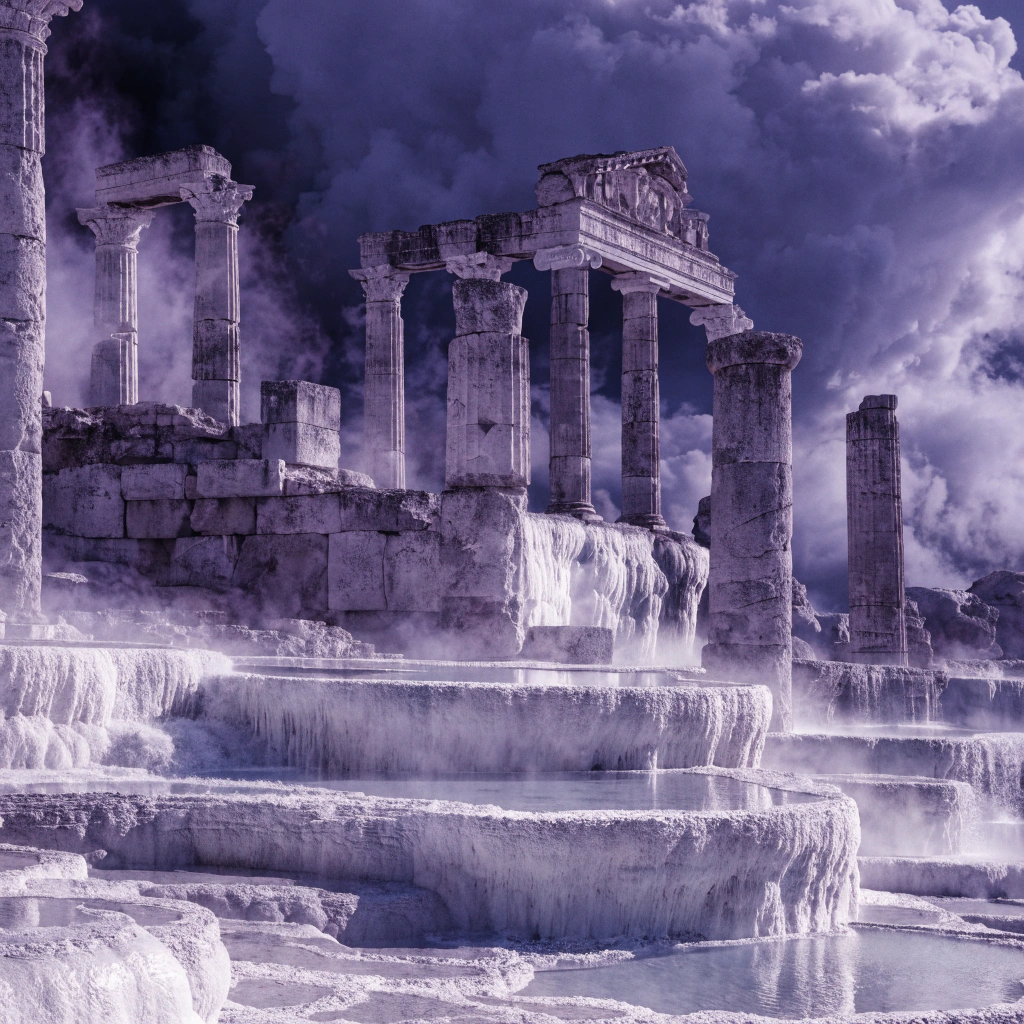
Beautiful Pamukkale
Pamukkale is a famous place in Turkey. It is very beautiful. In English, the name means "Cotton Castle." It looks like a big white mountain with snow. But it is not snow. It is white rock.
There is hot water in Pamukkale. The water comes from the ground. It is warm and good for your body. Many people visit this place. They walk on the white rocks and swim in the water.
The sun is bright here. You can take many photos. It is a special place for a holiday.
语法聚焦
句型: Present Simple 'to be'
"Pamukkale is a famous place in Turkey."
We use 'is' for one person or thing. It helps us describe what something is or where it is located.
句型: There is / There are
"There is hot water in Pamukkale."
We use 'there is' to show that one thing exists in a place. It is a common way to start a description.
测试你的理解
10 个问题 · A1 初学 · 1 次免费预览
测试你从这篇文章中学到的知识。回答所有问题即可获得经验值!
题目详情
Where is Pamukkale?
你的回答:
正确答案: Turkey
The name 'Pamukkale' means 'Cotton Castle' in English.
你的回答:
正确答案: 正确
What does 'special' mean?
你的回答:
正确答案: Not usual or different in a good way
The water comes from the _____.
你的回答:
正确答案: ground
Pamukkale: The Beautiful Cotton Castle
Pamukkale is a very famous place in southwestern Turkey. In the Turkish language, the name means "Cotton Castle." When you look at it, you see big white hills that look like snow or frozen waterfalls. It is a beautiful natural wonder.
The white hills are not made of ice. They are made of minerals from the hot thermal water. This water comes from the ground and it is very warm. For thousands of years, the water flowed over the cliffs and left white minerals behind. These minerals formed small pools called terraces.
In the past, people built an ancient city called Hierapolis at the top of the hill. Many people visited the city because the thermal water was good for their health. Today, Pamukkale is more popular than it was in the past. Thousands of tourists come every year to swim in the warm water.
Visitors must be careful because the site is very special. You cannot wear shoes on the white terraces because they are delicate. It is a wonderful place to take photos and enjoy nature.
语法聚焦
句型: Comparatives
"Today, Pamukkale is more popular than it was in the past."
We use 'more + adjective + than' to compare two things or times. This helps show how something has changed or how it is different from another thing.
句型: Past Simple
"In the past, people built an ancient city called Hierapolis at the top of the hill."
The past simple is used for actions that finished in the past. For irregular verbs like 'build', the form changes to 'built'.
测试你的理解
11 个问题 · A2 基础 · 1 次免费预览
测试你从这篇文章中学到的知识。回答所有问题即可获得经验值!
What does the name 'Pamukkale' mean in English?
题目详情
What does the name 'Pamukkale' mean in English?
你的回答:
正确答案: Cotton Castle
The white hills of Pamukkale are made of real ice.
你的回答:
正确答案: 错误
What does 'ancient' mean?
你的回答:
正确答案: From a long time ago
Visitors cannot wear _____ on the white terraces.
你的回答:
正确答案: shoes
Why did people visit Hierapolis in the past?
你的回答:
正确答案: Because the water was good for health
Discovering the Cotton Castle of Turkey
Pamukkale, which literally translates to 'Cotton Castle' in Turkish, is one of the most incredible natural wonders in the world. Located in southwestern Turkey, this site has attracted visitors for thousands of years because of its surreal appearance. The landscape looks like a giant, frozen waterfall or a field of soft white cotton, but it is actually made of carbonate minerals left by flowing thermal spring water.
The warm water has emerged from the earth at high temperatures for centuries. It is heavily saturated with calcium, which creates the famous white terraces. As the water spills over the edge of the plateau, carbon dioxide escapes, and the minerals stay behind to form the hard white stone. These natural pools have been used as a healing spa since the time of the Romans. In fact, the ancient city of Hierapolis was built on top of this 'white castle,' and many of its ruins are still visible today.
In recent years, Pamukkale has been protected as a UNESCO World Heritage site to preserve its beauty. To keep the terraces white and clean, strict rules have been introduced. For example, visitors must take off their shoes before they walk on the mineral surfaces. Many tourists have described the experience as walking on a soft, warm cloud, though the ground is actually quite hard.
If you visit, you can also swim in the 'Antique Pool,' which is filled with warm mineral water. Ancient marble columns have fallen into this pool over time, allowing you to swim among history. Pamukkale has become a popular destination for travelers who want to see a place where history and nature are combined perfectly. It is truly a unique location that everyone should experience at least once.
语法聚焦
句型: Present Perfect Tense
"this site has attracted visitors for thousands of years"
We use the present perfect (has/have + past participle) to talk about an action that started in the past and continues to the present. It emphasizes the connection between the past and now.
句型: Passive Voice
"the ancient city of Hierapolis was built on top of this 'white castle'"
The passive voice is used when the action or the object (the city) is more important than who did it. It is formed using the verb 'to be' and the past participle of the main verb.
测试你的理解
11 个问题 · B1 中级 · 1 次免费预览
测试你从这篇文章中学到的知识。回答所有问题即可获得经验值!
Why is the site called 'Pamukkale'?
题目详情
Why is the site called 'Pamukkale'?
你的回答:
正确答案: Because its appearance resembles white cotton
Visitors are allowed to wear shoes while walking on the white terraces.
你的回答:
正确答案: 错误
What does 'ancient' mean?
你的回答:
正确答案: Very old and from the distant past
Pamukkale is located in _____ Turkey.
你的回答:
正确答案: southwestern
What created the white terraces over centuries?
你的回答:
正确答案: Carbonate minerals from thermal water
The Timeless Allure of Pamukkale: Turkey’s Cotton Castle
Situated in the Denizli Province of southwestern Turkey, Pamukkale presents one of the most spectacular natural sights in the world. Often referred to as the 'Cotton Castle' due to its fluffy appearance, this geological phenomenon consists of a series of white travertine terraces that appear to cascade down the mountainside like a frozen waterfall. This unique landscape was formed over millennia as thermal spring water, emerging from the earth at temperatures between 35 and 100 degrees Celsius, flowed over the cliffs. As the water spilled over the plateau and the carbon dioxide escaped, calcium carbonate was deposited as a soft gel, eventually hardening into the brilliant white limestone structures that visitors marvel at today.
Historically, Pamukkale has been recognized not only for its aesthetic beauty but also for its therapeutic properties. The ancient Greco-Roman city of Hierapolis was established atop the white 'castle' during the second century BC, allowing citizens to benefit from the mineral-rich waters which were believed to cure various ailments. Even today, the archaeological ruins of Hierapolis, including a remarkably well-preserved theater, a grand colonnaded street, and a vast necropolis, stand as a testament to the region's historical significance. Consequently, the site was designated a UNESCO World Heritage site in 1988, acknowledging both its natural and cultural importance as a bridge between the physical world and human antiquity.
Nevertheless, the immense popularity of Pamukkale has brought significant challenges regarding its preservation. In the mid-20th century, the site faced a crisis when the construction of hotels and roads directly on the travertines led to severe damage and discoloration. The delicate ecosystem was nearly destroyed by unregulated tourism and the diversion of thermal waters for hotel pools. Since then, the Turkish government has implemented strict measures to ensure sustainable tourism. For instance, visitors are now required to remove their shoes before walking on the terraces to prevent erosion and pollution. Furthermore, the flow of water is now carefully managed by a computerized system to ensure that the terraces maintain their iconic white color and do not turn grey due to algae growth.
In conclusion, Pamukkale represents a delicate balance between natural wonder and human history. While the site continues to attract millions of tourists seeking the healing power of its thermal springs, the ongoing efforts to protect the environment are crucial. If the authorities had not intervened decades ago, the 'Cotton Castle' might have lost its luster entirely. Today, it remains a breathtaking symbol of how geological processes and human civilization can coexist, provided that preservation remains a top priority for future generations.
语法聚焦
句型: Passive Voice
"This unique landscape was formed over millennia as thermal spring water... flowed over the cliffs."
The passive voice is used here to focus on the action (the formation of the landscape) rather than the agent. It is formed using 'was/were' followed by the past participle.
句型: Relative Clauses
"The ancient Greco-Roman city of Hierapolis was established atop the white 'castle' during the second century BC, allowing citizens to benefit from the mineral-rich waters which were believed to cure various ailments."
The word 'which' introduces a relative clause that provides additional information about the 'waters'. In B2 English, these are used to combine ideas and add detail to nouns.
句型: Third Conditional
"If the authorities had not intervened decades ago, the 'Cotton Castle' might have lost its luster entirely."
This pattern is used to talk about an imaginary situation in the past and its imaginary result. It uses 'if + past perfect' and 'might/would have + past participle'.
测试你的理解
11 个问题 · B2 中高级 · 1 次免费预览
测试你从这篇文章中学到的知识。回答所有问题即可获得经验值!
What is the main chemical component responsible for the white terraces?
题目详情
What is the main chemical component responsible for the white terraces?
你的回答:
正确答案: Calcium carbonate
The city of Hierapolis was built primarily for military defense purposes.
你的回答:
正确答案: 错误
What does 'sustainable' mean in the context of tourism?
你的回答:
正确答案: Meeting current needs without compromising future generations
To prevent damage to the terraces, visitors are required to remove their _____.
你的回答:
正确答案: shoes
Why is the water flow currently managed by a computerized system?
你的回答:
正确答案: To prevent algae growth and maintain the white color
The Ephemeral Splendour of the Cotton Castle: Geological Marvels and Environmental Imperatives
The sheer visual impact of Pamukkale’s travertine terraces is unparalleled in the natural world. Nestled in the Menderes River valley in southwestern Turkey, this 'Cotton Castle' presents a landscape so surreal it appears almost otherworldly. Seldom does nature manifest its chemical processes with such overt aesthetic brilliance. The formation of these white cascades is a masterclass in geochemistry: thermal waters, heavily saturated with calcium bicarbonate, surge from the earth at temperatures ranging from 35 to 100 degrees Celsius. As this water spills over the plateau’s edge, the subsequent release of carbon dioxide triggers the precipitation of calcium carbonate, which eventually hardens into the crystalline travertine we see today.
However, the site is far more than a geological curiosity; it is a palimpsest of human history. It was the therapeutic allure of these thermal springs that prompted the Romans to establish the spa city of Hierapolis atop the plateau. For centuries, the site served as a sanctuary for those seeking the purported healing properties of the mineral-rich waters. Today, the ruins of Hierapolis—including its vast necropolis and well-preserved theatre—stand in silent testimony to the enduring human fascination with this ephemeral landscape. The juxtaposition of ancient stone and white mineral deposits creates a visual dialogue between the permanence of human architecture and the fluid, evolving nature of the earth.
Yet, the very popularity that brings global recognition to Pamukkale also poses its greatest threat. The encroachment of modern infrastructure and the sheer volume of foot traffic have necessitated stringent conservation measures. In the late 20th century, the site suffered significant degradation due to unregulated hotel construction and the diversion of thermal waters for swimming pools. Only through the implementation of rigorous management plans, including the demolition of hotels and the restriction of visitor access to certain areas, has the site begun to recover its pristine character. The restoration process highlights the fragility of such natural wonders when faced with the demands of mass tourism.
Striking a balance between the preservation of this delicate ecosystem and its accessibility as a global heritage site remains a contentious issue. While tourism provides the economic impetus for conservation, it simultaneously exerts pressure on the fragile mineral formations. The imperative to protect Pamukkale is not merely an aesthetic one; it is a duty to preserve a unique record of the Earth's history. As we navigate the complexities of sustainable travel, Pamukkale serves as a poignant reminder that even the most seemingly solid structures are, in fact, vulnerable to the passage of time and the impact of human presence. To visit Pamukkale today is to witness a landscape in constant flux, a testament to the power of water to both build and erode.
语法聚焦
句型: Negative Inversion
"Seldom does nature manifest its chemical processes with such overt aesthetic brilliance."
Inversion is used after negative or restrictive adverbs (like 'seldom') to add emphasis. The auxiliary verb comes before the subject.
句型: Cleft Sentence
"It was the therapeutic allure of these thermal springs that prompted the Romans to establish the spa city of Hierapolis atop the plateau."
Cleft sentences (It + is/was + subject + that/who) are used to focus on a specific piece of information, in this case, the reason for the city's location.
句型: Nominalisation
"The encroachment of modern infrastructure and the sheer volume of foot traffic have necessitated stringent conservation measures."
Nominalisation turns verbs (encroach) into nouns (encroachment) to create a more formal, academic tone typical of C1 level writing.
测试你的理解
12 个问题 · C1 高级 · 1 次免费预览
测试你从这篇文章中学到的知识。回答所有问题即可获得经验值!
What primary chemical process leads to the formation of the white terraces at Pamukkale?
题目详情
What primary chemical process leads to the formation of the white terraces at Pamukkale?
你的回答:
正确答案: The precipitation of calcium carbonate as CO2 escapes
The city of Hierapolis was built primarily for military defense due to its high plateau location.
你的回答:
正确答案: 错误
Which word best describes something that is controversial and likely to cause disagreement?
你的回答:
正确答案: Contentious
The release of carbon dioxide triggers the _____ of calcium carbonate.
你的回答:
正确答案: precipitation
What led to the significant degradation of the site in the late 20th century?
你的回答:
正确答案: Unregulated hotel construction and water diversion
Current conservation efforts include the demolition of some hotels previously built on the site.
你的回答:
正确答案: 正确
钙华奇观:土耳其棉花堡的自然与人文交响
在土耳其西南部,有一处地貌奇观,其得名“棉花堡”(Pamukkale),顾名思义,因其形似层层叠叠的雪白棉絮,从山坡上倾泻而下,故而得名。这并非冰雪所致,而是大自然鬼斧神工的杰作,经由地热温泉水千万年不息的钙华沉积所造就。这片超凡脱俗的白色景观,在阳光下熠熠生辉,犹如凝固的瀑布群,令人叹为观止,无疑是地球上最引人入胜的自然奇迹之一。
棉花堡的形成机制殊为独特且精密。其核心在于富含碳酸氢钙(Calcium Bicarbonate)的温泉水。这些泉水自地下深处涌出,温度介于35至100摄氏度之间,携带着高浓度的矿物质。当炽热的泉水沿高原边缘溢流而出,与空气接触,其温度骤降,压力亦随之减小,导致其中溶解的二氧化碳得以逸散。此过程触发了碳酸钙(Calcium Carbonate)从溶液中析出,并逐渐凝结沉淀。日积月累,这些碳酸钙便形成了坚硬的石灰华(Travertine)结构,堆砌成梯田状的白色水池和钟乳石般的奇特造型。这一系列复杂的物理化学反应,非但赋予了棉花堡晶莹剔透的白色外观,更塑造了其独一无二的阶梯状地貌,宛如大地的雕塑,鬼斧神工,令人心生敬畏。
棉花堡的魅力远不止于其自然风光。其上方坐落着古老的希拉波利斯(Hierapolis)城遗址,这座城市在古罗马时期曾是重要的温泉疗养中心。先民们显然早已洞悉了泉水的疗愈功效,在此修建了宏伟的浴场、剧院及其他公共设施。据历史记载,许多远道而来的罗马贵族和普通民众在此寻求疾病的治愈与身心的放松。自然与人文的交织,使得棉花堡不仅是地质学的奇迹,更是历史长河中人类活动与自然环境互动共生的生动写照。置身其间,仿佛能听见古罗马人的欢声笑语,感受到时光的流逝与文明的兴衰。
然而,如此脆弱而珍贵的自然与文化遗产,其保护工作亦面临严峻挑战。过度旅游曾一度对钙华结构造成不可逆转的损害。例如,游客直接踩踏钙华层、在泉水中洗涤衣物等不当行为,加剧了其侵蚀与污染,甚至导致部分区域的白色钙华变色或崩塌。鉴于此,联合国教科文组织(UNESCO)于1988年将其列为世界文化与自然双遗产,并与土耳其政府协同制定了严格的保护措施。这些举措包括限制游客流量、引导游客在指定路径行走、禁止在特定区域游泳,以及对水流进行科学管理以确保钙华的持续生长。此外,部分受损区域已被封闭进行生态修复,以期恢复其原始风貌。
如今,棉花堡的保护工作已初见成效,其晶莹洁白之姿得以有效维护。这片土地以其独特的自然奇观,无声地诉说着地球的演变与生命的韧性,同时也警示着我们,对于大自然的慷慨赐予,我们理应怀揣敬畏之心,以审慎的态度加以维护。可持续发展理念之于此类世界遗产,犹如空气之于生命,不容置喙。唯有通过国际社会与当地居民的共同努力,在旅游开发与生态保护之间寻求精妙的平衡,方能确保这片“棉花城堡”永葆其圣洁之美,继续在安纳托利亚高原上熠熠生辉,为后世子孙提供一份宝贵的自然与文化馈赠。
语法聚焦
句型: 非但...,更/反而...
"这一系列复杂的物理化学反应,非但赋予了棉花堡晶莹剔透的白色外观,更塑造了其独一无二的阶梯状地貌。"
此句式用于强调递进关系或转折关系。'非但...,更...'表示不只前面提及的一点,后面还有更进一步的强调。'非但...,反而...'则表示不仅没有达到预期的结果,反而出现了相反的情况。它增强了语气的强烈程度和表达的深度。
句型: 鉴于此,...
"鉴于此,联合国教科文组织(UNESCO)于1988年将其列为世界文化与自然双遗产,并与土耳其政府协同制定了严格的保护措施。"
‘鉴于此’是一个正式且带有总结性的短语,常用于学术和官方语境中。它表示“考虑到这个情况”或“基于上述原因”,引出由此得出的结论、决定或采取的行动。此结构使得语篇逻辑清晰,论证严谨。
句型: 之于...,犹如...之于...
"可持续发展理念之于此类世界遗产,犹如空气之于生命,不容置喙。"
这个句式用于进行高级类比,将两个看似不相关的概念进行对比,以说明它们之间存在着同等重要或相似的关系。‘A之于B,犹如C之于D’,意味着A对于B的重要性,就像C对于D的重要性一样。这种结构常用于增强表达的修辞效果和说服力。
测试你的理解
12 个问题 · C2 精通 · 1 次免费预览
测试你从这篇文章中学到的知识。回答所有问题即可获得经验值!
题目详情
以下哪项不是棉花堡白色景观的主要成因?
你的回答:
正确答案: 冰雪覆盖
古老的希拉波利斯城遗址位于棉花堡的下方。
你的回答:
正确答案: 错误
“鬼斧神工”在文中形容的是什么?
你的回答:
正确答案: 大自然的精湛技艺
当富含碳酸氢钙的温泉水与空气接触时,其中溶解的二氧化碳会______。
你的回答:
正确答案: 逸散
联合国教科文组织将棉花堡列为世界遗产的主要原因是什么?
你的回答:
正确答案: 其独特的自然与文化双重价值
文章指出,过度旅游曾一度对棉花堡的钙华结构造成不可逆转的损害。
你的回答:
正确答案: 正确

