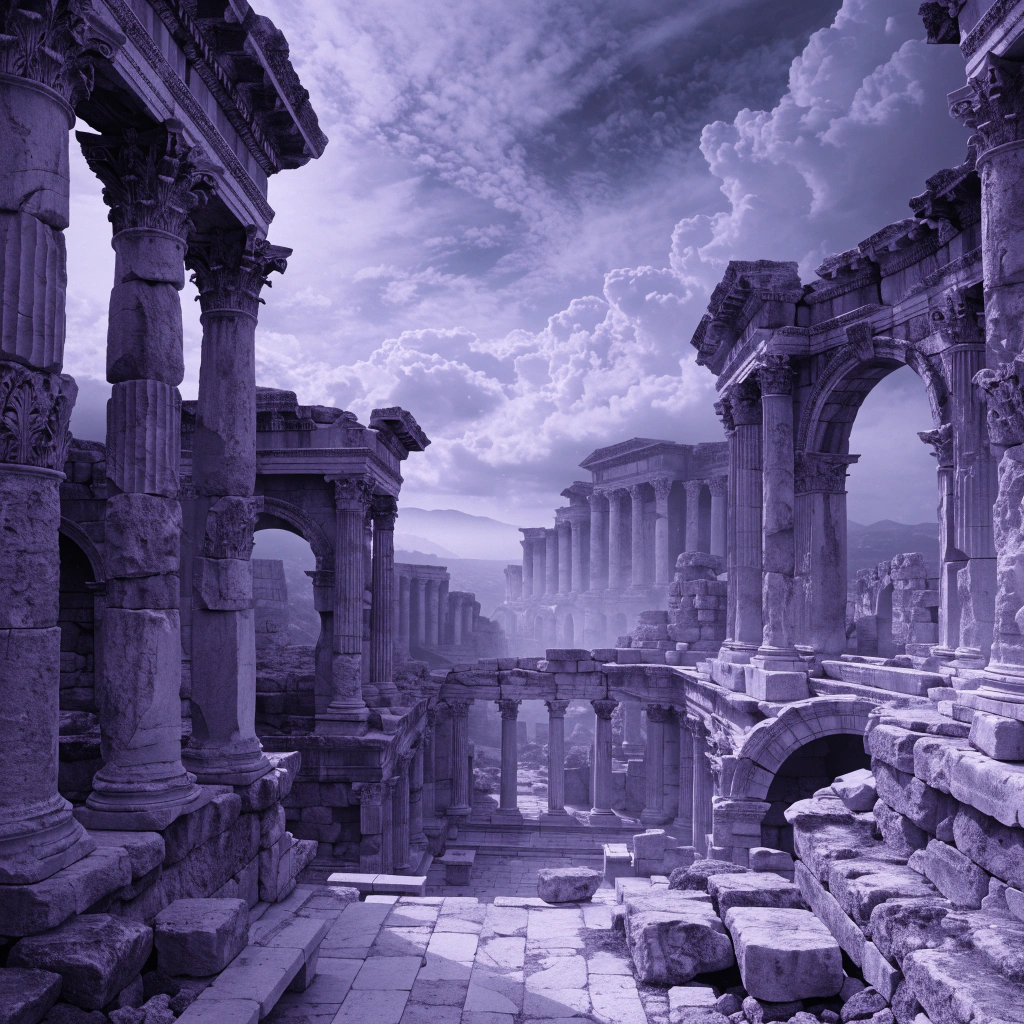
以弗所:土耳其的古老城市
以弗所 在 土耳其。它 是 一个 很 老 的 城市。这个 城市 以前 很 大。以前 有 很多 很多 人 住 在 这里。以弗所 是 一个 重要 的 地方,因为 它 靠近 海边。它 有 一个 很有名 的 神庙,叫 阿耳忒弥斯神庙。这个 神庙 以前 很 大,很 漂亮。现在,你 可以 去 看 以弗所。它 有 很多 老 的 房子 和 地方。你 可以 了解 很多 历史。以弗所 很 美丽,也 很 有趣。
语法聚焦
句型: 在 (zài) 表示地点
"以弗所 在 土耳其。"
“在”可以表示一个事物或一个人所处的位置。它的基本结构是:主语 + 在 + 地点。这个句子告诉我们以弗所的位置是在土耳其。
句型: 有 (yǒu) 表示拥有或存在
"它 有 一个 很有名 的 神庙。"
“有”可以表示拥有某物,也可以表示某个地方存在某物。它的基本结构是:主语 + 有 + 宾语。这个句子告诉我们以弗所(它)有一个神庙。
测试你的理解
10 个问题 · A1 初学 · 1 次免费预览
Ephesus: A Great Ancient City
Ephesus is a very old city in Turkey. It is near the town of Selçuk. A long time ago, it was a famous port city. It was the second most important city in the Roman Empire. Only Rome was bigger and more powerful.
More than 250,000 people lived there in the first and second centuries. They were very rich because Ephesus was a center for trade. People from many countries came to buy and sell things. It was also a famous place for philosophy and learning.
One of the Seven Wonders of the Ancient World was in Ephesus. It was the Temple of Artemis. It was very large and beautiful. Today, only one column remains, but many tourists still visit the site.
Visitors can walk on the old streets today. They can see the Library of Celsus and a big theater. The theater was bigger than most modern stadiums. Ephesus is an amazing place because it tells us about history.
语法聚焦
句型: Past Simple (Regular and Irregular)
"More than 250,000 people lived there in the first and second centuries."
We use the past simple to talk about finished actions in the past. Regular verbs end in -ed (lived), while irregular verbs (came, was) have special forms.
句型: Comparatives
"The theater was bigger than most modern stadiums."
We use 'adjective + er + than' to compare two things. For short words like 'big', we double the last letter before adding 'er'.
测试你的理解
11 个问题 · A2 基础 · 1 次免费预览
测试你从这篇文章中学到的知识。回答所有问题即可获得经验值!
Where is the ancient city of Ephesus located?
题目详情
Where is the ancient city of Ephesus located?
你的回答:
正确答案: In Turkey
Ephesus was the most important city in the Roman Empire.
你的回答:
正确答案: 错误
What does 'ancient' mean?
你的回答:
正确答案: Very old
Ephesus was a center for ______, so many people came to buy and sell things.
你的回答:
正确答案: trade
How many people lived in Ephesus at its peak?
你的回答:
正确答案: 250,000
Exploring the Ancient Wonders of Ephesus
Ephesus, which is located near the town of Selçuk in Turkey, is one of the most famous archaeological sites in the world. In ancient times, it was a busy port city and the second most important city in the Roman Empire after Rome itself. More than 250,000 people lived there during its peak in the 1st and 2nd centuries AD. It was a place where trade and philosophy were very important for the community.
Many incredible buildings have been preserved for centuries. One of the most beautiful structures is the Library of Celsus. This library was built to store thousands of scrolls and to serve as a tomb for a Roman senator. Another impressive site is the Great Theatre, which could hold 25,000 spectators. This theatre was used for drama and gladiator fights. Walking through these ruins, visitors can imagine what life was like thousands of years ago.
The city is also famous because it was home to the Temple of Artemis. This temple was known as one of the Seven Wonders of the Ancient World. Unfortunately, only a single column has remained until today, but the site still feels magical. It shows how much the city has changed over time.
Ephesus has been studied by historians for many years. Today, it is protected as a UNESCO World Heritage site. Millions of tourists visit every year to walk on the ancient marble streets. Although the sea has moved away from the city over time, the ruins still show how powerful and wealthy Ephesus used to be. It is a place that has captured the imagination of travelers for generations.
语法聚焦
句型: Relative Clauses
"Ephesus, which is located near the town of Selçuk in Turkey, is one of the most famous archaeological sites in the world."
Relative clauses use 'which', 'who', or 'that' to give more information about a noun. In this sentence, 'which' provides extra details about the location of Ephesus.
句型: Passive Voice
"Many incredible buildings have been preserved for centuries."
The passive voice is used when the focus is on the action or the object rather than the person doing it. It is formed using 'be' + past participle.
测试你的理解
11 个问题 · B1 中级 · 1 次免费预览
测试你从这篇文章中学到的知识。回答所有问题即可获得经验值!
Which city was more important than Ephesus in the Roman Empire?
题目详情
Which city was more important than Ephesus in the Roman Empire?
你的回答:
正确答案: Rome
The Great Theatre could hold up to 50,000 people.
你的回答:
正确答案: 错误
What does 'ancient' mean?
你的回答:
正确答案: From the distant past
The Great Theatre was used for drama and gladiator _____.
你的回答:
正确答案: fights
What is the Library of Celsus used for today in the article's context?
你的回答:
正确答案: It is a preserved ruin and tomb
The Grandeur of Ephesus: A Window into Roman Civilization
Nestled on the western coast of modern-day Turkey, the ancient city of Ephesus stands as a monumental testament to the grandeur of the Roman Empire. Once a thriving metropolis, it served as a pivotal commercial and cultural bridge between the East and the West. At its zenith during the 1st and 2nd centuries AD, Ephesus was home to approximately 250,000 residents, making it one of the largest and most influential urban centers in the Mediterranean world.
The architectural brilliance of Ephesus is perhaps best exemplified by the Library of Celsus. Completed in 117 AD, this structure was not merely a repository for thousands of scrolls but also served as a monumental tomb for Gaius Julius Celsus Polemaeanus. Its intricate facade, which has been meticulously restored by archaeologists, continues to captivate visitors with its symbolic statues representing wisdom, virtue, and intelligence. Furthermore, the Great Theatre, capable of seating 25,000 spectators, illustrates the city’s vibrant social life, having hosted both dramatic performances and intense gladiatorial contests.
However, the significance of Ephesus extended far beyond its aesthetic appeal. It was a spiritual epicenter, housing the Temple of Artemis, which was celebrated as one of the Seven Wonders of the Ancient World. Although only a solitary column remains today, the temple's historical impact remains undeniable. The city's prosperity was largely dependent on its strategic harbor; however, as the centuries progressed, the Cayster River gradually silted up the port. This environmental shift, coupled with devastating earthquakes and changing trade routes, eventually led to the city's decline and ultimate abandonment.
Today, Ephesus is recognized as a UNESCO World Heritage site, offering invaluable insights into Greco-Roman urban planning and daily life. Walking through its marble-paved streets, one cannot help but reflect on the transient nature of even the most powerful civilizations. For modern scholars and tourists alike, Ephesus remains an enduring symbol of a bygone era that continues to shape our understanding of classical antiquity. Its preservation allows us to analyze how ancient societies managed urban growth and environmental challenges, providing lessons that remain relevant even in the contemporary world.
语法聚焦
句型: Passive Voice for Formal Description
"The architectural brilliance of Ephesus is perhaps best exemplified by the Library of Celsus."
In formal or academic writing, the passive voice is often used to emphasize the object or the action rather than the subject. It is formed using a form of the verb 'to be' followed by a past participle.
句型: Participial Phrases as Sentence Openers
"Once a thriving metropolis, it served as a pivotal commercial and cultural bridge..."
This structure provides background information about the subject in a concise way. The phrase describes the noun that immediately follows the comma, allowing for more complex sentence structures.
句型: Modal Verbs for Logical Conclusion
"one cannot help but reflect on the transient nature of even the most powerful civilizations."
The phrase 'cannot help but' is a formal way to express that an action or feeling is unavoidable or inevitable. It is used here to emphasize the emotional impact of the site.
测试你的理解
11 个问题 · B2 中高级 · 1 次免费预览
测试你从这篇文章中学到的知识。回答所有问题即可获得经验值!
What was the primary environmental cause of the decline of Ephesus?
题目详情
What was the primary environmental cause of the decline of Ephesus?
你的回答:
正确答案: The silting of its harbor
Ephesus was the largest city in the Roman Empire during its peak.
你的回答:
正确答案: 错误
What does 'zenith' mean in the context of the article?
你的回答:
正确答案: The highest point or peak of success
The Library of Celsus was not just for books; it was also a _____ for Gaius Julius Celsus Polemaeanus.
你的回答:
正确答案: tomb
How many people could the Great Theatre of Ephesus hold?
你的回答:
正确答案: 25,000
The Ephemeral Grandeur of Ephesus: A Study in Imperial Stratification
The sheer magnitude of Ephesus serves as a poignant reminder of the ephemeral nature of imperial grandeur. Nestled on the Aegean coast of modern-day Turkey, this once-bustling metropolis was the quintessential Roman hub, second only to Rome itself in prestige and administrative clout. Seldom has a city embodied the zenith of classical antiquity so comprehensively as Ephesus did during the 1st and 2nd centuries AD. With a population exceeding a quarter of a million, it was not merely a center for trade, but a crucible for philosophical inquiry and religious fervor.
It was the strategic maritime location that initially catapulted Ephesus to prominence. However, the very geography that facilitated its rise ultimately orchestrated its downfall. The gradual siltation of the harbor, caused by the Kaystros River, severed the city’s lifeline to the Mediterranean. This environmental transformation, coupled with the encroaching marshes and the subsequent malaria outbreaks, precipitated a slow but inexorable decline. What had once been a vibrant port was relegated to a landlocked relic, a testament to the hubris of assuming human engineering can forever master the natural world.
The architectural vestiges remaining today, such as the Library of Celsus, offer a profound glimpse into the city's intellectualism. The library’s facade, reconstructed with meticulous care, stands as a monument to the Roman proclivity for monumental public works and the pursuit of knowledge. Yet, the stratification of history here is complex. Beneath the Roman marble lie Greek foundations, and above them, the echoes of early Christian transformation. It was here that the Temple of Artemis, one of the Seven Wonders of the Ancient World, once stood in its full glory. Today, the sight of a solitary, reconstructed column rising from a swampy field provides a stark contrast to the erstwhile magnificence of the structure.
The preservation of Ephesus is not merely an archaeological endeavor; it is a critical analysis of how urban centers evolve, thrive, and eventually perish. The interplay between socio-economic shifts and environmental constraints remains a pertinent lesson for contemporary urban planners. As visitors traverse the Curetes Way, the polished stones tell a story of both triumph and decay. The city’s transition from a pagan stronghold to a pivotal site of the Ecumenical Councils further underscores its role as a cultural palimpsest, where each layer of history informs the next, creating a narrative that transcends the mere physical stones.
Furthermore, the nuanced political landscape of Ephesus allowed it to maintain a degree of autonomy even under Roman hegemony. This delicate balance of power fostered a unique civic identity, visible in the grand theatre that could accommodate 25,000 spectators. The theatre was not just a venue for entertainment; it was the heartbeat of democratic discourse and public assembly. Ultimately, the story of Ephesus is one of adaptation. Even as the sea retreated and empires crumbled, the city remained a focal point for spiritual pilgrimage, proving that while physical structures may be ephemeral, the sanctity of a location often persists through the ages.
语法聚焦
句型: Inversion for Emphasis
"Seldom has a city embodied the zenith of classical antiquity so comprehensively as Ephesus did."
Inversion is used after negative or restrictive adverbs like 'seldom' to add formal emphasis. The auxiliary verb 'has' moves before the subject 'a city'.
句型: Cleft Sentences
"It was the strategic maritime location that initially catapulted Ephesus to prominence."
Cleft sentences (It + be + focus + relative clause) are used to emphasize a specific part of the sentence, in this case, the cause of the city's success.
句型: Nominalisation
"The preservation of Ephesus is not merely an archaeological endeavor."
Nominalisation involves turning verbs or adjectives into nouns (preserve -> preservation). This is common in C1 academic writing to create a more objective and sophisticated tone.
测试你的理解
12 个问题 · C1 高级 · 1 次免费预览
测试你从这篇文章中学到的知识。回答所有问题即可获得经验值!
What was the primary environmental cause for the decline of Ephesus?
题目详情
What was the primary environmental cause for the decline of Ephesus?
你的回答:
正确答案: The siltation of the harbor
Ephesus was the capital city of the entire Roman Empire.
你的回答:
正确答案: 错误
What does 'hubris' mean in the context of the article?
你的回答:
正确答案: Excessive pride and overconfidence
Seldom _____ a city embodied the zenith of classical antiquity so comprehensively.
你的回答:
正确答案: has
What does the Library of Celsus represent in the article?
你的回答:
正确答案: The Roman proclivity for monumental public works
The Temple of Artemis is currently fully intact as a major tourist site.
你的回答:
正确答案: 错误
The Palimpsest of Antiquity: Deciphering the Socio-Political Stratigraphy of Ephesus
Ephesus, the crowning jewel of the Aegean littoral, stands as a hauntingly beautiful testament to the inexorable march of time and the transient nature of human hegemony. To contemplate the ruins of this Ionian metropolis is to engage with a historical palimpsest, where layers of Greek, Roman, and Byzantine influence overlap in a complex stratigraphy of cultural evolution. At its zenith during the first and second centuries AD, Ephesus was not merely a provincial capital; it was a flourishing nexus of trade and intellect, second only to Rome in its socio-economic prominence. This city, once home to a quarter of a million residents, serves as a profound case study in urban resilience and eventual obsolescence.
Were one to traverse the sun-drenched marble thoroughfares of the Curetes Way today, the sheer magnitude of its erstwhile grandeur would likely prove overwhelming. The architectural sophistication of the site epitomizes the Roman commitment to public erudition and the monumentalization of civic pride. Most notably, the Library of Celsus, with its meticulously reconstructed facade, functioned as a repository for thousands of scrolls, symbolizing the city’s role as an intellectual crucible. It was here that the philosophical tenets of the classical world were debated and refined, often under the influence of the 'weeping philosopher' Heraclitus, who famously posited that change is the only constant. It is through the lens of such intellectual output that we might best comprehend the symbiotic relationship between urban prosperity and the pursuit of knowledge.
However, the economic dominance of Ephesus was inextricably linked to its maritime accessibility, a factor that ultimately proved to be its Achilles' heel. The gradual silting of the Cayster River—a natural process that the inhabitants desperately sought to mitigate through extensive dredging—eventually severed the city from its lifeline to the sea. This environmental shift, coupled with the encroaching marshes and the subsequent malaria outbreaks, necessitated that the city adapt or perish. It was imperative that the municipal authorities maintain the port's viability, yet nature's slow encroachment proved insurmountable. This serves as a poignant reminder of the environmental vulnerabilities that can destabilize even the most robust civilizations, suggesting that geography is often destiny.
The religious landscape of Ephesus also underwent a profound paradigm shift that mirrors the broader transformations of the Mediterranean world. Once the site of the Temple of Artemis—one of the Seven Wonders of the Ancient World—the city transitioned from pagan polytheism to becoming a pivotal center for early Christianity. The transition to ecclesiastical dominance is etched into the very fabric of the ruins. The Great Theatre, which once echoed with the oratory of philosophers and the cheers of 25,000 spectators, witnessed the tumultuous clash between traditional beliefs and the nascent Christian faith during the silversmiths' riot against the Apostle Paul. The subsequent Council of Ephesus in 431 AD further solidified the city’s status within the Christian hierarchy, fundamentally altering its social stratigraphy.
Despite its eventual decline into a mere vestige of its former self, Ephesus remains an indispensable site for scholarly analysis. The Terrace Houses, with their exquisite frescoes and intricate mosaics, offer a rare glimpse into the private lives of the Ephesian elite, revealing a level of domestic luxury that rivaled that of Rome itself. These dwellings provide empirical evidence of the socio-economic stratification that underpinned the city's stability. One might argue that the city's true legacy lies not in its enduring stones, but in its capacity to provoke reflection on the precarious balance between man-made structures and the shifting sands of the natural world. The ephemeral nature of its glory notwithstanding, Ephesus continues to offer a profound meditation on the cycles of rise and fall that characterize the human experience.
语法聚焦
句型: Inverted Conditionals (Were... to)
"Were one to traverse the sun-drenched marble thoroughfares of the Curetes Way today, the sheer magnitude of its erstwhile grandeur would likely prove overwhelming."
This formal structure replaces 'If one were to traverse'. It is used in C2 level writing to express hypothetical situations with a high degree of formality and elegance.
句型: Subjunctive Mood for Necessity
"It was imperative that the municipal authorities maintain the port's viability, yet nature's slow encroachment proved insurmountable."
The subjunctive 'maintain' (not maintains/maintained) follows adjectives of necessity like 'imperative'. It emphasizes the urgency or requirement of the action in a formal context.
句型: Cleft Sentences for Emphasis
"It is through the lens of such intellectual output that we might best comprehend the symbiotic relationship between urban prosperity and the pursuit of knowledge."
A cleft sentence (It is... that...) is used to focus on a specific part of the sentence—in this case, the 'lens of intellectual output'—to highlight its importance.
测试你的理解
12 个问题 · C2 精通 · 1 次免费预览
测试你从这篇文章中学到的知识。回答所有问题即可获得经验值!
What primary environmental factor contributed to the decline of Ephesus as a commercial powerhouse?
题目详情
What primary environmental factor contributed to the decline of Ephesus as a commercial powerhouse?
你的回答:
正确答案: The gradual accumulation of sediment in the river, blocking sea access
The article suggests that Ephesus reached its peak population and influence during the Byzantine period.
你的回答:
正确答案: 错误
What does the term 'palimpsest' imply in the context of the article?
你的回答:
正确答案: A location where multiple historical eras are layered upon one another
The author describes the city's glory as _____, emphasizing that it lasted only for a short time in the grand scale of history.
你的回答:
正确答案: ephemeral
According to the text, what did the Terrace Houses reveal about Ephesian society?
你的回答:
正确答案: The high level of luxury and social stratification among the elite
Heraclitus is mentioned as a philosopher who believed that change is the fundamental constant of the world.
你的回答:
正确答案: 正确

