tesseract 30秒了解
- A tesseract is a 4D hypercube, extending the concept of a 3D cube into a fourth spatial dimension.
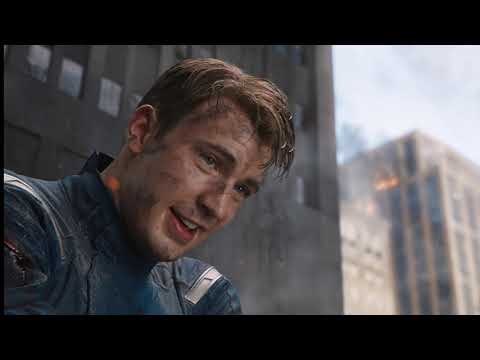
- It is famously used in science fiction (Marvel, A Wrinkle in Time) as a portal or power source.
- Mathematically, it consists of 8 cubes, 24 squares, 32 edges, and 16 vertices.
- It is impossible to see in 3D, so we use projections like a 'cube within a cube' to visualize it.
The term tesseract is a sophisticated noun that bridges the gap between theoretical mathematics and speculative fiction. At its most fundamental level, a tesseract is the four-dimensional equivalent of a cube. Just as a square is a two-dimensional object and a cube is a three-dimensional object, a tesseract extends this logic into a fourth spatial dimension. While the human brain is biologically hardwired to perceive only three dimensions of space, mathematicians and physicists use the tesseract as a model to understand higher-dimensional geometry. The word is most frequently encountered in academic discussions regarding topology, physics, and geometry, but it has gained significant traction in popular culture, particularly within the realms of science fiction and fantasy literature. In these creative contexts, a tesseract is often reimagined not just as a geometric shape, but as a gateway, a portal, or a mechanism for folding space-time to allow for instantaneous travel across vast cosmic distances.
- Mathematical Context
- In geometry, the tesseract is also known as an 8-cell or regular octachoron. It consists of 16 vertices, 32 edges, 24 squares, and 8 cubes. When we attempt to visualize it in our 3D world, we often see a 'cube within a cube' connected by slanted lines, which is actually a 3D projection of the 4D object.
The professor used a wireframe model to demonstrate how a tesseract would appear to fold into itself if it were rotated through the fourth dimension.
When people use this word in conversation, they are usually either discussing advanced science or referencing a specific piece of media. For instance, fans of the Marvel Cinematic Universe (MCU) recognize the Tesseract as a powerful artifact containing the Space Stone. Similarly, readers of Madeleine L'Engle's classic novel 'A Wrinkle in Time' are familiar with 'tessering' as a method of transportation. In these scenarios, the word evokes a sense of wonder, complexity, and the breaking of physical boundaries. It is a 'high-concept' word, used to signal that the topic at hand involves something beyond the ordinary or the easily observable. Using 'tesseract' instead of '4D cube' adds a layer of precision and intellectual flair to one's vocabulary.
- Literary Usage
- Authors use the concept of a tesseract to explain the 'unexplainable'—how a character can move from point A to point B without crossing the space in between. It serves as a metaphor for hidden depth and the limitations of human perception.
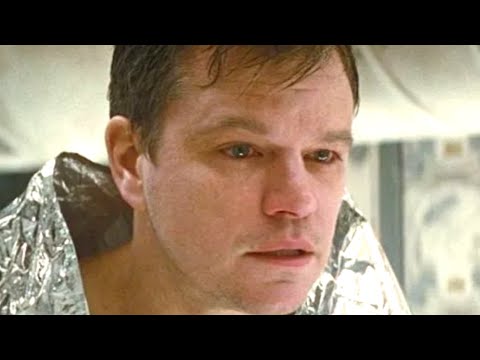
In the film Interstellar, the protagonist finds himself inside a massive tesseract constructed by future beings to help him communicate across time.
Beyond its literal meaning, the tesseract represents the human desire to comprehend the incomprehensible. It is a symbol of the 'extra'—the dimensions we cannot see but can prove through logic and mathematics. When you use the word, you are tapping into a history of intellectual pursuit that dates back to the late 19th century, when thinkers first began to seriously contemplate what a world beyond three dimensions might look like. It is a word that commands attention and suggests a deep interest in the mysteries of the universe.
- Visual Representation
- Because we cannot see 4D, we use 'shadows' or 'projections.' A tesseract's projection into 3D space is often shown as a Schlegel diagram, which looks like a small cube suspended inside a larger cube.
The digital artist rendered a rotating tesseract to illustrate the mind-bending nature of non-Euclidean geometry.
Using the word tesseract correctly requires an understanding of its grammatical role as a concrete noun, though it often describes an abstract mathematical concept. Because it is a specific object, it is almost always preceded by an article ('a', 'the') or a possessive pronoun. In technical writing, it is used with mathematical precision; in creative writing, it is often used metaphorically or as a plot device. Below are several ways to integrate this complex term into various types of sentences, ranging from scientific descriptions to narrative storytelling.
- Technical Description
- When describing the properties of the shape, focus on its dimensionality and relationship to the cube. Example: 'The tesseract is bounded by eight cubic cells, each representing a face in four-dimensional space.'
Calculating the hypervolume of a tesseract requires raising the length of one side to the fourth power.
In narrative or speculative contexts, the tesseract is often treated as an active entity or a location. Characters might 'enter' a tesseract or 'activate' one. Here, the word takes on a more mysterious tone. It is important to maintain the sense of scale and complexity associated with the word. For example, instead of saying 'the box was weird,' one might say 'the object possessed the unsettling, shifting geometry of a tesseract.' This elevates the description and provides a specific visual cue for the reader.
- Metaphorical Usage
- You can use 'tesseract' to describe something that is multi-layered or impossible to fully grasp from a single perspective. Example: 'The company's organizational structure was a tesseract of bureaucracy, where every department seemed to fold into another.'
Her poetry functioned like a tesseract, revealing new dimensions of meaning every time the reader approached it from a different angle.
When using the word in a sentence, consider the audience's familiarity with the concept. If writing for a general audience, it is often helpful to provide a brief contextual clue, such as 'the four-dimensional tesseract.' If writing for a scientific or sci-fi-savvy audience, the word can stand alone. Avoid using it to describe simple 3D objects, as this undermines the specific mathematical definition of the term. The power of the word lies in its association with the 'extra-dimensional.'
- Comparative Sentences
- Comparing a tesseract to a cube is the most common way to explain it. Example: 'Just as a cube is to a square, a tesseract is to a cube—an extension into a higher realm of existence.'
Trying to explain the fourth dimension to someone who has only seen 3D is like trying to describe a tesseract to a flatlander.
While tesseract is not a word you will hear at the grocery store or in casual small talk about the weather, it has several distinct 'habitats' where it is used frequently. Understanding these contexts will help you recognize when the word is being used literally and when it is being used as a cultural shorthand for something 'extra-dimensional' or 'magical.'
- In Science Fiction Cinema
- The most common place to hear this word today is in blockbuster movies. In the Marvel Cinematic Universe, characters frequently discuss 'The Tesseract' as a source of immense power. In Christopher Nolan's 'Interstellar,' the term is used more scientifically to describe a 5D space projected into 3D so a human can understand it.
'The tesseract is the key to unlimited sustainable energy,' the scientist explained in the opening scene of the superhero film.
In academic settings, specifically in mathematics and physics departments, you will hear the word used with rigorous precision. Professors might lecture on the properties of 'hypercubes' and use 'tesseract' as the specific name for the four-dimensional variety. Here, the word is stripped of its magical connotations and treated as a geometric reality that can be described with equations. You might also encounter it in computer science, particularly in discussions about high-dimensional data structures or 4D rendering engines.
- In Literature and Philosophy
- Beyond 'A Wrinkle in Time,' the concept of the tesseract appears in philosophical discussions about the limits of human perception. Philosophers like P.D. Ouspensky used higher dimensions as metaphors for higher states of consciousness, and the tesseract often serves as the primary example in these texts.
The author used the tesseract as a metaphor for the way God might view time—all at once, from a higher dimension.
Finally, you might hear the word in the world of modern art and architecture. Some avant-garde architects use 'tesseract-inspired' designs to create buildings that feel more spacious or complex than their physical footprint suggests. In digital art, 'tesseract' is a popular theme for those experimenting with 4D animation and fractal geometry. In these cases, the word is used to describe an aesthetic of complexity and mathematical beauty.
- In Gaming and Software
- Video games that involve puzzle-solving in non-Euclidean spaces often use the tesseract as a central mechanic. Players might have to manipulate a tesseract to navigate through a level, making the word a common part of the gaming vocabulary for fans of the 'puzzle-platformer' genre.
To solve the final level, the player must rotate the tesseract until the exit aligns with the current dimension.
Because tesseract is a specialized and somewhat 'exotic' word, it is prone to several common types of misuse. These mistakes usually fall into three categories: mathematical inaccuracy, confusion with other sci-fi terms, and pronunciation/spelling errors. Avoiding these pitfalls will ensure that you use the word with the authority of a C2-level speaker.
- Mistaking 3D for 4D
- The most frequent error is using 'tesseract' to describe any complex-looking 3D shape. A tesseract is specifically a 4D cube. If you are talking about a complex 3D object, words like 'polyhedron' or 'complex geometry' are more appropriate. Calling a standard cube a tesseract is a fundamental error.
Incorrect: Look at that tesseract-shaped building! (When the building is just a normal 3D cube).
Another common mistake is confusing the tesseract with other 'hyper-shapes.' While all tesseracts are hypercubes, not all hypercubes are tesseracts. A hypercube is a general term for an n-dimensional cube. A tesseract is specifically the 4-dimensional version. Using 'tesseract' when you mean a 5D or 6D cube is technically incorrect in a mathematical context, though often forgiven in casual sci-fi discussions.
- Confusing with 'Teleportation'
- In pop culture, 'tesseract' is often used as a synonym for 'portal.' While a tesseract can *act* as a portal in fiction, it is not the definition of the word. A tesseract is a shape. Using it as a verb ('I'm going to tesseract over there') is a reference to 'A Wrinkle in Time' and should be used only in that specific literary context.
Incorrect: The alien used a tesseract to walk through the wall. (Unless the wall is 4D, this is a misuse of the geometric term).
Spelling and pronunciation also trip people up. The word is often misspelled as 'tesserack' or 'tessaract.' Remember that it ends in '-act' and the middle vowel is an 'e'. Pronunciation-wise, the stress is on the first syllable: TESS-er-act. Avoid putting the stress on the second or third syllable, which can make the word sound like a different, unrelated term.
- Overuse as a Buzzword
- Because it sounds 'cool' and 'scientific,' there is a tendency to use 'tesseract' to describe anything complicated. This dilutes the word's meaning. If you are describing a complex situation, 'convoluted' or 'multifaceted' are usually better choices unless there is a literal or strong metaphorical connection to 4D geometry.
Incorrect: This tax form is a total tesseract! (While expressive, it's a bit of an overreach; 'labyrinth' is more accurate).
To truly master the word tesseract, it is helpful to understand the words that surround it in the same semantic field. Depending on whether you are speaking mathematically, creatively, or metaphorically, there are several alternatives you might choose to provide more variety or precision to your language.
- Hypercube
- This is the most direct synonym. A hypercube is the general term for a cube in any number of dimensions (n-cube). 'Tesseract' is specifically the 4D hypercube. Use 'hypercube' if you want to sound more broadly scientific or if the exact number of dimensions isn't specified.
The mathematician generalized the properties of a tesseract to describe a five-dimensional hypercube.
Another related term is the 8-cell or octachoron. These are technical names used in the study of polytopes (the higher-dimensional equivalent of polygons and polyhedra). While 'tesseract' is the most popular name, '8-cell' refers to the fact that the shape is composed of eight cubic 'cells.' You would use these terms in a high-level geometry paper to show a deep technical command of the subject.
- 4-Polytope
- A polytope is a geometric object with flat sides, which exists in any number of dimensions. A tesseract is a specific type of 4-polytope. This is a very formal term used in topology and higher mathematics.
The study of regular convex 4-polytopes naturally begins with the tesseract.
In a metaphorical sense, if you want to describe something complex without using the 4D geometry angle, you might use labyrinth, matrix, or manifold. A 'labyrinth' suggests a confusing path; a 'matrix' suggests an underlying structure; a 'manifold' (in mathematics) refers to a space that looks like Euclidean space on a small scale but has a complex global structure. Choose 'tesseract' specifically when the complexity involves 'folding' or 'extra dimensions.'
- Comparison Table
-
- Tesseract: Specific (4D), evocative, popular in sci-fi.
- Hypercube: General (nD), purely mathematical.
- 8-cell: Highly technical, focuses on composition.
- Portal: Functional, non-geometric (often confused with tesseract).
While the layman calls it a tesseract, the topologist prefers the term 8-cell to emphasize its boundary of eight cubes.
How Formal Is It?
趣味小知识
Hinton was obsessed with the fourth dimension and even invented 'tesseract blocks' to help people train their minds to visualize 4D space.
发音指南
- Pronouncing it as 'tess-er-ATE' (confusing it with verbs like 'accelerate').
- Putting the stress on the last syllable: 'tess-er-ACT'.
- Mispronouncing the middle 'e' as an 'a' (tess-ar-act).
- Adding an extra 's' sound (tess-er-asst).
- Dropping the 't' at the end (tess-er-ac).
难度评级
Requires understanding of geometric and scientific vocabulary.
Difficult to use correctly without a grasp of the concept.
Pronunciation is straightforward, but the concept is hard to explain.
Easily recognized in sci-fi contexts.
接下来学什么
前置知识
接下来学习
高级
需要掌握的语法
Using 'analog' as a noun
The tesseract is the 4D analog of a cube.
Greek-derived plurals
While tesseract is 'tesseracts', some Greek words change more (e.g., phenomenon/phenomena).
Adjective order with 'four-dimensional'
A large, glowing, four-dimensional tesseract.
Compound adjectives with hyphens
A tesseract-shaped object.
Definite vs Indefinite articles with unique concepts
A tesseract (any) vs The Tesseract (the Marvel artifact).
按水平分级的例句
The tesseract is a cool shape in the movie.
Le tesseract est une forme cool dans le film.
Use 'the' before tesseract.
I saw a tesseract in my science book.
J'ai vu un tesseract dans mon livre de sciences.
Countable noun.
A tesseract has many sides.
Un tesseract a beaucoup de côtés.
Singular subject.
Is a tesseract a real box?
Est-ce qu'un tesseract est une vraie boîte ?
Question form.
The tesseract is blue and glowing.
Le tesseract est bleu et brillant.
Adjective description.
We can draw a tesseract on paper.
Nous pouvons dessiner un tesseract sur du papier.
Direct object.
The tesseract is from the fourth dimension.
Le tesseract vient de la quatrième dimension.
Prepositional phrase.
I like the tesseract in the story.
J'aime le tesseract dans l'histoire.
Definite article.
A tesseract is like a cube but with more dimensions.
Un tesseract est comme un cube mais avec plus de dimensions.
Comparative structure.
The scientist explained what a tesseract is.
Le scientifique a expliqué ce qu'est un tesseract.
Indirect question.
You cannot easily see a tesseract in real life.
On ne peut pas facilement voir un tesseract dans la vraie vie.
Adverb usage.
The movie used a tesseract to travel through space.
Le film a utilisé un tesseract pour voyager dans l'espace.
Infinitive of purpose.
My teacher showed us a model of a tesseract.
Mon professeur nous a montré un modèle de tesseract.
Double object verb.
Is the tesseract bigger than a normal cube?
Le tesseract est-il plus grand qu'un cube normal ?
Comparative adjective.
The tesseract has eight cubes inside it.
Le tesseract contient huit cubes.
Present simple.
I don't understand how a tesseract works.
Je ne comprends pas comment fonctionne un tesseract.
Negative auxiliary.
In the novel, the tesseract allows characters to fold space.
Dans le roman, le tesseract permet aux personnages de plier l'espace.
Transitive verb 'allows'.
A tesseract is a 4D object that we represent in 3D.
Un tesseract est un objet 4D que nous représentons en 3D.
Relative clause 'that'.
If you rotate a tesseract, it looks like it's turning inside out.
Si vous faites pivoter un tesseract, il semble se retourner.
First conditional.
The concept of a tesseract was first introduced in the 19th century.
Le concept de tesseract a été introduit pour la première fois au XIXe siècle.
Passive voice.
Many people find the tesseract difficult to visualize.
Beaucoup de gens trouvent le tesseract difficile à visualiser.
Object + adjective.
The tesseract is often used as a plot device in sci-fi.
Le tesseract est souvent utilisé comme ressort dramatique en science-fiction.
Adverb of frequency.
Each face of a tesseract is actually a cube.
Chaque face d'un tesseract est en réalité un cube.
Quantifier 'each'.
We studied the tesseract during our geometry lesson today.
Nous avons étudié le tesseract pendant notre cours de géométrie aujourd'hui.
Past simple.
The tesseract's complex geometry challenges our perception of space.
La géométrie complexe du tesseract défie notre perception de l'espace.
Possessive form.
By projecting a tesseract into three dimensions, we can study its properties.
En projetant un tesseract en trois dimensions, nous pouvons étudier ses propriétés.
Gerund phrase.
The artifact in the film was modeled after a mathematical tesseract.
L'artéfact du film a été modélisé d'après un tesseract mathématique.
Phrasal verb 'modeled after'.
A tesseract consists of 16 vertices and 32 edges.
Un tesseract se compose de 16 sommets et 32 arêtes.
Verb 'consists of'.
Understanding the tesseract requires a basic grasp of the fourth dimension.
Comprendre le tesseract nécessite une maîtrise de base de la quatrième dimension.
Gerund as subject.
The tesseract is a regular polytope, meaning all its sides are equal.
Le tesseract est un polytope régulier, ce qui signifie que tous ses côtés sont égaux.
Appositive phrase.
In computer graphics, rendering a tesseract involves 4D matrix math.
En informatique, le rendu d'un tesseract implique des mathématiques matricielles 4D.
Noun phrase as object.
The tesseract has become a cultural icon for high-tech mysteries.
Le tesseract est devenu une icône culturelle pour les mystères de haute technologie.
Present perfect.
The tesseract serves as a bridge between abstract mathematics and visual art.
Le tesseract sert de pont entre les mathématiques abstraites et l'art visuel.
Metaphorical usage.
Schlegel diagrams are often used to provide a 3D representation of a tesseract.
Les diagrammes de Schlegel sont souvent utilisés pour fournir une représentation 3D d'un tesseract.
Technical terminology.
The protagonist's journey through the tesseract symbolized his internal growth.
Le voyage du protagoniste à travers le tesseract symbolisait sa croissance interne.
Symbolic interpretation.
Mathematically, a tesseract is defined by the Cartesian product of four intervals.
Mathématiquement, un tesseract est défini par le produit cartésien de quatre intervalles.
Academic passive.
The tesseract's rotation in 4D space creates a mesmerizing visual effect in 3D.
La rotation du tesseract dans l'espace 4D crée un effet visuel fascinant en 3D.
Complex noun phrase.
Critics argue that the use of the tesseract in the film was scientifically inaccurate.
Les critiques soutiennent que l'utilisation du tesseract dans le film était scientifiquement inexacte.
Reported speech.
The tesseract is the simplest example of a higher-dimensional hypercube.
Le tesseract est l'exemple le plus simple d'un hypercube de dimension supérieure.
Superlative adjective.
Exploring the topology of a tesseract reveals fascinating insights into spatial theory.
L'exploration de la topologie d'un tesseract révèle des aperçus fascinants sur la théorie spatiale.
Subject-verb agreement with gerund.
The tesseract's unfolding into a 3D cross-shape is analogous to a cube unfolding into a 2D cross.
Le déploiement du tesseract en une forme de croix 3D est analogue au déploiement d'un cube en une croix 2D.
Complex analogy.
Hinton's coinage of 'tesseract' reflected a Victorian obsession with the 'fourth dimension' as a spiritual realm.
L'invention du mot 'tesseract' par Hinton reflétait une obsession victorienne pour la 'quatrième dimension' en tant que royaume spirituel.
Historical context.
The tesseract is a regular polychoron, specifically the {4,3,3} Schläfli symbol.
Le tesseract est un polychore régulier, spécifiquement le symbole de Schläfli {4,3,3}.
Highly technical jargon.
In the tesseract, every vertex is the meeting point of four mutually perpendicular edges.
Dans le tesseract, chaque sommet est le point de rencontre de quatre arêtes mutuellement perpendiculaires.
Precise spatial description.
The tesseract's symmetry group is the hyperoctahedral group of order 384.
Le groupe de symétrie du tesseract est le groupe hyperoctaédrique d'ordre 384.
Group theory terminology.
The architectural design utilized tesseract-like projections to maximize perceived interior volume.
La conception architecturale a utilisé des projections de type tesseract pour maximiser le volume intérieur perçu.
Adjectival compound.
One might posit that the tesseract is the ultimate metaphor for the limitations of human sensory apparatus.
On pourrait avancer que le tesseract est la métaphore ultime des limites de l'appareil sensoriel humain.
Subjunctive/Modal 'might'.
The tesseract's boundary is composed of eight bounding cells, each of which is a three-dimensional cube.
La frontière du tesseract est composée de huit cellules de délimitation, dont chacune est un cube tridimensionnel.
Relative clause 'each of which'.
常见搭配
常用短语
— Traveling using a tesseract.
They were tessering through space to find their father.
— A flaw or shortcut in 4D space.
The scientist found a wrinkle in the tesseract.
— A 3D representation of a 4D object.
What we see is just the shadow of a tesseract.
— A metaphorical structure where time is a dimension.
The library was a tesseract of time and memory.
— Something resembling a 4D cube.
The crystal had a tesseract-like structure.
— The central part of a complex system.
We must reach the heart of the tesseract.
— The act of trying to see 4D.
Tesseract visualization is a challenge for the human mind.
容易混淆的词
A tessellation is a pattern of shapes fitting together (like tiles), while a tesseract is a 4D cube.
A tetrahedron is a 3D pyramid with four faces; a tesseract is a 4D cube with eight cubic cells.
Hyperbole is an exaggeration in speech; a hypercube (tesseract) is a geometric shape.
习语与表达
— To think in a highly complex, multi-dimensional way.
She's not just solving the problem; she's thinking in tesseracts.
informal/intellectual— A very complex and multi-layered set of deceptions.
The politician's story was a tesseract of lies.
literary— Attempting the impossible or moving to a higher level of understanding.
He's trying to fold the cube, but he's not there yet.
metaphorical— Being completely confused by a complex topic.
After the lecture on tesseracts, I was lost in the fourth dimension.
humorous— Hidden depth or a secret core.
Every simple idea has a cube within—a tesseract of meaning.
poetic— Trying to solve an unsolvable or extremely complex problem.
Fixing the economy is like squaring the tesseract.
academic slang— The ability to see all sides of an issue at once.
A great leader needs tesseract vision.
metaphorical— Something that is outside normal experience.
Their love was something beyond the third dimension.
romantic/sci-fi— Moving quickly or unpredictably.
Stop tessering around and focus on your work!
informal (fan-based)— A solution that considers all possible angles.
We need an 8-cell solution for this project.
business jargon容易混淆
They both refer to 4D cubes.
Hypercube is the general category for any dimension; tesseract is specifically 4D.
Every tesseract is a hypercube, but a 5D cube is not a tesseract.
Both are geometric terms.
Polytope is the general term for any shape with flat sides in any dimension; tesseract is one specific polytope.
A tesseract is a regular 4-polytope.
Both involve higher-dimensional space.
A manifold is a topological space that looks flat locally; a tesseract is a specific geometric object.
The tesseract exists within a four-dimensional manifold.
Sci-fi often uses them as the same thing.
A portal is a functional gateway; a tesseract is a geometric shape that *might* be used as a portal.
The tesseract opened a portal to the other side of the galaxy.
They are closely related.
A cube is 3D; a tesseract is 4D.
If you stack cubes in a fourth direction, you get a tesseract.
句型
It is a [word].
It is a tesseract.
A [word] is like a [noun].
A tesseract is like a cube.
The [word] allows us to [verb].
The tesseract allows us to travel.
A [word] consists of [number] [noun].
A tesseract consists of eight cubes.
By [verb-ing] the [word], one can [verb].
By rotating the tesseract, one can see its 3D shadow.
The [word] is the [adjective] analog of [noun].
The tesseract is the four-dimensional analog of a cube.
The [word]'s [noun] is characterized by [noun].
The tesseract's boundary is characterized by eight cubic cells.
One might posit that the [word] represents [abstract noun].
One might posit that the tesseract represents higher consciousness.
词族
名词
动词
形容词
相关
如何使用
Low in general English, high in physics, geometry, and science fiction fandoms.
-
Calling a 3D cube a tesseract.
→
Calling it a cube.
A tesseract must have four dimensions. A 3D object is just a cube.
-
Spelling it 'tessaract'.
→
tesseract
The middle vowel is an 'e', not an 'a'.
-
Using it as a verb for general travel.
→
Using 'travel' or 'teleport'.
'Tesser' is a specific literary reference, not a general English verb.
-
Thinking it's just a 'magic box'.
→
Recognizing it as a geometric shape.
In sci-fi it's magic, but in reality, it's a mathematical construct.
-
Confusing it with a tetrahedron.
→
tesseract
A tetrahedron is a 3D pyramid; they are completely different shapes.
小贴士
Precision
Use 'tesseract' when you want to be specific about the 4th dimension. Use 'hypercube' for a more general scientific tone.
Visualization
Think of a tesseract as a cube that has been pushed through a wall into a direction you can't see.
Pop Culture
Mentioning the tesseract is a quick way to signal that you are a fan of sci-fi or interested in advanced science.
Exam Tip
In geometry exams, remember that a tesseract has 16 vertices. This is a common trivia question in higher math.
Metaphorical Use
Use 'tesseract' to describe a problem that seems to change every time you look at it from a different angle.
Creative Writing
Describe the tesseract's color as 'shifting' or 'impossible' to emphasize its 4D nature.
Conversation
If someone is confused, explain it as 'a cube within a cube'—it's the easiest way for people to understand.
Root Word
Remember 'Tessares' means four. This helps you remember it's about the 4th dimension.
Logical Step
Square (2D) -> Cube (3D) -> Tesseract (4D). Follow this logic to never forget the definition.
Gaming
Look for tesseracts in puzzle games like 'Antichamber' or 'Miegakure' to see them in action.
记住它
记忆技巧
Think of 'TESS' (4 in Greek roots) and 'ACT'. It's a shape that 'ACTS' in 4 dimensions.
视觉联想
Imagine a box that is trying to swallow itself, or a cube that has another cube growing inside it.
Word Web
挑战
Try to describe a tesseract to a friend without using the word 'box' or 'cube'.
词源
Coined by British mathematician Charles Howard Hinton in his 1888 book 'A New Era of Thought'.
原始含义: Derived from the Greek 'tessares' (four) and 'aktis' (ray), referring to the four edges extending from each vertex.
Greek-derived English coinage.文化背景
No major sensitivities; purely a mathematical and fictional term.
Commonly known through the novel 'A Wrinkle in Time' (a staple of US middle school curricula) and Marvel movies.
在生活中练习
真实语境
Mathematics Class
- calculate the hypervolume
- identify the vertices
- Schlegel diagram
- orthogonal projection
Science Fiction Discussion
- fold space-time
- interdimensional travel
- the power of the artifact
- step through the portal
Art & Design
- 4D rendering
- geometric abstraction
- mathematical beauty
- complex symmetry
Philosophy
- higher planes of reality
- limitations of perception
- Platonic forms
- shadows of truth
Computer Science
- high-dimensional data
- 4D array
- rendering engine
- topological sorting
对话开场白
"Have you ever tried to visualize what a tesseract actually looks like in four dimensions?"
"Do you think the way Marvel uses the Tesseract is scientifically accurate at all?"
"If we lived in a 4D world, how do you think our houses would look compared to a tesseract?"
"Did you first hear about the tesseract in 'A Wrinkle in Time' or in a movie?"
"Why do you think the tesseract is such a popular shape for sci-fi writers to use?"
日记主题
Imagine you find a tesseract in your backyard. Describe what happens when you touch it and where it takes you.
Write about a world where everyone can see in four dimensions. How would a tesseract be used in daily life?
Explain the concept of a tesseract to a person from the 1700s. What words would you use to make them understand?
Reflect on the idea that our world might just be a 'shadow' of a higher-dimensional tesseract.
Compare the tesseract in 'Interstellar' to the one in 'The Avengers.' Which one do you find more interesting?
常见问题
10 个问题No, humans cannot see in four dimensions. We can only see 3D 'shadows' or projections of a tesseract. When you see a drawing of a tesseract, you are seeing a 2D or 3D version of a 4D object, which is why it looks like a cube inside a cube.
In 4D geometry, we talk about 'cells' instead of sides. A tesseract has 8 cubic cells. If you mean 2D faces, it has 24 square faces. It also has 32 edges and 16 vertices.
The Marvel Tesseract is inspired by the mathematical one, but it's mostly a fictional artifact. In the movies, it's a cube that holds the Space Stone, whereas in math, it's a theoretical 4D shape.
The word was coined by Charles Howard Hinton in 1888. He was a mathematician who wanted to help people understand the fourth dimension through both science and fiction.
'Tessering' is a verb coined by Madeleine L'Engle in her book 'A Wrinkle in Time.' It refers to the act of traveling through space and time using a tesseract as a shortcut.
In mathematics, it is a real, provable object. In physics, some theories suggest higher dimensions exist, but we haven't physically 'found' a tesseract in our world yet.
The most common way is to draw a large cube, then a smaller cube inside it, and then connect the corresponding corners of the two cubes with diagonal lines.
In the context of a tesseract, the fourth dimension is a fourth spatial direction, perpendicular to length, width, and height. It is not the same as 'time,' although time is often called the fourth dimension in physics.
It is called an 8-cell because its boundary is made up of eight cubes. Just as a cube is made of 6 squares, a tesseract is made of 8 cubes.
If you 'unfold' a tesseract into three dimensions, it forms a 3D shape called a 'net,' which looks like a cross made of eight cubes. This is famously depicted in Salvador Dalí's painting 'Corpus Hypercubus'.
自我测试 180 个问题
Explain the difference between a cube and a tesseract in three sentences.
Well written! Good try! Check the sample answer below.
Describe a tesseract as if you were a scientist explaining it to a child.
Well written! Good try! Check the sample answer below.
Write a short story (50 words) about finding a tesseract in your room.
Well written! Good try! Check the sample answer below.
Compare the use of the tesseract in 'A Wrinkle in Time' and 'The Avengers'.
Well written! Good try! Check the sample answer below.
How does the concept of a tesseract challenge our understanding of reality?
Well written! Good try! Check the sample answer below.
Write a dialogue between two students studying for a geometry test about tesseracts.
Well written! Good try! Check the sample answer below.
Describe the visual appearance of a 3D tesseract projection.
Well written! Good try! Check the sample answer below.
What are the mathematical properties of a tesseract? List at least four.
Well written! Good try! Check the sample answer below.
Why do you think the tesseract is such a popular concept in science fiction?
Well written! Good try! Check the sample answer below.
Explain the etymology of the word 'tesseract'.
Well written! Good try! Check the sample answer below.
Imagine you are inside a tesseract. Describe what you see and feel.
Well written! Good try! Check the sample answer below.
How would you calculate the hypervolume of a tesseract?
Well written! Good try! Check the sample answer below.
Write a poem about the mystery of the fourth dimension and the tesseract.
Well written! Good try! Check the sample answer below.
What is a Schlegel diagram and how does it relate to a tesseract?
Well written! Good try! Check the sample answer below.
Discuss the significance of Salvador Dalí's use of the tesseract net in his art.
Well written! Good try! Check the sample answer below.
Summarize the history of the word 'tesseract' from 1888 to today.
Well written! Good try! Check the sample answer below.
How would a 2D 'Flatlander' perceive a tesseract passing through their world?
Well written! Good try! Check the sample answer below.
Is the tesseract a useful concept for modern physics? Why or why not?
Well written! Good try! Check the sample answer below.
Describe the relationship between a point, a line, a square, a cube, and a tesseract.
Well written! Good try! Check the sample answer below.
Write a review of a movie that features a tesseract, focusing on its scientific accuracy.
Well written! Good try! Check the sample answer below.
Pronounce the word 'tesseract' correctly, emphasizing the first syllable.
Read this aloud:
你说的:
Speech recognition is not supported in your browser. Try Chrome or Edge.
Explain what a tesseract is to a partner in 30 seconds.
Read this aloud:
你说的:
Speech recognition is not supported in your browser. Try Chrome or Edge.
Discuss your favorite movie that features a tesseract and why.
Read this aloud:
你说的:
Speech recognition is not supported in your browser. Try Chrome or Edge.
Debate whether the fourth dimension is a real place or just a math concept.
Read this aloud:
你说的:
Speech recognition is not supported in your browser. Try Chrome or Edge.
Give a short presentation on the geometry of a tesseract (vertices, edges, cells).
Read this aloud:
你说的:
Speech recognition is not supported in your browser. Try Chrome or Edge.
Describe the visual effect of a rotating tesseract to someone who can't see it.
Read this aloud:
你说的:
Speech recognition is not supported in your browser. Try Chrome or Edge.
Roleplay a scientist trying to explain a tesseract to a skeptical general.
Read this aloud:
你说的:
Speech recognition is not supported in your browser. Try Chrome or Edge.
Talk about how the concept of a tesseract could be used in modern architecture.
Read this aloud:
你说的:
Speech recognition is not supported in your browser. Try Chrome or Edge.
Explain the etymology of 'tesseract' and why the name fits the shape.
Read this aloud:
你说的:
Speech recognition is not supported in your browser. Try Chrome or Edge.
Discuss the metaphorical meaning of 'thinking in tesseracts'.
Read this aloud:
你说的:
Speech recognition is not supported in your browser. Try Chrome or Edge.
Summarize the plot of 'A Wrinkle in Time' focusing on the tesseract.
Read this aloud:
你说的:
Speech recognition is not supported in your browser. Try Chrome or Edge.
Compare a cube and a tesseract using spatial prepositions.
Read this aloud:
你说的:
Speech recognition is not supported in your browser. Try Chrome or Edge.
Explain the concept of a '3D shadow' of a 4D object.
Read this aloud:
你说的:
Speech recognition is not supported in your browser. Try Chrome or Edge.
Discuss why humans find it so hard to visualize a tesseract.
Read this aloud:
你说的:
Speech recognition is not supported in your browser. Try Chrome or Edge.
Describe the 'net' of a tesseract and how it folds into 4D.
Read this aloud:
你说的:
Speech recognition is not supported in your browser. Try Chrome or Edge.
Talk about the influence of Charles Hinton on science fiction.
Read this aloud:
你说的:
Speech recognition is not supported in your browser. Try Chrome or Edge.
Explain the difference between a tesseract and a hypercube.
Read this aloud:
你说的:
Speech recognition is not supported in your browser. Try Chrome or Edge.
Describe the Tesseract from the MCU and its powers.
Read this aloud:
你说的:
Speech recognition is not supported in your browser. Try Chrome or Edge.
Discuss the mathematical beauty of the tesseract's symmetry.
Read this aloud:
你说的:
Speech recognition is not supported in your browser. Try Chrome or Edge.
Practice using the word 'tesseract' in three different registers (formal, informal, child-friendly).
Read this aloud:
你说的:
Speech recognition is not supported in your browser. Try Chrome or Edge.
Listen to a description of a tesseract and draw what you hear.
Identify the number of vertices mentioned in a short audio clip about tesseracts.
Listen to a movie clip and explain how the character uses the word 'tesseract'.
Listen to a lecture on 4D geometry and summarize the main points about the tesseract.
Identify the speaker's tone when they talk about the 'mysterious tesseract'.
Listen for the word 'tesseract' in a fast-paced science news report.
Listen to a child explaining a tesseract and correct any mistakes they make.
Identify the difference between 'tesseract' and 'tessellation' in a spoken comparison.
Listen to a poem about tesseracts and identify the metaphors used.
Listen to a math problem involving a tesseract and write down the formula used.
Listen to a discussion about 'A Wrinkle in Time' and explain what 'tessering' is.
Identify the stress pattern of 'tesseract' in three different accents.
Listen to a description of Dalí's painting and identify the geometric terms used.
Listen to a sci-fi podcast and explain the role of the tesseract in the story.
Listen to a list of shapes and clap every time you hear 'tesseract'.
/ 180 correct
Perfect score!
Summary
The tesseract is the four-dimensional equivalent of a cube, serving as a bridge between complex mathematical theory and imaginative science fiction. Example: 'The physicist used a tesseract model to explain higher-dimensional space.'
- A tesseract is a 4D hypercube, extending the concept of a 3D cube into a fourth spatial dimension.
- It is famously used in science fiction (Marvel, A Wrinkle in Time) as a portal or power source.
- Mathematically, it consists of 8 cubes, 24 squares, 32 edges, and 16 vertices.
- It is impossible to see in 3D, so we use projections like a 'cube within a cube' to visualize it.
Precision
Use 'tesseract' when you want to be specific about the 4th dimension. Use 'hypercube' for a more general scientific tone.
Visualization
Think of a tesseract as a cube that has been pushed through a wall into a direction you can't see.
Pop Culture
Mentioning the tesseract is a quick way to signal that you are a fan of sci-fi or interested in advanced science.
Exam Tip
In geometry exams, remember that a tesseract has 16 vertices. This is a common trivia question in higher math.