bin en 30 segundos
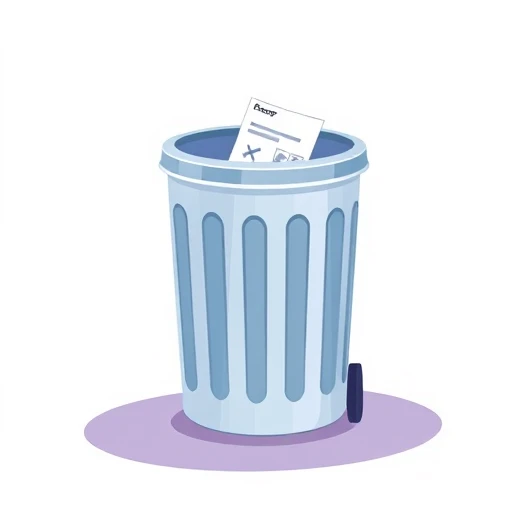
- A bin is a versatile container primarily used for waste disposal or storage, essential for maintaining cleanliness and organization in various environments.
- The term is highly common in British English, where it serves as the standard word for what Americans call a trash can or garbage can.
- Bins can be specialized for specific purposes, such as recycling, composting, storing bread, or holding carry-on luggage in an airplane's overhead compartment.
- In technical fields like statistics and computing, 'bin' refers to a method of grouping data or a specific type of binary file.
The word bin is a fundamental noun in the English language, primarily used to describe a container designed for holding items, most commonly waste or materials intended for storage. While it may seem like a simple object, the bin plays a crucial role in maintaining hygiene, organization, and environmental standards in both private and public spheres. In a domestic context, you will find bins in almost every room, from the small wastepaper basket in a home office to the large, sturdy plastic containers kept outside for weekly refuse collection. The term is versatile, extending beyond just 'trash' to include specialized containers like a bread bin for keeping loaves fresh or a toy bin for organizing a child's playroom.
- Waste Management
- In the modern era, the bin has evolved from a simple bucket into a sophisticated tool for environmental stewardship. Many households now utilize a system of multiple bins, often color-coded to distinguish between general waste, recyclable plastics, glass, and organic compost. This systematic use of bins is essential for reducing the amount of waste that ends up in landfills, making the bin a silent partner in global sustainability efforts.
After cleaning the kitchen, Sarah realized the bin was completely full and needed to be emptied before the guests arrived.
Beyond the home, bins are ubiquitous in urban planning. Public litter bins are strategically placed along sidewalks, in parks, and near transit hubs to discourage littering and keep the environment clean. These bins are often designed to be weather-resistant and bolted to the ground to prevent theft or displacement. In industrial settings, the term 'bin' can refer to massive storage structures, such as grain bins used on farms to store harvested crops before they are processed or sold. This highlights the word's capacity to scale from a tiny desktop accessory to a massive piece of agricultural infrastructure.
- Storage and Organization
- Bins are also indispensable for storage. Plastic storage bins with lids are a favorite for people moving house or organizing seasonal clothing in an attic. These bins protect contents from dust, moisture, and pests, demonstrating that the word 'bin' is as much about preservation as it is about disposal.
The carpenter kept all his spare screws and nails in a small plastic bin on his workbench.
Furthermore, the word has entered the digital and metaphorical lexicon. In computing, the 'Recycle Bin' or 'Trash' is a virtual folder where deleted files are held before being permanently erased. Metaphorically, we might speak of throwing an idea 'in the bin' if it is no longer useful or valid. This flexibility makes 'bin' a high-frequency word that learners must master to navigate both physical and abstract conversations effectively.
- Industrial Scale
- In manufacturing and logistics, 'picking bins' are used to organize small parts on assembly lines, ensuring that workers can quickly find the components they need. These bins are often slanted for easy access and labeled with barcodes for inventory tracking.
The warehouse manager ordered fifty new stackable bins to help organize the incoming inventory.
I forgot to put the bin out last night, so now we have to wait another week for the collection.
The bakery uses a large flour bin to hold the massive amounts of grain needed for their daily bread production.
Using the word bin correctly involves understanding its role as a countable noun and its common associations with specific actions like throwing, emptying, or filling. Because it is a concrete object, it is almost always preceded by an article (a, an, the) or a possessive adjective (my, your, his). When you are talking about the act of disposing of something, the preposition 'in' is the most frequent partner for 'bin'. For example, you 'put something in the bin' or 'throw something into the bin'. The word can also function as a verb in informal British English, meaning to discard something, but here we focus on its primary identity as a noun.
- Direct Objects and Verbs
- Common verbs that take 'bin' as an object include 'empty', 'fill', 'clean', 'hide', and 'move'. You might say, 'Could you empty the bin?' when it is overflowing with trash. Conversely, you might 'fill the bin' with old newspapers. In a more descriptive sense, you can use adjectives to specify the type of bin, such as 'overflowing bin', 'smelly bin', or 'recycling bin'.
The janitor spent the entire evening emptying every bin in the office building.
In more complex sentence structures, 'bin' can be part of a compound noun or a prepositional phrase that describes location. 'The bin in the corner' or 'the bin under the desk' are standard ways to identify a specific container. When discussing environmental policies, you might hear about 'bin collection schedules' or 'bin liners' (the plastic bags used to line the inside of a bin). These compounds are essential for practical daily communication in English-speaking countries.
- Prepositional Nuances
- We use 'in' for the contents: 'There is a spider in the bin.' We use 'by' or 'next to' for proximity: 'Leave the bag by the bin.' We use 'on' for the exterior: 'There is a sticker on the bin.' Understanding these prepositions helps you describe spatial relationships accurately.
Please make sure you put the glass bottles in the green bin, not the black one.
In professional or technical writing, 'bin' might be used to describe data categorization. For instance, in statistics, a 'bin' is a range of values. A sentence might read, 'The data was grouped into ten-year bins to analyze demographic shifts.' While this is a more specialized use, it follows the same logic of the bin being a container—in this case, a container for numerical data rather than physical objects.
- Descriptive Adjectives
- To make your descriptions more vivid, use adjectives like 'pedal' (a bin opened by a foot lever), 'swing-top' (a bin with a rotating lid), or 'industrial-sized'. These details help the listener visualize exactly what kind of container you are talking about.
The heavy metal bin made a loud clanging sound when the lid slammed shut.
I found this vintage record for only one dollar in the bargain bin at the back of the shop.
The city council recently replaced all the old wooden bins with modern, solar-powered compacting units.
You will encounter the word bin in a wide variety of real-world scenarios, ranging from mundane household chores to complex logistical operations. In everyday conversation, it is most frequently heard in the context of domestic management. Parents might tell their children to 'put your tissues in the bin,' or roommates might argue about whose turn it is to 'take the bin out.' In these contexts, the word is often synonymous with 'the trash' or 'the garbage,' but 'the bin' specifically refers to the physical vessel.
- Public Spaces and Signage
- In public areas like parks, airports, and train stations, you will see signs that say 'Please use the bins provided' or 'Recycling bins located on Level 2.' Announcements in these spaces might also remind travelers to keep the area tidy by disposing of their waste in the nearest bin. In the UK and Australia, you will hear the term 'wheelie bin' used constantly to describe the large, wheeled plastic bins used for residential waste collection.
The park ranger reminded the hikers to carry their trash until they found a designated bin.
In the workplace, particularly in offices, the 'bin' is a central part of the environment. You might hear a colleague say, 'I’ve thrown that draft in the bin,' which could mean they physically put the paper in a wastebasket or that they have discarded the idea digitally. In retail environments, 'dump bins' are large containers filled with loose merchandise, often seen during sales or in the aisles of supermarkets for items like avocados or discount DVDs. Hearing the word in a store usually signals a place where you can find bulk items or cheap deals.
- Digital Environments
- If you use a computer with a Windows operating system, you will see the 'Recycle Bin' icon on your desktop. This is perhaps one of the most common places the word is 'seen' rather than heard. In email applications, the 'Bin' or 'Trash' folder is where deleted messages go. Tech support might tell you to 'empty your bin' to free up space on your hard drive.
The flight attendant asked everyone to close their overhead bins securely before the plane took off.
In news reports and documentaries, especially those focusing on the environment, you might hear about 'ocean plastic' and the need for better 'waste bins' in coastal communities. Scientists might talk about 'sediment bins' or 'data bins' when discussing research methodologies. Even in sports, particularly in rugby, the 'sin bin' is a place where players are sent temporarily as a penalty for a foul. This wide range of applications shows that 'bin' is a word that spans across almost every aspect of modern life.
- Culinary and Storage
- In a professional kitchen, chefs use 'ingredient bins'—large, rolling containers filled with flour, sugar, or rice. If you watch a cooking show, you might hear a chef say, 'Grab the salt from the storage bin.' This usage emphasizes the bin's role as a protector of valuable resources.
He was sent to the sin bin for ten minutes after the referee saw him commit a dangerous tackle.
I accidentally deleted the important file, but luckily I found it in the recycle bin.
The supermarket has a huge bin of apples right at the entrance of the produce section.
One of the most common mistakes learners make with the word bin is confusing it with its synonyms in different dialects of English. While 'bin' is perfectly understood globally, it is primarily the preferred term in British, Australian, and New Zealand English. American English speakers almost exclusively use 'trash can', 'garbage can', or 'wastebasket'. A common error is using 'bin' in a formal American business setting where 'receptacle' or 'waste container' might be more appropriate, or simply using it where an American listener might expect 'trash can'.
- Confusing Noun and Verb
- As mentioned earlier, 'bin' can be used as a verb (e.g., 'I binned the old letters'). However, this is quite informal and mostly used in the UK. Learners often make the mistake of using this verb form in formal writing or in American contexts where it sounds strange. It is safer to use 'throw away', 'discard', or 'dispose of' in professional environments.
Incorrect: I will bin the report because it is wrong. (Too informal for a business meeting).
Another frequent mistake involves the pluralization and countability of the word. 'Bin' is a countable noun, meaning you must use 'bins' for more than one. Some learners mistakenly treat it as an uncountable noun like 'trash' or 'rubbish'. You cannot say 'there is much bin'; you must say 'there are many bins' or 'there is a lot of trash in the bin'. Distinguishing between the container (the bin) and the contents (the trash) is vital for grammatical accuracy.
- Preposition Errors
- Learners sometimes use 'on the bin' when they mean 'in the bin'. If you put something 'on the bin', it is sitting on top of the lid. If you want to throw it away, it must go 'in' or 'into' the bin. This small distinction can lead to confusion in physical instructions.
Incorrect: Put the rubbish on the bin. (This implies leaving it on the lid).
Finally, there is the confusion with the word 'binary'. In computing, 'bin' is often used as an abbreviation for 'binary' or 'binary file' (e.g., a .bin file). Learners in the tech field might accidentally use 'bin' to mean a container in a general sense when they actually mean a data structure or a specific file type. Context is key here; if you are talking about garbage, it's a waste bin. If you are talking about code, it's likely a binary file.
- Spelling Confusion
- Do not confuse 'bin' with 'pin' (a sharp needle) or 'tin' (a metal can). While they rhyme, their meanings are entirely different. 'Bin' starts with a voiced 'B' sound, which requires vibrating your vocal cords.
I need a bin for my trash, not a pin for my shirt!
The student mistakenly thought the bin was for clean paper only, but it was actually for general waste.
Don't forget to buy bin bags; we have completely run out and the bin is getting dirty.
The English language offers many alternatives to the word bin, each with its own specific nuance and regional preference. Understanding these synonyms will help you choose the right word for the right situation, whether you are in a casual setting or a formal one. The most direct synonyms are 'trash can' and 'garbage can', which are the standard terms in North America. 'Wastebasket' usually refers to a smaller bin found in bedrooms or offices, often used only for paper and dry waste.
- Bin vs. Receptacle
- 'Receptacle' is a more formal and technical term. You will often see it on official signs or in legal documents. While you wouldn't say 'put this in the receptacle' at home, a city ordinance might state that 'all waste must be placed in an approved refuse receptacle.' Use 'bin' for daily life and 'receptacle' for formal or technical writing.
The office manager replaced the small bins with larger recycling receptacles to encourage better waste habits.
In the UK, 'dustbin' is an older but still common term for the large bin kept outside. 'Skip' (UK) or 'dumpster' (US) refers to a very large, open-topped metal container used for bulk waste, such as during a home renovation or at a construction site. These are not called 'bins' in casual speech, although they are technically large waste containers. 'Container' itself is a broad term that includes bins but also boxes, crates, and jars. If you aren't sure if something is a bin, 'container' is always a safe, albeit less specific, choice.
- Bin vs. Basket
- A 'basket' is usually woven and has holes, like a laundry basket or a picnic basket. A 'bin' is typically solid-walled and made of plastic or metal. You wouldn't put liquid-soaked trash in a basket because it would leak, which is why we use bins for general waste.
Instead of a traditional bin, she used a decorative wicker basket to hold the clean towels in the bathroom.
For storage, alternatives include 'tote', 'crate', and 'chest'. A 'tote' is often a plastic bin with a lid used for moving or long-term storage. A 'crate' is usually open and made of wood or plastic, often used for transporting milk or fruit. A 'chest' is a large, heavy bin with a hinged lid, often used for toys or blankets. Choosing the right word depends on the material, the lid type, and what is being stored inside.
- Metaphorical Alternatives
- When you want to say something is being ignored or discarded, you can use phrases like 'consigned to the scrap heap' or 'thrown by the wayside'. These are more idiomatic and dramatic than simply saying something was 'put in the bin'.
The old project was binned in favor of a more modern approach that used artificial intelligence.
The construction crew filled the dumpster with broken bricks and old timber from the demolition site.
He searched through the scrap bin to find a piece of metal large enough for his welding project.
How Formal Is It?
Dato curioso
The word 'bin' has been used in English for over a thousand years, originally describing a woven basket before it became associated with metal and plastic waste containers.
Guía de pronunciación
- Pronouncing it like 'been' /biːn/ with a long 'ee' sound.
- Confusing the 'b' sound with 'p', making it sound like 'pin'.
- Nasalizing the vowel too much before the 'n'.
- In some accents, failing to voice the 'b' clearly.
- Shortening the 'n' sound too much.
Nivel de dificultad
Very easy to recognize in text.
Short and easy to spell.
Easy, but must distinguish from 'been' and 'pin'.
Can be missed in fast speech due to its brevity.
Qué aprender después
Requisitos previos
Aprende después
Avanzado
Gramática que debes saber
Countable Nouns
One bin, two bins.
Compound Nouns
Bin bag, bin lid.
Prepositions of Place
In the bin, next to the bin.
Imperative Mood
Put it in the bin!
Phrasal Verbs
Take the bin out.
Ejemplos por nivel
Put the paper in the bin.
Mettez le papier dans la poubelle.
Simple imperative sentence using 'the bin' as a direct object.
The bin is full.
La poubelle est pleine.
Subject + linking verb + adjective.
Where is the bin?
Où est la poubelle ?
Wh-question with the verb 'to be'.
I have a small bin in my room.
J'ai une petite poubelle dans ma chambre.
Use of the indefinite article 'a' with a countable noun.
Please empty the bin.
S'il vous plaît, videz la poubelle.
Polite request using the verb 'empty'.
The bin is blue.
La poubelle est bleue.
Describing the color of the noun.
Don't throw food in this bin.
Ne jetez pas de nourriture dans cette poubelle.
Negative imperative.
There are two bins in the kitchen.
Il y a deux poubelles dans la cuisine.
Plural form 'bins' used with 'there are'.
We need to buy some new bin bags.
Nous devons acheter de nouveaux sacs poubelle.
Compound noun 'bin bags'.
The recycling bin is for plastic and paper.
Le bac de recyclage est pour le plastique et le papier.
Using 'recycling' as a modifier for 'bin'.
He forgot to put the bin out last night.
Il a oublié de sortir la poubelle hier soir.
Phrasal verb 'put out' used with 'the bin'.
Is there a bin near the park entrance?
Y a-t-il une poubelle près de l'entrée du parc ?
Existential 'is there' question.
The bread bin keeps the bread fresh.
La boîte à pain garde le pain frais.
Specialized type of bin for storage.
She cleaned the bin with soapy water.
Elle a nettoyé la poubelle avec de l'eau savonneuse.
Past simple tense with a prepositional phrase.
The bin lid is broken.
Le couvercle de la poubelle est cassé.
Compound noun 'bin lid'.
You can find a bin in the bathroom.
Vous pouvez trouver une poubelle dans la salle de bain.
Modal verb 'can' for possibility.
I found a great book in the bargain bin.
J'ai trouvé un excellent livre dans le bac à soldes.
Idiomatic use of 'bargain bin' for retail.
Please put your luggage in the overhead bin.
Veuillez mettre vos bagages dans le coffre à bagages.
Specific terminology for aviation.
That old idea should be thrown in the bin.
Cette vieille idée devrait être jetée à la poubelle.
Metaphorical use of 'in the bin'.
The council provides a green bin for garden waste.
Le conseil fournit une poubelle verte pour les déchets de jardin.
Discussing local government services.
I accidentally binned my receipt.
J'ai jeté mon reçu par accident.
Informal British verb usage of 'bin'.
The compost bin is at the back of the garden.
Le bac à compost est au fond du jardin.
Using 'compost' to specify the bin's purpose.
He spent the morning sorting the storage bins in the attic.
Il a passé la matinée à trier les bacs de rangement dans le grenier.
Gerund 'sorting' followed by the object.
The bin collection is every Tuesday morning.
Le ramassage des poubelles a lieu tous les mardis matin.
Compound noun 'bin collection'.
The data was categorized into different bins for analysis.
Les données ont été classées dans différents bacs pour analyse.
Technical use of 'bins' in statistics.
His political career ended up in the dustbin of history.
Sa carrière politique a fini dans les poubelles de l'histoire.
Idiomatic expression 'dustbin of history'.
The factory uses huge industrial bins to store raw materials.
L'usine utilise d'énormes bacs industriels pour stocker les matières premières.
Using 'industrial' to describe the scale.
The referee sent the player to the sin bin for a professional foul.
L'arbitre a envoyé le joueur au banc de pénalité pour une faute professionnelle.
Sporting idiom 'sin bin'.
We need to bin this project before we waste any more money.
Nous devons abandonner ce projet avant de gaspiller plus d'argent.
Informal verb usage in a business context.
The sensor detects when the bin is nearly full and alerts the staff.
Le capteur détecte quand la poubelle est presque pleine et alerte le personnel.
Complex sentence with a subordinate clause.
The store uses dump bins to move excess inventory quickly.
Le magasin utilise des bacs de vrac pour écouler rapidement les stocks excédentaires.
Retail terminology 'dump bins'.
The grain bin was damaged during the heavy storm.
Le silo à grains a été endommagé pendant la forte tempête.
Agricultural use of 'bin'.
The architect integrated hidden bins into the sleek kitchen design.
L'architecte a intégré des poubelles cachées dans la conception épurée de la cuisine.
Descriptive sentence with advanced vocabulary like 'integrated' and 'sleek'.
The study suggests that the way we bin our waste reflects our social values.
L'étude suggère que la façon dont nous jetons nos déchets reflète nos valeurs sociales.
Using 'bin' as a verb in a sociological context.
The software automatically bins files based on their creation date.
Le logiciel classe automatiquement les fichiers en fonction de leur date de création.
Technical verb usage in computing.
The company decided to bin the entire marketing campaign after the scandal.
L'entreprise a décidé d'abandonner toute la campagne de marketing après le scandale.
Strong informal verb usage to show decisive action.
The artist created a sculpture entirely from items found in a scrap bin.
L'artiste a créé une sculpture entièrement à partir d'objets trouvés dans un bac à ferraille.
Using 'scrap bin' to denote a source of materials.
The binning process in digital photography can improve image quality in low light.
Le processus de binning en photographie numérique peut améliorer la qualité de l'image en basse lumière.
Highly technical use of 'binning' as a gerund.
The local council's failure to manage bin collections led to a public outcry.
L'échec du conseil local à gérer le ramassage des poubelles a provoqué un tollé général.
Formal sentence structure discussing public policy.
He has a tendency to bin any document that isn't immediately useful.
Il a tendance à jeter tout document qui n'est pas immédiatement utile.
Describing a personal habit using 'to bin'.
The philosopher argued that certain ideologies are destined for the bin of obsolescence.
Le philosophe a soutenu que certaines idéologies sont vouées au rebut de l'obsolescence.
Highly metaphorical and academic usage.
The astronomical data was binned to increase the signal-to-noise ratio.
Les données astronomiques ont été regroupées pour augmenter le rapport signal/bruit.
Specialized scientific verb usage.
The sheer volume of waste in the industrial bins was a testament to the factory's output.
Le volume impressionnant de déchets dans les bacs industriels témoignait de la production de l'usine.
Sophisticated sentence structure with 'testament to'.
The decision to bin the treaty was met with fierce international condemnation.
La décision d'abandonner le traité a suscité une vive condamnation internationale.
Using a simple verb 'bin' for dramatic effect in a high-stakes context.
The meticulous binning of artifacts helped the archaeologists date the site accurately.
Le classement méticuleux des artefacts a aidé les archéologues à dater le site avec précision.
Technical gerund usage in a scientific field.
She felt as though her years of hard work had been unceremoniously binned.
Elle avait l'impression que ses années de dur labeur avaient été jetées sans ménagement.
Passive voice with an adverb for emotional impact.
The bin liner's structural integrity was compromised by the sharp glass shards.
L'intégrité structurelle du sac poubelle a été compromise par les éclats de verre tranchants.
Highly formal and descriptive technical language.
The historical archive was saved from the bin just as the building was being demolished.
Les archives historiques ont été sauvées de la poubelle juste au moment où le bâtiment était en cours de démolition.
Using 'the bin' as a symbol for destruction or loss.
Colocaciones comunes
Frases Comunes
— To move the waste container to the street for collection.
It's your turn to take the bin out tonight.
— To remove the contents of a waste container.
Can you empty the bin? It's starting to smell.
— To discard something as waste.
If you don't want that old magazine, just put it in the bin.
— The scheduled service for picking up waste.
The bin collection was delayed due to the holiday.
— The specific day of the week when trash is collected.
Is it bin day tomorrow or Wednesday?
— A plastic bag used to line a waste container.
Tie the bin bag tightly before you take it outside.
— A general term for a container for trash.
There is a waste bin located next to every desk.
Se confunde a menudo con
The past participle of 'be'. In some accents, they sound identical, but 'bin' usually has a shorter vowel.
A small, sharp piece of metal. Only the first letter is different, so listen for the voiced 'b'.
A metal container for food. While both are containers, a 'bin' is usually for waste or bulk storage.
Modismos y expresiones
— A place where forgotten or discredited ideas, people, or events go.
Many failed inventions have ended up in the dustbin of history.
literary/formal— A penalty box in sports like rugby or ice hockey.
The captain was sent to the sin bin for arguing with the referee.
informal/sporting— A place for cheap, discounted, or low-quality items.
He felt like his career was in the bargain bin.
informal/metaphorical— To cancel or stop doing something (British slang).
I think I'm going to bin off the gym tonight and watch a movie.
slang— Completely ruined or useless.
After the crash, his car was basically in the bin.
informal— Sometimes used in Cockney Rhyming Slang for 'head' (less common).
Use your bread bin and think for a second!
slang— The digital folder for deleted files.
Check the recycle bin if you can't find the document.
technical— Often used to describe someone who is large or clumsy (rare/informal).
He's as big as a wheelie bin!
informal— The last few bottles of a particular wine sold at a discount.
We bought some excellent bin-ends at the wine shop.
specialized— The lowest quality or the last remaining parts of something.
These apples are the bottom of the bin; they're all bruised.
informalFácil de confundir
Both are containers.
A basket is usually woven with holes; a bin is solid and often has a lid.
I put the laundry in the basket and the trash in the bin.
Both are used for storage.
A box is usually square/rectangular and made of cardboard; a bin is often plastic/metal and used for waste.
Put the toys in the plastic bin and the books in the cardboard box.
American English uses 'trash can'.
In the UK, a 'can' is for soda or food; a 'bin' is for trash.
Throw the soda can into the recycling bin.
Both are for waste.
A skip is a massive industrial container; a bin is a smaller household container.
We put the old sofa in the skip and the paper in the bin.
Both are large containers.
A vat is specifically for liquids; a bin is usually for solids or waste.
The wine is fermenting in a large vat, not a bin.
Patrones de oraciones
Put [object] in the bin.
Put the apple in the bin.
The [type] bin is [adjective].
The recycling bin is full.
I found [object] in the [type] bin.
I found a shirt in the bargain bin.
It's time to [verb] the bin.
It's time to empty the bin.
The decision to bin [concept] was [adjective].
The decision to bin the project was controversial.
The [technical term] was binned for [reason].
The data was binned for statistical clarity.
Don't forget to [action] the bin.
Don't forget to put the bin out.
There is a bin [preposition] the [location].
There is a bin under the table.
Familia de palabras
Sustantivos
Verbos
Adjetivos
Relacionado
Cómo usarlo
Very high in British English; moderate in American English (where 'trash can' is higher).
-
I put the trash on the bin.
→
I put the trash in the bin.
Using 'on' means the trash is sitting on the lid. Use 'in' to indicate it is inside the container.
-
I need to empty the rubbish.
→
I need to empty the bin.
You empty the container (the bin), not the contents (the rubbish). You 'throw away' the rubbish.
-
There are much bins in the park.
→
There are many bins in the park.
'Bin' is a countable noun, so you must use 'many' instead of 'much'.
-
I have been the old papers.
→
I have binned the old papers.
Do not confuse the verb 'to bin' with the past participle 'been'.
-
The bin's bag is broken.
→
The bin bag is broken.
In English, we usually use the compound noun 'bin bag' rather than the possessive form.
Consejos
Learn Compound Nouns
Learning words like 'bin bag', 'bin lid', and 'bin day' together will help you speak more naturally about household chores.
Regional Awareness
If you are traveling to the USA, remember to say 'trash can'. If you are in the UK, 'bin' is the way to go.
Countable vs Uncountable
Remember that 'bin' is the container (countable), while 'rubbish' or 'trash' is the content (uncountable). You empty 'the bin', you don't empty 'the rubbish'.
Short Vowel Sound
Keep the 'i' sound short. If you make it too long, people might think you are saying 'been'.
Recycling Bins
In many countries, bins are color-coded. Learn the colors for your local area to ensure you use the right bin for recycling.
Informal Verb Use
Using 'bin' as a verb is a great way to sound like a native British speaker in casual settings, but avoid it in exams!
Storage Bins
Don't forget that bins aren't just for trash. Use 'storage bins' to talk about organizing your home or garage.
The Dustbin of History
This is a great idiom to use in essays when talking about failed ideas or forgotten historical figures.
Bargain Bins
When shopping, look for the 'bargain bin' or 'dump bin' to find the best discounts on various items.
Overhead Bins
When flying, listen for the flight attendant's instructions about the 'overhead bins' to know where to put your bags.
Memorízalo
Mnemotecnia
Think of a 'Bin' as a 'Box In' which you put things. B-I-N: Box In Now!
Asociación visual
Imagine a bright green recycling bin with a large white arrow forming a circle. This helps associate the word with its most common modern use.
Word Web
Desafío
Try to find five different types of bins in your house and name them in English (e.g., kitchen bin, bathroom bin, recycling bin).
Origen de la palabra
The word 'bin' originates from the Old English 'binne', which referred to a basket, crib, or manger. It is of Germanic origin and is related to the Old High German 'binne'.
Significado original: A container for holding grain or animal feed.
GermanicContexto cultural
No specific sensitivities, but be aware that 'bin' can be used as a derogatory slang term in very specific, rare contexts.
In the UK, 'bin' is universal. In the US, 'bin' is mostly for storage or specific items like 'bread bin'.
Practica en la vida real
Contextos reales
Kitchen
- under the sink bin
- pedal bin
- food waste bin
- empty the kitchen bin
Office
- wastepaper bin
- shredding bin
- recycling bin
- next to the desk
Airport
- overhead bin
- security bin
- litter bin
- luggage bin
Street
- public bin
- dog waste bin
- wheelie bin
- bin collection
Shopping
- bargain bin
- dump bin
- storage bin
- discount bin
Inicios de conversación
"Do you have separate bins for recycling and general waste in your country?"
"When is bin day in your neighborhood?"
"Have you ever found something valuable in a bargain bin?"
"Do you think there are enough public bins in your city?"
"Who is responsible for emptying the bins in your house?"
Temas para diario
Describe the waste management system in your hometown. How many bins do you use?
Write about a time you accidentally threw something important in the bin.
Do you think people would litter less if there were more bins available? Why or why not?
Imagine a world without bins. How would people manage their waste?
What are some creative ways to reuse old storage bins?
Preguntas frecuentes
10 preguntasNo, while waste disposal is its most common use, 'bin' also refers to containers for storage, like a bread bin, toy bin, or storage bin. It can also refer to digital folders or statistical groupings.
They refer to the same object. 'Bin' is the preferred term in British, Australian, and New Zealand English, while 'trash can' is the standard term in American English.
Yes, in informal British English, 'to bin' something means to throw it away or discard it. For example, 'I decided to bin my old shoes.' This is not common in American English.
A wheelie bin is a large plastic waste container with wheels, used by households to store trash until it is collected by a garbage truck. They are very common in the UK and Australia.
In sports like rugby, the 'sin bin' is a designated area where a player must sit for a specific amount of time after committing a foul. It is a temporary penalty area.
It is a neutral word suitable for most everyday situations. In very formal or technical contexts, you might use 'receptacle' or 'waste container' instead.
A bin liner is a plastic bag placed inside a bin to keep the container clean and make it easier to remove the trash. It is also called a 'bin bag' or 'trash bag'.
It comes from the Old English word 'binne', which meant a basket or a manger. It has been used in English for over a thousand years.
An overhead bin is the storage compartment located above the seats in an airplane where passengers store their carry-on luggage.
It means something has been rejected, discarded, or is no longer being considered. For example, 'That proposal is in the bin now' means the proposal was rejected.
Ponte a prueba 200 preguntas
Describe the different types of bins you have in your home.
Well written! Good try! Check the sample answer below.
Write a short paragraph about why recycling bins are important.
Well written! Good try! Check the sample answer below.
Explain the difference between a bin and a skip.
Well written! Good try! Check the sample answer below.
Write a dialogue between two roommates about whose turn it is to take the bin out.
Well written! Good try! Check the sample answer below.
Describe a 'bargain bin' experience you once had.
Well written! Good try! Check the sample answer below.
How does your city manage bin collections?
Well written! Good try! Check the sample answer below.
Write a formal request to your council for a new recycling bin.
Well written! Good try! Check the sample answer below.
Discuss the metaphorical meaning of 'the dustbin of history'.
Well written! Good try! Check the sample answer below.
Write instructions on how to set up a compost bin.
Well written! Good try! Check the sample answer below.
What are the benefits of using storage bins in a garage?
Well written! Good try! Check the sample answer below.
Describe the appearance of a typical public litter bin in your area.
Well written! Good try! Check the sample answer below.
Write a story about someone who found a treasure in a bin.
Well written! Good try! Check the sample answer below.
Explain the technical use of 'binning' in data analysis.
Well written! Good try! Check the sample answer below.
Why is it important to have a lid on a kitchen bin?
Well written! Good try! Check the sample answer below.
Write a complaint about missed bin collections.
Well written! Good try! Check the sample answer below.
Compare the terms 'bin', 'trash can', and 'receptacle'.
Well written! Good try! Check the sample answer below.
Describe the process of 'binning' a failed business project.
Well written! Good try! Check the sample answer below.
How can smart bins help improve city cleanliness?
Well written! Good try! Check the sample answer below.
Write a poem about an old, rusty bin.
Well written! Good try! Check the sample answer below.
What should never be put in a general waste bin?
Well written! Good try! Check the sample answer below.
Tell me about how you sort your trash at home.
Read this aloud:
Dijiste:
Speech recognition is not supported in your browser. Try Chrome or Edge.
What do you do if the bin is full?
Read this aloud:
Dijiste:
Speech recognition is not supported in your browser. Try Chrome or Edge.
Do you prefer 'bin' or 'trash can'? Why?
Read this aloud:
Dijiste:
Speech recognition is not supported in your browser. Try Chrome or Edge.
Explain the concept of a 'sin bin' to someone who doesn't know sports.
Read this aloud:
Dijiste:
Speech recognition is not supported in your browser. Try Chrome or Edge.
Talk about a time you forgot 'bin day'.
Read this aloud:
Dijiste:
Speech recognition is not supported in your browser. Try Chrome or Edge.
How can we encourage people to use litter bins more often?
Read this aloud:
Dijiste:
Speech recognition is not supported in your browser. Try Chrome or Edge.
Describe the bins in your favorite park.
Read this aloud:
Dijiste:
Speech recognition is not supported in your browser. Try Chrome or Edge.
What are the pros and cons of having many different recycling bins?
Read this aloud:
Dijiste:
Speech recognition is not supported in your browser. Try Chrome or Edge.
Talk about the 'bargain bin' at your local shop.
Read this aloud:
Dijiste:
Speech recognition is not supported in your browser. Try Chrome or Edge.
How do you feel when you see an overflowing bin in public?
Read this aloud:
Dijiste:
Speech recognition is not supported in your browser. Try Chrome or Edge.
Explain how to use a pedal bin.
Read this aloud:
Dijiste:
Speech recognition is not supported in your browser. Try Chrome or Edge.
What is the importance of a bin lid?
Read this aloud:
Dijiste:
Speech recognition is not supported in your browser. Try Chrome or Edge.
Discuss the environmental impact of not using bins correctly.
Read this aloud:
Dijiste:
Speech recognition is not supported in your browser. Try Chrome or Edge.
Talk about the 'Recycle Bin' on your computer.
Read this aloud:
Dijiste:
Speech recognition is not supported in your browser. Try Chrome or Edge.
Describe a 'bread bin' and its purpose.
Read this aloud:
Dijiste:
Speech recognition is not supported in your browser. Try Chrome or Edge.
How do you organize your storage bins?
Read this aloud:
Dijiste:
Speech recognition is not supported in your browser. Try Chrome or Edge.
What would you do if someone threw trash on the ground next to a bin?
Read this aloud:
Dijiste:
Speech recognition is not supported in your browser. Try Chrome or Edge.
Talk about the different colors of bins in your city.
Read this aloud:
Dijiste:
Speech recognition is not supported in your browser. Try Chrome or Edge.
Explain the phrase 'bin it off'.
Read this aloud:
Dijiste:
Speech recognition is not supported in your browser. Try Chrome or Edge.
Describe the most high-tech bin you have ever seen.
Read this aloud:
Dijiste:
Speech recognition is not supported in your browser. Try Chrome or Edge.
Listen to the sentence: 'The bin is in the corner.' Where is the bin?
Listen: 'I need to buy bin liners.' What does the speaker need?
Listen: 'The bin collection is on Wednesday.' When is the collection?
Listen: 'Put it in the recycling bin, not the general waste.' Which bin should be used?
Listen: 'The overhead bin is full.' What is the status of the bin?
Listen: 'He was sent to the sin bin for a foul.' Why was he sent there?
Listen: 'The bread bin is empty.' Is there any bread?
Listen: 'I've binned the old reports.' What did the speaker do with the reports?
Listen: 'The wheelie bin is outside.' Where is the bin?
Listen: 'The bargain bin is over there.' Where is the bin?
Listen: 'Empty the bin before it smells.' Why should the bin be emptied?
Listen: 'The bin lid is broken.' What part of the bin is broken?
Listen: 'We need a larger bin for the office.' What size bin is needed?
Listen: 'The compost bin is in the garden.' Where is it?
Listen: 'Don't forget the bin bags.' What should not be forgotten?
/ 200 correct
Perfect score!
Summary
The word 'bin' is a fundamental noun for any English learner, representing both a physical object for waste and a concept of organization. For example, 'Please put the empty bottle in the recycling bin' shows its practical daily use.
- A bin is a versatile container primarily used for waste disposal or storage, essential for maintaining cleanliness and organization in various environments.
- The term is highly common in British English, where it serves as the standard word for what Americans call a trash can or garbage can.
- Bins can be specialized for specific purposes, such as recycling, composting, storing bread, or holding carry-on luggage in an airplane's overhead compartment.
- In technical fields like statistics and computing, 'bin' refers to a method of grouping data or a specific type of binary file.
Learn Compound Nouns
Learning words like 'bin bag', 'bin lid', and 'bin day' together will help you speak more naturally about household chores.
Regional Awareness
If you are traveling to the USA, remember to say 'trash can'. If you are in the UK, 'bin' is the way to go.
Countable vs Uncountable
Remember that 'bin' is the container (countable), while 'rubbish' or 'trash' is the content (uncountable). You empty 'the bin', you don't empty 'the rubbish'.
Short Vowel Sound
Keep the 'i' sound short. If you make it too long, people might think you are saying 'been'.