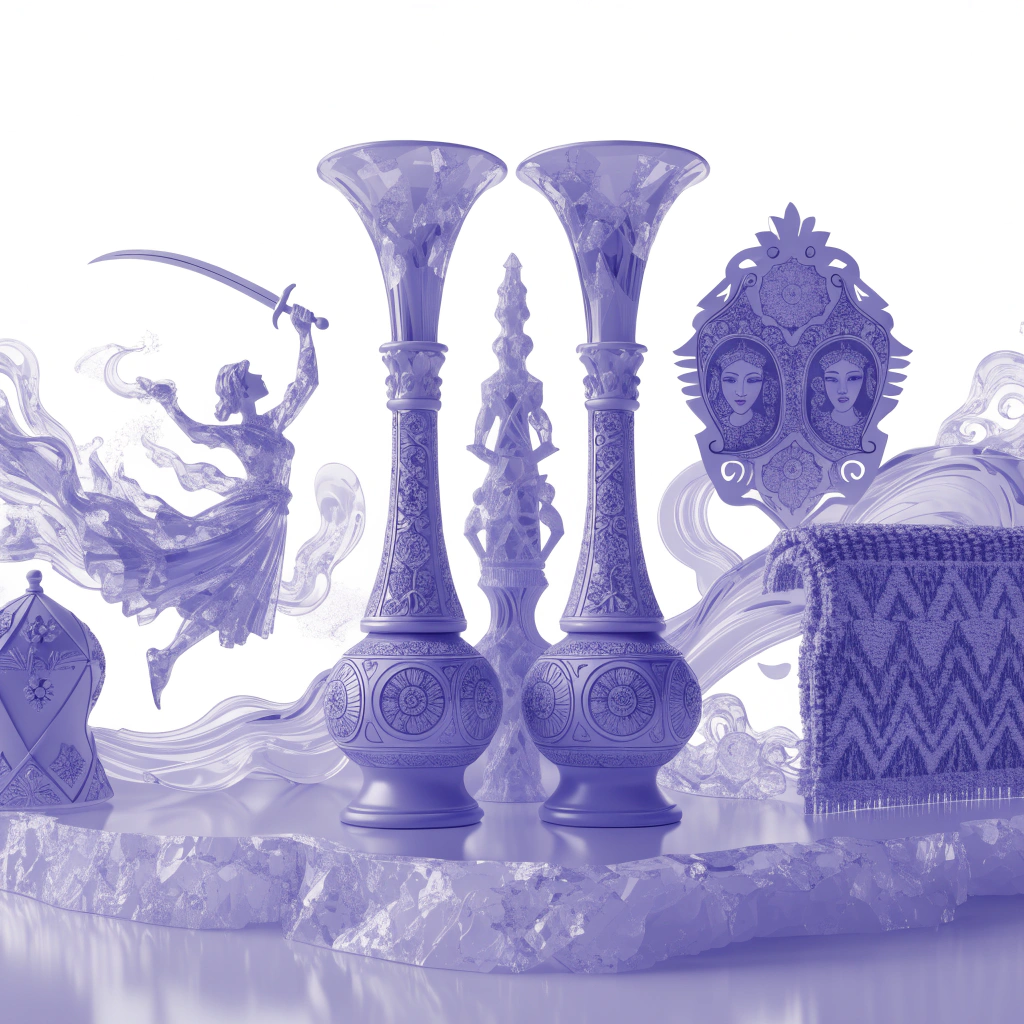
Al-Ardah: The Famous Saudi Dance
Al-Ardah is a famous dance in Saudi Arabia. It is very old. People call it the national dance of the country.
Men wear traditional clothes for the dance. They carry long swords and big drums. They sing beautiful songs together. The music is loud and happy.
People watch Al-Ardah at weddings and national holidays. Even the King dances Al-Ardah with the people. This dance shows the great history of Saudi Arabia. It is a very special celebration for everyone.
Grammar Spotlight
Pattern: Present Simple 'to be'
"Al-Ardah is a famous dance in Saudi Arabia."
We use 'is' with singular subjects like Al-Ardah. It describes a fact or a state.
Pattern: Present Simple Action Verbs
"Men wear traditional clothes for the dance."
We use the base verb 'wear' with plural subjects like 'Men'. It describes a general habit or truth.
Test Your Understanding
10 questions · A1 Beginner · 1 free preview
Test what you learned from this article. Answer all questions to earn XP!
Where is Al-Ardah a famous dance?
Want to finish the quiz?
9 more questions are waiting for you. Sign up free to unlock the full quiz and earn XP!
Sign Up FreeAlready have an account? Sign In
Question Breakdown
Where is Al-Ardah a famous dance?
Your answer:
Correct answer: Saudi Arabia
Men carry drums during the dance.
Your answer:
Correct answer: True
What is a 'drum'?
Your answer:
Correct answer: A musical instrument you hit
The music is _____ and happy.
Your answer:
Correct answer: loud
Al-Ardah: The Traditional Saudi Dance
Al-Ardah Al-Najdiyah is a very famous dance from the Najd region in Saudi Arabia. Many people call it the 'sword dance.' In the past, soldiers performed it before a battle. It made them feel brave and strong because it showed their power.
Today, Al-Ardah is different but still very important. Men wear traditional clothes and carry swords. They stand in two long lines and move to the sound of big drums. One person sings beautiful poetry, and the other men repeat the words.
This dance is more popular than other dances in Saudi Arabia. It is a symbol of national pride. People perform it at weddings and national holidays. Even the King and princes join the dance because it shows Saudi history. In 2015, UNESCO said it is a special part of world culture. It is a beautiful display of heritage that everyone loves.
Grammar Spotlight
Pattern: Past Simple
"In the past, soldiers performed it before a battle."
We use the past simple to talk about finished actions. For regular verbs, we usually add '-ed' to the base verb like 'perform' becomes 'performed'.
Pattern: Comparatives
"This dance is more popular than other dances in Saudi Arabia."
We use comparatives to compare two things. For long adjectives like 'popular', we put 'more' before the adjective and 'than' after it.
Test Your Understanding
11 questions · A2 Elementary · 1 free preview
Test what you learned from this article. Answer all questions to earn XP!
Where does Al-Ardah come from originally?
Want to finish the quiz?
10 more questions are waiting for you. Sign up free to unlock the full quiz and earn XP!
Sign Up FreeAlready have an account? Sign In
Question Breakdown
Where does Al-Ardah come from originally?
Your answer:
Correct answer: The Najd region
Soldiers used to perform this dance to feel brave.
Your answer:
Correct answer: True
What is a 'sword'?
Your answer:
Correct answer: A long metal weapon
Men wear traditional _____ and carry swords.
Your answer:
Correct answer: clothes
When did UNESCO recognize Al-Ardah as world culture?
Your answer:
Correct answer: 2015
The Dance of Saudi Pride: Exploring Al-Ardah Al-Najdiyah
Al-Ardah Al-Najdiyah is a traditional dance that represents the heart of Saudi Arabian culture. Although it started in the central Najd region, it has become a symbol of unity for the entire country. In the past, this performance was used by warriors who wanted to show their strength before a battle and celebrate their victories.
Today, the dance is performed at many special events, such as weddings, royal receptions, and national holidays. It has been recognized by UNESCO as an important part of human heritage since 2015. When people watch Ardah, they see men standing in two rows, holding swords and moving to the rhythm of drums. The performers wear traditional clothing, including the 'ghutra' and 'bisht', which adds to the beauty of the scene.
The performance combines poetry, music, and movement. A leader starts by reciting a verse of poetry, which is then repeated by the group. This creates a powerful atmosphere that connects the past with the present. Two types of drums are used: the large 'takhmir' and the smaller 'tathlith'. These instruments provide a deep, rhythmic sound that can be heard from far away.
The swords are not used for fighting anymore; instead, they are raised to show respect and celebrate national identity. Because it is so significant, even members of the Saudi royal family often participate in the dance during official ceremonies. Visitors who have traveled to Saudi Arabia often describe Ardah as an unforgettable experience. It is not just a dance; it is a display of pride and history that has lasted for centuries.
Grammar Spotlight
Pattern: Present Perfect Passive
"It has been recognized by UNESCO as an important part of human heritage since 2015."
This pattern is used to talk about an action that happened at an unspecified time in the past and focuses on the result. It is formed using 'has/have + been + past participle'.
Pattern: Relative Clauses
"Al-Ardah Al-Najdiyah is a traditional dance that represents the heart of Saudi Arabian culture."
Relative clauses give more information about a noun. In this sentence, 'that represents...' describes the 'traditional dance'.
Test Your Understanding
11 questions · B1 Intermediate · 1 free preview
Test what you learned from this article. Answer all questions to earn XP!
Where did the Ardah dance originally come from?
Want to finish the quiz?
10 more questions are waiting for you. Sign up free to unlock the full quiz and earn XP!
Sign Up FreeAlready have an account? Sign In
Question Breakdown
Where did the Ardah dance originally come from?
Your answer:
Correct answer: The Najd region
Ardah is only performed by professional dancers at weddings.
Your answer:
Correct answer: False
What does the word 'heritage' mean?
Your answer:
Correct answer: Traditions and history of a nation
The performance _____ poetry, music, and movement.
Your answer:
Correct answer: combines
What do the men hold while performing the Ardah?
Your answer:
Correct answer: Swords
Al-Ardah Al-Najdiyah: The Rhythmic Pulse of Saudi Heritage
Al-Ardah Al-Najdiyah is widely regarded as the quintessential national dance of Saudi Arabia. This powerful display of cultural heritage, which combines poetry, drumming, and synchronized swordplay, originated in the central Najd region. Historically, it was performed as a martial ritual intended to boost the morale of warriors before they headed into battle. Furthermore, it served as a triumphant celebration of victory upon their return. In the modern era, although its military necessity has faded, Al-Ardah has evolved into a centerpiece of Saudi identity.
The performance itself is a masterclass in coordination. It begins with a single line of poetry, chanted by a lead poet, which is then repeated by two rows of men facing each other. These participants, dressed in traditional robes and carrying swords, sway to the rhythmic beat of large drums known as 'takhmir' and smaller drums called 'tathlith.' The synchronization of the dancers’ movements reflects the unity and strength of the community. It is not merely a dance; it is a profound expression of loyalty and pride.
In 2015, the global significance of Al-Ardah was formally recognized when it was inscribed on the UNESCO Representative List of the Intangible Cultural Heritage of Humanity. This prestigious status highlights its importance not just to Saudi Arabia, but to the world's collective cultural legacy. Today, the dance is frequently performed at major national holidays, royal receptions, and family celebrations such as weddings. Even members of the royal family, including the King, often participate in the dance, further solidifying its role as a unifying national symbol.
Analyzing the survival of Al-Ardah reveals much about Saudi society. While the Kingdom undergoes rapid modernization, such traditions provide a vital link to the past. The preservation of this martial art demonstrates a commitment to maintaining a unique cultural identity amidst global change. Consequently, Al-Ardah remains a vibrant, living tradition that continues to inspire younger generations. It is a testament to the enduring power of heritage and the way in which historical rituals can adapt to reflect contemporary values.
Grammar Spotlight
Pattern: Passive Voice (Past Simple)
"Historically, it was performed as a martial ritual intended to boost the morale of warriors."
The passive voice is used here because the action (performing the dance) is more important than the specific people doing it. It is formed using 'was/were' + the past participle.
Pattern: Present Perfect Simple (Intransitive)
"Al-Ardah has evolved into a centerpiece of Saudi identity."
The present perfect is used to describe a change that started in the past and has relevance or completion in the present. It is formed with 'has/have' + past participle.
Pattern: Non-defining Relative Clauses
"This powerful display of cultural heritage, which combines poetry, drumming, and synchronized swordplay, originated in the central Najd region."
The clause starting with 'which' provides extra information about the subject. It is separated by commas and is common in formal B2 writing to add descriptive detail.
Test Your Understanding
11 questions · B2 Upper Intermediate · 1 free preview
Test what you learned from this article. Answer all questions to earn XP!
What was the primary historical purpose of Al-Ardah?
Want to finish the quiz?
10 more questions are waiting for you. Sign up free to unlock the full quiz and earn XP!
Sign Up FreeAlready have an account? Sign In
Question Breakdown
What was the primary historical purpose of Al-Ardah?
Your answer:
Correct answer: To encourage warriors and celebrate military success
Al-Ardah was added to the UNESCO Intangible Cultural Heritage list in 2015.
Your answer:
Correct answer: True
What does 'quintessential' mean in the context of the article?
Your answer:
Correct answer: A perfect or typical example of something
The performance itself is a masterclass in _____, involving synchronized movements and drumming.
Your answer:
Correct answer: coordination
Which region did Al-Ardah originally come from?
Your answer:
Correct answer: The Central Najd region
The Rhythmic Pulse of Sovereignty: Decoding Al-Ardah Al-Najdiyah
Rarely does a cultural artifact encapsulate the collective psyche of a nation as profoundly as Al-Ardah Al-Najdiyah. Originating in the arid heartlands of the Najd region, this performance transcends mere choreography, serving as a living testament to the martial prowess and communal solidarity of the Saudi people. What was once a strategic prelude to battle, designed to galvanize warriors and intimidate adversaries, has metamorphosed into a sophisticated emblem of national pride. The preservation of heritage through such a dynamic medium illustrates the intricate relationship between historical memory and modern identity.
Central to the efficacy of Al-Ardah is the meticulous interplay between auditory and visual stimuli. The performance is underpinned by the visceral resonance of the drums—the 'takhmir' and the 'dammam'—which provide a rhythmic scaffolding for the proceedings. It is the rhythmic cadence of the drums that dictates the deliberate, swaying movements of the participants. Over this percussive foundation, the chanting of 'Nabati' poetry commences. This vernacular verse is not merely decorative; rather, it serves as a vehicle for historical narration, extolling the virtues of courage, lineage, and sovereignty. It is through these verses that the collective memory of the community is both preserved and propagated.
Visually, the spectacle is dominated by the synchronized movements of men clad in traditional attire, brandishing swords that catch the desert sun. However, to view this purely as a display of militarism would be a reductive interpretation. Instead, the rhythmic swaying and the brandishing of steel represent a nuanced negotiation between strength and restraint. The sword, while a symbol of power, is handled with a grace that suggests the sublimation of violence into art. Seldom has a performance so effectively melded the martial with the poetic, creating a space where physical strength is tempered by artistic expression.
The inscription of Al-Ardah Al-Najdiyah onto the UNESCO Representative List of the Intangible Cultural Heritage of Humanity in 2015 marked a pivotal moment in its global recognition. This institutional validation highlights the dance's role in fostering social cohesion. In the contemporary Saudi landscape, Al-Ardah is a ubiquitous presence at state receptions and weddings alike, bridging the chasm between the elite and the commonality. Not only does it reinforce a sense of belonging among participants, but it also projects a formidable image of cultural continuity to the outside world.
Furthermore, the evolution of Al-Ardah invites a critical examination of how tradition adapts to the exigencies of modernity. While the core elements remain sacrosanct, the context of performance has shifted from the battlefield to the festival stage. This transition necessitates a delicate balancing act: ensuring the authenticity of the practice while accommodating the performative demands of a globalized audience. Ultimately, Al-Ardah Al-Najdiyah remains a potent synthesis of history and contemporary identity, a rhythmic heartbeat that continues to resonate across the Arabian Peninsula.
Grammar Spotlight
Pattern: Negative Inversion
"Rarely does a cultural artifact encapsulate the collective psyche of a nation as profoundly as Al-Ardah Al-Najdiyah."
Inversion is used after negative or restrictive adverbs like 'rarely' or 'seldom' to add emphasis. The auxiliary verb comes before the subject.
Pattern: Cleft Sentence
"It is through these verses that the collective memory of the community is both preserved and propagated."
Cleft sentences (It + is/was + focus + relative clause) are used to focus on specific information, in this case, the 'verses' as the means of preservation.
Pattern: Nominalisation
"The preservation of heritage through such a dynamic medium illustrates the intricate relationship between historical memory and modern identity."
Nominalisation involves turning verbs or adjectives into nouns (e.g., 'preserve' to 'preservation'). It makes academic writing sound more objective and concise.
Test Your Understanding
12 questions · C1 Advanced · 1 free preview
Test what you learned from this article. Answer all questions to earn XP!
What was the primary historical function of Al-Ardah Al-Najdiyah?
Want to finish the quiz?
11 more questions are waiting for you. Sign up free to unlock the full quiz and earn XP!
Sign Up FreeAlready have an account? Sign In
Question Breakdown
What was the primary historical function of Al-Ardah Al-Najdiyah?
Your answer:
Correct answer: A martial display to boost morale and intimidate enemies
According to the article, Nabati poetry in Al-Ardah is primarily decorative and lacks narrative depth.
Your answer:
Correct answer: False
What does the word 'ubiquitous' mean in the context of the article?
Your answer:
Correct answer: Found everywhere in the modern landscape
The transition of Al-Ardah to the festival stage requires a delicate balancing act to ensure _____.
Your answer:
Correct answer: authenticity
What does the author suggest about the brandishing of swords in the dance?
Your answer:
Correct answer: It represents a negotiation between power and artistic restraint
The 2015 UNESCO inscription is described as a pivotal moment for the dance's global recognition.
Your answer:
Correct answer: True
The Choreography of Sovereignty: Al-Ardah Al-Najdiyah as a Semiotic Construct of Saudi Identity
Al-Ardah Al-Najdiyah stands as an ontological pillar of Saudi Arabian cultural heritage, representing a sophisticated synthesis of martial prowess, poetic resonance, and communal synchronicity. To the uninitiated observer, the performance might appear as a mere rhythmic display of swordsmanship; however, were one to delve into its historical provenance, a far more complex narrative of social cohesion and political legitimacy would emerge. Originating within the arid expanses of the central Najd region, the Ardah was historically a bellicose prelude—a martial mechanism designed to galvanize warriors and intimidate adversaries through a collective exhibition of strength. Today, while its vestigial military functions have subsided, the Ardah has undergone a profound metamorphosis, evolving into the quintessence of national pride and a ceremonial staple of statecraft.
The performance is underpinned by the Nabati poetic tradition, where the metrical cadence of the verse dictates the somatic response of the participants. This relationship between the spoken word and the physical gesture is not merely aesthetic but serves as a conduit for historical memory. The poetry often evokes themes of loyalty, valor, and the historical unification of the Kingdom under King Abdulaziz. It is widely posited that the Ardah serves as a living archive, where the oral traditions of the peninsula are etched into the movements of the performers. The rhythmic structure, provided by the 'takhmir' and 'tathlith' drums, creates an evocative atmosphere that transcends the ephemeral nature of modern entertainment, rooting the audience in a sense of deep time.
In contemporary Saudi society, the Ardah functions as a powerful instrument of cultural diplomacy. Its inscription upon the UNESCO Representative List of the Intangible Cultural Heritage of Humanity in 2015 solidified its status as a global symbol of Saudi identity. When the King and members of the Royal Family participate in the dance, it reifies the bond between the leadership and the citizenry, suggesting a continuity of tradition that bridges the pre-modern and the post-modern eras. Seldom does a cultural practice manage to retain such gravity while adapting to the exigencies of a rapidly globalizing world. The Ardah remains a testament to the enduring power of ritual in the construction of national consciousness.
From a sociological perspective, the Ardah provides a unique vantage point into the mechanics of group identity. The synchronization required—the rhythmic swaying, the uniform raising of swords, and the call-and-response vocalizations—demands a total subordination of the individual to the collective. This performative unity is emblematic of the broader societal values of loyalty and mutual support. Furthermore, the Ardah is not a static relic; it is a dynamic process. While the core elements remain sacrosanct, the specific verses chosen for a performance can be tailored to reflect contemporary triumphs or challenges, thereby ensuring its ongoing relevance. Were it not for this inherent flexibility, the Ardah might have withered into a historical curiosity rather than remaining the vibrant, pulsating heart of Saudi ceremonial life. It remains a profound semiotic construct, where every beat of the drum and every flash of the blade communicates a narrative of resilience and sovereignty.
Grammar Spotlight
Pattern: Inversion with negative/restrictive adverbs
"Seldom does a cultural practice manage to retain such gravity while adapting to the exigencies of a rapidly globalizing world."
When a sentence begins with a restrictive adverb like 'seldom', 'rarely', or 'never', the subject and auxiliary verb are inverted to add rhetorical emphasis and formality.
Pattern: Inverted Conditionals (Subjunctive)
"Were one to delve into its historical provenance, a far more complex narrative of social cohesion and political legitimacy would emerge."
This structure replaces 'If one were to...' with 'Were one to...'. It is a formal way of expressing a hypothetical situation in the present or future, characteristic of scholarly English.
Pattern: Passive Reporting Verbs with 'It'
"It is widely posited that the Ardah serves as a living archive, where the oral traditions of the peninsula are etched into the movements of the performers."
Using 'It is + past participle + that' allows the writer to present an opinion or theory without attributing it to a specific person, maintaining an objective, academic tone.
Test Your Understanding
12 questions · C2 Mastery · 1 free preview
Test what you learned from this article. Answer all questions to earn XP!
What does the author suggest about the relationship between Ardah and modern entertainment?
Want to finish the quiz?
11 more questions are waiting for you. Sign up free to unlock the full quiz and earn XP!
Sign Up FreeAlready have an account? Sign In
Question Breakdown
What does the author suggest about the relationship between Ardah and modern entertainment?
Your answer:
Correct answer: Ardah is fundamentally different because it creates a sense of deep time and historical continuity.
The historical function of the Ardah was primarily decorative and performed for foreign dignitaries.
Your answer:
Correct answer: False
Which word is synonymous with 'the most perfect example' in the context of the article?
Your answer:
Correct answer: Quintessence
The author argues that the Ardah is an _____ pillar of Saudi heritage, relating to the very nature of their existence.
Your answer:
Correct answer: ontological
How does the author characterize the participation of the Royal Family in the Ardah?
Your answer:
Correct answer: As a means of reifying the connection between the leadership and the people.
The article posits that the Ardah is a dynamic process because the poetry can be adjusted to reflect modern events.
Your answer:
Correct answer: True
