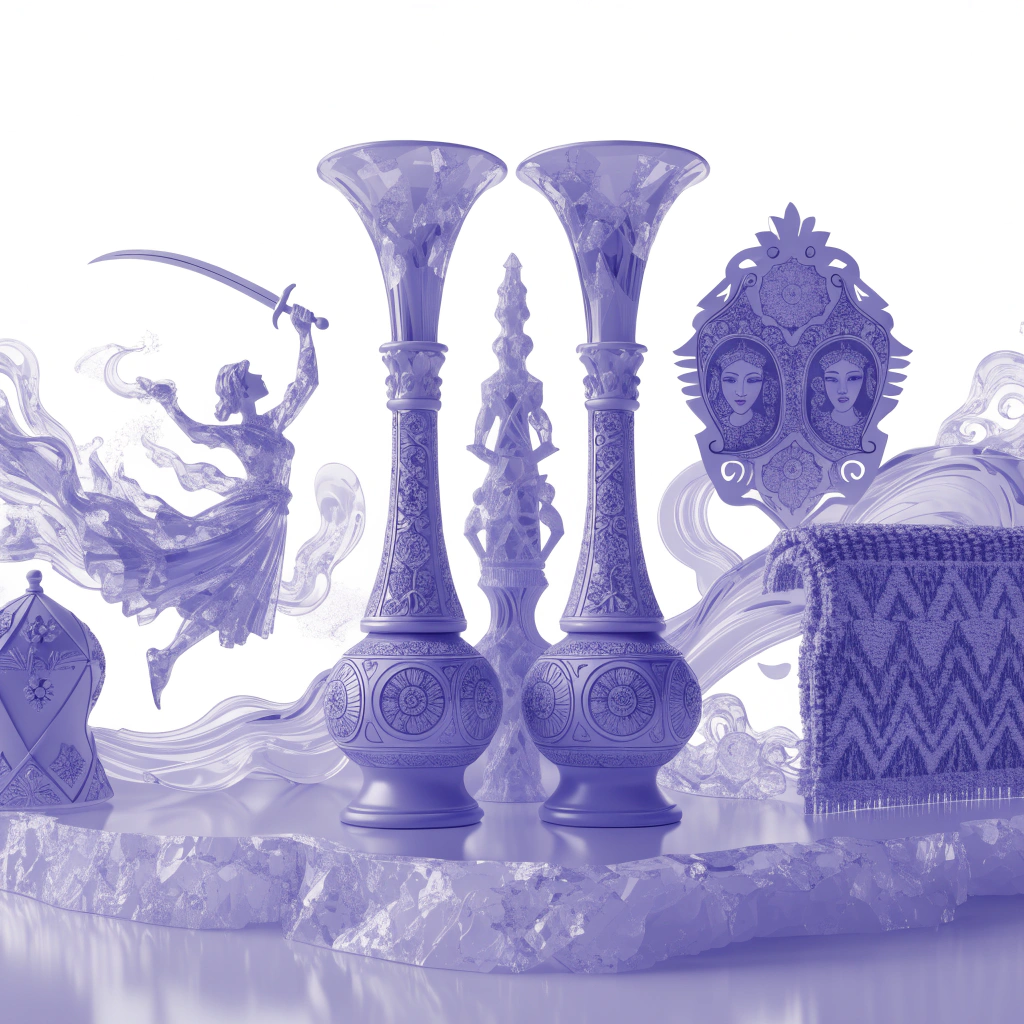
Al-Ardah: The Famous Saudi Dance
Al-Ardah is a famous dance in Saudi Arabia. It is very old. People call it the national dance of the country.
Men wear traditional clothes for the dance. They carry long swords and big drums. They sing beautiful songs together. The music is loud and happy.
People watch Al-Ardah at weddings and national holidays. Even the King dances Al-Ardah with the people. This dance shows the great history of Saudi Arabia. It is a very special celebration for everyone.
语法聚焦
句型: Present Simple 'to be'
"Al-Ardah is a famous dance in Saudi Arabia."
We use 'is' with singular subjects like Al-Ardah. It describes a fact or a state.
句型: Present Simple Action Verbs
"Men wear traditional clothes for the dance."
We use the base verb 'wear' with plural subjects like 'Men'. It describes a general habit or truth.
测试你的理解
10 个问题 · A1 初学 · 1 次免费预览
测试你从这篇文章中学到的知识。回答所有问题即可获得经验值!
题目详情
Where is Al-Ardah a famous dance?
你的回答:
正确答案: Saudi Arabia
Men carry drums during the dance.
你的回答:
正确答案: 正确
What is a 'drum'?
你的回答:
正确答案: A musical instrument you hit
The music is _____ and happy.
你的回答:
正确答案: loud
Al-Ardah: The Traditional Saudi Dance
Al-Ardah Al-Najdiyah is a very famous dance from the Najd region in Saudi Arabia. Many people call it the 'sword dance.' In the past, soldiers performed it before a battle. It made them feel brave and strong because it showed their power.
Today, Al-Ardah is different but still very important. Men wear traditional clothes and carry swords. They stand in two long lines and move to the sound of big drums. One person sings beautiful poetry, and the other men repeat the words.
This dance is more popular than other dances in Saudi Arabia. It is a symbol of national pride. People perform it at weddings and national holidays. Even the King and princes join the dance because it shows Saudi history. In 2015, UNESCO said it is a special part of world culture. It is a beautiful display of heritage that everyone loves.
语法聚焦
句型: Past Simple
"In the past, soldiers performed it before a battle."
We use the past simple to talk about finished actions. For regular verbs, we usually add '-ed' to the base verb like 'perform' becomes 'performed'.
句型: Comparatives
"This dance is more popular than other dances in Saudi Arabia."
We use comparatives to compare two things. For long adjectives like 'popular', we put 'more' before the adjective and 'than' after it.
测试你的理解
11 个问题 · A2 基础 · 1 次免费预览
测试你从这篇文章中学到的知识。回答所有问题即可获得经验值!
Where does Al-Ardah come from originally?
题目详情
Where does Al-Ardah come from originally?
你的回答:
正确答案: The Najd region
Soldiers used to perform this dance to feel brave.
你的回答:
正确答案: 正确
What is a 'sword'?
你的回答:
正确答案: A long metal weapon
Men wear traditional _____ and carry swords.
你的回答:
正确答案: clothes
When did UNESCO recognize Al-Ardah as world culture?
你的回答:
正确答案: 2015
The Dance of Saudi Pride: Exploring Al-Ardah Al-Najdiyah
Al-Ardah Al-Najdiyah is a traditional dance that represents the heart of Saudi Arabian culture. Although it started in the central Najd region, it has become a symbol of unity for the entire country. In the past, this performance was used by warriors who wanted to show their strength before a battle and celebrate their victories.
Today, the dance is performed at many special events, such as weddings, royal receptions, and national holidays. It has been recognized by UNESCO as an important part of human heritage since 2015. When people watch Ardah, they see men standing in two rows, holding swords and moving to the rhythm of drums. The performers wear traditional clothing, including the 'ghutra' and 'bisht', which adds to the beauty of the scene.
The performance combines poetry, music, and movement. A leader starts by reciting a verse of poetry, which is then repeated by the group. This creates a powerful atmosphere that connects the past with the present. Two types of drums are used: the large 'takhmir' and the smaller 'tathlith'. These instruments provide a deep, rhythmic sound that can be heard from far away.
The swords are not used for fighting anymore; instead, they are raised to show respect and celebrate national identity. Because it is so significant, even members of the Saudi royal family often participate in the dance during official ceremonies. Visitors who have traveled to Saudi Arabia often describe Ardah as an unforgettable experience. It is not just a dance; it is a display of pride and history that has lasted for centuries.
语法聚焦
句型: Present Perfect Passive
"It has been recognized by UNESCO as an important part of human heritage since 2015."
This pattern is used to talk about an action that happened at an unspecified time in the past and focuses on the result. It is formed using 'has/have + been + past participle'.
句型: Relative Clauses
"Al-Ardah Al-Najdiyah is a traditional dance that represents the heart of Saudi Arabian culture."
Relative clauses give more information about a noun. In this sentence, 'that represents...' describes the 'traditional dance'.
测试你的理解
11 个问题 · B1 中级 · 1 次免费预览
测试你从这篇文章中学到的知识。回答所有问题即可获得经验值!
Where did the Ardah dance originally come from?
题目详情
Where did the Ardah dance originally come from?
你的回答:
正确答案: The Najd region
Ardah is only performed by professional dancers at weddings.
你的回答:
正确答案: 错误
What does the word 'heritage' mean?
你的回答:
正确答案: Traditions and history of a nation
The performance _____ poetry, music, and movement.
你的回答:
正确答案: combines
What do the men hold while performing the Ardah?
你的回答:
正确答案: Swords
Al-Ardah Al-Najdiyah: The Rhythmic Pulse of Saudi Heritage
Al-Ardah Al-Najdiyah is widely regarded as the quintessential national dance of Saudi Arabia. This powerful display of cultural heritage, which combines poetry, drumming, and synchronized swordplay, originated in the central Najd region. Historically, it was performed as a martial ritual intended to boost the morale of warriors before they headed into battle. Furthermore, it served as a triumphant celebration of victory upon their return. In the modern era, although its military necessity has faded, Al-Ardah has evolved into a centerpiece of Saudi identity.
The performance itself is a masterclass in coordination. It begins with a single line of poetry, chanted by a lead poet, which is then repeated by two rows of men facing each other. These participants, dressed in traditional robes and carrying swords, sway to the rhythmic beat of large drums known as 'takhmir' and smaller drums called 'tathlith.' The synchronization of the dancers’ movements reflects the unity and strength of the community. It is not merely a dance; it is a profound expression of loyalty and pride.
In 2015, the global significance of Al-Ardah was formally recognized when it was inscribed on the UNESCO Representative List of the Intangible Cultural Heritage of Humanity. This prestigious status highlights its importance not just to Saudi Arabia, but to the world's collective cultural legacy. Today, the dance is frequently performed at major national holidays, royal receptions, and family celebrations such as weddings. Even members of the royal family, including the King, often participate in the dance, further solidifying its role as a unifying national symbol.
Analyzing the survival of Al-Ardah reveals much about Saudi society. While the Kingdom undergoes rapid modernization, such traditions provide a vital link to the past. The preservation of this martial art demonstrates a commitment to maintaining a unique cultural identity amidst global change. Consequently, Al-Ardah remains a vibrant, living tradition that continues to inspire younger generations. It is a testament to the enduring power of heritage and the way in which historical rituals can adapt to reflect contemporary values.
语法聚焦
句型: Passive Voice (Past Simple)
"Historically, it was performed as a martial ritual intended to boost the morale of warriors."
The passive voice is used here because the action (performing the dance) is more important than the specific people doing it. It is formed using 'was/were' + the past participle.
句型: Present Perfect Simple (Intransitive)
"Al-Ardah has evolved into a centerpiece of Saudi identity."
The present perfect is used to describe a change that started in the past and has relevance or completion in the present. It is formed with 'has/have' + past participle.
句型: Non-defining Relative Clauses
"This powerful display of cultural heritage, which combines poetry, drumming, and synchronized swordplay, originated in the central Najd region."
The clause starting with 'which' provides extra information about the subject. It is separated by commas and is common in formal B2 writing to add descriptive detail.
测试你的理解
11 个问题 · B2 中高级 · 1 次免费预览
测试你从这篇文章中学到的知识。回答所有问题即可获得经验值!
What was the primary historical purpose of Al-Ardah?
题目详情
What was the primary historical purpose of Al-Ardah?
你的回答:
正确答案: To encourage warriors and celebrate military success
Al-Ardah was added to the UNESCO Intangible Cultural Heritage list in 2015.
你的回答:
正确答案: 正确
What does 'quintessential' mean in the context of the article?
你的回答:
正确答案: A perfect or typical example of something
The performance itself is a masterclass in _____, involving synchronized movements and drumming.
你的回答:
正确答案: coordination
Which region did Al-Ardah originally come from?
你的回答:
正确答案: The Central Najd region
The Rhythmic Pulse of Sovereignty: Decoding Al-Ardah Al-Najdiyah
Rarely does a cultural artifact encapsulate the collective psyche of a nation as profoundly as Al-Ardah Al-Najdiyah. Originating in the arid heartlands of the Najd region, this performance transcends mere choreography, serving as a living testament to the martial prowess and communal solidarity of the Saudi people. What was once a strategic prelude to battle, designed to galvanize warriors and intimidate adversaries, has metamorphosed into a sophisticated emblem of national pride. The preservation of heritage through such a dynamic medium illustrates the intricate relationship between historical memory and modern identity.
Central to the efficacy of Al-Ardah is the meticulous interplay between auditory and visual stimuli. The performance is underpinned by the visceral resonance of the drums—the 'takhmir' and the 'dammam'—which provide a rhythmic scaffolding for the proceedings. It is the rhythmic cadence of the drums that dictates the deliberate, swaying movements of the participants. Over this percussive foundation, the chanting of 'Nabati' poetry commences. This vernacular verse is not merely decorative; rather, it serves as a vehicle for historical narration, extolling the virtues of courage, lineage, and sovereignty. It is through these verses that the collective memory of the community is both preserved and propagated.
Visually, the spectacle is dominated by the synchronized movements of men clad in traditional attire, brandishing swords that catch the desert sun. However, to view this purely as a display of militarism would be a reductive interpretation. Instead, the rhythmic swaying and the brandishing of steel represent a nuanced negotiation between strength and restraint. The sword, while a symbol of power, is handled with a grace that suggests the sublimation of violence into art. Seldom has a performance so effectively melded the martial with the poetic, creating a space where physical strength is tempered by artistic expression.
The inscription of Al-Ardah Al-Najdiyah onto the UNESCO Representative List of the Intangible Cultural Heritage of Humanity in 2015 marked a pivotal moment in its global recognition. This institutional validation highlights the dance's role in fostering social cohesion. In the contemporary Saudi landscape, Al-Ardah is a ubiquitous presence at state receptions and weddings alike, bridging the chasm between the elite and the commonality. Not only does it reinforce a sense of belonging among participants, but it also projects a formidable image of cultural continuity to the outside world.
Furthermore, the evolution of Al-Ardah invites a critical examination of how tradition adapts to the exigencies of modernity. While the core elements remain sacrosanct, the context of performance has shifted from the battlefield to the festival stage. This transition necessitates a delicate balancing act: ensuring the authenticity of the practice while accommodating the performative demands of a globalized audience. Ultimately, Al-Ardah Al-Najdiyah remains a potent synthesis of history and contemporary identity, a rhythmic heartbeat that continues to resonate across the Arabian Peninsula.
语法聚焦
句型: Negative Inversion
"Rarely does a cultural artifact encapsulate the collective psyche of a nation as profoundly as Al-Ardah Al-Najdiyah."
Inversion is used after negative or restrictive adverbs like 'rarely' or 'seldom' to add emphasis. The auxiliary verb comes before the subject.
句型: Cleft Sentence
"It is through these verses that the collective memory of the community is both preserved and propagated."
Cleft sentences (It + is/was + focus + relative clause) are used to focus on specific information, in this case, the 'verses' as the means of preservation.
句型: Nominalisation
"The preservation of heritage through such a dynamic medium illustrates the intricate relationship between historical memory and modern identity."
Nominalisation involves turning verbs or adjectives into nouns (e.g., 'preserve' to 'preservation'). It makes academic writing sound more objective and concise.
测试你的理解
12 个问题 · C1 高级 · 1 次免费预览
测试你从这篇文章中学到的知识。回答所有问题即可获得经验值!
What was the primary historical function of Al-Ardah Al-Najdiyah?
题目详情
What was the primary historical function of Al-Ardah Al-Najdiyah?
你的回答:
正确答案: A martial display to boost morale and intimidate enemies
According to the article, Nabati poetry in Al-Ardah is primarily decorative and lacks narrative depth.
你的回答:
正确答案: 错误
What does the word 'ubiquitous' mean in the context of the article?
你的回答:
正确答案: Found everywhere in the modern landscape
The transition of Al-Ardah to the festival stage requires a delicate balancing act to ensure _____.
你的回答:
正确答案: authenticity
What does the author suggest about the brandishing of swords in the dance?
你的回答:
正确答案: It represents a negotiation between power and artistic restraint
The 2015 UNESCO inscription is described as a pivotal moment for the dance's global recognition.
你的回答:
正确答案: 正确
沙特民族之魂:纳吉迪亚战舞的文化赓续与时代回响
在阿拉伯半岛广袤的沙漠腹地,沙特阿拉伯王国承载着深厚的历史积淀与独特的文化风貌。其中,纳吉迪亚战舞(Al-Ardah Al-Najdiyah)作为其民族身份的显著象征,不仅是一场艺术表演,更是一部流动的史诗,镌刻着这片土地的英勇精神与集体记忆。追溯其源流,纳吉迪亚战舞最初发轫于内志(Najd)地区,彼时,它不啻为一种战前动员的仪式,旨在振奋士气,凝聚人心,亦是胜利凯旋后普天同庆的盛典。其本质上融合了诗歌的激昂、鼓点的沉雄以及刀剑的凛然,构成了一幅幅摄人心魄的动态画卷。
历史的洪流涤荡着岁月的尘埃,纳吉迪亚战舞的形态与功能亦随之演进。从最初的军事藩篱内,它逐渐走向更广阔的社会舞台,成为沙特民众生活不可或缺的一部分。时至今日,其表演场景已远超军事范畴,涵盖了国家重大节庆、王室接待外宾的隆重场合,以及寻常百姓家婚丧嫁娶等人生重要节点。凡是需要彰显民族团结、庆祝喜悦、传承文化之处,纳吉迪亚战舞便会以其独有的魅力,吸引着众人的目光,激荡着在场者的心弦。它并非仅仅是娱乐,毋宁说,它是一种集体认同的强化,一种文化根基的巩固。
纳吉迪亚战舞的表演形式颇具特色。通常由一群身着传统服饰的男性参与,他们手持弯刀或步枪,在激昂的鼓点和吟唱的诗歌声中,齐声高呼,步调一致地左右移动。这种整齐划一的动作,象征着团结与力量;而刀剑的挥舞,则承载着昔日战士的骁勇与果敢。诗歌内容往往赞颂民族英雄、歌颂国家荣耀,或表达对真主的虔诚,其韵律与节奏与鼓点、舞步紧密结合,共同营造出一种庄重而又充满活力的氛围。鼓手们娴熟地敲击着不同大小的鼓,创造出富有层次感和感染力的音效,与诗歌的吟诵相得益彰,共同将观众带入一种历史与现实交织的情境。
值得一提的是,纳吉迪亚战舞并非一成不变的僵化传统,它在赓续古老精髓的同时,也展现出与时俱进的适应性。在现代社会,它被赋予了新的意义,成为沙特文化软实力的重要组成部分,向世界展示着沙特阿拉伯的独特魅力与文化自信。2015年,联合国教科文组织(UNESCO)将纳吉迪亚战舞列入人类非物质文化遗产代表作名录,这无疑是对其历史价值、艺术成就及文化重要性的高度认可。此举不仅有助于提升其国际知名度,也为沙特王国在全球文化交流中增添了一张亮丽的名片。
然而,文化遗产的保护与传承并非一劳永逸。在快速变迁的全球化浪潮中,如何确保纳吉迪亚战舞的纯粹性与活力,同时吸引年轻一代的参与,使其薪火相传,是沙特文化界需要深思的课题。这或许需要创新性的教育项目、媒体宣传以及与现代艺术形式的适度融合,以期在传统与现代之间找到最佳平衡点。毋庸置疑,纳吉迪亚战舞作为沙特民族精神的具象体现,其未来发展之路,将继续承载着沙特人民对自身文化根脉的坚守与对未来的美好期许,在历史的长河中砥砺前行,不断焕发新的生机。
语法聚焦
句型: 与其说...毋宁说...
"它并非仅仅是娱乐,毋宁说,它是一种集体认同的强化,一种文化根基的巩固。"
这个句式用于表达一种比较和选择,意为“与其说是A,不如说是B”。强调后者(毋宁说之后的内容)才是更准确或更本质的描述。常用于纠正或深化对某事物的理解。
句型: 不啻为...
"彼时,它不啻为一种战前动员的仪式,旨在振奋士气,凝聚人心,亦是胜利凯旋后普天同庆的盛典。"
“不啻为”是一个书面语表达,意为“不亚于”、“简直是”、“完全可以看作是”。它用来强调某事物具有某种性质或达到某种程度,语气庄重,常用于正式语境中。
句型: 凡是...无不...
"凡是需要彰显民族团结、庆祝喜悦、传承文化之处,纳吉迪亚战舞便会以其独有的魅力,吸引着众人的目光,激荡着在场者的心弦。"
这个句式表示“所有符合某种条件的事物或人,都无一例外地具有某种特征或结果”。“凡是”引出条件或范围,“无不”表示全部、没有例外,强调普遍性和彻底性。
测试你的理解
12 个问题 · C2 精通 · 1 次免费预览
测试你从这篇文章中学到的知识。回答所有问题即可获得经验值!
题目详情
根据文章,纳吉迪亚战舞最初的起源地是哪里?
你的回答:
正确答案: 内志(Najd)地区
文章指出,纳吉迪亚战舞现在只在军事场合和王室接待中使用,不再出现在普通民众的庆祝活动中。
你的回答:
正确答案: 错误
在文章中,“赓续”一词最贴切的含义是什么?
你的回答:
正确答案: 连续不断地继承或延续
纳吉迪亚战舞的表演形式融合了诗歌的激昂、鼓点的沉雄以及刀剑的_____。
你的回答:
正确答案: 凛然
以下哪项不是纳吉迪亚战舞表演中诗歌内容可能赞颂的主题?
你的回答:
正确答案: 外国文化
联合国教科文组织将纳吉迪亚战舞列入人类非物质文化遗产代表作名录,是为了限制其在沙特的传播。
你的回答:
正确答案: 错误

