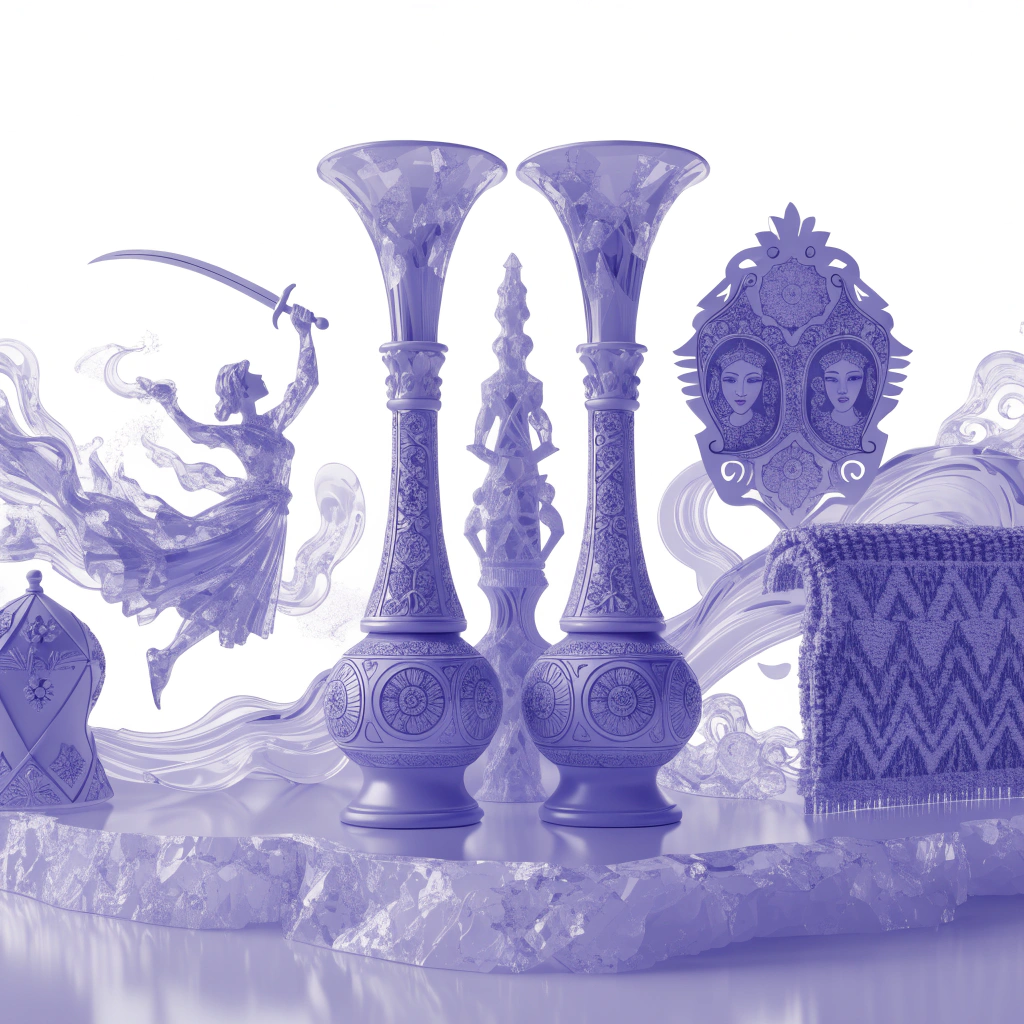
Al-Ardah: The Famous Saudi Dance
Al-Ardah is a famous dance in Saudi Arabia. It is very old. People call it the national dance of the country.
Men wear traditional clothes for the dance. They carry long swords and big drums. They sing beautiful songs together. The music is loud and happy.
People watch Al-Ardah at weddings and national holidays. Even the King dances Al-Ardah with the people. This dance shows the great history of Saudi Arabia. It is a very special celebration for everyone.
Gramática destacada
Patrón: Present Simple 'to be'
"Al-Ardah is a famous dance in Saudi Arabia."
We use 'is' with singular subjects like Al-Ardah. It describes a fact or a state.
Patrón: Present Simple Action Verbs
"Men wear traditional clothes for the dance."
We use the base verb 'wear' with plural subjects like 'Men'. It describes a general habit or truth.
Pon a prueba tu comprensión
10 preguntas · A1 Principiante · 1 vista previa gratis
Pon a prueba lo que aprendiste en este artículo. ¡Responde todas las preguntas para ganar XP!
Where is Al-Ardah a famous dance?
¿Quieres terminar el quiz?
9 preguntas más te esperan. ¡Regístrate gratis para desbloquear el quiz completo y ganar XP!
Regístrate gratis¿Ya tienes cuenta? Acceder
Desglose de preguntas
Where is Al-Ardah a famous dance?
Tu respuesta:
Respuesta correcta: Saudi Arabia
Men carry drums during the dance.
Tu respuesta:
Respuesta correcta: Verdadero
What is a 'drum'?
Tu respuesta:
Respuesta correcta: A musical instrument you hit
The music is _____ and happy.
Tu respuesta:
Respuesta correcta: loud
Al-Ardah: The Traditional Saudi Dance
Al-Ardah Al-Najdiyah is a very famous dance from the Najd region in Saudi Arabia. Many people call it the 'sword dance.' In the past, soldiers performed it before a battle. It made them feel brave and strong because it showed their power.
Today, Al-Ardah is different but still very important. Men wear traditional clothes and carry swords. They stand in two long lines and move to the sound of big drums. One person sings beautiful poetry, and the other men repeat the words.
This dance is more popular than other dances in Saudi Arabia. It is a symbol of national pride. People perform it at weddings and national holidays. Even the King and princes join the dance because it shows Saudi history. In 2015, UNESCO said it is a special part of world culture. It is a beautiful display of heritage that everyone loves.
Gramática destacada
Patrón: Past Simple
"In the past, soldiers performed it before a battle."
We use the past simple to talk about finished actions. For regular verbs, we usually add '-ed' to the base verb like 'perform' becomes 'performed'.
Patrón: Comparatives
"This dance is more popular than other dances in Saudi Arabia."
We use comparatives to compare two things. For long adjectives like 'popular', we put 'more' before the adjective and 'than' after it.
Pon a prueba tu comprensión
11 preguntas · A2 Básico · 1 vista previa gratis
Pon a prueba lo que aprendiste en este artículo. ¡Responde todas las preguntas para ganar XP!
Where does Al-Ardah come from originally?
¿Quieres terminar el quiz?
10 preguntas más te esperan. ¡Regístrate gratis para desbloquear el quiz completo y ganar XP!
Regístrate gratis¿Ya tienes cuenta? Acceder
Desglose de preguntas
Where does Al-Ardah come from originally?
Tu respuesta:
Respuesta correcta: The Najd region
Soldiers used to perform this dance to feel brave.
Tu respuesta:
Respuesta correcta: Verdadero
What is a 'sword'?
Tu respuesta:
Respuesta correcta: A long metal weapon
Men wear traditional _____ and carry swords.
Tu respuesta:
Respuesta correcta: clothes
When did UNESCO recognize Al-Ardah as world culture?
Tu respuesta:
Respuesta correcta: 2015
The Dance of Saudi Pride: Exploring Al-Ardah Al-Najdiyah
Al-Ardah Al-Najdiyah is a traditional dance that represents the heart of Saudi Arabian culture. Although it started in the central Najd region, it has become a symbol of unity for the entire country. In the past, this performance was used by warriors who wanted to show their strength before a battle and celebrate their victories.
Today, the dance is performed at many special events, such as weddings, royal receptions, and national holidays. It has been recognized by UNESCO as an important part of human heritage since 2015. When people watch Ardah, they see men standing in two rows, holding swords and moving to the rhythm of drums. The performers wear traditional clothing, including the 'ghutra' and 'bisht', which adds to the beauty of the scene.
The performance combines poetry, music, and movement. A leader starts by reciting a verse of poetry, which is then repeated by the group. This creates a powerful atmosphere that connects the past with the present. Two types of drums are used: the large 'takhmir' and the smaller 'tathlith'. These instruments provide a deep, rhythmic sound that can be heard from far away.
The swords are not used for fighting anymore; instead, they are raised to show respect and celebrate national identity. Because it is so significant, even members of the Saudi royal family often participate in the dance during official ceremonies. Visitors who have traveled to Saudi Arabia often describe Ardah as an unforgettable experience. It is not just a dance; it is a display of pride and history that has lasted for centuries.
Gramática destacada
Patrón: Present Perfect Passive
"It has been recognized by UNESCO as an important part of human heritage since 2015."
This pattern is used to talk about an action that happened at an unspecified time in the past and focuses on the result. It is formed using 'has/have + been + past participle'.
Patrón: Relative Clauses
"Al-Ardah Al-Najdiyah is a traditional dance that represents the heart of Saudi Arabian culture."
Relative clauses give more information about a noun. In this sentence, 'that represents...' describes the 'traditional dance'.
Pon a prueba tu comprensión
11 preguntas · B1 Intermedio · 1 vista previa gratis
Pon a prueba lo que aprendiste en este artículo. ¡Responde todas las preguntas para ganar XP!
Where did the Ardah dance originally come from?
¿Quieres terminar el quiz?
10 preguntas más te esperan. ¡Regístrate gratis para desbloquear el quiz completo y ganar XP!
Regístrate gratis¿Ya tienes cuenta? Acceder
Desglose de preguntas
Where did the Ardah dance originally come from?
Tu respuesta:
Respuesta correcta: The Najd region
Ardah is only performed by professional dancers at weddings.
Tu respuesta:
Respuesta correcta: Falso
What does the word 'heritage' mean?
Tu respuesta:
Respuesta correcta: Traditions and history of a nation
The performance _____ poetry, music, and movement.
Tu respuesta:
Respuesta correcta: combines
What do the men hold while performing the Ardah?
Tu respuesta:
Respuesta correcta: Swords
Al-Ardah Al-Najdiyah: El Alma de la Identidad Saudí
En el corazón del Reino de Arabia Saudita, arraigada en la historia y la cultura de la región de Najd, reside una expresión artística que trasciende el mero entretenimiento para convertirse en un pilar fundamental de la identidad nacional: la Al-Ardah Al-Najdiyah. Esta danza tradicional, una sinfonía de poesía, percusión y esgrima, encapsula el espíritu de un pueblo y su legado ancestral.
Originalmente, la Al-Ardah era una práctica marcial, concebida para infundir valor y elevar la moral de los guerreros antes de la batalla. Se creía que el ritmo atronador de los tambores, la cadencia de los versos recitados y el brillo de las espadas en movimiento forjaban un sentido de unidad y propósito entre los combatientes. Asimismo, servía como una majestuosa conmemoración de las victorias logradas, una forma de honrar el coraje y la destreza de aquellos que defendían su tierra. La coreografía, aunque aparentemente sencilla, esconde una disciplina rigurosa y un profundo simbolismo, donde cada paso y cada golpe de espada evocan la preparación y la fuerza del guerrero.
Con el transcurso del tiempo, su función ha evolucionado, si bien su esencia ha permanecido intacta. Hoy en día, la Al-Ardah Al-Najdiyah es el epicentro de las celebraciones más significativas en Arabia Saudita. Desde las fastuosas recepciones reales y las solemnes festividades nacionales hasta los íntimos y alegres matrimonios y reuniones familiares, esta danza es un componente indispensable que añade esplendor y solemnidad a cualquier evento. Su presencia en estas ocasiones subraya su papel como un vínculo intrínseco con el pasado y un símbolo viviente de orgullo y unidad para las generaciones presentes y futuras.
El reconocimiento internacional de esta invaluable tradición llegó en 2015, cuando la UNESCO la inscribió en su Lista Representativa del Patrimonio Cultural Inmaterial de la Humanidad. Esta distinción no solo valida su importancia a nivel global, sino que también garantiza su preservación y promoción, asegurando que la Al-Ardah Al-Najdiyah continúe siendo el latido cultural de Arabia Saudita. A través de ella, el reino comparte con el mundo una parte vibrante de su alma, un testimonio de resiliencia, honor y una rica herencia que perdura con el mismo vigor que antaño.
Gramática destacada
Patrón: Pasiva refleja con 'se'
"Se creía que el ritmo atronador de los tambores... forjaban un sentido de unidad."
Se usa la pasiva refleja con 'se' para hablar de acciones sin especificar quién las realiza, o cuando el agente no es importante. Se forma con 'se' + el verbo en tercera persona del singular o plural, dependiendo del sujeto (lo que se cree o hace).
Patrón: Uso del pretérito imperfecto de subjuntivo
"Se creía que el ritmo atronador de los tambores... forjaran un sentido de unidad."
El pretérito imperfecto de subjuntivo se utiliza para expresar acciones pasadas que son inciertas, deseos, dudas, o para referirse a situaciones hipotéticas en el pasado. A menudo sigue a verbos de emoción, duda o influencia en el pasado, o en cláusulas condicionales.
Patrón: Cláusulas de relativo con preposición
"La región de la que proviene..."
Se usan cláusulas de relativo con preposición para dar más información sobre un sustantivo. La preposición (como 'de', 'en', 'con', 'para') se coloca antes del pronombre relativo ('que', 'quien', 'cuyo') y concuerda con el verbo de la cláusula principal.
Pon a prueba tu comprensión
11 preguntas · B2 Intermedio alto · 1 vista previa gratis
Pon a prueba lo que aprendiste en este artículo. ¡Responde todas las preguntas para ganar XP!
¿Cuál era el propósito original de la Al-Ardah Al-Najdiyah?
¿Quieres terminar el quiz?
10 preguntas más te esperan. ¡Regístrate gratis para desbloquear el quiz completo y ganar XP!
Regístrate gratis¿Ya tienes cuenta? Acceder
Desglose de preguntas
¿Cuál era el propósito original de la Al-Ardah Al-Najdiyah?
Tu respuesta:
Respuesta correcta: Elevar la moral de los guerreros antes de la batalla.
La Al-Ardah Al-Najdiyah ha perdido completamente su significado marcial en la actualidad.
Tu respuesta:
Respuesta correcta: Falso
¿Qué significa la palabra 'destreza' en el contexto del artículo?
Tu respuesta:
Respuesta correcta: Habilidad o maña para hacer algo.
La UNESCO inscribió la Al-Ardah Al-Najdiyah en su Lista Representativa del Patrimonio Cultural Inmaterial de la Humanidad en el año ____.
Tu respuesta:
Respuesta correcta: 2015
¿Qué elementos principales combina la Al-Ardah Al-Najdiyah?
Tu respuesta:
Respuesta correcta: Poesía, percusión y esgrima.
The Rhythmic Pulse of Sovereignty: Decoding Al-Ardah Al-Najdiyah
Rarely does a cultural artifact encapsulate the collective psyche of a nation as profoundly as Al-Ardah Al-Najdiyah. Originating in the arid heartlands of the Najd region, this performance transcends mere choreography, serving as a living testament to the martial prowess and communal solidarity of the Saudi people. What was once a strategic prelude to battle, designed to galvanize warriors and intimidate adversaries, has metamorphosed into a sophisticated emblem of national pride. The preservation of heritage through such a dynamic medium illustrates the intricate relationship between historical memory and modern identity.
Central to the efficacy of Al-Ardah is the meticulous interplay between auditory and visual stimuli. The performance is underpinned by the visceral resonance of the drums—the 'takhmir' and the 'dammam'—which provide a rhythmic scaffolding for the proceedings. It is the rhythmic cadence of the drums that dictates the deliberate, swaying movements of the participants. Over this percussive foundation, the chanting of 'Nabati' poetry commences. This vernacular verse is not merely decorative; rather, it serves as a vehicle for historical narration, extolling the virtues of courage, lineage, and sovereignty. It is through these verses that the collective memory of the community is both preserved and propagated.
Visually, the spectacle is dominated by the synchronized movements of men clad in traditional attire, brandishing swords that catch the desert sun. However, to view this purely as a display of militarism would be a reductive interpretation. Instead, the rhythmic swaying and the brandishing of steel represent a nuanced negotiation between strength and restraint. The sword, while a symbol of power, is handled with a grace that suggests the sublimation of violence into art. Seldom has a performance so effectively melded the martial with the poetic, creating a space where physical strength is tempered by artistic expression.
The inscription of Al-Ardah Al-Najdiyah onto the UNESCO Representative List of the Intangible Cultural Heritage of Humanity in 2015 marked a pivotal moment in its global recognition. This institutional validation highlights the dance's role in fostering social cohesion. In the contemporary Saudi landscape, Al-Ardah is a ubiquitous presence at state receptions and weddings alike, bridging the chasm between the elite and the commonality. Not only does it reinforce a sense of belonging among participants, but it also projects a formidable image of cultural continuity to the outside world.
Furthermore, the evolution of Al-Ardah invites a critical examination of how tradition adapts to the exigencies of modernity. While the core elements remain sacrosanct, the context of performance has shifted from the battlefield to the festival stage. This transition necessitates a delicate balancing act: ensuring the authenticity of the practice while accommodating the performative demands of a globalized audience. Ultimately, Al-Ardah Al-Najdiyah remains a potent synthesis of history and contemporary identity, a rhythmic heartbeat that continues to resonate across the Arabian Peninsula.
Gramática destacada
Patrón: Negative Inversion
"Rarely does a cultural artifact encapsulate the collective psyche of a nation as profoundly as Al-Ardah Al-Najdiyah."
Inversion is used after negative or restrictive adverbs like 'rarely' or 'seldom' to add emphasis. The auxiliary verb comes before the subject.
Patrón: Cleft Sentence
"It is through these verses that the collective memory of the community is both preserved and propagated."
Cleft sentences (It + is/was + focus + relative clause) are used to focus on specific information, in this case, the 'verses' as the means of preservation.
Patrón: Nominalisation
"The preservation of heritage through such a dynamic medium illustrates the intricate relationship between historical memory and modern identity."
Nominalisation involves turning verbs or adjectives into nouns (e.g., 'preserve' to 'preservation'). It makes academic writing sound more objective and concise.
Pon a prueba tu comprensión
12 preguntas · C1 Avanzado · 1 vista previa gratis
Pon a prueba lo que aprendiste en este artículo. ¡Responde todas las preguntas para ganar XP!
What was the primary historical function of Al-Ardah Al-Najdiyah?
¿Quieres terminar el quiz?
11 preguntas más te esperan. ¡Regístrate gratis para desbloquear el quiz completo y ganar XP!
Regístrate gratis¿Ya tienes cuenta? Acceder
Desglose de preguntas
What was the primary historical function of Al-Ardah Al-Najdiyah?
Tu respuesta:
Respuesta correcta: A martial display to boost morale and intimidate enemies
According to the article, Nabati poetry in Al-Ardah is primarily decorative and lacks narrative depth.
Tu respuesta:
Respuesta correcta: Falso
What does the word 'ubiquitous' mean in the context of the article?
Tu respuesta:
Respuesta correcta: Found everywhere in the modern landscape
The transition of Al-Ardah to the festival stage requires a delicate balancing act to ensure _____.
Tu respuesta:
Respuesta correcta: authenticity
What does the author suggest about the brandishing of swords in the dance?
Tu respuesta:
Respuesta correcta: It represents a negotiation between power and artistic restraint
The 2015 UNESCO inscription is described as a pivotal moment for the dance's global recognition.
Tu respuesta:
Respuesta correcta: Verdadero
The Choreography of Sovereignty: Al-Ardah Al-Najdiyah as a Semiotic Construct of Saudi Identity
Al-Ardah Al-Najdiyah stands as an ontological pillar of Saudi Arabian cultural heritage, representing a sophisticated synthesis of martial prowess, poetic resonance, and communal synchronicity. To the uninitiated observer, the performance might appear as a mere rhythmic display of swordsmanship; however, were one to delve into its historical provenance, a far more complex narrative of social cohesion and political legitimacy would emerge. Originating within the arid expanses of the central Najd region, the Ardah was historically a bellicose prelude—a martial mechanism designed to galvanize warriors and intimidate adversaries through a collective exhibition of strength. Today, while its vestigial military functions have subsided, the Ardah has undergone a profound metamorphosis, evolving into the quintessence of national pride and a ceremonial staple of statecraft.
The performance is underpinned by the Nabati poetic tradition, where the metrical cadence of the verse dictates the somatic response of the participants. This relationship between the spoken word and the physical gesture is not merely aesthetic but serves as a conduit for historical memory. The poetry often evokes themes of loyalty, valor, and the historical unification of the Kingdom under King Abdulaziz. It is widely posited that the Ardah serves as a living archive, where the oral traditions of the peninsula are etched into the movements of the performers. The rhythmic structure, provided by the 'takhmir' and 'tathlith' drums, creates an evocative atmosphere that transcends the ephemeral nature of modern entertainment, rooting the audience in a sense of deep time.
In contemporary Saudi society, the Ardah functions as a powerful instrument of cultural diplomacy. Its inscription upon the UNESCO Representative List of the Intangible Cultural Heritage of Humanity in 2015 solidified its status as a global symbol of Saudi identity. When the King and members of the Royal Family participate in the dance, it reifies the bond between the leadership and the citizenry, suggesting a continuity of tradition that bridges the pre-modern and the post-modern eras. Seldom does a cultural practice manage to retain such gravity while adapting to the exigencies of a rapidly globalizing world. The Ardah remains a testament to the enduring power of ritual in the construction of national consciousness.
From a sociological perspective, the Ardah provides a unique vantage point into the mechanics of group identity. The synchronization required—the rhythmic swaying, the uniform raising of swords, and the call-and-response vocalizations—demands a total subordination of the individual to the collective. This performative unity is emblematic of the broader societal values of loyalty and mutual support. Furthermore, the Ardah is not a static relic; it is a dynamic process. While the core elements remain sacrosanct, the specific verses chosen for a performance can be tailored to reflect contemporary triumphs or challenges, thereby ensuring its ongoing relevance. Were it not for this inherent flexibility, the Ardah might have withered into a historical curiosity rather than remaining the vibrant, pulsating heart of Saudi ceremonial life. It remains a profound semiotic construct, where every beat of the drum and every flash of the blade communicates a narrative of resilience and sovereignty.
Gramática destacada
Patrón: Inversion with negative/restrictive adverbs
"Seldom does a cultural practice manage to retain such gravity while adapting to the exigencies of a rapidly globalizing world."
When a sentence begins with a restrictive adverb like 'seldom', 'rarely', or 'never', the subject and auxiliary verb are inverted to add rhetorical emphasis and formality.
Patrón: Inverted Conditionals (Subjunctive)
"Were one to delve into its historical provenance, a far more complex narrative of social cohesion and political legitimacy would emerge."
This structure replaces 'If one were to...' with 'Were one to...'. It is a formal way of expressing a hypothetical situation in the present or future, characteristic of scholarly English.
Patrón: Passive Reporting Verbs with 'It'
"It is widely posited that the Ardah serves as a living archive, where the oral traditions of the peninsula are etched into the movements of the performers."
Using 'It is + past participle + that' allows the writer to present an opinion or theory without attributing it to a specific person, maintaining an objective, academic tone.
Pon a prueba tu comprensión
12 preguntas · C2 Dominio · 1 vista previa gratis
Pon a prueba lo que aprendiste en este artículo. ¡Responde todas las preguntas para ganar XP!
What does the author suggest about the relationship between Ardah and modern entertainment?
¿Quieres terminar el quiz?
11 preguntas más te esperan. ¡Regístrate gratis para desbloquear el quiz completo y ganar XP!
Regístrate gratis¿Ya tienes cuenta? Acceder
Desglose de preguntas
What does the author suggest about the relationship between Ardah and modern entertainment?
Tu respuesta:
Respuesta correcta: Ardah is fundamentally different because it creates a sense of deep time and historical continuity.
The historical function of the Ardah was primarily decorative and performed for foreign dignitaries.
Tu respuesta:
Respuesta correcta: Falso
Which word is synonymous with 'the most perfect example' in the context of the article?
Tu respuesta:
Respuesta correcta: Quintessence
The author argues that the Ardah is an _____ pillar of Saudi heritage, relating to the very nature of their existence.
Tu respuesta:
Respuesta correcta: ontological
How does the author characterize the participation of the Royal Family in the Ardah?
Tu respuesta:
Respuesta correcta: As a means of reifying the connection between the leadership and the people.
The article posits that the Ardah is a dynamic process because the poetry can be adjusted to reflect modern events.
Tu respuesta:
Respuesta correcta: Verdadero
Al-Ardah: Una Danza Famosa
Al-Ardah es una danza. Es de Arabia Saudita. Es muy famosa.
Muchas personas bailan. Hay música y personas. La danza es importante.
Es para celebrar. Es una tradición de Arabia Saudita. Niños y adultos miran. ¡Es bonita!
Gramática destacada
Patrón: El verbo "Ser" (presente simple)
"Al-Ardah es una danza."
El verbo "ser" significa "to be" en español. Lo usamos para decir qué es algo o quién es alguien. Por ejemplo: "Yo soy Juan" o "Esto es una mesa".
Pon a prueba tu comprensión
9 preguntas · A0 Pre-principiante · 1 vista previa gratis
Pon a prueba lo que aprendiste en este artículo. ¡Responde todas las preguntas para ganar XP!
¿De dónde es Al-Ardah?
¿Quieres terminar el quiz?
8 preguntas más te esperan. ¡Regístrate gratis para desbloquear el quiz completo y ganar XP!
Regístrate gratis¿Ya tienes cuenta? Acceder
Desglose de preguntas
¿De dónde es Al-Ardah?
Tu respuesta:
Respuesta correcta: Arabia Saudita
Al-Ardah es una canción.
Tu respuesta:
Respuesta correcta: Falso
¿Qué significa "danza"?
Tu respuesta:
Respuesta correcta: bailar

