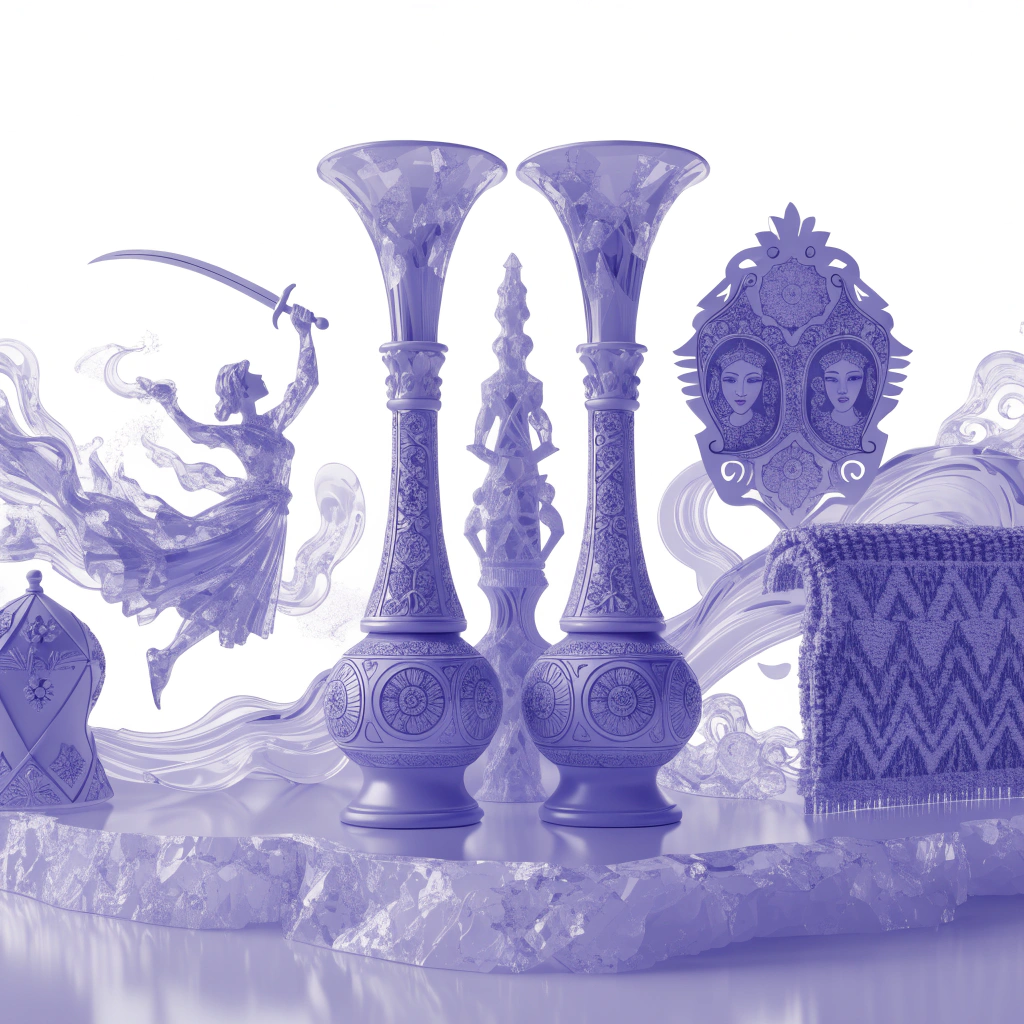
A Arda Saudita: Uma Dança Importante
A Arda Saudita é uma dança importante. Ela vem da Arábia Saudita. É uma dança antiga e bonita. Pessoas dançam com espadas. Elas também cantam e tocam tambores.
Esta dança mostra a cultura do país. É um símbolo. Pessoas veem a Arda em festas grandes. Também em casamentos e celebrações. A UNESCO reconhece esta dança. É parte da história da Arábia Saudita. É muito especial para o povo.
Gramática em destaque
Padrão: O verbo "ser" (presente)
"A Arda Saudita **é** uma dança importante."
Usamos o verbo "ser" para falar sobre identidade ou características permanentes de algo ou alguém. No presente, a forma para "ele/ela/você" é "é".
Padrão: Plural de substantivos (terminados em -a)
"Pessoas dançam com **espadas**."
Para fazer o plural de muitos substantivos em português que terminam em -a, adicionamos a letra -s no final. Por exemplo, "espada" (singular) vira "espadas" (plural).
Teste sua compreensão
10 perguntas · A1 Iniciante · 1 pré-visualização grátis
Teste o que aprendeu neste artigo. Responda todas as perguntas para ganhar XP!
O que é a Arda Saudita?
Quer finalizar o quiz?
9 perguntas a mais estão esperando por você. Cadastre-se grátis para desbloquear o quiz completo e ganhar XP!
Cadastrar grátisJá tem conta? Entrar
Detalhamento das perguntas
O que é a Arda Saudita?
Sua resposta:
Resposta correta: Uma dança
A Arda Saudita vem da Arábia Saudita.
Sua resposta:
Resposta correta: Verdadeiro
O que significa "povo"?
Sua resposta:
Resposta correta: As pessoas de um lugar
Pessoas dançam com _____.
Sua resposta:
Resposta correta: espadas
Al-Ardah Al-Najdiyah: A Dança da Arábia Saudita
Al-Ardah Al-Najdiyah é uma dança muito importante na Arábia Saudita. É a dança nacional do país. Ela vem de uma região chamada Najd, no centro da Arábia Saudita.
Antigamente, esta dança era para os guerreiros. Eles dançavam antes das batalhas para ficarem mais corajosos. Também dançavam depois de vencerem, para comemorar. A dança tem poesia, tambores fortes e espadas. Os homens seguram espadas e se movem juntos.
Hoje, Al-Ardah Al-Najdiyah não é só para a guerra. É uma parte grande da cultura saudita. As pessoas assistem a esta dança em festas grandes do país, como feriados nacionais. Também é popular em casamentos e outras celebrações de família. Em 2015, a UNESCO reconheceu esta dança como importante para o mundo. É uma dança bonita e cheia de história.
Gramática em destaque
Padrão: Verbos no Passado Simples (Pretérito Perfeito)
"Em 2015, a UNESCO reconheceu esta dança como importante para o mundo."
Usamos o passado simples (Pretérito Perfeito) para falar sobre ações que começaram e terminaram no passado. Por exemplo, 'reconheceu' mostra uma ação que aconteceu em um momento específico no passado (2015).
Padrão: Uso de 'para' + Infinitivo
"Eles dançavam antes das batalhas para ficarem mais corajosos."
A palavra 'para' antes de um verbo no infinitivo (como 'ficar') indica o objetivo ou a finalidade de uma ação. Significa 'com o propósito de' ou 'a fim de'.
Teste sua compreensão
11 perguntas · A2 Elementar · 1 pré-visualização grátis
Teste o que aprendeu neste artigo. Responda todas as perguntas para ganhar XP!
O que é Al-Ardah Al-Najdiyah?
Quer finalizar o quiz?
10 perguntas a mais estão esperando por você. Cadastre-se grátis para desbloquear o quiz completo e ganhar XP!
Cadastrar grátisJá tem conta? Entrar
Detalhamento das perguntas
O que é Al-Ardah Al-Najdiyah?
Sua resposta:
Resposta correta: Uma dança nacional
Esta dança era usada apenas para festas de família antigamente.
Sua resposta:
Resposta correta: Falso
O que significa 'guerreiros'?
Sua resposta:
Resposta correta: Pessoas que lutam
A dança tem poesia, tambores fortes e _____.
Sua resposta:
Resposta correta: espadas
Quem reconheceu a dança Al-Ardah Al-Najdiyah em 2015?
Sua resposta:
Resposta correta: A UNESCO
Al-Ardah Al-Najdiyah: A Dança da Herança Saudita
A Al-Ardah Al-Najdiyah é considerada a dança nacional da Arábia Saudita e representa uma parte muito importante da cultura do país. É uma exibição poderosa de herança que combina poesia, percussão e esgrima. Esta dança tradicional tem sido uma característica essencial das celebrações e eventos sociais por séculos, mostrando a força e a identidade do povo saudita.
Historicamente, a Al-Ardah Al-Najdiyah surgiu na região central de Najd. Ela era originalmente uma performance marcial, executada para dar coragem aos guerreiros antes das batalhas e para celebrar as vitórias depois. Os homens, alinhados em fileiras, recitam versos enquanto movem suas espadas ritmicamente, acompanhados por tambores. Esta prática tem ajudado a manter viva a memória das antigas tradições guerreiras.
Hoje, a dança evoluiu e se tornou um símbolo central da identidade saudita. Ela é apresentada em grandes feriados nacionais, recepções reais e celebrações familiares, como casamentos. Muitos turistas que visitam o país têm a oportunidade de assistir a essa performance impressionante, que demonstra a riqueza cultural da Arábia Saudita. Em 2015, a Al-Ardah Al-Najdiyah foi inscrita pela UNESCO como Patrimônio Cultural Imaterial da Humanidade, um reconhecimento importante da sua relevância global.
A música e os movimentos da Al-Ardah contam histórias de orgulho e união. É uma manifestação cultural que continua a fascinar e a unir gerações, passando de pais para filhos. A sua presença é um lembrete constante da rica história e dos valores do Reino da Arábia Saudita, sendo um elo vital com o passado e uma celebração do presente.
Gramática em destaque
Padrão: Voz Passiva (Ser + Particípio Passado)
"A Al-Ardah Al-Najdiyah é considerada a dança nacional da Arábia Saudita."
Usamos a voz passiva para focar na ação e no que a recebe, e não em quem a faz. Ela é formada com o verbo 'ser' no tempo adequado e o particípio passado do verbo principal.
Padrão: Orações Subordinadas Adjetivas Relativas (com 'que')
"É uma exibição poderosa de herança que combina poesia, percussão e esgrima."
As orações relativas são usadas para adicionar informações sobre um substantivo já mencionado. O pronome 'que' é muito comum e se refere ao substantivo anterior, conectando as duas partes da frase.
Teste sua compreensão
11 perguntas · B1 Intermediário · 1 pré-visualização grátis
Teste o que aprendeu neste artigo. Responda todas as perguntas para ganhar XP!
Qual é a principal função histórica da Al-Ardah Al-Najdiyah?
Quer finalizar o quiz?
10 perguntas a mais estão esperando por você. Cadastre-se grátis para desbloquear o quiz completo e ganhar XP!
Cadastrar grátisJá tem conta? Entrar
Detalhamento das perguntas
Qual é a principal função histórica da Al-Ardah Al-Najdiyah?
Sua resposta:
Resposta correta: Dar coragem aos guerreiros e celebrar vitórias.
A Al-Ardah Al-Najdiyah é uma dança que combina apenas poesia e percussão.
Sua resposta:
Resposta correta: Falso
O que significa a palavra 'herança'?
Sua resposta:
Resposta correta: Tradições e valores transmitidos entre gerações.
Em 2015, a Al-Ardah Al-Najdiyah foi _____ pela UNESCO como Patrimônio Cultural Imaterial da Humanidade.
Sua resposta:
Resposta correta: inscrita
Em quais tipos de eventos a Al-Ardah Al-Najdiyah é apresentada hoje?
Sua resposta:
Resposta correta: Feriados nacionais, recepções reais e celebrações familiares.
Al-Ardah Al-Najdiyah: The Rhythmic Pulse of Saudi Heritage
Al-Ardah Al-Najdiyah is widely regarded as the quintessential national dance of Saudi Arabia. This powerful display of cultural heritage, which combines poetry, drumming, and synchronized swordplay, originated in the central Najd region. Historically, it was performed as a martial ritual intended to boost the morale of warriors before they headed into battle. Furthermore, it served as a triumphant celebration of victory upon their return. In the modern era, although its military necessity has faded, Al-Ardah has evolved into a centerpiece of Saudi identity.
The performance itself is a masterclass in coordination. It begins with a single line of poetry, chanted by a lead poet, which is then repeated by two rows of men facing each other. These participants, dressed in traditional robes and carrying swords, sway to the rhythmic beat of large drums known as 'takhmir' and smaller drums called 'tathlith.' The synchronization of the dancers’ movements reflects the unity and strength of the community. It is not merely a dance; it is a profound expression of loyalty and pride.
In 2015, the global significance of Al-Ardah was formally recognized when it was inscribed on the UNESCO Representative List of the Intangible Cultural Heritage of Humanity. This prestigious status highlights its importance not just to Saudi Arabia, but to the world's collective cultural legacy. Today, the dance is frequently performed at major national holidays, royal receptions, and family celebrations such as weddings. Even members of the royal family, including the King, often participate in the dance, further solidifying its role as a unifying national symbol.
Analyzing the survival of Al-Ardah reveals much about Saudi society. While the Kingdom undergoes rapid modernization, such traditions provide a vital link to the past. The preservation of this martial art demonstrates a commitment to maintaining a unique cultural identity amidst global change. Consequently, Al-Ardah remains a vibrant, living tradition that continues to inspire younger generations. It is a testament to the enduring power of heritage and the way in which historical rituals can adapt to reflect contemporary values.
Gramática em destaque
Padrão: Passive Voice (Past Simple)
"Historically, it was performed as a martial ritual intended to boost the morale of warriors."
The passive voice is used here because the action (performing the dance) is more important than the specific people doing it. It is formed using 'was/were' + the past participle.
Padrão: Present Perfect Simple (Intransitive)
"Al-Ardah has evolved into a centerpiece of Saudi identity."
The present perfect is used to describe a change that started in the past and has relevance or completion in the present. It is formed with 'has/have' + past participle.
Padrão: Non-defining Relative Clauses
"This powerful display of cultural heritage, which combines poetry, drumming, and synchronized swordplay, originated in the central Najd region."
The clause starting with 'which' provides extra information about the subject. It is separated by commas and is common in formal B2 writing to add descriptive detail.
Teste sua compreensão
11 perguntas · B2 Intermediário superior · 1 pré-visualização grátis
Teste o que aprendeu neste artigo. Responda todas as perguntas para ganhar XP!
What was the primary historical purpose of Al-Ardah?
Quer finalizar o quiz?
10 perguntas a mais estão esperando por você. Cadastre-se grátis para desbloquear o quiz completo e ganhar XP!
Cadastrar grátisJá tem conta? Entrar
Detalhamento das perguntas
What was the primary historical purpose of Al-Ardah?
Sua resposta:
Resposta correta: To encourage warriors and celebrate military success
Al-Ardah was added to the UNESCO Intangible Cultural Heritage list in 2015.
Sua resposta:
Resposta correta: Verdadeiro
What does 'quintessential' mean in the context of the article?
Sua resposta:
Resposta correta: A perfect or typical example of something
The performance itself is a masterclass in _____, involving synchronized movements and drumming.
Sua resposta:
Resposta correta: coordination
Which region did Al-Ardah originally come from?
Sua resposta:
Resposta correta: The Central Najd region
The Rhythmic Pulse of Sovereignty: Decoding Al-Ardah Al-Najdiyah
Rarely does a cultural artifact encapsulate the collective psyche of a nation as profoundly as Al-Ardah Al-Najdiyah. Originating in the arid heartlands of the Najd region, this performance transcends mere choreography, serving as a living testament to the martial prowess and communal solidarity of the Saudi people. What was once a strategic prelude to battle, designed to galvanize warriors and intimidate adversaries, has metamorphosed into a sophisticated emblem of national pride. The preservation of heritage through such a dynamic medium illustrates the intricate relationship between historical memory and modern identity.
Central to the efficacy of Al-Ardah is the meticulous interplay between auditory and visual stimuli. The performance is underpinned by the visceral resonance of the drums—the 'takhmir' and the 'dammam'—which provide a rhythmic scaffolding for the proceedings. It is the rhythmic cadence of the drums that dictates the deliberate, swaying movements of the participants. Over this percussive foundation, the chanting of 'Nabati' poetry commences. This vernacular verse is not merely decorative; rather, it serves as a vehicle for historical narration, extolling the virtues of courage, lineage, and sovereignty. It is through these verses that the collective memory of the community is both preserved and propagated.
Visually, the spectacle is dominated by the synchronized movements of men clad in traditional attire, brandishing swords that catch the desert sun. However, to view this purely as a display of militarism would be a reductive interpretation. Instead, the rhythmic swaying and the brandishing of steel represent a nuanced negotiation between strength and restraint. The sword, while a symbol of power, is handled with a grace that suggests the sublimation of violence into art. Seldom has a performance so effectively melded the martial with the poetic, creating a space where physical strength is tempered by artistic expression.
The inscription of Al-Ardah Al-Najdiyah onto the UNESCO Representative List of the Intangible Cultural Heritage of Humanity in 2015 marked a pivotal moment in its global recognition. This institutional validation highlights the dance's role in fostering social cohesion. In the contemporary Saudi landscape, Al-Ardah is a ubiquitous presence at state receptions and weddings alike, bridging the chasm between the elite and the commonality. Not only does it reinforce a sense of belonging among participants, but it also projects a formidable image of cultural continuity to the outside world.
Furthermore, the evolution of Al-Ardah invites a critical examination of how tradition adapts to the exigencies of modernity. While the core elements remain sacrosanct, the context of performance has shifted from the battlefield to the festival stage. This transition necessitates a delicate balancing act: ensuring the authenticity of the practice while accommodating the performative demands of a globalized audience. Ultimately, Al-Ardah Al-Najdiyah remains a potent synthesis of history and contemporary identity, a rhythmic heartbeat that continues to resonate across the Arabian Peninsula.
Gramática em destaque
Padrão: Negative Inversion
"Rarely does a cultural artifact encapsulate the collective psyche of a nation as profoundly as Al-Ardah Al-Najdiyah."
Inversion is used after negative or restrictive adverbs like 'rarely' or 'seldom' to add emphasis. The auxiliary verb comes before the subject.
Padrão: Cleft Sentence
"It is through these verses that the collective memory of the community is both preserved and propagated."
Cleft sentences (It + is/was + focus + relative clause) are used to focus on specific information, in this case, the 'verses' as the means of preservation.
Padrão: Nominalisation
"The preservation of heritage through such a dynamic medium illustrates the intricate relationship between historical memory and modern identity."
Nominalisation involves turning verbs or adjectives into nouns (e.g., 'preserve' to 'preservation'). It makes academic writing sound more objective and concise.
Teste sua compreensão
12 perguntas · C1 Avançado · 1 pré-visualização grátis
Teste o que aprendeu neste artigo. Responda todas as perguntas para ganhar XP!
What was the primary historical function of Al-Ardah Al-Najdiyah?
Quer finalizar o quiz?
11 perguntas a mais estão esperando por você. Cadastre-se grátis para desbloquear o quiz completo e ganhar XP!
Cadastrar grátisJá tem conta? Entrar
Detalhamento das perguntas
What was the primary historical function of Al-Ardah Al-Najdiyah?
Sua resposta:
Resposta correta: A martial display to boost morale and intimidate enemies
According to the article, Nabati poetry in Al-Ardah is primarily decorative and lacks narrative depth.
Sua resposta:
Resposta correta: Falso
What does the word 'ubiquitous' mean in the context of the article?
Sua resposta:
Resposta correta: Found everywhere in the modern landscape
The transition of Al-Ardah to the festival stage requires a delicate balancing act to ensure _____.
Sua resposta:
Resposta correta: authenticity
What does the author suggest about the brandishing of swords in the dance?
Sua resposta:
Resposta correta: It represents a negotiation between power and artistic restraint
The 2015 UNESCO inscription is described as a pivotal moment for the dance's global recognition.
Sua resposta:
Resposta correta: Verdadeiro
The Choreography of Sovereignty: Al-Ardah Al-Najdiyah as a Semiotic Construct of Saudi Identity
Al-Ardah Al-Najdiyah stands as an ontological pillar of Saudi Arabian cultural heritage, representing a sophisticated synthesis of martial prowess, poetic resonance, and communal synchronicity. To the uninitiated observer, the performance might appear as a mere rhythmic display of swordsmanship; however, were one to delve into its historical provenance, a far more complex narrative of social cohesion and political legitimacy would emerge. Originating within the arid expanses of the central Najd region, the Ardah was historically a bellicose prelude—a martial mechanism designed to galvanize warriors and intimidate adversaries through a collective exhibition of strength. Today, while its vestigial military functions have subsided, the Ardah has undergone a profound metamorphosis, evolving into the quintessence of national pride and a ceremonial staple of statecraft.
The performance is underpinned by the Nabati poetic tradition, where the metrical cadence of the verse dictates the somatic response of the participants. This relationship between the spoken word and the physical gesture is not merely aesthetic but serves as a conduit for historical memory. The poetry often evokes themes of loyalty, valor, and the historical unification of the Kingdom under King Abdulaziz. It is widely posited that the Ardah serves as a living archive, where the oral traditions of the peninsula are etched into the movements of the performers. The rhythmic structure, provided by the 'takhmir' and 'tathlith' drums, creates an evocative atmosphere that transcends the ephemeral nature of modern entertainment, rooting the audience in a sense of deep time.
In contemporary Saudi society, the Ardah functions as a powerful instrument of cultural diplomacy. Its inscription upon the UNESCO Representative List of the Intangible Cultural Heritage of Humanity in 2015 solidified its status as a global symbol of Saudi identity. When the King and members of the Royal Family participate in the dance, it reifies the bond between the leadership and the citizenry, suggesting a continuity of tradition that bridges the pre-modern and the post-modern eras. Seldom does a cultural practice manage to retain such gravity while adapting to the exigencies of a rapidly globalizing world. The Ardah remains a testament to the enduring power of ritual in the construction of national consciousness.
From a sociological perspective, the Ardah provides a unique vantage point into the mechanics of group identity. The synchronization required—the rhythmic swaying, the uniform raising of swords, and the call-and-response vocalizations—demands a total subordination of the individual to the collective. This performative unity is emblematic of the broader societal values of loyalty and mutual support. Furthermore, the Ardah is not a static relic; it is a dynamic process. While the core elements remain sacrosanct, the specific verses chosen for a performance can be tailored to reflect contemporary triumphs or challenges, thereby ensuring its ongoing relevance. Were it not for this inherent flexibility, the Ardah might have withered into a historical curiosity rather than remaining the vibrant, pulsating heart of Saudi ceremonial life. It remains a profound semiotic construct, where every beat of the drum and every flash of the blade communicates a narrative of resilience and sovereignty.
Gramática em destaque
Padrão: Inversion with negative/restrictive adverbs
"Seldom does a cultural practice manage to retain such gravity while adapting to the exigencies of a rapidly globalizing world."
When a sentence begins with a restrictive adverb like 'seldom', 'rarely', or 'never', the subject and auxiliary verb are inverted to add rhetorical emphasis and formality.
Padrão: Inverted Conditionals (Subjunctive)
"Were one to delve into its historical provenance, a far more complex narrative of social cohesion and political legitimacy would emerge."
This structure replaces 'If one were to...' with 'Were one to...'. It is a formal way of expressing a hypothetical situation in the present or future, characteristic of scholarly English.
Padrão: Passive Reporting Verbs with 'It'
"It is widely posited that the Ardah serves as a living archive, where the oral traditions of the peninsula are etched into the movements of the performers."
Using 'It is + past participle + that' allows the writer to present an opinion or theory without attributing it to a specific person, maintaining an objective, academic tone.
Teste sua compreensão
12 perguntas · C2 Domínio · 1 pré-visualização grátis
Teste o que aprendeu neste artigo. Responda todas as perguntas para ganhar XP!
What does the author suggest about the relationship between Ardah and modern entertainment?
Quer finalizar o quiz?
11 perguntas a mais estão esperando por você. Cadastre-se grátis para desbloquear o quiz completo e ganhar XP!
Cadastrar grátisJá tem conta? Entrar
Detalhamento das perguntas
What does the author suggest about the relationship between Ardah and modern entertainment?
Sua resposta:
Resposta correta: Ardah is fundamentally different because it creates a sense of deep time and historical continuity.
The historical function of the Ardah was primarily decorative and performed for foreign dignitaries.
Sua resposta:
Resposta correta: Falso
Which word is synonymous with 'the most perfect example' in the context of the article?
Sua resposta:
Resposta correta: Quintessence
The author argues that the Ardah is an _____ pillar of Saudi heritage, relating to the very nature of their existence.
Sua resposta:
Resposta correta: ontological
How does the author characterize the participation of the Royal Family in the Ardah?
Sua resposta:
Resposta correta: As a means of reifying the connection between the leadership and the people.
The article posits that the Ardah is a dynamic process because the poetry can be adjusted to reflect modern events.
Sua resposta:
Resposta correta: Verdadeiro

