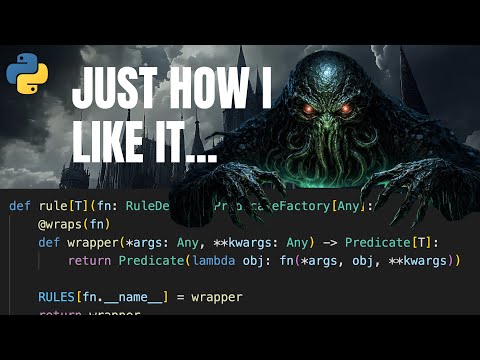
predicates در ۳۰ ثانیه
- A predicate is the part of a sentence that contains the verb and tells us something about the subject.
- It can be simple (just the verb) or complete (the verb plus all its modifiers and objects).
- In logic and programming, it refers to a property or a condition that evaluates to true or false.
- Every complete sentence must have a subject and a predicate to express a full thought.
The term predicates refers to the fundamental structural component of a sentence or clause that provides information about the subject. In the realm of linguistics and traditional grammar, a sentence is typically divided into two primary parts: the subject and the predicate. While the subject identifies who or what the sentence is about, the predicate encompasses everything else—the action, the state, and the circumstances surrounding that subject. Understanding predicates is essential for mastering sentence structure because the predicate contains the verb, which serves as the 'engine' of the thought being expressed. Without a predicate, a group of words remains a mere fragment, lacking the necessary assertion to convey a complete idea. People use this term most frequently in educational settings, such as English language arts classes, linguistics lectures, and writing workshops, to diagnose and improve sentence clarity. However, the concept extends beyond grammar into the world of logic and philosophy, where a predicate is a property or attribute assigned to a subject in a proposition. For example, in the logical statement 'Socrates is mortal,' the property of being 'mortal' is the predicate. In modern computer science, specifically in functional programming and database queries, a predicate is a function that returns a boolean value (true or false) based on a given input, effectively 'predicating' whether an item meets certain criteria.
- Grammatical Function
- The predicate identifies the action performed by the subject or the state of being that describes the subject. It must contain at least one finite verb.
- Logical Property
- In formal logic, predicates are used to define sets and relationships, asserting that a specific entity possesses a certain quality.
The old clock chimed loudly at midnight.
In the example above, 'The old clock' is the subject, while 'chimed loudly at midnight' is the complete predicate. The verb 'chimed' is the simple predicate, and the adverb 'loudly' along with the prepositional phrase 'at midnight' provide additional context, all falling under the umbrella of the predicate. This distinction is vital for learners because it helps them identify where the action starts. In complex sentences, predicates can become quite long, involving direct objects, indirect objects, and various modifiers. For instance, in the sentence 'The chef prepared a delicious five-course meal for the guests,' the entire phrase following 'The chef' constitutes the predicate. Educators often use the concept of predicates to help students fix 'run-on' sentences or 'fragments.' If a student writes 'The dog in the park,' a teacher might point out that the sentence lacks a predicate—it doesn't tell us what the dog is doing. By adding 'barked at the squirrels,' the student provides the necessary predicate to complete the thought. Furthermore, in academic writing, the choice of predicates—specifically the verbs used—can significantly alter the tone and impact of a thesis statement. Strong, active predicates make for more persuasive and engaging prose compared to weak or passive ones.
She is a talented musician.
In this case, the predicate 'is a talented musician' uses a linking verb ('is') to connect the subject to a noun phrase that describes her. This is known as a predicate nominative. Predicates are not just about actions; they are about definitions and descriptions. In the sentence 'The water feels cold,' the predicate 'feels cold' describes the state of the subject. This versatility is why the term is so central to English syntax. When we talk about 'predicates' in the plural, we are often referring to multiple instances of these structures within a text or the various types of predicates (simple, complete, compound) that exist in grammar. For example, a compound predicate occurs when a single subject performs two or more actions: 'The athlete ran the race and won the gold medal.' Here, 'ran the race and won the gold medal' is a compound predicate because it contains two distinct verbal phrases joined by a conjunction. Understanding these nuances allows for more sophisticated sentence construction and better reading comprehension, as it enables the reader to parse complex information into manageable chunks of 'who' and 'what happened.'
- Compound Predicates
- Two or more verbs sharing the same subject, joined by a conjunction like 'and' or 'but'.
The storm howled and battered the coast.
All men are mortal.
Ultimately, predicates are the vehicles of meaning in communication. While the subject provides the context, the predicate provides the content. Whether you are analyzing a Shakespearean sonnet, writing a technical manual, or coding a search algorithm, you are constantly working with predicates to define relationships and describe the world. Their ubiquity makes them a cornerstone of both natural and formal languages.
Using the word predicates correctly involves understanding whether you are referring to the grammatical components of a sentence or the logical attributes of an entity. In a grammatical context, you might say, 'The teacher asked us to underline the predicates in each sentence.' This usage is plural because you are dealing with multiple sentences, each having its own predicate. If you are discussing the structure of a single sentence, you might say, 'The predicate of this sentence is quite complex because it includes several prepositional phrases.' It is important to distinguish between the 'simple predicate' (the main verb) and the 'complete predicate' (the verb plus all its modifiers). For example, in the sentence 'The exhausted travelers finally reached their destination after a long journey,' the simple predicate is 'reached,' while the complete predicate is 'finally reached their destination after a long journey.' When writing about grammar, you should use the term to clarify which part of the sentence you are analyzing. This is particularly useful in peer reviews or editing sessions where you might suggest that a writer 'strengthen their predicates' to make their writing more dynamic. Instead of using 'is' or 'has,' a writer could use more descriptive verbs like 'illuminates,' 'challenges,' or 'transforms.'
- Simple vs. Complete
- The simple predicate is just the verb; the complete predicate includes all words that tell what the subject does or is.
The scientist carefully observed the chemical reaction.
In logical and philosophical contexts, 'predicates' are used to describe the properties that are being asserted about a subject. For instance, in the proposition 'The sky is blue,' the predicate is 'is blue.' In a logic class, you might hear, 'The validity of the argument depends on how the predicates are defined.' Here, the word refers to the conceptual categories we place things into. In computer science, specifically in the context of programming languages like Java, C++, or SQL, a predicate is a specific type of expression. You might say, 'We need to define a predicate to filter the list of users who are over eighteen.' In this case, the predicate is a condition that evaluates to true or false. This technical usage is very common in software engineering and data science. When using the word in this way, it is often treated as a noun representing a function or a logical condition. For example, 'The SQL query uses a predicate in the WHERE clause to limit the results.' This shows how the grammatical concept of 'telling something about a subject' translates into 'filtering data based on a condition.'
The committee approved the proposal without any objections.
Another way to use 'predicates' is when discussing the 'predicate nominative' or 'predicate adjective.' These are specific types of predicates that follow a linking verb. A predicate nominative renames the subject ('Mr. Smith is the principal'), while a predicate adjective describes the subject ('The soup smells delicious'). Using these terms correctly allows for a very precise discussion of English syntax. In linguistics, you might also encounter the term 'predicate calculus,' which is a formal system of logic. You would use the word 'predicates' to describe the various symbols and rules within that system. For example, 'Predicate calculus allows us to express complex relationships between objects that simple propositional logic cannot.' This demonstrates the word's importance in higher-level academic discourse. Whether you are a student learning the basics of a sentence or a logician mapping out complex truths, 'predicates' provides the necessary vocabulary to describe the 'what' of any given statement. It is a versatile word that bridges the gap between how we speak and how we reason.
- Predicate Nominative
- A noun or pronoun that follows a linking verb and renames the subject.
- Predicate Adjective
- An adjective that follows a linking verb and describes the subject.
The mountain air was crisp and refreshing.
The filter function uses a predicate to select even numbers.
In summary, 'predicates' is a word that describes the 'action' or 'attribute' side of a subject-object relationship. By using it in sentences, you are usually engaging in some form of analysis—be it grammatical, logical, or computational. It is a precise term that helps avoid ambiguity when discussing how information is structured and conveyed.
You are most likely to hear the word predicates in an academic or professional environment. In elementary and middle school classrooms, teachers use the word daily when teaching the basics of sentence construction. You might hear a teacher say, 'Every sentence needs a subject and a predicate to be complete.' This is often accompanied by exercises where students draw a line between the two parts. As students progress to high school and college, the term reappears in more advanced English and linguistics courses. Professors might discuss 'verb-initial predicates' in certain languages or the role of 'auxiliary verbs' within a predicate. If you are a student of linguistics, you will hear this word constantly when discussing syntax trees and how different parts of speech combine to form meaning. It is a technical term that provides a common language for scholars to dissect the mechanics of communication. Beyond the classroom, you will hear 'predicates' in the world of philosophy and formal logic. Philosophers like Aristotle and Immanuel Kant wrote extensively about the nature of predicates—how we attribute qualities to things. In a philosophy seminar, a student might argue, 'The predicate of existence is not a real predicate,' a famous point made by Kant regarding the ontological argument for God's existence. This shows that the word carries significant weight in deep intellectual debates about the nature of reality and language.
- In the Classroom
- 'Class, please identify the simple and complete predicates in the paragraph on page 42.'
- In Logic Seminars
- 'The predicate 'is red' is being applied to the subject 'the apple' in this proposition.'
The professor explained the difference between subject and predicate.
In the modern era, the word has found a new home in the tech industry. Software developers and data engineers use 'predicates' when talking about code. If you are attending a technical talk or a coding bootcamp, you might hear someone say, 'We can pass a predicate into the filter method to get only the active users.' In this context, a predicate is a piece of logic that decides whether something stays or goes. It is a very common term in functional programming languages like Haskell, Scala, and even modern JavaScript or Java. Database administrators also use it when talking about SQL queries. A 'search predicate' is the part of the query that filters the data, such as 'WHERE price > 100.' You might hear a DBA say, 'The query is slow because the predicate is not using an index.' This shows how a grammatical concept from ancient Greece has become a vital part of 21st-century technology. Even if you aren't a grammarian or a coder, you might encounter the word in legal contexts. Lawyers and judges sometimes discuss the 'factual predicates' of a case—the underlying facts that must be established before a legal conclusion can be reached. For example, 'The predicate for this lawsuit is the breach of contract that occurred in June.' Here, the word means 'foundation' or 'basis,' which is a slightly more metaphorical use of the grammatical idea that a predicate 'completes' or 'grounds' a subject.
The developer wrote a predicate to check for null values.
While you won't typically hear 'predicates' in a casual conversation at a coffee shop or a grocery store, it is a staple of 'smart' talk. It is a word used by people who are analyzing how things work—whether those things are sentences, logical arguments, computer programs, or legal cases. It is a word that signals precision and analytical thinking. If you use it correctly in a professional or academic setting, it shows that you have a strong grasp of structure and logic. It is one of those 'invisible' words that holds the framework of our knowledge together. Whether you are hearing it from a teacher, a philosopher, a coder, or a lawyer, the core meaning remains the same: it is the part that tells you something about the subject at hand. It is the 'meat' of the statement, the part that carries the information we actually care about. So, while it might seem like a dry, technical term, it is actually one of the most powerful tools we have for describing the world around us.
- In Programming
- 'The filter function takes a predicate as an argument to determine which elements to keep.'
- In Legal Contexts
- 'The prosecution must establish the predicate facts before the witness can testify about the motive.'
The judge ruled that the predicate for the search was insufficient.
The entire theory predicates on the assumption that light speed is constant.
In conclusion, 'predicates' is a word with a long history and a wide range of modern applications. From the basic grammar school lesson to the most complex computer algorithms, it remains a vital term for anyone interested in how we structure information and make sense of the world. It is a word that you will encounter more and more as you delve deeper into any field of study that requires rigorous analysis and clear communication.
One of the most common mistakes people make with the word predicates is confusing the 'simple predicate' with the 'complete predicate.' Many students believe that the predicate is just the verb. While the verb is the core of the predicate (the simple predicate), the complete predicate includes all the words that modify the verb or complete its meaning. For example, in the sentence 'The dog barked at the mailman,' many might say the predicate is just 'barked.' However, the complete predicate is 'barked at the mailman.' Failing to include the objects and modifiers can lead to an incomplete understanding of sentence structure. Another frequent error is misidentifying the subject as part of the predicate, especially in sentences with unusual word orders. In the sentence 'Down the street ran the boy,' the subject is 'the boy' and the predicate is 'Down the street ran.' Because the predicate comes first, learners often get confused and label 'Down the street' as the subject. It is crucial to remember that the subject is the 'doer' or the 'topic,' and the predicate is the 'action' or 'description,' regardless of where they appear in the sentence.
- Mistake: Verb Only
- Thinking the predicate is only the verb, ignoring objects and adverbs.
- Mistake: Word Order Confusion
- Assuming the first part of a sentence is always the subject and the second part is always the predicate.
Incorrect: In 'The cat sat,' the predicate is just 'sat.' Correct: It is 'sat,' but in 'The cat sat on the mat,' the complete predicate is 'sat on the mat'.
Another mistake involves compound predicates. Sometimes writers forget to include a necessary auxiliary verb in the second part of a compound predicate, or they accidentally create a comma splice. For example, 'She is singing and danced' is incorrect because the tenses don't match within the compound predicate. It should be 'She is singing and dancing' or 'She sang and danced.' Furthermore, people often confuse 'predicates' (the noun) with 'predicates' (the verb form of 'predicate'). As a verb, 'to predicate' means to base something on a specific foundation. For example, 'The success of the project is predicated on your cooperation.' This is a very different meaning from the grammatical noun. Using the noun when you mean the verb, or vice versa, can lead to confusing sentences. In technical fields like programming, a common mistake is using a predicate that doesn't return a boolean value. If a function is supposed to be a predicate but returns a string or a number instead of true/false, it will break the logic of the program. This is a common bug for beginner coders who are still learning the formal definition of the term in a computational context.
Mistake: 'The movie was long, it was boring.' (Comma splice). Correct: 'The movie was long and boring' (Compound predicate).
In logical discussions, a frequent error is 'predicate confusion,' where the property being assigned to the subject is too vague or ill-defined. For instance, saying 'The idea is green' is grammatically correct (it has a subject and a predicate), but logically nonsensical because 'green' is not a valid predicate for the subject 'idea' (unless used metaphorically). This highlights the importance of ensuring that the predicate actually makes sense in relation to the subject. Finally, many people struggle with 'predicate nominatives' and 'predicate adjectives' after linking verbs. They might use an adverb where an adjective is required. For example, 'I feel badly' is a common mistake; it should be 'I feel bad' because 'feel' is a linking verb and 'bad' is a predicate adjective describing the subject 'I.' 'Feel badly' would mean your sense of touch is impaired! Understanding these subtle grammatical rules is the key to avoiding common pitfalls and communicating with precision.
- Adverb vs. Predicate Adjective
- Use adjectives after linking verbs (is, feel, seem) to describe the subject, not adverbs.
Incorrect: The flowers smell sweetly. Correct: The flowers smell sweet.
Fragment: The sun behind the clouds. Complete: The sun is behind the clouds.
By being aware of these common mistakes—from simple identification errors to complex logical and technical misuses—you can improve your writing, your coding, and your ability to think critically about how language functions. The predicate is half of every thought you express; getting it right is essential for being understood.
While predicates is a very specific technical term, there are several words and phrases that can be used as alternatives depending on the context. In a general grammatical sense, you might use the word verb phrase. While not identical (a predicate can contain multiple verb phrases), they often cover the same ground in a sentence. For example, instead of saying 'Identify the predicate,' you could say 'Identify the verb and its associated words.' This is often more intuitive for younger learners. Another related term is assertion. In logic and rhetoric, the predicate is the assertion you are making about the subject. If you say 'The car is fast,' your assertion is that the car possesses the quality of speed. Using 'assertion' emphasizes the act of stating something as true, whereas 'predicate' emphasizes the structural role of those words in the sentence. In more casual writing, you might simply refer to the action or the description. 'What is the action in this sentence?' is a common way to help someone find the simple predicate. However, this doesn't work as well for linking verbs like 'is' or 'seems,' where there isn't a clear 'action' taking place.
- Verb Phrase
- A more modern linguistic term that focuses on the verb and its dependents.
- Attribute
- In logic and data science, this is often used interchangeably with predicate to describe a property.
Instead of: 'The predicate is 'is blue'.' You could say: 'The attribute assigned to the sky is blueness.'
In the context of logic and philosophy, synonyms like property, quality, or characteristic are frequently used. Instead of saying 'The predicate of the object,' a philosopher might say 'The properties of the object.' This shifts the focus from the language used to the actual nature of the thing being discussed. In computer science, 'predicates' are often called conditions, filters, or boolean expressions. When you write an 'if' statement in code, the part inside the parentheses is essentially a predicate. For example, in `if (user.age > 18)`, the expression `user.age > 18` is the predicate. In a technical meeting, you might hear someone say, 'We need to change the filtering condition,' which is a more common way of saying 'We need to update the predicate.' Another interesting alternative is the word foundation or basis, but only when using the verb form 'to predicate.' If you say 'Our plan is predicated on his arrival,' you could easily substitute 'based on' or 'contingent upon.' This is a very common usage in formal business and legal writing.
The success of the mission depends on (is predicated on) the weather.
It is also worth noting the difference between a complement and a predicate. A complement is a specific part of the predicate that completes the meaning of the verb. For example, in 'He is a doctor,' 'a doctor' is the complement. All complements are part of the predicate, but not all parts of the predicate are complements (like adverbs). Understanding these distinctions helps you choose the most precise word for your needs. If you are teaching a child, 'action part' is best. If you are writing a linguistics paper, 'predicate' or 'VP' is expected. If you are debugging code, 'boolean condition' is the standard. By having these alternatives in your vocabulary, you can adapt your language to your audience while still maintaining the core idea of 'that which is said about a subject.' This flexibility is a hallmark of an advanced speaker and writer.
- Condition
- Common in programming to describe a logical test.
- Basis
- Used when 'predicated' means 'founded upon'.
The boolean expression in the code acts as a predicate for the loop.
Topic: The rain. Comment (Predicate): fell steadily all night.
In conclusion, while 'predicates' is the most accurate term for describing the 'what' of a sentence or logical proposition, you have many other words at your disposal to make your meaning clearer depending on who you are talking to. Whether you choose 'verb phrase,' 'property,' or 'condition,' you are still exploring the same fundamental concept of how we attribute meaning to the subjects of our thoughts.
چقدر رسمی است؟
نکته جالب
The word shares the same root as 'preach'. Both come from the idea of 'proclaiming' something publicly.
راهنمای تلفظ
- Pronouncing the noun like the verb (ending in -kate instead of -kut).
- Stressing the second syllable.
- Mumbling the middle 'i' sound.
- Confusing the spelling with 'predict'.
- Over-emphasizing the final 's' in the plural.
سطح دشواری
Common in educational texts but rare in casual reading.
Requires understanding of sentence structure to use the term correctly.
Rarely used in spoken English outside of teaching or technical fields.
Easy to recognize but can be confused with 'predict'.
بعداً چه یاد بگیریم؟
پیشنیازها
بعداً یاد بگیرید
پیشرفته
گرامر لازم
Subject-Verb Agreement
The dog (singular subject) barks (singular predicate).
Sentence Fragments
A group of words without a predicate is a fragment (e.g., 'The tall tree').
Comma Splices
Don't join two complete predicates with just a comma; use 'and' or a semicolon.
Linking Verbs
Linking verbs in predicates take adjectives, not adverbs (e.g., 'He looks happy').
Compound Predicates
Use a conjunction to join two verbs in a compound predicate (e.g., 'She sang and danced').
مثالها بر اساس سطح
The dog barks.
The predicate is 'barks'.
Simple predicate (verb).
I am a student.
The predicate is 'am a student'.
Predicate with a linking verb.
She runs fast.
The predicate is 'runs fast'.
Verb + adverb.
The sun is hot.
The predicate is 'is hot'.
Predicate adjective.
They play football.
The predicate is 'play football'.
Verb + object.
The cat sleeps.
The predicate is 'sleeps'.
Simple predicate.
We are happy.
The predicate is 'are happy'.
Linking verb + adjective.
He has a red car.
The predicate is 'has a red car'.
Verb + noun phrase.
My father works in a big office.
The complete predicate is 'works in a big office'.
Verb + prepositional phrase.
The children are playing in the garden.
The predicate is 'are playing in the garden'.
Present continuous predicate.
She bought a new dress yesterday.
The predicate is 'bought a new dress yesterday'.
Past tense predicate with time adverb.
The coffee smells very good.
The predicate is 'smells very good'.
Linking verb 'smells' + adjective phrase.
He can speak three languages fluently.
The predicate is 'can speak three languages fluently'.
Modal verb in the predicate.
The bus arrives at ten o'clock.
The predicate is 'arrives at ten o'clock'.
Verb + time phrase.
They went to the cinema last night.
The predicate is 'went to the cinema last night'.
Complete predicate in the past.
The water in the pool is very cold.
The predicate is 'is very cold'.
Subject is 'The water in the pool'.
The teacher explained the rules of the game clearly.
The complete predicate is 'explained the rules of the game clearly'.
Verb + complex object + adverb.
He has been studying English for five years.
The simple predicate is 'has been studying'.
Present perfect continuous verb phrase.
The old man sat on the bench and read the newspaper.
This is a compound predicate: 'sat... and read...'.
Two verbs sharing one subject.
The cake tastes delicious but looks a bit strange.
Compound predicate with linking verbs.
Contrastive compound predicate.
She decided to quit her job and travel the world.
Compound predicate with infinitive phrases.
Compound predicate.
The storm caused a lot of damage to the coastal towns.
The complete predicate is 'caused a lot of damage...'.
Verb + complex noun phrase.
They are planning a surprise party for their mother.
The predicate is 'are planning a surprise party...'.
Complete predicate with indirect object implied.
The movie was so boring that I fell asleep.
The predicate of the main clause is 'was so boring...'.
Predicate followed by a result clause.
The witness's testimony appeared to be entirely fabricated.
The predicate is 'appeared to be entirely fabricated'.
Linking verb + infinitive phrase as predicate.
The CEO announced the merger and thanked the employees.
Compound predicate in a formal context.
Formal compound predicate.
The climate change report was both alarming and enlightening.
Predicate adjectives joined by 'both... and'.
Compound predicate adjective.
He struggled to maintain his composure during the interview.
The predicate includes the infinitive phrase 'to maintain...'.
Verb + infinitive complement.
The new software allows users to edit videos easily.
The predicate is 'allows users to edit videos easily'.
Verb + object + infinitive.
The suspect remained silent throughout the interrogation.
The predicate is 'remained silent throughout the interrogation'.
Linking verb 'remained' + adjective.
The economy has shown signs of recovery in recent months.
The predicate is 'has shown signs of recovery...'.
Present perfect predicate.
She was elected president by a narrow margin.
The predicate is 'was elected president by a narrow margin'.
Passive voice predicate.
The validity of the theory is predicated on several assumptions.
Here 'predicated' is used as a verb meaning 'based on'.
Formal verb usage of 'predicate'.
The philosopher argued that 'existence' is not a real predicate.
Logical use of the noun 'predicate'.
Noun referring to a logical property.
The SQL query failed because the search predicate was invalid.
Technical use in computer science.
Noun referring to a filtering condition.
The poem's beauty lies in its intricate use of verbs and predicates.
Literary analysis context.
Noun referring to grammatical structures.
He meticulously dissected the sentence into its subject and predicate.
Linguistic analysis context.
Noun referring to sentence parts.
The prosecution failed to establish the factual predicate for the charge.
Legal context meaning 'basis'.
Noun meaning foundation or basis.
The function takes a predicate as an argument to filter the data.
Programming context.
Noun meaning a boolean function.
Her argument was beautifully structured, with each predicate reinforcing her thesis.
Rhetorical analysis.
Noun referring to assertions.
In Aristotelian logic, the predicates are categorized into five types.
Historical and logical context.
Plural noun in formal logic.
The generative model posits that subjects are base-generated within the predicate.
Advanced linguistic theory.
Noun in theoretical linguistics.
The legal team argued that the predicate offense was not sufficiently proven.
Specialized legal terminology.
Adjective-like use of the noun 'predicate'.
The ontological argument hinges on whether 'existence' can be a predicate.
High-level philosophical debate.
Noun in metaphysics.
The efficiency of the algorithm is determined by the complexity of its predicates.
Computer science optimization.
Noun in computational theory.
The author uses compound predicates to create a sense of frantic movement.
Stylistic literary criticism.
Plural noun in stylistic analysis.
The semantic value of the sentence is derived from the predicate's extension.
Formal semantics.
Noun in semantics.
The entire legal framework is predicated upon the principle of 'habeas corpus'.
Formal verb usage in law.
Passive verb form meaning 'founded'.
ترکیبهای رایج
عبارات رایج
— The two essential parts of a complete sentence.
Every sentence must have a subject and a predicate.
— To find the part of the sentence that contains the verb.
The students were asked to identify the predicate.
— A property attributed to a subject in a logical statement.
In logic, 'is mortal' is a logical predicate.
— A crime that is an element of a larger, more serious crime.
The predicate offense for the RICO charge was bribery.
— A condition used to select specific items from a set of data.
The filter predicate removed all inactive users.
— Based on or founded on a specific condition.
Our success is predicated upon teamwork.
— The distinction between the verb and the full verb phrase.
Learn the difference between simple vs complete predicates.
— The location in a sentence where the predicate usually appears.
In English, the predicate usually follows the subject.
— A predicate consisting of multiple verbs or intricate modifiers.
The sentence features a complex predicate with three clauses.
— A philosophical term regarding whether 'existing' is a property.
Kant famously denied that existence is a predicate.
اغلب اشتباه گرفته میشود با
Predict is a verb meaning to say what will happen; predicate is a noun for a sentence part.
Related etymologically but means to give a religious or moral speech.
A legal term for an earlier event used as an example; predicate is a basis or foundation.
اصطلاحات و عبارات
— Based on something that is not true.
Their entire relationship was predicated on a lie.
formal— The core or foundation of a situation (rare/metaphorical).
That is the predicate of the matter we are discussing.
formal— To lay the groundwork or foundation for something.
We need to establish a predicate before we make the offer.
legal/business— Missing the point or the action (slang/informal).
You're just giving me subjects; you're missing the predicate!
informal— The reason or basis for making a change.
The low sales provided the predicate for change.
business— A clear, binary condition.
It's a simple logic predicate: either we go or we stay.
technical— The essential condition for succeeding.
Hard work is the primary predicate of success.
formal— Outside the scope of what was asserted.
That question goes beyond the predicate of our study.
academic— The underlying facts of a legal matter.
The predicate of the case was a simple misunderstanding.
legal— The most important part of the message.
The predicate of the sentence is where the meaning lives.
educationalبهراحتی اشتباه گرفته میشود
They are the two halves of a sentence.
The subject is the 'who'; the predicate is the 'what'.
In 'John eats', John is the subject and eats is the predicate.
The verb is the most important part of the predicate.
The verb is just the action; the predicate is the verb plus its objects and modifiers.
In 'He hit the ball', 'hit' is the verb, but 'hit the ball' is the predicate.
Both are parts of the sentence following the verb.
A complement is a specific type of word that completes the verb; the predicate is the entire phrase.
In 'He is a pilot', 'a pilot' is the complement and 'is a pilot' is the predicate.
Objects are often found within the predicate.
The object is the thing receiving the action; the predicate includes the action and the object.
In 'I see you', 'you' is the object, 'see you' is the predicate.
A clause contains a subject and a predicate.
A clause is the whole unit; the predicate is just the 'action' part of that unit.
The phrase 'because he was late' is a clause; 'was late' is its predicate.
الگوهای جملهسازی
Subject + Verb
Birds fly.
Subject + Verb + Object
I like apples.
Subject + Verb + Adverb + Prepositional Phrase
He ran quickly to the store.
Subject + Verb + and + Verb
She cooked and ate dinner.
Subject + Linking Verb + Predicate Adjective
The sky turned dark.
Subject + Linking Verb + Predicate Nominative
She became a doctor.
Passive Subject + is predicated on + Noun
Peace is predicated on justice.
Logical Subject + Predicate Property
All circles are round.
خانواده کلمه
اسمها
فعلها
صفتها
مرتبط
نحوه استفاده
Common in academic, legal, and technical domains; rare in casual speech.
-
The dog in the yard.
→
The dog is in the yard.
The first example is a fragment because it lacks a predicate (a verb).
-
She feel badly.
→
She feels bad.
After a linking verb like 'feel', you must use a predicate adjective (bad), not an adverb (badly).
-
The predicate is 'ran'.
→
The complete predicate is 'ran to the store'.
Don't confuse the simple predicate (the verb) with the complete predicate.
-
He sang and dancing.
→
He sang and danced.
In a compound predicate, the verbs should usually be in the same tense.
-
Using 'predict' when you mean 'predicate'.
→
The theory is predicated on this fact.
'Predict' means to forecast; 'predicate' (as a verb) means to base on.
نکات
Identify the Verb First
The easiest way to find the predicate is to locate the verb. Everything attached to that verb is part of the predicate.
Avoid Fragments
Every time you write a sentence, check if it has a predicate. If it doesn't have a verb, it's not a complete sentence.
Think of Properties
In logic, think of the predicate as a property you are 'tagging' onto a subject.
Boolean Result
In programming, always ensure your predicate functions return a clear true or false value.
Look for the Basis
In legal reading, when you see 'predicate', look for the underlying facts or crimes being discussed.
Vary Your Predicates
Don't just use 'is' and 'has'. Use descriptive verbs to make your predicates more powerful.
Check the Subject
Sometimes the subject is hidden or comes after the predicate. Always ask 'who is doing this?' to find the subject first.
Underline Carefully
In exams, if asked for the 'complete' predicate, include every word after the subject. If 'simple', just the verb.
Use Visual Aids
Draw a vertical line between the subject and the predicate to visualize the sentence structure.
Verb vs Noun
Remember the pronunciation difference: 'PRED-i-kut' (noun) vs 'PRED-i-kate' (verb).
حفظ کنید
روش یادسپاری
The 'P' in Predicate stands for the 'Property' or 'Perform' part of the sentence.
تداعی تصویری
Imagine a train. The Subject is the engine, and the Predicate is all the cars following it, carrying the cargo.
شبکه واژگان
چالش
Write five sentences about your favorite hobby. Then, circle the complete predicate in each one.
ریشه کلمه
From the Latin 'praedicatum', which is the neuter past participle of 'praedicare', meaning 'to proclaim' or 'to declare'.
معنای اصلی: Something declared or asserted about a subject.
Indo-European (Latin branch).بافت فرهنگی
None. This is a technical linguistic and logical term.
Taught as a core concept in primary school English across the US, UK, Canada, and Australia.
تمرین در زندگی واقعی
موقعیتهای واقعی
Grammar Class
- Underline the predicate
- Simple vs complete
- Compound predicate
- Subject-verb agreement
Logic/Philosophy
- Logical predicate
- Attribute a property
- Predicate of existence
- Formal proposition
Computer Programming
- Filter predicate
- Boolean expression
- Search condition
- Predicate function
Legal Proceedings
- Predicate offense
- Factual predicate
- Basis for the claim
- Underlying facts
Writing Workshop
- Strengthen your predicates
- Active vs passive
- Sentence fragments
- Clear assertions
شروعکنندههای مکالمه
"Do you remember learning about subjects and predicates in school?"
"How would you define the predicate of your life's story right now?"
"In coding, do you prefer using predicates or simple loops for filtering?"
"Do you think 'existence' is a real predicate, or just a state?"
"What's the most complex predicate you've ever had to diagram?"
موضوعات نگارش
Write about a time you felt like a 'subject' without a 'predicate' (a person without a clear action or purpose).
Analyze a sentence from your favorite book. What does the predicate reveal about the character?
How does the concept of a 'predicate' in logic change how you view everyday arguments?
Describe your dream job using only strong, active predicates.
Reflect on the 'factual predicates' of a major decision you made recently.
سوالات متداول
10 سوالA simple predicate is just the main verb or verb phrase in a sentence, without any of the words that describe it. For example, in 'The tall man ran quickly,' the simple predicate is 'ran'.
A complete predicate includes the verb and all the words that tell more about the action or the subject. In 'The tall man ran quickly,' the complete predicate is 'ran quickly'.
Yes, if the sentence only has a subject and a verb, like 'Jesus wept,' the word 'wept' is both the simple and the complete predicate.
A compound predicate occurs when one subject performs two or more actions. For example, 'The cat meowed and jumped' has a compound predicate: 'meowed and jumped'.
In many cases, they are the same. However, 'predicate' is a functional term (what it does in the sentence), while 'verb phrase' is a structural term (what it is made of).
It is a noun or pronoun that follows a linking verb and renames the subject. Example: 'My friend is a dancer.' Here, 'dancer' is the predicate nominative.
It is an adjective that follows a linking verb and describes the subject. Example: 'The sky is blue.' Here, 'blue' is the predicate adjective.
Turn the question into a statement. 'Is he coming?' becomes 'He is coming.' The predicate is 'is coming'.
It means that something is based on or depends on a specific condition or fact. Example: 'The plan is predicated on our success today'.
Yes, in programming, a predicate is a function that returns true or false, often used to filter data.
خودت رو بسنج 180 سوال
Write a short sentence with the subject 'The dog' and a simple predicate.
خوب نوشتید! تلاش خوبی بود! پاسخ نمونه را ببینید.
Write a sentence with the subject 'I' and the predicate 'am happy'.
خوب نوشتید! تلاش خوبی بود! پاسخ نمونه را ببینید.
Write a sentence with a complete predicate that includes the word 'quickly'.
خوب نوشتید! تلاش خوبی بود! پاسخ نمونه را ببینید.
Write a sentence about your favorite food using a linking verb.
خوب نوشتید! تلاش خوبی بود! پاسخ نمونه را ببینید.
Write a sentence with a compound predicate using the word 'and'.
خوب نوشتید! تلاش خوبی بود! پاسخ نمونه را ببینید.
Write a sentence and then underline the complete predicate.
خوب نوشتید! تلاش خوبی بود! پاسخ نمونه را ببینید.
Write a sentence using a predicate nominative to describe a profession.
خوب نوشتید! تلاش خوبی بود! پاسخ نمونه را ببینید.
Write a sentence using a predicate adjective to describe the weather.
خوب نوشتید! تلاش خوبی بود! پاسخ نمونه را ببینید.
Write a formal sentence using the phrase 'is predicated on'.
خوب نوشتید! تلاش خوبی بود! پاسخ نمونه را ببینید.
Write a sentence using 'predicate' in a logical or technical context.
خوب نوشتید! تلاش خوبی بود! پاسخ نمونه را ببینید.
Explain the difference between a simple and complete predicate in two sentences.
خوب نوشتید! تلاش خوبی بود! پاسخ نمونه را ببینید.
Write a sentence with a complex compound predicate.
خوب نوشتید! تلاش خوبی بود! پاسخ نمونه را ببینید.
Rewrite this fragment as a complete sentence: 'The bird on the branch.'
خوب نوشتید! تلاش خوبی بود! پاسخ نمونه را ببینید.
Use the word 'predicate' as a noun in a sentence about grammar.
خوب نوشتید! تلاش خوبی بود! پاسخ نمونه را ببینید.
Use the word 'predicate' as a verb in a sentence about a business deal.
خوب نوشتید! تلاش خوبی بود! پاسخ نمونه را ببینید.
Write a sentence with the predicate 'is very tall'.
خوب نوشتید! تلاش خوبی بود! پاسخ نمونه را ببینید.
Write a sentence with the predicate 'has been working since morning'.
خوب نوشتید! تلاش خوبی بود! پاسخ نمونه را ببینید.
Write a sentence with a predicate adjective and a prepositional phrase.
خوب نوشتید! تلاش خوبی بود! پاسخ نمونه را ببینید.
Write a sentence about a legal case using the word 'predicate'.
خوب نوشتید! تلاش خوبی بود! پاسخ نمونه را ببینید.
Discuss the importance of predicates in clear communication.
خوب نوشتید! تلاش خوبی بود! پاسخ نمونه را ببینید.
Say a sentence about your cat using the predicate 'is cute'.
این را بلند بخوانید:
تو گفتی:
تشخیص گفتار در مرورگر شما پشتیبانی نمیشود. از کروم یا اج استفاده کنید.
Describe what you did this morning using a complete predicate.
این را بلند بخوانید:
تو گفتی:
تشخیص گفتار در مرورگر شما پشتیبانی نمیشود. از کروم یا اج استفاده کنید.
Explain the difference between a subject and a predicate to a friend.
این را بلند بخوانید:
تو گفتی:
تشخیص گفتار در مرورگر شما پشتیبانی نمیشود. از کروم یا اج استفاده کنید.
Use the word 'predicate' in a sentence about your favorite hobby.
این را بلند بخوانید:
تو گفتی:
تشخیص گفتار در مرورگر شما پشتیبانی نمیشود. از کروم یا اج استفاده کنید.
Discuss a situation that was 'predicated on' a misunderstanding.
این را بلند بخوانید:
تو گفتی:
تشخیص گفتار در مرورگر شما پشتیبانی نمیشود. از کروم یا اج استفاده کنید.
Say 'The sun is hot' and identify the predicate.
این را بلند بخوانید:
تو گفتی:
تشخیص گفتار در مرورگر شما پشتیبانی نمیشود. از کروم یا اج استفاده کنید.
Say a sentence with a compound predicate about your weekend.
این را بلند بخوانید:
تو گفتی:
تشخیص گفتار در مرورگر شما پشتیبانی نمیشود. از کروم یا اج استفاده کنید.
Identify the simple predicate in: 'The children have been playing outside.'
این را بلند بخوانید:
تو گفتی:
تشخیص گفتار در مرورگر شما پشتیبانی نمیشود. از کروم یا اج استفاده کنید.
Explain what a predicate adjective is with an example.
این را بلند بخوانید:
تو گفتی:
تشخیص گفتار در مرورگر شما پشتیبانی نمیشود. از کروم یا اج استفاده کنید.
How is 'predicate' used in computer programming?
این را بلند بخوانید:
تو گفتی:
تشخیص گفتار در مرورگر شما پشتیبانی نمیشود. از کروم یا اج استفاده کنید.
Discuss the philosophical debate about 'existence' as a predicate.
این را بلند بخوانید:
تو گفتی:
تشخیص گفتار در مرورگر شما پشتیبانی نمیشود. از کروم یا اج استفاده کنید.
Give an example of a sentence with a very long complete predicate.
این را بلند بخوانید:
تو گفتی:
تشخیص گفتار در مرورگر شما پشتیبانی نمیشود. از کروم یا اج استفاده کنید.
Use 'predicate nominative' in a sentence about yourself.
این را بلند بخوانید:
تو گفتی:
تشخیص گفتار در مرورگر شما پشتیبانی نمیشود. از کروم یا اج استفاده کنید.
Use 'predicated upon' in a formal business context.
این را بلند بخوانید:
تو گفتی:
تشخیص گفتار در مرورگر شما پشتیبانی نمیشود. از کروم یا اج استفاده کنید.
Say a sentence where the predicate comes before the subject.
این را بلند بخوانید:
تو گفتی:
تشخیص گفتار در مرورگر شما پشتیبانی نمیشود. از کروم یا اج استفاده کنید.
What is the simple predicate of 'I will be going to London'?
این را بلند بخوانید:
تو گفتی:
تشخیص گفتار در مرورگر شما پشتیبانی نمیشود. از کروم یا اج استفاده کنید.
Correct this: 'The flowers smell sweetly.'
این را بلند بخوانید:
تو گفتی:
تشخیص گفتار در مرورگر شما پشتیبانی نمیشود. از کروم یا اج استفاده کنید.
What is a 'predicate offense' in law?
این را بلند بخوانید:
تو گفتی:
تشخیص گفتار در مرورگر شما پشتیبانی نمیشود. از کروم یا اج استفاده کنید.
Why is the predicate called the 'engine' of the sentence?
این را بلند بخوانید:
تو گفتی:
تشخیص گفتار در مرورگر شما پشتیبانی نمیشود. از کروم یا اج استفاده کنید.
Say 'I am' and add a predicate.
این را بلند بخوانید:
تو گفتی:
تشخیص گفتار در مرورگر شما پشتیبانی نمیشود. از کروم یا اج استفاده کنید.
Listen to: 'The dog barked.' What was the predicate?
Listen to: 'She is eating an apple.' What is the complete predicate?
Listen to: 'He ran and jumped over the fence.' Is the predicate compound?
Listen to: 'The results were inconclusive.' What is the predicate adjective?
Listen to: 'The deal was predicated on secrecy.' What was the basis?
Listen to: 'We are happy.' What is the predicate?
Listen to: 'The car stopped suddenly.' What is the complete predicate?
Listen to: 'They have been working hard.' What is the simple predicate?
Listen to: 'She became a doctor.' What is the predicate nominative?
Listen to: 'The search predicate returned no results.' What failed to find data?
Listen to: 'The predicate-argument structure is complex.' What is complex?
Listen to: 'The rain stopped.' What is the predicate?
Listen to: 'The cake tastes sweet.' Is 'sweet' an adverb or adjective?
Listen to: 'It was predicated on a lie.' What was it based on?
Listen to: 'He can swim.' What is the predicate?
/ 180 درست
نمره کامل!
Summary
The predicate is the 'action' or 'description' half of a sentence. For example, in 'The cat (subject) chased the mouse (predicate),' the predicate tells us exactly what the cat did. Without it, the sentence is incomplete.
- A predicate is the part of a sentence that contains the verb and tells us something about the subject.
- It can be simple (just the verb) or complete (the verb plus all its modifiers and objects).
- In logic and programming, it refers to a property or a condition that evaluates to true or false.
- Every complete sentence must have a subject and a predicate to express a full thought.
Identify the Verb First
The easiest way to find the predicate is to locate the verb. Everything attached to that verb is part of the predicate.
Avoid Fragments
Every time you write a sentence, check if it has a predicate. If it doesn't have a verb, it's not a complete sentence.
Think of Properties
In logic, think of the predicate as a property you are 'tagging' onto a subject.
Boolean Result
In programming, always ensure your predicate functions return a clear true or false value.