









wildfire در ۳۰ ثانیه
- A wildfire is a massive, uncontrolled fire that rages through natural landscapes like forests and grasslands, often moving with terrifying speed and unpredictability.
- It is frequently caused by natural events like lightning or human negligence, and it poses a severe threat to wildlife, human life, and property.
- The term is also used metaphorically in the common idiom 'spread like wildfire' to describe information or trends that circulate extremely rapidly.
- In environmental science, wildfires are studied for their role in ecosystem renewal, although climate change is making them more frequent and destructive.
The term wildfire primarily refers to a large, destructive, and often uncontrollable fire that spreads rapidly across natural landscapes such as forests, grasslands, or prairies. Unlike a controlled burn or a small campfire, a wildfire is characterized by its unpredictability and its ability to consume vast amounts of vegetation in a very short period. In the modern era, the word is frequently used in environmental discussions, news reports about climate change, and emergency management contexts. However, it also carries a powerful metaphorical meaning, describing anything—such as news, rumors, or viral trends—that spreads with incredible speed and intensity through a population.
- Literal Meaning
- An unplanned fire in a natural area like a forest or grassland that is difficult to extinguish.
The dry summer conditions turned the national park into a tinderbox, leading to a devastating wildfire that burned for weeks.
- Metaphorical Usage
- Used to describe information or trends that propagate quickly, such as a video going viral on social media.
News of the celebrity's secret wedding spread like wildfire across the internet within minutes.
Ecologically, wildfires are complex. While they are often viewed solely as disasters, many ecosystems have evolved to depend on them. For instance, certain pine species require the intense heat of a fire to open their cones and release seeds. This process, known as serotiny, ensures that new life begins exactly when the ground is cleared of competing vegetation and enriched with ash. Therefore, in the context of forest management, you might hear experts distinguish between 'bad' wildfires that threaten human settlements and 'good' ecological fires that maintain biodiversity. However, due to global warming, the frequency and intensity of these fires have increased, making the word a staple in political and scientific discourse regarding the climate crisis.
Firefighters worked tirelessly to create a firebreak to stop the wildfire from reaching the nearby town.
- Scientific Context
- Wildfires are categorized by where they burn: ground fires (in soil), surface fires (on the forest floor), and crown fires (in the tops of trees).
The wildfire jumped from the forest floor to the canopy, becoming a dangerous crown fire.
Smoke from the Canadian wildfire drifted thousands of miles, affecting air quality in New York City.
Using the word wildfire correctly involves understanding its role as a noun and its common collocations. It can be the subject of a sentence (The wildfire spread) or the object (The crew fought the wildfire). Because it describes a dynamic and dangerous event, it is often paired with verbs of movement, destruction, and containment. In a formal or academic setting, you might discuss the 'mitigation' or 'suppression' of wildfires. In a more narrative or journalistic setting, you might read about a wildfire 'raging' or 'tearing through' a landscape.
- As a Subject
- When the wildfire is the one performing the action, usually spreading or destroying.
The wildfire consumed over ten thousand acres of timber in just three days.
- As an Object
- When humans or nature are acting upon the fire, usually trying to stop it.
Emergency services struggled to contain the wildfire due to high winds and low humidity.
When using the word metaphorically, it is almost exclusively used in the phrase 'spread like wildfire'. This idiom is so common that using 'wildfire' in other metaphorical ways might sound strange to native speakers. For example, you wouldn't usually say 'The wildfire of her anger,' but you would say 'Her anger spread like wildfire through the office.' This specific phrasing emphasizes the speed and the lack of control over the situation. In business contexts, 'wildfire marketing' or 'viral marketing' are sometimes used interchangeably to describe campaigns designed to be shared rapidly by users.
Once the leaked documents were posted online, the scandal spread like wildfire.
- Compound Nouns
- Wildfire management, wildfire suppression, wildfire season, wildfire risk.
The local government issued a warning as the region entered the peak of the wildfire season.
A single lightning strike was enough to ignite a massive wildfire in the dry brush.
The word wildfire is ubiquitous in modern media, especially during the summer months in the Northern Hemisphere and the winter months in the Southern Hemisphere. You will hear it most frequently in news broadcasts, weather reports, and documentaries about nature or climate change. In these contexts, the tone is usually serious, urgent, and descriptive. Reporters will use it to convey the scale of a disaster, often mentioning 'containment percentages' or 'evacuation orders'. It is a word that carries a sense of collective anxiety in regions prone to these events, such as California, Greece, or parts of Canada.
- News Media
- Used to report on current disasters, property damage, and firefighting efforts.
Breaking news: A fast-moving wildfire has forced thousands of residents to flee their homes in the valley.
- Scientific Documentaries
- Used to explain the ecological impact of fire on forest health and animal habitats.
Researchers are studying how the wildfire cycle affects the regeneration of giant sequoia trees.
In casual conversation, people living in fire-prone areas might discuss 'wildfire smoke' affecting their daily lives or the 'wildfire risk' when planning a camping trip. In professional settings, particularly in marketing, public relations, or tech, you will hear the metaphorical use. A product manager might say, 'We need this feature to spread like wildfire,' meaning they want it to achieve rapid, organic growth through word-of-mouth. This dual life of the word—as a terrifying natural force and a desirable social phenomenon—makes it a very versatile part of the English lexicon. It is also a common topic in literature and film, often serving as a climax or a symbol of uncontrollable change.
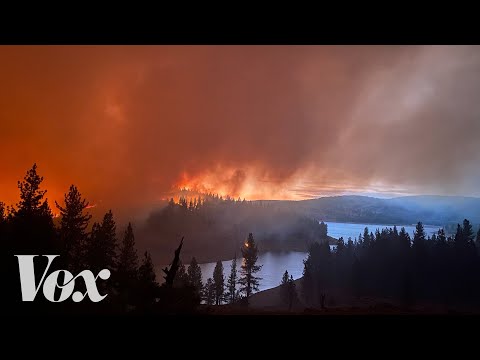
The sky turned an eerie orange as the wildfire smoke settled over the city.
- Policy and Politics
- Used in debates about forest management, climate policy, and budget allocation for emergency services.
The senator argued that more funding is needed for wildfire prevention programs.
The wildfire of misinformation made it difficult for officials to communicate the truth.
While wildfire is a relatively straightforward word, learners often make mistakes regarding its specificity and its metaphorical constraints. One common error is using 'wildfire' to describe any large fire. For example, a massive fire in a city building is not a wildfire; it is a 'structure fire' or a 'conflagration'. Wildfires are specifically tied to natural, uncultivated land. Another mistake is confusing 'wildfire' with 'forest fire'. While many wildfires are forest fires, not all are—some burn through grass (grassfires) or shrubs (brushfires). Using 'wildfire' is the safer, more inclusive term for any unplanned fire in the wild.
- Misuse of Location
- Incorrect: 'A wildfire broke out in the downtown apartment complex.' Correct: 'A major fire broke out...'
Don't call a building fire a wildfire; keep that term for nature.
- Metaphorical Overuse
- Learners sometimes try to use 'wildfire' as a general adjective for 'fast'. This is usually incorrect unless it's part of the 'spread like wildfire' idiom.
Incorrect: 'He is a wildfire runner.' Correct: 'He is a very fast runner' or 'He ran like the wind.'
Another nuance involves the verb 'to wildfire'. In English, 'wildfire' is almost exclusively a noun. While some nouns can be 'verbed' (like 'to google'), 'to wildfire' is not standard English. You cannot say 'The news wildfired through the town.' You must say 'The news spread like wildfire.' Additionally, be careful with the word 'bushfire'. If you are speaking American or British English, 'wildfire' is the standard. If you are in Australia or New Zealand, 'bushfire' is the preferred term. Using 'wildfire' in Australia isn't wrong, but it might mark you as an outsider. Conversely, using 'bushfire' in the US might lead people to think specifically of a fire in small bushes rather than a large forest fire.
Remember: wildfire is a noun, not a verb.
- Article Usage
- Because it's a countable noun, it usually needs an article (a/the) unless you are talking about the phenomenon in general.
Incorrect: 'Wildfire is coming.' Correct: 'The wildfire is coming' or 'Wildfires are common here.'
The wildfire was started by an unattended campfire.
To truly master the word wildfire, it helps to understand its synonyms and how they differ in intensity, location, and formality. While 'fire' is the most basic alternative, it lacks the specific connotation of a natural disaster. Words like 'blaze', 'inferno', and 'conflagration' are often used by journalists to add drama or to describe the fire's intensity. Each of these words has a slightly different 'flavor'. For instance, 'inferno' suggests a fire so hot and large that it resembles hell, while 'blaze' is a more general term for a bright, powerful fire.
- Wildfire vs. Forest Fire
- A forest fire is a type of wildfire. Wildfire is the broader category including grass and brush fires.
While the wildfire in the plains was manageable, the forest fire in the mountains was not.
- Wildfire vs. Inferno
- An inferno is an extremely intense fire. It is more of a descriptive noun than a technical one.
The wildfire grew into a raging inferno that could be seen from space.
In specific geographic regions, you will encounter local terms. In Australia, 'bushfire' is the standard. In the western United States, you might hear 'brushfire' for fires in low-lying vegetation. Scientists might use the term 'landscape fire' to be even more precise. When talking about the metaphorical 'spread', you could use 'viral', 'contagious', or 'rapidly proliferating'. However, 'spread like wildfire' remains the most evocative and commonly understood idiom. Understanding these alternatives allows you to vary your vocabulary and choose the word that best fits the level of formality and the specific environment you are describing.
The wildfire was so large it was classified as a megafire by the authorities.
- Wildfire vs. Controlled Burn
- A controlled burn (or prescribed fire) is intentionally set by experts to reduce fuel and prevent a future wildfire.
To prevent a catastrophic wildfire, the rangers conducted a controlled burn in the spring.
The wildfire was finally contained after a week of intense firefighting.
چقدر رسمی است؟
نکته جالب
In the Middle Ages, 'wildfire' also referred to 'Greek fire,' a highly flammable liquid weapon used in naval battles that was very difficult to extinguish.
راهنمای تلفظ
- Pronouncing it as two separate words: 'wild' and 'fire'. It should be one continuous word.
- Misplacing the stress on the second syllable.
- Confusing the 'i' sound with a short 'i' like in 'will'.
- Omitting the 'd' sound in the middle.
- Failing to pronounce the 'f' clearly.
سطح دشواری
The word is common in news and science articles, making it easy to recognize.
Learners must remember it is one word and use the 'spread like' idiom correctly.
Pronunciation is straightforward, but the metaphorical use requires practice.
Easily identified in news reports due to its distinct sound.
بعداً چه یاد بگیریم؟
پیشنیازها
بعداً یاد بگیرید
پیشرفته
گرامر لازم
Compound Nouns
Wildfire + season = Wildfire season. The first noun acts as an adjective.
Similes with 'Like'
Something spreads LIKE wildfire. 'Like' is used for comparison.
Passive Voice in News
The wildfire WAS CONTAINED by the crews. Common in reporting.
Zero Article for Generalizations
Wildfires are a natural part of some ecosystems. No 'the' when speaking generally.
Conditionals for Risk
If the drought continues, a wildfire WILL occur. (First conditional).
مثالها بر اساس سطح
There is a big wildfire in the forest.
Il y a un grand incendie de forêt.
Use 'a' before wildfire because it is a noun.
The wildfire is very hot.
L'incendie est très chaud.
Subject + is + adjective.
Animals run from the wildfire.
Les animaux fuient l'incendie.
Present simple for a general fact.
I see smoke from the wildfire.
Je vois de la fumée de l'incendie.
Smoke is uncountable.
The wildfire is scary.
L'incendie fait peur.
Adjective describing a feeling.
Firefighters help stop the wildfire.
Les pompiers aident à arrêter l'incendie.
Plural subject.
Is the wildfire near the house?
L'incendie est-il près de la maison ?
Question form with 'is'.
The wildfire started yesterday.
L'incendie a commencé hier.
Past simple tense.
A small spark can cause a massive wildfire.
Une petite étincelle peut causer un incendie massif.
Modal verb 'can' for possibility.
The news spread like wildfire through the school.
La nouvelle s'est répandue comme une traînée de poudre dans l'école.
Idiom: spread like wildfire.
They are using planes to fight the wildfire.
Ils utilisent des avions pour combattre l'incendie.
Present continuous for current action.
The wildfire destroyed many trees last summer.
L'incendie a détruit de nombreux arbres l'été dernier.
Past simple for completed action.
We must be careful not to start a wildfire.
Nous devons faire attention à ne pas déclencher d'incendie.
Modal verb 'must' for obligation.
The sky was gray because of the wildfire smoke.
Le ciel était gris à cause de la fumée de l'incendie.
'Because of' + noun phrase.
Is this area at risk of a wildfire?
Cette zone est-elle menacée par un incendie ?
Prepositional phrase 'at risk of'.
Many people lost their homes in the wildfire.
Beaucoup de gens ont perdu leur maison dans l'incendie.
Past simple of 'lose'.
The wildfire was finally contained after three days of effort.
L'incendie a finalement été maîtrisé après trois jours d'efforts.
Passive voice 'was contained'.
Dry conditions and high winds made the wildfire spread quickly.
Les conditions sèches et les vents violents ont fait propager l'incendie rapidement.
Make + object + verb (base form).
The wildfire season is starting earlier every year due to climate change.
La saison des incendies commence plus tôt chaque année à cause du changement climatique.
Present continuous for a changing situation.
Rumors about the company's closure spread like wildfire.
Les rumeurs sur la fermeture de l'entreprise se sont répandues comme une traînée de poudre.
Metaphorical use of the noun.
The government is investing in new wildfire detection technology.
Le gouvernement investit dans de nouvelles technologies de détection des incendies.
Compound noun: wildfire detection.
Wildlife habitats were severely impacted by the recent wildfire.
Les habitats de la faune ont été gravement touchés par le récent incendie.
Adverb 'severely' modifying the verb.
If it doesn't rain soon, the risk of a wildfire will increase.
S'il ne pleut pas bientôt, le risque d'incendie augmentera.
First conditional (If + present, will + verb).
The wildfire jumped across the highway, trapping several drivers.
L'incendie a sauté par-dessus l'autoroute, piégeant plusieurs conducteurs.
Participle phrase 'trapping...'.
The wildfire mitigation strategy includes creating defensible space around homes.
La stratégie d'atténuation des incendies comprend la création d'un espace défendable autour des maisons.
Noun 'mitigation' used as a modifier.
The intensity of the wildfire created its own weather system.
L'intensité de l'incendie a créé son propre système météorologique.
Possessive 'its' referring to the wildfire.
Once the video was posted, it spread like wildfire across all social platforms.
Une fois la vidéo publiée, elle s'est répandue comme une traînée de poudre sur toutes les plateformes sociales.
Conjunction 'once' for time.
Ecologists argue that some wildfires are necessary for forest regeneration.
Les écologistes soutiennent que certains incendies sont nécessaires à la régénération des forêts.
Reporting verb 'argue' followed by a 'that' clause.
The wildfire was so fierce that it scorched the earth down to the roots.
L'incendie était si violent qu'il a brûlé la terre jusqu'aux racines.
So + adjective + that clause.
Emergency crews are struggling to suppress the wildfire in the rugged terrain.
Les équipes d'urgence ont du mal à éteindre l'incendie sur le terrain accidenté.
Verb 'suppress' used in a technical context.
The wildfire smoke posed a significant health risk to elderly residents.
La fumée de l'incendie représentait un risque important pour la santé des résidents âgés.
Verb 'pose' + noun phrase.
Despite the rain, the wildfire continued to smolder in the deep undergrowth.
Malgré la pluie, l'incendie a continué à couver dans les sous-bois profonds.
Preposition 'despite' followed by a noun.
The catastrophic wildfire served as a wake-up call for urban planners regarding the wildland-urban interface.
L'incendie catastrophique a servi de signal d'alarme pour les urbanistes concernant l'interface forêt-ville.
Complex noun phrase 'wildland-urban interface'.
A wildfire of indignation erupted following the announcement of the new tax laws.
Un incendie d'indignation a éclaté suite à l'annonce des nouvelles lois fiscales.
Metaphorical extension beyond the standard idiom.
The sheer scale of the wildfire rendered traditional firefighting methods obsolete.
L'ampleur même de l'incendie a rendu les méthodes traditionnelles de lutte contre le feu obsolètes.
Verb 'render' + object + adjective.
Authorities are investigating whether the wildfire was ignited by arson or natural causes.
Les autorités enquêtent pour savoir si l'incendie a été déclenché par un incendie criminel ou par des causes naturelles.
Indirect question with 'whether'.
The wildfire's rapid progression was exacerbated by the accumulation of dry fuel on the forest floor.
La progression rapide de l'incendie a été exacerbée par l'accumulation de combustible sec sur le sol de la forêt.
Passive voice with 'exacerbated by'.
Insurance premiums in the region have skyrocketed due to the increasing frequency of wildfires.
Les primes d'assurance dans la région ont grimpé en flèche en raison de la fréquence croissante des incendies.
Present perfect 'have skyrocketed'.
The wildfire left behind a mosaic of burnt and unburnt patches, creating a complex ecosystem.
L'incendie a laissé derrière lui une mosaïque de zones brûlées et non brûlées, créant un écosystème complexe.
Metaphorical use of 'mosaic'.
In the absence of a coordinated response, the wildfire quickly spiraled out of control.
En l'absence d'une réponse coordonnée, l'incendie a rapidement échappé à tout contrôle.
Idiomatic phrase 'spiraled out of control'.
The pyrocumulonimbus clouds generated by the wildfire were visible from hundreds of miles away.
Les nuages pyrocumulonimbus générés par l'incendie étaient visibles à des centaines de kilomètres.
Technical meteorological term.
The wildfire acted as a socio-political flashpoint, igniting debates over land management and climate justice.
L'incendie a agi comme un point de friction socio-politique, déclenchant des débats sur la gestion des terres et la justice climatique.
Metaphorical use of 'flashpoint' and 'igniting'.
The sheer ferocity of the wildfire underscored the inadequacy of current environmental safeguards.
La férocité même de l'incendie a souligné l'insuffisance des garanties environnementales actuelles.
Verb 'underscore' for emphasis.
Anthropogenic factors have undeniably altered the natural wildfire regime in the Mediterranean basin.
Les facteurs anthropiques ont indéniablement modifié le régime naturel des incendies dans le bassin méditerranéen.
Adverb 'undeniably' and technical term 'regime'.
The wildfire's embers were carried by the wind, initiating 'spotting' miles ahead of the main fire front.
Les braises de l'incendie ont été transportées par le vent, initiant des 'feux de sautes' à des kilomètres devant le front de feu principal.
Technical term 'spotting' in quotes.
Post-wildfire erosion poses a secondary threat to the watershed's water quality.
L'érosion après l'incendie représente une menace secondaire pour la qualité de l'eau du bassin versant.
Compound noun 'post-wildfire erosion'.
The wildfire of populism that swept the nation proved difficult for established parties to extinguish.
L'incendie du populisme qui a balayé la nation s'est avéré difficile à éteindre pour les partis établis.
Extended political metaphor.
The wildfire's path was erratic, dictated by shifting microclimates and topographical anomalies.
La trajectoire de l'incendie était erratique, dictée par des microclimats changeants et des anomalies topographiques.
Adjective 'erratic' and complex modifiers.
ترکیبهای رایج
عبارات رایج
— Being in the direct line where the fire is moving.
Many homes were directly in the path of the wildfire.
— Actions taken to reduce the severity or impact of fires.
The community focused on wildfire mitigation by clearing dry brush.
— Dry material like wood or grass that helps a fire burn.
The dead trees provided ample fuel for the wildfire.
— The percentage of the fire's perimeter that is surrounded by a barrier.
Officials reported 50% wildfire containment by Monday morning.
— A fire that is spreading without any successful intervention.
An out-of-control wildfire is threatening the outskirts of the city.
— The process of leaving an area due to fire danger.
The wildfire evacuation order was issued at midnight.
— A region that frequently experiences wildfires.
Building in a wildfire-prone area requires special permits.
— The act of spotting a fire early using technology or lookouts.
Satellite imagery is essential for early wildfire detection.
— The process of rebuilding and restoring land after a fire.
The government provided funds for post-wildfire recovery.
— The way a fire reacts to weather, fuel, and topography.
Understanding wildfire behavior is key to keeping firefighters safe.
اغلب اشتباه گرفته میشود با
Mainly used in Australia and New Zealand. In the US, it refers to a fire in bushes.
A specific type of wildfire. Not all wildfires are in forests.
This is an intentional fire, while a wildfire is unintentional.
اصطلاحات و عبارات
— To circulate or propagate extremely rapidly and widely.
The news of the scandal spread like wildfire.
informal/neutral— To use the same methods as your opponent to defeat them.
When they started a negative ad campaign, we decided to fight fire with fire.
neutral— To make a bad situation even worse.
His angry comments only added fuel to the fire.
neutral— To take dangerous or unnecessary risks.
Investing all your money in one stock is playing with fire.
informal— To experience a difficult first challenge that tests your abilities.
Her first day as a surgeon was a baptism by fire.
neutral— If there are rumors of something, there is usually some truth to them.
I don't know if he's guilty, but where there's smoke, there's fire.
neutral— A strong determination or passion to achieve something.
The young athlete has a real fire in her belly.
informal— Being criticized or attacked.
The politician is under fire for her recent decisions.
neutral— To be very successful and gain a lot of attention.
He's a good musician, but he's not going to set the world on fire.
informal— To be very angry and aggressive.
The boss was breathing fire after the project failed.
informalبهراحتی اشتباه گرفته میشود
Both are outdoor fires.
A bonfire is small, controlled, and for celebration. A wildfire is large, uncontrolled, and destructive.
We sat around the bonfire, but we fled from the wildfire.
Both happen in nature.
A campfire is a small fire for cooking or warmth. A wildfire is a disaster.
Always put out your campfire so it doesn't start a wildfire.
Sounds similar.
A backfire is an explosion in an engine or a plan that goes wrong. It can also be a firefighting technique.
The plan to stop the wildfire actually backfired.
Both mean a big fire.
Conflagration is much more formal and can refer to building fires too.
The city was destroyed by a massive conflagration.
Related to starting fires.
Arson is the crime of starting a fire. A wildfire is the fire itself.
The wildfire was caused by an act of arson.
الگوهای جملهسازی
The [noun] is [adjective].
The wildfire is big.
The [noun] spread like wildfire.
The news spread like wildfire.
Because of [noun], the wildfire [verb].
Because of the wind, the wildfire spread.
The [noun] was [passive verb] by [agent].
The wildfire was contained by the firefighters.
The [adjective] [noun] underscored the [noun].
The catastrophic wildfire underscored the need for change.
Despite [noun], the wildfire [verb].
Despite the rain, the wildfire continued to burn.
The wildfire acted as a [metaphor].
The wildfire acted as a catalyst for political reform.
Exacerbated by [noun], the wildfire [verb].
Exacerbated by drought, the wildfire ravaged the coast.
خانواده کلمه
اسمها
فعلها
صفتها
مرتبط
نحوه استفاده
High, especially during summer months and in environmental discourse.
-
The news wildfired through the city.
→
The news spread like wildfire through the city.
Wildfire is a noun, not a verb. You must use the full idiom.
-
There was a wildfire in the hotel.
→
There was a major fire in the hotel.
Wildfires only happen in nature, not in buildings.
-
A wild fire started in the woods.
→
A wildfire started in the woods.
It is a compound noun and should be written as one word.
-
The wildfire was very big and hot.
→
The wildfire was massive and intense.
At higher levels, use more descriptive adjectives like 'massive' or 'intense'.
-
He is a wildfire person.
→
He has a fiery personality.
Wildfire isn't usually used to describe people directly; use 'fiery' instead.
نکات
One Word
Always remember that 'wildfire' is a single word. Do not put a space between 'wild' and 'fire'.
Be Specific
If the fire is specifically in a forest, you can use 'forest fire', but 'wildfire' is the best general term for any natural fire.
The 'Spread' Idiom
Use 'spread like wildfire' for news, rumors, or viral videos. It's one of the most common idioms in English.
Articles
Don't forget the article! Say 'A wildfire broke out' or 'The wildfire is spreading'.
Stress
Put the stress on the first part: WILD-fire. This makes you sound more like a native speaker.
Verbs
Pair 'wildfire' with strong verbs like 'rage', 'consume', 'ravage', or 'threaten'.
Regionality
If you are in Australia, use 'bushfire' to sound more natural to the locals.
Real Life
In real life, a 'wildfire warning' means you should be ready to leave your home immediately.
Metaphorical Limits
Avoid using 'wildfire' as a verb. Instead of 'it wildfired', say 'it spread like wildfire'.
News Keywords
When listening to news, words like 'acres', 'containment', and 'evacuation' are clues that the topic is a wildfire.
حفظ کنید
روش یادسپاری
Think of a 'WILD' animal that is made of 'FIRE' running through the forest. It's fast, scary, and hard to catch!
تداعی تصویری
Imagine a map of the world where little orange flames are popping up and spreading like a giant web.
شبکه واژگان
چالش
Try to use the word 'wildfire' in a sentence about a viral video and then in a sentence about a forest. Do this three times today.
ریشه کلمه
The word is a compound of 'wild' (from Old English 'wilde', meaning untamed or in a natural state) and 'fire' (from Old English 'fȳr'). It has been used in English for centuries to describe fires that occur in the wilderness.
معنای اصلی: A fire occurring in a wild or uncultivated area.
Germanic (English)بافت فرهنگی
Be sensitive when using the word around people who have lost homes or loved ones to these disasters. It is a traumatic topic for many.
In the US and Canada, 'wildfire' is the standard term. In Australia and South Africa, 'bushfire' or 'veld fire' are more common.
تمرین در زندگی واقعی
موقعیتهای واقعی
Environmental News
- unprecedented wildfire season
- containment efforts
- evacuation orders
- smoke inhalation
Social Media/Marketing
- spread like wildfire
- viral content
- organic growth
- trending topic
Camping/Outdoor Safety
- wildfire risk
- fire ban
- dry conditions
- extinguish campfires
Climate Change Discussion
- increased frequency
- drought-stricken areas
- carbon emissions
- ecological impact
Emergency Management
- disaster relief
- firebreaks
- emergency response
- property damage
شروعکنندههای مکالمه
"Have you ever seen a wildfire or the smoke from one in your area?"
"Why do you think the idiom 'spread like wildfire' is so popular in English?"
"Do you think governments are doing enough to prevent wildfires caused by climate change?"
"In your country, what is the most common word for a fire in nature?"
"How would you react if a wildfire evacuation order was issued for your neighborhood?"
موضوعات نگارش
Describe a time when a piece of news spread like wildfire in your community. What was the result?
Imagine you are a firefighter battling a massive wildfire. Write about your day and the challenges you face.
Write an essay about the dual nature of wildfires: as a destructive force and as a tool for ecological renewal.
How has social media changed the way news about wildfires and other disasters is shared?
Reflect on how the increasing frequency of wildfires makes you feel about the future of the environment.
سوالات متداول
10 سوالIt is always written as one word: 'wildfire'. Writing it as two words is a common spelling mistake.
Yes, ecologically speaking. Some ecosystems need fire to clear dead plants and help new seeds grow. However, for humans, they are usually considered disasters.
They are essentially the same thing. 'Bushfire' is the preferred term in Australia and New Zealand, while 'wildfire' is used in the US, Canada, and the UK.
The most common way is the idiom 'spread like wildfire,' which means something is becoming known or popular very quickly.
Most are caused by human activity (like campfires or cigarettes), but many are also caused by natural events like lightning.
A megafire is an extraordinarily large and destructive wildfire, usually covering over 100,000 acres.
No, 'wildfire' is only for fires in natural areas like forests or fields. For a house, use 'structure fire' or just 'fire'.
Yes, you can say 'one wildfire' or 'many wildfires'.
It means firefighters have created a boundary (like a cleared path of dirt) that the fire cannot cross.
It is a mix of gases and fine particles from burning trees and other plant material.
خودت رو بسنج 200 سوال
Write a sentence using the word 'wildfire' to describe a natural disaster.
خوب نوشتید! تلاش خوبی بود! پاسخ نمونه را ببینید.
Use the idiom 'spread like wildfire' in a sentence about social media.
خوب نوشتید! تلاش خوبی بود! پاسخ نمونه را ببینید.
Explain why wildfires are dangerous in three sentences.
خوب نوشتید! تلاش خوبی بود! پاسخ نمونه را ببینید.
Write a formal sentence about wildfire mitigation.
خوب نوشتید! تلاش خوبی بود! پاسخ نمونه را ببینید.
Describe the difference between a wildfire and a campfire.
خوب نوشتید! تلاش خوبی بود! پاسخ نمونه را ببینید.
Write a short news headline about a wildfire.
خوب نوشتید! تلاش خوبی بود! پاسخ نمونه را ببینید.
Use the word 'containment' in a sentence about a wildfire.
خوب نوشتید! تلاش خوبی بود! پاسخ نمونه را ببینید.
Write a metaphorical sentence using 'wildfire' that is NOT the standard idiom.
خوب نوشتید! تلاش خوبی بود! پاسخ نمونه را ببینید.
Describe the impact of climate change on wildfires.
خوب نوشتید! تلاش خوبی بود! پاسخ نمونه را ببینید.
Write a sentence using 'wildfire smoke'.
خوب نوشتید! تلاش خوبی بود! پاسخ نمونه را ببینید.
Explain the role of 'lightning' in starting wildfires.
خوب نوشتید! تلاش خوبی بود! پاسخ نمونه را ببینید.
Write a sentence about an 'evacuation order'.
خوب نوشتید! تلاش خوبی بود! پاسخ نمونه را ببینید.
Use 'wildfire risk' in a sentence about camping.
خوب نوشتید! تلاش خوبی بود! پاسخ نمونه را ببینید.
Write a sentence about 'post-wildfire recovery'.
خوب نوشتید! تلاش خوبی بود! پاسخ نمونه را ببینید.
Describe a 'crown fire' in one sentence.
خوب نوشتید! تلاش خوبی بود! پاسخ نمونه را ببینید.
Write a sentence about 'firefighters' and 'wildfire'.
خوب نوشتید! تلاش خوبی بود! پاسخ نمونه را ببینید.
Use 'wildfire season' in a sentence.
خوب نوشتید! تلاش خوبی بود! پاسخ نمونه را ببینید.
Write a sentence about 'wildlife' and 'wildfire'.
خوب نوشتید! تلاش خوبی بود! پاسخ نمونه را ببینید.
Explain 'firebreaks' in your own words.
خوب نوشتید! تلاش خوبی بود! پاسخ نمونه را ببینید.
Write a sentence about 'satellite imagery' and 'wildfire'.
خوب نوشتید! تلاش خوبی بود! پاسخ نمونه را ببینید.
Pronounce the word 'wildfire' clearly. Focus on the 'W' and 'F' sounds.
این را بلند بخوانید:
تو گفتی:
تشخیص گفتار در مرورگر شما پشتیبانی نمیشود. از کروم یا اج استفاده کنید.
Describe a wildfire in three simple sentences.
این را بلند بخوانید:
تو گفتی:
تشخیص گفتار در مرورگر شما پشتیبانی نمیشود. از کروم یا اج استفاده کنید.
Explain the idiom 'spread like wildfire' to a friend.
این را بلند بخوانید:
تو گفتی:
تشخیص گفتار در مرورگر شما پشتیبانی نمیشود. از کروم یا اج استفاده کنید.
Discuss the impact of wildfires on the environment.
این را بلند بخوانید:
تو گفتی:
تشخیص گفتار در مرورگر شما پشتیبانی نمیشود. از کروم یا اج استفاده کنید.
What should people do to prepare for a wildfire season?
این را بلند بخوانید:
تو گفتی:
تشخیص گفتار در مرورگر شما پشتیبانی نمیشود. از کروم یا اج استفاده کنید.
How does climate change affect wildfires?
این را بلند بخوانید:
تو گفتی:
تشخیص گفتار در مرورگر شما پشتیبانی نمیشود. از کروم یا اج استفاده کنید.
Talk about a time you heard news that 'spread like wildfire'.
این را بلند بخوانید:
تو گفتی:
تشخیص گفتار در مرورگر شما پشتیبانی نمیشود. از کروم یا اج استفاده کنید.
Explain the difference between a 'wildfire' and a 'controlled burn'.
این را بلند بخوانید:
تو گفتی:
تشخیص گفتار در مرورگر شما پشتیبانی نمیشود. از کروم یا اج استفاده کنید.
What are the challenges of fighting a wildfire in the mountains?
این را بلند بخوانید:
تو گفتی:
تشخیص گفتار در مرورگر شما پشتیبانی نمیشود. از کروم یا اج استفاده کنید.
How can technology help in detecting wildfires early?
این را بلند بخوانید:
تو گفتی:
تشخیص گفتار در مرورگر شما پشتیبانی نمیشود. از کروم یا اج استفاده کنید.
Describe the visual of a wildfire from a distance.
این را بلند بخوانید:
تو گفتی:
تشخیص گفتار در مرورگر شما پشتیبانی نمیشود. از کروم یا اج استفاده کنید.
Why is 'wildfire smoke' a health concern?
این را بلند بخوانید:
تو گفتی:
تشخیص گفتار در مرورگر شما پشتیبانی نمیشود. از کروم یا اج استفاده کنید.
What is the role of 'lightning' in the natural fire cycle?
این را بلند بخوانید:
تو گفتی:
تشخیص گفتار در مرورگر شما پشتیبانی نمیشود. از کروم یا اج استفاده کنید.
Discuss the 'wildland-urban interface' and why it's a risky place to live.
این را بلند بخوانید:
تو گفتی:
تشخیص گفتار در مرورگر شما پشتیبانی نمیشود. از کروم یا اج استفاده کنید.
How do wildfires affect local economies?
این را بلند بخوانید:
تو گفتی:
تشخیص گفتار در مرورگر شما پشتیبانی نمیشود. از کروم یا اج استفاده کنید.
Explain 'serotiny' in simple terms.
این را بلند بخوانید:
تو گفتی:
تشخیص گفتار در مرورگر شما پشتیبانی نمیشود. از کروم یا اج استفاده کنید.
What is a 'megafire' and why are they becoming more common?
این را بلند بخوانید:
تو گفتی:
تشخیص گفتار در مرورگر شما پشتیبانی نمیشود. از کروم یا اج استفاده کنید.
How do animals survive a wildfire?
این را بلند بخوانید:
تو گفتی:
تشخیص گفتار در مرورگر شما پشتیبانی نمیشود. از کروم یا اج استفاده کنید.
What is the most important thing to do during a wildfire evacuation?
این را بلند بخوانید:
تو گفتی:
تشخیص گفتار در مرورگر شما پشتیبانی نمیشود. از کروم یا اج استفاده کنید.
Describe the feeling of a community after a wildfire.
این را بلند بخوانید:
تو گفتی:
تشخیص گفتار در مرورگر شما پشتیبانی نمیشود. از کروم یا اج استفاده کنید.
Listen to a news clip (simulated): 'The wildfire has consumed 2,000 acres.' How much land was burned?
Listen for the containment level: 'Officials say the wildfire is now 15% contained.' What is the percentage?
What caused the fire in this audio? 'Investigators believe a discarded cigarette ignited the wildfire.'
Is the fire getting better or worse? 'The wildfire is spreading rapidly due to 50 mph winds.'
What is the reporter saying about the sky? 'The sky has turned a dark orange as wildfire smoke blankets the region.'
Who is being told to evacuate? 'All residents in the North Valley are under a mandatory evacuation order.'
What is the 'fuel' mentioned in the report? 'The dry brush is acting as fuel for the raging wildfire.'
What is the advice for people with asthma? 'Health officials advise those with respiratory issues to stay indoors due to wildfire smoke.'
How many firefighters are on the scene? 'Over five hundred firefighters are currently battling the wildfire.'
What is the 'firebreak' mentioned? 'Crews are digging a firebreak to stop the wildfire's progress.'
What is the metaphorical use in this clip? 'The new app's popularity spread like wildfire among teenagers.'
What is the 'crown fire' mentioned? 'The fire has jumped to the canopy, becoming a dangerous crown fire.'
What is the 'spotting' mentioned? 'Strong winds are causing spotting, starting new fires ahead of the front.'
Is the fire near the city? 'The wildfire is currently ten miles from the city limits.'
What is the 'fire retardant' mentioned? 'A tanker plane is dropping fire retardant on the southern edge.'
/ 200 درست
نمره کامل!
Summary
A wildfire is a large, uncontrolled natural fire. Remember its literal use for disasters and its metaphorical use for the rapid spread of information. Example: 'The wildfire destroyed the forest, and news of the tragedy spread like wildfire.'
- A wildfire is a massive, uncontrolled fire that rages through natural landscapes like forests and grasslands, often moving with terrifying speed and unpredictability.
- It is frequently caused by natural events like lightning or human negligence, and it poses a severe threat to wildlife, human life, and property.
- The term is also used metaphorically in the common idiom 'spread like wildfire' to describe information or trends that circulate extremely rapidly.
- In environmental science, wildfires are studied for their role in ecosystem renewal, although climate change is making them more frequent and destructive.
One Word
Always remember that 'wildfire' is a single word. Do not put a space between 'wild' and 'fire'.
Be Specific
If the fire is specifically in a forest, you can use 'forest fire', but 'wildfire' is the best general term for any natural fire.
The 'Spread' Idiom
Use 'spread like wildfire' for news, rumors, or viral videos. It's one of the most common idioms in English.
Articles
Don't forget the article! Say 'A wildfire broke out' or 'The wildfire is spreading'.
مثال
The massive wildfire destroyed thousands of acres of forest.
محتوای مرتبط
قواعد دستوری مرتبط
واژههای بیشتر Environment
abyss
B2ورطه یا مغاک یک سوراخ، شکاف یا خلأ بسیار عمیق یا به ظاهر بیانتها است.
acclimate
C1To adapt or become accustomed to a new climate, environment, or situation. It involves physiological or psychological adjustment to different conditions, such as temperature, altitude, or social atmosphere.
adaptation
B2انطباق فرآیند تغییر چیزی برای مناسب شدن با هدفی جدید است. همچنین میتواند به فیلمی بر اساس یک کتاب اشاره داشته باشد.
afforestation
B2جنگلکاری فرآیند ایجاد جنگل در زمینهایی است که اخیراً پوشش درختی نداشتهاند.
air
A1هوا مخلوط نامرئی از گازهایی است که زمین را احاطه کرده است.
ambient
B2به محیط اطراف یا شرایط پسزمینه یک منطقه خاص، مانند دما یا نور اشاره دارد. به عنوان اسم، به طور خاص ژانر موسیقی الکترونیکی را مشخص میکند که با صداهای جوی و عدم وجود ضرب آهنگ پایدار مشخص میشود. محیط اطراف یا شرایط عمومی اطراف خود، مانند دما یا نور را توصیف میکند. همچنین میتواند نوعی موسیقی باشد که فضایی آرام و بدون ضرب آهنگ قوی ایجاد میکند.
antimanment
C1ضد مدیریت (antimanment) به مخالفت سیستماتیک یا معکوس کردن مدیریت و مداخله انسانی در یک سیستم یا محیط خاص اشاره دارد. این اصطلاح معمولاً به سیاستی اطلاق میشود که به فرآیندهای طبیعی یا ارگانیک اجازه میدهد بدون کنترل یا نظارت خارجی رخ دهند.
aquifer
B2سفره آب زیرزمینی (aquifer) لایهای زیرزمینی از سنگ، شن، ماسه یا لای حاوی آب است که میتوان از آن با استفاده از چاه آب، آب زیرزمینی استخراج کرد. این یک سیستم ذخیرهسازی طبیعی است که بخش عمدهای از نیازهای آب شیرین جهان را تأمین میکند. (An aquifer is an underground layer of rock, gravel, sand, or silt containing water, from which groundwater can be extracted using a water well. It is a natural storage system that supplies a significant portion of the world's freshwater needs.)
arid
C1کلمه 'arid' زمین یا اقلیمی را توصیف می کند که به دلیل بارندگی بسیار کم، بسیار خشک است.
aridity
C2خشکی منطقه کشاورزی را دشوار می کند.

