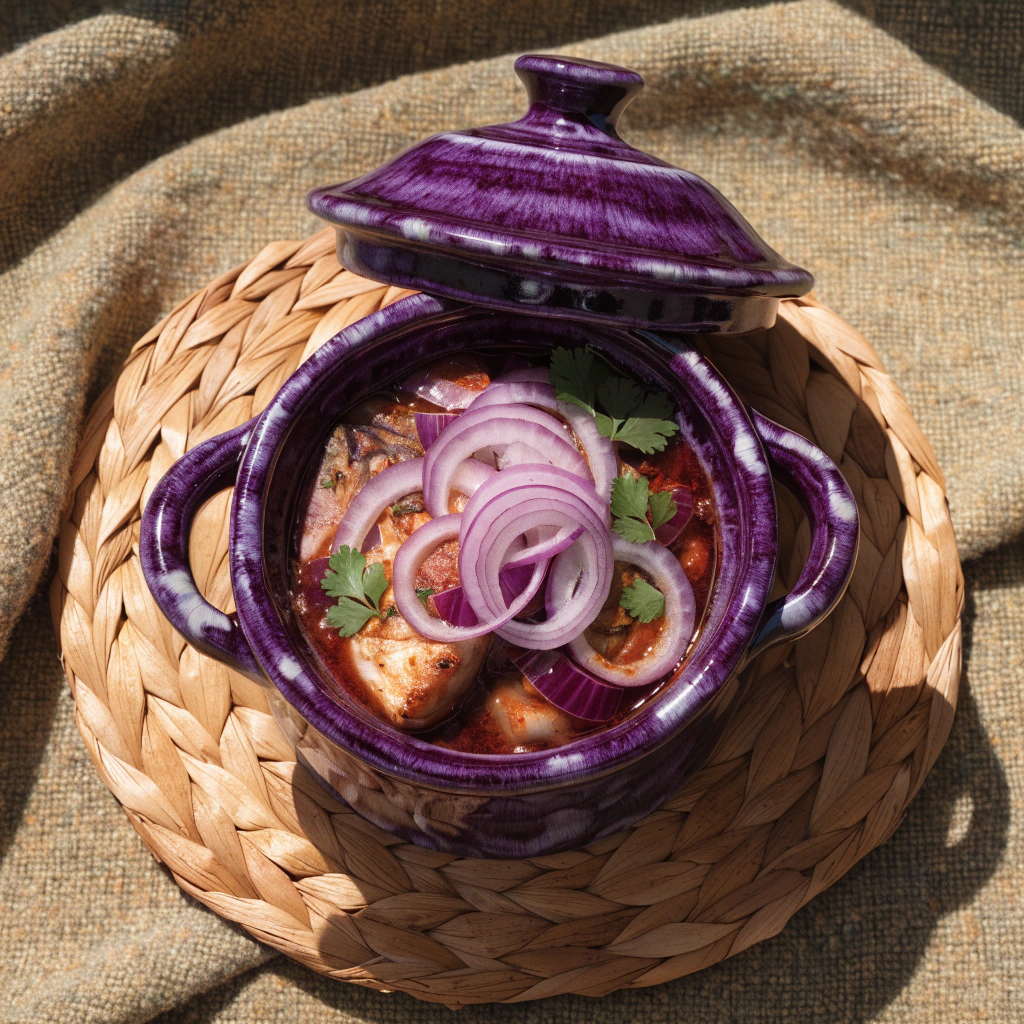
Moqueca: A Delicious Brazilian Food
Moqueca is a famous food from Brazil. It is a delicious fish stew. People in Brazil love this dish.
The soup has many fresh ingredients. There is firm white fish and sometimes shrimp. Cooks use tomatoes, onions, and garlic. They also use green coriander.
Brazil has two types of moqueca. One type is from Bahia. It has coconut milk and palm oil. The other type is from Espírito Santo. This version is simple and light.
Families eat moqueca on weekends. It is a very special meal for friends. You must try it!
Point grammaire
Structure: Present Simple: To Be
"It is a delicious fish stew."
We use 'is' with singular subjects like 'it' or 'moqueca'. It describes a fact or a state of being.
Structure: Present Simple: Have/Has
"The soup has many fresh ingredients."
Use 'has' for singular subjects (he, she, it) and 'have' for plural subjects. This shows possession or what is inside something.
Teste ta compréhension
10 questions · A1 Débutant · 1 aperçu gratuit
Teste ce que tu as appris dans cet article. Réponds à toutes les questions pour gagner des XP !
Where is Moqueca from?
Tu veux terminer le quiz ?
9 questions supplémentaires t'attendent. Inscris-toi gratuitement pour débloquer le quiz complet et gagner des XP !
S'inscrire gratuitementTu as dj un compte ? Connexion
Bien joué !
Continue à pratiquer !
Déjà terminé — pas de XP supplémentaire
Inscris-toi pour gagner des XPDétail des questions
Where is Moqueca from?
Ta réponse:
Bonne réponse: Brazil
Moqueca is a type of cake.
Ta réponse:
Bonne réponse: Faux
What is 'shrimp'?
Ta réponse:
Bonne réponse: A small sea animal
Families eat moqueca on _____.
Ta réponse:
Bonne réponse: weekends
The Story of Moqueca: A Delicious Brazilian Stew
Moqueca is a famous seafood stew from Brazil. It is a very old dish. Long ago, Indigenous people, Africans, and Portuguese people lived together in Brazil. They mixed their traditions to create this special food.
The stew has many fresh ingredients. Cooks use firm white fish, shrimp, onions, and tomatoes. They also add garlic and coriander for a great smell. People usually cook it slowly in a traditional clay pot.
There are two main types of Moqueca. The first is 'Moqueca Baiana' from Bahia. This version is very popular because it has coconut milk and 'dendê' palm oil. It is richer and heavier than other stews. The second is 'Moqueca Capixaba' from Espírito Santo. This version is lighter because cooks use olive oil instead of palm oil.
In the past, people only ate Moqueca near the ocean. Today, it is famous across the whole country. Brazilians often eat it with rice. It is a wonderful meal to share with family and friends.
Point grammaire
Structure: Comparatives
"It is richer and heavier than other stews."
We use comparatives to compare two things. For short adjectives like 'rich' or 'heavy', we add '-er' and use the word 'than'.
Structure: Connectors (Because)
"This version is very popular because it has coconut milk and 'dendê' palm oil."
We use 'because' to give a reason for something. It connects the main result to the cause.
Teste ta compréhension
11 questions · A2 mentaire · 1 aperçu gratuit
Teste ce que tu as appris dans cet article. Réponds à toutes les questions pour gagner des XP !
What is Moqueca?
Tu veux terminer le quiz ?
10 questions supplémentaires t'attendent. Inscris-toi gratuitement pour débloquer le quiz complet et gagner des XP !
S'inscrire gratuitementTu as dj un compte ? Connexion
Bien joué !
Continue à pratiquer !
Déjà terminé — pas de XP supplémentaire
Inscris-toi pour gagner des XPDétail des questions
What is Moqueca?
Ta réponse:
Bonne réponse: A seafood stew
Moqueca is a new dish created recently.
Ta réponse:
Bonne réponse: Faux
What does 'traditional' mean?
Ta réponse:
Bonne réponse: Something from the past
Brazilians often eat Moqueca with _____.
Ta réponse:
Bonne réponse: rice
Which version of Moqueca uses olive oil?
Ta réponse:
Bonne réponse: Moqueca Capixaba
Moqueca: The Heart of Brazilian Cooking
Moqueca is one of the most famous and beloved dishes in Brazil. It is a delicious seafood stew that has been cooked by families for centuries. This traditional meal is a perfect example of how different cultures have come together to create a unique identity. In Brazil, European, African, and Indigenous traditions have been mixed over time to produce this wonderful dish.
The stew is usually made with firm white fish, fresh shrimp, or a combination of both. These ingredients are slow-cooked in a special handmade clay pot with tomatoes, onions, garlic, and fresh coriander. Because the food is cooked slowly, the flavors are very rich and deep. However, there is a friendly but fierce rivalry between two coastal states: Bahia and Espírito Santo. People who live in these regions have argued about the 'true' recipe for a long time.
In the state of Bahia, the recipe has been heavily influenced by African traditions. The cooks use coconut milk and 'dendê' (palm oil), which gives the stew a bright orange color and a very creamy texture. On the other hand, the version from Espírito Santo, which is known as 'Moqueca Capixaba,' is much lighter. It is prepared using olive oil and 'urucum' seeds to provide a natural red color. This version was influenced more by Indigenous cooking methods.
Today, moqueca is not just a meal that is eaten for a Sunday lunch; it represents the rich history of the Brazilian people. Whether it is served with white rice or 'farofa' (toasted manioc flour), it is a dish that must be experienced by every traveler. It has become a powerful symbol of regional pride and cultural heritage. As the locals often say, 'Moqueca is not just food; it is a part of who we are.'
Point grammaire
Structure: Present Perfect
"People who live in these regions have argued about the 'true' recipe for a long time."
The present perfect (have/has + past participle) is used here to describe an action that started in the past and continues to the present moment.
Structure: Passive Voice
"The recipe has been heavily influenced by African traditions."
The passive voice is used when the focus is on the action or the thing being affected (the recipe) rather than who is doing the action.
Teste ta compréhension
11 questions · B1 Intermédiaire · 1 aperçu gratuit
Teste ce que tu as appris dans cet article. Réponds à toutes les questions pour gagner des XP !
What are the main ingredients of Moqueca mentioned in the text?
Tu veux terminer le quiz ?
10 questions supplémentaires t'attendent. Inscris-toi gratuitement pour débloquer le quiz complet et gagner des XP !
S'inscrire gratuitementTu as dj un compte ? Connexion
Bien joué !
Continue à pratiquer !
Déjà terminé — pas de XP supplémentaire
Inscris-toi pour gagner des XPDétail des questions
What are the main ingredients of Moqueca mentioned in the text?
Ta réponse:
Bonne réponse: Seafood like fish and shrimp
The Bahian version of Moqueca uses coconut milk.
Ta réponse:
Bonne réponse: Vrai
What does 'ingredients' mean?
Ta réponse:
Bonne réponse: The food items used to make a dish
Moqueca has become a powerful _____ of regional pride.
Ta réponse:
Bonne réponse: symbol
Why is Moqueca cooked in a clay pot?
Ta réponse:
Bonne réponse: It is a traditional method that helps flavors develop
La Moqueca : Un Symbole de la Diversité Culturelle Brésilienne
La moqueca est bien plus qu'une simple spécialité culinaire ; elle incarne l'âme du Brésil, un pays où les influences s'entremêlent pour créer quelque chose de radicalement nouveau. Ce ragoût de fruits de mer, dont la renommée dépasse les frontières sud-américaines, est le fruit d'une convergence historique entre les peuples autochtones, les colons portugais et les populations d'origine africaine.
Au cœur de ce plat se trouve une base de poisson blanc à chair ferme, de crevettes, de tomates, d'oignons et d'ail, le tout agrémenté d'une généreuse dose de coriandre. Cependant, pour comprendre la moqueca, il faut s'intéresser à la rivalité ancestrale qui oppose deux régions : Bahia et l'Espírito Santo. La « Moqueca Baiana », originaire du nord-est, est un hommage vibrant à l'héritage africain. L'utilisation de l'huile de palme (dendê) et du lait de coco lui confère une texture onctueuse et une saveur riche et épicée. C’est un plat qui sollicite tous les sens par sa couleur orangée et ses arômes puissants.
À l'opposé, la « Moqueca Capixaba », venant de l'État de l'Espírito Santo, revendique une approche plus sobre et fidèle aux racines indigènes. Ici, l'huile de palme et le lait de coco sont absents. On privilégie l'huile d'olive et l'ajout de graines de roucou (urucum) pour obtenir une teinte rougeâtre sans altérer le goût délicat du poisson. Les Capixabas aiment à dire avec fierté : « La moqueca est capixaba, le reste n'est que du ragoût de poisson ». Cette distinction souligne combien la gastronomie est un vecteur identitaire fort.
Préparée traditionnellement dans un pot en terre cuite fabriqué à la main, la moqueca doit mijoter lentement pour que les saveurs se marient harmonieusement. Ce processus de cuisson lente permet de préserver la tendreté des ingrédients tout en développant un bouillon complexe. En dégustant ce plat, on ne savoure pas seulement un mélange d'ingrédients, mais on participe à une célébration de la résilience culturelle. La moqueca transcende les classes sociales et les origines, s'imposant comme un patrimoine incontournable de la culture brésilienne. Elle nous rappelle que l'identité d'un peuple est souvent le reflet de ce qui mijote dans ses marmites : un mélange subtil, riche et en constante évolution.
Point grammaire
Structure: Le subjonctif présent
"La moqueca doit mijoter lentement pour que les saveurs se marient harmonieusement."
Le subjonctif est utilisé ici après la conjonction 'pour que' qui exprime un but. Il souligne une action envisagée ou souhaitée.
Structure: Le passif
"La version bahianaise est fortement influencée par les traditions africaines."
Le passif permet de mettre l'accent sur l'objet de l'action (la version bahianaise) plutôt que sur l'agent. On utilise l'auxiliaire 'être' conjugué suivi du participe passé.
Structure: Le gérondif
"En dégustant ce plat, on ne savoure pas seulement un mélange d'ingrédients..."
Le gérondif (en + participe présent) exprime ici la simultanéité de deux actions faites par le même sujet. Il peut aussi exprimer la manière.
Teste ta compréhension
11 questions · B2 Intermédiaire supérieur · 1 aperçu gratuit
Teste ce que tu as appris dans cet article. Réponds à toutes les questions pour gagner des XP !
Quelle est la principale différence entre la Moqueca Baiana et la Capixaba ?
Tu veux terminer le quiz ?
10 questions supplémentaires t'attendent. Inscris-toi gratuitement pour débloquer le quiz complet et gagner des XP !
S'inscrire gratuitementTu as dj un compte ? Connexion
Bien joué !
Continue à pratiquer !
Déjà terminé — pas de XP supplémentaire
Inscris-toi pour gagner des XPDétail des questions
Quelle est la principale différence entre la Moqueca Baiana et la Capixaba ?
Ta réponse:
Bonne réponse: L'utilisation de l'huile de palme et du lait de coco
La Moqueca Capixaba utilise du lait de coco pour obtenir sa texture.
Ta réponse:
Bonne réponse: Faux
Que signifie le mot 'onctueux' dans le contexte du texte ?
Ta réponse:
Bonne réponse: Une texture douce et crémeuse
Il existe une _____ ancestrale entre Bahia et l'Espírito Santo concernant l'origine du plat.
Ta réponse:
Bonne réponse: rivalité
Quel ingrédient donne sa couleur rouge à la Moqueca Capixaba ?
Ta réponse:
Bonne réponse: Les graines de roucou (urucum)
A Culinary Crucible: Deciphering the Socio-Cultural Layers of the Brazilian Moqueca
To the uninitiated, Brazil’s moqueca might appear to be a mere seafood stew, yet to perceive it as such would be to overlook a profound narrative of cultural convergence. This dish serves as a visceral testament to the country’s complex history, where Indigenous, African, and Portuguese lineages intersect within the confines of a clay pot. Seldom does a single dish encapsulate the friction and fusion of three continents so eloquently. The moqueca is not merely a recipe; it is a contentious symbol of regional identity, sparking a long-standing rivalry between the coastal states of Bahia and Espírito Santo.
The Bahian iteration, known as Moqueca Baiana, is emblematic of the heavy African influence that defines the region’s quintessence. It is the addition of dendê oil—a vibrant, heavy palm oil brought by enslaved West Africans—and rich coconut milk that distinguishes this version. These ingredients create a dense, aromatic profile that mirrors the historical proliferation of Afro-Brazilian traditions in Salvador. The meticulous layering of bell peppers, tomatoes, and onions over firm white fish ensures a slow infusion of flavors, a process that demands patience and culinary intuition.
Conversely, the Capixaba version from Espírito Santo prides itself on a more rudimentary, perhaps purist, approach. Eschewing the heavy oils and milk of its northern neighbor, the Moqueca Capixaba relies on urucum (annatto) for its characteristic reddish hue and extra-virgin olive oil for a lighter finish. The preservation of indigenous techniques is most evident here, particularly in the use of the 'panela de barro'—a handmade black clay pot sealed with mangrove sap. It is through this vessel that the indigenous legacy is most viscerally felt, as the clay’s heat retention and mineral properties are deemed indispensable to the final result.
This culinary dichotomy highlights a broader sociological phenomenon: the use of food as a tool for regional distinction. While the disparate ingredients might suggest a divide, the ubiquity of the moqueca across Brazil’s coastline suggests a shared heritage. The dispute over which state produces the 'authentic' moqueca is less about the acidity of the lime or the firmness of the shrimp and more about the assertion of local history. Ultimately, the moqueca serves as a sensory map of Brazil's past, proving that the most enduring legacies are often those that are simmered meticulously over time, transcending the boundaries of simple sustenance to become a form of cultural high art.
Point grammaire
Structure: Negative Inversion
"Seldom does a single dish encapsulate the friction and fusion of three continents so eloquently."
When using negative or restrictive adverbs like 'seldom' or 'rarely' at the beginning of a sentence for emphasis, the auxiliary verb is placed before the subject.
Structure: Cleft Sentence
"It is through this vessel that the indigenous legacy is most viscerally felt."
A cleft sentence is used to focus on a specific part of the information. It typically follows the structure 'It + is/was + [emphasized part] + that/who...'
Structure: Nominalization
"The preservation of indigenous techniques is most evident here."
Nominalization involves turning verbs or adjectives into nouns (e.g., 'preserve' to 'preservation'). It is a hallmark of C1 writing, making the tone more formal and objective.
Teste ta compréhension
12 questions · C1 Avancé · 1 aperçu gratuit
Teste ce que tu as appris dans cet article. Réponds à toutes les questions pour gagner des XP !
According to the article, what is the primary cultural significance of moqueca?
Tu veux terminer le quiz ?
11 questions supplémentaires t'attendent. Inscris-toi gratuitement pour débloquer le quiz complet et gagner des XP !
S'inscrire gratuitementTu as dj un compte ? Connexion
Bien joué !
Continue à pratiquer !
Déjà terminé — pas de XP supplémentaire
Inscris-toi pour gagner des XPDétail des questions
According to the article, what is the primary cultural significance of moqueca?
Ta réponse:
Bonne réponse: It represents the convergence of Indigenous, African, and Portuguese heritage.
The Bahian version of moqueca is characterized by its use of olive oil instead of palm oil.
Ta réponse:
Bonne réponse: Faux
What does the word 'quintessence' mean in the context of the article?
Ta réponse:
Bonne réponse: The most typical or perfect example of a quality.
The _____ of the moqueca across Brazil’s coastline suggests a shared heritage despite regional differences.
Ta réponse:
Bonne réponse: ubiquity
Why is the 'panela de barro' considered significant in the Capixaba tradition?
Ta réponse:
Bonne réponse: It represents the indigenous legacy and provides unique heat retention.
The article suggests that the rivalry between Bahia and Espírito Santo is more about regional identity than just ingredients.
Ta réponse:
Bonne réponse: Vrai
The Gastronomic Palimpsest: Moqueca and the Dialectics of Brazilian Identity
To traverse the littoral regions of Brazil is to engage in a sensory discourse with its complex historical past. Nowhere is this discourse more pronounced than in the consumption of moqueca, a seafood stew that serves as a quintessential gastronomic palimpsest. To the uninitiated, moqueca might appear to be a mere culinary staple; however, for the Brazilian populace, it represents a profound syncretism of Indigenous, African, and Portuguese heritages. Rarely has a dish so succinctly encapsulated the tripartite cultural underpinnings of a nation, yet its preparation remains a site of fierce, albeit amicable, regional contestation.
At its ontological core, moqueca is defined by the vessel in which it is prepared: the 'panela de barro' or black clay pot. This artifact is a direct legacy of the Indigenous peoples, specifically the Tupi-Guarani, whose technique of slow-cooking in clay vessels predates European contact. Lest the culinary historian overlook the nuances of this vessel, it must be noted that the clay pot provides a specific thermal viscosity that allows the stew to simmer with a gentle persistence, preserving the structural integrity of the firm white fish. This Indigenous foundation remains the bedrock of both major regional variations, yet the divergent paths they take thereafter reflect the broader socio-political stratification of Brazilian history.
In the northeastern state of Bahia, the 'Moqueca Baiana' emerges as a vibrant testament to the African diaspora. Here, the inclusion of 'azeite de dendê'—a heavy, crimson palm oil brought by enslaved West Africans—transforms the dish into a visceral experience. Augmented by coconut milk and malagueta peppers, the Bahian iteration is characterized by a rich, opaque density. Should one venture into the state of Espírito Santo, however, the culinary landscape shifts markedly toward the 'Moqueca Capixaba.' This version, ostensibly more aligned with Portuguese sensibilities, eschews the dendê oil and coconut milk in favor of olive oil and urucum (annatto) for color. The Capixaba claim that 'Moqueca is only Capixaba; the rest is just fish soup' highlights a regional hegemony that persists to this day.
Were one to analyze the dichotomy between these two styles, one would find that it mirrors the demographic realities of the regions themselves. Bahia remains the heart of Afro-Brazilian culture, whereas Espírito Santo reflects a different colonial trajectory. The tension between the two is not merely a matter of palate but a negotiation of identity. It is a testament to the resilience of these traditions that, despite the encroachment of globalized fast food, the ritual of the moqueca remains sacrosanct. The meticulous layering of tomatoes, onions, and coriander—a technique known as 'refogado'—requires a patience that stands in stark opposition to the frenetic pace of modern life.
Ultimately, the moqueca is not a static relic of the past but a living, breathing entity. It continues to evolve, reflecting the ongoing synthesis of Brazilian society. Whether one prefers the robust, earthy notes of the dendê-infused Bahian version or the lighter, more delicate profile of the Capixaba style, the dish remains a powerful symbol of national cohesion. It serves as a reminder that the most enduring aspects of culture are often those that can be tasted, smelled, and shared around a communal table, bridging the gap between historical trauma and contemporary celebration.
Point grammaire
Structure: Negative Inversion
"Rarely has a dish so succinctly encapsulated the tripartite cultural underpinnings of a nation."
Used for emphasis by placing a negative adverbial at the beginning of the sentence, followed by an auxiliary verb and the subject.
Structure: The Subjunctive Mood
"Lest the culinary historian overlook the nuances of this vessel, it must be noted that..."
The word 'lest' triggers the subjunctive mood (base form of the verb), used here to express a formal caution or to prevent a hypothetical negative outcome.
Structure: Mixed Conditional (Hypothetical)
"Were one to analyze the dichotomy between these two styles, one would find that it mirrors the demographic realities..."
The use of 'Were one to' is a highly formal way of expressing a hypothetical present or future condition, replacing the standard 'If' structure.
Teste ta compréhension
12 questions · C2 Maîtrise · 1 aperçu gratuit
Teste ce que tu as appris dans cet article. Réponds à toutes les questions pour gagner des XP !
What is the primary significance of the 'panela de barro' according to the text?
Tu veux terminer le quiz ?
11 questions supplémentaires t'attendent. Inscris-toi gratuitement pour débloquer le quiz complet et gagner des XP !
S'inscrire gratuitementTu as dj un compte ? Connexion
Bien joué !
Continue à pratiquer !
Déjà terminé — pas de XP supplémentaire
Inscris-toi pour gagner des XPDétail des questions
What is the primary significance of the 'panela de barro' according to the text?
Ta réponse:
Bonne réponse: It represents the Indigenous contribution to the dish.
The Capixaba version of moqueca traditionally includes coconut milk and dendê oil.
Ta réponse:
Bonne réponse: Faux
What does 'hegemony' refer to in the context of the article?
Ta réponse:
Bonne réponse: The dominance of one regional perspective over another.
The technique of layering tomatoes and onions is known as ____.
Ta réponse:
Bonne réponse: refogado
Which ingredient is responsible for the crimson color in Moqueca Capixaba?
Ta réponse:
Bonne réponse: Urucum
The author suggests that moqueca is a static relic of Brazilian history.
Ta réponse:
Bonne réponse: Faux

