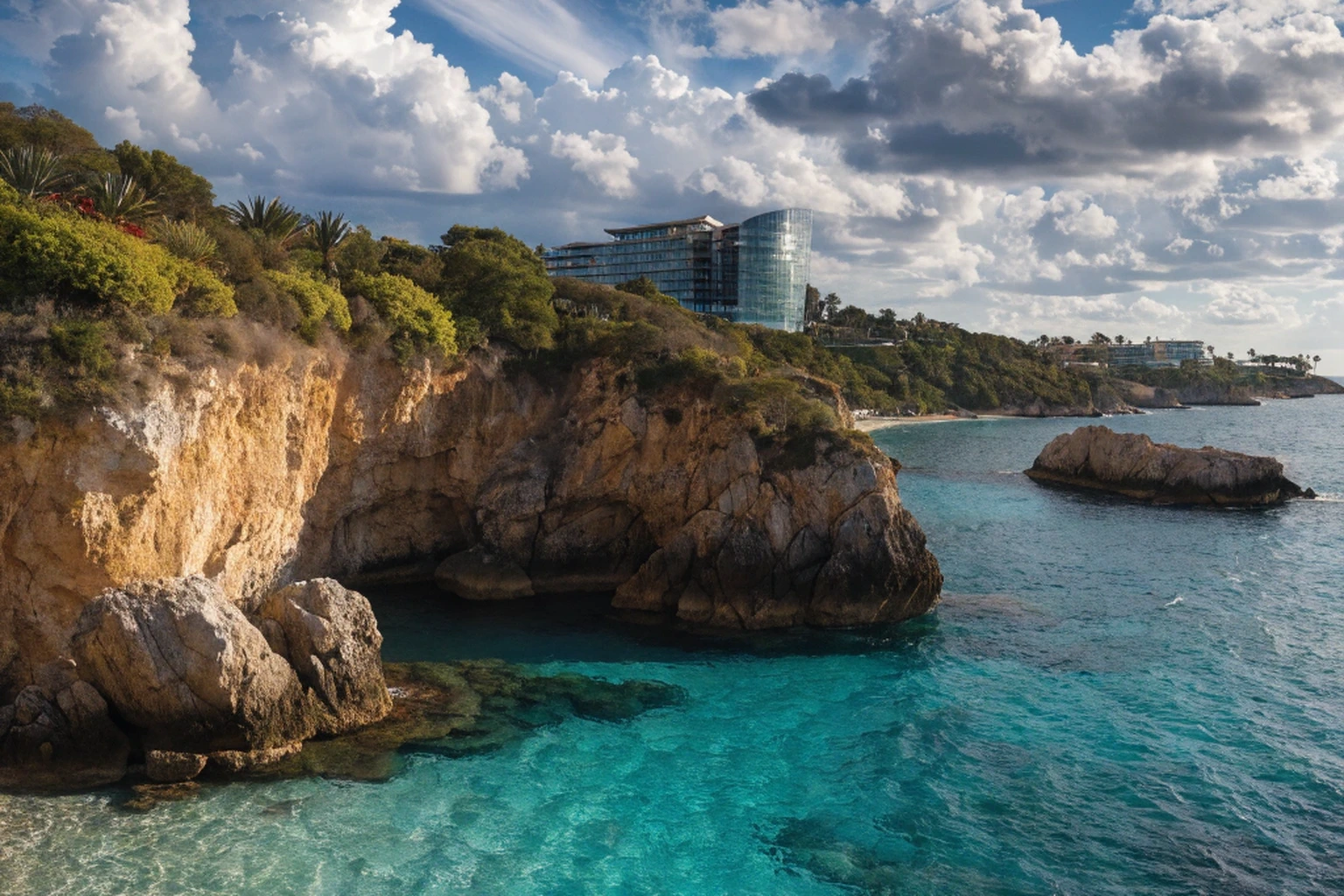
Le Tourisme en Espagne : Une Histoire Simple
Le tourisme est très important pour l'Espagne. Il aide l'économie du pays. Il y a beaucoup de personnes qui travaillent grâce au tourisme. Chaque année, des millions de touristes visitent l'Espagne.
Avant, les touristes aimaient surtout les plages et le soleil. Les côtes comme la Costa del Sol étaient très populaires. Aujourd'hui, l'Espagne offre plus. Les gens visitent pour la culture, les villes historiques et la nourriture. Le tourisme évolue. L'Espagne est un pays accueillant et diversifié pour les visiteurs. C'est bon pour tout le monde.
Point grammaire
Structure: Le verbe "être" au présent
"Le tourisme est très important pour l'Espagne."
Le verbe "être" est utilisé pour décrire ou identifier quelque chose. Pour "il" (le tourisme), on utilise "est". C'est un verbe très commun en français.
Structure: La construction "Il y a"
"Il y a beaucoup de personnes qui travaillent grâce au tourisme."
"Il y a" signifie "there is" ou "there are" en anglais. On utilise cette expression pour indiquer l'existence de quelque chose ou de quelqu'un. C'est une forme fixe.
Teste ta compréhension
10 questions · A1 Débutant · 1 aperçu gratuit
Teste ce que tu as appris dans cet article. Réponds à toutes les questions pour gagner des XP !
Qu'est-ce qui est très important pour l'économie de l'Espagne ?
Tu veux terminer le quiz ?
9 questions supplémentaires t'attendent. Inscris-toi gratuitement pour débloquer le quiz complet et gagner des XP !
S'inscrire gratuitementTu as dj un compte ? Connexion
Bien joué !
Continue à pratiquer !
Déjà terminé — pas de XP supplémentaire
Inscris-toi pour gagner des XPDétail des questions
Qu'est-ce qui est très important pour l'économie de l'Espagne ?
Ta réponse:
Bonne réponse: Le tourisme
Avant, les touristes aimaient surtout les plages et le soleil en Espagne.
Ta réponse:
Bonne réponse: Vrai
Que signifie le mot 'emplois' ?
Ta réponse:
Bonne réponse: Des travaux payés
Le tourisme est très _____ pour l'Espagne.
Ta réponse:
Bonne réponse: important
Sun, Sand, and History: Tourism in Spain
Spain is a very famous country for holidays. Many people visit Spain every year because the weather is hot and the beaches are beautiful. Tourism is very important for the Spanish economy. It gives jobs to millions of people.
In the 1960s, tourism started to grow quickly. The government made a popular plan called "Spain is Different." People from Europe traveled to the Costa del Sol and the Balearic Islands. They wanted sun and sand. It was cheaper than other places in Europe.
Today, tourism is different. Visitors still like the beach, but they also visit old cities and museums. Spain is now more modern than before. The food is delicious and the people are friendly. Tourism helps Spain grow and change. It is a big part of life in Spain.
Point grammaire
Structure: Past Simple (Regular and Irregular)
"The government made a popular plan called "Spain is Different.""
We use the past simple to talk about finished actions in the past. 'Made' is the irregular past form of 'make'.
Structure: Comparatives (More + Adjective + Than)
"Spain is now more modern than before."
We use 'more' + adjective + 'than' to compare two things when the adjective is long (has two or more syllables).
Teste ta compréhension
11 questions · A2 mentaire · 1 aperçu gratuit
Teste ce que tu as appris dans cet article. Réponds à toutes les questions pour gagner des XP !
Why do many people visit Spain?
Tu veux terminer le quiz ?
10 questions supplémentaires t'attendent. Inscris-toi gratuitement pour débloquer le quiz complet et gagner des XP !
S'inscrire gratuitementTu as dj un compte ? Connexion
Bien joué !
Continue à pratiquer !
Déjà terminé — pas de XP supplémentaire
Inscris-toi pour gagner des XPDétail des questions
Why do many people visit Spain?
Ta réponse:
Bonne réponse: Because of the hot weather and beaches
Tourism started to grow quickly in the 1990s.
Ta réponse:
Bonne réponse: Faux
What does 'modern' mean?
Ta réponse:
Bonne réponse: Using new styles, not old
Tourism gives _____ to millions of people.
Ta réponse:
Bonne réponse: jobs
Which place did people visit in the 1960s?
Ta réponse:
Bonne réponse: Costa del Sol
The Resilience and Evolution of Spanish Tourism
Spain is recognized globally as a premier holiday destination. For decades, tourism has been a fundamental pillar of the Spanish economy, providing employment to millions of citizens. It accounts for a large portion of the national income. The history of mass tourism in Spain dates back to the 1960s. During this period, the "Spain is Different" campaign was introduced. Consequently, coastal regions like the Costa del Sol and the Balearic Islands were transformed into major resorts for international travelers.
However, the industry has evolved since that time. Although the traditional "sun and beach" model is still popular, the country now offers much more. Cultural tourism has grown significantly. Cities such as Barcelona and Granada, which contain famous monuments like the Alhambra, attract tourists who appreciate history. Furthermore, gastronomy has become a key attraction. Many visitors travel specifically to enjoy Spanish cuisine, which is famous for its variety and flavor.
Recently, the sector has shown great resilience in the face of challenges. After the global pandemic, which stopped travel worldwide, Spanish tourism has bounced back. Hotels and local businesses have improved their services to meet modern standards. Moreover, there is a new emphasis on sustainability. Significant efforts have been made to reduce the environmental impact of tourism. This strategy ensures that natural resources are preserved for future visitors. Spain has successfully demonstrated that it can modernize its economy while keeping its cultural heritage alive.
Point grammaire
Structure: La voix passive (Past Simple)
"Consequently, coastal regions like the Costa del Sol and the Balearic Islands were transformed into major resorts."
On utilise la voix passive (was/were + participe passé) quand l'action est plus importante que la personne qui l'a faite. Ici, on met l'accent sur le changement des régions, et non sur qui les a changées.
Structure: Les propositions relatives explicatives
"Cities such as Barcelona and Granada, which contain famous monuments like the Alhambra, attract tourists."
Cette structure utilise 'which' entre virgules pour donner des informations supplémentaires sur les villes. La phrase aurait toujours du sens même sans ce détail supplémentaire.
Teste ta compréhension
11 questions · B1 Intermédiaire · 1 aperçu gratuit
Teste ce que tu as appris dans cet article. Réponds à toutes les questions pour gagner des XP !
Quand est-ce que le tourisme de masse a commencé à se développer en Espagne ?
Tu veux terminer le quiz ?
10 questions supplémentaires t'attendent. Inscris-toi gratuitement pour débloquer le quiz complet et gagner des XP !
S'inscrire gratuitementTu as dj un compte ? Connexion
Bien joué !
Continue à pratiquer !
Déjà terminé — pas de XP supplémentaire
Inscris-toi pour gagner des XPDétail des questions
Quand est-ce que le tourisme de masse a commencé à se développer en Espagne ?
Ta réponse:
Bonne réponse: Dans les années 1960
Le modèle « soleil et plage » n'est plus populaire en Espagne.
Ta réponse:
Bonne réponse: Faux
Que signifie le mot « resilience » ?
Ta réponse:
Bonne réponse: La capacité à se remettre rapidement
Les hôtels et les commerces locaux ont _____ leurs services pour répondre aux normes modernes.
Ta réponse:
Bonne réponse: improved
Quel est le nouvel objectif pour l'avenir du tourisme espagnol mentionné dans le texte ?
Ta réponse:
Bonne réponse: La durabilité
Beyond Sun and Sand: The Evolution of Spanish Tourism
Spain has long been celebrated as one of the world's premier holiday destinations. Since the 1960s, when the famous 'Spain is Different' campaign was launched, millions of visitors have flocked to its sunny coasts to enjoy the Mediterranean climate. However, the industry has undergone a significant evolution in recent decades. While the traditional 'sun and beach' model remains popular, Spain is increasingly recognized for its rich cultural heritage, diverse landscapes, and commitment to sustainability.
Tourism is the undisputed titan of the Spanish economy, accounting for approximately 12-14% of the national Gross Domestic Product (GDP). It provides employment to millions of citizens, serving as a crucial pillar of financial stability and growth. Nevertheless, relying solely on mass-market tourism has presented specific challenges, such as seasonal overcrowding and environmental strain. Consequently, there has been a strategic shift towards prioritizing quality over quantity.
One major development is the promotion of cultural and urban tourism. Cities like Seville, Bilbao, and Madrid offer world-class museums, historical architecture, and gastronomy that attract a more sophisticated traveler. Furthermore, rural tourism has gained traction, allowing visitors to explore the quiet beauty of the country's interior. This diversification ensures that the economic benefits of tourism are distributed more evenly throughout the regions, rather than being concentrated solely in coastal areas.
Sustainability has also become a top priority for the sector. The overwhelming number of tourists during peak summer months can burden local infrastructure and natural ecosystems. In response, the government has implemented various initiatives to manage visitor flows and preserve natural resources. By focusing on eco-friendly practices and responsible travel, Spain aims to protect its assets for future generations.
Despite global economic fluctuations, the Spanish tourism sector has demonstrated remarkable resilience. It has successfully adapted to changing consumer preferences and the rise of digital booking platforms. If Spain continues to innovate and broaden its appeal, it will undoubtedly remain a global leader in the international tourism market.
Point grammaire
Structure: Present Perfect Passive
"Spain has long been celebrated as one of the world's premier holiday destinations."
This tense is used to describe an action that started in the past and continues to the present, focusing on the receiver of the action (Spain) rather than the doer.
Structure: Connectors of Contrast
"However, the industry has undergone a significant evolution in recent decades."
Words like 'However' are used to introduce a statement that contrasts with or contradicts the previous statement, adding complexity and flow to the argument.
Structure: Relative Clauses
"Cities like Seville, Bilbao, and Madrid offer world-class museums... that attract a more sophisticated traveler."
Relative clauses starting with 'that' or 'which' provide essential information about the noun preceding them, allowing for more descriptive and complex sentences.
Teste ta compréhension
11 questions · B2 Intermédiaire supérieur · 1 aperçu gratuit
Teste ce que tu as appris dans cet article. Réponds à toutes les questions pour gagner des XP !
According to the article, what was the primary focus of Spanish tourism in the 1960s?
Tu veux terminer le quiz ?
10 questions supplémentaires t'attendent. Inscris-toi gratuitement pour débloquer le quiz complet et gagner des XP !
S'inscrire gratuitementTu as dj un compte ? Connexion
Bien joué !
Continue à pratiquer !
Déjà terminé — pas de XP supplémentaire
Inscris-toi pour gagner des XPDétail des questions
According to the article, what was the primary focus of Spanish tourism in the 1960s?
Ta réponse:
Bonne réponse: Sun and beach holidays
Tourism accounts for less than 10% of Spain's GDP.
Ta réponse:
Bonne réponse: Faux
Which word means 'accepted by everyone; not questioned'?
Ta réponse:
Bonne réponse: Undisputed
The government has implemented various ________ to manage visitor flows.
Ta réponse:
Bonne réponse: initiatives
Why has rural tourism gained traction in Spain?
Ta réponse:
Bonne réponse: It allows visitors to explore the interior landscapes
Beyond Sun and Sand: The Renaissance of Spanish Tourism
Spain’s position as a global tourism powerhouse is undisputed. Yet, the industry’s journey has been anything but static. Hardly had the 1960s commenced when the nation embarked on a transformative trajectory, leveraging its climatic assets to court the burgeoning European middle class. It was this strategic pivot, embodied by the 'Spain is Different' slogan, that catalysed the mass migration of holidaymakers to the Costa del Sol and the Balearic Islands. However, the initial 'sun and beach' paradigm, while economically lucrative, eventually laid bare the vulnerabilities of reliance on seasonal, low-margin volume.
The saturation of coastal enclaves prompted a necessary re-evaluation of the tourism model. No longer could the country rely solely on its weather; diversification became the watchword for survival and growth. Consequently, there has been a concerted shift towards high-value experiential travel. It is the rich tapestry of cultural heritage, from the Alhambra in Granada to the modernist marvels of Barcelona, that now commands equal attention. Furthermore, Spanish gastronomy has ascended to global renown, transforming dining into a primary travel motivation rather than a mere necessity.
Rarely has a sector demonstrated such resilience in the face of adversity. The financial crisis of 2008 and the unprecedented halt caused by the COVID-19 pandemic posed existential threats. Yet, in both instances, the industry’s recovery was swift, driven by domestic demand and a renewed international appetite for travel. What became evident was the sector’s ability to adapt; hotels were refurbished, digital infrastructure was overhauled, and sustainability protocols were embraced.
Crucially, the evolution continues. The current focus is on the mitigation of over-tourism and the promotion of sustainable practices. Local authorities are implementing stricter regulations to preserve the quality of life for residents, acknowledging that a destination’s viability is inextricably linked to the well-being of its community. Thus, the narrative of Spanish tourism is one of perpetual reinvention, ensuring that it remains a pivotal pillar of the national economy while safeguarding its treasures for future generations.
Point grammaire
Structure: Inversion after Negative Adverbials
"Hardly had the 1960s commenced when the nation embarked on a transformative trajectory."
When a sentence starts with a negative or restrictive adverb (like 'Hardly', 'Rarely', 'Seldom'), the subject and auxiliary verb are inverted. This creates a more dramatic or formal tone.
Structure: Cleft Sentences
"It was this strategic pivot... that catalysed the mass migration of holidaymakers."
Cleft sentences (starting with 'It is' or 'It was') are used to emphasize a specific part of the sentence. Here, it highlights the 'strategic pivot' as the main cause.
Structure: Nominalisation
"The saturation of coastal enclaves prompted a necessary re-evaluation of the tourism model."
Nominalisation involves turning verbs or adjectives into nouns (e.g., 'saturate' to 'saturation'). This is common in academic and formal C1 writing to make the text more objective and concise.
Teste ta compréhension
12 questions · C1 Avancé · 1 aperçu gratuit
Teste ce que tu as appris dans cet article. Réponds à toutes les questions pour gagner des XP !
What was the primary focus of the initial Spanish tourism model in the 1960s?
Tu veux terminer le quiz ?
11 questions supplémentaires t'attendent. Inscris-toi gratuitement pour débloquer le quiz complet et gagner des XP !
S'inscrire gratuitementTu as dj un compte ? Connexion
Bien joué !
Continue à pratiquer !
Déjà terminé — pas de XP supplémentaire
Inscris-toi pour gagner des XPDétail des questions
What was the primary focus of the initial Spanish tourism model in the 1960s?
Ta réponse:
Bonne réponse: Sun and beach leisure
The article suggests that Spanish tourism failed to recover after the 2008 financial crisis.
Ta réponse:
Bonne réponse: Faux
Which word means 'producing a great deal of profit'?
Ta réponse:
Bonne réponse: Lucrative
The ____________ of coastal areas led to a need for a new tourism strategy.
Ta réponse:
Bonne réponse: saturation
According to the text, what is a key component of the 'diversification' strategy?
Ta réponse:
Bonne réponse: Promoting gastronomy and culture
Local authorities are now implementing regulations to address over-tourism.
Ta réponse:
Bonne réponse: Vrai
Beyond the Sun: The Metamorphosis and Enduring Vitality of Spanish Tourism
It is no exaggeration to assert that tourism constitutes the backbone of the contemporary Spanish economy, a sector whose influence permeates every stratum of society. The genesis of this phenomenon can be traced back to the autarkic aspirations of the mid-20th century, specifically the 1960s, when the 'Spain is Different' campaign was launched. While initially dismissed by some skeptics as a mere marketing ploy, the initiative precipitated a monumental shift in the nation's socioeconomic fabric. Had the authorities not capitalized on the climatic advantages of the Mediterranean coast at that precise historical juncture, the trajectory of Spanish modernization might have been significantly more sluggish.
For decades, the industry was predicated on the hegemony of the 'sol y playa' (sun and beach) model. This approach, characterized by mass tourism and high-density coastal development, successfully transformed sleepy fishing villages into bustling metropolises of leisure. However, reliance on a single, seasonal asset rendered the economy vulnerable to the vicissitudes of global travel trends and emerging competitors in the Mediterranean basin offering similar amenities at lower price points. It became increasingly evident that for Spain to maintain its status as a premier global destination, a paradigm shift was not merely desirable, but imperative.
Consequently, the turn of the millennium witnessed a concerted effort to diversify the national portfolio. A burgeoning interest in cultural tourism began to challenge the dominance of the coastal resorts. The 'Bilbao Effect,' sparked by the construction of the Guggenheim Museum, demonstrated how architectural innovation could revitalize post-industrial urban centers. Cities such as Barcelona, Seville, and Madrid began to market their quintessential blend of history, art, and nightlife, attracting a demographic of traveler less interested in sedentary beach holidays and more inclined towards immersive cultural experiences. This diversification was crucial in mitigating the seasonality that had long plagued the sector.
Furthermore, the interior of the country, once overlooked, has seen a renaissance through the promotion of rural tourism and the 'Paradores' network—luxury hotels located in converted castles, convents, and palaces. This strategy has proven effective in redistributing the economic benefits of tourism to depopulated regions, helping to ameliorate the rural exodus. Visitors are now just as likely to seek out the ubiquitous gastronomic delights of San Sebastián or the architectural wonders of Granada as they are the beaches of the Balearic Islands. The gastronomic revolution, led by avant-garde chefs, has further cemented Spain’s reputation as a hub of high culture.
Nevertheless, the industry faces significant headwinds. The very success of Spanish tourism has given rise to the challenge of overtourism, particularly in historic city centers and fragile coastal ecosystems. The ephemeral nature of low-cost travel has led to congestion and gentrification, prompting a backlash from local communities. The nascent eco-tourism sector aims to address these concerns by prioritizing sustainability and carrying capacity over sheer visitor numbers. Ultimately, the resilience of Spanish tourism lies in its ability to adapt; it must continue to evolve from a model of quantity to one of quality, ensuring that it remains not just a playground for Europe, but a sustainable pillar of Spanish prosperity.
Point grammaire
Structure: Inversion in Conditional Sentences
"Had the authorities not capitalized on the climatic advantages of the Mediterranean coast at that precise historical juncture, the trajectory of Spanish modernization might have been significantly more sluggish."
This structure omits 'if' and inverts the subject and auxiliary verb ('Had the authorities...') to create a more formal, academic tone typical of C2 writing. It expresses a hypothetical situation in the past.
Structure: Passive Voice with Infinitive Construction
"The genesis of this phenomenon can be traced back to the autarkic aspirations of the mid-20th century."
Using the passive voice ('can be traced back') shifts the focus from the agent to the action or result, which is common in objective, analytical prose. It allows for a smoother flow of information.
Structure: Advanced Cleft Sentences (implied)
"It is no exaggeration to assert that tourism constitutes the backbone of the contemporary Spanish economy."
The phrase 'It is... that...' acts as an introductory cleft structure to emphasize the assertion that follows, adding weight and authority to the statement.
Teste ta compréhension
12 questions · C2 Maîtrise · 1 aperçu gratuit
Teste ce que tu as appris dans cet article. Réponds à toutes les questions pour gagner des XP !
According to the article, what was the primary motivation behind the initial 'Spain is Different' campaign?
Tu veux terminer le quiz ?
11 questions supplémentaires t'attendent. Inscris-toi gratuitement pour débloquer le quiz complet et gagner des XP !
S'inscrire gratuitementTu as dj un compte ? Connexion
Bien joué !
Continue à pratiquer !
Déjà terminé — pas de XP supplémentaire
Inscris-toi pour gagner des XPDétail des questions
According to the article, what was the primary motivation behind the initial 'Spain is Different' campaign?
Ta réponse:
Bonne réponse: To acquire foreign currency during a period of autarky
The article suggests that the 'sun and beach' model has been completely abandoned in favor of cultural tourism.
Ta réponse:
Bonne réponse: Faux
Which word best matches the definition: 'Changes that are unpleasant or unwelcome'?
Ta réponse:
Bonne réponse: Vicissitudes
The 'Bilbao Effect' is cited as an example of how architectural innovation can _____ post-industrial urban centers.
Ta réponse:
Bonne réponse: revitalize
What is identified as a significant benefit of the 'Paradores' network?
Ta réponse:
Bonne réponse: It helps redistribute economic benefits to depopulated rural areas
What does the author imply is the current challenge regarding low-cost travel?
Ta réponse:
Bonne réponse: It has led to congestion and gentrification

