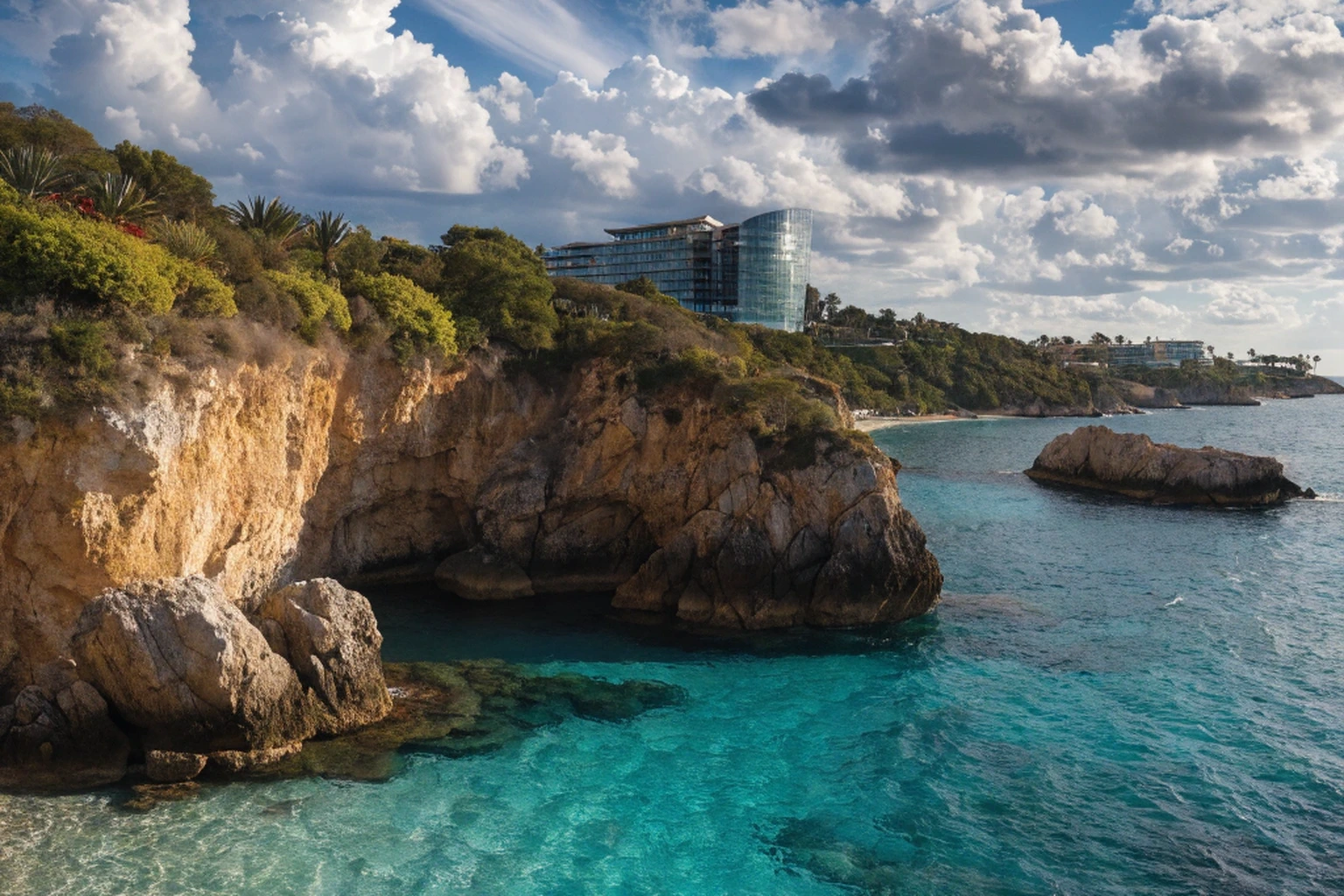
A Trip to Sunny Spain
Spain is a beautiful country in Europe. Many people visit Spain for their holidays. They come for the sun and the nice weather. The beaches in Spain are very popular.
Tourists do many things in Spain. They visit the beaches and swim in the sea. They also eat Spanish food and see interesting places. They learn about Spanish culture. People are very friendly.
Spain is always new and interesting. It is not just about the sun and the beach. There are many things to see and do. It is a great place for a holiday.
语法聚焦
句型: 一般现在时:'to be'
"Spain is a beautiful country in Europe."
我们用 'is' 来描述一个人、一个地方或一个事物。例如,'He is a student' (他是一名学生) 或 'The apple is red' (这个苹果是红色的)。它告诉我们一个当前的事实或描述。
句型: 一般现在时:规则动词
"They visit the beaches and swim in the sea."
我们对 'I' (我)、'you' (你/你们)、'we' (我们) 和 'they' (他们) 使用动词的原形。例如,'They visit' (他们拜访)。这个时态用于表示经常发生的动作或事实。
测试你的理解
10 个问题 · A1 初学 · 1 次免费预览
Sun, Sand, and History: Tourism in Spain
Spain is a very famous country for holidays. Many people visit Spain every year because the weather is hot and the beaches are beautiful. Tourism is very important for the Spanish economy. It gives jobs to millions of people.
In the 1960s, tourism started to grow quickly. The government made a popular plan called "Spain is Different." People from Europe traveled to the Costa del Sol and the Balearic Islands. They wanted sun and sand. It was cheaper than other places in Europe.
Today, tourism is different. Visitors still like the beach, but they also visit old cities and museums. Spain is now more modern than before. The food is delicious and the people are friendly. Tourism helps Spain grow and change. It is a big part of life in Spain.
语法聚焦
句型: 一般过去时(规则和不规则)
"The government made a popular plan called "Spain is Different.""
我们用一般过去时来谈论过去完成的动作。'Made' 是 'make' 的不规则过去式。
句型: 比较级 (More + 形容词 + Than)
"Spain is now more modern than before."
当形容词较长(有两个或更多音节)时,我们使用'more' + 形容词 + 'than'来比较两个事物。
测试你的理解
11 个问题 · A2 基础 · 1 次免费预览
测试你从这篇文章中学到的知识。回答所有问题即可获得经验值!
题目详情
为什么很多人去西班牙旅游?
你的回答:
正确答案: 因为天气炎热和有海滩
旅游业在20世纪90年代开始快速增长。
你的回答:
正确答案: 错误
'modern' 是什么意思?
你的回答:
正确答案: 使用新的风格,不旧
旅游业为数百万人提供_____
你的回答:
正确答案: jobs
在20世纪60年代,人们参观了哪个地方?
你的回答:
正确答案: 太阳海岸 (Costa del Sol)
The Resilience and Evolution of Spanish Tourism
Spain is recognized globally as a premier holiday destination. For decades, tourism has been a fundamental pillar of the Spanish economy, providing employment to millions of citizens. It accounts for a large portion of the national income. The history of mass tourism in Spain dates back to the 1960s. During this period, the "Spain is Different" campaign was introduced. Consequently, coastal regions like the Costa del Sol and the Balearic Islands were transformed into major resorts for international travelers.
However, the industry has evolved since that time. Although the traditional "sun and beach" model is still popular, the country now offers much more. Cultural tourism has grown significantly. Cities such as Barcelona and Granada, which contain famous monuments like the Alhambra, attract tourists who appreciate history. Furthermore, gastronomy has become a key attraction. Many visitors travel specifically to enjoy Spanish cuisine, which is famous for its variety and flavor.
Recently, the sector has shown great resilience in the face of challenges. After the global pandemic, which stopped travel worldwide, Spanish tourism has bounced back. Hotels and local businesses have improved their services to meet modern standards. Moreover, there is a new emphasis on sustainability. Significant efforts have been made to reduce the environmental impact of tourism. This strategy ensures that natural resources are preserved for future visitors. Spain has successfully demonstrated that it can modernize its economy while keeping its cultural heritage alive.
语法聚焦
句型: 被动语态(一般过去时)
"Consequently, coastal regions like the Costa del Sol and the Balearic Islands were transformed into major resorts."
当动作本身比执行动作的人更重要时,我们使用被动语态(was/were + 过去分词)。这里,重点是这些地区被改变了,而不是谁改变了它们。
句型: 非限定性关系从句
"Cities such as Barcelona and Granada, which contain famous monuments like the Alhambra, attract tourists."
这个句式在逗号中使用'which'来提供关于城市的额外信息。即使去掉这部分额外信息,句子本身的意思仍然是完整的。
测试你的理解
11 个问题 · B1 中级 · 1 次免费预览
测试你从这篇文章中学到的知识。回答所有问题即可获得经验值!
题目详情
大众旅游是从什么时候开始在西班牙发展的?
你的回答:
正确答案: 在20世纪60年代
“阳光和海滩”模式在西班牙已经不再流行了。
你的回答:
正确答案: 错误
'resilience' 是什么意思?
你的回答:
正确答案: 迅速恢复的能力
酒店和当地商家已经_____了他们的服务以满足现代标准。
你的回答:
正确答案: improved
根据文中内容,西班牙旅游业未来的新重点是什么?
你的回答:
正确答案: 可持续性
Beyond Sun and Sand: The Evolution of Spanish Tourism
Spain has long been celebrated as one of the world's premier holiday destinations. Since the 1960s, when the famous 'Spain is Different' campaign was launched, millions of visitors have flocked to its sunny coasts to enjoy the Mediterranean climate. However, the industry has undergone a significant evolution in recent decades. While the traditional 'sun and beach' model remains popular, Spain is increasingly recognized for its rich cultural heritage, diverse landscapes, and commitment to sustainability.
Tourism is the undisputed titan of the Spanish economy, accounting for approximately 12-14% of the national Gross Domestic Product (GDP). It provides employment to millions of citizens, serving as a crucial pillar of financial stability and growth. Nevertheless, relying solely on mass-market tourism has presented specific challenges, such as seasonal overcrowding and environmental strain. Consequently, there has been a strategic shift towards prioritizing quality over quantity.
One major development is the promotion of cultural and urban tourism. Cities like Seville, Bilbao, and Madrid offer world-class museums, historical architecture, and gastronomy that attract a more sophisticated traveler. Furthermore, rural tourism has gained traction, allowing visitors to explore the quiet beauty of the country's interior. This diversification ensures that the economic benefits of tourism are distributed more evenly throughout the regions, rather than being concentrated solely in coastal areas.
Sustainability has also become a top priority for the sector. The overwhelming number of tourists during peak summer months can burden local infrastructure and natural ecosystems. In response, the government has implemented various initiatives to manage visitor flows and preserve natural resources. By focusing on eco-friendly practices and responsible travel, Spain aims to protect its assets for future generations.
Despite global economic fluctuations, the Spanish tourism sector has demonstrated remarkable resilience. It has successfully adapted to changing consumer preferences and the rise of digital booking platforms. If Spain continues to innovate and broaden its appeal, it will undoubtedly remain a global leader in the international tourism market.
语法聚焦
句型: 现在完成时被动语态
"Spain has long been celebrated as one of the world's premier holiday destinations."
这个时态用来描述一个在过去开始并持续到现在的动作,重点是被动语态的接受者(西班牙),而不是动作的执行者。
句型: 对比连接词
"However, the industry has undergone a significant evolution in recent decades."
像“However”(然而)这样的词语用来引入一个与前一句对比或矛盾的陈述,增加了论证的复杂性和流畅性。
句型: 定语从句
"Cities like Seville, Bilbao, and Madrid offer world-class museums... that attract a more sophisticated traveler."
以“that”或“which”开头的定语从句提供了关于其先行名词的重要信息,使得句子更具描述性和复杂性。
测试你的理解
11 个问题 · B2 中高级 · 1 次免费预览
测试你从这篇文章中学到的知识。回答所有问题即可获得经验值!
题目详情
根据文章,20世纪60年代西班牙旅游业的主要重点是什么?
你的回答:
正确答案: 阳光海滩度假
旅游业占西班牙GDP不到10%。
你的回答:
正确答案: 错误
哪个词的意思是“被所有人接受;毋庸置疑”?
你的回答:
正确答案: Undisputed
政府已经实施了各种________来管理游客流量。
你的回答:
正确答案: initiatives
为什么乡村旅游在西班牙越来越受欢迎?
你的回答:
正确答案: 它让游客可以探索内陆风光
Beyond Sun and Sand: The Renaissance of Spanish Tourism
Spain’s position as a global tourism powerhouse is undisputed. Yet, the industry’s journey has been anything but static. Hardly had the 1960s commenced when the nation embarked on a transformative trajectory, leveraging its climatic assets to court the burgeoning European middle class. It was this strategic pivot, embodied by the 'Spain is Different' slogan, that catalysed the mass migration of holidaymakers to the Costa del Sol and the Balearic Islands. However, the initial 'sun and beach' paradigm, while economically lucrative, eventually laid bare the vulnerabilities of reliance on seasonal, low-margin volume.
The saturation of coastal enclaves prompted a necessary re-evaluation of the tourism model. No longer could the country rely solely on its weather; diversification became the watchword for survival and growth. Consequently, there has been a concerted shift towards high-value experiential travel. It is the rich tapestry of cultural heritage, from the Alhambra in Granada to the modernist marvels of Barcelona, that now commands equal attention. Furthermore, Spanish gastronomy has ascended to global renown, transforming dining into a primary travel motivation rather than a mere necessity.
Rarely has a sector demonstrated such resilience in the face of adversity. The financial crisis of 2008 and the unprecedented halt caused by the COVID-19 pandemic posed existential threats. Yet, in both instances, the industry’s recovery was swift, driven by domestic demand and a renewed international appetite for travel. What became evident was the sector’s ability to adapt; hotels were refurbished, digital infrastructure was overhauled, and sustainability protocols were embraced.
Crucially, the evolution continues. The current focus is on the mitigation of over-tourism and the promotion of sustainable practices. Local authorities are implementing stricter regulations to preserve the quality of life for residents, acknowledging that a destination’s viability is inextricably linked to the well-being of its community. Thus, the narrative of Spanish tourism is one of perpetual reinvention, ensuring that it remains a pivotal pillar of the national economy while safeguarding its treasures for future generations.
语法聚焦
句型: 否定副词后的倒装
"Hardly had the 1960s commenced when the nation embarked on a transformative trajectory."
当一个句子以否定或限制性副词(如 'Hardly'、'Rarely'、'Seldom')开头时,主语和助动词会倒装。这会营造出一种更戏剧化或更正式的语气。
句型: 分裂句
"It was this strategic pivot... that catalysed the mass migration of holidaymakers."
分裂句(以 'It is' 或 'It was' 开头)用来强调句子中的某个特定部分。在这里,它强调了“战略支点”是主要原因。
句型: 名词化
"The saturation of coastal enclaves prompted a necessary re-evaluation of the tourism model."
名词化是指将动词或形容词转化为名词(例如,'saturate' 变成 'saturation')。这在学术和正式的C1级别写作中很常见,能让文章显得更客观、更简洁。
测试你的理解
12 个问题 · C1 高级 · 1 次免费预览
测试你从这篇文章中学到的知识。回答所有问题即可获得经验值!
题目详情
20世纪60年代,西班牙最初的旅游模式主要关注什么?
你的回答:
正确答案: 阳光和海滩休闲
文章暗示,西班牙旅游业在2008年金融危机后未能复苏。
你的回答:
正确答案: 错误
哪个词的意思是“能产生巨大利润的”?
你的回答:
正确答案: Lucrative
沿海地区的____________导致需要制定新的旅游战略。
你的回答:
正确答案: saturation
根据文本,“多样化”战略的一个关键组成部分是什么?
你的回答:
正确答案: 推广美食和文化
地方当局现在正在实施法规以解决过度旅游问题。
你的回答:
正确答案: 正确
Beyond the Sun: The Metamorphosis and Enduring Vitality of Spanish Tourism
It is no exaggeration to assert that tourism constitutes the backbone of the contemporary Spanish economy, a sector whose influence permeates every stratum of society. The genesis of this phenomenon can be traced back to the autarkic aspirations of the mid-20th century, specifically the 1960s, when the 'Spain is Different' campaign was launched. While initially dismissed by some skeptics as a mere marketing ploy, the initiative precipitated a monumental shift in the nation's socioeconomic fabric. Had the authorities not capitalized on the climatic advantages of the Mediterranean coast at that precise historical juncture, the trajectory of Spanish modernization might have been significantly more sluggish.
For decades, the industry was predicated on the hegemony of the 'sol y playa' (sun and beach) model. This approach, characterized by mass tourism and high-density coastal development, successfully transformed sleepy fishing villages into bustling metropolises of leisure. However, reliance on a single, seasonal asset rendered the economy vulnerable to the vicissitudes of global travel trends and emerging competitors in the Mediterranean basin offering similar amenities at lower price points. It became increasingly evident that for Spain to maintain its status as a premier global destination, a paradigm shift was not merely desirable, but imperative.
Consequently, the turn of the millennium witnessed a concerted effort to diversify the national portfolio. A burgeoning interest in cultural tourism began to challenge the dominance of the coastal resorts. The 'Bilbao Effect,' sparked by the construction of the Guggenheim Museum, demonstrated how architectural innovation could revitalize post-industrial urban centers. Cities such as Barcelona, Seville, and Madrid began to market their quintessential blend of history, art, and nightlife, attracting a demographic of traveler less interested in sedentary beach holidays and more inclined towards immersive cultural experiences. This diversification was crucial in mitigating the seasonality that had long plagued the sector.
Furthermore, the interior of the country, once overlooked, has seen a renaissance through the promotion of rural tourism and the 'Paradores' network—luxury hotels located in converted castles, convents, and palaces. This strategy has proven effective in redistributing the economic benefits of tourism to depopulated regions, helping to ameliorate the rural exodus. Visitors are now just as likely to seek out the ubiquitous gastronomic delights of San Sebastián or the architectural wonders of Granada as they are the beaches of the Balearic Islands. The gastronomic revolution, led by avant-garde chefs, has further cemented Spain’s reputation as a hub of high culture.
Nevertheless, the industry faces significant headwinds. The very success of Spanish tourism has given rise to the challenge of overtourism, particularly in historic city centers and fragile coastal ecosystems. The ephemeral nature of low-cost travel has led to congestion and gentrification, prompting a backlash from local communities. The nascent eco-tourism sector aims to address these concerns by prioritizing sustainability and carrying capacity over sheer visitor numbers. Ultimately, the resilience of Spanish tourism lies in its ability to adapt; it must continue to evolve from a model of quantity to one of quality, ensuring that it remains not just a playground for Europe, but a sustainable pillar of Spanish prosperity.
语法聚焦
句型: 条件句中的倒装
"Had the authorities not capitalized on the climatic advantages of the Mediterranean coast at that precise historical juncture, the trajectory of Spanish modernization might have been significantly more sluggish."
这种结构省略了 'if',并将主语和助动词倒置('Had the authorities...'),营造出一种更正式、更学术的语气,这是 C2 级别写作的典型特征。它用来表达过去的一种假设情况。
句型: 被动语态与不定式结构
"The genesis of this phenomenon can be traced back to the autarkic aspirations of the mid-20th century."
使用被动语态('can be traced back')将焦点从施动者转移到动作或结果上,这在客观、分析性的文章中很常见。它使信息的流动更加顺畅。
句型: 高级分裂句(隐含)
"It is no exaggeration to assert that tourism constitutes the backbone of the contemporary Spanish economy."
短语 'It is... that...' 作为一个引导性的分裂结构,用以强调后面的断言,增加了该陈述的分量和权威性。
测试你的理解
12 个问题 · C2 精通 · 1 次免费预览
测试你从这篇文章中学到的知识。回答所有问题即可获得经验值!
题目详情
根据文章,最初“西班牙与众不同”宣传活动背后的主要动机是什么?
你的回答:
正确答案: 在自给自足时期获取外汇
文章暗示,“阳光与海滩”模式已完全被文化旅游所取代。
你的回答:
正确答案: 错误
哪个词最符合定义:“令人不悦或不受欢迎的变化”?
你的回答:
正确答案: 变迁
“毕尔巴鄂效应”被引为建筑创新如何能_____后工业时代城市中心的例子。
你的回答:
正确答案: revitalize
“Paradores”连锁酒店网络的一个显著好处是什么?
你的回答:
正确答案: 它有助于将经济利益重新分配给人口稀少的农村地区
作者暗示,目前关于低成本旅行的挑战是什么?
你的回答:
正确答案: 它导致了拥堵和士绅化

