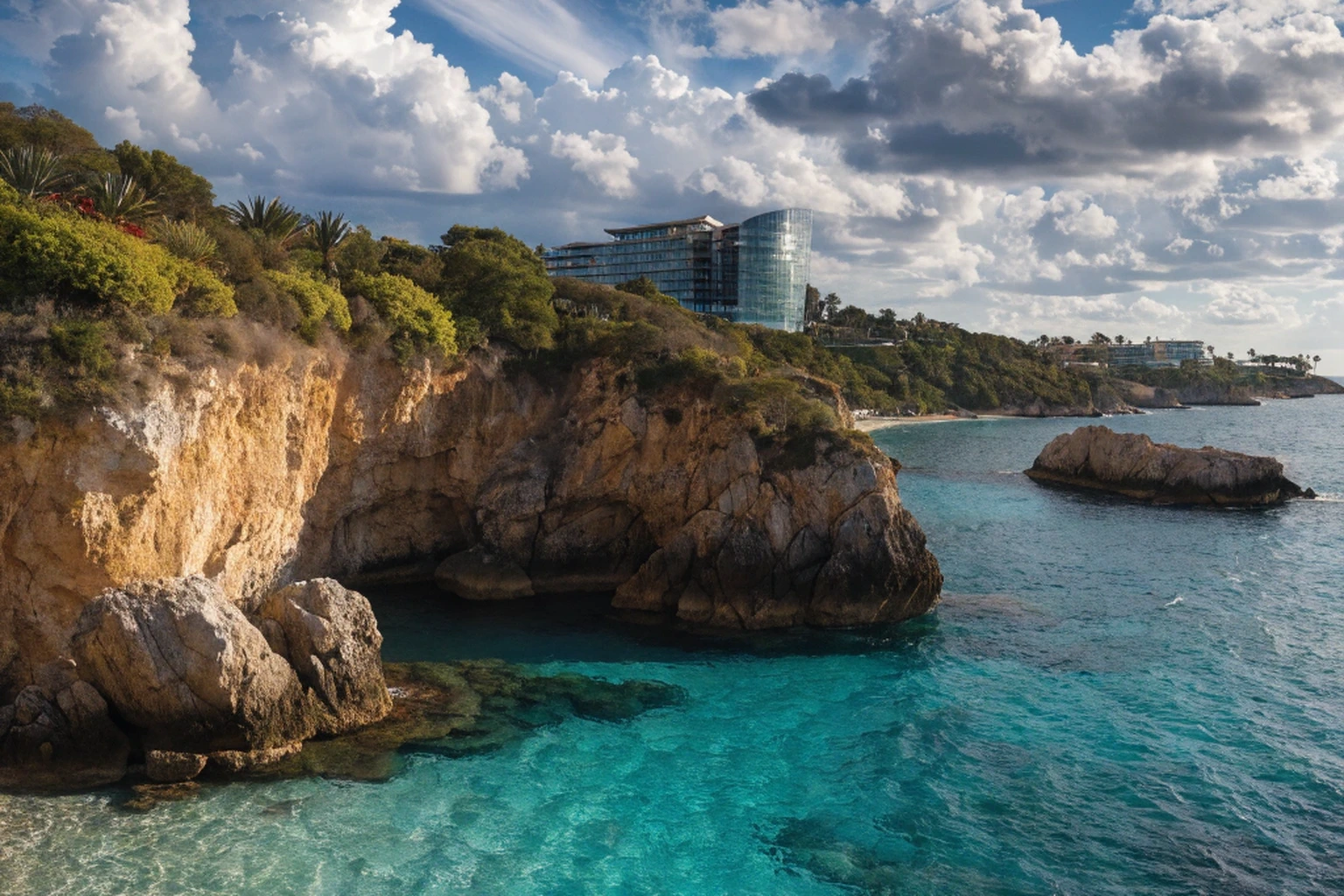
A Trip to Sunny Spain
Spain is a beautiful country in Europe. Many people visit Spain for their holidays. They come for the sun and the nice weather. The beaches in Spain are very popular.
Tourists do many things in Spain. They visit the beaches and swim in the sea. They also eat Spanish food and see interesting places. They learn about Spanish culture. People are very friendly.
Spain is always new and interesting. It is not just about the sun and the beach. There are many things to see and do. It is a great place for a holiday.
Gramática em destaque
Padrão: Presente Simples: 'to be'
"Spain is a beautiful country in Europe."
Usamos 'is' (é/está) para descrever uma pessoa, lugar ou coisa. Por exemplo, 'He is a student' (Ele é um estudante) ou 'The apple is red' (A maçã é vermelha). Isso nos diz um fato ou uma descrição no presente.
Padrão: Presente Simples: Verbos Regulares
"They visit the beaches and swim in the sea."
Usamos a forma simples do verbo para 'I', 'you', 'we' e 'they'. Por exemplo, 'They visit' (Eles visitam). Este tempo verbal é para ações que acontecem regularmente ou são fatos.
Teste sua compreensão
10 perguntas · A1 Iniciante · 1 pré-visualização grátis
Teste o que aprendeu neste artigo. Responda todas as perguntas para ganhar XP!
Por que muitas pessoas visitam a Espanha?
Quer finalizar o quiz?
9 perguntas a mais estão esperando por você. Cadastre-se grátis para desbloquear o quiz completo e ganhar XP!
Cadastrar grátisJá tem conta? Entrar
Detalhamento das perguntas
Por que muitas pessoas visitam a Espanha?
Sua resposta:
Resposta correta: Pelo sol e pelo clima
A Espanha é sempre a mesma e nunca muda.
Sua resposta:
Resposta correta: Falso
O que significa 'beaches'?
Sua resposta:
Resposta correta: A terra ao lado do mar
Eles _____ sobre a cultura espanhola.
Sua resposta:
Resposta correta: learn
Sun, Sand, and History: Tourism in Spain
Spain is a very famous country for holidays. Many people visit Spain every year because the weather is hot and the beaches are beautiful. Tourism is very important for the Spanish economy. It gives jobs to millions of people.
In the 1960s, tourism started to grow quickly. The government made a popular plan called "Spain is Different." People from Europe traveled to the Costa del Sol and the Balearic Islands. They wanted sun and sand. It was cheaper than other places in Europe.
Today, tourism is different. Visitors still like the beach, but they also visit old cities and museums. Spain is now more modern than before. The food is delicious and the people are friendly. Tourism helps Spain grow and change. It is a big part of life in Spain.
Gramática em destaque
Padrão: Passado Simples (Regular e Irregular)
"The government made a popular plan called "Spain is Different.""
Usamos o passado simples para falar sobre ações terminadas no passado. 'Made' é a forma irregular no passado de 'make'.
Padrão: Comparativos (More + Adjetivo + Than)
"Spain is now more modern than before."
Usamos 'more' + adjetivo + 'than' para comparar duas coisas quando o adjetivo é longo (tem duas ou mais sílabas).
Teste sua compreensão
11 perguntas · A2 Elementar · 1 pré-visualização grátis
Teste o que aprendeu neste artigo. Responda todas as perguntas para ganhar XP!
Por que muitas pessoas visitam a Espanha?
Quer finalizar o quiz?
10 perguntas a mais estão esperando por você. Cadastre-se grátis para desbloquear o quiz completo e ganhar XP!
Cadastrar grátisJá tem conta? Entrar
Detalhamento das perguntas
Por que muitas pessoas visitam a Espanha?
Sua resposta:
Resposta correta: Por causa do tempo quente e das praias
O turismo começou a crescer rapidamente nos anos 90.
Sua resposta:
Resposta correta: Falso
O que significa 'moderno'?
Sua resposta:
Resposta correta: Que usa estilos novos, não é antigo
O turismo gera _____ para milhões de pessoas.
Sua resposta:
Resposta correta: jobs
Qual lugar as pessoas visitavam nos anos 60?
Sua resposta:
Resposta correta: Costa del Sol
The Resilience and Evolution of Spanish Tourism
Spain is recognized globally as a premier holiday destination. For decades, tourism has been a fundamental pillar of the Spanish economy, providing employment to millions of citizens. It accounts for a large portion of the national income. The history of mass tourism in Spain dates back to the 1960s. During this period, the "Spain is Different" campaign was introduced. Consequently, coastal regions like the Costa del Sol and the Balearic Islands were transformed into major resorts for international travelers.
However, the industry has evolved since that time. Although the traditional "sun and beach" model is still popular, the country now offers much more. Cultural tourism has grown significantly. Cities such as Barcelona and Granada, which contain famous monuments like the Alhambra, attract tourists who appreciate history. Furthermore, gastronomy has become a key attraction. Many visitors travel specifically to enjoy Spanish cuisine, which is famous for its variety and flavor.
Recently, the sector has shown great resilience in the face of challenges. After the global pandemic, which stopped travel worldwide, Spanish tourism has bounced back. Hotels and local businesses have improved their services to meet modern standards. Moreover, there is a new emphasis on sustainability. Significant efforts have been made to reduce the environmental impact of tourism. This strategy ensures that natural resources are preserved for future visitors. Spain has successfully demonstrated that it can modernize its economy while keeping its cultural heritage alive.
Gramática em destaque
Padrão: Voz Passiva (Passado Simples)
"Consequently, coastal regions like the Costa del Sol and the Balearic Islands were transformed into major resorts."
Usamos a voz passiva (was/were + particípio passado) quando a ação é mais importante do que quem a realizou. Aqui, o foco está na mudança das regiões, não em quem as mudou.
Padrão: Orações Relativas Explicativas
"Cities such as Barcelona and Granada, which contain famous monuments like the Alhambra, attract tourists."
Este padrão usa 'which' entre vírgulas para dar informações extras sobre as cidades. A frase ainda faria sentido sem esse detalhe adicional.
Teste sua compreensão
11 perguntas · B1 Intermediário · 1 pré-visualização grátis
Teste o que aprendeu neste artigo. Responda todas as perguntas para ganhar XP!
Quando o turismo de massa começou a se desenvolver na Espanha?
Quer finalizar o quiz?
10 perguntas a mais estão esperando por você. Cadastre-se grátis para desbloquear o quiz completo e ganhar XP!
Cadastrar grátisJá tem conta? Entrar
Detalhamento das perguntas
Quando o turismo de massa começou a se desenvolver na Espanha?
Sua resposta:
Resposta correta: Nos anos 1960
O modelo 'sol e praia' não é mais popular na Espanha.
Sua resposta:
Resposta correta: Falso
O que significa 'resilience' (resiliência)?
Sua resposta:
Resposta correta: A capacidade de se recuperar rapidamente
Hotéis e empresas locais _____ seus serviços para atender aos padrões modernos.
Sua resposta:
Resposta correta: improved
Qual é o novo foco para o futuro do turismo espanhol mencionado no texto?
Sua resposta:
Resposta correta: Sustentabilidade
Beyond Sun and Sand: The Evolution of Spanish Tourism
Spain has long been celebrated as one of the world's premier holiday destinations. Since the 1960s, when the famous 'Spain is Different' campaign was launched, millions of visitors have flocked to its sunny coasts to enjoy the Mediterranean climate. However, the industry has undergone a significant evolution in recent decades. While the traditional 'sun and beach' model remains popular, Spain is increasingly recognized for its rich cultural heritage, diverse landscapes, and commitment to sustainability.
Tourism is the undisputed titan of the Spanish economy, accounting for approximately 12-14% of the national Gross Domestic Product (GDP). It provides employment to millions of citizens, serving as a crucial pillar of financial stability and growth. Nevertheless, relying solely on mass-market tourism has presented specific challenges, such as seasonal overcrowding and environmental strain. Consequently, there has been a strategic shift towards prioritizing quality over quantity.
One major development is the promotion of cultural and urban tourism. Cities like Seville, Bilbao, and Madrid offer world-class museums, historical architecture, and gastronomy that attract a more sophisticated traveler. Furthermore, rural tourism has gained traction, allowing visitors to explore the quiet beauty of the country's interior. This diversification ensures that the economic benefits of tourism are distributed more evenly throughout the regions, rather than being concentrated solely in coastal areas.
Sustainability has also become a top priority for the sector. The overwhelming number of tourists during peak summer months can burden local infrastructure and natural ecosystems. In response, the government has implemented various initiatives to manage visitor flows and preserve natural resources. By focusing on eco-friendly practices and responsible travel, Spain aims to protect its assets for future generations.
Despite global economic fluctuations, the Spanish tourism sector has demonstrated remarkable resilience. It has successfully adapted to changing consumer preferences and the rise of digital booking platforms. If Spain continues to innovate and broaden its appeal, it will undoubtedly remain a global leader in the international tourism market.
Gramática em destaque
Padrão: Presente Perfeito Passivo
"Spain has long been celebrated as one of the world's premier holiday destinations."
Este tempo verbal é usado para descrever uma ação que começou no passado e continua até o presente, focando no receptor da ação (Espanha) em vez de quem a praticou.
Padrão: Conectivos de Contraste
"However, the industry has undergone a significant evolution in recent decades."
Palavras como 'However' (No entanto) são usadas para introduzir uma afirmação que contrasta ou contradiz a afirmação anterior, adicionando complexidade e fluidez ao argumento.
Padrão: Orações Relativas
"Cities like Seville, Bilbao, and Madrid offer world-class museums... that attract a more sophisticated traveler."
Orações relativas que começam com 'that' ou 'which' fornecem informações essenciais sobre o substantivo que as precede, permitindo frases mais descritivas e complexas.
Teste sua compreensão
11 perguntas · B2 Intermediário superior · 1 pré-visualização grátis
Teste o que aprendeu neste artigo. Responda todas as perguntas para ganhar XP!
De acordo com o artigo, qual era o foco principal do turismo espanhol nos anos 1960?
Quer finalizar o quiz?
10 perguntas a mais estão esperando por você. Cadastre-se grátis para desbloquear o quiz completo e ganhar XP!
Cadastrar grátisJá tem conta? Entrar
Detalhamento das perguntas
De acordo com o artigo, qual era o foco principal do turismo espanhol nos anos 1960?
Sua resposta:
Resposta correta: Férias de sol e praia
O turismo representa menos de 10% do PIB da Espanha.
Sua resposta:
Resposta correta: Falso
Qual palavra significa 'aceito por todos; não questionado'?
Sua resposta:
Resposta correta: Indiscutível
O governo implementou várias ________ para gerenciar o fluxo de visitantes.
Sua resposta:
Resposta correta: initiatives
Por que o turismo rural ganhou força na Espanha?
Sua resposta:
Resposta correta: Permite que os visitantes explorem as paisagens do interior
Beyond Sun and Sand: The Renaissance of Spanish Tourism
Spain’s position as a global tourism powerhouse is undisputed. Yet, the industry’s journey has been anything but static. Hardly had the 1960s commenced when the nation embarked on a transformative trajectory, leveraging its climatic assets to court the burgeoning European middle class. It was this strategic pivot, embodied by the 'Spain is Different' slogan, that catalysed the mass migration of holidaymakers to the Costa del Sol and the Balearic Islands. However, the initial 'sun and beach' paradigm, while economically lucrative, eventually laid bare the vulnerabilities of reliance on seasonal, low-margin volume.
The saturation of coastal enclaves prompted a necessary re-evaluation of the tourism model. No longer could the country rely solely on its weather; diversification became the watchword for survival and growth. Consequently, there has been a concerted shift towards high-value experiential travel. It is the rich tapestry of cultural heritage, from the Alhambra in Granada to the modernist marvels of Barcelona, that now commands equal attention. Furthermore, Spanish gastronomy has ascended to global renown, transforming dining into a primary travel motivation rather than a mere necessity.
Rarely has a sector demonstrated such resilience in the face of adversity. The financial crisis of 2008 and the unprecedented halt caused by the COVID-19 pandemic posed existential threats. Yet, in both instances, the industry’s recovery was swift, driven by domestic demand and a renewed international appetite for travel. What became evident was the sector’s ability to adapt; hotels were refurbished, digital infrastructure was overhauled, and sustainability protocols were embraced.
Crucially, the evolution continues. The current focus is on the mitigation of over-tourism and the promotion of sustainable practices. Local authorities are implementing stricter regulations to preserve the quality of life for residents, acknowledging that a destination’s viability is inextricably linked to the well-being of its community. Thus, the narrative of Spanish tourism is one of perpetual reinvention, ensuring that it remains a pivotal pillar of the national economy while safeguarding its treasures for future generations.
Gramática em destaque
Padrão: Inversão após Advérbios Negativos
"Hardly had the 1960s commenced when the nation embarked on a transformative trajectory."
Quando uma frase começa com um advérbio negativo ou restritivo (como 'Hardly', 'Rarely', 'Seldom'), o sujeito e o verbo auxiliar são invertidos. Isso cria um tom mais dramático ou formal.
Padrão: Frases Clivadas
"It was this strategic pivot... that catalysed the mass migration of holidaymakers."
Frases clivadas (começando com 'It is' ou 'It was') são usadas para enfatizar uma parte específica da frase. Aqui, destaca o 'pivô estratégico' como a causa principal.
Padrão: Nominalização
"The saturation of coastal enclaves prompted a necessary re-evaluation of the tourism model."
A nominalização envolve transformar verbos ou adjetivos em substantivos (por exemplo, 'saturate' para 'saturation'). Isso é comum na escrita acadêmica e formal de nível C1 para tornar o texto mais objetivo e conciso.
Teste sua compreensão
12 perguntas · C1 Avançado · 1 pré-visualização grátis
Teste o que aprendeu neste artigo. Responda todas as perguntas para ganhar XP!
Qual era o foco principal do modelo inicial de turismo espanhol na década de 1960?
Quer finalizar o quiz?
11 perguntas a mais estão esperando por você. Cadastre-se grátis para desbloquear o quiz completo e ganhar XP!
Cadastrar grátisJá tem conta? Entrar
Detalhamento das perguntas
Qual era o foco principal do modelo inicial de turismo espanhol na década de 1960?
Sua resposta:
Resposta correta: Lazer de sol e praia
O artigo sugere que o turismo espanhol não conseguiu se recuperar após a crise financeira de 2008.
Sua resposta:
Resposta correta: Falso
Qual palavra significa 'que produz muito lucro'?
Sua resposta:
Resposta correta: Lucrative
A ____________ das áreas costeiras levou à necessidade de uma nova estratégia de turismo.
Sua resposta:
Resposta correta: saturation
De acordo com o texto, qual é um componente chave da estratégia de 'diversificação'?
Sua resposta:
Resposta correta: Promover gastronomia e cultura
As autoridades locais estão agora implementando regulamentos para lidar com o excesso de turismo.
Sua resposta:
Resposta correta: Verdadeiro
Beyond the Sun: The Metamorphosis and Enduring Vitality of Spanish Tourism
It is no exaggeration to assert that tourism constitutes the backbone of the contemporary Spanish economy, a sector whose influence permeates every stratum of society. The genesis of this phenomenon can be traced back to the autarkic aspirations of the mid-20th century, specifically the 1960s, when the 'Spain is Different' campaign was launched. While initially dismissed by some skeptics as a mere marketing ploy, the initiative precipitated a monumental shift in the nation's socioeconomic fabric. Had the authorities not capitalized on the climatic advantages of the Mediterranean coast at that precise historical juncture, the trajectory of Spanish modernization might have been significantly more sluggish.
For decades, the industry was predicated on the hegemony of the 'sol y playa' (sun and beach) model. This approach, characterized by mass tourism and high-density coastal development, successfully transformed sleepy fishing villages into bustling metropolises of leisure. However, reliance on a single, seasonal asset rendered the economy vulnerable to the vicissitudes of global travel trends and emerging competitors in the Mediterranean basin offering similar amenities at lower price points. It became increasingly evident that for Spain to maintain its status as a premier global destination, a paradigm shift was not merely desirable, but imperative.
Consequently, the turn of the millennium witnessed a concerted effort to diversify the national portfolio. A burgeoning interest in cultural tourism began to challenge the dominance of the coastal resorts. The 'Bilbao Effect,' sparked by the construction of the Guggenheim Museum, demonstrated how architectural innovation could revitalize post-industrial urban centers. Cities such as Barcelona, Seville, and Madrid began to market their quintessential blend of history, art, and nightlife, attracting a demographic of traveler less interested in sedentary beach holidays and more inclined towards immersive cultural experiences. This diversification was crucial in mitigating the seasonality that had long plagued the sector.
Furthermore, the interior of the country, once overlooked, has seen a renaissance through the promotion of rural tourism and the 'Paradores' network—luxury hotels located in converted castles, convents, and palaces. This strategy has proven effective in redistributing the economic benefits of tourism to depopulated regions, helping to ameliorate the rural exodus. Visitors are now just as likely to seek out the ubiquitous gastronomic delights of San Sebastián or the architectural wonders of Granada as they are the beaches of the Balearic Islands. The gastronomic revolution, led by avant-garde chefs, has further cemented Spain’s reputation as a hub of high culture.
Nevertheless, the industry faces significant headwinds. The very success of Spanish tourism has given rise to the challenge of overtourism, particularly in historic city centers and fragile coastal ecosystems. The ephemeral nature of low-cost travel has led to congestion and gentrification, prompting a backlash from local communities. The nascent eco-tourism sector aims to address these concerns by prioritizing sustainability and carrying capacity over sheer visitor numbers. Ultimately, the resilience of Spanish tourism lies in its ability to adapt; it must continue to evolve from a model of quantity to one of quality, ensuring that it remains not just a playground for Europe, but a sustainable pillar of Spanish prosperity.
Gramática em destaque
Padrão: Inversão em Frases Condicionais
"Had the authorities not capitalized on the climatic advantages of the Mediterranean coast at that precise historical juncture, the trajectory of Spanish modernization might have been significantly more sluggish."
Essa estrutura omite o 'if' e inverte o sujeito e o verbo auxiliar ('Had the authorities...') para criar um tom mais formal e acadêmico, típico da escrita C2. Ela expressa uma situação hipotética no passado.
Padrão: Voz Passiva com Construção de Infinitivo
"The genesis of this phenomenon can be traced back to the autarkic aspirations of the mid-20th century."
O uso da voz passiva ('can be traced back') desloca o foco do agente para a ação ou resultado, o que é comum em prosa objetiva e analítica. Isso permite um fluxo mais suave de informações.
Padrão: Frases Clivadas Avançadas (implícito)
"It is no exaggeration to assert that tourism constitutes the backbone of the contemporary Spanish economy."
A frase 'It is... that...' atua como uma estrutura de clivagem introdutória para enfatizar a afirmação que se segue, adicionando peso e autoridade à declaração.
Teste sua compreensão
12 perguntas · C2 Domínio · 1 pré-visualização grátis
Teste o que aprendeu neste artigo. Responda todas as perguntas para ganhar XP!
De acordo com o artigo, qual foi a principal motivação por trás da campanha inicial 'Spain is Different'?
Quer finalizar o quiz?
11 perguntas a mais estão esperando por você. Cadastre-se grátis para desbloquear o quiz completo e ganhar XP!
Cadastrar grátisJá tem conta? Entrar
Detalhamento das perguntas
De acordo com o artigo, qual foi a principal motivação por trás da campanha inicial 'Spain is Different'?
Sua resposta:
Resposta correta: Adquirir moeda estrangeira durante um período de autarquia
O artigo sugere que o modelo de 'sol e praia' foi completamente abandonado em favor do turismo cultural.
Sua resposta:
Resposta correta: Falso
Qual palavra melhor corresponde à definição: 'Mudanças que são desagradáveis ou indesejadas'?
Sua resposta:
Resposta correta: Vicissitudes
O 'Efeito Bilbao' é citado como um exemplo de como a inovação arquitetônica pode _____ centros urbanos pós-industriais.
Sua resposta:
Resposta correta: revitalize
O que é identificado como um benefício significativo da rede 'Paradores'?
Sua resposta:
Resposta correta: Ajuda a redistribuir benefícios econômicos para áreas rurais despovoadas
O que o autor sugere ser o desafio atual em relação às viagens de baixo custo?
Sua resposta:
Resposta correta: Levou ao congestionamento e à gentrificação

