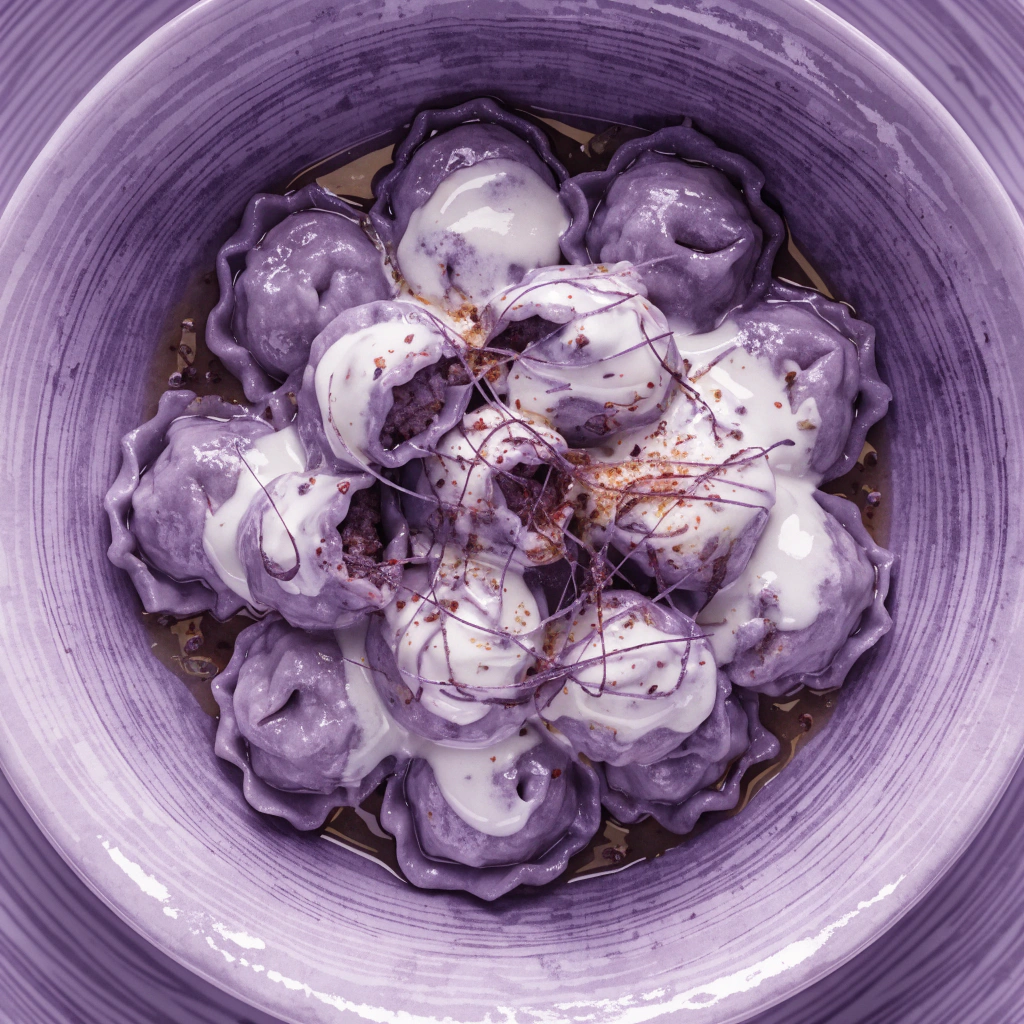
Les Mantı : Les Raviolis de Turquie
Les mantı sont une spécialité de Turquie. Ce sont de petits raviolis avec de la viande. Les Turcs mangent ce plat depuis longtemps. C'est un plat traditionnel très populaire.
La préparation est un travail de groupe. Les familles préparent les mantı ensemble. Les raviolis sont très petits. C'est difficile à faire !
On sert les mantı avec du yaourt. On ajoute aussi de l'ail et du beurre chaud. Parfois, on met de la menthe ou du sumac. C'est délicieux et très bon pour le déjeuner.
Point grammaire
Structure: Le présent de l'indicatif (être)
"Les mantı sont une spécialité de Turquie."
On utilise le verbe 'être' pour identifier ou décrire. Pour le pluriel 'ils', on utilise la forme 'sont'.
Structure: Les articles définis pluriels
"Les familles préparent les mantı ensemble."
On utilise 'les' devant un nom au pluriel, comme 'familles' ou 'mantı'. Cela désigne un groupe général ou connu.
Teste ta compréhension
10 questions · A1 Débutant · 1 aperçu gratuit
Teste ce que tu as appris dans cet article. Réponds à toutes les questions pour gagner des XP !
De quel pays vient ce plat ?
Tu veux terminer le quiz ?
9 questions supplémentaires t'attendent. Inscris-toi gratuitement pour débloquer le quiz complet et gagner des XP !
S'inscrire gratuitementTu as dj un compte ? Connexion
Bien joué !
Continue à pratiquer !
Déjà terminé — pas de XP supplémentaire
Inscris-toi pour gagner des XPDétail des questions
De quel pays vient ce plat ?
Ta réponse:
Bonne réponse: De Turquie
Les mantı sont de très gros raviolis.
Ta réponse:
Bonne réponse: Faux
Que signifie le mot 'viande' ?
Ta réponse:
Bonne réponse: La chair d'un animal
On sert les mantı avec du _____.
Ta réponse:
Bonne réponse: yaourt
Mantı: The Delicious Tiny Pasta of Turkey
Mantı is a traditional food in Turkey. It is often called 'Turkish ravioli.' This dish is very old because people brought it from Central Asia many centuries ago. In the past, Ottoman Sultans ate Mantı in their big palaces. It was a very special meal for important people.
Today, many families eat Mantı at home. The most famous Mantı comes from a city called Kayseri. In Kayseri, the dumplings are smaller than in other cities. Some people say that forty small pieces of Mantı should fit in one spoon! It takes a long time to make, but it is very tasty.
Usually, people boil the Mantı in water. Then, they serve it with fresh yogurt and garlic. They also add a hot sauce made of butter and red pepper. Some people like to put dried mint or sumac on top. Mantı is more popular than many other dishes in Turkey because it has a unique taste.
Point grammaire
Structure: Past Simple
"In the past, Ottoman Sultans ate Mantı in their big palaces."
The past simple is used for finished actions in the past. Here, 'ate' is the irregular past form of 'eat'.
Structure: Comparatives
"In Kayseri, the dumplings are smaller than in other cities."
We use 'adjective + er + than' to compare two things. For long adjectives, we use 'more + adjective + than' like 'more popular than'.
Teste ta compréhension
11 questions · A2 mentaire · 1 aperçu gratuit
Teste ce que tu as appris dans cet article. Réponds à toutes les questions pour gagner des XP !
Where did people originally bring Mantı from?
Tu veux terminer le quiz ?
10 questions supplémentaires t'attendent. Inscris-toi gratuitement pour débloquer le quiz complet et gagner des XP !
S'inscrire gratuitementTu as dj un compte ? Connexion
Bien joué !
Continue à pratiquer !
Déjà terminé — pas de XP supplémentaire
Inscris-toi pour gagner des XPDétail des questions
Where did people originally bring Mantı from?
Ta réponse:
Bonne réponse: Central Asia
Mantı is a modern food that was invented last year.
Ta réponse:
Bonne réponse: Faux
What does the word 'tasty' mean?
Ta réponse:
Bonne réponse: Having a good flavor
Some people say that forty pieces of Mantı should fit in one _____.
Ta réponse:
Bonne réponse: spoon
What is usually served on top of Mantı?
Ta réponse:
Bonne réponse: Yogurt and hot butter sauce
Le Mantı : Le Petit Trésor de la Cuisine Turque
Le mantı est souvent décrit comme le « ravioli turc ». Ce plat délicieux porte en lui l'héritage ancien des peuples nomades d'Asie centrale qui ont voyagé vers l'Anatolie. Bien que des variantes de pâtes farcies existent tout au long de la Route de la Soie, la version turque se distingue par sa taille minuscule et sa préparation minutieuse. En effet, une règle traditionnelle dit que plus le mantı est petit, plus le cuisinier est considéré comme talentueux.
Historiquement, le mantı était un plat très apprécié à la cour ottomane, où il a été servi pendant des siècles aux sultans. À cette époque, il était déjà accompagné de garnitures spéciales comme le sumac ou la menthe séchée pour relever le goût de la viande. Aujourd'hui, la confection du mantı reste une activité sociale importante. Les familles se réunissent souvent le dimanche pour plier délicatement chaque petit carré de pâte rempli de viande hachée et d'épices.
Ce qui rend ce plat vraiment unique, c'est l'équilibre surprenant des saveurs. Une fois qu'ils ont été bouillis, les mantı sont recouverts d'une sauce onctueuse au yaourt frais et à l'ail. On ajoute ensuite un nappage de beurre fondu, coloré par du piment rouge ou du paprika. Ce contraste entre la chaleur de la pâte et la fraîcheur du yaourt crée une expérience culinaire inoubliable.
Le mantı n'est pas seulement un repas ; c'est un symbole de patience et d'artisanat. Bien que sa préparation demande beaucoup de temps, le résultat final est toujours récompensé par le plaisir de partager ce chef-d'œuvre avec ses proches. C'est un véritable voyage gustatif qui relie le passé nomade à la table turque moderne.
Point grammaire
Structure: La Voix Passive
"Le mantı est souvent décrit comme le « ravioli turc »."
On utilise la voix passive pour mettre l'accent sur l'objet de l'action. Elle se forme avec l'auxiliaire 'être' conjugué et le participe passé du verbe principal.
Structure: Les Pronoms Relatifs
"Ce qui rend ce plat vraiment unique, c'est l'équilibre surprenant des saveurs."
Le pronom relatif 'ce qui' est utilisé comme sujet d'une proposition subordonnée pour faire référence à une idée ou une chose non spécifiée.
Teste ta compréhension
11 questions · B1 Intermédiaire · 1 aperçu gratuit
Teste ce que tu as appris dans cet article. Réponds à toutes les questions pour gagner des XP !
D'où viennent les racines historiques du mantı ?
Tu veux terminer le quiz ?
10 questions supplémentaires t'attendent. Inscris-toi gratuitement pour débloquer le quiz complet et gagner des XP !
S'inscrire gratuitementTu as dj un compte ? Connexion
Bien joué !
Continue à pratiquer !
Déjà terminé — pas de XP supplémentaire
Inscris-toi pour gagner des XPDétail des questions
D'où viennent les racines historiques du mantı ?
Ta réponse:
Bonne réponse: Des peuples nomades d'Asie centrale
En Turquie, la grande taille des mantı est un signe de talent culinaire.
Ta réponse:
Bonne réponse: Faux
Que signifie le mot 'onctueuse' ?
Ta réponse:
Bonne réponse: Doux et crémeux
Les familles se _____ souvent le dimanche pour préparer le repas ensemble.
Ta réponse:
Bonne réponse: réunissent
Quels ingrédients composent la sauce versée sur le mantı ?
Ta réponse:
Bonne réponse: Yaourt et ail
The Culinary Heritage of Mantı: A Journey from Central Asia to the Ottoman Court
Mantı is often celebrated as the quintessential Turkish comfort food, yet its historical origins are far more complex than they might initially appear. This dish, which consists of small dough parcels filled with seasoned meat, serves as a culinary bridge between the ancient nomadic tribes of Central Asia and the sophisticated kitchens of the Ottoman Empire. Throughout history, the Silk Road facilitated the exchange of spices and techniques, leading to the various dumpling styles found across Eurasia. However, the Turkish version has been distinguished by its unique preparation and specific presentation, setting it apart from its counterparts in neighboring regions.
Historically, mantı was not merely a commoner's meal; it was highly regarded within the Ottoman court. Royal chefs would frequently compete to create the most miniature dumplings possible, as small size was considered a mark of culinary excellence and refinement. Legend has it that a skilled cook should be able to fit forty individual pieces of mantı onto a single spoon. This labor-intensive process highlights the cultural importance of the dish, where the effort invested in preparation directly reflects the level of hospitality offered to guests. Even today, the act of folding the dough is considered a communal activity that strengthens social bonds.
While several regional variations exist across Turkey, the most famous style originates from the city of Kayseri. These tiny dumplings are typically boiled and then served with a cold, garlic-infused yogurt. To complete the dish, a warm sauce made of melted butter and red pepper flakes is drizzled over the top, often accompanied by dried mint and sumac. This combination of contrasting temperatures and bold flavors creates a sophisticated profile that has been preserved for centuries. If you were to visit a traditional Turkish household, you would almost certainly be served this dish as a sign of respect.
In modern times, the significance of mantı extends beyond its nutritional value. Although industrial production has made it more accessible for everyday consumption, the handmade version is still preferred for its superior texture and historical influence. Consequently, mantı remains a vital part of Turkey’s edible heritage, representing both a link to the nomadic past and a staple of contemporary life. By analyzing its evolution, one can appreciate how a simple dumpling can embody the identity of an entire nation.
Point grammaire
Structure: Present Perfect Passive
"the Turkish version has been distinguished by its unique preparation"
This is used to describe an action that happened at an unspecified time in the past and has a result in the present, focusing on the object rather than the doer. It is formed using 'has/have + been + past participle'.
Structure: Relative Clauses
"This dish, which consists of small dough parcels filled with seasoned meat, serves as a culinary bridge"
A non-defining relative clause is used here to provide extra information about 'this dish'. It is separated by commas and uses 'which' for objects.
Structure: Second Conditional
"If you were to visit a traditional Turkish household, you would almost certainly be served this dish"
This structure is used to imagine a hypothetical situation in the present or future. It uses 'If + past simple' and 'would + base verb'.
Teste ta compréhension
11 questions · B2 Intermédiaire supérieur · 1 aperçu gratuit
Teste ce que tu as appris dans cet article. Réponds à toutes les questions pour gagner des XP !
What historical trade route contributed to the spread of dumpling techniques to Turkey?
Tu veux terminer le quiz ?
10 questions supplémentaires t'attendent. Inscris-toi gratuitement pour débloquer le quiz complet et gagner des XP !
S'inscrire gratuitementTu as dj un compte ? Connexion
Bien joué !
Continue à pratiquer !
Déjà terminé — pas de XP supplémentaire
Inscris-toi pour gagner des XPDétail des questions
What historical trade route contributed to the spread of dumpling techniques to Turkey?
Ta réponse:
Bonne réponse: The Silk Road
In the Ottoman court, larger dumplings were preferred because they showed more wealth.
Ta réponse:
Bonne réponse: Faux
What does 'labor-intensive' mean in the context of making mantı?
Ta réponse:
Bonne réponse: A process that requires a lot of time and physical effort
The most famous style of Turkish mantı originates from the city of _____.
Ta réponse:
Bonne réponse: Kayseri
According to the article, why is the handmade version of mantı still preferred today?
Ta réponse:
Bonne réponse: Because it has a superior texture and historical influence
Le Mantı : L'Orfèvrerie Culinaire de l'Anatolie entre Tradition Nomade et Raffinement Impérial
S'il est un plat qui cristallise à lui seul l'histoire tumultueuse et la richesse gastronomique de la Turquie, c'est indubitablement le mantı. Souvent qualifié de « raviole turque », ce mets transcende la simple catégorie de pâte farcie pour devenir une émanation de l'identité culturelle anatolienne. Son origine remonte aux steppes d'Asie centrale, où les peuples turcs nomades transportaient ces petites poches de pâte séchées, faciles à conserver et à cuire lors de leurs pérégrinations. C’est par le biais de la Route de la Soie que cette tradition culinaire a migré vers l'ouest, s'imprégnant des influences persanes et byzantines avant de trouver son apogée dans les cuisines du palais ottoman.
Ce qui distingue le mantı de ses cousins asiatiques ou européens, tels que le jiaozi chinois ou le tortellini italien, réside paradoxalement dans sa dimension. Dans la région de Kayseri, berceau de la variante la plus prestigieuse, la tradition exige que les ravioles soient si minuscules qu'une quarantaine d'entre elles puissent tenir dans une seule cuillère en bois. Cette miniaturisation n'est pas qu'une coquetterie esthétique ; elle constitue une véritable épreuve de dextérité pour les cuisiniers, symbolisant l'hospitalité et le respect envers les convives. Plus la raviole est petite, plus l'honneur rendu à l'invité est grand. La préparation, souvent collective, devient alors un moment de sociabilité intense où se transmettent des savoir-faire séculaires.
L'alchimie du mantı repose sur un équilibre subtil des saveurs. La farce, généralement composée de viande hachée (agneau ou bœuf) finement assaisonnée d'oignons et d'épices, est enveloppée dans une pâte fine. Toutefois, c'est l'accompagnement qui parachève l'œuvre. L'usage du yaourt à l'ail, onctueux et rafraîchissant, vient contrebalancer la chaleur de la pâte. À cela s'ajoute un beurre fondu infusé au piment d'Alep ou au paprika, créant un contraste visuel et gustatif saisissant. L'apport final du sumac, pour son acidité, et de la menthe séchée, pour sa fraîcheur aromatique, témoigne de la complexité des couches de saveurs chères à la gastronomie ottomane.
Sous l'égide des sultans, le mantı a acquis ses lettres de noblesse, devenant un mets de choix lors des banquets impériaux. Les registres du palais de Topkapi attestent de la consommation régulière de ces ravioles, souvent agrémentées d'ingrédients rares pour l'époque. Aujourd'hui, bien que la modernisation des modes de vie tende à favoriser les versions industrielles, le mantı fait maison demeure un pilier de la convivialité familiale. En dépit de la mondialisation culinaire, ce plat préserve son caractère sacré, rappelant que la gastronomie est, avant tout, une forme d'artisanat où la patience et la précision l'emportent sur la rapidité contemporaine. Analyser le mantı, c'est donc explorer une géographie sémantique où chaque pli de pâte raconte une migration, un palais et un foyer.
Point grammaire
Structure: La phrase clivée (Mise en relief)
"C’est par le biais de la Route de la Soie que cette tradition culinaire a migré vers l'ouest."
Utilisée pour mettre l'accent sur un élément spécifique de la phrase (ici le moyen de transport). On utilise la structure 'C’est... que/qui' pour isoler l'information cruciale.
Structure: L'inversion du sujet après un adverbe initial
"Plus la raviole est petite, plus l'honneur rendu à l'invité est grand."
Bien que ce soit une structure comparative, l'ordre des mots suit une logique d'intensification. On peut aussi noter l'inversion dans 'S'il est un plat...', une tournure impersonnelle soutenue.
Structure: La nominalisation
"Cette miniaturisation n'est pas qu'une coquetterie esthétique."
La transformation d'un adjectif (miniature) ou d'un verbe en nom (miniaturisation) permet de densifier le discours et de rendre le texte plus académique et précis, typique du niveau C1.
Teste ta compréhension
12 questions · C1 Avancé · 1 aperçu gratuit
Teste ce que tu as appris dans cet article. Réponds à toutes les questions pour gagner des XP !
Quelle est l'origine historique première du mantı selon l'article ?
Tu veux terminer le quiz ?
11 questions supplémentaires t'attendent. Inscris-toi gratuitement pour débloquer le quiz complet et gagner des XP !
S'inscrire gratuitementTu as dj un compte ? Connexion
Bien joué !
Continue à pratiquer !
Déjà terminé — pas de XP supplémentaire
Inscris-toi pour gagner des XPDétail des questions
Quelle est l'origine historique première du mantı selon l'article ?
Ta réponse:
Bonne réponse: Les steppes d'Asie centrale
À Kayseri, la taille idéale des mantı permet d'en mettre quarante dans une cuillère.
Ta réponse:
Bonne réponse: Vrai
Que signifie le mot 'apogée' dans le contexte de l'article ?
Ta réponse:
Bonne réponse: Le sommet de la gloire ou du développement
L'accompagnement du mantı repose souvent sur un beurre fondu infusé au _____.
Ta réponse:
Bonne réponse: piment
Quel rôle joue le yaourt dans la dégustation du plat ?
Ta réponse:
Bonne réponse: Il contrebalance la chaleur de la pâte par sa fraîcheur
Le mantı était un plat totalement ignoré par les sultans ottomans.
Ta réponse:
Bonne réponse: Faux
The Gastronomic Semiotics of Mantı: A Culinary Palimpsest of Turkic Nomadism
To approach the subject of Turkish mantı is to engage with a culinary palimpsest, wherein layers of nomadic heritage, imperial refinement, and regional identity are intricately interwoven. Often colloquially termed 'Turkish ravioli,' such a reductive label fails to capture the profound epistemological weight the dish carries within the Anatolian cultural landscape. Originating from the expansive steppes of Central Asia, these dough-bound parcels represent a quintessential vestige of the Turkic itinerary across the Silk Road, evolving from a utilitarian staple of the saddlebag into a sophisticated emblem of Ottoman connoisseurship.
Central to the discourse on mantı is the concept of 'Kayseri mantı,' a variant whose prestige is predicated upon its diminutive scale. It is widely asserted that the culinary prowess of a prospective bride was historically evaluated by her ability to fit forty individual dumplings within a single spoon. While such an anecdote may border on the apocryphal, it underscores the cultural premium placed upon dexterity and meticulousness. Were one to scrutinize the labor-intensive process of folding these miniscule squares of unleavened dough, one would discern a ritualistic dedication to form that transcends mere sustenance.
Beyond the borders of Kayseri, the geography of mantı expands into diverse regional manifestations, each articulating a unique dialogue with local ecology. In the coastal regions of Sinop, for instance, the mantı assumes a more robust form, occasionally garnished with crushed walnuts—a departure from the ubiquitous yogurt that highlights the adaptability of the dish. This regional pluralism suggests that while the core concept remains constant, the execution is subject to the 'genius loci' of the Turkish provinces. Furthermore, the historical transition of mantı from a nomadic provision—easily dried and transported across vast distances—to an elaborate courtly delicacy reveals much about the socio-political evolution of the Turkic people. In the Topkapı Palace archives, records indicate that mantı was not merely a meal but a curated experience, often integrated into the complex protocols of imperial hospitality.
The architectural integrity of the mantı is complemented by a sophisticated interplay of garnishes, most notably the juxtaposition of garlic-infused yogurt and a piquant drizzle of burnt butter infused with Aleppo pepper or paprika. This contrast—the cooling acidity of the ferment against the thermal intensity of the spice—constitutes a sensory dialectic that distinguishes the Turkish iteration from its broader Eurasian cousins. Furthermore, the inclusion of sumac and dried mint provides a botanical counterpoint, hinting at the medicinal and aromatic proclivities of the Ottoman court.
From a sociological perspective, the preparation of mantı serves as a communal locus. The 'mantı açmak'—the rolling and filling of the dough—is frequently a collective endeavor, facilitating a space for oral tradition and social cohesion. It is here that the domestic sphere becomes a site of cultural transmission, where the nuances of the pedigree of the dish are preserved. Notwithstanding the encroachment of industrialization and the proliferation of frozen alternatives, the artisanal preparation of mantı remains a steadfast bastion of Turkish identity. In conclusion, mantı is not merely a gastronomic artifact but a living testament to the fluidity of cultural exchange. To consume mantı is to partake in a historical continuum, a flavor profile that has been refined over a millennium to reach its current state of sophisticated equilibrium.
Point grammaire
Structure: Inverted Conditional (Subjunctive)
"Were one to scrutinize the labor-intensive process of folding these miniscule squares of unleavened dough, one would discern a ritualistic dedication to form that transcends mere sustenance."
This formal structure replaces 'If one were to...' by inverting the verb and subject. It is used in academic or literary English to express a hypothetical situation with a high degree of formality.
Structure: Passive Reporting Verbs (Academic Hedging)
"It is widely asserted that the culinary prowess of a prospective bride was historically evaluated by her ability to fit forty individual dumplings within a single spoon."
Using 'It is + past participle + that' allows the writer to present a common belief or theory without attributing it to a specific person. This is a hallmark of objective, scholarly prose.
Structure: Cleft Sentences for Emphasis
"It is here that the domestic sphere becomes a site of cultural transmission, where the nuances of the pedigree of the dish are preserved."
A cleft sentence divides a single clause into two parts to focus on specific information. By starting with 'It is here that...', the writer emphasizes the location or context of the action.
Teste ta compréhension
12 questions · C2 Maîtrise · 1 aperçu gratuit
Teste ce que tu as appris dans cet article. Réponds à toutes les questions pour gagner des XP !
What is the primary thesis of the article regarding the nature of mantı?
Tu veux terminer le quiz ?
11 questions supplémentaires t'attendent. Inscris-toi gratuitement pour débloquer le quiz complet et gagner des XP !
S'inscrire gratuitementTu as dj un compte ? Connexion
Bien joué !
Continue à pratiquer !
Déjà terminé — pas de XP supplémentaire
Inscris-toi pour gagner des XPDétail des questions
What is the primary thesis of the article regarding the nature of mantı?
Ta réponse:
Bonne réponse: It is a complex cultural artifact that reflects historical, social, and regional transitions.
The author suggests that the term 'Turkish ravioli' is an insufficient description of the dish's cultural depth.
Ta réponse:
Bonne réponse: Vrai
What does the word 'piquant' mean in the context of the article?
Ta réponse:
Bonne réponse: Having a pleasantly sharp or appetizing flavor.
According to the text, what does the 'spoon test' in Kayseri symbolize?
Ta réponse:
Bonne réponse: The cultural value placed on dexterity and precision.
The article claims that the use of yogurt is a universal garnish for all regional variations of mantı in Turkey.
Ta réponse:
Bonne réponse: Faux
The author describes mantı as a culinary _____, implying it contains visible traces of its historical evolution.
Ta réponse:
Bonne réponse: palimpsest

