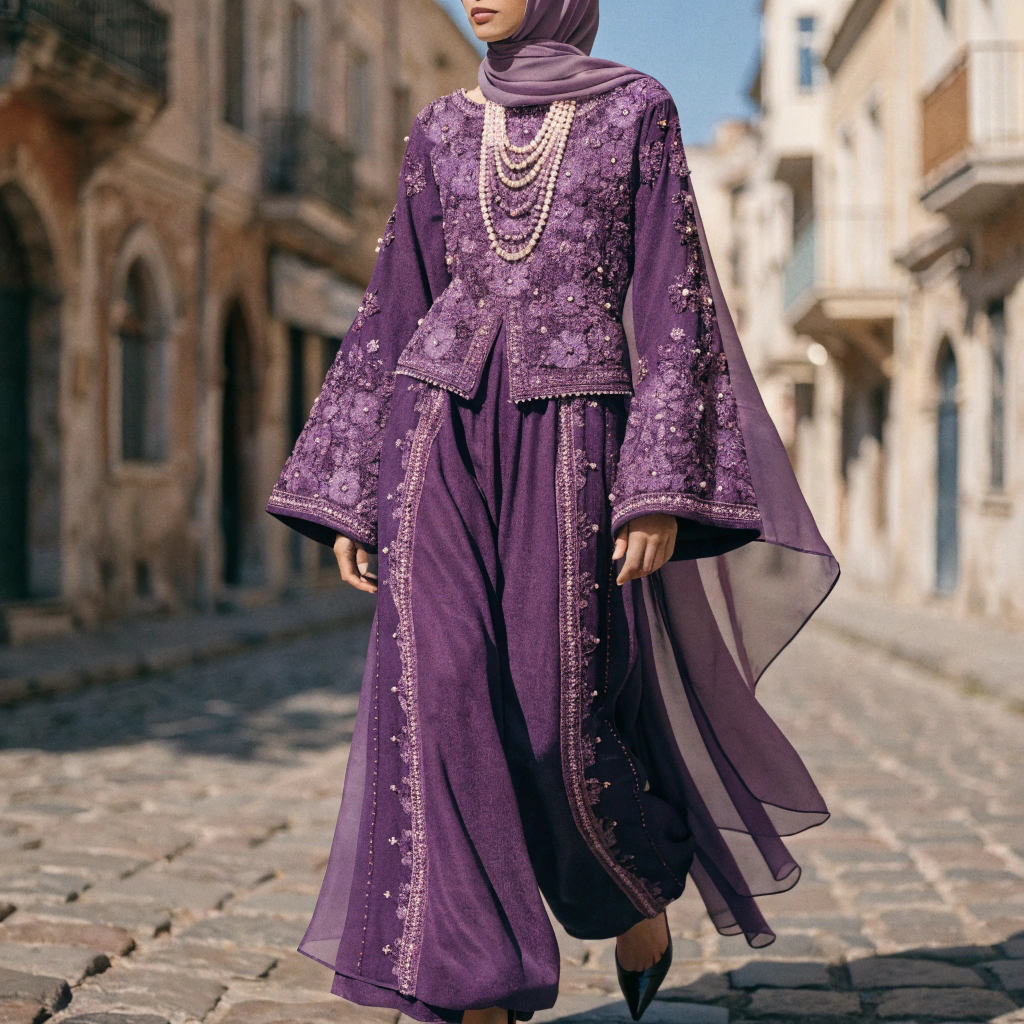
Les vêtements traditionnels en Turquie
La Turquie a une histoire très riche. Les vêtements traditionnels sont magnifiques et confortables. Autrefois, les gens voyagent beaucoup. Ils ont besoin de vêtements pratiques.
Le « shalwar » est un pantalon très large. Il est parfait pour marcher et bouger. Le « kaftan » est aussi célèbre. C'est une robe longue et très élégante.
Ces habits sont souvent en coton ou en soie. Aujourd'hui, les Turcs portent ces vêtements pour les fêtes et les mariages. C'est une tradition importante pour la culture du pays. Les couleurs sont vives et les tissus sont doux.
Point grammaire
Structure: Le présent de l'indicatif
"La Turquie a une histoire très riche."
On utilise le présent pour parler de faits réels et permanents. Ici, le verbe 'avoir' décrit une caractéristique du pays.
Structure: La place de l'adjectif
"Le shalwar est un pantalon très large."
En français, l'adjectif se place généralement après le nom. L'adjectif 'large' décrit le nom 'pantalon'.
Teste ta compréhension
10 questions · A1 Débutant · 1 aperçu gratuit
Teste ce que tu as appris dans cet article. Réponds à toutes les questions pour gagner des XP !
De quel pays parle l'article ?
Tu veux terminer le quiz ?
9 questions supplémentaires t'attendent. Inscris-toi gratuitement pour débloquer le quiz complet et gagner des XP !
S'inscrire gratuitementTu as dj un compte ? Connexion
Bien joué !
Continue à pratiquer !
Déjà terminé — pas de XP supplémentaire
Inscris-toi pour gagner des XPDétail des questions
De quel pays parle l'article ?
Ta réponse:
Bonne réponse: La Turquie
Le shalwar est un chapeau traditionnel.
Ta réponse:
Bonne réponse: Faux
Que signifie le mot 'vêtement' ?
Ta réponse:
Bonne réponse: Un habit pour le corps
Le kaftan est une _____ longue et élégante.
Ta réponse:
Bonne réponse: robe
The Story of Turkish Traditional Clothes
Turkish traditional dress has a long and interesting history. Long ago, people in Central Asia needed clothes for traveling. They created the 'shalwar' and the 'kaftan'. These clothes were very useful because they were comfortable for riding horses.
The shalwar are baggy trousers. They are wide at the top and narrow at the ankles. In the past, both men and women wore them. People liked them because they were more comfortable than tight clothes. They allowed for easy movement during daily work.
The kaftan is a long, beautiful robe. In the Ottoman Empire, kaftans were very important. Rich people wore kaftans made of silk and expensive gold threads. The colors and patterns were special symbols. They showed a person's rank in society.
Today, people still wear these traditional clothes during weddings and festivals. They are a proud part of Turkish culture because they connect the past with the present.
Point grammaire
Structure: Past Simple
"They created the 'shalwar' and the 'kaftan'."
We use the past simple to talk about actions that finished in the past. For regular verbs, we add '-ed' to the end of the base verb.
Structure: Comparatives
"People liked them because they were more comfortable than tight clothes."
We use comparatives to compare two things. For long adjectives like 'comfortable', we put 'more' before the adjective and 'than' after it.
Teste ta compréhension
11 questions · A2 mentaire · 1 aperçu gratuit
Teste ce que tu as appris dans cet article. Réponds à toutes les questions pour gagner des XP !
Why were the shalwar and kaftan useful in Central Asia?
Tu veux terminer le quiz ?
10 questions supplémentaires t'attendent. Inscris-toi gratuitement pour débloquer le quiz complet et gagner des XP !
S'inscrire gratuitementTu as dj un compte ? Connexion
Bien joué !
Continue à pratiquer !
Déjà terminé — pas de XP supplémentaire
Inscris-toi pour gagner des XPDétail des questions
Why were the shalwar and kaftan useful in Central Asia?
Ta réponse:
Bonne réponse: They were good for riding horses.
In the past, only men wore the baggy trousers called shalwar.
Ta réponse:
Bonne réponse: Faux
What does the word 'kaftan' describe in the text?
Ta réponse:
Bonne réponse: A long, beautiful robe
The colors and patterns on kaftans were special _____.
Ta réponse:
Bonne réponse: symbols
Where did the history of these clothes begin?
Ta réponse:
Bonne réponse: Central Asia
L'Héritage du Caftan et du Shalwar : Une Histoire Turque
L'histoire des vêtements traditionnels turcs est une véritable carte visuelle qui raconte le voyage d'une nation. Depuis les steppes d'Asie centrale jusqu'aux cours sophistiquées de l'Empire ottoman, la mode turque a beaucoup évolué au fil des siècles. À l'origine, ces vêtements ont été conçus pour la mobilité et l'adaptation au climat, un héritage précieux du peuple nomade Yörük qui devait se déplacer constamment.
Les éléments les plus emblématiques de cette garde-robe sont sans aucun doute le « shalwar » et le « caftan ». Le shalwar est un pantalon très large, souvent resserré aux chevilles, qui offrait une liberté de mouvement nécessaire pour monter à cheval ou travailler dans les champs. Ce vêtement, qui a été porté par les hommes et les femmes pendant des générations, représente l'aspect pratique de la culture turque.
Le caftan, en revanche, incarne l'élégance et le prestige. C'est une longue robe ouverte sur le devant, souvent ornée de broderies magnifiques et de motifs floraux. Dans l'Empire ottoman, le caftan était un indicateur important du statut social. Les sultans portaient des caftans fabriqués avec des tissus luxueux comme la soie, le satin ou le velours. Les couleurs et les motifs permettaient d'identifier immédiatement le rang d'une personne à la cour.
Aujourd'hui, même si la plupart des Turcs portent des vêtements occidentaux modernes, ces pièces traditionnelles n'ont pas disparu. Elles sont fièrement portées lors de mariages, de danses folkloriques ou de fêtes nationales. Ce patrimoine vestimentaire, qui a été préservé avec soin, continue d'influencer les designers contemporains et reste un symbole fort de l'identité culturelle de la Turquie.
Point grammaire
Structure: La voix passive
"Ce vêtement, qui a été porté par les hommes et les femmes pendant des générations..."
On utilise la voix passive pour mettre l'accent sur l'objet de l'action. Elle se forme avec l'auxiliaire 'être' conjugué et le participe passé du verbe principal.
Structure: Les pronoms relatifs (qui, que)
"L'histoire des vêtements traditionnels turcs est une véritable carte visuelle qui raconte le voyage d'une nation."
Le pronom 'qui' remplace un sujet dans une proposition relative. Il permet de relier deux phrases pour éviter la répétition d'un nom.
Teste ta compréhension
11 questions · B1 Intermédiaire · 1 aperçu gratuit
Teste ce que tu as appris dans cet article. Réponds à toutes les questions pour gagner des XP !
Quelle était la fonction principale des vêtements des nomades Yörük ?
Tu veux terminer le quiz ?
10 questions supplémentaires t'attendent. Inscris-toi gratuitement pour débloquer le quiz complet et gagner des XP !
S'inscrire gratuitementTu as dj un compte ? Connexion
Bien joué !
Continue à pratiquer !
Déjà terminé — pas de XP supplémentaire
Inscris-toi pour gagner des XPDétail des questions
Quelle était la fonction principale des vêtements des nomades Yörük ?
Ta réponse:
Bonne réponse: La mobilité et l'adaptation au climat
Le shalwar était un pantalon porté uniquement par les hommes.
Ta réponse:
Bonne réponse: Faux
Que signifie le mot 'soie' ?
Ta réponse:
Bonne réponse: Un tissu luxueux et brillant
Le caftan est une longue _____ ouverte sur le devant.
Ta réponse:
Bonne réponse: robe
Où sont encore portés ces vêtements traditionnels aujourd'hui ?
Ta réponse:
Bonne réponse: Lors de cérémonies et festivals
The Sartorial Heritage of Turkey: From Nomadic Roots to Imperial Splendor
The sartorial heritage of Turkey serves as a fascinating chronological record, tracing the nation's evolution from its nomadic origins in the steppes of Central Asia to the opulent ceremonies of the Ottoman imperial courts. Central to this visual history is the concept of climate adaptability and functionality, which was largely dictated by the mobile lifestyle of the Yoruk people. Two garments, the shalwar and the kaftan, stand out as the most enduring symbols of this aesthetic legacy, representing a unique synthesis of practicality and prestige.
The shalwar, characterized by its distinctive baggy silhouette, was originally engineered for maximum mobility. These trousers, which are wide at the waist and taper sharply at the ankles, allowed riders to mount horses with ease while providing essential insulation against harsh weather conditions. Although they were born out of necessity, they eventually became a staple of Turkish fashion across all social strata, from rural farmers to urban merchants. The design reflects a sophisticated understanding of ergonomics, proving that traditional attire was often as practical as it was stylish. Even today, the comfort provided by the shalwar makes it a preferred choice in many rural provinces.
In contrast, the kaftan represented the pinnacle of social hierarchy and artistic expression within the Ottoman Empire. While the basic structure of the kaftan—a long, front-opening robe—remained relatively consistent over the centuries, the materials and patterns used clearly indicated the wearer's status. In the Ottoman court, kaftans were crafted from luxurious silks, brocades, and velvets, often featuring intricate embroidery that required months of labor. These garments were so highly valued that they were frequently presented as 'robes of honor' to successful generals and foreign dignitaries. Consequently, the kaftan evolved from a simple protective layer into a complex symbol of political power and cultural identity.
Furthermore, the decorative elements of these garments were never merely aesthetic; they often conveyed specific messages about the wearer's region or tribal affiliation. Gold and silver threads, known as 'sim,' were meticulously woven into the fabric to create motifs inspired by nature, such as tulips and carnations. By examining the history of the shalwar and kaftan, one gains a deeper appreciation for how Turkish culture has successfully balanced its nomadic roots with imperial grandeur. This legacy continues to influence modern Turkish fashion, where contemporary designers often reinterpret these ancient forms for a global audience, ensuring that the heritage remains vibrant and relevant.
Point grammaire
Structure: Passive Voice
"In the Ottoman court, kaftans were crafted from luxurious silks, brocades, and velvets."
The passive voice is used here to focus on the object (the kaftans) and the action (crafting) rather than the specific person who made them. It is formed using the verb 'to be' plus the past participle.
Structure: Non-defining Relative Clauses
"These trousers, which are wide at the waist and taper sharply at the ankles, allowed riders to mount horses with ease."
This clause provides extra, non-essential information about the 'trousers'. It is separated by commas and uses the relative pronoun 'which'.
Structure: Gerund Phrases for Method
"By examining the history of the shalwar and kaftan, one gains a deeper appreciation..."
Starting a sentence with 'By' followed by a gerund (-ing form) explains the method or means by which an action is achieved.
Teste ta compréhension
11 questions · B2 Intermédiaire supérieur · 1 aperçu gratuit
Teste ce que tu as appris dans cet article. Réponds à toutes les questions pour gagner des XP !
What was the primary factor influencing the design of early Turkish clothing?
Tu veux terminer le quiz ?
10 questions supplémentaires t'attendent. Inscris-toi gratuitement pour débloquer le quiz complet et gagner des XP !
S'inscrire gratuitementTu as dj un compte ? Connexion
Bien joué !
Continue à pratiquer !
Déjà terminé — pas de XP supplémentaire
Inscris-toi pour gagner des XPDétail des questions
What was the primary factor influencing the design of early Turkish clothing?
Ta réponse:
Bonne réponse: The mobile lifestyle of nomadic people
The shalwar was exclusively worn by the wealthy elite in urban centers.
Ta réponse:
Bonne réponse: Faux
What does the word 'intricate' mean in the context of the article?
Ta réponse:
Bonne réponse: Highly detailed and complex
The kaftan evolved into a complex symbol of political _____ and cultural identity.
Ta réponse:
Bonne réponse: power
What are 'robes of honor' as mentioned in the text?
Ta réponse:
Bonne réponse: Kaftans given as rewards to dignitaries and generals
L'Épopée du Kaftan et du Shalwar : Entre Héritage Nomade et Faste Ottoman
S’immerger dans l’histoire du costume traditionnel turc, c’est entreprendre un voyage sensoriel et sociopolitique qui nous transporte des steppes arides de l’Asie centrale jusqu’aux cours feutrées de l’Empire ottoman. Loin d’être une simple parure, le vêtement turc constitue une véritable cartographie visuelle de l’identité nationale, fusionnant avec brio les impératifs de la mobilité nomade et les exigences de la pompe impériale. Au cœur de cette esthétique se trouve le shalwar, ce pantalon bouffant dont la conception même défie les conventions occidentales de la coupe ajustée.
Caractérisé par une ampleur généreuse à la taille et un resserrement progressif vers les chevilles, le shalwar n'est pas le fruit du hasard. Il incarne l’héritage des peuples Yoruk, dont le mode de vie pastoral exigeait une liberté de mouvement absolue. Que l’on soit à cheval ou accroupi près d’un feu de camp, la structure du vêtement permet une aisance que les étoffes rigides de l'Europe médiévale ne pouvaient offrir. La versatilité de cette pièce est telle qu’elle a transcendé les classes sociales, adoptée aussi bien par le paysan que par le dignitaire, bien que la qualité des tissus et la finesse des broderies servissent à marquer la distinction de rang.
Parallèlement à cette fonctionnalité, le kaftan s’est imposé comme le symbole ultime de la puissance et de la sophistication ottomane. C’est dans les ateliers du palais de Topkapi que cet habit a atteint son apogée. Longue robe fluide, le kaftan se déclinait en une myriade de soies, de brocarts et de velours, souvent rehaussés de fils d’or et d’argent. La hiérarchisation sociale au sein de l’Empire se manifestait par la longueur des manches et la complexité des motifs floraux, tels que la tulipe ou l’œillet. Porter un kaftan n’était pas un acte anodin ; c’était revêtir une armure de prestige. Peut-être n’aurait-on pas soupçonné que derrière cette apparente rigidité cérémonielle se cachait une continuité avec les tuniques des ancêtres nomades, adaptées pour refléter la splendeur d’une puissance mondiale.
L'orfèvrerie textile turque ne se limitait pas à l'ostentation. Elle représentait une symbiose entre l’utile et l’agréable, où la sobriété des coupes était compensée par la richesse des textures. Aujourd'hui, cet héritage vestimentaire continue d’irriguer la mode contemporaine, prouvant que le dialogue entre tradition et modernité est intemporel. En analysant le kaftan et le shalwar, on saisit la quintessence d’une culture qui a su préserver son essence tout en absorbant les influences des territoires conquis. C’est cette capacité d’adaptation qui confère au costume turc sa place singulière dans l’histoire mondiale de la mode.
Point grammaire
Structure: L'inversion du sujet après 'Peut-être'
"Peut-être n’aurait-on pas soupçonné que derrière cette apparente rigidité cérémonielle se cachait une continuité..."
En français soutenu, l'adverbe 'peut-être' placé en début de phrase entraîne souvent l'inversion du sujet pour donner un ton plus élégant et formel à l'énoncé.
Structure: La mise en relief (phrase clivée)
"C’est dans les ateliers du palais de Topkapi que cet habit a atteint son apogée."
La structure 'C'est... que/qui' permet d'isoler un constituant de la phrase (ici le lieu) pour attirer l'attention du lecteur sur cette information spécifique.
Structure: La nominalisation
"La hiérarchisation sociale au sein de l’Empire se manifestait par la longueur des manches..."
L'usage de noms (hiérarchisation) au lieu de verbes (hiérarchiser) permet de densifier le propos et d'adopter un style académique propre au niveau C1.
Teste ta compréhension
12 questions · C1 Avancé · 1 aperçu gratuit
Teste ce que tu as appris dans cet article. Réponds à toutes les questions pour gagner des XP !
Quelle était la fonction première du shalwar pour les peuples Yoruk ?
Tu veux terminer le quiz ?
11 questions supplémentaires t'attendent. Inscris-toi gratuitement pour débloquer le quiz complet et gagner des XP !
S'inscrire gratuitementTu as dj un compte ? Connexion
Bien joué !
Continue à pratiquer !
Déjà terminé — pas de XP supplémentaire
Inscris-toi pour gagner des XPDétail des questions
Quelle était la fonction première du shalwar pour les peuples Yoruk ?
Ta réponse:
Bonne réponse: Permettre une liberté de mouvement totale
Le kaftan était un vêtement porté uniquement par les paysans pour les travaux agricoles.
Ta réponse:
Bonne réponse: Faux
Que signifie le terme 'intemporel' dans le texte ?
Ta réponse:
Bonne réponse: Qui ne dépend pas des modes ou du temps
Le shalwar est un pantalon _____ dont la coupe est large à la taille.
Ta réponse:
Bonne réponse: bouffant
Quels motifs étaient couramment utilisés pour décorer les kaftans impériaux ?
Ta réponse:
Bonne réponse: Des motifs floraux comme la tulipe
La longueur des manches d'un kaftan pouvait indiquer le rang social de celui qui le portait.
Ta réponse:
Bonne réponse: Vrai
Sartorial Sovereignty: The Vestiary Evolution of the Kaftan and Shalwar
The vestiary history of Turkey serves as a profound narrative arc, tracing the nation’s metamorphosis from the rugged, wind-swept steppes of Central Asia to the meticulously choreographed opulence of the Ottoman Sublime Porte. This sartorial journey is not merely a matter of changing fashions but is, rather, a visual manifestation of a culture’s transition from nomadic pragmatism to imperial stratification. At the epicenter of this evolution lie two quintessential garments: the shalwar and the kaftan. Should one scrutinize the intricate weaving of a sixteenth-century Ottoman kaftan, the convergence of aesthetic ostentation and geopolitical influence becomes immediately apparent.
The shalwar, a bifurcated garment of nomadic provenance, represents the zenith of utilitarian design. Originally conceived to facilitate the equestrian lifestyle of the Yoruk people, its voluminous silhouette and tapered ankles provided an ergonomic solution to the exigencies of climate and mobility. It is imperative that the scholar recognize the shalwar not merely as a garment, but as a masterpiece of ergonomic engineering. Its generous proportions allowed for unrestricted movement, while the cinched waist ensured thermal retention during the biting winters of the Anatolian plateau. Notwithstanding its humble origins, the shalwar eventually permeated the urban elite, undergoing a transformation where coarse wool was supplanted by delicate silks and intricate embroidery, thus bridging the gap between the pastoral and the palatial.
Conversely, the kaftan emerged as the definitive symbol of social stratification and imperial authority. Within the Ottoman court, the kaftan was far more than an item of apparel; it was a calibrated instrument of hierarchy. Sumptuary laws, though often flexible, dictated the specific fabrics, colors, and lengths permitted to various ranks of the bureaucracy. The most prestigious kaftans, crafted from heavy brocades and silks such as kemha and çatma, were often bestowed as 'hil’at' or robes of honor, signaling the Sultan’s favor. Such garments were frequently adorned with motifs that reflected a unique cultural syncretism, blending traditional Turkic geometric patterns with the floral aesthetics of the Persianate world and the nascent influences of the European Renaissance.
Furthermore, the materiality of these garments speaks volumes about the economic vitality of the Silk Road. The proliferation of sericulture in cities like Bursa allowed the Ottoman textile industry to flourish, creating a vestiary language that was both distinct and globally resonant. Seldom has a culture managed to preserve such a distinct vestiary identity while simultaneously absorbing the myriad influences of its neighbors. This legacy is not a static relic of the past but a living testament to the Turkish capacity for synthesis. The enduring appeal of the kaftan and shalwar lies in their ability to evoke a sense of historical continuity, reminding the modern observer that the threads of the past are inextricably woven into the fabric of contemporary identity. It is through this analytical lens that we must view the legacy of Turkish traditional dress—as a sophisticated interplay between the functional requirements of a nomadic ancestry and the symbolic demands of a global empire.
Point grammaire
Structure: Inverted Conditional
"Should one scrutinize the intricate weaving of a sixteenth-century Ottoman kaftan, the convergence of aesthetic ostentation and geopolitical influence becomes immediately apparent."
This formal structure replaces 'If one should scrutinize' or 'If one were to scrutinize'. It is used in academic writing to lend a tone of hypothetical inquiry or sophisticated analysis.
Structure: Subjunctive Mood with Impersonal Expressions
"It is imperative that the scholar recognize the shalwar not merely as a garment, but as a masterpiece of ergonomic engineering."
The base form of the verb 'recognize' (without -s) is used after 'It is imperative that'. This emphasizes necessity or urgency in scholarly discourse.
Structure: Negative Inversion
"Seldom has a culture managed to preserve such a distinct vestiary identity while simultaneously absorbing the myriad influences of its neighbors."
When a sentence begins with a negative or restrictive adverb like 'seldom', the auxiliary verb 'has' precedes the subject 'a culture'. This creates rhetorical emphasis.
Teste ta compréhension
12 questions · C2 Maîtrise · 1 aperçu gratuit
Teste ce que tu as appris dans cet article. Réponds à toutes les questions pour gagner des XP !
According to the text, what was the primary driver behind the original design of the shalwar?
Tu veux terminer le quiz ?
11 questions supplémentaires t'attendent. Inscris-toi gratuitement pour débloquer le quiz complet et gagner des XP !
S'inscrire gratuitementTu as dj un compte ? Connexion
Bien joué !
Continue à pratiquer !
Déjà terminé — pas de XP supplémentaire
Inscris-toi pour gagner des XPDétail des questions
According to the text, what was the primary driver behind the original design of the shalwar?
Ta réponse:
Bonne réponse: The practical requirements of a nomadic, equestrian lifestyle.
The kaftan served as a tool for enforcing and displaying social hierarchy within the Ottoman Empire.
Ta réponse:
Bonne réponse: Vrai
What does 'sumptuary' refer to in the context of the article?
Ta réponse:
Bonne réponse: Laws regulating luxury and expenditure.
The transition from wool to silk in the production of the shalwar illustrates the bridge between the pastoral and the _____.
Ta réponse:
Bonne réponse: palatial
What does the term 'syncretism' describe in the article's discussion of garment motifs?
Ta réponse:
Bonne réponse: The blending of Turkic, Persian, and European aesthetic elements.
The article suggests that the Turkish vestiary identity is a static relic that has remained unchanged by outside influences.
Ta réponse:
Bonne réponse: Faux

