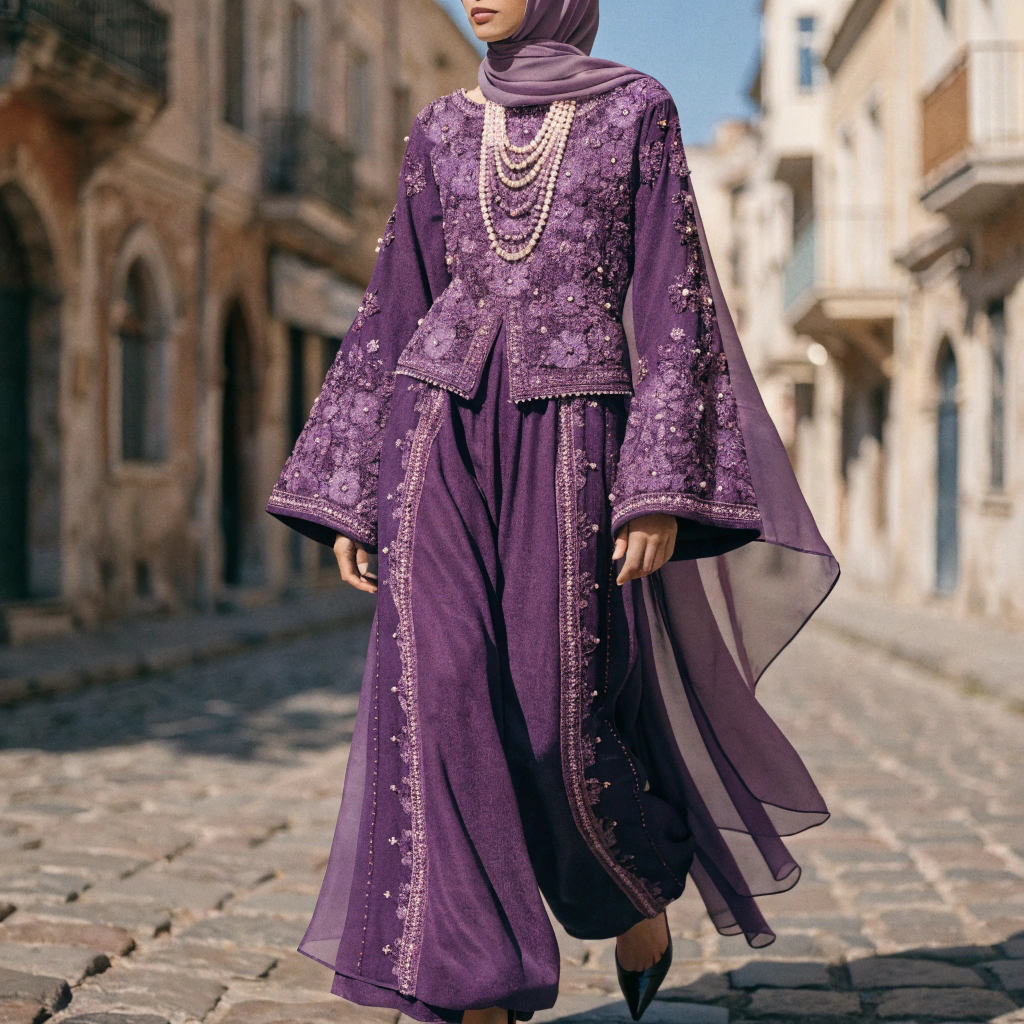
Traditional Clothes in Turkey
Turkey has beautiful clothes. They have a long history. People in Turkey wear the kaftan and the shalwar.
The kaftan is a long robe. It is very colorful. Important people wore kaftans in the past. Today, people wear them for special days.
The shalwar are big trousers. They are comfortable. In the past, people moved easily in them. They are wide at the top and thin at the bottom.
These clothes are part of Turkish culture. They are famous around the world. People like the traditional style of Turkey.
نکته دستوری
الگو: Present Simple (to be)
"The kaftan is a long robe."
We use 'is' for singular subjects to describe facts or states. It connects the subject to a description.
الگو: Present Simple (regular verbs)
"People in Turkey wear the kaftan."
We use the base form of the verb for plural subjects like 'people'. This describes a general habit or truth.
درک خود را بسنجید
10 سوال · A1 مبتدی · 1 پیشنمایش رایگان
آنچه از این مقاله آموختید را بسنجید. به همه سؤالات پاسخ دهید و XP کسب کنید!
What is a kaftan?
آیا میخواهید آزمون را تمام کنید؟
9 سؤال دیگر منتظر شماست. ثبتنام رایگان کنید تا آزمون کامل را باز کنید و XP کسب کنید!
ثبتنام رایگانقبلاً ثبتنام کردی؟ ورود
جزئیات سؤالات
What is a kaftan?
پاسخ شما:
پاسخ درست: A long robe
The shalwar are big trousers.
پاسخ شما:
پاسخ درست: درست
What does 'colorful' mean?
پاسخ شما:
پاسخ درست: Having many colors
These clothes are part of Turkish _____.
پاسخ شما:
پاسخ درست: culture
The Story of Turkish Traditional Clothes
Turkish traditional dress has a long and interesting history. Long ago, people in Central Asia needed clothes for traveling. They created the 'shalwar' and the 'kaftan'. These clothes were very useful because they were comfortable for riding horses.
The shalwar are baggy trousers. They are wide at the top and narrow at the ankles. In the past, both men and women wore them. People liked them because they were more comfortable than tight clothes. They allowed for easy movement during daily work.
The kaftan is a long, beautiful robe. In the Ottoman Empire, kaftans were very important. Rich people wore kaftans made of silk and expensive gold threads. The colors and patterns were special symbols. They showed a person's rank in society.
Today, people still wear these traditional clothes during weddings and festivals. They are a proud part of Turkish culture because they connect the past with the present.
نکته دستوری
الگو: Past Simple
"They created the 'shalwar' and the 'kaftan'."
We use the past simple to talk about actions that finished in the past. For regular verbs, we add '-ed' to the end of the base verb.
الگو: Comparatives
"People liked them because they were more comfortable than tight clothes."
We use comparatives to compare two things. For long adjectives like 'comfortable', we put 'more' before the adjective and 'than' after it.
درک خود را بسنجید
11 سوال · A2 مقدماتی · 1 پیشنمایش رایگان
آنچه از این مقاله آموختید را بسنجید. به همه سؤالات پاسخ دهید و XP کسب کنید!
Why were the shalwar and kaftan useful in Central Asia?
آیا میخواهید آزمون را تمام کنید؟
10 سؤال دیگر منتظر شماست. ثبتنام رایگان کنید تا آزمون کامل را باز کنید و XP کسب کنید!
ثبتنام رایگانقبلاً ثبتنام کردی؟ ورود
جزئیات سؤالات
Why were the shalwar and kaftan useful in Central Asia?
پاسخ شما:
پاسخ درست: They were good for riding horses.
In the past, only men wore the baggy trousers called shalwar.
پاسخ شما:
پاسخ درست: نادرست
What does the word 'kaftan' describe in the text?
پاسخ شما:
پاسخ درست: A long, beautiful robe
The colors and patterns on kaftans were special _____.
پاسخ شما:
پاسخ درست: symbols
Where did the history of these clothes begin?
پاسخ شما:
پاسخ درست: Central Asia
The Colors of History: Turkish Traditional Clothing
Turkish traditional clothing has a long and fascinating history. It has been influenced by many cultures, starting with the nomadic Yoruk people in Central Asia. These people needed clothes that were comfortable for traveling and adaptable to different climates. This is why mobility was the most important feature of their design.
The most famous part of this tradition is the 'shalwar'. These are baggy trousers which are wide at the waist and tapering at the ankles. Because they are so loose, they have provided freedom of movement for centuries. In the past, both men and women wore them for daily work. Even today, they are still popular in rural areas of Turkey because they are so practical.
Another iconic garment is the 'kaftan'. During the Ottoman Empire, the kaftan became a symbol of power and status. These long, flowing robes were often made from expensive silk and decorated with beautiful embroidery. In the sophisticated courts of the Sultans, the colors and patterns of a kaftan showed a person's rank. Some of these historical garments have been preserved in museums, and they still look amazing today.
The legacy of the kaftan and shalwar has not disappeared. Modern fashion designers often use these traditional styles in their new collections. While people in big cities usually wear Western clothes, traditional dress is still worn during weddings and folk festivals. These clothes are a visual map of Turkey’s journey from the steppes of Asia to a modern nation.
نکته دستوری
الگو: Passive Voice
"It has been influenced by many cultures."
The passive voice is used here to focus on the clothing history rather than the specific people who influenced it. It is formed using 'has been' + the past participle.
الگو: Relative Clauses
"These are baggy trousers which are wide at the waist."
The relative pronoun 'which' introduces a relative clause to provide more information about the noun 'trousers'. This helps create more complex and descriptive sentences.
درک خود را بسنجید
11 سوال · B1 متوسط · 1 پیشنمایش رایگان
آنچه از این مقاله آموختید را بسنجید. به همه سؤالات پاسخ دهید و XP کسب کنید!
Why was mobility important for the Yoruk people's clothing?
آیا میخواهید آزمون را تمام کنید؟
10 سؤال دیگر منتظر شماست. ثبتنام رایگان کنید تا آزمون کامل را باز کنید و XP کسب کنید!
ثبتنام رایگانقبلاً ثبتنام کردی؟ ورود
جزئیات سؤالات
Why was mobility important for the Yoruk people's clothing?
پاسخ شما:
پاسخ درست: They were nomadic travelers
The kaftan was a symbol of rank and status during the Ottoman Empire.
پاسخ شما:
پاسخ درست: درست
What does 'legacy' mean?
پاسخ شما:
پاسخ درست: Something from the past that continues to exist
The shalwar provides _____ of movement because it is loose.
پاسخ شما:
پاسخ درست: freedom
Where did the history of Turkish dress begin?
پاسخ شما:
پاسخ درست: Central Asia
The Sartorial Heritage of Turkey: From Nomadic Roots to Imperial Splendor
The sartorial heritage of Turkey serves as a fascinating chronological record, tracing the nation's evolution from its nomadic origins in the steppes of Central Asia to the opulent ceremonies of the Ottoman imperial courts. Central to this visual history is the concept of climate adaptability and functionality, which was largely dictated by the mobile lifestyle of the Yoruk people. Two garments, the shalwar and the kaftan, stand out as the most enduring symbols of this aesthetic legacy, representing a unique synthesis of practicality and prestige.
The shalwar, characterized by its distinctive baggy silhouette, was originally engineered for maximum mobility. These trousers, which are wide at the waist and taper sharply at the ankles, allowed riders to mount horses with ease while providing essential insulation against harsh weather conditions. Although they were born out of necessity, they eventually became a staple of Turkish fashion across all social strata, from rural farmers to urban merchants. The design reflects a sophisticated understanding of ergonomics, proving that traditional attire was often as practical as it was stylish. Even today, the comfort provided by the shalwar makes it a preferred choice in many rural provinces.
In contrast, the kaftan represented the pinnacle of social hierarchy and artistic expression within the Ottoman Empire. While the basic structure of the kaftan—a long, front-opening robe—remained relatively consistent over the centuries, the materials and patterns used clearly indicated the wearer's status. In the Ottoman court, kaftans were crafted from luxurious silks, brocades, and velvets, often featuring intricate embroidery that required months of labor. These garments were so highly valued that they were frequently presented as 'robes of honor' to successful generals and foreign dignitaries. Consequently, the kaftan evolved from a simple protective layer into a complex symbol of political power and cultural identity.
Furthermore, the decorative elements of these garments were never merely aesthetic; they often conveyed specific messages about the wearer's region or tribal affiliation. Gold and silver threads, known as 'sim,' were meticulously woven into the fabric to create motifs inspired by nature, such as tulips and carnations. By examining the history of the shalwar and kaftan, one gains a deeper appreciation for how Turkish culture has successfully balanced its nomadic roots with imperial grandeur. This legacy continues to influence modern Turkish fashion, where contemporary designers often reinterpret these ancient forms for a global audience, ensuring that the heritage remains vibrant and relevant.
نکته دستوری
الگو: Passive Voice
"In the Ottoman court, kaftans were crafted from luxurious silks, brocades, and velvets."
The passive voice is used here to focus on the object (the kaftans) and the action (crafting) rather than the specific person who made them. It is formed using the verb 'to be' plus the past participle.
الگو: Non-defining Relative Clauses
"These trousers, which are wide at the waist and taper sharply at the ankles, allowed riders to mount horses with ease."
This clause provides extra, non-essential information about the 'trousers'. It is separated by commas and uses the relative pronoun 'which'.
الگو: Gerund Phrases for Method
"By examining the history of the shalwar and kaftan, one gains a deeper appreciation..."
Starting a sentence with 'By' followed by a gerund (-ing form) explains the method or means by which an action is achieved.
درک خود را بسنجید
11 سوال · B2 بالاتر از متوسط · 1 پیشنمایش رایگان
آنچه از این مقاله آموختید را بسنجید. به همه سؤالات پاسخ دهید و XP کسب کنید!
What was the primary factor influencing the design of early Turkish clothing?
آیا میخواهید آزمون را تمام کنید؟
10 سؤال دیگر منتظر شماست. ثبتنام رایگان کنید تا آزمون کامل را باز کنید و XP کسب کنید!
ثبتنام رایگانقبلاً ثبتنام کردی؟ ورود
جزئیات سؤالات
What was the primary factor influencing the design of early Turkish clothing?
پاسخ شما:
پاسخ درست: The mobile lifestyle of nomadic people
The shalwar was exclusively worn by the wealthy elite in urban centers.
پاسخ شما:
پاسخ درست: نادرست
What does the word 'intricate' mean in the context of the article?
پاسخ شما:
پاسخ درست: Highly detailed and complex
The kaftan evolved into a complex symbol of political _____ and cultural identity.
پاسخ شما:
پاسخ درست: power
What are 'robes of honor' as mentioned in the text?
پاسخ شما:
پاسخ درست: Kaftans given as rewards to dignitaries and generals
Sartorial Sovereignty: The Evolution and Significance of the Kaftan and Shalwar
Rarely has a nation’s history been so vividly etched into its textiles as that of Turkey. From the rugged expanses of Central Asia to the gilded halls of Topkapi Palace, the evolution of Turkish attire mirrors a profound transition from nomadic pragmatism to imperial grandeur. Central to this vestimentary narrative are the kaftan and the shalwar, garments that transcend mere utility to represent a complex cultural synthesis. The history of these garments provides a visual map of the nation's journey, reflecting the shifting priorities of a people moving from the mobility required by the steppes to the sophisticated stratification of an empire.
It was the harsh, shifting climates of the Eurasian steppes that necessitated the invention of the shalwar. Characterized by its voluminous proportions and tapered ankles, the shalwar provided the Yoruk people with unparalleled mobility. What makes this garment particularly fascinating is its historical gender neutrality; both men and women donned these trousers, albeit with variations in embroidery and fabric. The nominalization of 'freedom of movement' into a physical form is nowhere more evident than in the generous cut of the shalwar, which allowed for horse-riding and labor-intensive nomadic life. This utilitarian design was not merely a choice but a survival mechanism, ensuring that the wearer could traverse vast distances without the hindrance of restrictive fabrics.
As the Ottoman Empire consolidated its power, the kaftan emerged as the quintessential symbol of social stratification. No longer just a protective layer, the kaftan became a canvas for political messaging and hierarchical display. It was within the opulent courts of Istanbul that the garment reached its zenith of complexity. Only through the most intricate silk brocades and silver threading could the Sultan’s proximity be signaled. The fabrics, often sourced from the silk-weaving centers of Bursa, were chosen not only for their aesthetic appeal but for their weight and texture, which commanded respect. Not until one examines the 'hilat'—the robes of honor bestowed by the Sultan upon distinguished officials—does the true weight of the kaftan as a diplomatic and political tool become clear.
The shift toward Western-style clothing in the 19th century, particularly during the Tanzimat period, did not entirely eradicate these traditions. While modern Turkey has embraced contemporary fashion, the legacy of the kaftan persists in ceremonial contexts and high-fashion reinterpretations. It is the enduring versatility of these garments that ensures their survival in the collective consciousness. Indeed, the fusion of utilitarian roots with aesthetic opulence continues to inspire designers today, proving that the threads of the past are woven inextricably into the fabric of the present. By analyzing these garments, one gains insight into the Turkish identity—a blend of nomadic resilience and imperial elegance.
نکته دستوری
الگو: Negative Inversion
"Rarely has a nation’s history been so vividly etched into its textiles as that of Turkey."
This structure places a negative or restrictive adverb at the beginning of the sentence for emphasis. When this occurs, the auxiliary verb and the subject are inverted.
الگو: Cleft Sentence
"It was the harsh, shifting climates of the Eurasian steppes that necessitated the invention of the shalwar."
Cleft sentences are used to focus on a specific piece of information. The structure 'It is/was + [focus] + that/who' highlights the reason or agent behind an action.
الگو: Negative Inversion with 'Not until'
"Not until one examines the 'hilat'—the robes of honor bestowed by the Sultan—does the true weight of the kaftan as a diplomatic tool become clear."
When a sentence begins with 'Not until', the inversion of the subject and auxiliary verb occurs in the main clause, not the time clause.
درک خود را بسنجید
12 سوال · C1 پیشرفته · 1 پیشنمایش رایگان
آنچه از این مقاله آموختید را بسنجید. به همه سؤالات پاسخ دهید و XP کسب کنید!
What was the primary driver for the design of the shalwar according to the article?
آیا میخواهید آزمون را تمام کنید؟
11 سؤال دیگر منتظر شماست. ثبتنام رایگان کنید تا آزمون کامل را باز کنید و XP کسب کنید!
ثبتنام رایگانقبلاً ثبتنام کردی؟ ورود
جزئیات سؤالات
What was the primary driver for the design of the shalwar according to the article?
پاسخ شما:
پاسخ درست: To accommodate nomadic mobility and harsh climates
The shalwar was historically worn exclusively by men.
پاسخ شما:
پاسخ درست: نادرست
What does 'stratification' mean in the context of the Ottoman court?
پاسخ شما:
پاسخ درست: A social hierarchy
The _____ of 'freedom of movement' into a physical form is evident in the shalwar's cut.
پاسخ شما:
پاسخ درست: nominalization
What did the 'hilat' represent in Ottoman society?
پاسخ شما:
پاسخ درست: A robe of honor used as a diplomatic tool
The Tanzimat period marked a shift toward Western-style clothing.
پاسخ شما:
پاسخ درست: درست
Sartorial Sovereignty: The Vestiary Evolution of the Kaftan and Shalwar
The vestiary history of Turkey serves as a profound narrative arc, tracing the nation’s metamorphosis from the rugged, wind-swept steppes of Central Asia to the meticulously choreographed opulence of the Ottoman Sublime Porte. This sartorial journey is not merely a matter of changing fashions but is, rather, a visual manifestation of a culture’s transition from nomadic pragmatism to imperial stratification. At the epicenter of this evolution lie two quintessential garments: the shalwar and the kaftan. Should one scrutinize the intricate weaving of a sixteenth-century Ottoman kaftan, the convergence of aesthetic ostentation and geopolitical influence becomes immediately apparent.
The shalwar, a bifurcated garment of nomadic provenance, represents the zenith of utilitarian design. Originally conceived to facilitate the equestrian lifestyle of the Yoruk people, its voluminous silhouette and tapered ankles provided an ergonomic solution to the exigencies of climate and mobility. It is imperative that the scholar recognize the shalwar not merely as a garment, but as a masterpiece of ergonomic engineering. Its generous proportions allowed for unrestricted movement, while the cinched waist ensured thermal retention during the biting winters of the Anatolian plateau. Notwithstanding its humble origins, the shalwar eventually permeated the urban elite, undergoing a transformation where coarse wool was supplanted by delicate silks and intricate embroidery, thus bridging the gap between the pastoral and the palatial.
Conversely, the kaftan emerged as the definitive symbol of social stratification and imperial authority. Within the Ottoman court, the kaftan was far more than an item of apparel; it was a calibrated instrument of hierarchy. Sumptuary laws, though often flexible, dictated the specific fabrics, colors, and lengths permitted to various ranks of the bureaucracy. The most prestigious kaftans, crafted from heavy brocades and silks such as kemha and çatma, were often bestowed as 'hil’at' or robes of honor, signaling the Sultan’s favor. Such garments were frequently adorned with motifs that reflected a unique cultural syncretism, blending traditional Turkic geometric patterns with the floral aesthetics of the Persianate world and the nascent influences of the European Renaissance.
Furthermore, the materiality of these garments speaks volumes about the economic vitality of the Silk Road. The proliferation of sericulture in cities like Bursa allowed the Ottoman textile industry to flourish, creating a vestiary language that was both distinct and globally resonant. Seldom has a culture managed to preserve such a distinct vestiary identity while simultaneously absorbing the myriad influences of its neighbors. This legacy is not a static relic of the past but a living testament to the Turkish capacity for synthesis. The enduring appeal of the kaftan and shalwar lies in their ability to evoke a sense of historical continuity, reminding the modern observer that the threads of the past are inextricably woven into the fabric of contemporary identity. It is through this analytical lens that we must view the legacy of Turkish traditional dress—as a sophisticated interplay between the functional requirements of a nomadic ancestry and the symbolic demands of a global empire.
نکته دستوری
الگو: Inverted Conditional
"Should one scrutinize the intricate weaving of a sixteenth-century Ottoman kaftan, the convergence of aesthetic ostentation and geopolitical influence becomes immediately apparent."
This formal structure replaces 'If one should scrutinize' or 'If one were to scrutinize'. It is used in academic writing to lend a tone of hypothetical inquiry or sophisticated analysis.
الگو: Subjunctive Mood with Impersonal Expressions
"It is imperative that the scholar recognize the shalwar not merely as a garment, but as a masterpiece of ergonomic engineering."
The base form of the verb 'recognize' (without -s) is used after 'It is imperative that'. This emphasizes necessity or urgency in scholarly discourse.
الگو: Negative Inversion
"Seldom has a culture managed to preserve such a distinct vestiary identity while simultaneously absorbing the myriad influences of its neighbors."
When a sentence begins with a negative or restrictive adverb like 'seldom', the auxiliary verb 'has' precedes the subject 'a culture'. This creates rhetorical emphasis.
درک خود را بسنجید
12 سوال · C2 تسلط · 1 پیشنمایش رایگان
آنچه از این مقاله آموختید را بسنجید. به همه سؤالات پاسخ دهید و XP کسب کنید!
According to the text, what was the primary driver behind the original design of the shalwar?
آیا میخواهید آزمون را تمام کنید؟
11 سؤال دیگر منتظر شماست. ثبتنام رایگان کنید تا آزمون کامل را باز کنید و XP کسب کنید!
ثبتنام رایگانقبلاً ثبتنام کردی؟ ورود
جزئیات سؤالات
According to the text, what was the primary driver behind the original design of the shalwar?
پاسخ شما:
پاسخ درست: The practical requirements of a nomadic, equestrian lifestyle.
The kaftan served as a tool for enforcing and displaying social hierarchy within the Ottoman Empire.
پاسخ شما:
پاسخ درست: درست
What does 'sumptuary' refer to in the context of the article?
پاسخ شما:
پاسخ درست: Laws regulating luxury and expenditure.
The transition from wool to silk in the production of the shalwar illustrates the bridge between the pastoral and the _____.
پاسخ شما:
پاسخ درست: palatial
What does the term 'syncretism' describe in the article's discussion of garment motifs?
پاسخ شما:
پاسخ درست: The blending of Turkic, Persian, and European aesthetic elements.
The article suggests that the Turkish vestiary identity is a static relic that has remained unchanged by outside influences.
پاسخ شما:
پاسخ درست: نادرست

