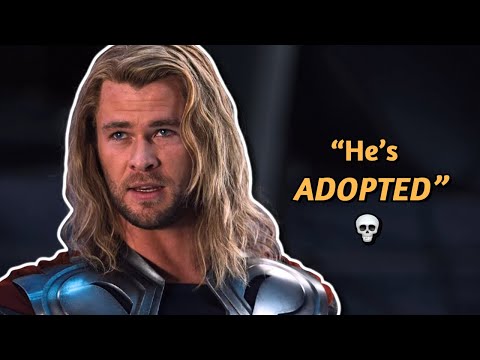
asgard en 30 secondes
- Asgard is the legendary home of the Norse gods, including Odin and Thor.
- It is a fortified celestial realm connected to Earth by a rainbow bridge.
- The term is a proper noun and should always be capitalized in writing.
- In modern times, it is famous due to Marvel movies and fantasy literature.
Asgard represents one of the most iconic locations in global mythology, specifically within the Norse tradition. To understand Asgard, one must first understand the concept of the Nine Worlds in Germanic cosmology. Asgard is the dwelling place of the Aesir, the primary tribe of deities which includes famous figures like Odin, Frigg, Thor, and Baldur. It is not merely a city but a vast, celestial realm characterized by its impenetrable walls and golden halls. When people use the word today, they are often referring to this mythological site, but the term has also permeated modern pop culture, most notably through the Marvel Cinematic Universe and various fantasy literatures. In these contexts, Asgard is often depicted as a high-tech or magical kingdom that exists in a different dimension or high above the clouds.
- Mythological Significance
- Asgard serves as the seat of divine power, where the gods hold council and prepare for the inevitable events of Ragnarök. It is a symbol of order and civilization in contrast to the chaotic realms of the giants.
The ancient texts describe Asgard as a place where the sun never sets on the glory of the Aesir.
In a broader sense, the term is used metaphorically to describe any place that feels unreachable, divine, or exceptionally grand. For instance, an architect might describe a futuristic skyscraper as a modern-day Asgard. Historically, the word derives from Old Norse 'Ásgarðr', where 'áss' refers to a god and 'garðr' means an enclosure or garden. This 'enclosure' aspect is crucial; Asgard is a fortified sanctuary. The walls of Asgard were famously built by a giant who sought the hand of the goddess Freyja in payment, a story that highlights the realm's status as a prize and a bastion of safety. Within its borders lie several distinct halls, the most famous being Valhalla, where the souls of heroic warriors are taken after death in battle.
- Cultural Context
- Modern usage often leans heavily on the 'superhero' interpretation, but scholars use the term to explore Indo-European religious structures and the concept of the 'Upper World'.
Many fans of fantasy fiction dream of visiting a realm as majestic as Asgard.
Linguistically, Asgard is a proper noun and should always be capitalized. It is rarely used in the plural because, in its primary sense, there is only one Asgard. However, in creative writing, one might encounter 'Asgards' if the author is suggesting multiple divine realms in a multiverse. The word carries a weight of ancient authority and epic scale. When a speaker invokes the name, they are calling upon thousands of years of storytelling, from the Poetic Edda to modern digital media. It evokes images of gold, rainbow bridges (Bifröst), and eternal vigilance. In academic circles, Asgard is studied alongside other divine abodes like Mount Olympus or Anu's heaven, providing a comparative look at how different cultures visualize the home of the sacred.
- Geographical Placement
- In the cosmology of Yggdrasil (the World Tree), Asgard is located at the very top, signifying its status as the highest and most spiritual plane of existence.
The rainbow bridge Bifröst is the only path connecting Midgard to Asgard.
Odin rules over Asgard with wisdom and an iron will.
The fall of Asgard during Ragnarök marks the end of the old world.
Using the word 'Asgard' correctly requires an understanding of its role as a specific location. Because it is a proper noun, it does not typically take an article (like 'the') unless you are using it as an adjective or in a specific descriptive phrase. For example, you would say 'I am reading about Asgard,' not 'I am reading about the Asgard.' However, you might say 'The Asgard of the movies is different from the Asgard of the myths.' This distinction is important for maintaining grammatical accuracy in formal writing. When used in a sentence, Asgard often functions as the subject or the object of a preposition, frequently paired with verbs of motion, ruling, or dwelling.
- Subjective Use
- Asgard stands as a beacon of hope for the gods during the long winters of the north.
Legend says that Asgard was built by a master stonemason.
In creative and descriptive contexts, Asgard can be used to evoke a sense of grandeur. You might describe a mountain peak as 'reaching toward Asgard' or a beautiful city as 'a terrestrial Asgard.' These metaphorical uses allow the word to transcend its mythological roots and become a tool for vivid imagery. When writing about Asgard in an academic or literary sense, it is often associated with themes of destiny, the divine right to rule, and the cyclical nature of time. The destruction of Asgard in the myth of Ragnarök is a particularly powerful image used to discuss themes of ending and rebirth. In these cases, the sentence structure often emphasizes the tragic or epic nature of the location.
- Prepositional Phrases
- Heimdall stands watch at the gates of Asgard, his eyes seeing across all the nine realms.
The heroes traveled across the stars to reach Asgard.
Furthermore, 'Asgardian' is the adjective form used to describe people or things from Asgard. For example, 'Thor is an Asgardian prince.' Using the adjective form correctly is essential for variety in your writing. You can also use 'Asgard' in possessive form: 'Asgard's walls were said to be unbreakable.' This is common when discussing the attributes or history of the realm. In modern conversational English, especially among fans of comic books, 'Asgard' might be used in a more casual way, such as 'That party was like a night in Asgard!' meaning it was legendary or incredibly impressive. However, in most formal contexts, it remains a specific reference to the mythological home of the gods.
- Adjectival Use
- The Asgardian architecture in the film was inspired by both Norse carvings and futuristic designs.
Every soul in Asgard prepared for the coming storm.
The golden spires of Asgard could be seen from miles away.
Without the protection of Asgard, the other realms would fall to the frost giants.
In the modern era, the most frequent place you will hear the word 'Asgard' is in the context of the Marvel Cinematic Universe (MCU). Since the release of the 'Thor' movies starting in 2011, Asgard has become a household name for millions of people who may have never read the original Norse sagas. In these films, characters frequently discuss the politics, defense, and eventual fate of Asgard. You will hear it in dialogue between characters like Thor, Loki, and Odin. Beyond the silver screen, the word is a staple in the fantasy genre of literature and gaming. Video games like 'God of War' or 'Assassin's Creed Valhalla' feature Asgard as a central location that players can explore, often with a high degree of visual detail and lore-heavy storytelling.
- Pop Culture
- In movies, 'Asgard' is often used to represent a blend of ancient tradition and advanced alien technology.
"Asgard is not a place; it's a people," is a famous line from the movie Thor: Ragnarök.
In educational settings, you will hear 'Asgard' during history or literature lectures focusing on Northern European heritage. Professors and students use the term when analyzing the 'Prose Edda' or 'Poetic Edda,' which are the primary sources for our knowledge of Norse myths. Here, the word is used with more precision, often discussing its etymological roots and its place in the cosmological structure of the world tree, Yggdrasil. You might also hear it in discussions about comparative religion, where Asgard is compared to other 'high places' of the gods. In these academic contexts, the pronunciation is usually more formal, and the discussion focuses on the symbolic meaning of the realm as a place of divine order.
- Academic Discourse
- Scholars use 'Asgard' to describe the celestial sphere in the tripartite division of the Norse universe.
The professor explained how Asgard represents the ideal of the Germanic chieftain's hall.
Another interesting place you might encounter the word is in the world of heavy metal music, particularly 'Viking Metal' or 'Pagan Metal.' Bands like Amon Amarth or Enslaved frequently use Asgard in their lyrics to evoke a sense of warrior pride, ancient heritage, and epic battle. In this subculture, Asgard is a powerful symbol of a lost, heroic age. Furthermore, you might see the name used for various real-world businesses or products, from software companies to fitness brands, aiming to project an image of strength, divinity, or 'top-tier' quality. Whether in a blockbuster movie, a university classroom, or a high-energy concert, 'Asgard' remains a vibrant part of the modern lexicon, bridging the gap between ancient myth and contemporary imagination.
- Music and Subcultures
- Metal lyrics often depict the journey to Asgard as the ultimate reward for a life of bravery.
The lead singer shouted about the gates of Asgard opening for the fallen.
The travel guide mentioned a small village named after Asgard.
In the comic shop, fans debated the architectural layout of Asgard.
One of the most common mistakes people make with 'Asgard' is confusing it with other mythological locations, particularly Valhalla. While Valhalla is located *within* Asgard, they are not the same thing. Valhalla is a specific hall (a building) where Odin houses the honored dead, whereas Asgard is the entire realm or city-state. Using them interchangeably can make a writer or speaker seem less knowledgeable about the subject matter. Another frequent error is the misspelling of the word. People often forget the 'd' at the end or try to spell it phonetically as 'Azgard' or 'Asguard.' The correct spelling is 'Asgard,' derived from the Old Norse 'garðr' (enclosure). Ensuring the 'd' is present is vital for both formal and informal writing.
- Confusing with Valhalla
- Incorrect: 'The gods live in Valhalla.' Correct: 'The gods live in Asgard, and some warriors live in Valhalla.'
Many people mistakenly think Asgard is just another name for the afterlife.
Another mistake involves the capitalization of the word. As a proper noun referring to a specific mythological place, 'Asgard' must always be capitalized. Failing to do so is a grammatical error. Additionally, some people use 'Asgard' as if it were a synonym for 'Heaven' in a Christian sense. While there are similarities (both are celestial homes for divine beings), they are culturally and conceptually very different. Asgard is a place of war, politics, and physical fortification, whereas Heaven is often depicted as a place of pure spiritual peace. Mixing these concepts can lead to a misunderstanding of the specific 'flavor' of Norse mythology. Furthermore, beginners sometimes confuse Asgard with Midgard (Earth) or Jotunheim (the land of giants), which are entirely separate realms in the Norse cosmology.
- Capitalization Errors
- Incorrect: 'The myth tells of asgard.' Correct: 'The myth tells of Asgard.'
It is a common error to spell the name as Asguard instead of the correct version.
Finally, there is the issue of pronunciation. While English speakers typically say 'AZ-gard' or 'AS-gard,' the original Old Norse pronunciation would have been closer to 'OWS-garth.' While you don't need to use the ancient pronunciation in everyday English, being aware of it can help you understand the word's history. A more common modern mistake is adding an 's' to the end when it's not needed, like 'Asgards' when referring to the single realm. Unless you are talking about multiple versions of the realm in a fictional multiverse, it should always be singular. Lastly, avoid using 'Asgard' to describe just any 'cool place' in a formal essay; keep its usage specific to the mythology or the specific fictional universes where it exists to maintain a high level of academic rigor.
- Pluralization Mistake
- Incorrect: 'The many Asgards of the gods.' Correct: 'The many halls of Asgard.'
One should not use Asgard as a generic word for paradise.
The student was corrected for writing asgard without a capital letter.
Mixing up Asgard and Olympus is a frequent error in comparative mythology quizzes.
When looking for words similar to 'Asgard,' we must look at other mythological and legendary 'homes of the gods.' The most direct equivalent in Greek mythology is Mount Olympus. Like Asgard, Olympus is a physical location (a mountain) that serves as the dwelling of the primary pantheon. However, while Asgard is often described as a fortified city in the sky, Olympus is a mountain on Earth whose peak reaches into the heavens. Another similar term is Elysium or the Elysian Fields, though these are more akin to a paradise for heroes than a home for the gods themselves. In a more general sense, 'Celestial Realm' or 'Divine Abode' can serve as academic alternatives when you want to describe the concept without referring specifically to the Norse tradition.
- Olympus vs. Asgard
- Olympus is a Greek mountain; Asgard is a Norse celestial enclosure. Both represent the seat of divine power.
While the Greeks had Olympus, the Norse people looked toward Asgard as the home of their deities.
In the context of the afterlife, 'Valhalla' is often used as a synonym for Asgard, though as discussed previously, this is technically a sub-location. Other alternatives from different cultures include 'Nirvana' (though this is a state of being rather than a physical place) or 'Tír na nÓg' from Irish mythology, which is a land of eternal youth. If you are writing fiction and want to create a place *like* Asgard without using the name, you might use terms like 'The High Kingdom,' 'The Sky Fortress,' or 'The Golden Citadel.' These phrases capture the essence of Asgard—its height, its strength, and its splendor—without the specific cultural baggage of the Norse name. Using these alternatives can help avoid repetition in long pieces of writing about mythology or fantasy.
- Valhalla vs. Asgard
- Valhalla is a hall within Asgard. Think of Asgard as the city and Valhalla as the most famous palace within it.
The poet described the city as a 'modern Asgard', gleaming with steel and glass.
For those interested in the linguistic side, 'Midgard' and 'Utgard' are the most relevant related terms. Midgard is the 'Middle Enclosure' (Earth), and Utgard is the 'Outer Enclosure' (the land of the giants). Understanding this 'tripartite' system of enclosures helps clarify why Asgard is named the way it is. If you are looking for a word that describes the *feeling* of Asgard, you might use 'Ethereal,' 'Majestic,' or 'Imperious.' These adjectives capture the divine and commanding nature of the realm. In modern fantasy, you might also see 'Aether' used to describe the substance of the sky-realms, which is a concept that overlaps with the celestial nature of Asgard. Choosing the right alternative depends entirely on whether you are aiming for mythological accuracy, poetic beauty, or modern clarity.
- Midgard vs. Asgard
- Midgard is the realm of men; Asgard is the realm of gods. They are connected by the Bifröst bridge.
The traveler sought a way to leave Midgard and enter the gates of Asgard.
The architect's vision was to create a sanctuary that rivaled Asgard in its beauty.
Legends of Asgard have inspired countless writers to imagine their own celestial cities.
How Formal Is It?
Le savais-tu ?
The '-gard' suffix is related to the English word 'garden' and 'yard', as well as the Slavic 'grad' (meaning city, as in Petrograd).
Guide de prononciation
- Pronouncing it as 'As-guard' (like a security guard).
- Using a soft 's' instead of a 'z' sound (though both are acceptable, 'z' is more common).
- Adding an extra syllable like 'As-a-gard'.
- Misplacing the stress on the second syllable.
- Dropping the 'd' at the end.
Niveau de difficulté
Easy to recognize but requires context of mythology.
Proper capitalization and spelling are important.
Simple two-syllable pronunciation.
Can be confused with 'a guard' if spoken quickly.
Quoi apprendre ensuite
Prérequis
Apprends ensuite
Avancé
Grammaire à connaître
Proper Nouns
Asgard must always be capitalized.
Zero Article
We say 'in Asgard', not 'in the Asgard'.
Possessive Nouns
Asgard's walls are very tall.
Adjective Formation
Add '-ian' to make 'Asgardian'.
Prepositions of Place
Use 'in' for location and 'to' for direction.
Exemples par niveau
Asgard is the home of the gods.
Asgard est la maison des dieux.
Proper noun, no article.
Thor lives in Asgard.
Thor habite à Asgard.
Subject-Verb-Prepositional Phrase.
The bridge to Asgard is a rainbow.
Le pont vers Asgard est un arc-en-ciel.
Preposition 'to' shows direction.
Odin is the king of Asgard.
Odin est le roi d'Asgard.
Possessive 'of' relationship.
Asgard is very beautiful.
Asgard est très beau.
Adjective 'beautiful' describes the noun.
I want to see Asgard.
Je veux voir Asgard.
Infinitive 'to see' + object.
Asgard has big walls.
Asgard a de grands murs.
Verb 'has' shows possession.
Is Asgard in the sky?
Est-ce qu'Asgard est dans le ciel ?
Question form with 'is'.
The Vikings told many stories about Asgard.
Les Vikings racontaient beaucoup d'histoires sur Asgard.
Past tense 'told'.
You cannot walk to Asgard; you must use the bridge.
Tu ne peux pas marcher jusqu'à Asgard ; tu dois utiliser le pont.
Modal verbs 'cannot' and 'must'.
Asgard is a safe place for the Aesir.
Asgard est un endroit sûr pour les Ases.
Adjective 'safe' before noun.
Heimdall guards the entrance to Asgard.
Heimdall garde l'entrée d'Asgard.
Present simple for habitual action.
There are many golden halls in Asgard.
Il y a beaucoup de salles dorées à Asgard.
'There are' for plural existence.
The gods meet in Asgard every day.
Les dieux se réunissent à Asgard chaque jour.
Adverbial phrase 'every day'.
Asgard is higher than Midgard.
Asgard est plus haut que Midgard.
Comparative 'higher than'.
Do you know the way to Asgard?
Connais-tu le chemin vers Asgard ?
Interrogative 'Do you know'.
In Norse mythology, Asgard is the realm of the gods.
Dans la mythologie nordique, Asgard est le royaume des dieux.
Introductory prepositional phrase.
The walls of Asgard were built to protect it from giants.
Les murs d'Asgard ont été construits pour le protéger des géants.
Passive voice 'were built'.
Asgard is often depicted as a shining fortress in the sky.
Asgard est souvent représenté comme une forteresse brillante dans le ciel.
Adverb 'often' with passive voice.
Many heroes hope to enter Valhalla, which is in Asgard.
Beaucoup de héros espèrent entrer au Valhalla, qui se trouve à Asgard.
Relative clause 'which is in Asgard'.
The movie shows a futuristic version of Asgard.
Le film montre une version futuriste d'Asgard.
Adjective 'futuristic' modifying 'version'.
Asgard was destroyed during the battle of Ragnarök.
Asgard a été détruit pendant la bataille de Ragnarök.
Past passive with time marker 'during'.
The gods gathered in Asgard to discuss the future.
Les dieux se sont rassemblés à Asgard pour discuter de l'avenir.
Infinitive of purpose 'to discuss'.
Asgard represents order in the Norse universe.
Asgard représente l'ordre dans l'univers nordique.
Present simple for general truth.
Asgard is situated at the top of Yggdrasil, the World Tree.
Asgard est situé au sommet d'Yggdrasil, l'Arbre du Monde.
Stative passive 'is situated'.
The concept of Asgard as an 'inner-world' is central to Norse belief.
Le concept d'Asgard en tant qu'« inner-world » est central à la croyance nordique.
Appositive 'as an inner-world'.
Despite its strength, Asgard was destined to fall eventually.
Malgré sa force, Asgard était destiné à tomber un jour.
Concessive 'Despite' + noun phrase.
Asgardian culture, as portrayed in comics, is quite distinct from the myths.
La culture asgardienne, telle qu'elle est dépeinte dans les bandes dessinées, est assez distincte des mythes.
Parenthetical 'as portrayed in comics'.
The architect of Asgard's wall was actually a giant in disguise.
L'architecte du mur d'Asgard était en fait un géant déguisé.
Possessive 'Asgard's'.
Scholars debate the exact location of Asgard in the cosmological map.
Les chercheurs débattent de l'emplacement exact d'Asgard sur la carte cosmologique.
Transitive verb 'debate' + object.
Asgard serves as a sanctuary for the divine beings.
Asgard sert de sanctuaire pour les êtres divins.
Phrasal verb 'serves as'.
The splendor of Asgard is a recurring theme in the Poetic Edda.
La splendeur d'Asgard est un thème récurrent dans l'Edda poétique.
Abstract noun 'splendor' as subject.
Asgard functions as a mythological microcosm of the Germanic social order.
Asgard fonctionne comme un microcosme mythologique de l'ordre social germanique.
Metaphorical use of 'microcosm'.
The tripartite division of the world places Asgard in the celestial sphere.
La division tripartite du monde place Asgard dans la sphère céleste.
Technical term 'tripartite division'.
In the wake of Ragnarök, Asgard is said to be replaced by a new world.
À la suite du Ragnarök, on dit qu'Asgard est remplacé par un nouveau monde.
Prepositional phrase 'In the wake of'.
The etymology of Asgard reveals its nature as a protected enclosure.
L'étymologie d'Asgard révèle sa nature d'enclos protégé.
Subject-Verb-Object with abstract nouns.
Asgard's impenetrability was a source of pride for the Aesir.
L'impénétrabilité d'Asgard était une source de fierté pour les Ases.
Possessive with abstract noun 'impenetrability'.
The transition from Midgard to Asgard represents a spiritual ascent.
La transition de Midgard à Asgard représente une ascension spirituelle.
Noun 'transition' + from/to.
Modern interpretations of Asgard often strip away its more brutal elements.
Les interprétations modernes d'Asgard éliminent souvent ses éléments les plus brutaux.
Phrasal verb 'strip away'.
Asgard is not merely a place but an ideological construct of divine sovereignty.
Asgard n'est pas seulement un lieu mais une construction idéologique de la souveraineté divine.
Correlative conjunction 'not merely... but'.
The ontological status of Asgard remains a subject of intense hermeneutic study.
Le statut ontologique d'Asgard reste un sujet d'étude herméneutique intense.
Highly formal vocabulary ('ontological', 'hermeneutic').
Asgard's eventual annihilation is the quintessential expression of Norse fatalism.
L'annihilation finale d'Asgard est l'expression quintessentielle du fatalisme nordique.
Complex noun phrase as subject.
The spatial configuration of Asgard reflects the 'innangard' vs 'utangard' dichotomy.
La configuration spatiale d'Asgard reflète la dichotomie « innangard » contre « utangard ».
Technical jargon 'dichotomy'.
Wagner's 'Der Ring des Nibelungen' reimagines Asgard as a site of tragic hubris.
« L'Anneau du Nibelung » de Wagner réimagine Asgard comme un site d'hubris tragique.
Literary reference with 'reimagines as'.
The myth of the giant builder highlights the transactional nature of Asgard's defense.
Le mythe du géant bâtisseur souligne la nature transactionnelle de la défense d'Asgard.
Abstract noun 'transactional nature'.
Asgard's golden age is perpetually haunted by the prophecy of its demise.
L'âge d'or d'Asgard est perpétuellement hanté par la prophétie de sa disparition.
Adverb 'perpetually' modifying passive verb.
The deconstruction of Asgard in postmodern media often critiques traditional power structures.
La déconstruction d'Asgard dans les médias postmodernes critique souvent les structures de pouvoir traditionnelles.
Gerund phrase 'The deconstruction of...'.
Asgard stands as a testament to the human endeavor to spatialize the divine.
Asgard témoigne de l'effort humain pour spatialiser le divin.
Complex infinitive 'to spatialize the divine'.
Collocations courantes
Phrases Courantes
— An exclamation of surprise or emphasis often used in Asgardian-themed media.
By the beard of Odin, that was a huge explosion!
— Refers to the many palaces and meeting places within the realm.
Feasts were held nightly in the halls of Asgard.
— The power, beauty, and reputation of the divine realm.
He fought to maintain the glory of Asgard.
— A journey from the human world to the divine world.
The soul traveled from Midgard to Asgard.
— The seat of power and leadership over the gods.
Who will sit upon the throne of Asgard?
— Outside the safety of the divine realm.
Danger lurks beyond the gates of Asgard.
— The best warriors or people from the realm.
They sent Asgard's finest to deal with the threat.
— Hidden knowledge or magic belonging to the gods.
He sought to learn the secrets of Asgard.
— A battle cry used by warriors of the realm.
They charged into the fray, shouting 'For Asgard!'
— Another way to refer to Ragnarök or the end of the gods.
The twilight of Asgard was a somber time.
Souvent confondu avec
Valhalla is a specific hall inside the realm of Asgard.
Midgard is the world of humans, while Asgard is for gods.
Olympus is the Greek equivalent, but it is a mountain, not a sky-realm.
Expressions idiomatiques
— Extremely impressive or majestic.
The new opera house is as grand as Asgard.
Informal— A path to something divine or impossible.
Winning this award felt like finding a bridge to Asgard.
Literary— Waiting for an inevitable disaster or a big change.
The employees sat in silence, as if waiting for Ragnarök.
Informal— A person who sees everything or is very wise.
The boss has an Odin's eye for detail.
Slang— A very powerful tool or a heavy-handed approach.
He used the legal system like Thor's hammer.
Informal— The ability to lie or persuade others easily.
Be careful of him; he has Loki's tongue.
Informal— A state of constant and perfect vigilance.
The security team was on Heimdall's watch all night.
Literary— Heading for a glorious end or success after hard work.
That athlete is Valhalla-bound after such a career.
Informal— A link between two very different worlds or ideas.
The internet is the Bifröst connection of our age.
Modern— Something that is unbreakable or of extremely high quality.
His resolve was made of Asgardian steel.
InformalFacile à confondre
Similar name.
Asgardia is a modern project to create a nation in space, not a myth.
He joined the Asgardia project.
Phonetic spelling.
This is a common misspelling of the mythological Asgard.
Correct: Asgard.
Confused with 'guard'.
The suffix is '-gard' (enclosure), not '-guard' (protection).
Correct: Asgard.
Missing the 's'.
This is simply a typo.
Correct: Asgard.
Missing the 'd'.
This is a typo or a mispronunciation.
Correct: Asgard.
Structures de phrases
Asgard is [adjective].
Asgard is big.
[Subject] lives in Asgard.
Odin lives in Asgard.
Asgard is known for [noun phrase].
Asgard is known for its golden halls.
The [noun] of Asgard [verb].
The walls of Asgard protect the gods.
Asgard serves as a [noun] for [noun].
Asgard serves as a sanctuary for the Aesir.
The [adjective] nature of Asgard [verb].
The ephemeral nature of Asgard underscores the theme of Ragnarök.
If I could go to Asgard, I would [verb].
If I could go to Asgard, I would meet Thor.
Not only is Asgard [adjective], but it is also [adjective].
Not only is Asgard beautiful, but it is also strong.
Famille de mots
Noms
Adjectifs
Apparenté
Comment l'utiliser
High in fiction and mythology; low in daily business or science.
-
Writing 'asgard' with a lowercase 'a'.
→
Asgard
It is a proper noun and must be capitalized.
-
Saying 'I'm going to the Asgard'.
→
I'm going to Asgard.
Proper nouns for places usually don't need 'the'.
-
Thinking Valhalla and Asgard are exactly the same.
→
Valhalla is in Asgard.
Asgard is the city; Valhalla is a building inside it.
-
Spelling it 'Asguard'.
→
Asgard
The suffix is '-gard', not '-guard'.
-
Confusing it with Midgard.
→
Asgard is for gods; Midgard is for humans.
These are two different realms in the mythology.
Astuces
The 'D' is Silent?
No, the 'd' at the end of Asgard should be lightly pronounced. Don't forget to write it!
Capitalize It!
Always capitalize Asgard because it is a specific place name, just like your hometown.
Asgardian
Use the word 'Asgardian' when you want to describe something that belongs to Asgard.
Beyond Marvel
If you are in a history class, focus on the 'Prose Edda' rather than the movies.
The 'Z' Sound
Most people say 'AZ-gard' with a 'z' sound in the middle. It sounds more natural.
Thor's Home
Associating Asgard with Thor is the easiest way to remember what it is.
Like Olympus
Think of Asgard as the Viking version of Mount Olympus.
Garden Connection
Remember that '-gard' is like 'garden' to help you remember it's a place.
No 'The'
Avoid saying 'the Asgard'. Just say 'Asgard' on its own.
Epic Tone
Use the word when you want to sound epic or describe something very grand.
Mémorise-le
Moyen mnémotechnique
Think of 'As' (the gods) in a 'Gard' (garden). The gods are playing in their heavenly garden.
Association visuelle
Imagine a golden castle sitting on a cloud with a giant rainbow leading up to its front door.
Word Web
Défi
Try to describe your own 'personal Asgard'—a place where you feel safe, powerful, and happy.
Origine du mot
Derived from the Old Norse word 'Ásgarðr'. It is a compound of two words that were common in the Germanic languages of Northern Europe.
Sens originel : 'Áss' refers to a god (plural Aesir), and 'garðr' means an enclosure, yard, or garden.
North Germanic / Indo-European.Contexte culturel
While mostly used in fantasy, be respectful when discussing it in the context of modern Heathenry or Ásatrú religions.
Commonly known through Marvel movies; often associated with 'epic' or 'legendary' things.
Pratique dans la vie réelle
Contextes réels
Mythology Class
- Norse pantheon
- Nine Worlds
- Snorri Sturluson
- Aesir gods
Movie Discussion
- Marvel Cinematic Universe
- Thor's home
- Loki's schemes
- CGI effects
Fantasy Gaming
- Quest to Asgard
- Unlock the realm
- God of War lore
- Level design
Literature Analysis
- Epic setting
- Divine intervention
- Heroic fatalism
- Symbol of order
Heavy Metal Music
- Viking metal
- Gates of Valhalla
- Battle for Asgard
- Pagan roots
Amorces de conversation
"Have you ever seen the depiction of Asgard in the Thor movies?"
"What do you think is the most interesting part of Norse mythology?"
"If you could visit any mythological place, would you choose Asgard or Olympus?"
"Why do you think stories about Asgard are still so popular today?"
"Do you know which gods besides Thor live in Asgard?"
Sujets d'écriture
Describe what you think a day in Asgard would look like.
Compare the concept of Asgard with another mythological home of the gods.
Write a short story about a human who accidentally finds the bridge to Asgard.
How does the idea of a 'fortified heaven' like Asgard differ from other versions of paradise?
Reflect on why modern culture is so obsessed with Norse mythology and Asgard.
Questions fréquentes
10 questionsThe Aesir gods live in Asgard. This includes famous gods like Odin, Thor, Loki (sometimes), Frigg, and Heimdall. It is their primary residence and fortress.
Asgard is a place from Norse mythology. While it is not a physical location on Earth, it was a very real part of the spiritual beliefs of the Viking people.
According to myth, the only way to get to Asgard is by crossing the Bifröst, which is a magical rainbow bridge that connects the human world to the divine world.
The word comes from Old Norse and means 'Enclosure of the Gods'. 'As' refers to the gods, and 'gard' refers to a yard or protected space.
No, Valhalla is just one of the many halls located inside Asgard. It is the hall where Odin welcomes warriors who died bravely in battle.
In the myths, Asgard is destined to be destroyed during Ragnarök, the final battle of the gods, though some stories say a new world will rise afterward.
Marvel comics adapted Norse mythology in the 1960s, turning the gods into superheroes and Asgard into a high-tech alien realm.
Yes, in most descriptions, Asgard is located in the heavens or at the highest point of the cosmic tree Yggdrasil.
The walls were built by a giant (often called the Blast) who used a magical horse named Svadilfari to help him move massive stones.
No, Asgard is part of Norse mythology, which is a completely different religious tradition from the Judeo-Christian Bible.
Teste-toi 190 questions
Write a sentence using 'Asgard' and 'Thor'.
Well written! Good try! Check the sample answer below.
Describe Asgard in two sentences.
Well written! Good try! Check the sample answer below.
Explain the difference between Asgard and Midgard.
Well written! Good try! Check the sample answer below.
Use the adjective 'Asgardian' in a sentence.
Well written! Good try! Check the sample answer below.
Write a short paragraph about the bridge to Asgard.
Well written! Good try! Check the sample answer below.
Why is Asgard important in Norse mythology?
Well written! Good try! Check the sample answer below.
Compare Asgard to a modern city.
Well written! Good try! Check the sample answer below.
Discuss the symbolic meaning of the 'fall of Asgard'.
Well written! Good try! Check the sample answer below.
Write a dialogue between two gods in Asgard.
Well written! Good try! Check the sample answer below.
How has the image of Asgard changed in modern movies?
Well written! Good try! Check the sample answer below.
Describe the walls of Asgard.
Well written! Good try! Check the sample answer below.
What would you do if you visited Asgard?
Well written! Good try! Check the sample answer below.
Use the phrase 'gates of Asgard' in a sentence.
Well written! Good try! Check the sample answer below.
Explain the etymology of Asgard.
Well written! Good try! Check the sample answer below.
Write a poem line about Asgard.
Well written! Good try! Check the sample answer below.
Is Asgard a place of peace or war?
Well written! Good try! Check the sample answer below.
What is the role of Heimdall in Asgard?
Well written! Good try! Check the sample answer below.
How does Asgard connect to the World Tree?
Well written! Good try! Check the sample answer below.
Write a sentence using 'Asgard' as a metaphor.
Well written! Good try! Check the sample answer below.
What is the significance of Valhalla being in Asgard?
Well written! Good try! Check the sample answer below.
Say the word 'Asgard' out loud three times.
Read this aloud:
Tu as dit :
Speech recognition is not supported in your browser. Try Chrome or Edge.
Pronounce 'Asgardian' correctly.
Read this aloud:
Tu as dit :
Speech recognition is not supported in your browser. Try Chrome or Edge.
Tell a partner who lives in Asgard.
Read this aloud:
Tu as dit :
Speech recognition is not supported in your browser. Try Chrome or Edge.
Describe the bridge to Asgard.
Read this aloud:
Tu as dit :
Speech recognition is not supported in your browser. Try Chrome or Edge.
Explain why Asgard has walls.
Read this aloud:
Tu as dit :
Speech recognition is not supported in your browser. Try Chrome or Edge.
Talk about your favorite Asgardian character.
Read this aloud:
Tu as dit :
Speech recognition is not supported in your browser. Try Chrome or Edge.
Summarize the story of Ragnarök in relation to Asgard.
Read this aloud:
Tu as dit :
Speech recognition is not supported in your browser. Try Chrome or Edge.
Discuss the difference between Asgard in myths and in movies.
Read this aloud:
Tu as dit :
Speech recognition is not supported in your browser. Try Chrome or Edge.
How would you feel if you were standing at the gates of Asgard?
Read this aloud:
Tu as dit :
Speech recognition is not supported in your browser. Try Chrome or Edge.
Explain the meaning of the name 'Asgard'.
Read this aloud:
Tu as dit :
Speech recognition is not supported in your browser. Try Chrome or Edge.
Name three gods who live in Asgard.
Read this aloud:
Tu as dit :
Speech recognition is not supported in your browser. Try Chrome or Edge.
Describe the appearance of Asgard.
Read this aloud:
Tu as dit :
Speech recognition is not supported in your browser. Try Chrome or Edge.
Why is Heimdall important to Asgard?
Read this aloud:
Tu as dit :
Speech recognition is not supported in your browser. Try Chrome or Edge.
Is Asgard a place you would like to visit? Why?
Read this aloud:
Tu as dit :
Speech recognition is not supported in your browser. Try Chrome or Edge.
Compare Asgard to another mythological place.
Read this aloud:
Tu as dit :
Speech recognition is not supported in your browser. Try Chrome or Edge.
What does the word 'fortified' mean when describing Asgard?
Read this aloud:
Tu as dit :
Speech recognition is not supported in your browser. Try Chrome or Edge.
How do the gods travel from Asgard to Midgard?
Read this aloud:
Tu as dit :
Speech recognition is not supported in your browser. Try Chrome or Edge.
Discuss the role of fate in the story of Asgard.
Read this aloud:
Tu as dit :
Speech recognition is not supported in your browser. Try Chrome or Edge.
Use 'Asgard' in a sentence about a beautiful place.
Read this aloud:
Tu as dit :
Speech recognition is not supported in your browser. Try Chrome or Edge.
What is the most famous building in Asgard?
Read this aloud:
Tu as dit :
Speech recognition is not supported in your browser. Try Chrome or Edge.
Listen to the sentence: 'Asgard is the home of Odin.' Who lives in Asgard?
Listen to the sentence: 'The rainbow bridge is called Bifröst.' What is the bridge called?
Listen to the sentence: 'Heimdall guards the gates.' What does Heimdall guard?
Listen to the sentence: 'Asgardian warriors are very brave.' What kind of warriors are they?
Listen to the sentence: 'The fall of Asgard was predicted by a prophet.' Who predicted the fall?
Listen to the sentence: 'Valhalla is located inside Asgard.' Where is Valhalla?
Listen to the sentence: 'The gods met in the great hall of Asgard.' Where did the gods meet?
Listen to the sentence: 'Asgard is one of the nine realms.' How many realms are there?
Listen to the sentence: 'Thor returned to Asgard after his battle.' Where did Thor go?
Listen to the sentence: 'The golden spires of Asgard were visible from afar.' What was visible?
Listen to the sentence: 'Asgard is a place of divine order.' What kind of order is in Asgard?
Listen to the sentence: 'The giants attacked the walls of Asgard.' Who attacked the walls?
Listen to the sentence: 'Loki is an Asgardian prince.' What is Loki's title?
Listen to the sentence: 'Asgard is situated on the top of Yggdrasil.' Where is Asgard situated?
Listen to the sentence: 'The beauty of Asgard is legendary.' What is legendary?
/ 190 correct
Perfect score!
Summary
Asgard is the divine fortress of Norse mythology, symbolizing order and power. For example: 'The gods of Asgard prepared for battle as the giants approached the rainbow bridge.'
- Asgard is the legendary home of the Norse gods, including Odin and Thor.
- It is a fortified celestial realm connected to Earth by a rainbow bridge.
- The term is a proper noun and should always be capitalized in writing.
- In modern times, it is famous due to Marvel movies and fantasy literature.
The 'D' is Silent?
No, the 'd' at the end of Asgard should be lightly pronounced. Don't forget to write it!
Capitalize It!
Always capitalize Asgard because it is a specific place name, just like your hometown.
Asgardian
Use the word 'Asgardian' when you want to describe something that belongs to Asgard.
Beyond Marvel
If you are in a history class, focus on the 'Prose Edda' rather than the movies.