fray en 30 secondes
- Fray can be a verb meaning to unravel at the edges or a noun meaning a noisy fight or competition.
- It is commonly used to describe worn-out clothes or ropes, as well as stressed-out nerves and tempers.
- The phrase 'enter the fray' means to join a conflict or a busy situation that is already happening.
- Staying 'above the fray' means to remain neutral and avoid getting involved in petty arguments or messy situations.
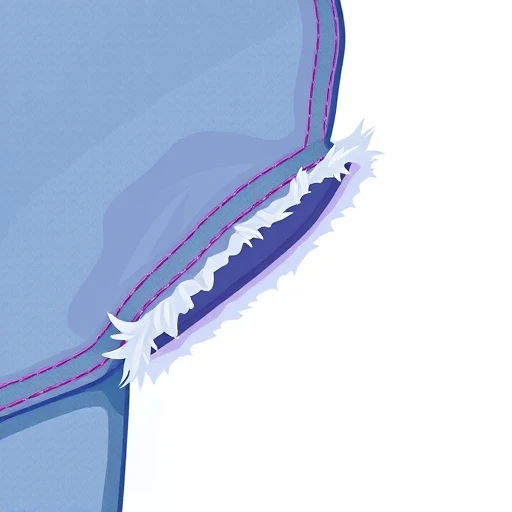
The word 'fray' is a versatile and evocative term in the English language, serving both as a noun and a verb, and bridging the gap between physical reality and psychological states. At its most literal level, as a verb, to fray is to witness the slow, inevitable disintegration of a material. Imagine the cuff of a well-loved denim jacket or the end of a heavy hemp rope. When the individual threads begin to separate, unravel, and turn into a fuzzy mess of fibers due to friction, age, or stress, the fabric is fraying. This physical process is often used as a powerful metaphor for human experiences. When we speak of 'frayed nerves' or 'frayed tempers,' we are describing a person who has been worn down by stress, exhaustion, or repeated irritation until their emotional stability begins to unravel, much like the threads of a worn-out garment. This transition from the physical to the metaphorical is a hallmark of English expressive depth.
- Physical Fraying
- The unraveling of fabric or rope at the edges, usually caused by constant rubbing or friction against another surface.
The hem of his old trousers began to fray after years of hiking through the brush.
As a noun, 'fray' takes on a more energetic and often chaotic meaning. It refers to a fight, a noisy quarrel, or a heated competition. When someone 'enters the fray,' they are jumping into a situation that is already underway and likely filled with conflict or intense activity. This could be a literal physical brawl in a historical context, but in modern usage, it is frequently applied to political debates, sports matches, or corporate rivalries. The noun form carries a sense of noise and commotion, suggesting that the situation is not just a disagreement, but a visible and audible struggle. It implies a certain level of bravery or perhaps recklessness on the part of the person joining in. Whether it is a lawyer entering a legal battle or a substitute player entering a high-stakes football game, the 'fray' represents the heart of the action.
- The Social Fray
- A situation of intense activity, competition, or argument where multiple parties are struggling for dominance or resolution.
The young politician was eager to join the fray and voice her opinions on the new policy.
Understanding the context is key to using 'fray' correctly. In a domestic setting, you might notice your carpet fraying near the doorway where people walk most often. In a psychological context, after a long day of dealing with difficult customers, a retail worker might feel their patience start to fray. In a journalistic context, a reporter might describe a new candidate entering the presidential fray. Each of these uses maintains the core concept of tension and the breaking down of a previous state—whether that state is the integrity of a piece of cloth, the calmness of a person's mind, or the peace of a quiet room. The word is particularly useful because it conveys both the process of breaking down (verb) and the result of that breakdown in a social sense (noun).
As the deadline approached, the team's nerves began to fray, leading to several minor arguments.
- Metaphorical Tension
- The state of becoming strained or upset due to pressure, much like a rope under too much weight.
The constant noise from the construction site caused his concentration to fray.
He remained calm and stayed above the fray while his colleagues argued loudly.
Mastering the use of 'fray' requires an understanding of its dual roles. When using it as a verb, it is almost always intransitive, meaning it doesn't necessarily need a direct object, although it can have one. For example, 'The rope frayed' is a complete thought. If you want to use it transitively, you might say, 'The constant friction frayed the rope.' In everyday conversation, you will most frequently encounter the past participle 'frayed' used as an adjective. 'Frayed jeans' are a popular fashion choice, where the edges are intentionally left to unravel for a rugged look. Similarly, 'frayed nerves' is a common idiomatic expression used to describe someone who is extremely stressed or on the verge of an emotional breakdown. When you use 'fray' in this way, you are painting a vivid picture of someone whose internal strength is literally coming apart at the seams.
- Verb Usage (Physical)
- Focus on the action of wearing down. Example: 'The collar of his shirt had started to fray.'
If you don't sear the ends of the nylon cord, it will quickly fray.
When using 'fray' as a noun, the most common phrasing is 'into the fray' or 'above the fray.' To 'jump into the fray' means to involve oneself in a conflict or a busy situation. This is often used in sports commentary: 'The star player returned from the bench and immediately jumped into the fray.' In contrast, to 'stay above the fray' means to remain neutral or uninvolved in a petty argument or a messy situation. This is a highly valued trait in leadership and diplomacy. A manager might stay above the fray of office gossip to maintain their professional authority. Using the noun form correctly adds a touch of sophistication to your writing, as it sounds more formal and descriptive than simply saying 'the fight' or 'the argument.'
- Noun Usage (Conflict)
- Focus on the situation of struggle. Example: 'The debate turned into a general fray with everyone shouting.'
After a moment of hesitation, the knight charged back into the fray.
In more advanced writing, 'fray' can be used to describe the weakening of abstract concepts like relationships, alliances, or social structures. You might read about 'the fraying of the social fabric' in a sociological essay, referring to the breakdown of community bonds and shared values. This usage combines the physical imagery of a cloth coming apart with the noun's sense of conflict. It suggests that the conflict itself is what is causing the structure to unravel. When writing about complex topics, using 'fray' in this metaphorical sense can help you convey a sense of gradual but serious decline. It is a word that carries weight and implies that if the situation isn't addressed, the entire structure might eventually fail.
Years of neglect had caused the alliance between the two nations to fray.
- Adjectival Form
- The past participle 'frayed' is very common. Example: 'She tried to hide her frayed emotions with a forced smile.'
The frayed edges of the old map made it difficult to read the coastal landmarks.
The politician's refusal to enter the fray was seen as a sign of weakness by his opponents.
You will encounter the word 'fray' in a variety of settings, ranging from the very mundane to the highly dramatic. In everyday life, you might hear it at a clothing store or a tailor's shop. A customer might point out that a garment is starting to fray, or a fashion designer might talk about 'distressed' clothing with 'intentionally frayed' edges. This is the most literal and common use of the word. It's also common in household maintenance; if a power cord is fraying, it's a safety hazard that needs immediate attention. In these contexts, the word is practical and descriptive, focusing on the physical state of materials.
- In the News
- Journalists love the word 'fray' because it sounds more dynamic than 'argument' or 'competition.' You'll see headlines like 'New Candidate Enters the Mayoral Fray' or 'Trade Relations Fray Between Superpowers.'
The news anchor reported that the peace talks had begun to fray after only two days.
In the world of sports and entertainment, 'fray' is used to describe intense competition. A sports commentator might say, 'With only two minutes left on the clock, the star quarterback is ready to lead his team back into the fray.' This usage adds a sense of epic struggle and heroism to the game. Similarly, in literature and film, 'fray' is often used in historical dramas or fantasy novels to describe battles. A character might 'plunge into the fray' to save a friend. This noun form is particularly effective at conveying a sense of noise, movement, and high stakes. It makes the conflict feel more visceral and immediate to the audience.
- In Psychology and Self-Help
- The metaphorical use of 'fraying nerves' is extremely common in discussions about mental health and stress management. It's a relatable way to describe the feeling of being overwhelmed.
The therapist suggested several techniques to help her patient cope when his patience began to fray.
Finally, you'll hear 'fray' in more formal or academic settings, particularly when discussing social or political stability. A sociologist might talk about the 'fraying of social norms,' or an economist might discuss how 'market volatility is fraying investor confidence.' In these cases, the word is used to describe a gradual weakening or breakdown of a system. It's a sophisticated way to express that something is not failing all at once, but is slowly losing its integrity and strength. This nuanced usage is what makes 'fray' such a valuable addition to a B1-level vocabulary and beyond.
The professor noted that the long-standing agreement was starting to fray at the edges due to changing economic conditions.
- In Literature
- Classic novels often use 'fray' to describe the physical and emotional wear and tear on characters. It adds a layer of descriptive texture to the narrative.
The old sailor's coat was frayed and salt-stained, a testament to his many years at sea.
The small-town dispute soon grew into a public fray that involved the entire community.
One of the most common mistakes learners make with 'fray' is confusing its noun and verb forms, or using them in the wrong context. For instance, some might say 'I am in a fray' when they simply mean they are in a quiet disagreement. Remember, the noun 'fray' implies a certain level of noise, intensity, or public visibility. It's not just a private argument; it's a 'noisy quarrel' or a 'competition.' Using it for a minor, quiet disagreement can sound overly dramatic or slightly off. Similarly, as a verb, 'fray' is specifically about the unraveling of threads or the metaphorical unraveling of nerves. You wouldn't say a glass 'frays' when it breaks; it shatters. The word is tied to the idea of fibers and gradual wearing down.
- Mistaking 'Fray' for 'Afraid'
- While they sound somewhat similar, they are completely unrelated. 'Afraid' is an adjective meaning scared, while 'fray' is a noun or verb related to conflict or unraveling.
Incorrect: He was fray of the big dog. Correct: He was afraid of the big dog.
Another mistake is overusing the metaphorical sense without a clear context. Saying 'My life is fraying' is very poetic, but in everyday conversation, it might be too vague. It's better to specify what exactly is fraying—your nerves, your patience, your relationships, or your schedule. This specificity makes the metaphor much more powerful. Also, be careful with the phrase 'above the fray.' It's often misused to mean 'above the law' or 'above everyone else.' In reality, it specifically means staying out of a particular conflict or argument. If there is no conflict happening, you can't really be 'above the fray.'
- Misusing 'Frayed' as a General Term for 'Broken'
- 'Frayed' specifically refers to things that have threads or fibers. You can't have a 'frayed' window or a 'frayed' smartphone screen.
Incorrect: The frayed mirror was dangerous. Correct: The cracked mirror was dangerous.
Lastly, some learners confuse 'fray' with 'fry.' While the spelling is similar, the meanings are entirely different. 'Fry' is a cooking method, while 'fray' is about unraveling or fighting. This might seem like a simple mistake, but in fast speech, they can sound similar. Paying attention to the 'a' sound in 'fray' (like 'play') versus the 'i' sound in 'fry' (like 'my') is crucial for clear communication. Also, remember that 'fray' is a regular verb, so the past tense is 'frayed,' not 'fraid' (which is not a word) or 'fried' (which is the past tense of 'fry').
The chef fried the fish, but the edges of his apron were starting to fray.
- Spelling Confusion
- Don't confuse 'fray' with 'flay' (to skin something) or 'frey' (a Norse god). Each has a very different meaning and usage.
The frayed rope was the cause of the accident, not a lack of skill.
She was careful not to let the argument turn into a full-blown fray.
To truly understand 'fray,' it's helpful to compare it with its synonyms and see where the nuances lie. For the noun form, synonyms include 'brawl,' 'scuffle,' 'skirmish,' 'clash,' and 'quarrel.' A 'brawl' is usually a more violent, physical fight, often involving many people. A 'scuffle' is a short, confused fight that isn't very serious. A 'skirmish' is a minor battle, often between small parts of larger armies. A 'clash' suggests a strong disagreement or a physical collision. 'Fray' is unique because it combines the sense of noise and commotion with the idea of a competition or a situation that one can 'enter.' It feels a bit more formal and literary than 'brawl' or 'scuffle.'
- Fray vs. Brawl
- A 'brawl' is almost always physical and messy. A 'fray' can be physical, but it's also frequently used for verbal or competitive situations like a political race.
The barroom brawl was much more violent than the political fray.
For the verb form, synonyms include 'unravel,' 'wear,' 'tatter,' and 'strain.' 'Unravel' is the closest synonym for the physical process of threads coming apart. However, 'unravel' can also mean to solve a mystery, which 'fray' cannot. 'Wear' is a more general term for something getting old or damaged. 'Tatter' usually refers to something that is already torn into pieces, whereas 'fray' is the beginning of that process. 'Strain' is the best synonym for the metaphorical use of 'fraying nerves.' When you say your patience is 'strained,' it means it's being pulled tight; when you say it's 'fraying,' it means it's actually starting to break. This makes 'fray' a more intense and descriptive choice.
- Fray vs. Unravel
- 'Unravel' is often intentional (like unraveling a sweater to reuse the wool) or metaphorical (unraveling a mystery). 'Fray' is almost always unintentional and caused by wear and tear.
The detective began to unravel the mystery, while the suspect's composure began to fray.
In a professional or academic context, you might choose 'conflict' or 'competition' instead of the noun 'fray' to sound more neutral. Instead of the verb 'fray,' you might use 'deteriorate' or 'weaken.' However, 'fray' remains a powerful choice when you want to add a descriptive, almost visual element to your language. It's a word that bridges the gap between the physical and the abstract, making it a favorite for writers and speakers who want to be both precise and evocative. By understanding these alternatives, you can choose the exact word that fits the tone and meaning you want to convey.
The deterioration of the relationship was evident as their tempers began to fray.
- Fray vs. Strain
- 'Strain' is about tension and pressure. 'Fray' is about the actual breaking or unraveling that results from that pressure.
The heavy workload put a strain on the team, causing their nerves to fray.
He chose to stay above the fray and not get involved in the petty office politics.
How Formal Is It?
Le savais-tu ?
The word 'afraid' actually comes from the same root as 'fray'! They both share the idea of being disturbed or frightened.
Guide de prononciation
- Pronouncing it like 'fry' (f-rye).
- Confusing it with 'afraid' (a-fray-d).
- Adding an extra syllable (fray-ee).
- Muting the 'r' sound.
- Shortening the 'ay' sound.
Niveau de difficulté
Easy to understand in context, especially with physical descriptions.
Requires understanding the difference between noun and verb forms.
Useful for idiomatic expressions like 'frayed nerves'.
Can be confused with 'fry' or 'afraid' if not careful.
Quoi apprendre ensuite
Prérequis
Apprends ensuite
Avancé
Grammaire à connaître
Regular Verb Conjugation
I fray, you fray, he frays, we frayed, they are fraying.
Adjectival Participles
The 'frayed' rope (past participle used as an adjective).
Intransitive vs. Transitive
The rope frayed (intransitive). The rock frayed the rope (transitive).
Noun Phrases
Using 'the' before 'fray' when referring to a specific conflict.
Metaphorical Extension
Applying physical verbs to abstract nouns like 'nerves' or 'alliances'.
Exemples par niveau
My old shirt is starting to fray at the sleeves.
Minha camisa velha está começando a desfiar nas mangas.
Present continuous tense.
The rope will fray if you pull it too hard.
A corda vai desfiar se você puxar com muita força.
Future simple tense with 'will'.
I see a fray on your jeans.
Eu vejo um desfiado no seu jeans.
Noun usage.
Do not let the thread fray.
Não deixe a linha desfiar.
Imperative sentence.
The edges of the paper are starting to fray.
As bordas do papel estão começando a se desgastar.
Metaphorical physical use.
Is the carpet fraying here?
O tapete está desfiando aqui?
Interrogative sentence.
She cut the frayed ends of the ribbon.
Ela cortou as pontas desfiadas da fita.
Adjective usage.
The cat made the sofa fray.
O gato fez o sofá desfiar.
Causative structure.
He was so tired that his nerves began to fray.
Ele estava tão cansado que seus nervos começaram a se esgotar.
Metaphorical verb usage.
The frayed edges of the map made it hard to read.
As bordas desfiadas do mapa tornavam difícil a leitura.
Adjective modifying a noun.
You should fix that fraying hem before it gets worse.
Você deve consertar essa bainha desfiando antes que piore.
Gerund used as an adjective.
The dog bit the rope until it started to fray.
O cachorro mordeu a corda até ela começar a desfiar.
Past tense 'bit' and 'started'.
His patience was fraying after waiting for an hour.
A paciência dele estava se esgotando depois de esperar por uma hora.
Past continuous tense.
The old book has many frayed pages.
O livro antigo tem muitas páginas desgastadas.
Adjective usage.
The curtains are fraying because of the sun.
As cortinas estão desfiando por causa do sol.
Present continuous with a reason.
She noticed the fray on the collar of his jacket.
Ela notou o desfiado no colarinho da jaqueta dele.
Noun usage.
The two politicians were ready to enter the fray of the debate.
Os dois políticos estavam prontos para entrar na briga do debate.
Idiomatic noun phrase 'enter the fray'.
After a long day of travel, everyone's tempers were starting to fray.
Depois de um longo dia de viagem, o humor de todos estava começando a se exaltar.
Metaphorical use for emotions.
He preferred to stay above the fray and not join the argument.
Ele preferiu ficar fora da briga e não se juntar à discussão.
Idiomatic noun phrase 'above the fray'.
The heavy use of the machine caused the belt to fray quickly.
O uso intenso da máquina fez com que a correia desfiasse rapidamente.
Causative structure.
A small scuffle in the crowd soon turned into a general fray.
Uma pequena confusão na multidão logo se transformou em uma briga geral.
Noun meaning a noisy quarrel.
She tried to repair the frayed cord with some electrical tape.
Ela tentou consertar o fio desfiado com fita isolante.
Adjective usage.
The constant noise was fraying his ability to concentrate.
O barulho constante estava desgastando a capacidade dele de se concentrar.
Metaphorical verb usage.
The edges of the ancient scroll were badly frayed.
As bordas do pergaminho antigo estavam muito desgastadas.
Passive voice with an adjective.
The economic crisis caused the social fabric of the city to fray.
A crise econômica fez com que o tecido social da cidade se desgastasse.
Metaphorical use for abstract concepts.
He was a seasoned veteran who had survived many a political fray.
Ele era um veterano experiente que tinha sobrevivido a muitas brigas políticas.
Noun usage in a professional context.
The relationship between the two partners began to fray over financial issues.
O relacionamento entre os dois parceiros começou a se desgastar por questões financeiras.
Verb usage for relationships.
The athlete's confidence was frayed after a series of unexpected losses.
A confiança do atleta estava abalada após uma série de derrotas inesperadas.
Metaphorical adjective usage.
The company decided to enter the competitive fray of the tech industry.
A empresa decidiu entrar na briga competitiva da indústria de tecnologia.
Noun meaning intense competition.
Years of constant friction had frayed the cable to the point of breaking.
Anos de fricção constante tinham desgastado o cabo ao ponto de romper.
Perfect tense with a result.
The manager's nerves were frayed by the constant demands of her staff.
Os nervos da gerente estavam esgotados pelas demandas constantes de sua equipe.
Passive voice with metaphorical meaning.
The peace treaty started to fray as both sides accused each other of violations.
O tratado de paz começou a se desgastar enquanto os dois lados se acusavam de violações.
Verb usage for formal agreements.
The relentless scrutiny of the media caused the celebrity's composure to fray.
O escrutínio implacável da mídia fez com que a compostura da celebridade se desgastasse.
Metaphorical verb usage in a complex sentence.
The diplomat skillfully stayed above the fray of the domestic political squabbles.
O diplomata habilmente ficou fora da briga das picuinhas políticas domésticas.
Idiomatic noun phrase with advanced vocabulary.
A fraying of international norms could lead to increased global instability.
Um desgaste das normas internacionais poderia levar a um aumento da instabilidade global.
Gerund used as a noun.
The witness's testimony began to fray under the pressure of cross-examination.
O depoimento da testemunha começou a se desmoronar sob a pressão do contra-interrogatório.
Metaphorical verb usage for abstract concepts.
The novel explores the fraying of traditional values in a rapidly changing world.
O romance explora o desgaste dos valores tradicionais em um mundo que muda rapidamente.
Metaphorical gerund.
The frayed edges of his memory made it difficult to recall the exact details.
As bordas desgastadas de sua memória tornavam difícil lembrar os detalhes exatos.
Metaphorical adjective usage.
The legal fray lasted for several years before a settlement was finally reached.
A briga judicial durou vários anos antes que um acordo fosse finalmente alcançado.
Noun usage for a complex situation.
The constant stress of the job had frayed his health and well-being.
O estresse constante do trabalho tinha desgastado sua saúde e bem-estar.
Perfect tense with metaphorical meaning.
The ontological security of the community was frayed by the sudden influx of outsiders.
A segurança ontológica da comunidade foi abalada pelo súbito influxo de estrangeiros.
Highly academic and metaphorical usage.
He watched with a sense of detached irony as the political fray descended into farce.
Ele assistiu com um senso de ironia distanciada enquanto a briga política se transformava em farsa.
Noun usage with complex emotional context.
The delicate lace of the antique gown had begun to fray, necessitating expert restoration.
A renda delicada do vestido antigo tinha começado a desfiar, necessitando de restauração especializada.
Literal verb usage in a formal context.
The fraying of the social contract has led to a profound sense of disillusionment.
O desgaste do contrato social levou a um profundo senso de desilusão.
Metaphorical gerund in a sociological context.
The author's narrative style reflects the frayed and fragmented nature of modern life.
O estilo narrativo do autor reflete a natureza desgastada e fragmentada da vida moderna.
Metaphorical adjective in literary criticism.
Despite the mounting pressure, she remained resolutely above the fray, maintaining her dignity.
Apesar da pressão crescente, ela permaneceu resolutamente fora da briga, mantendo sua dignidade.
Idiomatic noun phrase with strong adverbs.
The subtle fraying of the alliance was only apparent to those who looked closely.
O sutil desgaste da aliança só era aparente para aqueles que olhavam de perto.
Metaphorical gerund with nuance.
The constant friction of competing ideologies has frayed the very foundations of the state.
A fricção constante de ideologias concorrentes desgastou os próprios alicerces do estado.
Perfect tense with metaphorical and literal imagery.
Synonymes
Antonymes
Collocations courantes
Phrases Courantes
— Prepared for a fight or a difficult situation.
The team was ready for the fray.
— Returning to a difficult or busy situation.
She went back into the fray after a short break.
Souvent confondu avec
A cooking method. 'Fray' is about unraveling or fighting.
An adjective meaning scared. 'Fray' is a noun or verb.
To strip the skin off. 'Fray' is much less violent.
Expressions idiomatiques
— To join a fight, argument, or competition.
The lawyer entered the fray to defend his client.
Neutral— Not involved in a petty argument or conflict.
The president stayed above the fray of the local election.
Formal— A state of being extremely stressed or irritated.
The constant noise was a test for her frayed nerves.
Neutral— Coming apart or failing completely.
The plan was starting to fray at the seams.
Informal— To eagerly join a conflict or busy situation.
He jumped into the fray as soon as he heard the news.
Neutral— The most active or dangerous part of a fight.
He was right in the thick of the fray.
Literary— When people in a group are starting to get angry.
Frayed tempers made the meeting very difficult.
Neutral— A small problem that could lead to a bigger one.
There was a fray in the fabric of their agreement.
Metaphorical— To remain neutral and professional during a conflict.
A good manager stays above the fray.
Formal— Returning to a struggle or competition again.
He went into the fray once more to win the title.
LiteraryFacile à confondre
Both mean threads coming apart.
'Unravel' can be intentional or used for mysteries. 'Fray' is usually unintentional and due to wear.
She unraveled the old sweater, but the edges of her new one were already fraying.
Both mean a fight.
'Brawl' is more physical and messy. 'Fray' can be a verbal or competitive struggle.
The barroom brawl was a literal fray.
Both used for nerves.
'Strain' is the pressure. 'Fray' is the actual breaking or unraveling.
The strain of the job caused his nerves to fray.
Both relate to damaged cloth.
'Tatter' means torn into pieces. 'Fray' means the edges are coming apart.
His frayed shirt was eventually reduced to tatters.
Both mean conflict.
'Clash' is a collision or strong disagreement. 'Fray' is a noisy, ongoing struggle.
The clash of opinions led to a general fray.
Structures de phrases
The [noun] is fraying.
The shirt is fraying.
My [noun] began to fray.
My patience began to fray.
He decided to enter the [noun] fray.
He decided to enter the political fray.
The [noun] was frayed by [noun].
The relationship was frayed by constant arguments.
Staying above the fray is [adjective].
Staying above the fray is essential for a leader.
The fraying of [abstract noun] led to [noun].
The fraying of the social contract led to unrest.
A [adjective] fray broke out.
A noisy fray broke out in the street.
Don't let your [noun] fray.
Don't let your nerves fray under pressure.
Famille de mots
Noms
Verbes
Adjectifs
Apparenté
Comment l'utiliser
Common in journalism and literature, less common in basic daily speech.
-
Using 'fray' for metal or glass.
→
The metal is rusted/The glass is cracked.
'Fray' only applies to fibrous materials like cloth or rope.
-
Saying 'I am fray of the dark'.
→
I am afraid of the dark.
'Fray' and 'afraid' are different words with different meanings.
-
Using 'fray' for a quiet, private talk.
→
We had a quiet disagreement.
A 'fray' implies noise, intensity, or a public struggle.
-
Spelling the past tense as 'fraid'.
→
The rope was frayed.
'Fraid' is not a word; the past tense of 'fray' is 'frayed'.
-
Confusing 'fray' with 'fry' in speech.
→
I want to fry the egg / The rope will fray.
The vowel sounds are different ('eye' vs 'ay').
Astuces
Regular Verb
Remember that 'fray' follows regular conjugation rules: fray, frayed, fraying.
Idiomatic Power
Learning 'enter the fray' and 'above the fray' will significantly improve your B2/C1 level English.
The 'Ay' Sound
Make sure to pronounce the 'ay' clearly so it doesn't sound like 'fry'.
Metaphorical Depth
Use 'fray' to describe the gradual weakening of abstract things like trust or alliances.
Avoid Overuse
Don't use 'fray' for every argument; save it for situations that are noisy or intense.
News Headlines
Look for 'fray' in headlines about elections or trade wars to see it in action.
Expressing Stress
Use 'my nerves are frayed' when you want to sound more descriptive than just saying 'I'm tired'.
Visual Cues
Visualize a rope unraveling to remember both the physical and metaphorical meanings.
Fray vs. Brawl
Remember that a fray is often more than just a physical fight; it can be a competition.
Mémorise-le
Moyen mnémotechnique
Think of a 'fray' as 'Fabric Ray'—when the rays of thread come out of the fabric. Or 'Fight Ray'—a ray of light on a fight.
Association visuelle
Imagine a rope being rubbed against a sharp rock until the threads start to pop out. That is 'fraying'.
Word Web
Défi
Try to use 'fray' as both a noun and a verb in a single sentence about a stressful day at work.
Origine du mot
The word 'fray' comes from the Middle English word 'frayen', which was shortened from 'affrayen'. This, in turn, came from the Old French 'effrayer', meaning 'to frighten' or 'to disturb'.
Sens originel : The original meaning was related to causing fear or a disturbance, which led to the noun meaning a 'noisy quarrel'.
Indo-European > Germanic > Old French > Middle English.Contexte culturel
The word is generally neutral but can imply violence when used as a noun.
Commonly used in political journalism and sports commentary to add drama.
Pratique dans la vie réelle
Contextes réels
Clothing and Fashion
- frayed jeans
- fraying hem
- cut the frays
- intentionally frayed
Stress and Emotions
- frayed nerves
- tempers fraying
- patience is fraying
- emotional fray
Politics and Debates
- enter the fray
- above the fray
- political fray
- jump into the fray
Sports and Competition
- join the fray
- thick of the fray
- back in the fray
- competitive fray
Maintenance and Safety
- frayed cord
- fraying rope
- check for frays
- fray-resistant
Amorces de conversation
"Have you ever had a favorite piece of clothing start to fray?"
"Do you prefer to enter the fray during an argument or stay above it?"
"What kind of situations make your nerves feel frayed?"
"Have you noticed the social fabric of your city fraying in any way?"
"Who is a public figure you admire for staying above the fray?"
Sujets d'écriture
Describe a time you decided to enter the fray to help someone else.
Write about a physical object you own that is fraying and what it means to you.
How do you handle it when your patience begins to fray during a long day?
Discuss a political or social 'fray' you have been following in the news.
Reflect on the importance of staying above the fray in a professional environment.
Questions fréquentes
10 questionsNo, 'fray' is only for things with fibers like cloth or rope. For a window, use 'shatter' or 'crack'.
It means a player is joining the game, especially during a very active or difficult moment.
It is moderately common. You will see it often in books, newspapers, and formal discussions.
Usually, it is neutral or negative, but 'entering the fray' can sometimes be seen as brave.
'Affray' is a more formal legal term for a public fight. 'Fray' is the more common, everyday word.
Use it to describe something wearing out: 'The rope is fraying' or 'The stress frayed his nerves'.
Yes, it is the past participle of 'fray' and is very commonly used as an adjective.
Yes, it's a common metaphor for a relationship that is starting to have problems and weaken.
Words like day, play, stay, and gray rhyme with fray.
Not commonly, though it might be used informally to mean any kind of fight or argument.
Teste-toi 180 questions
Write a sentence using 'fray' to describe an old piece of clothing.
Well written! Good try! Check the sample answer below.
Use the phrase 'enter the fray' in a sentence about a sports game.
Well written! Good try! Check the sample answer below.
Explain what 'frayed nerves' means in your own words.
Well written! Good try! Check the sample answer below.
Write a short paragraph about a political 'fray' you know about.
Well written! Good try! Check the sample answer below.
Use 'fray' as a verb to describe a relationship.
Well written! Good try! Check the sample answer below.
Create a sentence with 'above the fray'.
Well written! Good try! Check the sample answer below.
Describe a physical 'fray' that might happen in a crowded place.
Well written! Good try! Check the sample answer below.
Use 'frayed' as an adjective to describe a map or document.
Well written! Good try! Check the sample answer below.
Write a sentence about 'fraying patience'.
Well written! Good try! Check the sample answer below.
Use 'fray' in a sentence about a rope.
Well written! Good try! Check the sample answer below.
Write a sentence using 'fray' to describe a social situation.
Well written! Good try! Check the sample answer below.
Use 'frayed at the edges' metaphorically.
Well written! Good try! Check the sample answer below.
Explain why a 'frayed' power cord is dangerous.
Well written! Good try! Check the sample answer below.
Write a sentence about someone 'jumping into the fray'.
Well written! Good try! Check the sample answer below.
Use 'fray' in a sentence about an alliance.
Well written! Good try! Check the sample answer below.
Describe a 'frayed' emotional state.
Well written! Good try! Check the sample answer below.
Use 'the thick of the fray' in a sentence.
Well written! Good try! Check the sample answer below.
Write a sentence about 'frayed tempers' in a group.
Well written! Good try! Check the sample answer below.
Use 'fray' to describe the breakdown of social norms.
Well written! Good try! Check the sample answer below.
Create a sentence using 'fray' as a noun meaning a competition.
Well written! Good try! Check the sample answer below.
Describe a time you felt your nerves were frayed.
Read this aloud:
Tu as dit :
Speech recognition is not supported in your browser. Try Chrome or Edge.
Talk about a piece of clothing you have that is starting to fray.
Read this aloud:
Tu as dit :
Speech recognition is not supported in your browser. Try Chrome or Edge.
Would you rather enter a fray or stay above it? Why?
Read this aloud:
Tu as dit :
Speech recognition is not supported in your browser. Try Chrome or Edge.
Give an example of a 'political fray' in your country.
Read this aloud:
Tu as dit :
Speech recognition is not supported in your browser. Try Chrome or Edge.
How do you handle it when tempers start to fray in a group?
Read this aloud:
Tu as dit :
Speech recognition is not supported in your browser. Try Chrome or Edge.
Describe the physical appearance of a frayed rope.
Read this aloud:
Tu as dit :
Speech recognition is not supported in your browser. Try Chrome or Edge.
What does 'entering the fray' mean in a business context?
Read this aloud:
Tu as dit :
Speech recognition is not supported in your browser. Try Chrome or Edge.
Can you think of a famous person who stays above the fray?
Read this aloud:
Tu as dit :
Speech recognition is not supported in your browser. Try Chrome or Edge.
Why is a frayed power cord a safety risk?
Read this aloud:
Tu as dit :
Speech recognition is not supported in your browser. Try Chrome or Edge.
What rhymes with 'fray' and how do you use it?
Read this aloud:
Tu as dit :
Speech recognition is not supported in your browser. Try Chrome or Edge.
Describe a situation where a small argument turned into a fray.
Read this aloud:
Tu as dit :
Speech recognition is not supported in your browser. Try Chrome or Edge.
How can you tell if a relationship is starting to fray?
Read this aloud:
Tu as dit :
Speech recognition is not supported in your browser. Try Chrome or Edge.
What does 'frayed at the seams' mean to you?
Read this aloud:
Tu as dit :
Speech recognition is not supported in your browser. Try Chrome or Edge.
Explain the phrase 'the thick of the fray'.
Read this aloud:
Tu as dit :
Speech recognition is not supported in your browser. Try Chrome or Edge.
Talk about the 'fraying of social fabric' in modern society.
Read this aloud:
Tu as dit :
Speech recognition is not supported in your browser. Try Chrome or Edge.
Use 'fray' in a sentence about a sports team.
Read this aloud:
Tu as dit :
Speech recognition is not supported in your browser. Try Chrome or Edge.
How do you feel when you see something you own starting to fray?
Read this aloud:
Tu as dit :
Speech recognition is not supported in your browser. Try Chrome or Edge.
What is the difference between a 'brawl' and a 'fray'?
Read this aloud:
Tu as dit :
Speech recognition is not supported in your browser. Try Chrome or Edge.
Describe a 'frayed' book you have seen.
Read this aloud:
Tu as dit :
Speech recognition is not supported in your browser. Try Chrome or Edge.
Why is 'fray' a good word for a writer to use?
Read this aloud:
Tu as dit :
Speech recognition is not supported in your browser. Try Chrome or Edge.
Listen for the word 'fray' in this sentence: 'The rope will fray if it rubs against the rock.' What is it doing?
In the phrase 'enter the fray', is 'fray' a noun or a verb?
Listen to this: 'Her patience was fraying.' Is she becoming more or less patient?
Does 'fray' rhyme with 'try' or 'stay'?
In a news report about an election, what does 'the fray' likely mean?
Listen for 'frayed edges'. What kind of object is being described?
If someone says 'I'm staying above the fray', are they involved in the fight?
Listen to this: 'A general fray broke out.' How many people are likely involved?
In the sentence 'The stress frayed his health', is 'frayed' used literally or metaphorically?
Listen for the 'r' sound in 'fray'. How is it different from 'flay'?
What does 'frayed tempers' mean in a conversation?
Listen to: 'The alliance is fraying.' Is the alliance getting stronger or weaker?
If you hear 'frayed at the seams', what is the general meaning?
Listen for the word 'fray' in a story about a knight. What is he likely doing?
In the sentence 'Don't fray the thread', is 'fray' a command?
/ 180 correct
Perfect score!
Summary
The word 'fray' is essential for describing both physical wear and tear and social or emotional conflict. For example, 'The frayed edges of the rope made it unsafe, just as the long meeting caused the team's tempers to fray.'
- Fray can be a verb meaning to unravel at the edges or a noun meaning a noisy fight or competition.
- It is commonly used to describe worn-out clothes or ropes, as well as stressed-out nerves and tempers.
- The phrase 'enter the fray' means to join a conflict or a busy situation that is already happening.
- Staying 'above the fray' means to remain neutral and avoid getting involved in petty arguments or messy situations.
Context is Key
Always check if you are talking about a physical object or a social situation to choose the right meaning.
Regular Verb
Remember that 'fray' follows regular conjugation rules: fray, frayed, fraying.
Idiomatic Power
Learning 'enter the fray' and 'above the fray' will significantly improve your B2/C1 level English.
The 'Ay' Sound
Make sure to pronounce the 'ay' clearly so it doesn't sound like 'fry'.