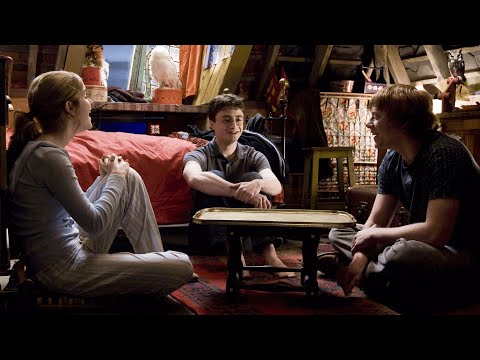
ron en 30 secondes
- Ron is a widely recognized masculine given name, primarily serving as a shortened version of the traditional name Ronald, which has Germanic and Old Norse roots.
- Beyond being a personal name, RON is the official international currency code for the Romanian Leu, used in global financial markets and banking transactions.
- In the context of the game Mahjong, 'Ron' is a specific declaration made by a player to claim a winning tile discarded by an opponent.
- The name is deeply embedded in popular culture, associated with famous figures like Ron Howard and iconic fictional characters like Ron Weasley and Ron Swanson.
The word Ron is a proper noun that serves as a quintessential masculine given name in the English-speaking world. While it is most commonly recognized as a diminutive or shortened form of the name Ronald, its identity has evolved significantly over the last century. In its primary function, it identifies an individual, but sociolinguistically, it carries connotations of friendliness, reliability, and the 'everyman' archetype. The name itself is rooted in Old Norse and Germanic traditions, where the full form Ronald (from Rögnvaldr) signified a 'ruler's counselor' or 'mighty advisor.' When people use the name Ron today, they are often referring to someone in a casual or semi-formal context, as the monosyllabic nature of the name lends itself to ease of communication and a sense of familiarity.
- Etymological Root
- Derived from the Old Norse name Rögnvaldr, combining 'regin' (advice/decision) and 'valdr' (ruler).
- Cultural Archetype
- Often represents the loyal friend or the dependable working-class man in Western media.
- Usage Frequency
- Highly popular in the mid-20th century, particularly between 1930 and 1960 in the United States and United Kingdom.
Beyond its use as a personal name, the term Ron appears in specialized contexts. In the world of finance, RON is the ISO 4217 code for the Romanian Leu, the official currency of Romania. In the niche context of Japanese Mahjong, 'Ron' (written as 栄) is a specific call made when a player wins by taking a tile discarded by another player. However, in general English conversation, 99% of the time, the word refers to a person. It is a name that transcends social classes, appearing in royal lineages, sports, and fictional universes alike. For instance, the character Ron Weasley from the Harry Potter series has redefined the name for a new generation, associating it with loyalty, humor, and occasional insecurity.
"I think Ron is the most dependable person I know; he never misses a Saturday morning football game."
The name's phonetic simplicity—a single syllable ending in a nasal consonant—makes it easy to shout across a room or a sports field. This phonetic 'punchiness' contributed to its rise in popularity during the industrial era. In modern times, while the name has seen a decline in new births, it remains a staple of the English lexicon. It is often paired with other short names in lists, such as 'Ron and Dave' or 'Ron and Barb,' reinforcing its status as a foundational name of the baby boomer generation. Understanding the word Ron requires recognizing it not just as a label, but as a cultural marker of a specific era of Western history.
"The legendary manager Ron Atkinson was known for his colorful personality and unique vocabulary."
"When playing Mahjong, shouting 'Ron' signals a sudden and decisive end to the round."
"The exchange rate for RON against the Euro has remained relatively stable this quarter."
"Ron Swanson's character in Parks and Recreation became a symbol of stoic masculinity."
Using the name Ron in a sentence follows the standard rules for proper nouns in English. It must always be capitalized, regardless of its position in the sentence. As a subject, it takes a singular verb (e.g., 'Ron runs'), and as an object, it receives the action (e.g., 'I saw Ron'). Because it is a masculine name, the corresponding pronouns are 'he,' 'him,' and 'his.' However, the versatility of the name allows it to appear in various grammatical structures, from simple identifications to complex possessive forms.
- Subjective Use
- Ron decided to take the early train to London to avoid the morning rush hour.
- Possessive Use
- The blue car parked in the driveway is Ron's, but he rarely drives it these days.
- Vocative Use
- "Hey Ron, could you pass me the wrench from the toolbox?"
When referring to multiple people named Ron, the plural 'Rons' is used, though this is rare. More common is the use of 'Ron' in compound subjects, such as 'Ron and his family.' In literary or descriptive writing, the name often carries an adjective to provide more context, such as 'Old Ron' or 'Young Ron.' This helps distinguish between generations in a family or characters in a story. Furthermore, in the context of the Romanian currency, 'RON' is used as an uncountable noun or a unit of measurement, often appearing after a numerical value.
"I asked Ron if he wanted to join us for lunch, but he said he was too busy with the project."
In informal speech, 'Ron' can be part of nicknames or playful variations. For example, 'Ronnie' is a common affectionate form used for children or close friends. In some dialects, 'Ron' might be used as a generic placeholder name, similar to 'Joe' or 'Jack,' though this is less common than it once was. In the business world, a sentence might include 'Ron' as a point of contact: 'Please send the invoice to Ron in accounting.' This demonstrates the name's integration into the functional vocabulary of daily life.
"The total cost of the dinner in Bucharest was 150 RON, which seemed quite reasonable for three courses."
"Is Ron coming to the party tonight, or is he still feeling under the weather?"
"We need to talk to Ron about the changes to the schedule before we finalize the plan."
"Every time Ron tells that story, it gets a little more dramatic and unbelievable."
You will encounter the word Ron in a diverse array of environments, ranging from the mundane to the highly specialized. In domestic settings, it is a name called out in kitchens, backyards, and living rooms across the UK, USA, Canada, and Australia. It is a 'dad name' or a 'grandpa name' for many, evoking a sense of generational continuity. In the workplace, particularly in traditional industries like construction, manufacturing, or accounting, 'Ron' is a common fixture. You might hear it in a meeting: 'Ron has the latest figures on the supply chain.' This ubiquity makes it a 'transparent' name—one that doesn't draw attention to itself but facilitates social interaction.
- Pop Culture
- In the 'Harry Potter' films and books, 'Ron!' is frequently shouted by Hermione or Harry during moments of crisis or humor.
- Sports Broadcasting
- Commentators often refer to famous athletes or managers like Ron Rivera or Ron Howard (in a different context) by their first names.
- Financial News
- Reports on Eastern European markets will frequently mention the RON (Romanian Leu) in relation to the Dollar or Euro.
In the realm of entertainment, the name Ron has been immortalized by several iconic characters. Ron Swanson from Parks and Recreation is a modern cultural touchstone, representing a specific brand of libertarian, wood-working, breakfast-food-loving masculinity. Fans of the show often quote him or refer to 'the Ron Swanson way' of doing things. Similarly, Ron Burgundy from Anchorman represents a satirical take on the 1970s news anchor. In these contexts, the name 'Ron' is used to anchor the character in a specific, recognizable reality. You will also hear the name in the credits of countless films, as Ron Howard is one of Hollywood's most prolific directors.
"I was watching a documentary last night, and the narrator kept mentioning Ron Chernow's biography of Alexander Hamilton."
In international travel, specifically in Romania, you will see 'RON' on every price tag, menu, and bank statement. Hearing a merchant say 'That will be fifty RON' is a standard part of the tourist experience in Bucharest. Additionally, in the gaming community, specifically those who play Mahjong, the shout of 'Ron!' is a pivotal moment in any match. It signifies that a player has completed their hand using another's discard, often leading to a shift in the leaderboard. This cross-disciplinary usage ensures that 'Ron' is a word you will hear in classrooms, casinos, banks, and cinemas alike.
"The coach, Ron, told the team that they needed to focus on their defense in the second half."
"If you're looking for a good book, Ron Rash is an incredible author who writes about the Appalachian region."
"The waiter told us the bill was 200 RON, so we left a generous tip for the excellent service."
"I heard Ron is planning to retire next year after thirty years with the company."
Despite its simplicity, the word Ron is subject to several common mistakes, particularly among English learners and in written communication. The most frequent error is a failure to capitalize the first letter. As a proper noun, 'Ron' must always start with an uppercase 'R'. Writing 'ron' in a sentence is grammatically incorrect and can be confusing, especially since 'ron' is not a standard English common noun. Another common mistake involves the confusion between 'Ron' and 'run' due to their similar phonetic profiles. In some accents, the short 'o' in Ron and the short 'u' in run can sound nearly identical, leading to misunderstandings in spoken English.
- Capitalization Error
- Incorrect: 'i saw ron at the park.' Correct: 'I saw Ron at the park.'
- Spelling Confusion
- Confusing 'Ron' with 'Ronnie' or 'Ronald' in formal documents where the full legal name is required.
- Possessive Placement
- Incorrect: 'Rons car'. Correct: 'Ron's car'. The apostrophe is essential to indicate ownership.
In the context of the Romanian currency, people often mistake 'RON' for 'ROL'. ROL was the old Romanian Leu, which was replaced by the RON (new Leu) in 2005. Using the wrong code in financial transactions can lead to significant errors in value calculation. Additionally, some learners might confuse 'Ron' with 'Rod' or 'Rob,' which are also short, three-letter masculine names. While they sound similar, they have entirely different origins and full forms (Rodney and Robert, respectively). Paying close attention to the final consonant is key to distinguishing these names in conversation.
"You wrote 'ron' with a lowercase letter in the report; please fix it to 'Ron'."
Another subtle mistake is assuming that everyone named Ron is actually named Ronald. While this is the most common case, some individuals are named Ron legally at birth. It is always polite to ask or observe how a person introduces themselves before assuming their full name. In academic or formal writing, using the nickname 'Ron' instead of the full 'Ronald' might be seen as too informal unless you are specifically referring to a person who is exclusively known by the shorter name (like Ron Howard). Finally, in Mahjong, calling 'Ron' when you do not actually have a winning hand is a serious breach of etiquette known as a 'chombo' or foul.
"The student confused Ron with Rob during the introductions, which led to a bit of awkward laughter."
"Make sure you check the currency code; 100 ROL is worth almost nothing compared to 100 RON."
"I thought he said 'run to the store,' but he actually said 'Ron's at the store'."
"Don't forget the apostrophe in 'Ron's' when you're writing about his new book."
While Ron is a distinct name, there are several alternatives and similar-sounding words that one might encounter. The most obvious alternative is the full version of the name, Ronald. Using the full name often adds a layer of formality or seriousness to the person being addressed. Another common variation is Ronnie or Ronny, which are diminutive forms often used for children or as a term of endearment among close friends and family. In some cultures, international variants of the name are used, such as Ronaldo in Portuguese-speaking countries or Renato in Italian and Spanish contexts, although these have different etymological paths.
- Ronald vs. Ron
- Ronald is the formal, legal version; Ron is the casual, everyday version. Ronald sounds traditional, while Ron sounds modern and approachable.
- Ronnie vs. Ron
- Ronnie is more playful and youthful. It is often used for athletes (e.g., Ronnie O'Sullivan) to create a friendly public persona.
- Don vs. Ron
- Don (short for Donald) is phonetically similar but is a completely different name. Both were popular in the same era, leading to occasional confusion.
Phonetically, 'Ron' shares a similar structure with other three-letter names like 'Jon,' 'Dan,' and 'Ken.' These names all belong to a category of 'mid-century modern' English names that are simple, strong, and masculine. If you are looking for a name with a similar meaning (ruler or counselor), you might consider 'Reginald' or 'Reynold,' which share the same Germanic roots. In the context of the Romanian currency, an alternative way to refer to it is simply as the 'Leu' (singular) or 'Lei' (plural), which is the actual name of the currency, whereas 'RON' is the technical code used by banks and exchanges.
"While his birth certificate says Ronald, he has gone by Ron since he was five years old."
In literary contexts, if a writer wants to avoid the name 'Ron' but keep the character's essence, they might use a descriptive title like 'the redhead' (in the case of Ron Weasley) or 'the director' (for Ron Howard). In the world of finance, if you are not using the code 'RON,' you would use the symbol 'L' to denote the currency. Understanding these alternatives helps in choosing the right level of formality and precision in both spoken and written English. Whether you are naming a character, addressing a colleague, or exchanging money, knowing the nuances between Ron and its counterparts is invaluable.
"The little boy was called Ronnie by his grandmother, but he insisted his friends call him Ron."
"In the movie, the character Ronaldo was clearly inspired by the real-life exploits of Ron."
"I accidentally called him Don instead of Ron, which was embarrassing since they are brothers."
"The exchange office listed the rate for the Romanian Leu under the code RON."
How Formal Is It?
Le savais-tu ?
Despite being a very 'English' name today, Ron has a completely independent life in Hebrew, where it means 'joy' or 'song.' This makes it one of the few names that sounds the same in two unrelated language families but has two beautiful, distinct meanings.
Guide de prononciation
- Pronouncing it like 'run' (/rʌn/), which has a different vowel sound.
- Over-extending the 'o' sound so it sounds like 'roan' (/roʊn/).
- Failing to pronounce the final 'n' clearly.
- In US English, making the 'ah' sound too nasal.
- Confusing it with the name 'Ronan' and adding an extra syllable.
Niveau de difficulté
Very easy to read; a simple three-letter word.
Simple to spell, though capitalization is important.
Easy to pronounce, but must be distinguished from 'run'.
Can be confused with 'run' or 'Rob' in noisy environments.
Quoi apprendre ensuite
Prérequis
Apprends ensuite
Avancé
Grammaire à connaître
Capitalization of Proper Nouns
Always write 'Ron', never 'ron'.
Possessive Case with Names
Ron's hat is on the table.
Subject-Verb Agreement
Ron works (not Ron work) at the bank.
Use of Pronouns
Ron is here; he is waiting for you.
Currency Codes as Nouns
The exchange rate for the RON is fluctuating.
Exemples par niveau
Hello, my name is Ron.
Bonjour, je m'appelle Ron.
Simple subject-verb-complement structure.
Ron is my friend.
Ron est mon ami.
Use of the verb 'to be' with a proper noun.
Is Ron here?
Est-ce que Ron est ici ?
Question form with a proper noun.
Ron has a red car.
Ron a une voiture rouge.
Third-person singular 'has'.
This is Ron's book.
C'est le livre de Ron.
Possessive 's' indicating ownership.
Ron likes apples.
Ron aime les pommes.
Present simple with a third-person subject.
Where is Ron?
Où est Ron ?
Wh-question with the verb 'to be'.
Ron is a tall man.
Ron est un homme grand.
Adjective placement after the verb 'to be'.
Ron is going to the park today.
Ron va au parc aujourd'hui.
Present continuous for future plans.
I saw Ron at the supermarket yesterday.
J'ai vu Ron au supermarché hier.
Past simple of the irregular verb 'see'.
Ron's brother lives in London.
Le frère de Ron habite à Londres.
Possessive 's' with a family relationship.
Can you give this to Ron?
Peux-tu donner ceci à Ron ?
Modal verb 'can' for a request.
Ron doesn't like cold weather.
Ron n'aime pas le temps froid.
Negative form of present simple.
Ron and I are playing tennis.
Ron et moi jouons au tennis.
Compound subject with 'I'.
He is Ron, the new manager.
C'est Ron, le nouveau directeur.
Appositive phrase providing more information.
Ron was born in June.
Ron est né en juin.
Passive construction for birth.
Ron has been working here for ten years.
Ron travaille ici depuis dix ans.
Present perfect continuous for ongoing action.
If Ron had more time, he would travel more.
Si Ron avait plus de temps, il voyagerait plus.
Second conditional for hypothetical situations.
Ron is the person who helped me with my car.
Ron est la personne qui m'a aidé avec ma voiture.
Relative clause with 'who'.
I think Ron might be late for the meeting.
Je pense que Ron pourrait être en retard pour la réunion.
Modal verb 'might' for possibility.
Ron's house is much larger than mine.
La maison de Ron est beaucoup plus grande que la mienne.
Comparative adjective with possessive.
Have you ever met Ron's parents?
As-tu déjà rencontré les parents de Ron ?
Present perfect for life experience.
Ron said that he was feeling tired.
Ron a dit qu'il se sentait fatigué.
Reported speech with backshift.
Despite the rain, Ron went for a run.
Malgré la pluie, Ron est allé courir.
Concessive clause with 'despite'.
Ron is widely considered to be an expert in his field.
Ron est largement considéré comme un expert dans son domaine.
Passive reporting verb structure.
The character of Ron represents the loyal sidekick trope.
Le personnage de Ron représente le trope du comparse fidèle.
Abstract noun as subject.
We need to convert our Euros into RON before we arrive in Bucharest.
Nous devons convertir nos euros en RON avant d'arriver à Bucarest.
Currency code used as an uncountable noun.
Ron's contribution to the project was invaluable.
La contribution de Ron au projet a été inestimable.
Possessive with an abstract noun.
It was Ron who first noticed the error in the calculations.
C'est Ron qui a remarqué l'erreur dans les calculs en premier.
Cleft sentence for emphasis.
Ron, whose father was a famous actor, decided to become a teacher.
Ron, dont le père était un acteur célèbre, a décidé de devenir enseignant.
Non-defining relative clause with 'whose'.
Hardly had Ron entered the room when the phone started ringing.
À peine Ron était-il entré dans la pièce que le téléphone s'est mis à sonner.
Inversion for emphasis.
Ron is likely to be promoted by the end of the year.
Ron est susceptible d'être promu d'ici la fin de l'année.
Adjective 'likely' followed by an infinitive.
The name Ron has seen a steady decline in popularity since the late 1950s.
Le prénom Ron a connu une baisse constante de popularité depuis la fin des années 1950.
Present perfect with a time marker.
In the game of Mahjong, a 'Ron' call can abruptly change the course of the match.
Dans le jeu de Mahjong, un appel 'Ron' peut brusquement changer le cours du match.
Noun used as a technical term.
Ron's stoic demeanor often masks a deeply sensitive personality.
Le comportement stoïque de Ron masque souvent une personnalité profondément sensible.
Complex vocabulary with possessive.
Should Ron decide to resign, the company would face a significant leadership vacuum.
Si Ron décidait de démissionner, l'entreprise ferait face à un vide de leadership important.
Inverted first conditional for formality.
The etymology of Ron can be traced back to the Old Norse name Rögnvaldr.
L'étymologie de Ron remonte au nom vieux norrois Rögnvaldr.
Passive voice with 'traced back to'.
Ron, ever the optimist, believed that the economic downturn was merely temporary.
Ron, toujours optimiste, pensait que le ralentissement économique n'était que temporaire.
Appositive adjective phrase.
The volatility of the RON has made international trade more challenging for Romanian firms.
La volatilité du RON a rendu le commerce international plus difficile pour les entreprises roumaines.
Abstract noun 'volatility' with currency code.
By the time Ron arrived, the negotiations had already reached a stalemate.
Au moment où Ron est arrivé, les négociations avaient déjà abouti à une impasse.
Past perfect for an action completed before another past action.
The sociolinguistic nuances of a name like Ron evoke a specific mid-century zeitgeist.
Les nuances sociolinguistiques d'un nom comme Ron évoquent un zeitgeist spécifique du milieu du siècle.
Advanced academic vocabulary.
Ron's narrative arc in the novel serves as a poignant critique of the American Dream.
L'arc narratif de Ron dans le roman sert de critique poignante du rêve américain.
Literary analysis terminology.
The sudden 'Ron' declaration in the high-stakes Mahjong tournament stunned the spectators.
La déclaration soudaine de 'Ron' dans le tournoi de Mahjong à enjeux élevés a stupéfié les spectateurs.
Complex noun phrase with 'declaration'.
To understand the fiscal policy of Romania, one must analyze the fluctuations of the RON.
Pour comprendre la politique budgétaire de la Roumanie, il faut analyser les fluctuations du RON.
Formal 'one' as a generic subject.
Ron, far from being a mere caricature, is portrayed with remarkable psychological depth.
Ron, loin d'être une simple caricature, est dépeint avec une profondeur psychologique remarquable.
Prepositional phrase 'far from' for contrast.
The name Ron, while seemingly simple, carries a heavy burden of cultural expectations.
Le nom Ron, bien que semblant simple, porte un lourd fardeau d'attentes culturelles.
Concessive clause with 'while'.
Were it not for Ron's intervention, the deal would undoubtedly have collapsed.
Sans l'intervention de Ron, l'accord se serait sans doute effondré.
Inverted third conditional for high formality.
The ubiquity of the name Ron in 20th-century literature underscores its symbolic status.
L'ubiquité du nom Ron dans la littérature du XXe siècle souligne son statut symbolique.
Subject-verb agreement with a complex subject.
Collocations courantes
Phrases Courantes
— A suggestion to seek information from a person named Ron. It implies Ron is knowledgeable.
If you're not sure how to fix the sink, just ask Ron.
— Used to describe an action that is very typical of a person named Ron. It highlights a recurring trait.
He forgot his keys again? That's classic Ron.
— An expression of praise or approval for Ron's actions. It means he did a great job.
He finished the report early? Ron's the man!
— A directive to communicate with Ron regarding a specific matter. It is common in office settings.
You'll need to talk to Ron about getting a new laptop.
— A common question asked when looking for a person named Ron. It is used in social and work contexts.
The meeting is starting; where's Ron?
— Refers to Ron and his group of friends. It suggests a close-knit social circle.
I'm going out with Ron and the gang tonight.
— Indicates that it is Ron's time to perform an action or take a move in a game. It establishes order.
We've all gone; now it's Ron's turn.
— Used to attribute a statement or piece of information to Ron. It indicates the source of the news.
According to Ron, the office will be closed on Friday.
— Refers to the specific method or philosophy Ron uses to do things. It often implies a unique approach.
He likes to do things Ron's way, even if it takes longer.
— Used when someone clarifies that they prefer the short name over the formal 'Ronald'. It shows a preference for informality.
Please, don't call me Ronald; it's just Ron.
Souvent confondu avec
Phonetically similar, but 'run' is a verb meaning to move fast, while 'Ron' is a name.
Another three-letter masculine name starting with 'R', but short for Robert.
A three-letter name short for Rodney, often confused in quick speech.
Expressions idiomatiques
— A slang term for an 'everyman' or a typical, dependable person. It is not a formal idiom but a common cultural descriptor.
He's a real Ron—hardworking, quiet, and loves his garden.
Informal— A playful variation of the British idiom 'Bob's your uncle,' meaning 'and there you have it' or 'it's as simple as that.'
Just plug it in, press the button, and Ron's your uncle!
Informal/Slang— In the context of Harry Potter fans, it means to be accidentally brave or to make a funny, self-deprecating comment.
He pulled a Ron and managed to save the day despite being terrified.
Slang/Fan Culture— Used to describe someone who is stoic, loves woodworking, or hates government, similar to the TV character.
He's the Ron Swanson of the accounting department; he never says a word.
Informal— A very niche term for winning a game of Mahjong by discard. It is technical rather than idiomatic.
I was so close to winning, but then he started Ron-ing it.
Technical— A simile used to describe someone who is very reliable and consistent. It is often used in local communities.
You can count on him to be there; he's as steady as Ron.
Informal— A humorous term for a person's specific, unchangeable rules. It is a play on 'Murphy's Law'.
No coffee after 4 PM—that's Ron's law in this house.
Informal— To be the loyal best friend who is often in the shadow of someone more famous. It describes a social dynamic.
He doesn't mind being a Ron Weasley to his brother's star athlete.
Informal— A rare financial pun referring to being in Romania or dealing with its currency. It is not a standard idiom.
We spent our whole vacation living in the RON.
Playful— Used to describe something that is substantial or 'man-sized,' often referring to portions of food.
That's a Ron-sized steak if I ever saw one!
InformalFacile à confondre
Similar spelling and sound.
Ronan is an Irish name meaning 'little seal,' while Ron is usually a short form of Ronald.
Ronan is a popular name in Ireland, but Ron is more common in the US.
Homophones in some dialects.
Roan refers to a color pattern of a horse's coat, while Ron is a person's name.
The roan horse was beautiful, but Ron preferred the black one.
Rhyming names from the same era.
Don is short for Donald, while Ron is short for Ronald. They are distinct names.
Don and Ron are both retired now and live in Florida.
Rhyming three-letter names.
Jon is short for Jonathan or John, while Ron is short for Ronald.
Jon and Ron are the two managers of the store.
Old currency code for Romania.
ROL is the obsolete code, while RON is the current, valid code for the Leu.
Make sure you use RON for the bank transfer, not the old ROL.
Structures de phrases
I am [Name].
I am Ron.
[Name] is [Adjective].
Ron is happy.
[Name] has been [Verb-ing].
Ron has been waiting.
It was [Name] who [Verb-ed].
It was Ron who called.
The [Noun] of [Name] is [Adjective].
The influence of Ron is significant.
Were [Name] to [Verb], [Result].
Were Ron to leave, we would fail.
[Name] and [Name] are [Noun].
Ron and Dan are brothers.
The [Noun] costs [Number] [Currency].
The coffee costs 10 RON.
Famille de mots
Noms
Adjectifs
Apparenté
Comment l'utiliser
Common as a name for men over 40; rare for children; common as a currency code in Europe.
-
Using 'ron' without a capital letter.
→
Ron
Names of people are proper nouns and must always be capitalized in English.
-
Confusing 'Ron' with 'Run' in speech.
→
Ron (Name) vs. Run (Verb)
The vowel sounds are different. 'Ron' has an open 'o' or 'ah' sound, while 'run' has a short 'u' sound.
-
Writing 'Rons' for the possessive.
→
Ron's
To show that something belongs to Ron, you must use an apostrophe before the 's'.
-
Using 'Ron' in a very formal legal contract.
→
Ronald
In legal contexts, the full birth name (Ronald) should be used instead of the nickname.
-
Confusing the currency code 'RON' with 'ROL'.
→
RON
ROL is the old, inactive currency code. RON is the current code for the Romanian Leu.
Astuces
When to use Ronald
Use 'Ronald' in formal situations like legal documents, graduation ceremonies, or when you are meeting someone very important for the first time.
Avoid the 'Run' trap
Make sure your 'o' sound is clear. If you say it too quickly with a closed mouth, it will sound like the verb 'run,' which can confuse your listeners.
The Weasley Effect
If you meet a Ron with red hair, they have likely heard every Harry Potter joke imaginable. It's best to avoid making a joke about it!
Check the Currency
When traveling in Romania, remember that 1 RON is divided into 100 bani. Prices are usually written as '10,50 RON'.
Mahjong Etiquette
When you call 'Ron' in Mahjong, be prepared to show your hand immediately to prove that you have actually won.
Possessive Apostrophe
Always remember the apostrophe in 'Ron's'. Without it, 'Rons' looks like you are talking about many people named Ron at the same time.
Diminutives
Learning that Ron comes from Ronald is a great way to understand how English speakers often shorten long names to make them easier to say.
Ask for Preference
If you meet a Ronald, it's polite to ask, 'Do you go by Ron?' This shows you are considerate of their personal identity.
Three Letters
Ron is one of the easiest names to spell. It's a great 'starter' name for learning how to write proper nouns in English.
Viking Roots
Remembering the Viking origin of the name can help you associate it with strength and leadership, even if it sounds like a simple name today.
Mémorise-le
Moyen mnémotechnique
To remember Ron, think of a 'Reliable Old Neighbor.' The first letters of these words (R, O, N) spell the name and describe the typical personality associated with it.
Association visuelle
Imagine a man with red hair (like Ron Weasley) holding a Romanian coin (RON) while playing Mahjong. This combines all three meanings of the word into one image.
Word Web
Défi
Try to write a five-sentence story using 'Ron' as a name, 'RON' as a currency, and 'Ron' as a Mahjong call. This will help you master all the different contexts of the word.
Origine du mot
The name Ron is primarily a shortened form of Ronald. Ronald itself comes from the Old Norse name Rögnvaldr. This name was brought to the British Isles by Viking settlers and became popular in Scotland before spreading to the rest of the English-speaking world.
Sens originel : The name is composed of two elements: 'regin' (meaning 'advice', 'decision', or 'the gods') and 'valdr' (meaning 'ruler' or 'power'). Thus, the original meaning was 'mighty counselor' or 'one who rules with the advice of the gods.'
Germanic / Old NorseContexte culturel
There are no major sensitivities associated with the name Ron, though it is currently considered 'dated' in some Western fashion circles.
Ron is seen as a friendly, unpretentious name. It is rarely used for upper-class characters in fiction, instead representing the working or middle class.
Pratique dans la vie réelle
Contextes réels
Social Introduction
- Hi, I'm Ron.
- This is my friend Ron.
- Have you met Ron?
- Nice to meet you, Ron.
Workplace
- Ron is in charge of this.
- Email Ron for the details.
- Ron's report was excellent.
- Ask Ron for his opinion.
Financial Transaction (Romania)
- How much is that in RON?
- I need to exchange some RON.
- The price is 50 RON.
- Do you accept RON?
Pop Culture Discussion
- I love Ron Weasley.
- Ron Swanson is hilarious.
- Is Ron Howard directing this?
- That's a classic Ron character.
Gaming (Mahjong)
- I'm calling Ron!
- He won with a Ron.
- Don't discard that, or he'll Ron.
- That was a great Ron move.
Amorces de conversation
"Do you know anyone named Ron, or is it a rare name in your country?"
"What do you think of the character Ron Weasley from the Harry Potter books?"
"If you had to choose a nickname, would you prefer a short one like Ron or a long one?"
"Have you ever traveled to Romania and used the RON currency?"
"Do you think names like Ron will become popular again in the future?"
Sujets d'écriture
Write about a fictional character named Ron. What does he look like, and what is his personality?
Describe a time you met someone with a very common name. How did you remember who they were?
If you were to change your name to a short, three-letter name like Ron, what would you choose and why?
Research the currency of a country you want to visit (like the RON in Romania) and write about its history.
Reflect on the importance of nicknames. Why do we shorten names like Ronald to Ron?
Questions fréquentes
10 questionsYes, Ron is the most common nickname for Ronald. While some people are named Ron legally at birth, most Rons have Ronald as their full name. It is used to make the name sound more casual and friendly.
In its English/Norse origin, it means 'mighty counselor' or 'ruler's advisor.' In Hebrew, it means 'joy' or 'song.' Both meanings are positive and have contributed to the name's long-standing popularity.
It was extremely popular in the mid-20th century but has become less common for babies born in the 21st century. However, it remains very well-known due to famous people and fictional characters.
In English, Ron is almost exclusively a masculine name. However, in Israel, Ron is used for both boys and girls. The feminine English equivalent is often Rhonda or Ronnie (as a nickname for Veronica).
RON is the ISO 4217 currency code for the Romanian Leu. If you are traveling to Romania or doing business there, you will see prices listed in RON.
It is pronounced with a short 'o' sound. In British English, it sounds like 'r-on' (rhyming with 'gone'). In American English, the 'o' is more open, sounding like 'r-ahn' (rhyming with 'don').
This depends on your interests. In literature, it's Ron Weasley. In film, it's director Ron Howard. In comedy, it's Ron Swanson or Ron Burgundy.
In Japanese Mahjong, 'Ron' is the call a player makes when they win a hand using a tile discarded by another player. It is a crucial part of the game's mechanics.
Yes, as a proper noun (a name) or a currency code, it should always be capitalized. Writing it as 'ron' is considered a grammatical error in English.
The standard spelling is R-O-N. Occasionally, you might see 'Ronn' with two 'n's, but this is very rare and usually a stylistic choice by the parents.
Teste-toi 200 questions
Write a short introduction for a man named Ron.
Well written! Good try! Check the sample answer below.
Describe Ron Weasley's personality in three sentences.
Well written! Good try! Check the sample answer below.
Write a dialogue between two people exchanging money in Romania.
Well written! Good try! Check the sample answer below.
Explain the difference between 'Ron' and 'Ronald' in terms of formality.
Well written! Good try! Check the sample answer below.
Write a sentence using 'Ron' as a name and 'RON' as a currency.
Well written! Good try! Check the sample answer below.
Describe a fictional character named Ron Swanson.
Well written! Good try! Check the sample answer below.
Write a short story about a man named Ron who wins a game of Mahjong.
Well written! Good try! Check the sample answer below.
Compare the name Ron with the name Jon.
Well written! Good try! Check the sample answer below.
Write a formal email to a colleague named Ronald, but use his nickname Ron.
Well written! Good try! Check the sample answer below.
Explain the etymology of the name Ron.
Well written! Good try! Check the sample answer below.
Write a sentence using the possessive form 'Ron's'.
Well written! Good try! Check the sample answer below.
Describe a famous person named Ron.
Well written! Good try! Check the sample answer below.
Write a sentence about the popularity of the name Ron.
Well written! Good try! Check the sample answer below.
Write a sentence using 'Ronnie'.
Well written! Good try! Check the sample answer below.
Explain what happens when someone calls 'Ron' in Mahjong.
Well written! Good try! Check the sample answer below.
Write a sentence about Ron's job.
Well written! Good try! Check the sample answer below.
Write a sentence about Ron's family.
Well written! Good try! Check the sample answer below.
Write a sentence about Ron's hobby.
Well written! Good try! Check the sample answer below.
Write a sentence about Ron's car.
Well written! Good try! Check the sample answer below.
Write a sentence about Ron's vacation.
Well written! Good try! Check the sample answer below.
Pronounce the name 'Ron' clearly.
Read this aloud:
Tu as dit :
Speech recognition is not supported in your browser. Try Chrome or Edge.
Introduce yourself using the name Ron.
Read this aloud:
Tu as dit :
Speech recognition is not supported in your browser. Try Chrome or Edge.
Say the sentence: 'Ron's car is red.'
Read this aloud:
Tu as dit :
Speech recognition is not supported in your browser. Try Chrome or Edge.
Ask a question about Ron's location.
Read this aloud:
Tu as dit :
Speech recognition is not supported in your browser. Try Chrome or Edge.
Pronounce 'RON' as a currency code.
Read this aloud:
Tu as dit :
Speech recognition is not supported in your browser. Try Chrome or Edge.
Say: 'Ron and Harry are friends.'
Read this aloud:
Tu as dit :
Speech recognition is not supported in your browser. Try Chrome or Edge.
Shout 'Ron!' as if you just won a game.
Read this aloud:
Tu as dit :
Speech recognition is not supported in your browser. Try Chrome or Edge.
Say: 'I need to exchange some money for RON.'
Read this aloud:
Tu as dit :
Speech recognition is not supported in your browser. Try Chrome or Edge.
Say: 'Ron Howard is a great director.'
Read this aloud:
Tu as dit :
Speech recognition is not supported in your browser. Try Chrome or Edge.
Say: 'Is that Ron's book?'
Read this aloud:
Tu as dit :
Speech recognition is not supported in your browser. Try Chrome or Edge.
Say: 'Ron Swanson loves steak.'
Read this aloud:
Tu as dit :
Speech recognition is not supported in your browser. Try Chrome or Edge.
Say: 'Ronnie is a cute nickname.'
Read this aloud:
Tu as dit :
Speech recognition is not supported in your browser. Try Chrome or Edge.
Say: 'The name Ron comes from Ronald.'
Read this aloud:
Tu as dit :
Speech recognition is not supported in your browser. Try Chrome or Edge.
Say: 'Ron is a very loyal friend.'
Read this aloud:
Tu as dit :
Speech recognition is not supported in your browser. Try Chrome or Edge.
Say: 'How much is 100 RON in dollars?'
Read this aloud:
Tu as dit :
Speech recognition is not supported in your browser. Try Chrome or Edge.
Say: 'Ron was born in the 1950s.'
Read this aloud:
Tu as dit :
Speech recognition is not supported in your browser. Try Chrome or Edge.
Say: 'Ron and I are going for a walk.'
Read this aloud:
Tu as dit :
Speech recognition is not supported in your browser. Try Chrome or Edge.
Say: 'That's a classic Ron move.'
Read this aloud:
Tu as dit :
Speech recognition is not supported in your browser. Try Chrome or Edge.
Say: 'Ron's house is at the end of the street.'
Read this aloud:
Tu as dit :
Speech recognition is not supported in your browser. Try Chrome or Edge.
Say: 'Do you know Ron Weasley?'
Read this aloud:
Tu as dit :
Speech recognition is not supported in your browser. Try Chrome or Edge.
Listen to the sentence: 'Ron is here.' Who is here?
Listen to the sentence: 'The price is 20 RON.' What is the price?
Listen to the sentence: 'Ron's dog is barking.' Whose dog is barking?
Listen to the sentence: 'Ron Howard directed the film.' Who directed the film?
Listen to the sentence: 'He shouted Ron and won.' What did he shout?
Listen to the sentence: 'Ron is short for Ronald.' What is Ron short for?
Listen to the sentence: 'Ron and Harry are at school.' Who is with Ron?
Listen to the sentence: 'I have 50 RON.' How much money do I have?
Listen to the sentence: 'Ron Swanson works in the park.' Where does Ron work?
Listen to the sentence: 'Is Ron your brother?' What is the relationship being asked about?
Listen to the sentence: 'Ron's car is blue.' What color is the car?
Listen to the sentence: 'We are visiting Ron today.' When are we visiting Ron?
Listen to the sentence: 'The name Ron means joy in Hebrew.' What does the name mean in Hebrew?
Listen to the sentence: 'Ron was the first person I met.' Who was the first person met?
Listen to the sentence: 'Exchange your money for RON.' What should you exchange your money for?
/ 200 correct
Perfect score!
Summary
The word Ron is most commonly a friendly, informal masculine name (short for Ronald) used throughout the English-speaking world. For example: 'Ron Weasley is Harry Potter's best friend.' It also uniquely identifies the Romanian currency and a winning move in Mahjong.
- Ron is a widely recognized masculine given name, primarily serving as a shortened version of the traditional name Ronald, which has Germanic and Old Norse roots.
- Beyond being a personal name, RON is the official international currency code for the Romanian Leu, used in global financial markets and banking transactions.
- In the context of the game Mahjong, 'Ron' is a specific declaration made by a player to claim a winning tile discarded by an opponent.
- The name is deeply embedded in popular culture, associated with famous figures like Ron Howard and iconic fictional characters like Ron Weasley and Ron Swanson.
When to use Ronald
Use 'Ronald' in formal situations like legal documents, graduation ceremonies, or when you are meeting someone very important for the first time.
Avoid the 'Run' trap
Make sure your 'o' sound is clear. If you say it too quickly with a closed mouth, it will sound like the verb 'run,' which can confuse your listeners.
The Weasley Effect
If you meet a Ron with red hair, they have likely heard every Harry Potter joke imaginable. It's best to avoid making a joke about it!
Check the Currency
When traveling in Romania, remember that 1 RON is divided into 100 bani. Prices are usually written as '10,50 RON'.